Shibu Onsen Kuyu Meguri
Nine public bathhouses up the lane of Shibu Onsen in Nagano, each said to be good for a different ailment. Soak through all nine, stamp a prayer towel, and finish at the hilltop temple.
9 places
Earn this badge
Shibu Onsen Kuyu Meguri (渋温泉 九湯めぐり) is the signature ritual of Shibu Onsen, a 1,300-year-old hot-spring town tucked into the hills of Yamanouchi in northern Nagano. Wooden ryokan lean over a stone-paved lane, and guests pad from bath to bath in yukata and geta clogs. There are nine public bathhouses (sotoyu), each fed by its own spring and each said to be good for a different ailment. You soak your way through all nine, stamping a prayer towel as you go, then climb the stone steps to the little temple above the town to finish.
The fun is in the wordplay. Nine (ku, 九) sounds just like ku (苦), "hardship", so working through the nine baths is said to wash away the nine kinds of suffering. Finish the circuit and the blessings are protection from misfortune, safe childbirth and child-rearing, and a long, healthy life.
The nine sotoyu
- Hatsu-yu (初湯): "first bath", good for the stomach and digestion. By legend the monk Gyoki (行基) found this spring and rinsed his bowl here, so it's where the circuit begins.
- Sasa-no-yu (笹の湯): "bamboo-grass bath", for skin rashes and eczema, traditionally the bath you finish a recovery cure in.
- Wata-no-yu (綿の湯): "cotton bath", for skin troubles, cuts, and boils, with thick white mineral deposits.
- Take-no-yu (竹の湯): "bamboo bath", for chronic gout, with notably soft water.
- Matsu-no-yu (松の湯): "pine bath", for nerve pain and neuralgia.
- Mearai-no-yu (目洗いの湯): "eye-washing bath", for eye ailments, and known as a beauty bath for the skin.
- Shichikuri-no-yu (七操の湯): for injuries and the recovery that follows them, with dark mineral flecks in the water. The "seven" in the name feeds a local saying that it cures seven different ailments.
- Shinmei-taki-no-yu (神明滝の湯): "divine waterfall bath", for women's health, and a fertility bath (kodakara-no-yu, 子宝の湯).
- Oyu (大湯): the great bath at the top, for neuralgia and rheumatism and said to be good for almost anything. The largest of the nine, with a steam room and a foot bath; locals call it Shibu Oyu (渋大湯).
The temple finish
After the ninth bath you climb the long stone staircase to Shibu Takayakushi (渋高薬師), a small hall of the Medicine Buddha (Yakushi) looking out over the rooftops. Touch your stamped towel to the final temple seal and the circuit is complete: manganjoju (満願成就), the fulfillment of the vow. The climb and the view are reward enough on their own.
How it works
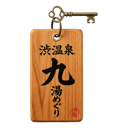
- Stay at a Shibu Onsen ryokan and you'll be handed a single master key at check-in that opens all nine sotoyu, free, for the length of your stay.
- Pick up a prayer towel (kigan-tenugui, 祈願手ぬぐい) at your inn or a town shop for a few hundred yen, then stamp it at each bath as you go.
- Walk from bath to bath in yukata and geta: the whole town is the inn.
- The baths run roughly 06:00–22:00 for key-holding guests. The water is genuinely hot, so add cold and ease in.
- Day-trippers can't use the key baths, but the ninth, Oyu (大湯), opens to visitors for a small fee (ask at the tourist information office, usually around 10:00–16:00).
Earning the Onsen Oni badge
The Shibu Onsen Kuyu Meguri badge is awarded by Onsen Oni moderators to anyone who has soaked in all nine sotoyu. A photo of your fully stamped prayer towel, or a set of check-in photos from the nine baths sent through the feedback channel, is enough. There's no time limit, and the temple visit at the end is the traditional way to close it out.