Onsen areas
Japan's named hot-spring regions, each one gathered around its own source. Every onsenchi has its own water, its own bathing districts, and its own way of living with the heat that rises from the ground.
Hokkaido
10

Sounkyo Onsen
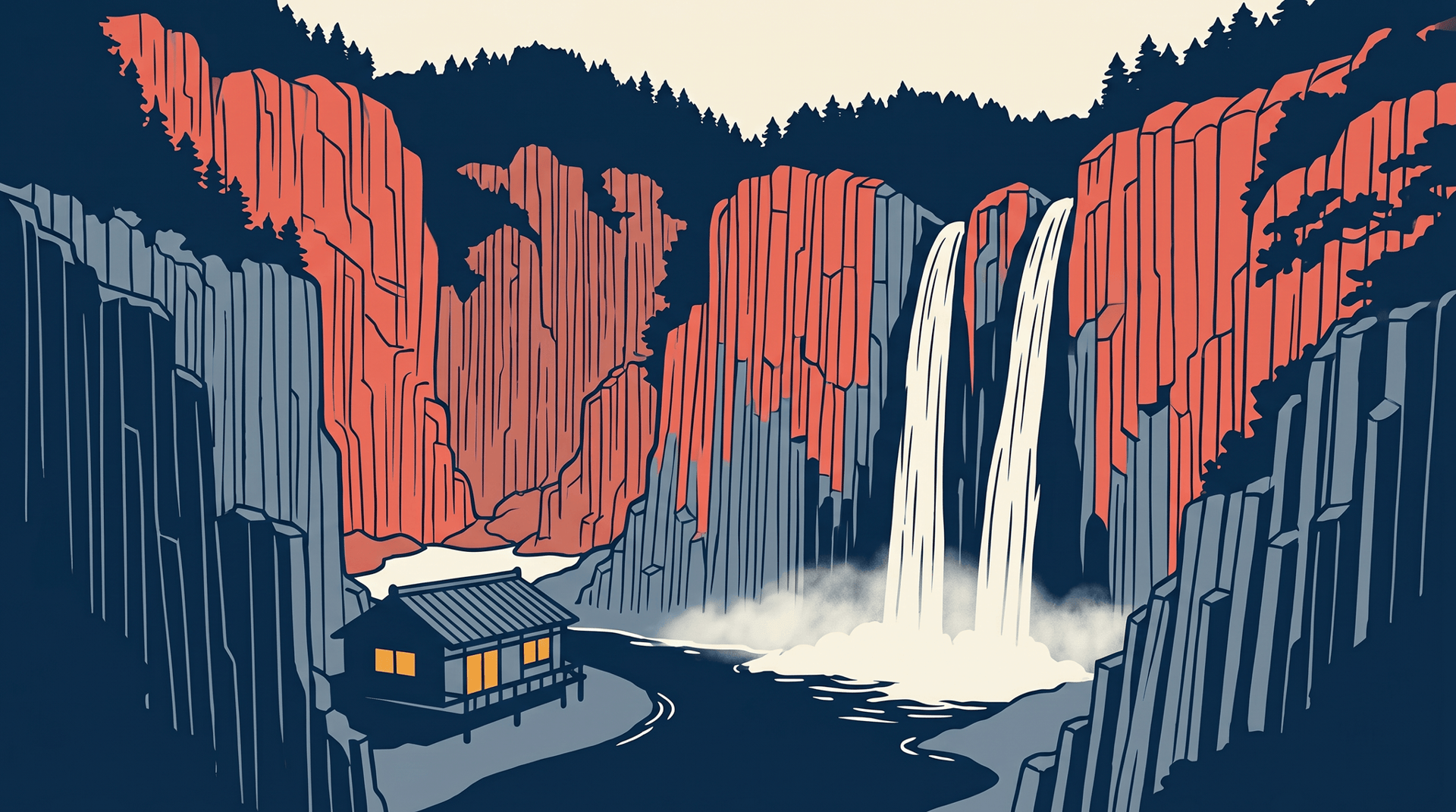
Gorge onsen at the entrance to Daisetsuzan, Hokkaido's largest national park. Sodium chloride springs at the foot of 100-meter columnar cliffs and the Ginga + Ryusei waterfalls.

Utoro Onsen
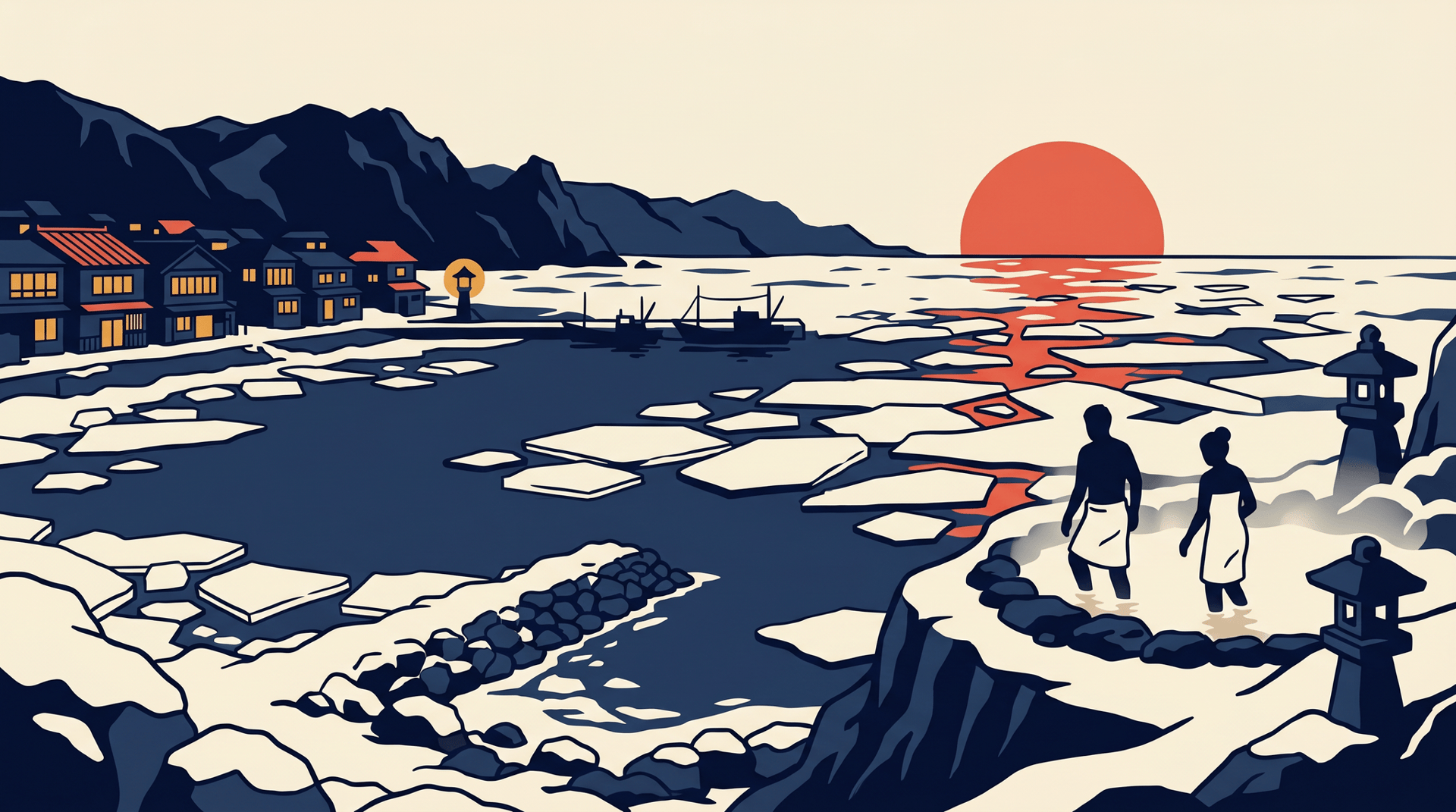
Gateway onsen to Shiretoko, the easternmost UNESCO World Heritage site in Japan. Sodium chloride springs on the Okhotsk coast, with sea ice drifting past hotel windows in winter.

Niseko Onsen-kyo
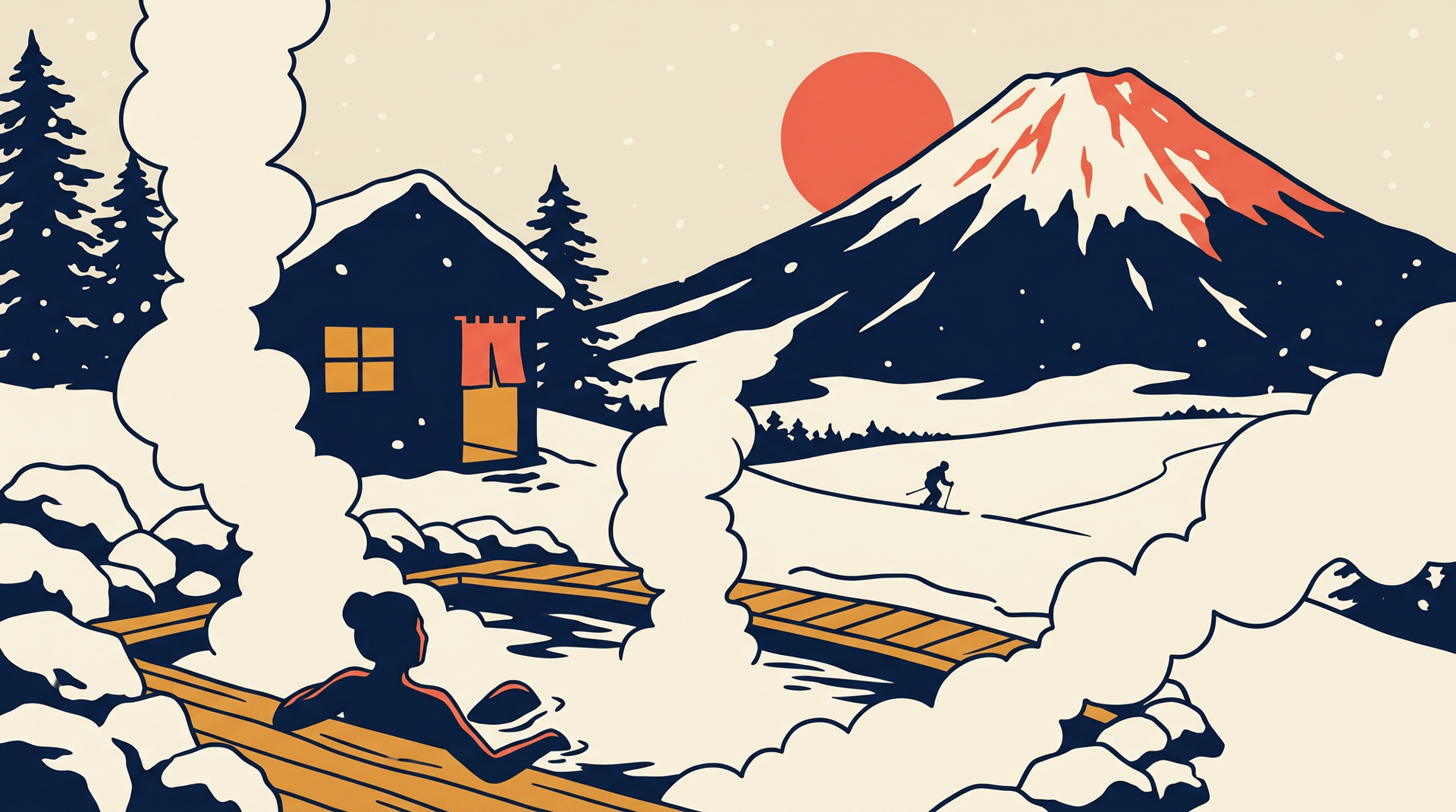
World-famous ski-and-onsen region in southwest Hokkaido, with deep powder snow, Mount Yotei views, and a string of onsen (Niseko-Konbu, Yumoto, Goshiki, Hirafu) tucked into the foothills.

Tokachigawa Onsen
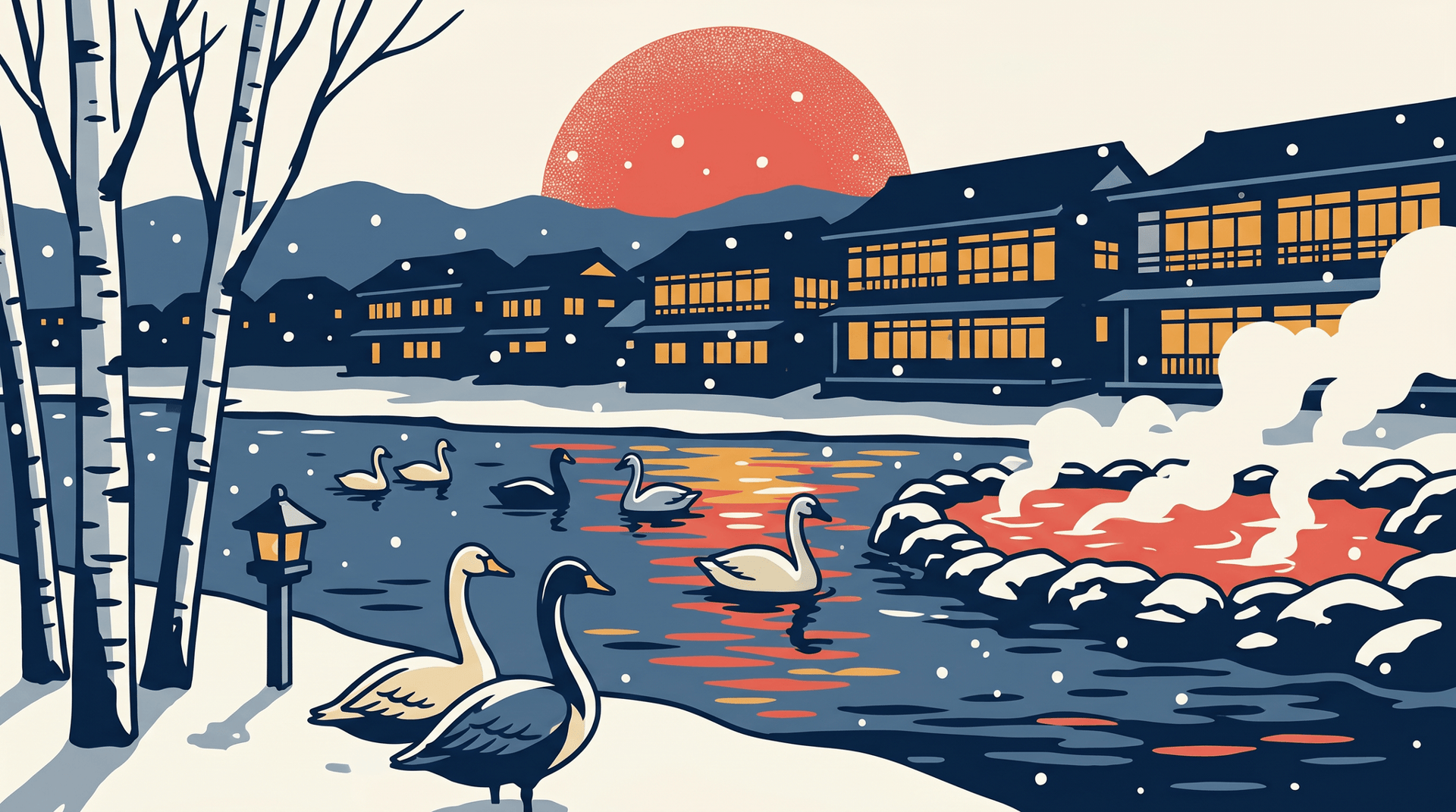
Central Hokkaido onsen by the Tokachi River, famous for its rare 'moor' springs — humic-acid waters drawn from ancient peat-bog deposits, prized for their skin-softening properties.

Kawayu Onsen
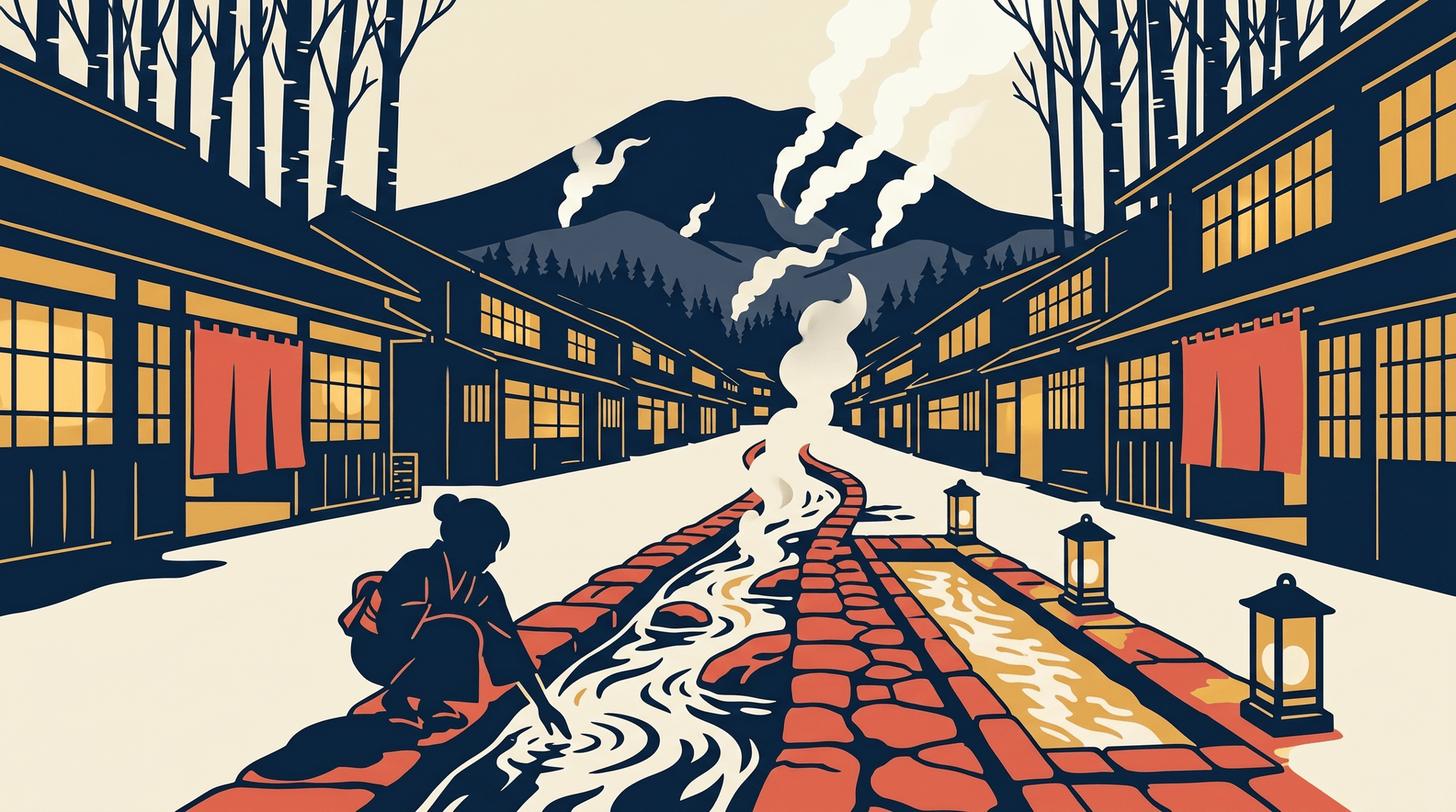
Strongly acidic sulfur onsen in eastern Hokkaido, in Akan-Mashu National Park near Mount Io. Hot enough at the source to flow through open canals in the town center.

Akanko Onsen
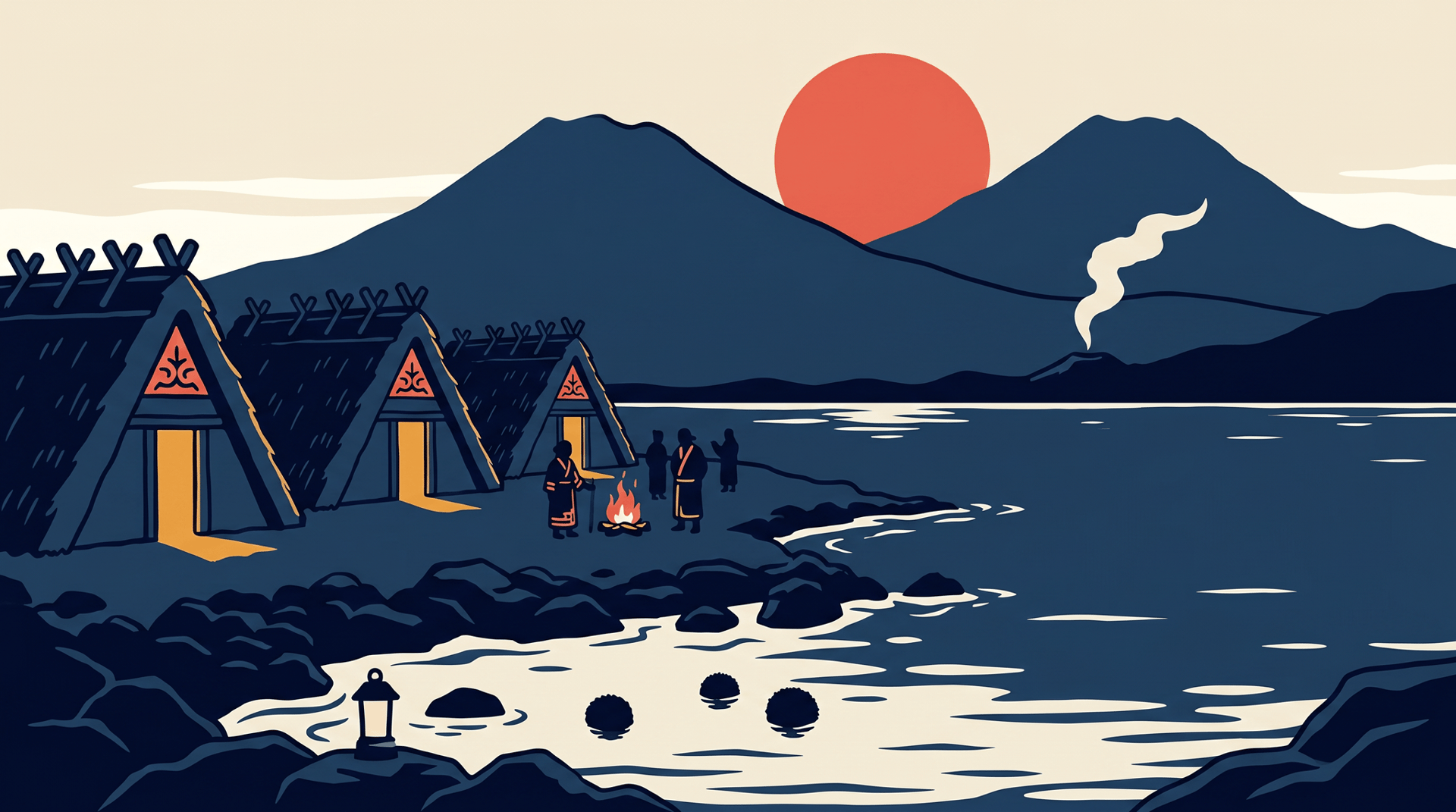
Eastern Hokkaido lakeside onsen on Lake Akan, in Akan-Mashu National Park. Ainu culture village (Akan-kotan) and the famous marimo algae of the lake.

Noboribetsu Onsen
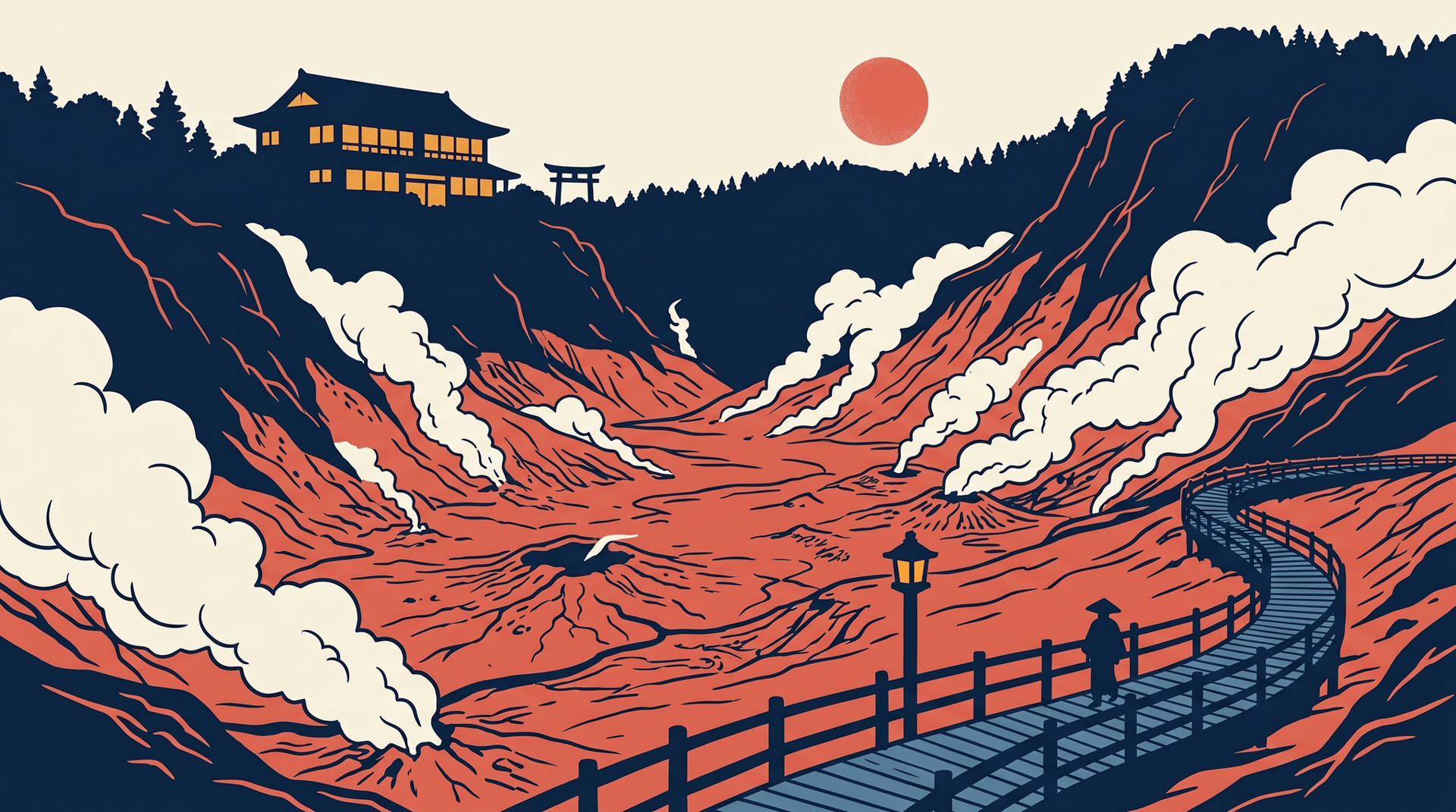
Hokkaido's biggest onsen town, fed by the steaming Jigokudani ('Hell Valley') crater. Nine different spring chemistries within walking distance.
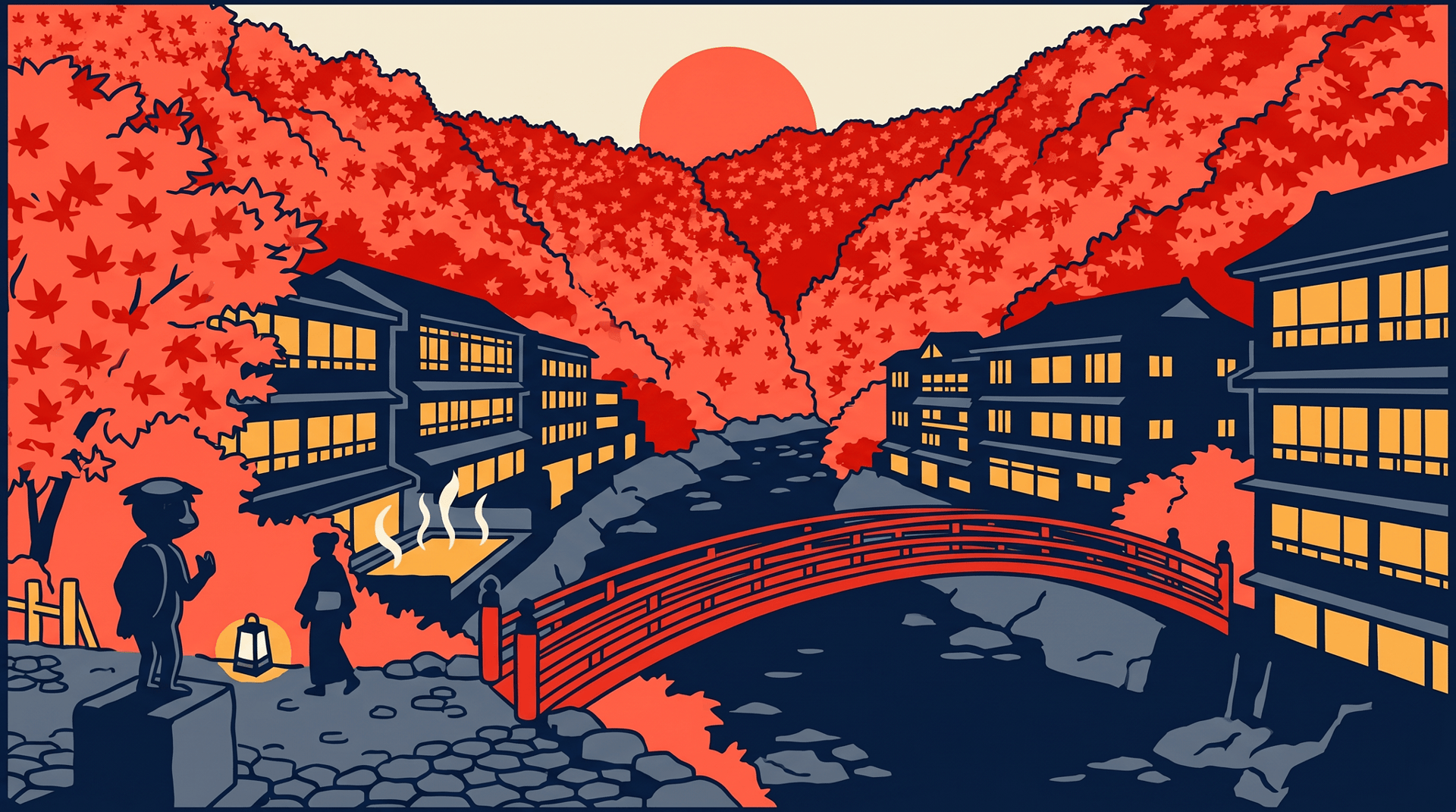

Jozankei Onsen
Sapporo's mountain onsen, an hour from the city in the Toyohira river gorge. Sodium chloride springs and 60+ ryokan along a wooded canyon.
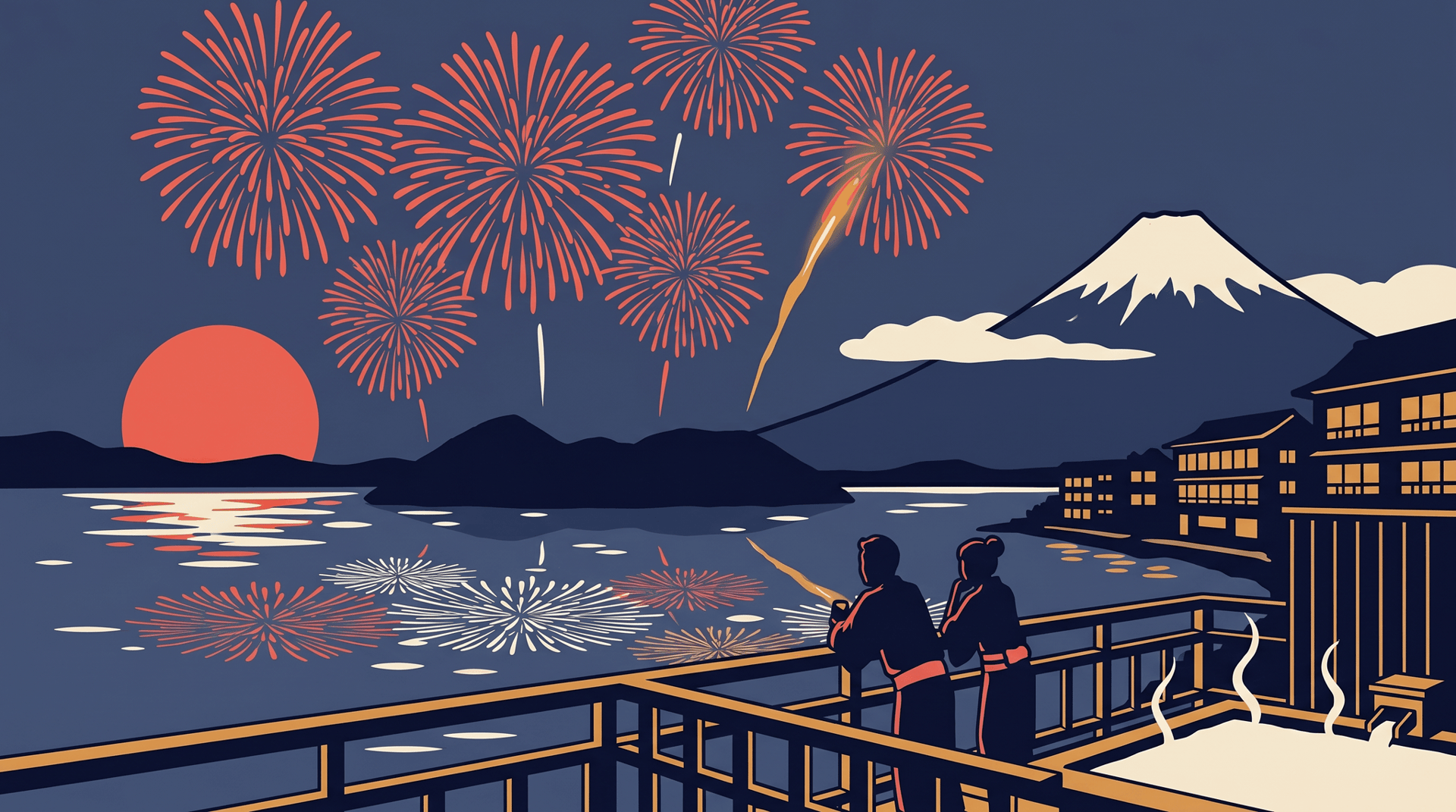

Toyako Onsen
Caldera-lake onsen at the foot of the still-active Mount Usu, inside the Toya-Usu UNESCO Geopark. Nightly summer fireworks over the lake.
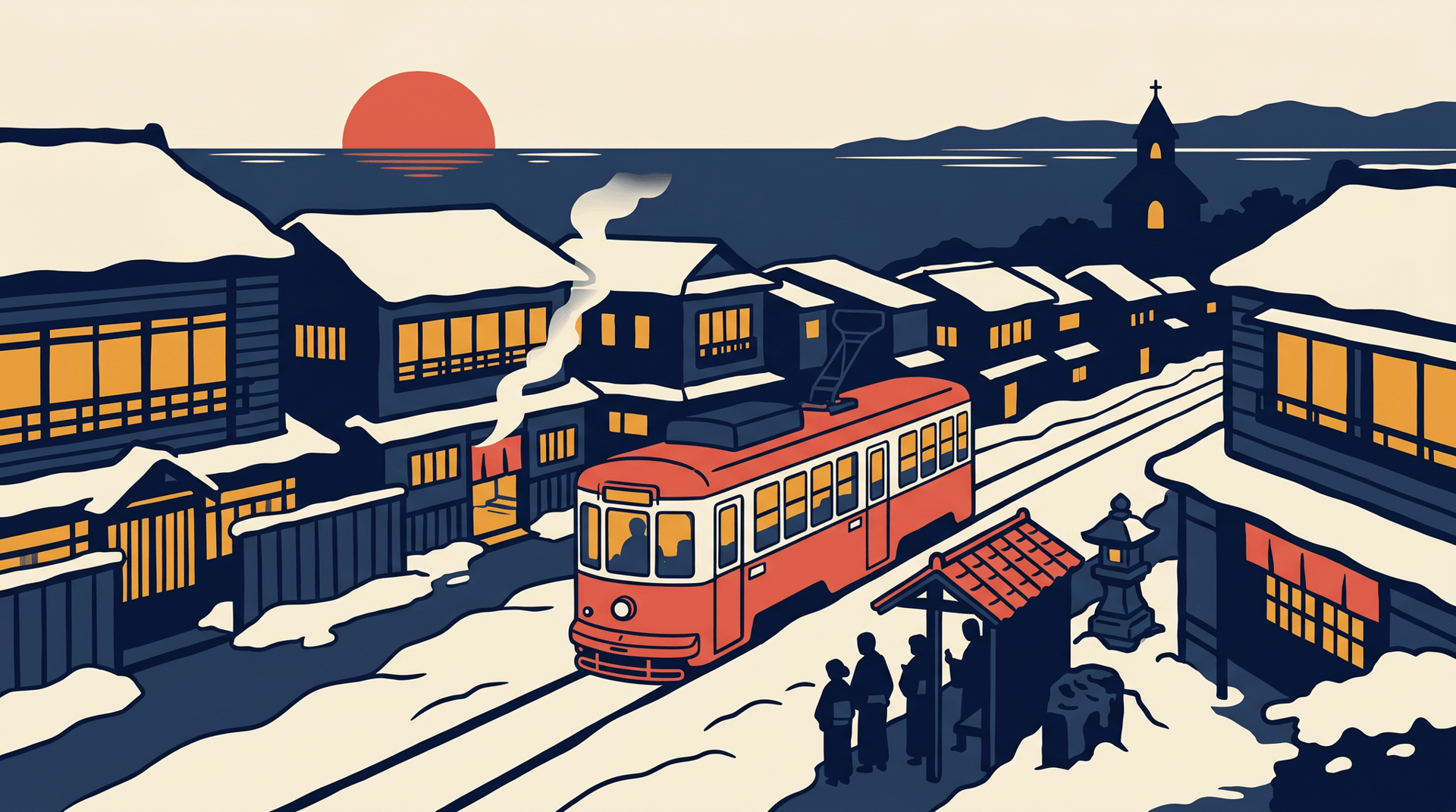

Yunokawa Onsen
Hakodate's beachside onsen quarter, fed by 350-year-old sodium chloride springs. Famous for ryokan facing the Tsugaru Strait.
Tohoku
12
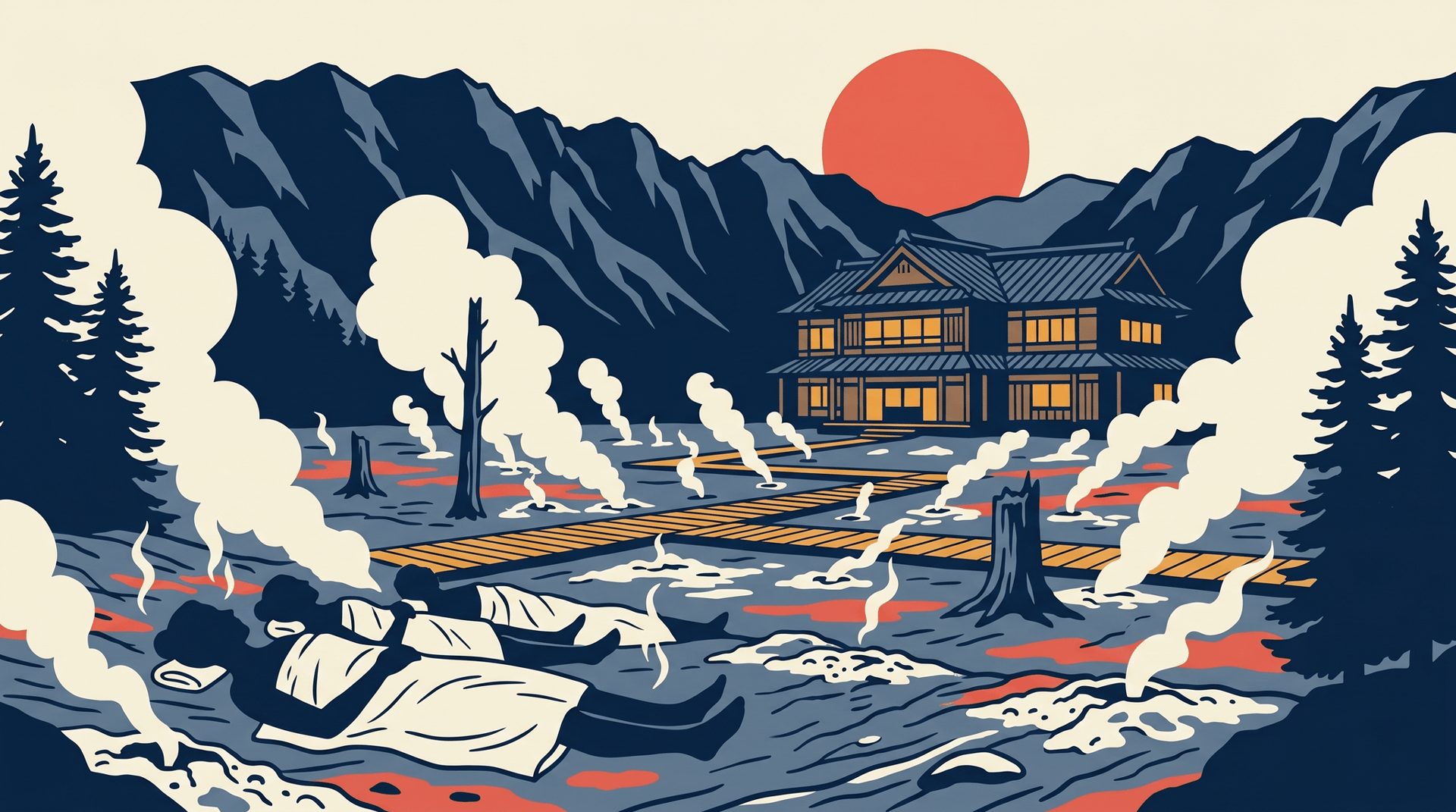

Tamagawa Onsen
Akita mountain onsen with the most acidic natural spring in Japan (pH 1.05) and the highest single-source discharge. Famous for the Hokutolite radon stones.
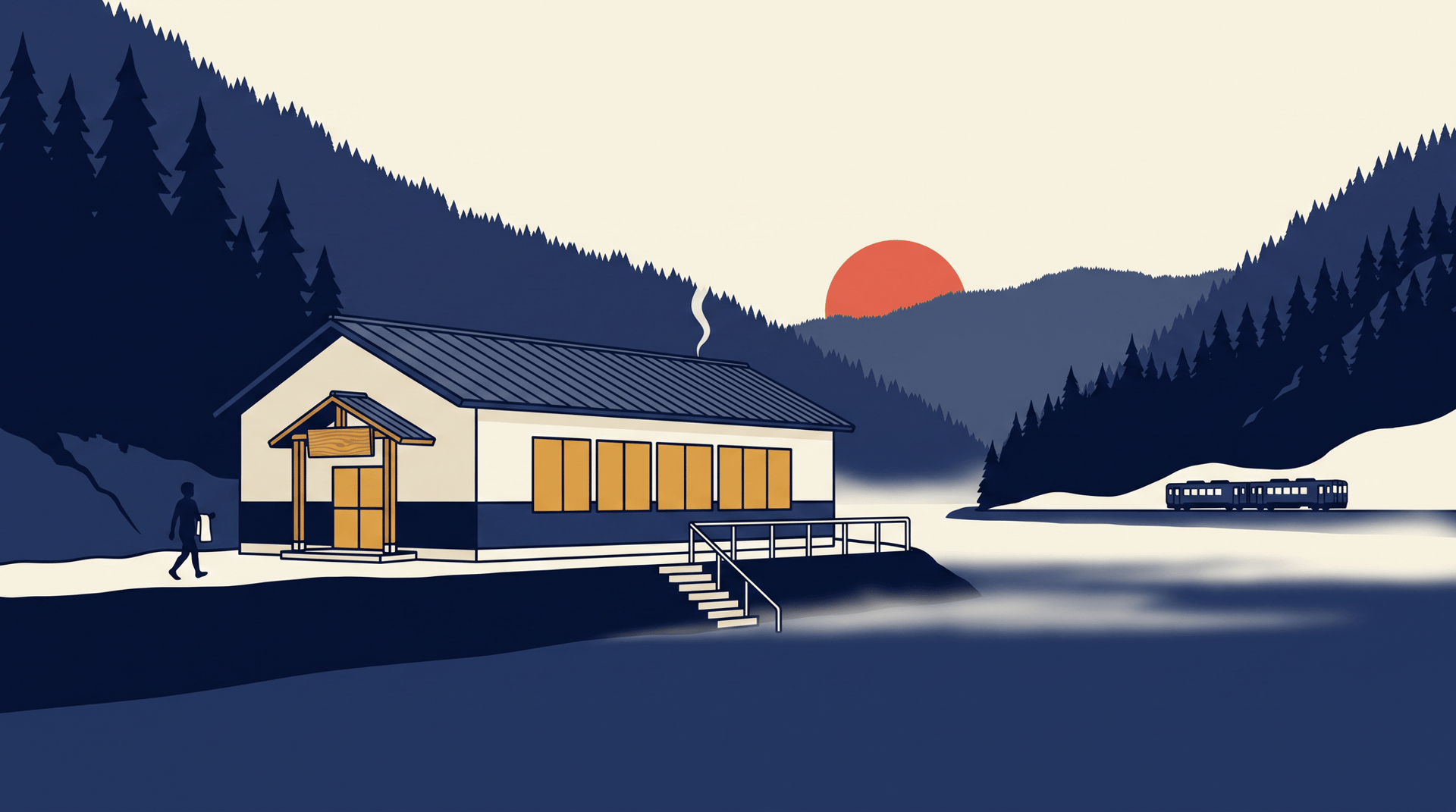

Aizu-Oshio Onsen
A hamlet on the Tadami River in Oku-Aizu with one bathhouse and one minshuku, sharing a 38 °C spring so charged with dissolved carbon dioxide that it ranks among the most carbonated in Japan — tea-brown, faintly salty, lukewarm enough to sit in for an hour, and drunk as well as bathed in. A second spring rises cold a few minutes away: a well of natural sparkling water that Meiji-era traders shipped to Europe and that is still bottled today.
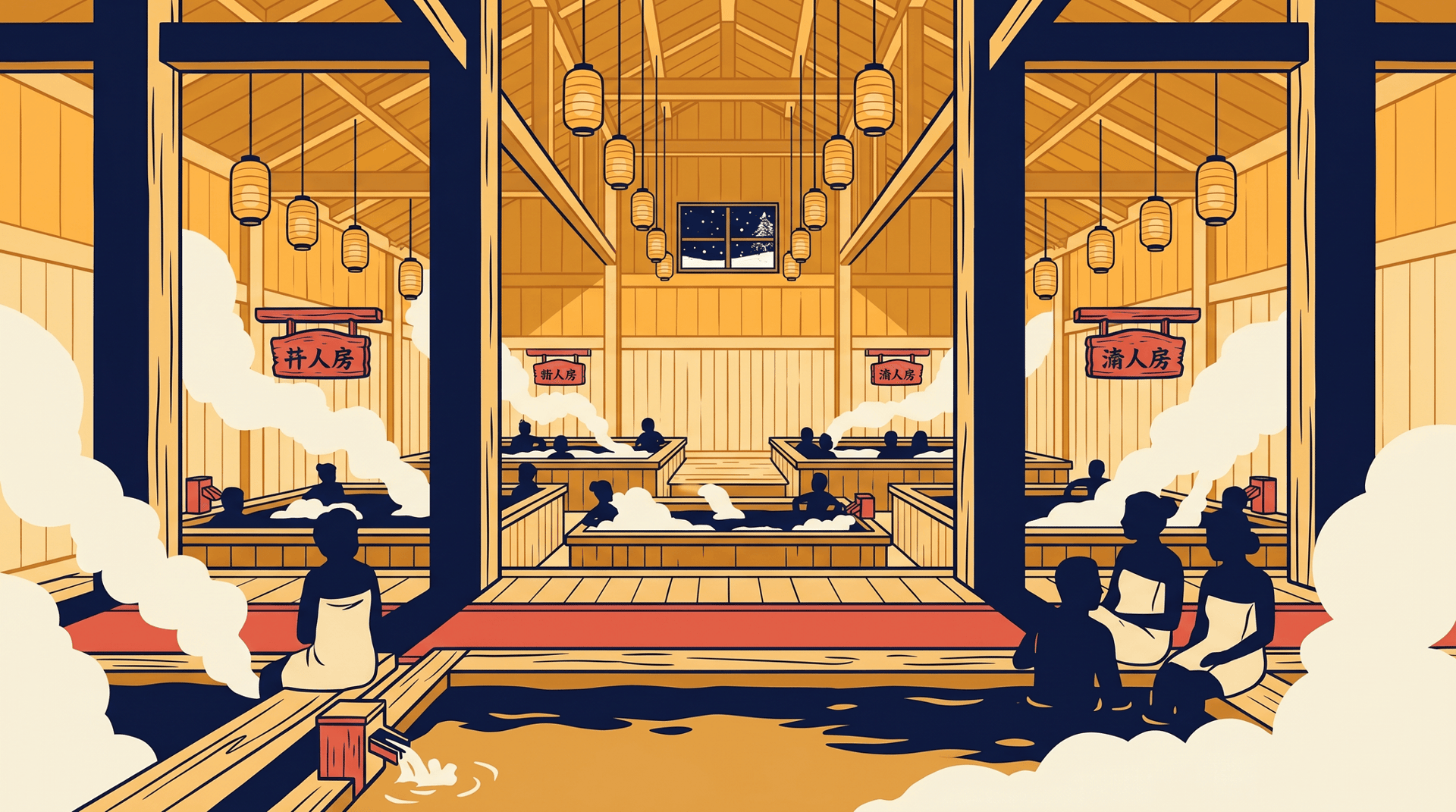

Sukayu Onsen
Sole-inn onsen high in the Hakkoda mountains, famous for the 'Hiba sennin-buro', a 160-畳 cypress-wood mixed bath fed by strong acidic sulfur springs.
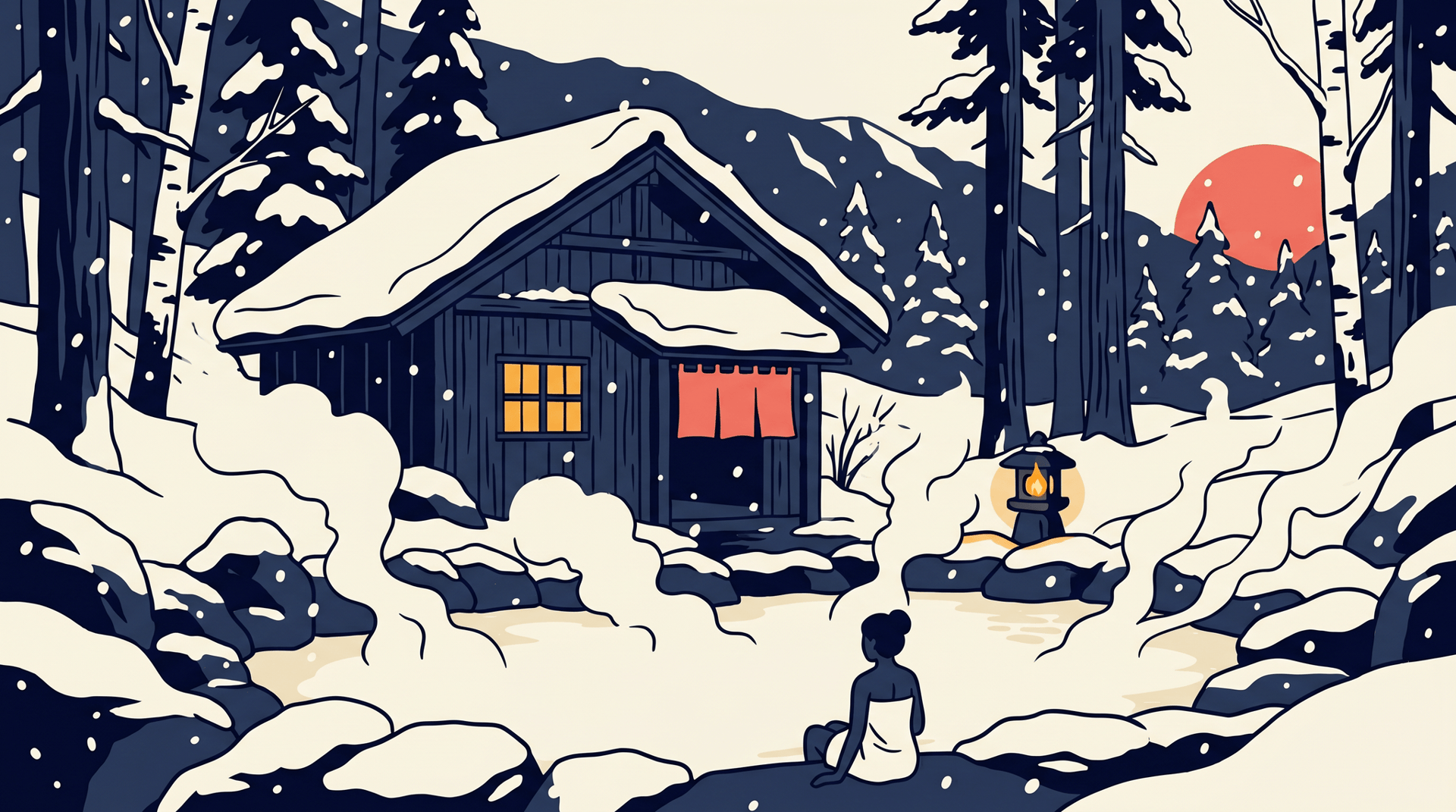

Nyuto Onsen-kyo
Cluster of seven beech-forest hot springs around Mount Nyuto in Akita. Tsurunoyu's milky open-air bath is its most photographed feature.
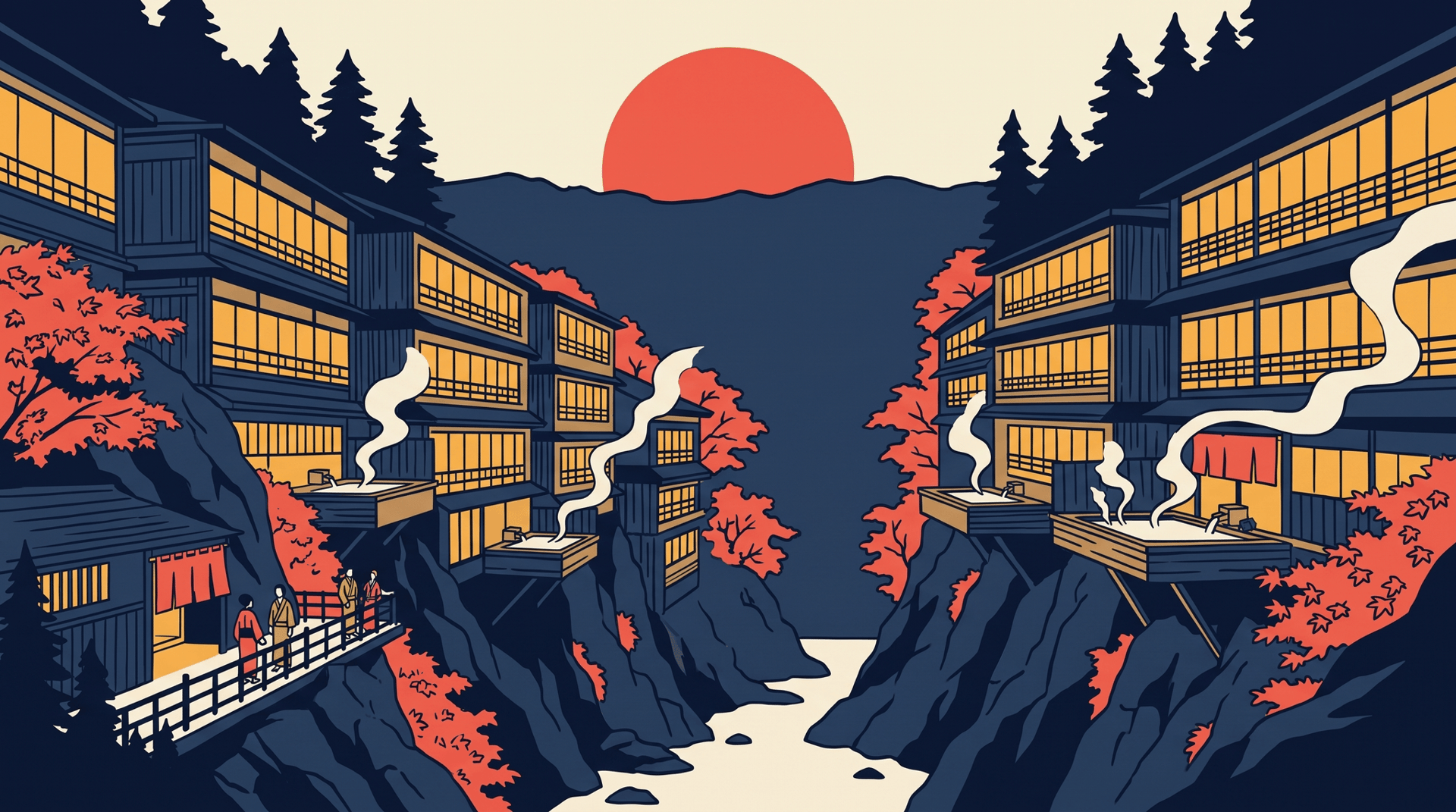

Ashinomaki Onsen
A gorge town south of Aizu-Wakamatsu, where tall inns stand along the cliffs of the Okawa river and their open-air baths hang straight over the water. Tradition credits the priest Gyoki with finding the spring some twelve centuries ago, and the calcium and sodium sulfate-chloride water still rises hot enough to need cooling. Three free foot baths mark the walking route, and the branch-line station at the edge of town keeps a cat as its stationmaster.
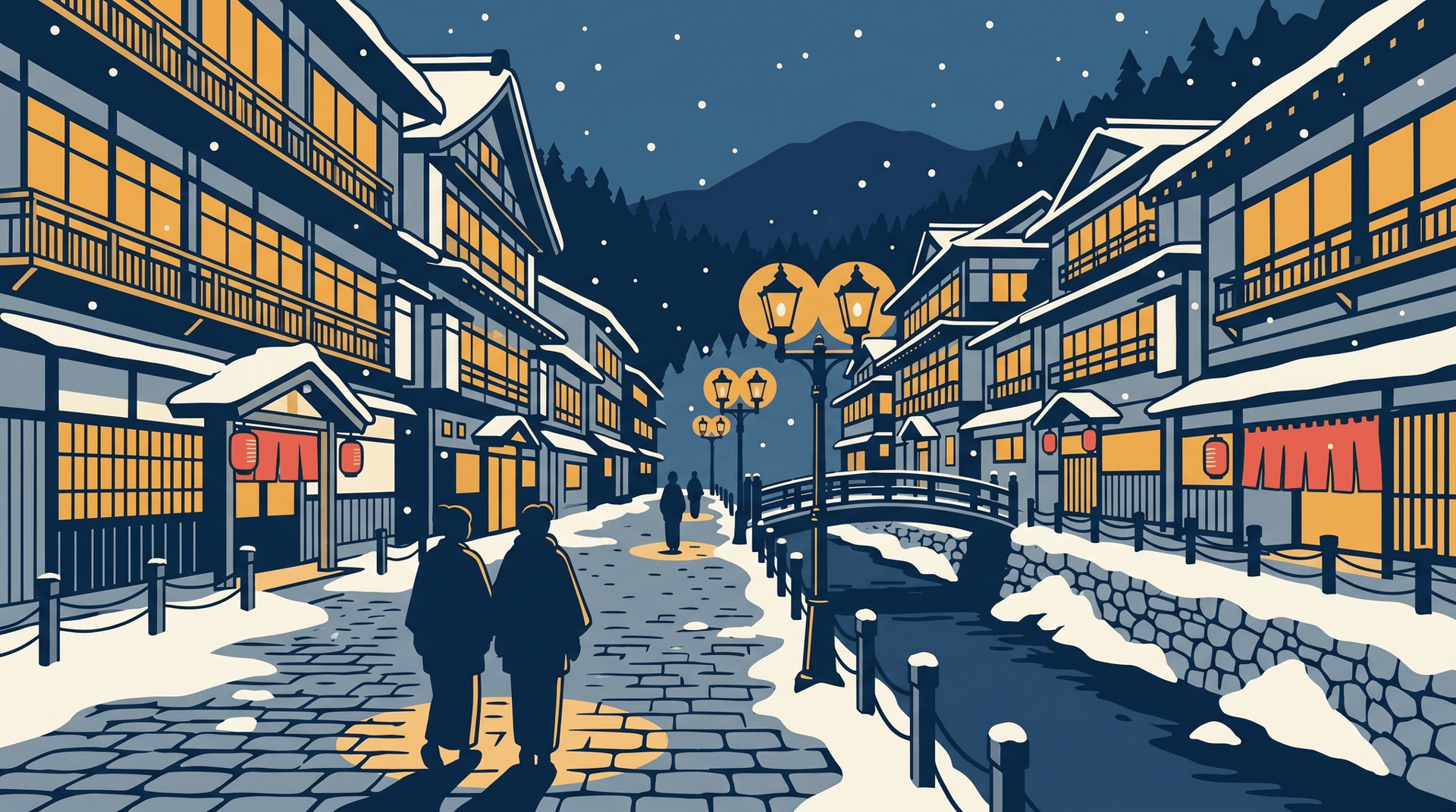

Ginzan Onsen
Iconic Taisho-era street of wooden inns lit by gas lamps in the snow. Tucked into a narrow gorge in Yamagata.
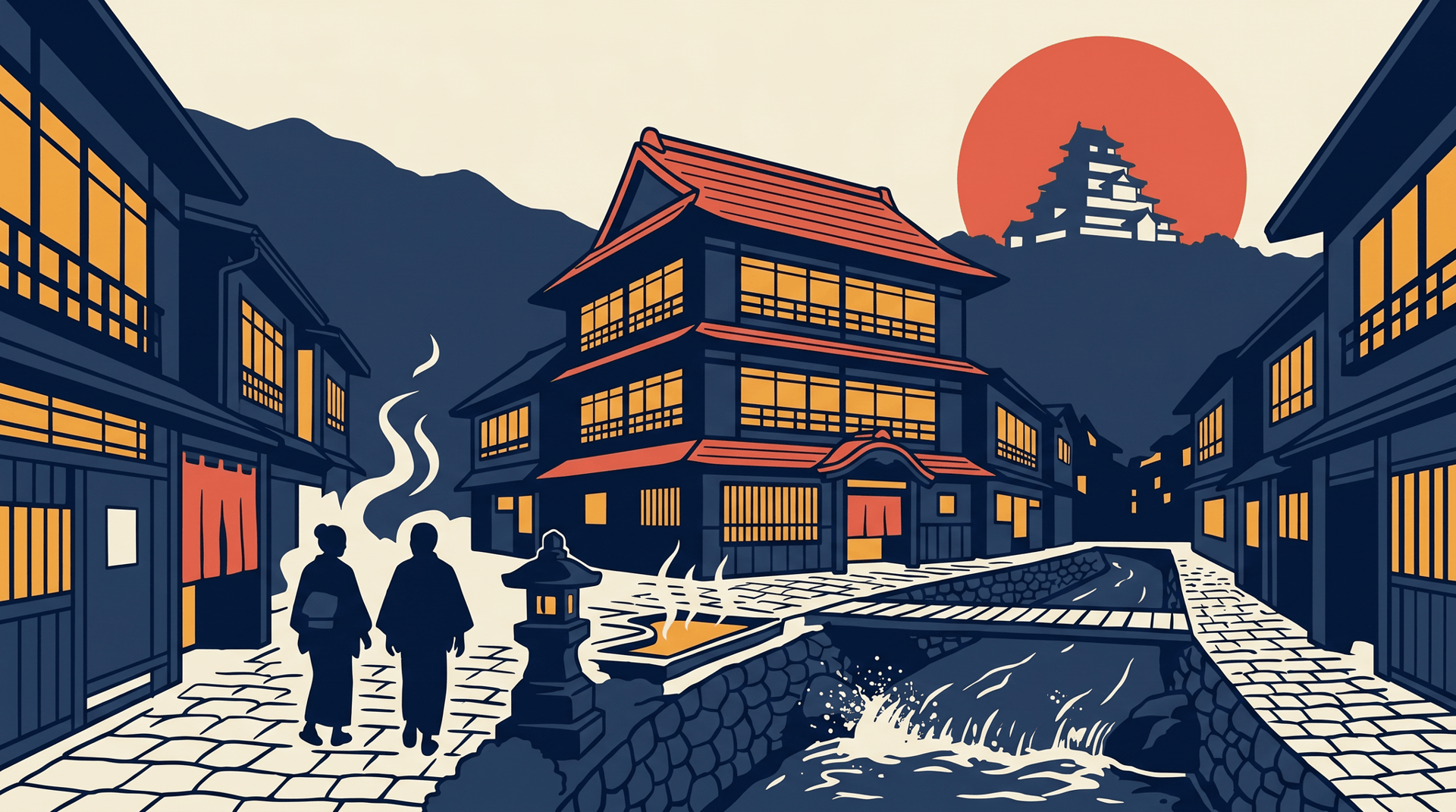

Higashiyama Onsen
Aizu-Wakamatsu's traditional onsen quarter, founded in the 8th century. Ryokan packed along the Yukawa river gorge below Tsurugajo castle.
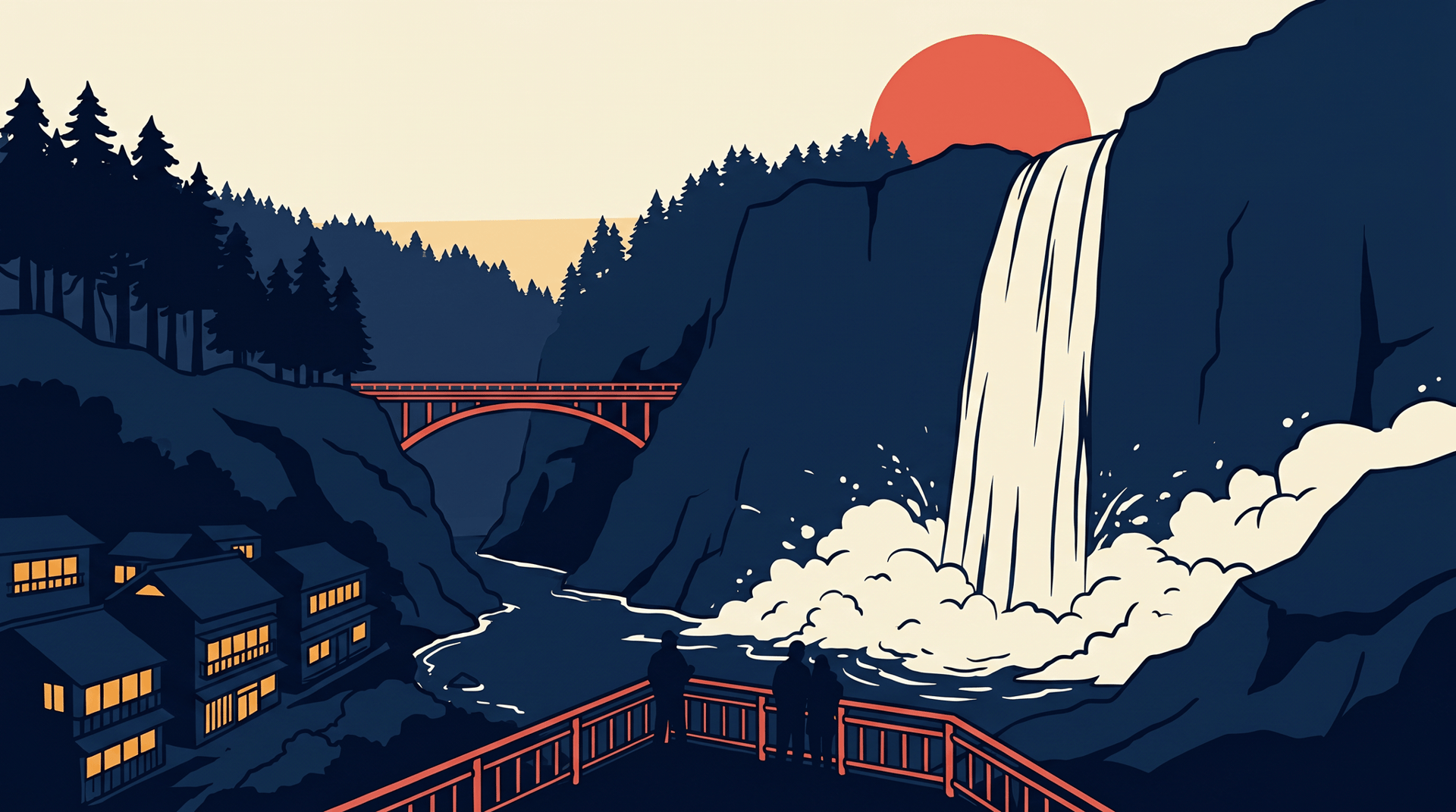

Akiu Onsen
Sendai's century-old onsen valley along the Natori River — 'one of Japan's three Imperial Springs' (御湯) and known for its 60m Akiu Otaki waterfall.
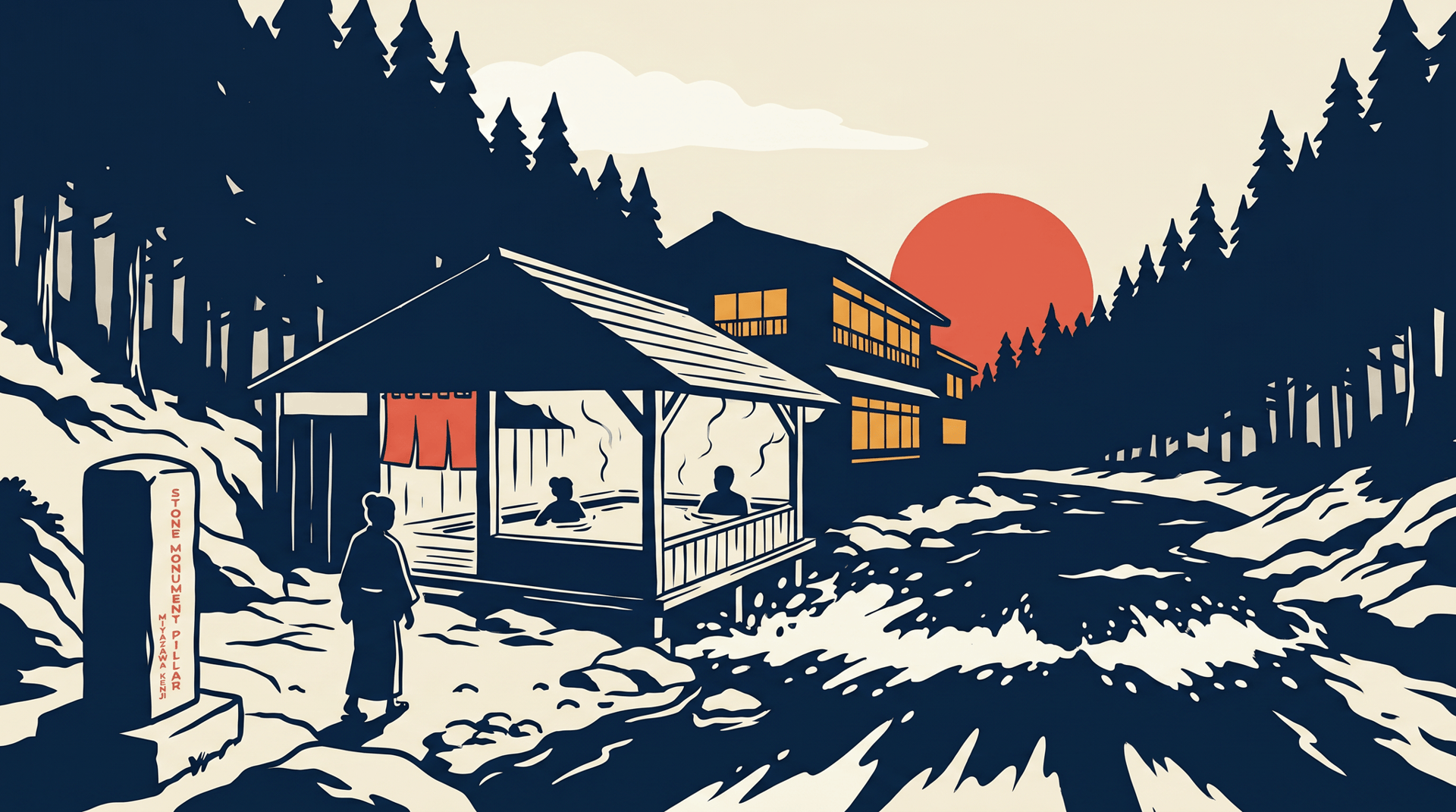

Hanamaki Onsen-kyo
Iwate onsen group along the Toyosawa River, famously associated with the poet Miyazawa Kenji. Twelve onsen districts within a few kilometers.
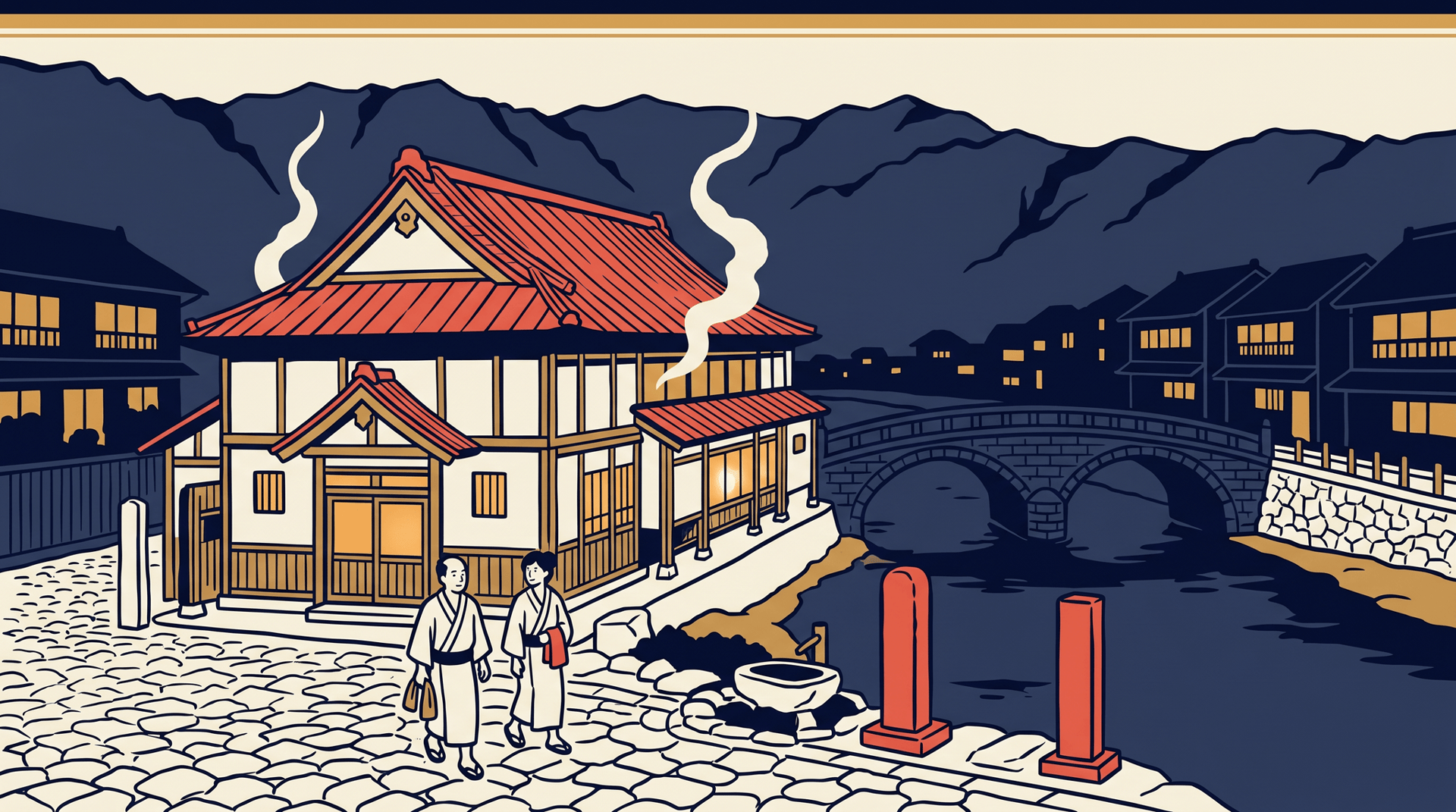

Iizaka Onsen
Historic Fukushima onsen town with nine free public bathhouses along the Surikami River, one of Tohoku's three great hot springs (Oshu sanmeisen).
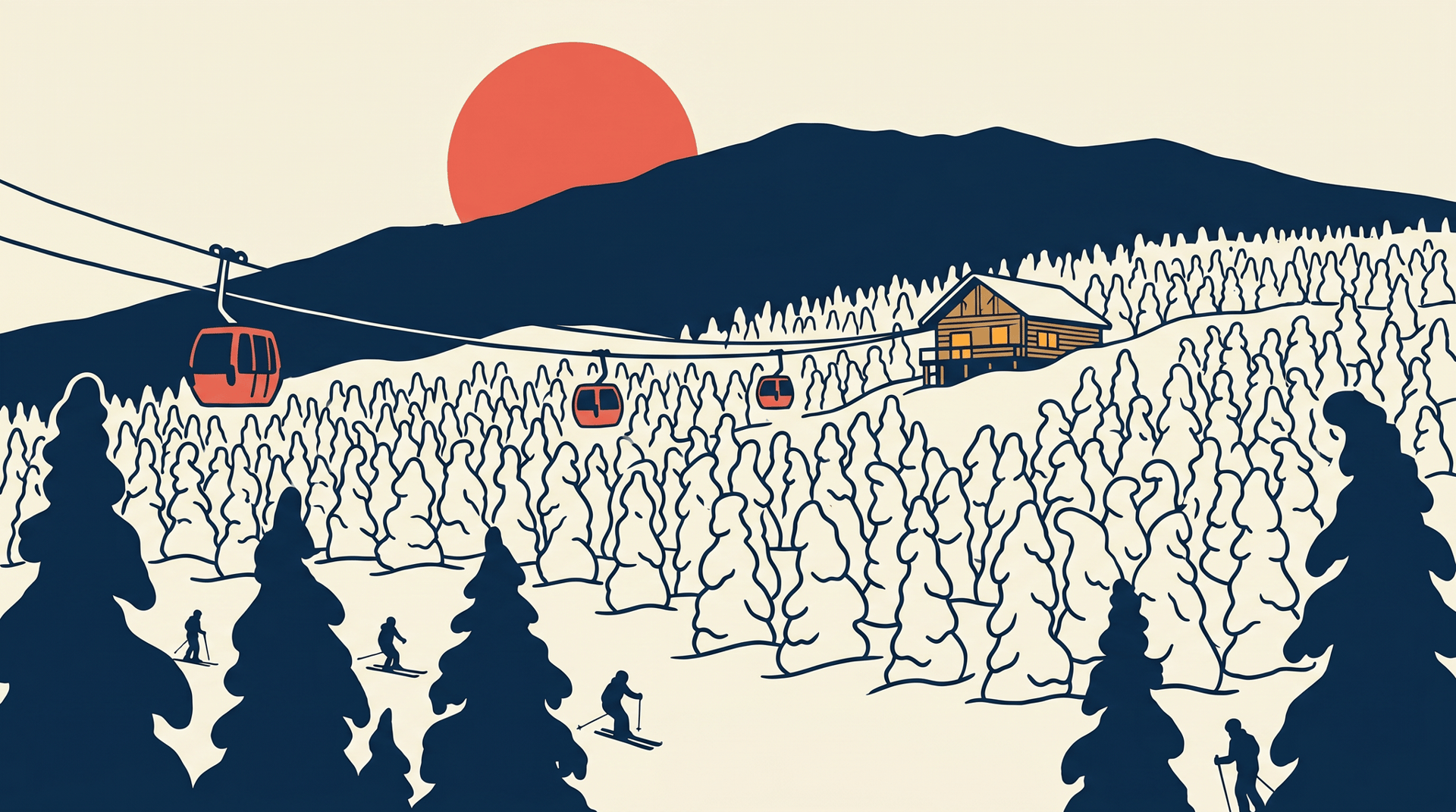

Zao Onsen
Sulfur springs at 880m on Mount Zao. Ski-and-onsen pairing in winter; famous frost-covered 'snow monsters' in late January.
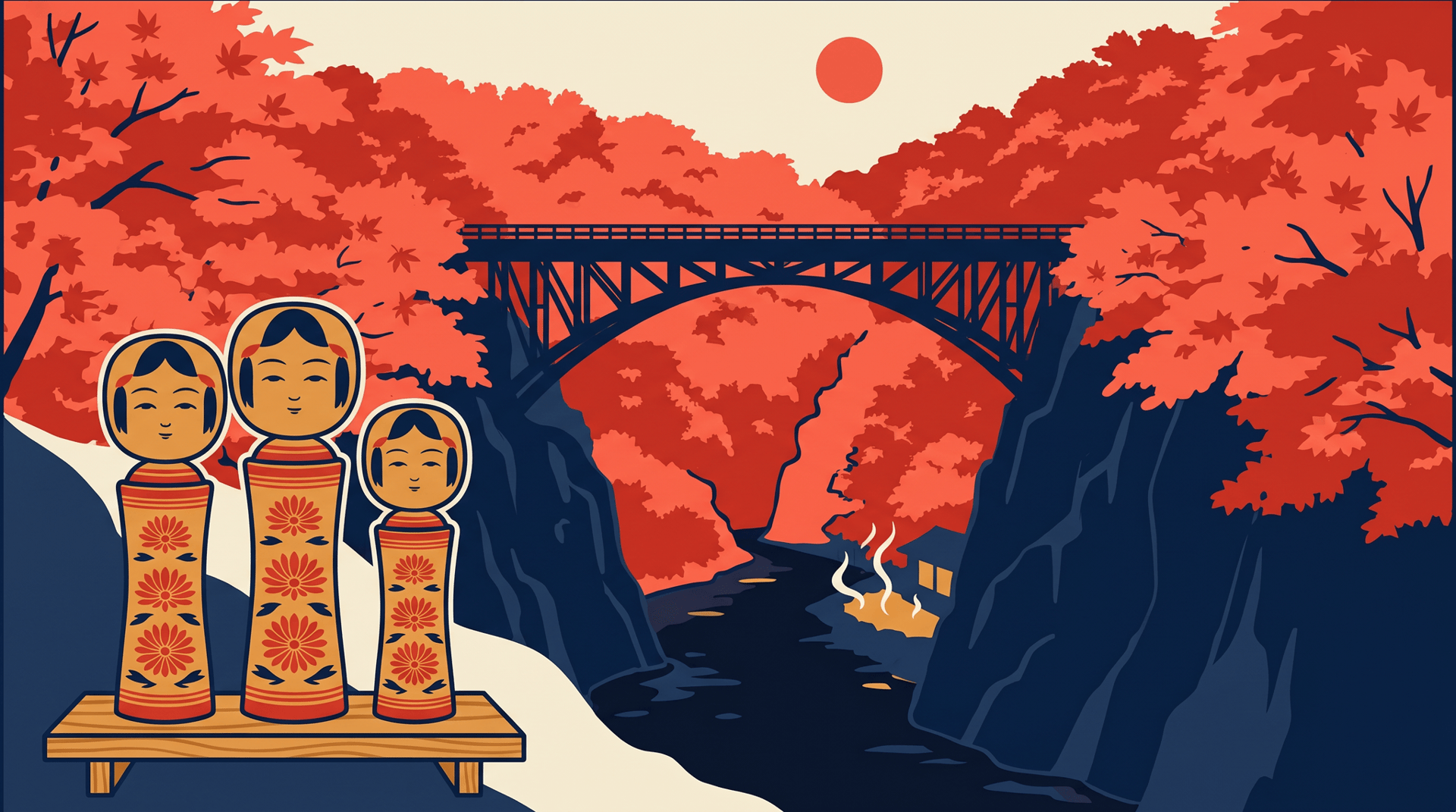

Naruko Onsen-kyo
Five-area onsen group in the Naruko Gorge of Miyagi, famed for a wide range of spring chemistries within a few kilometers and for Naruko kokeshi dolls.
Kanto
13
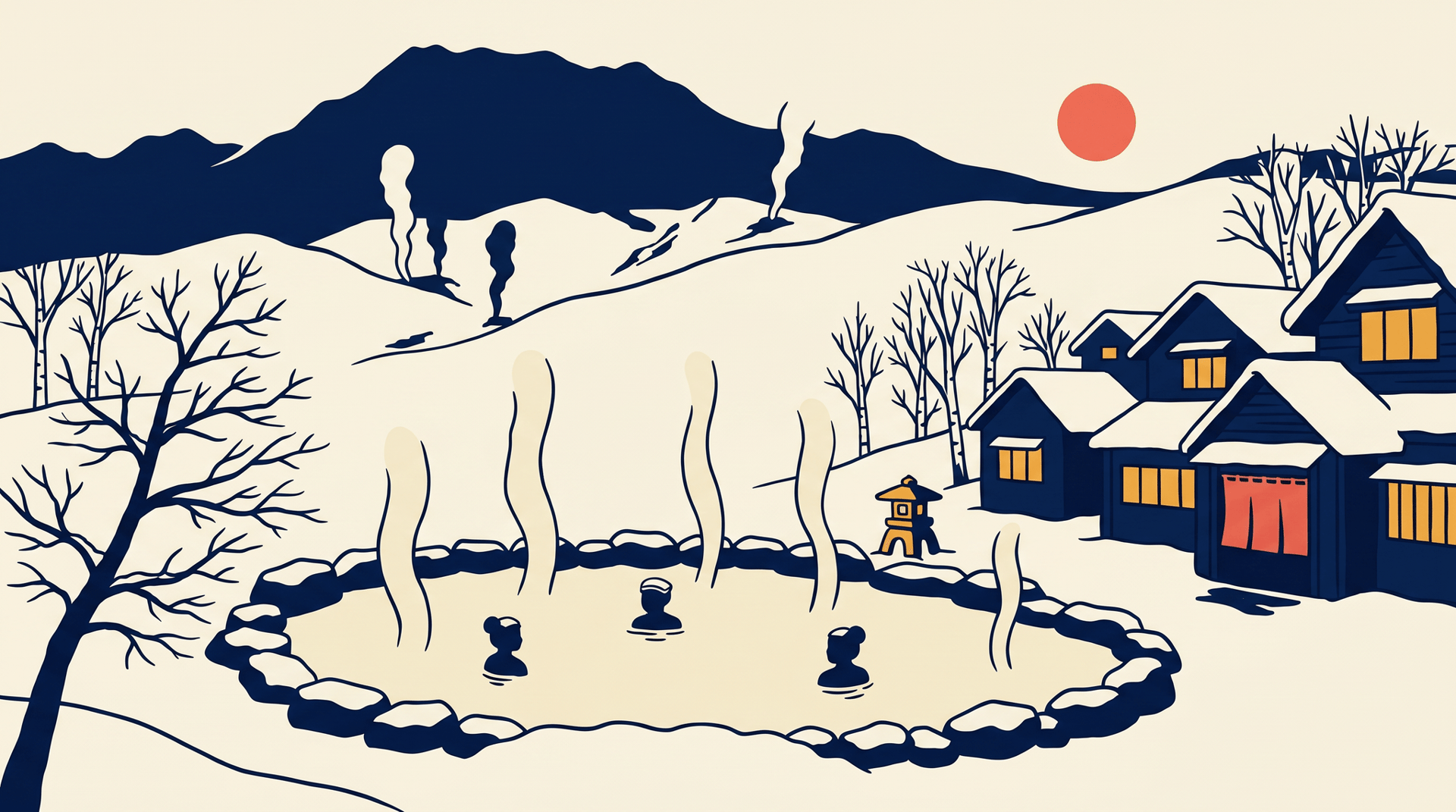

Manza Onsen
Japan's highest onsenchi, at 1,800 m on the slopes of Mt. Shirane in Gunma. Strongly acidic milky-white sulfur waters (pH 2.5) from one of the country's most active geothermal fields, with rotenburo open to alpine views year-round.
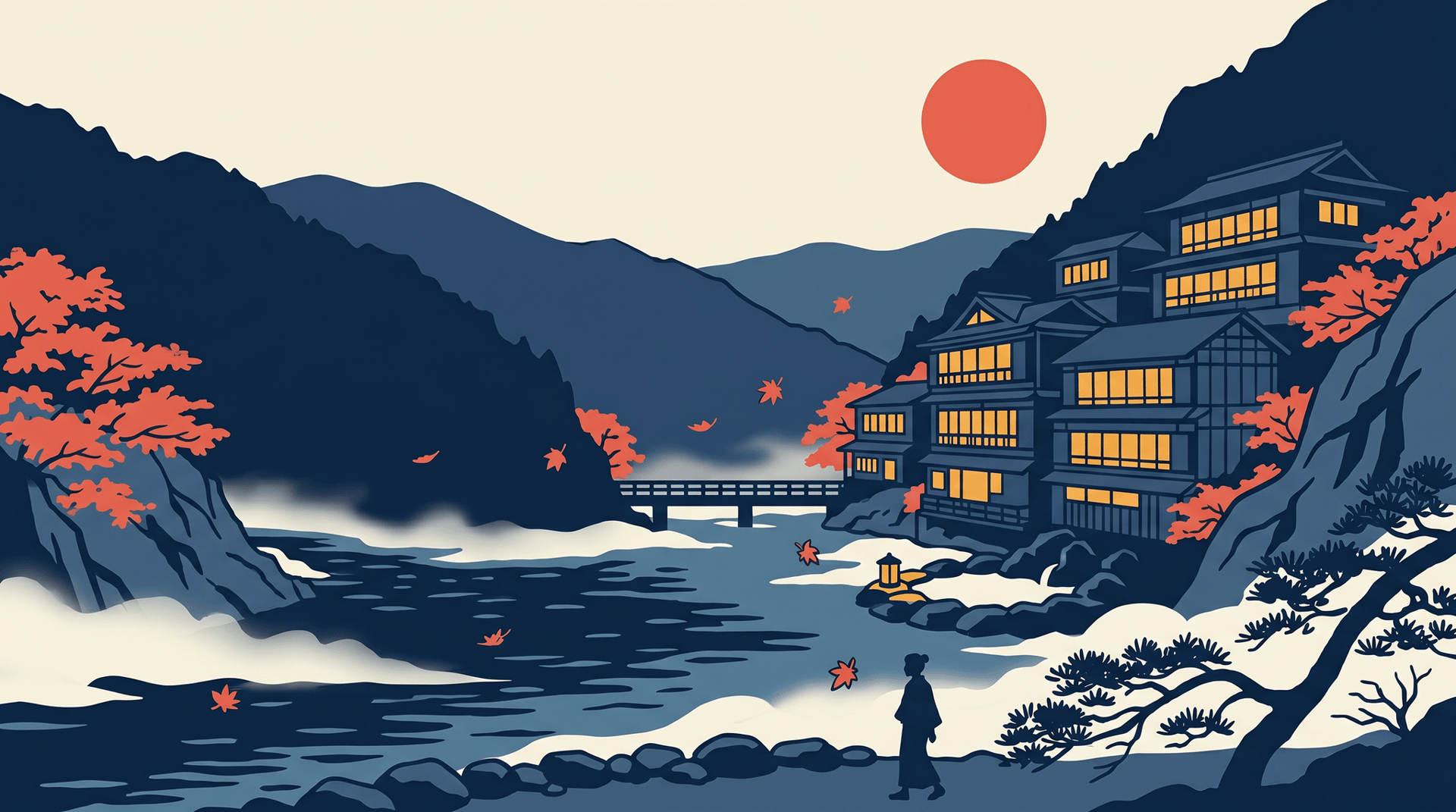

Kawaji Onsen
Quiet gorge onsen at the confluence of the Kinu and Kawaji rivers in Tochigi, just upstream of bustling Kinugawa. The local saying "Kawaji for cuts, Kinugawa for ailments" nods to its gentle alkaline waters and traditional yutoji feel.
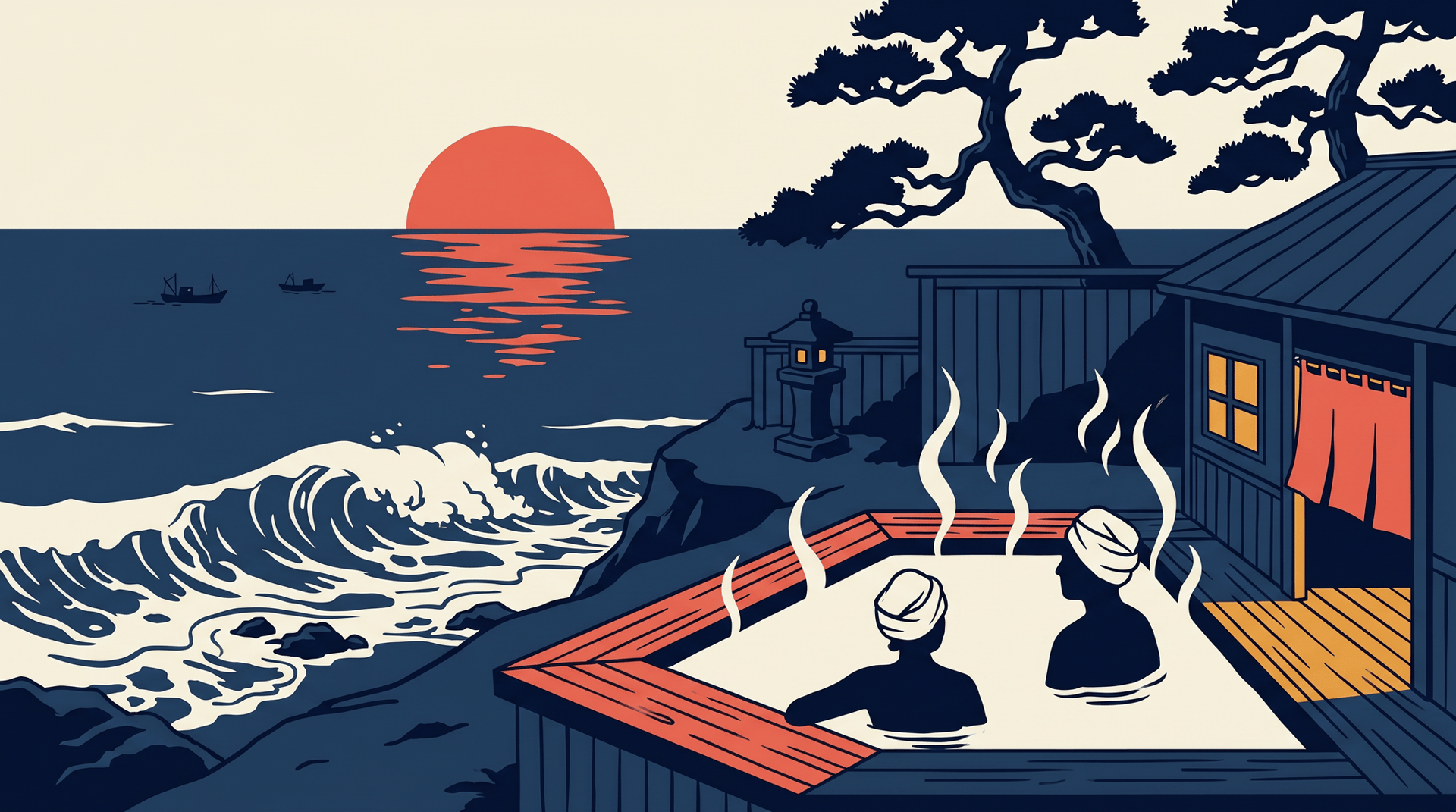

Kamogawa Onsen
Pacific-coast onsen on the outer side of the Boso Peninsula. Sodium chloride springs flowing right by the surf, paired with the famous Kamogawa Sea World.
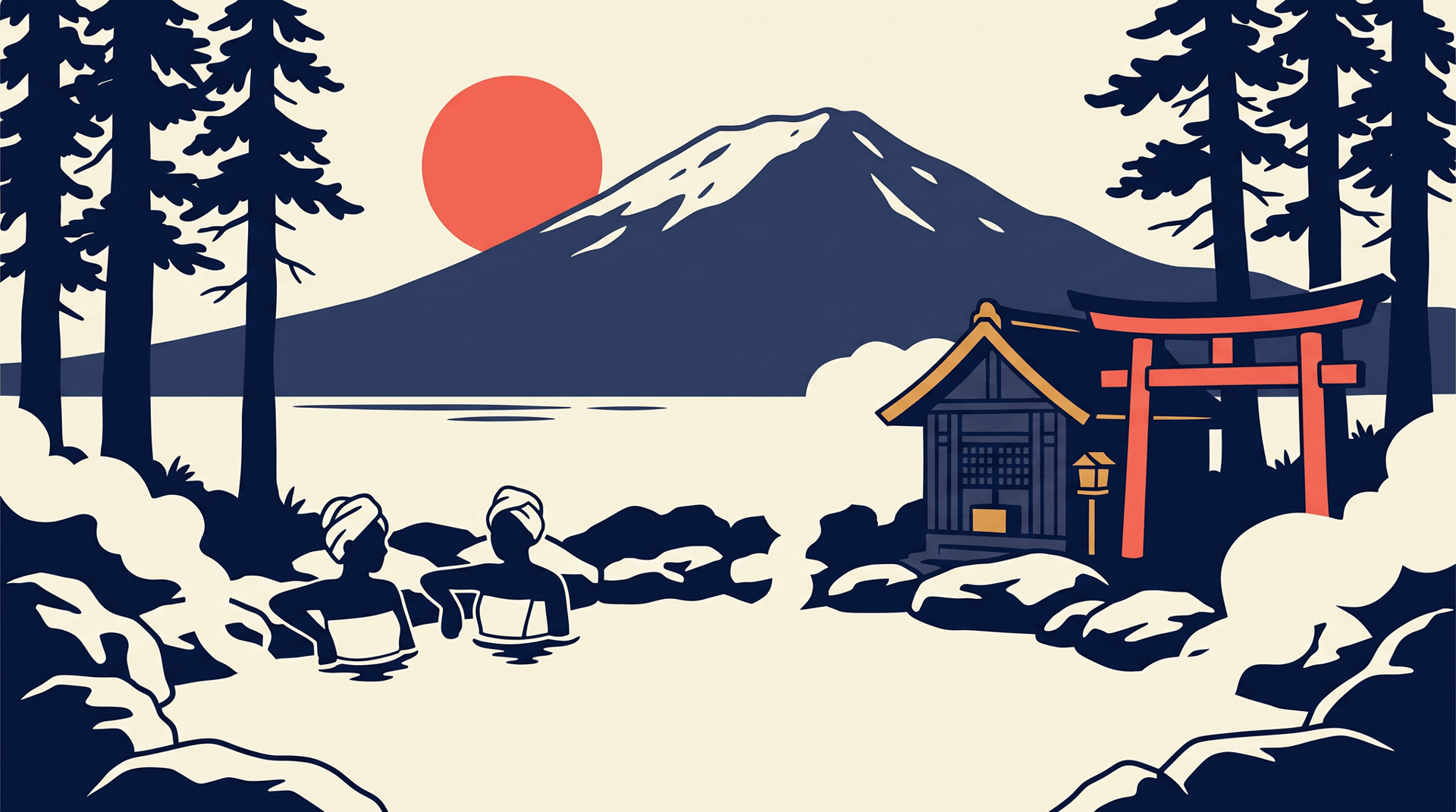

Oku-Nikko Yumoto Onsen
Mountain onsen at the headwaters of Lake Yunoko inside Nikko National Park, 1500 m above the temples of Nikko. Cloudy sulfur springs in a primeval beech forest.
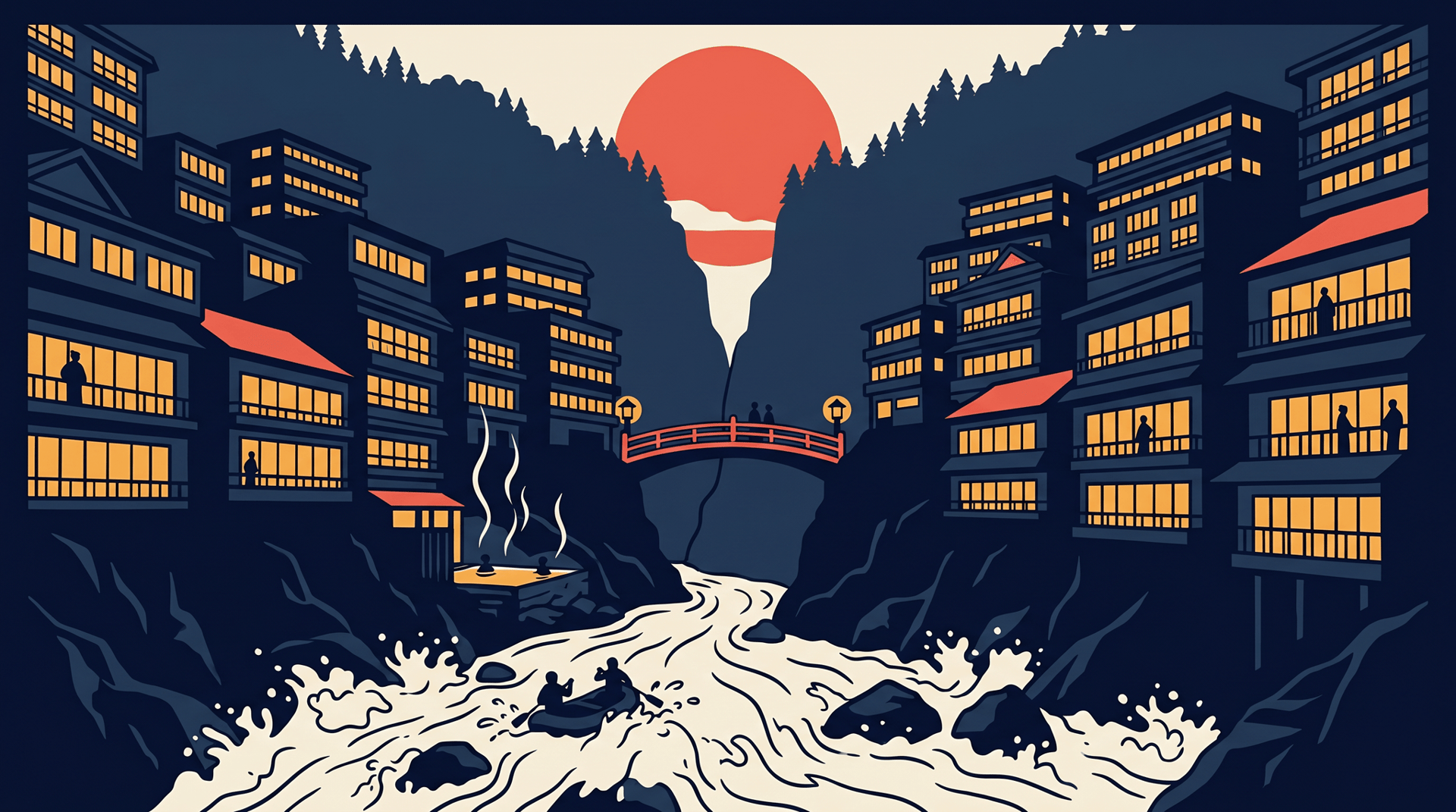

Kinugawa Onsen
Tochigi resort town in the Kinugawa River gorge — gateway to Nikko and a long-time family destination, with cliff-top rotenburo overlooking the canyon.
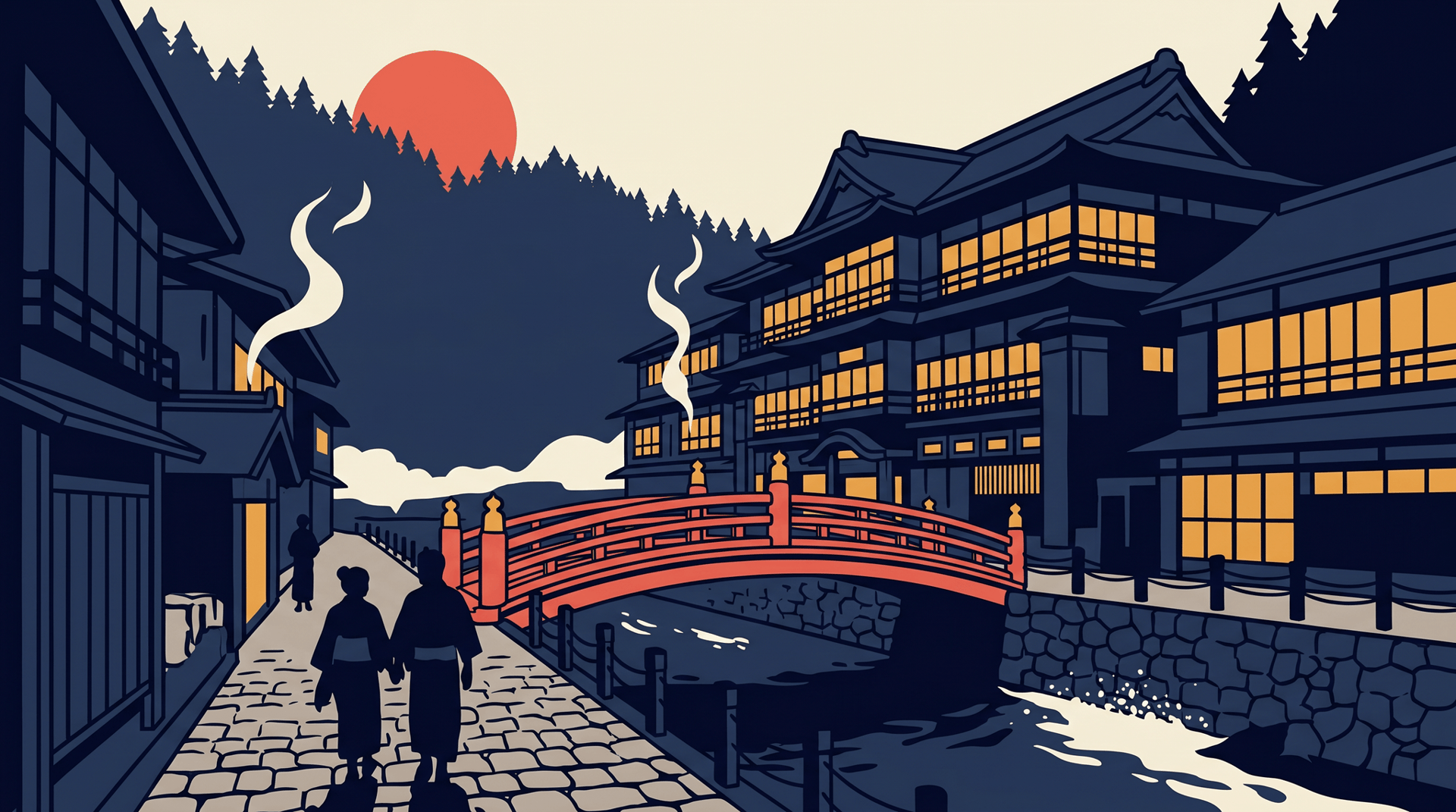

Shima Onsen
Quiet Gunma valley onsen designated 国民保養温泉地 #1 in 1954. The 'forty-thousand cures' name nods to its medicinal reputation.
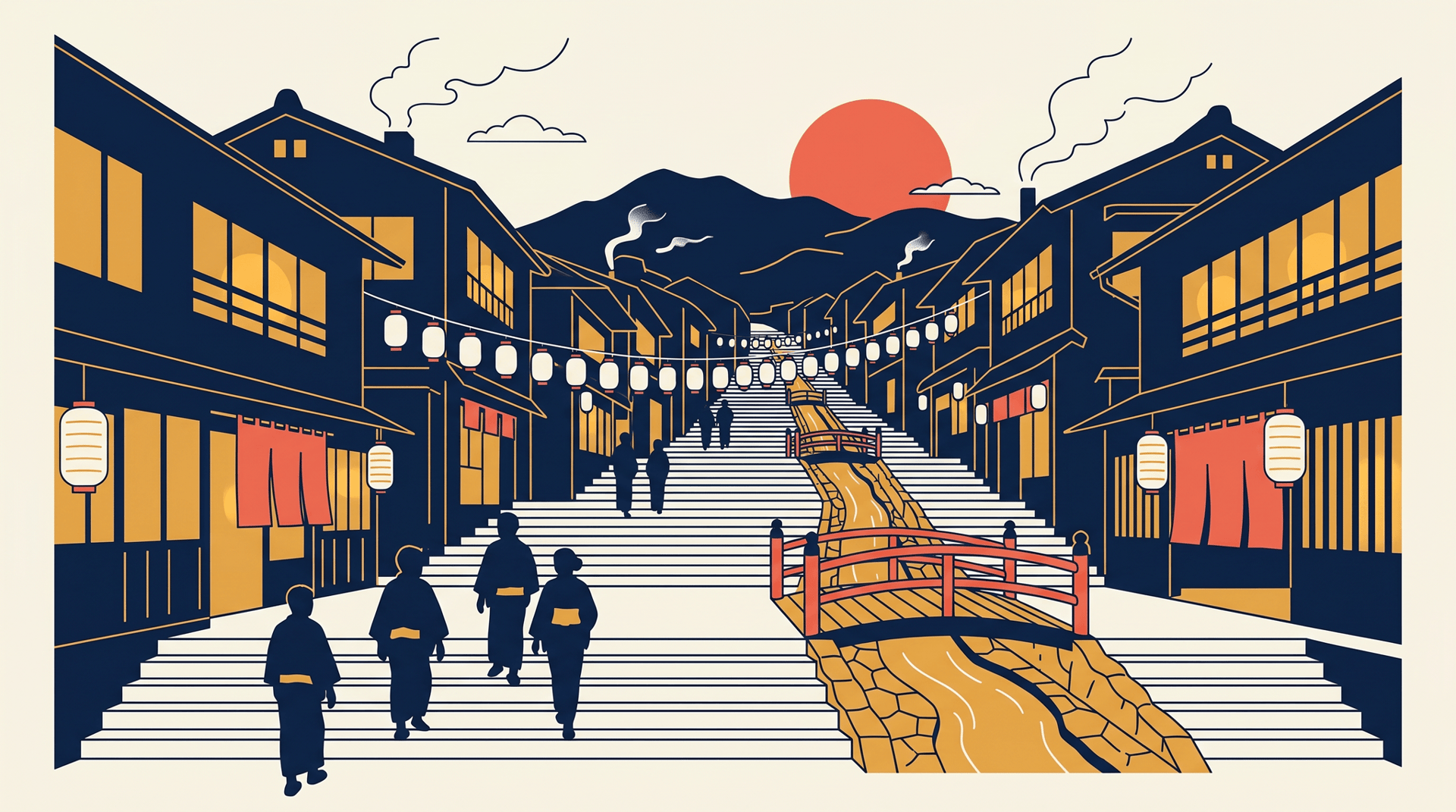

Ikaho Onsen
Gunma hillside onsen built around a 365-step stone staircase. Famous 'gold' (iron-bearing) and 'white' (sulfate) waters.
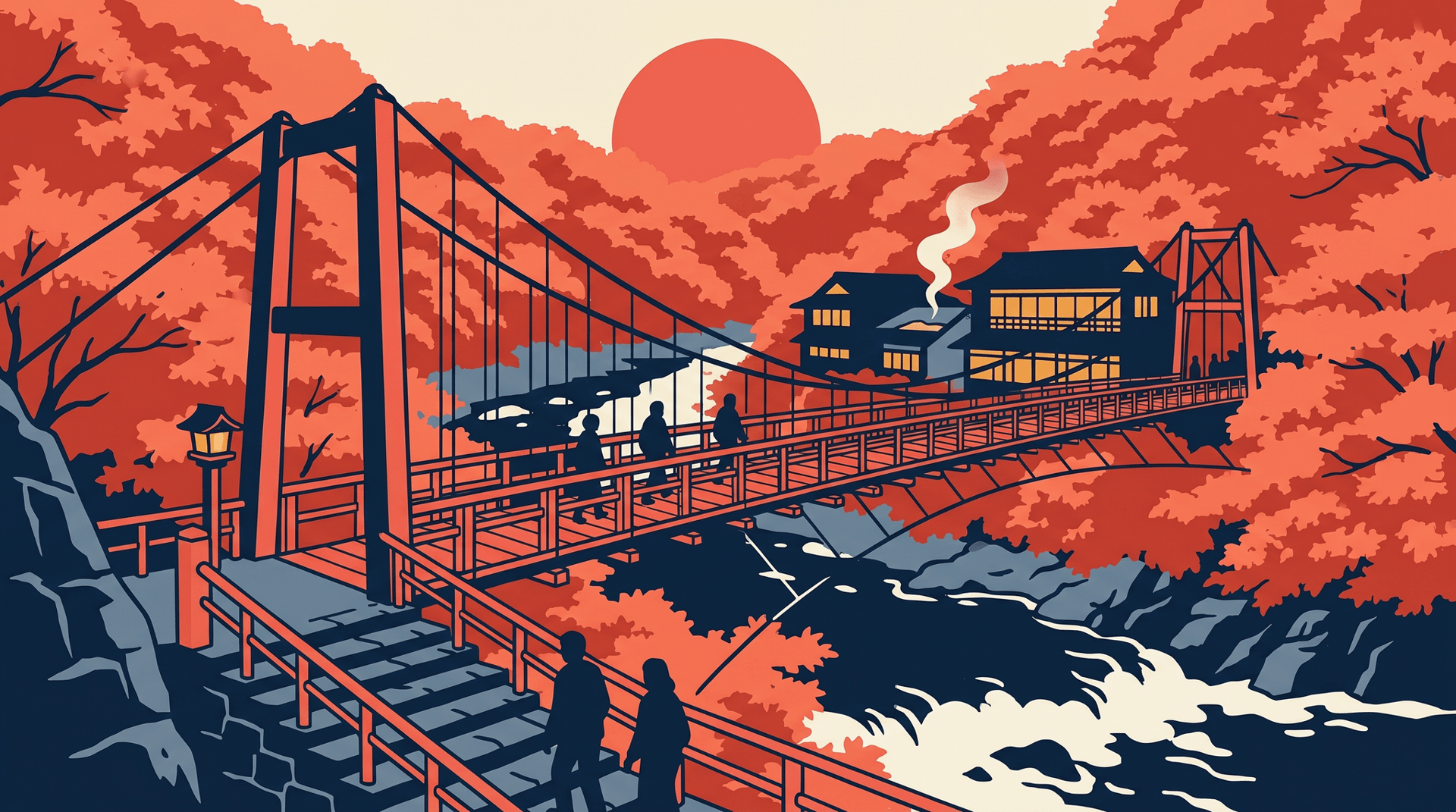

Shiobara Onsen-kyo
Eleven onsen districts strung along a 9-km gorge of the Hoki River in Tochigi. Wide range of spring chemistries within a tight valley.
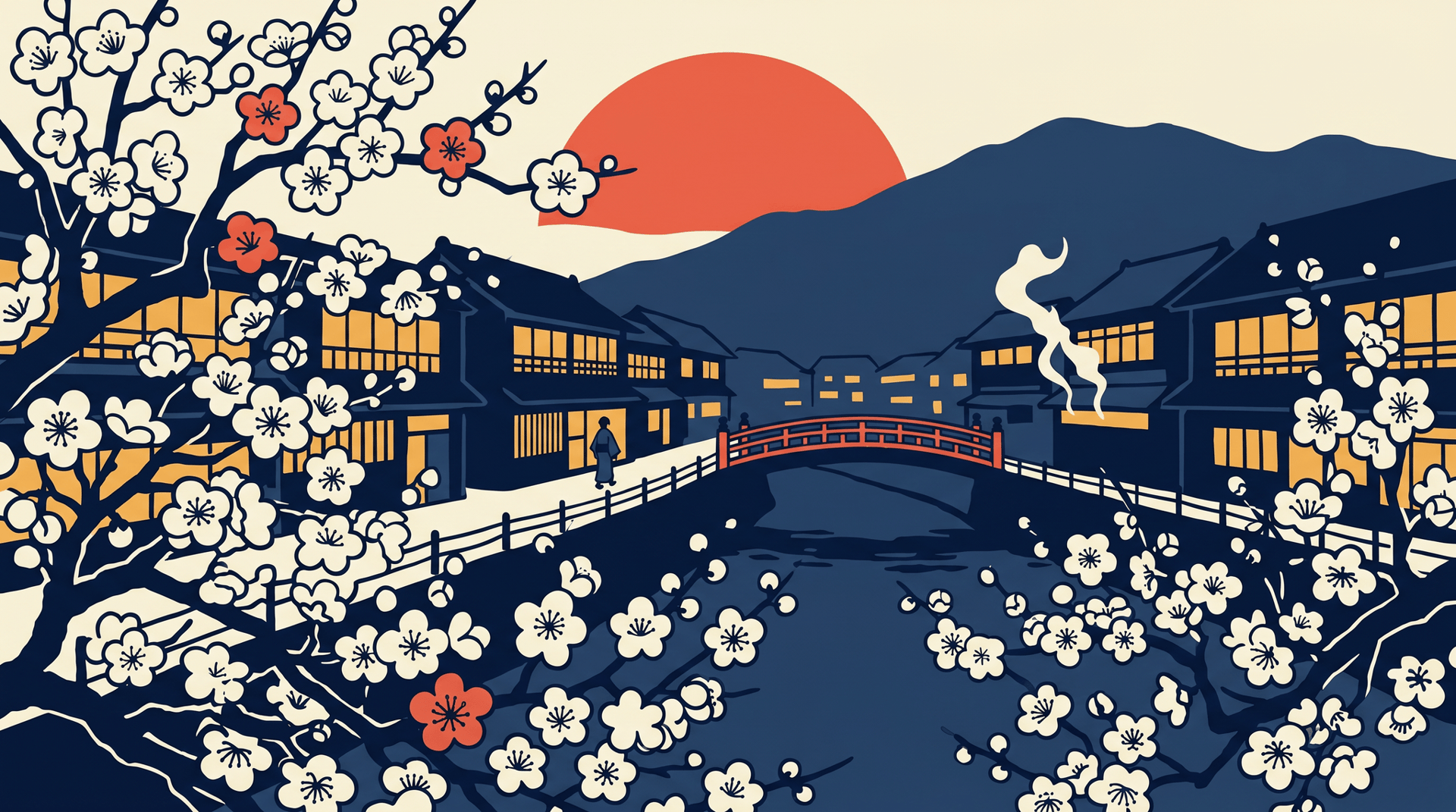

Yugawara Onsen
Quiet Kanagawa onsen in the foothills of the Hakone outer rim, on the Manyoshu-era list of historic baths. Plum blossoms in February.
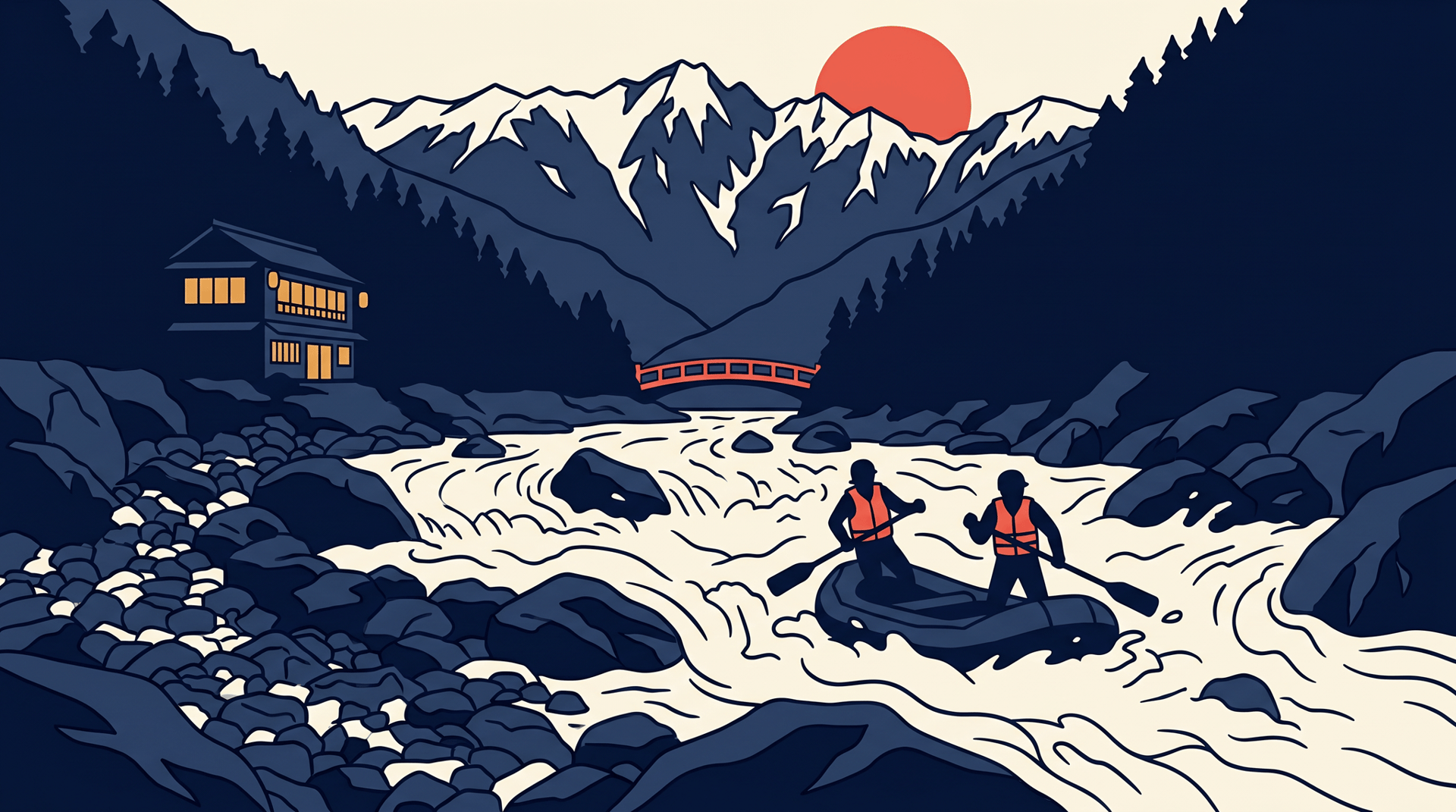

Minakami Onsen-kyo
Group of 18 onsen along the upper Tone River in northern Gunma, surrounded by Tanigawa-dake. Big snow country with skiing, rafting, and rotenburo.
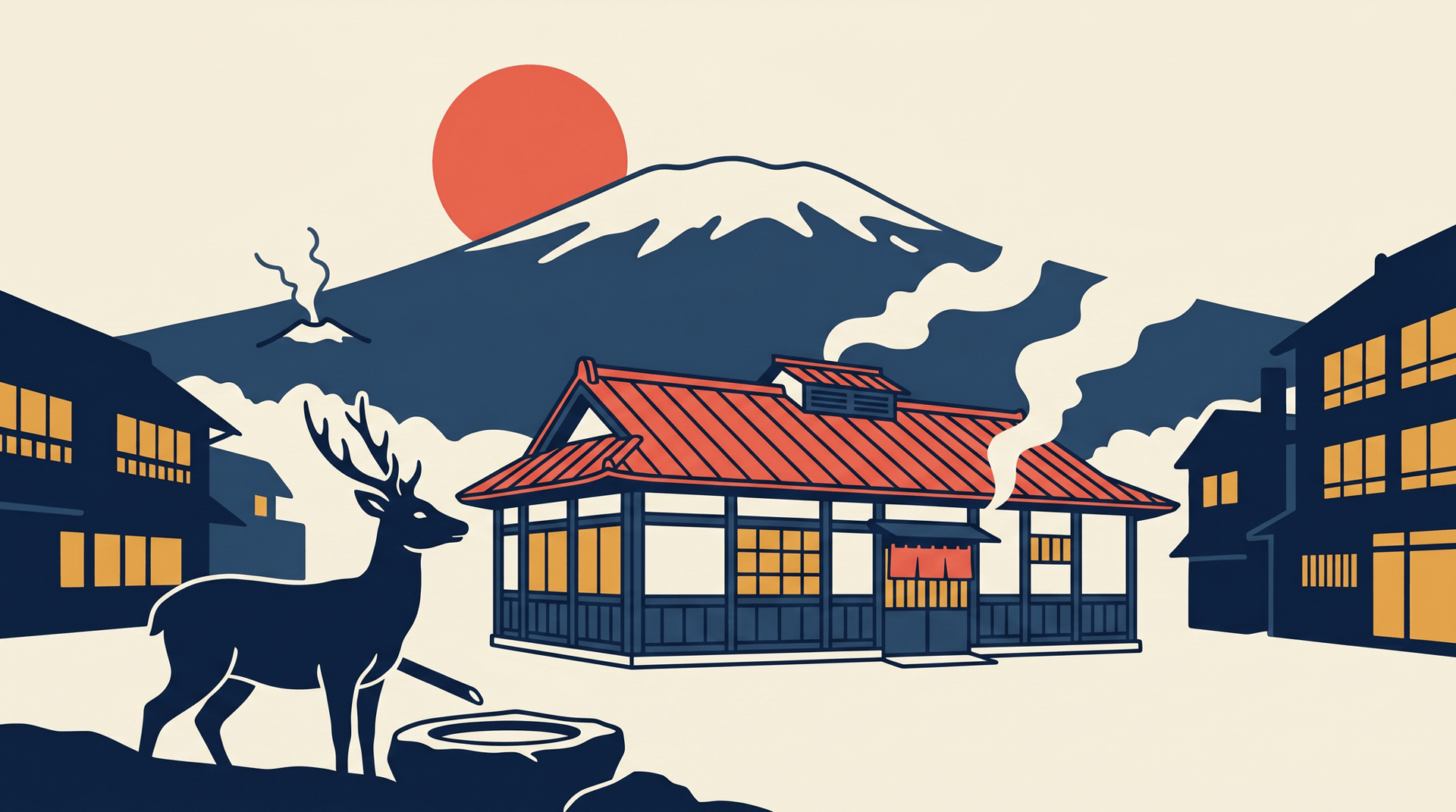

Nasu Onsen-kyo
Onsen group along the foothills of Mount Chausu, with Nasu-Yumoto's milky sulfur waters at its heart.
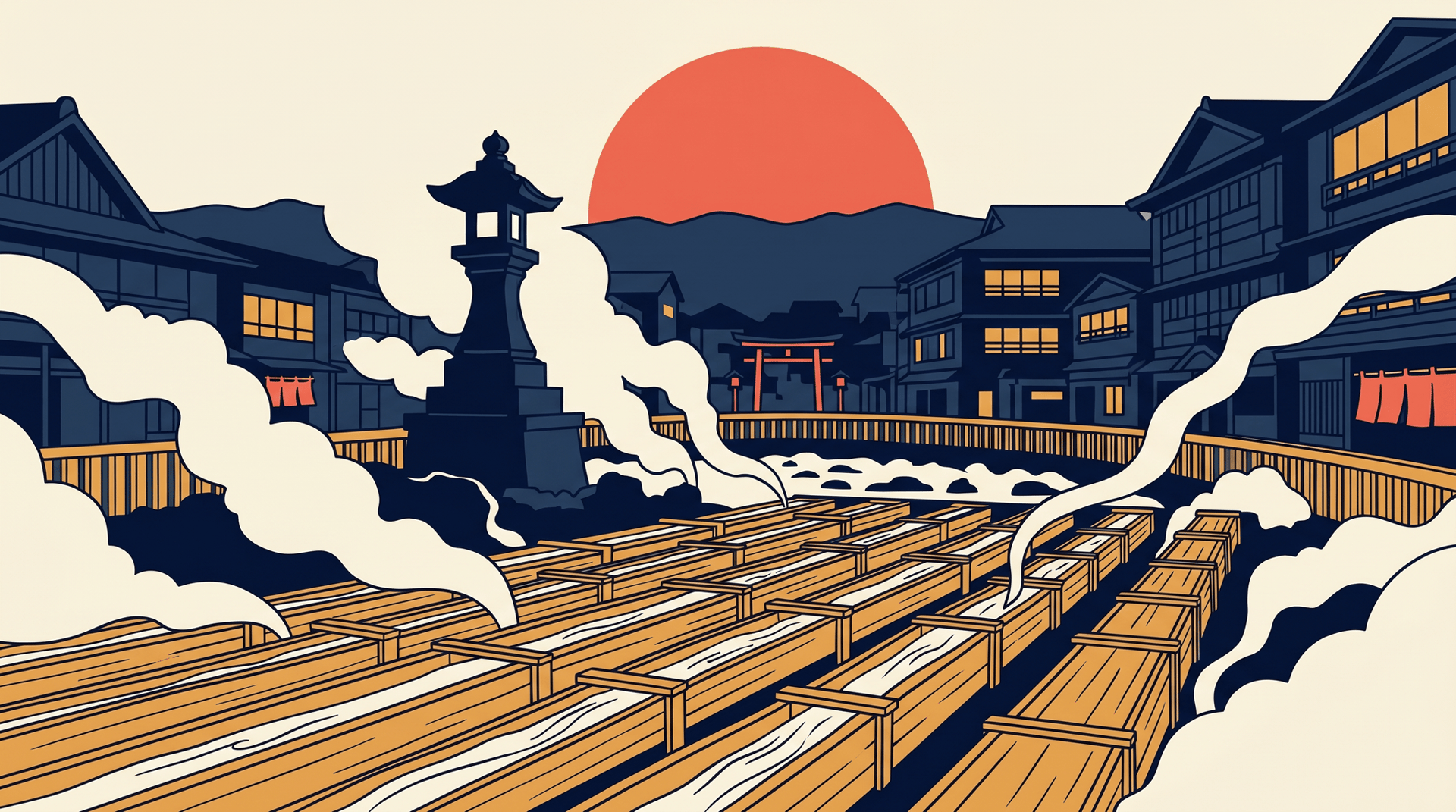

Kusatsu Onsen
One of the three great onsen of Japan (Sanmeisen). Famously hot, acidic waters; the wooden yubatake in the town center funnels source water into cooling channels.
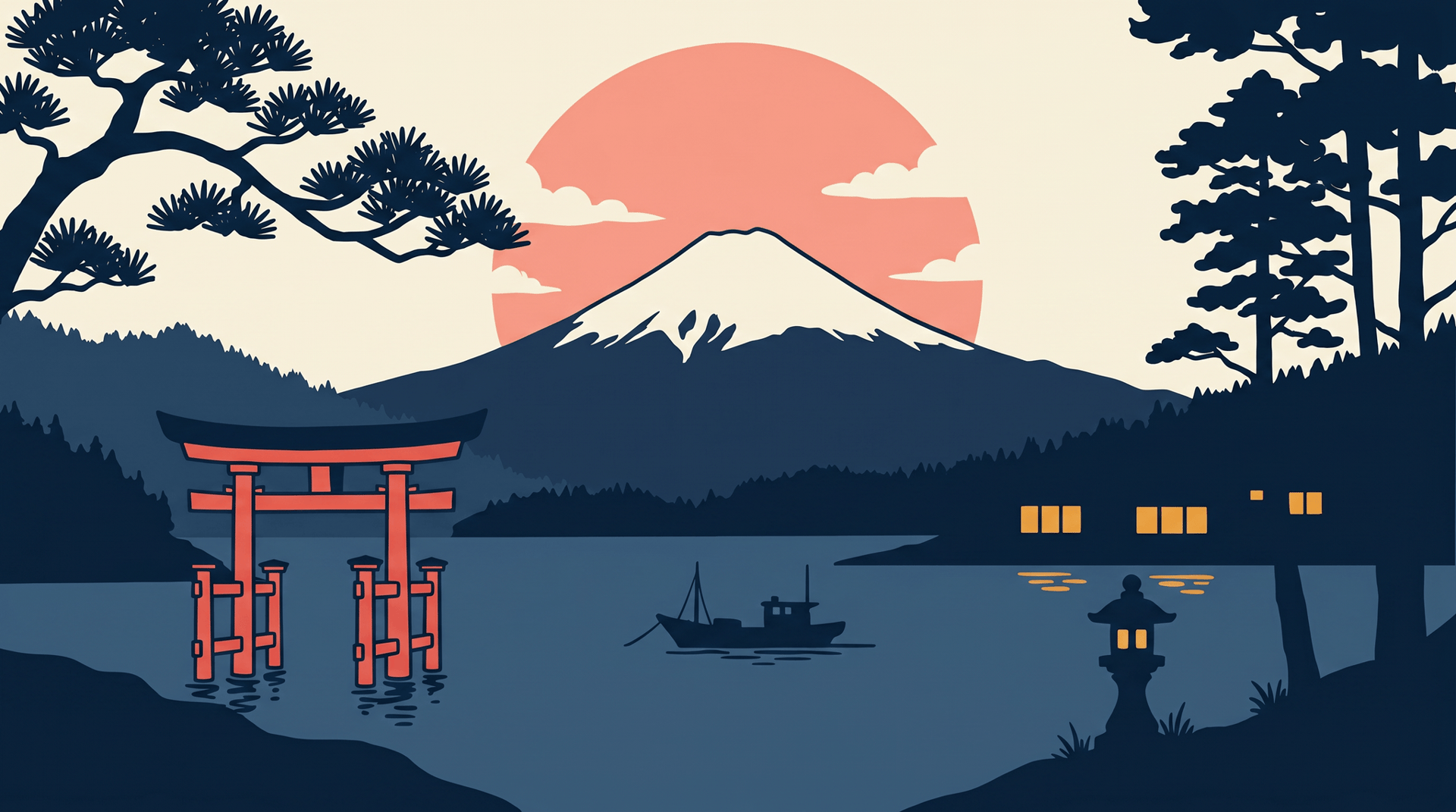

Hakone Onsen
Mountain resort town in Fuji-Hakone-Izu National Park, with Hakone-Yumoto, Miyanoshita, Gora, Sengokuhara and a dozen more sub-areas spread across the caldera.
Chubu
20
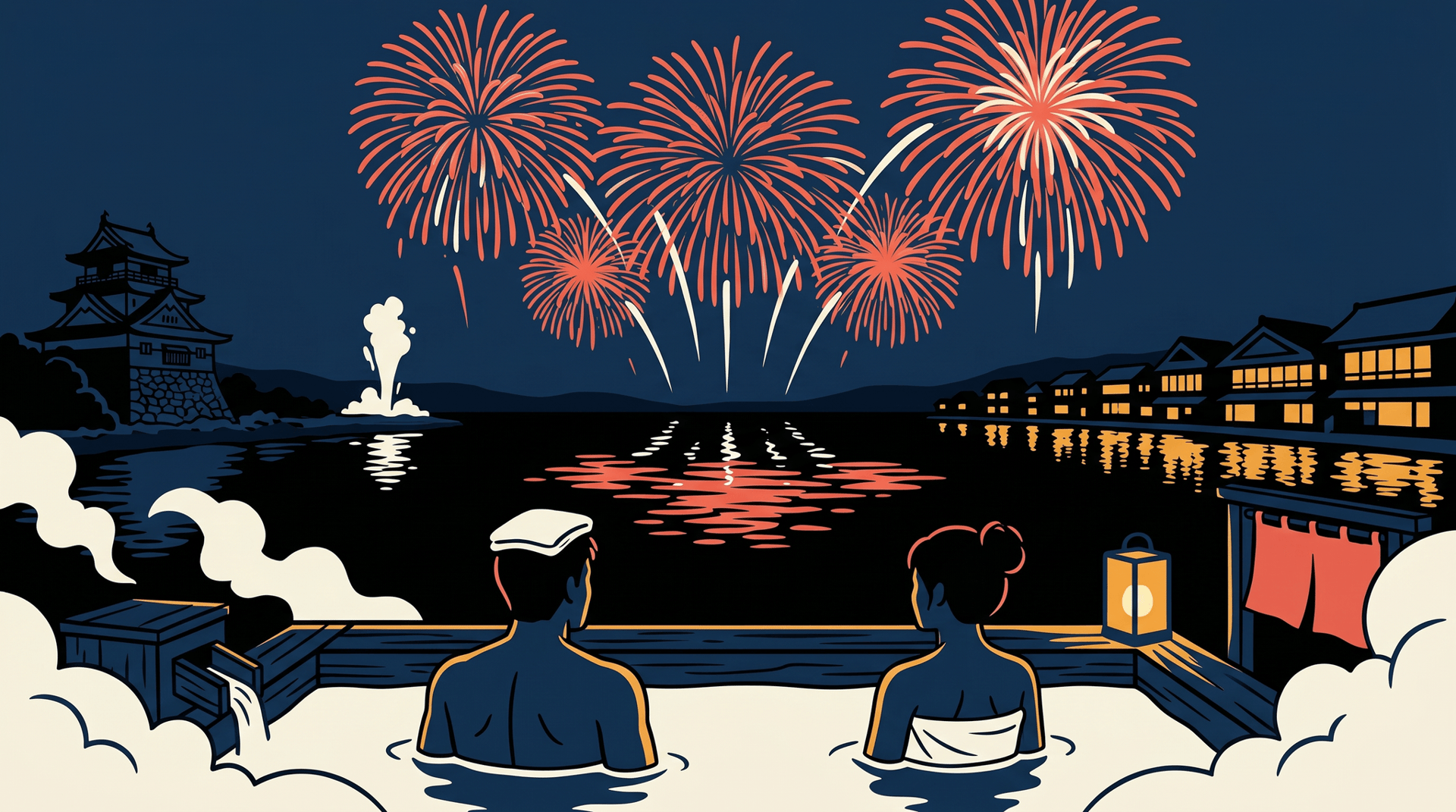

Kamisuwa Onsen
A lakeside spa town on the eastern shore of Lake Suwa, where open-air baths face the water beneath the floating castle of Takashima, a timed geyser, five sake breweries, and the great August lake fireworks.
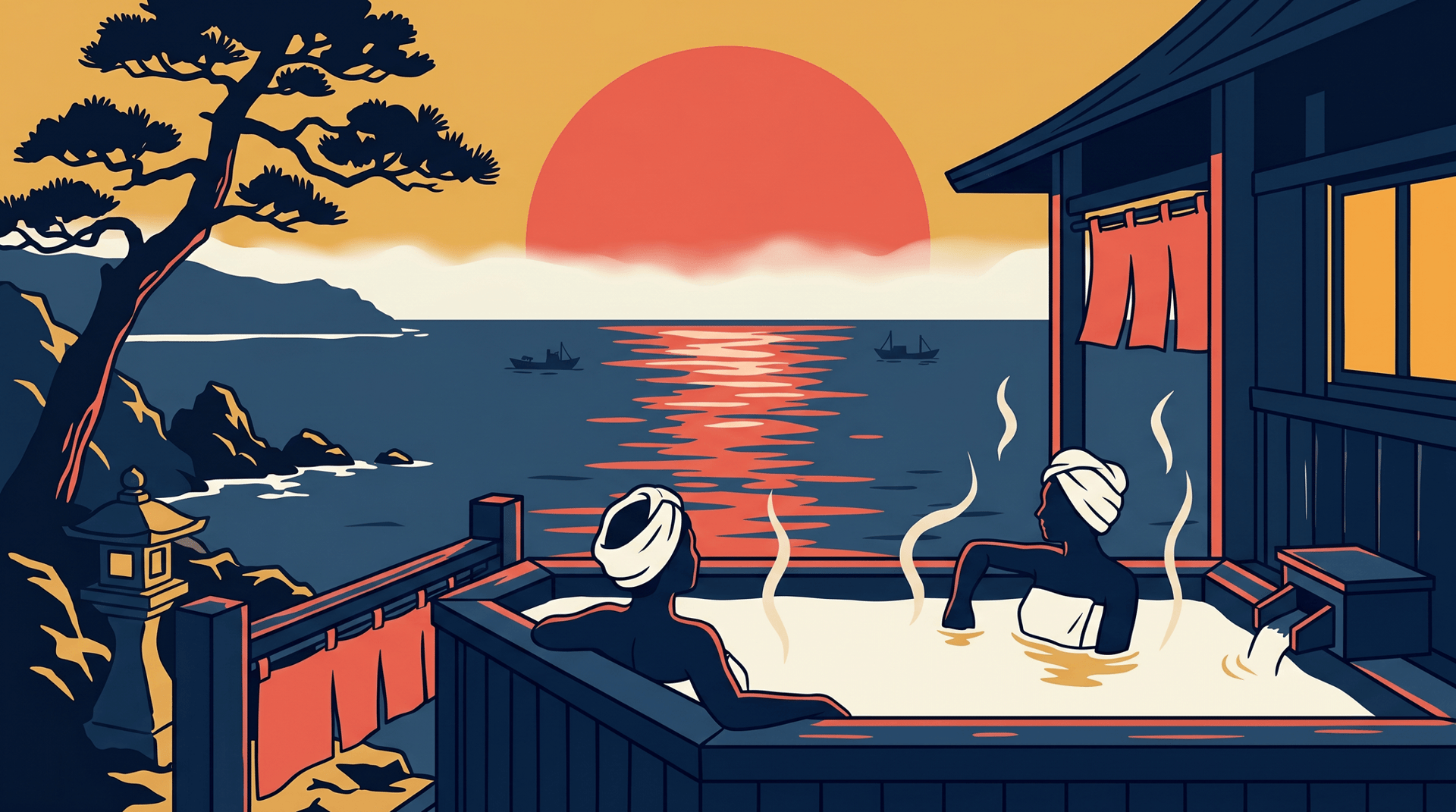

Senami Onsen
On the Sea of Japan coast at Murakami in northern Niigata, Senami Onsen was discovered in 1904 when oil prospectors struck near-boiling water instead of crude. Its 95 °C sodium-chloride springs face straight out to sea, famous for sunsets sinking into the water beside the open-air baths.
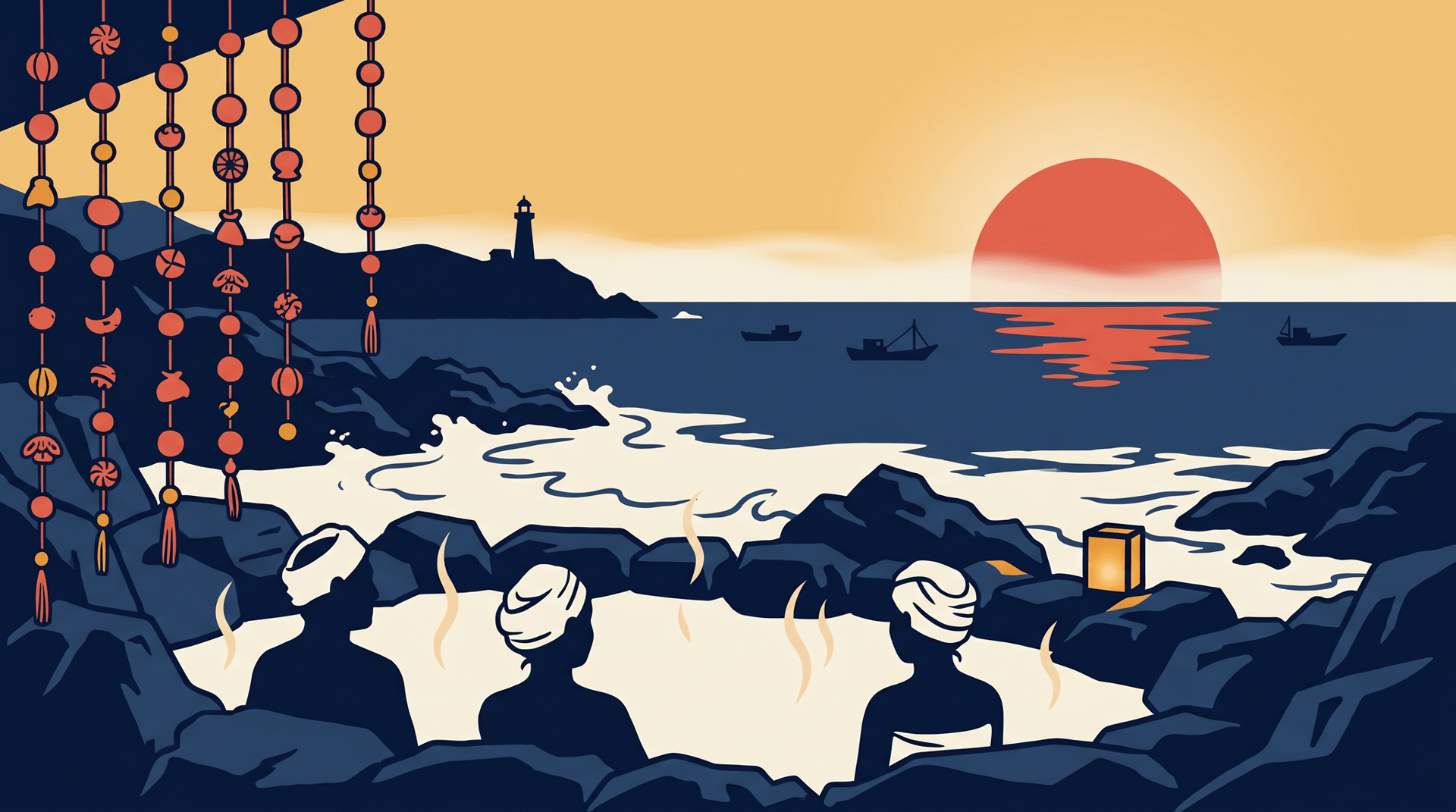

Inatori Onsen
A fishing port on a cape of the Izu Peninsula's east coast, where saline cliffside baths look out over the Pacific. Famous for branded kinmedai snapper and the Hina no Tsurushi-kazari hanging-doll festival, one of Japan's three great tsurushi displays.
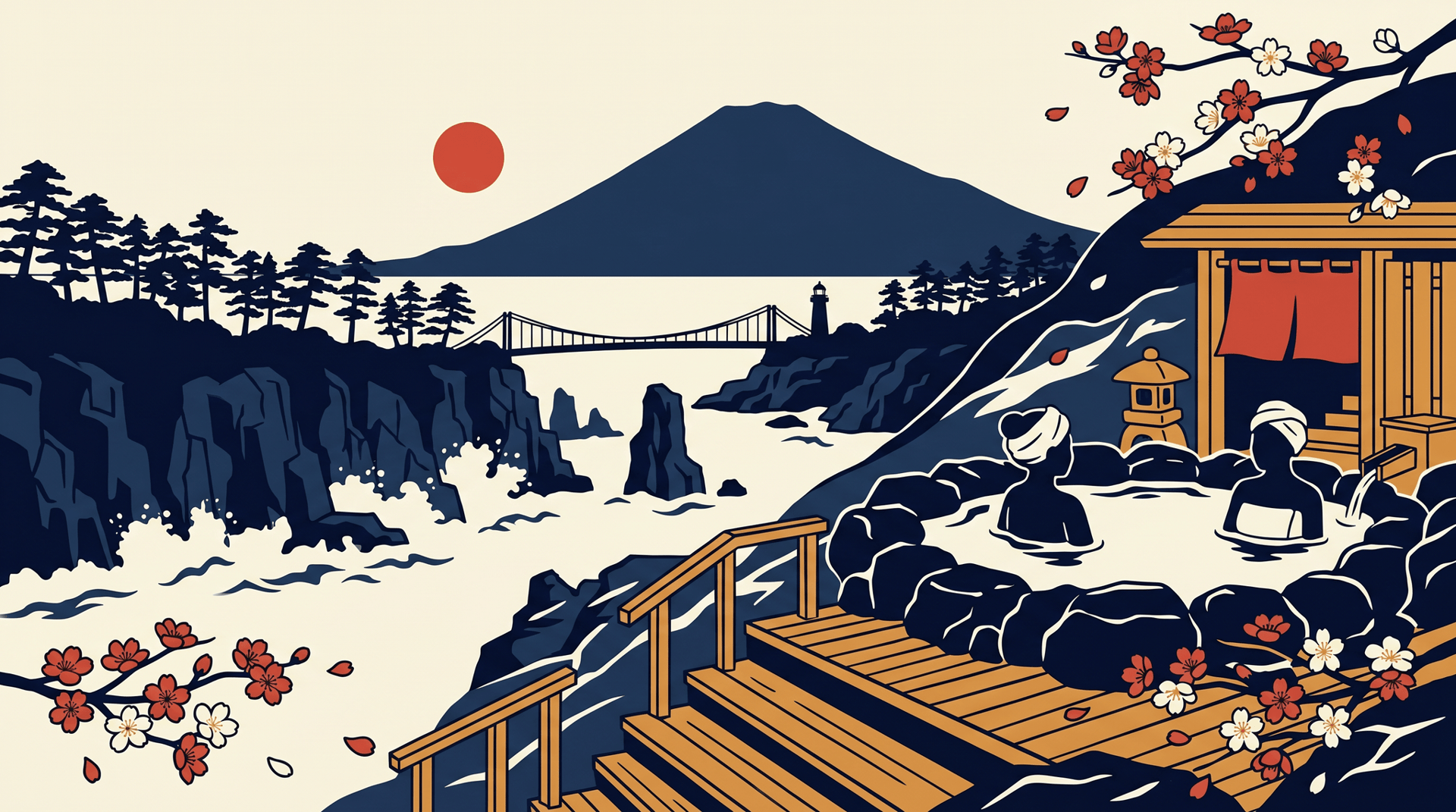

Izukogen Onsen
A planned highland resort above Ito on the eastern Izu Peninsula, laid out in the 1960s on lava from Mt. Omuro, with mild simple-thermal springs, sea-view open-air baths, pensions and small art museums, the Jogasaki Coast, and a cherry-blossom avenue.
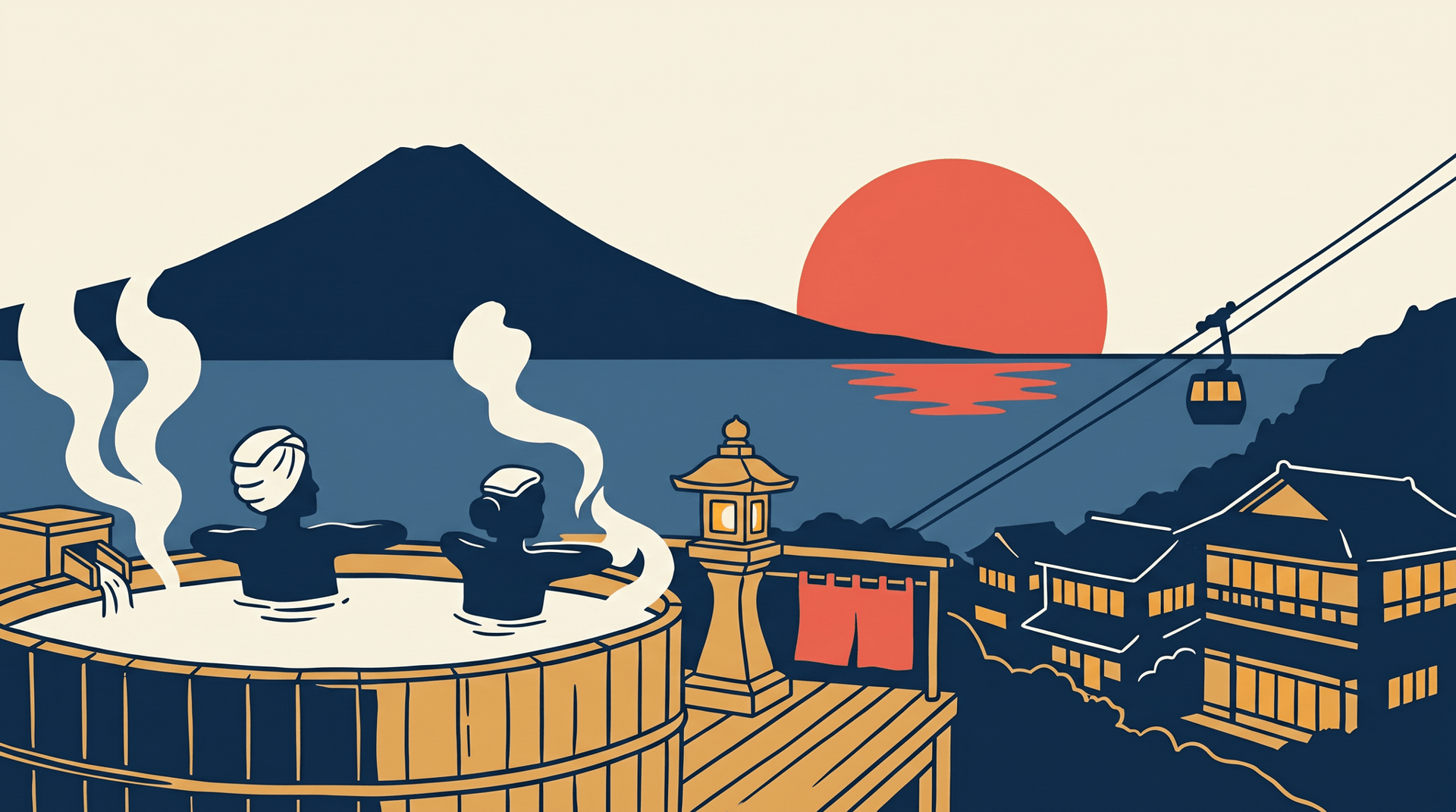

Izunagaoka Onsen
A hot-spring town on the central Izu plain, joining the ancient Kona spring, named in the Azuma Kagami and tied to the Hojo clan, with Meiji-era Nagaoka. Gentle alkaline "beauty water," Mt. Katsuragi's Fuji-and-Suruga-Bay views, and the Genji history of nearby Hirugakojima.
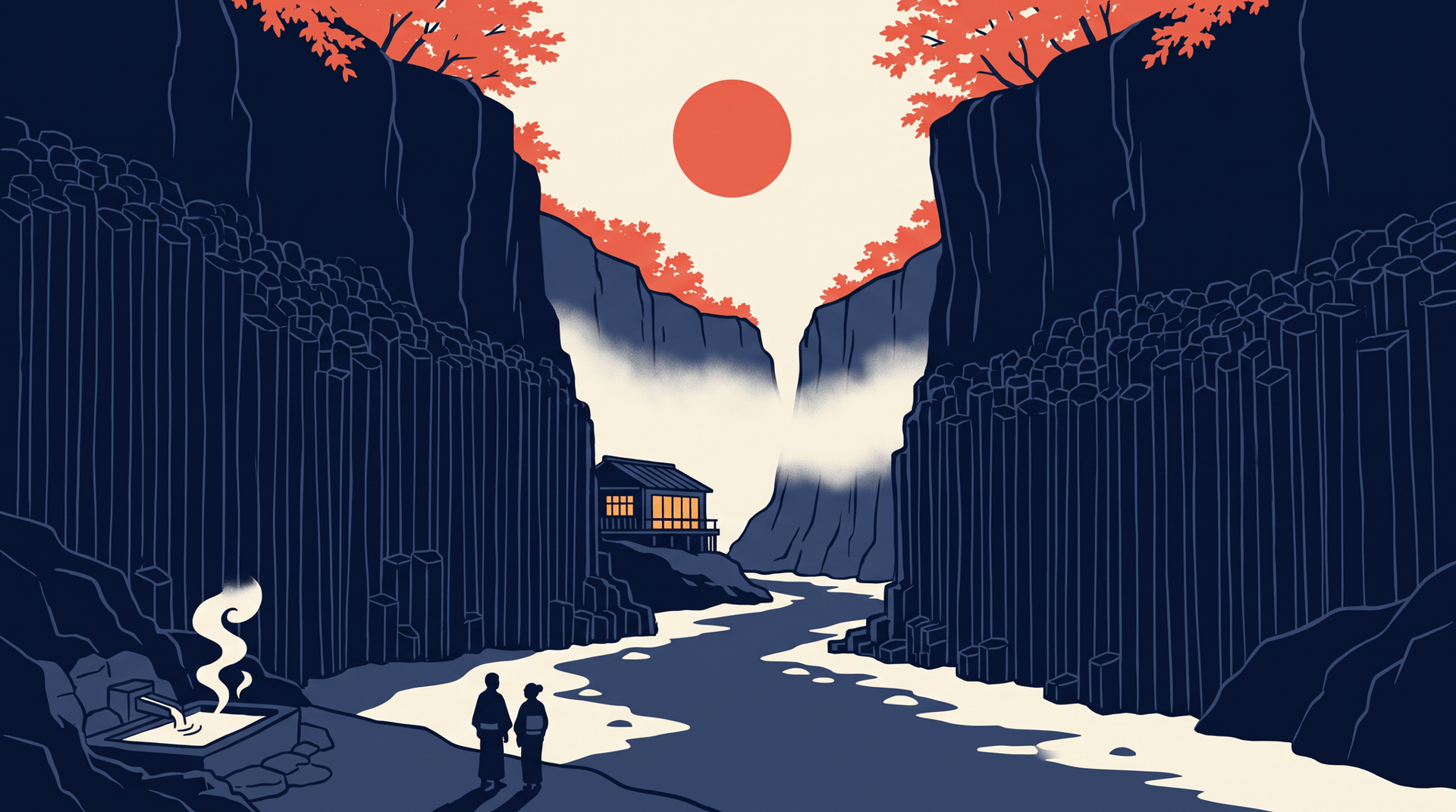

Kiyotsukyo Onsen
Two inns and a foot bath at the mouth of the Kiyotsu gorge, counted among the three great gorges of Japan for the columnar rock walling it in. The sulfur water at Kiyotsukan is said to have been located through a vision of Yakushi Nyorai, and the inn belongs to the association that keeps Japan's hidden hot springs. Most visitors come for the gorge tunnel, whose far chamber holds a shallow pool that mirrors the cliffs.
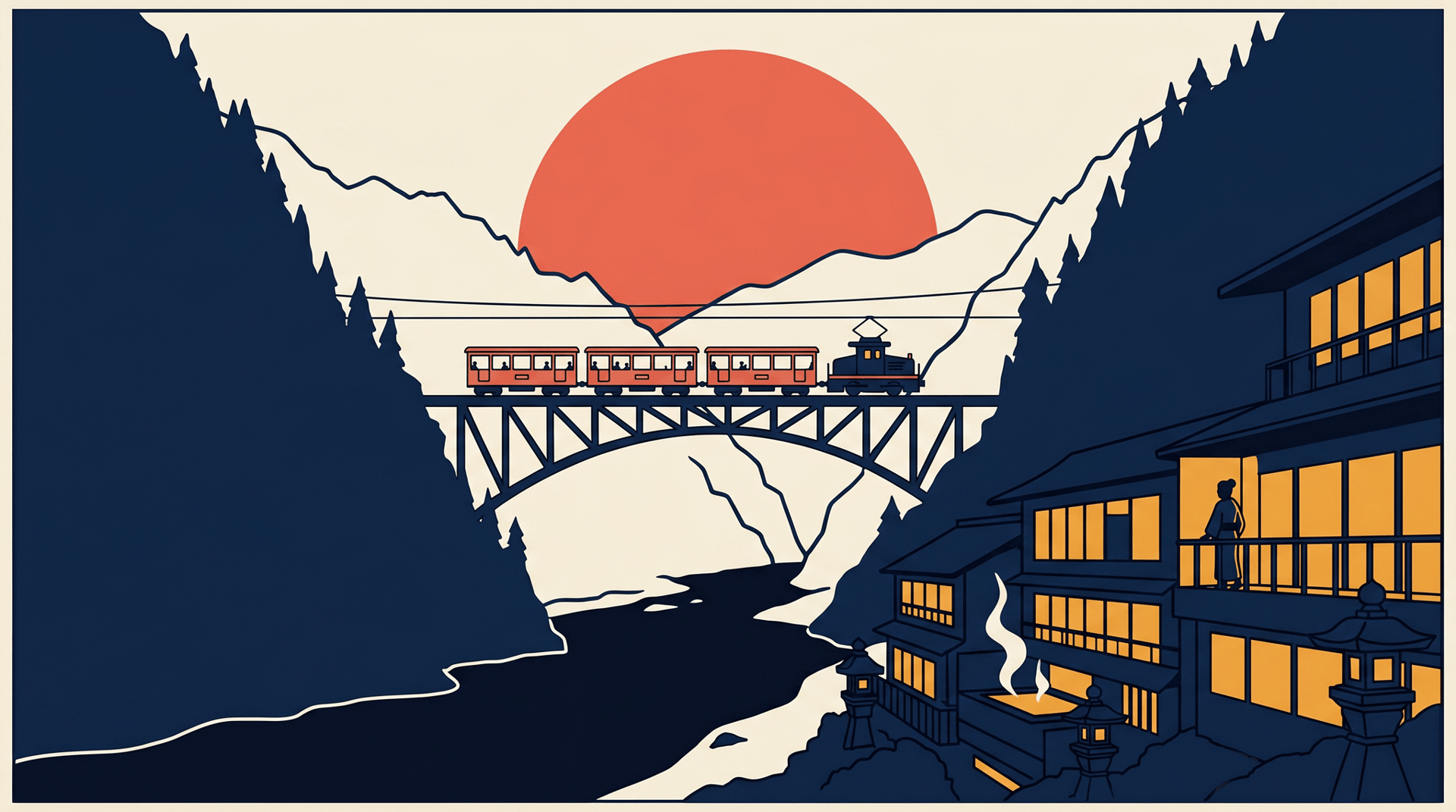

Unazuki Onsen
Gateway to the Kurobe Gorge in Toyama — alkaline simple springs piped 7 km from the head of the gorge.
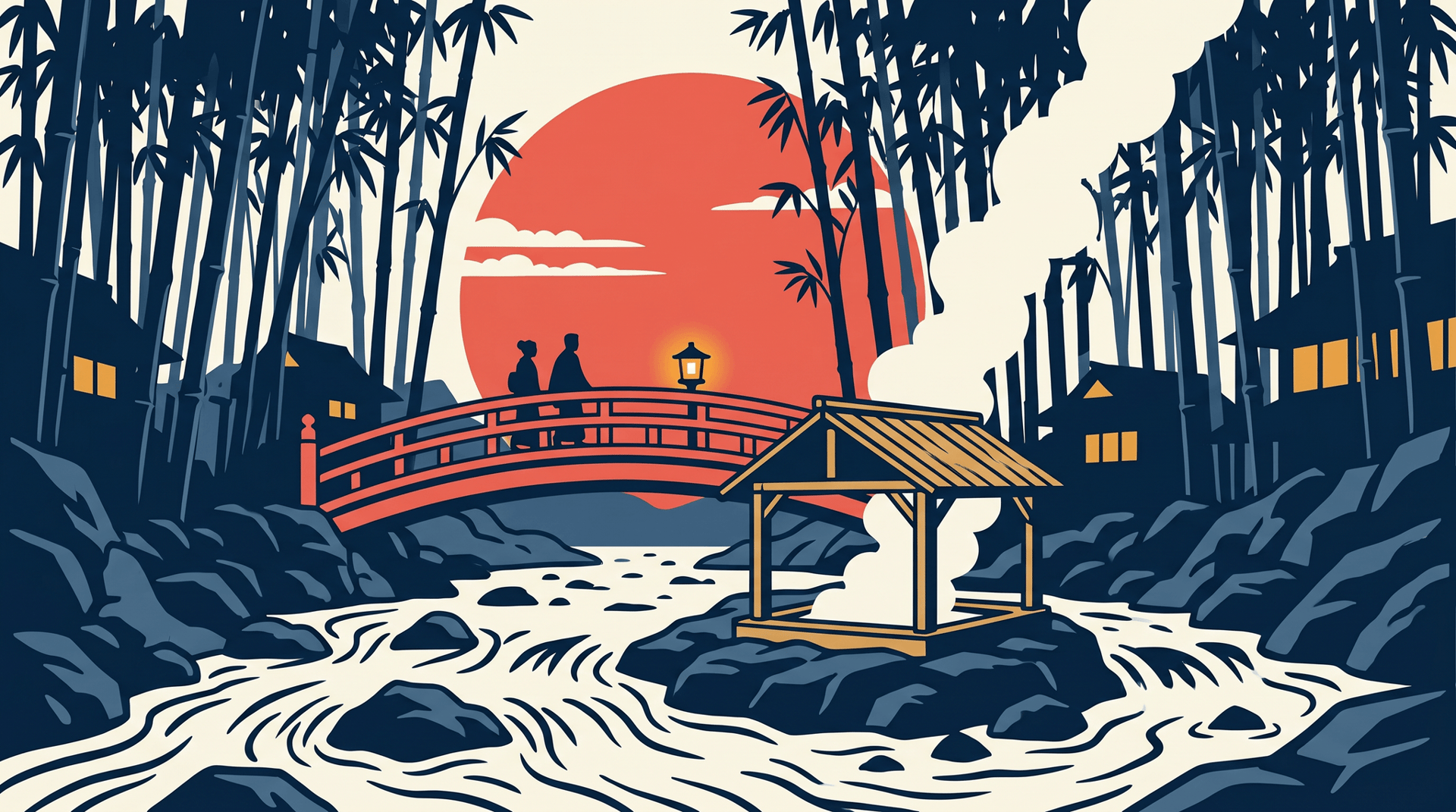

Shuzenji Onsen
1200-year-old onsen at the head of the Katsura River in central Izu. Bamboo grove, red bridges, the historic Shuzenji temple complex.
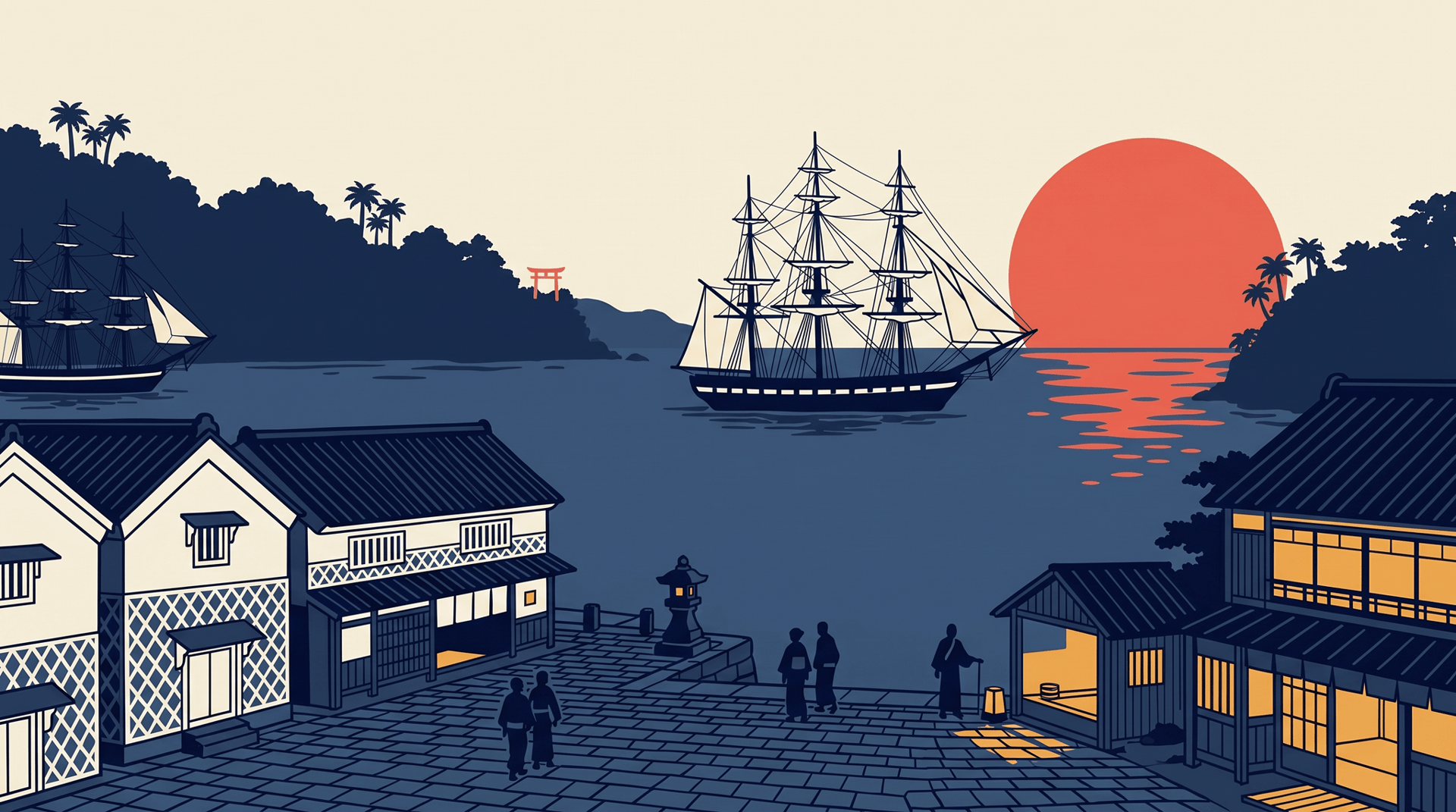

Shimoda Onsen
Port town at the southern tip of the Izu Peninsula, famous as the site of Commodore Perry's 1854 landing. Sulfate springs and Pacific-coast ryokan with views of the Izu islands.
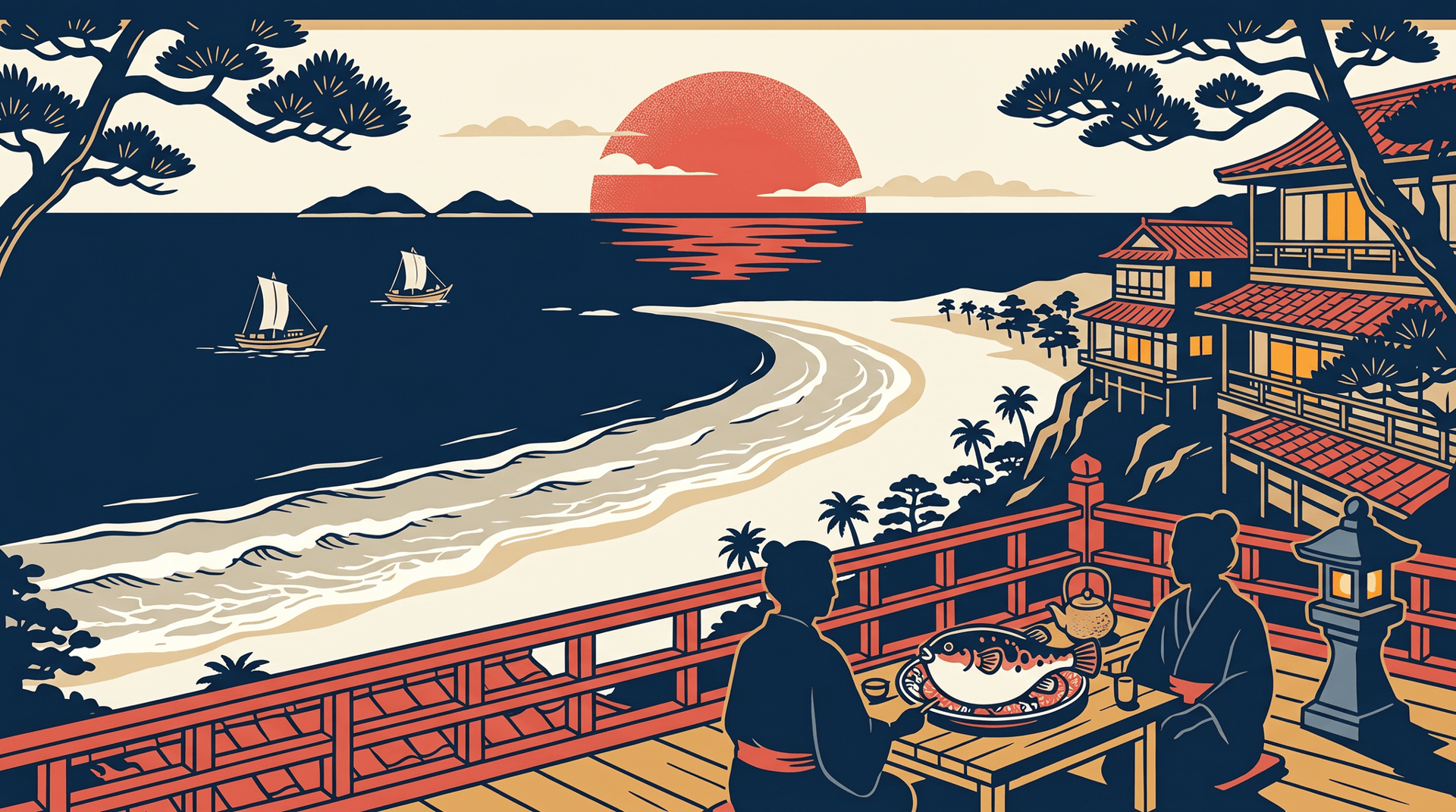

Minamichita Onsen-go
Cluster of seaside onsen on the Chita Peninsula south of Nagoya, with fresh-tuna ryokan, Ise Bay sunsets, and the chloride springs of Utsumi, Toyohama, and Yamami.
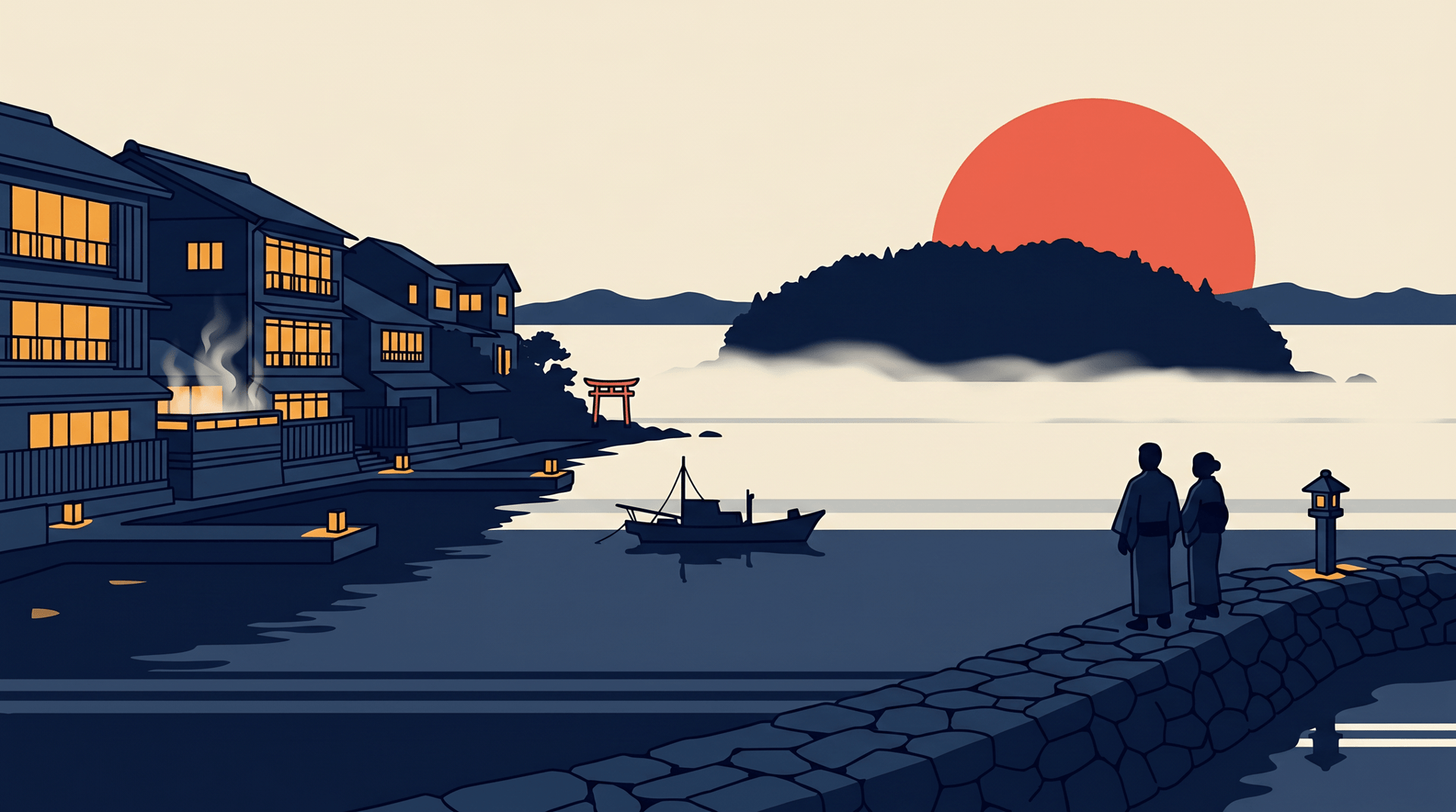

Wakura Onsen
Sea-side onsen on the Noto Peninsula coast (Ishikawa) with 1200 years of history. Strong sodium chloride springs feeding luxury ryokan, including the famed Kagaya inn.
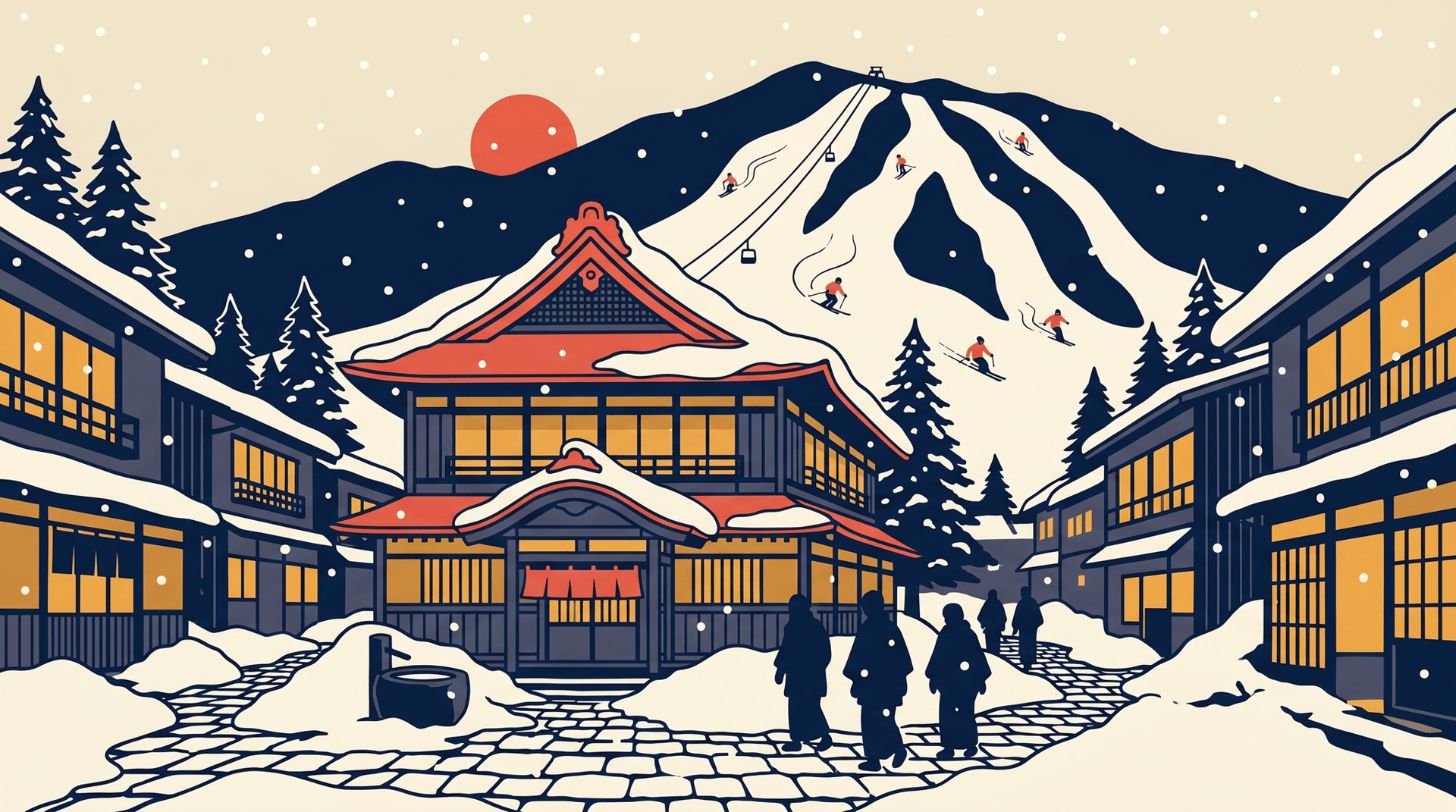

Nozawa Onsen
Snow-country ski resort village with 13 free public bathhouses (sotoyu) maintained by the residents themselves.
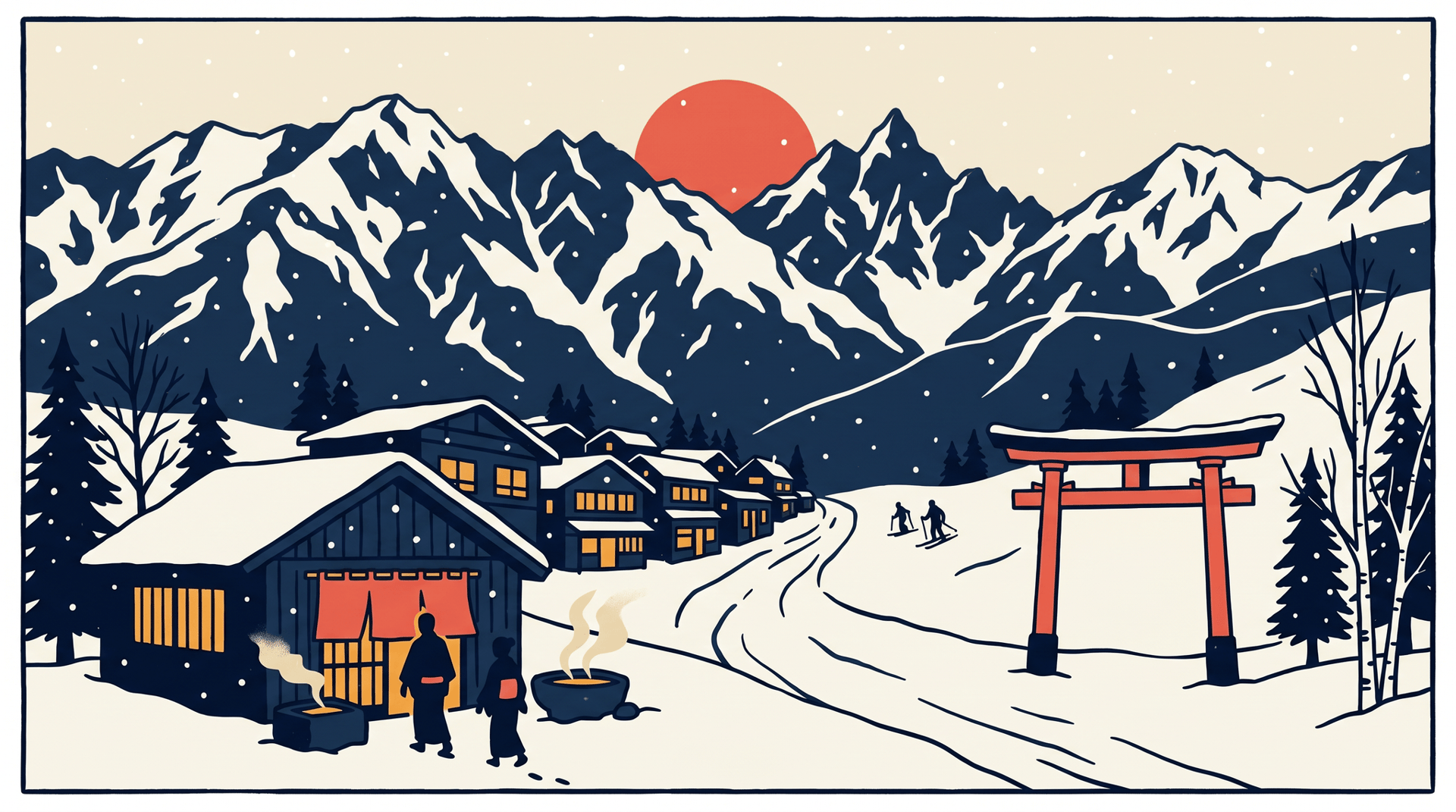

Hakuba-Happo Onsen
Ski-resort onsen at the base of the Hakuba Happo-One slopes, in the Northern Japanese Alps.
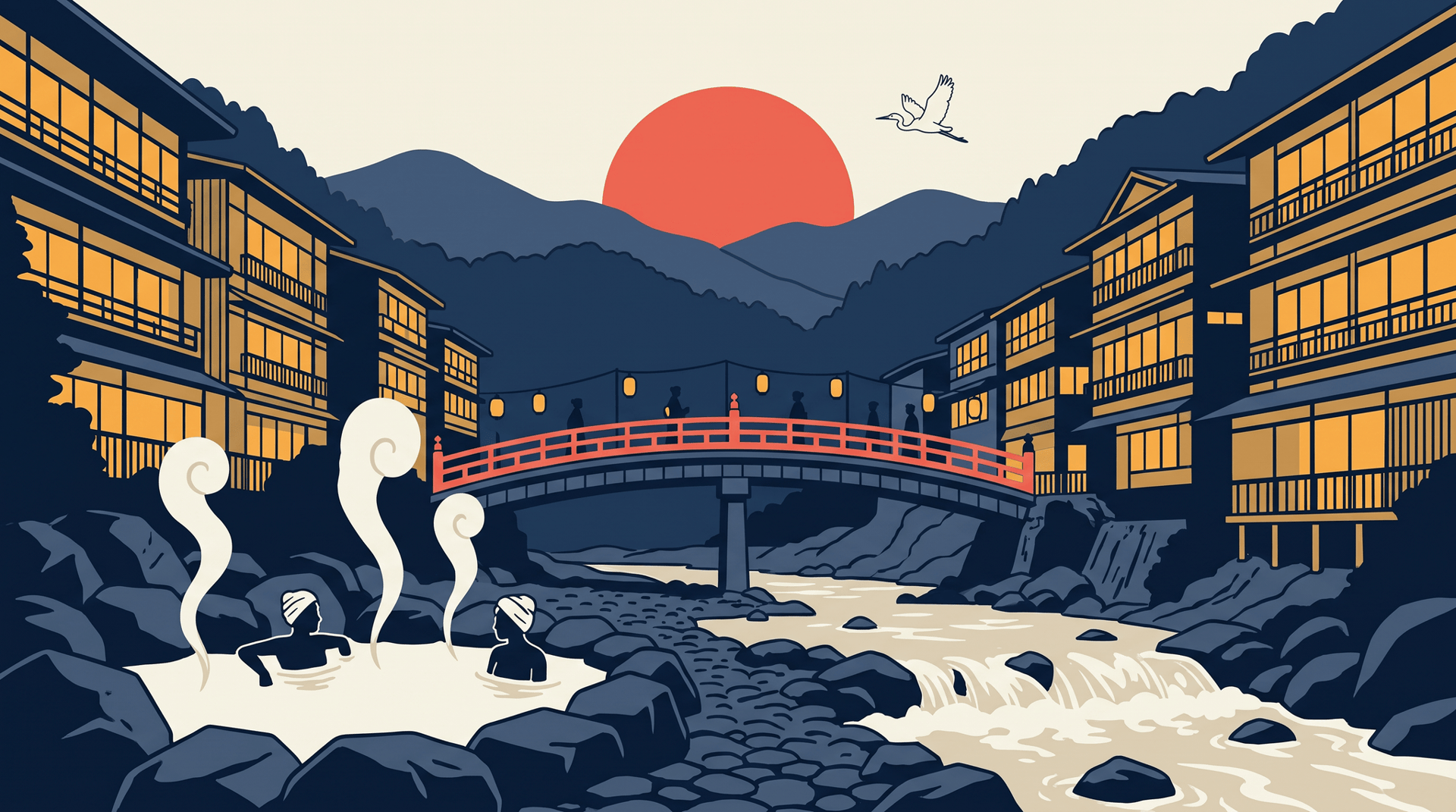

Gero Onsen
One of Japan's three great onsen (Sanmeisen). Alkaline springs along the Hida River, with a free outdoor bath in the riverbed.
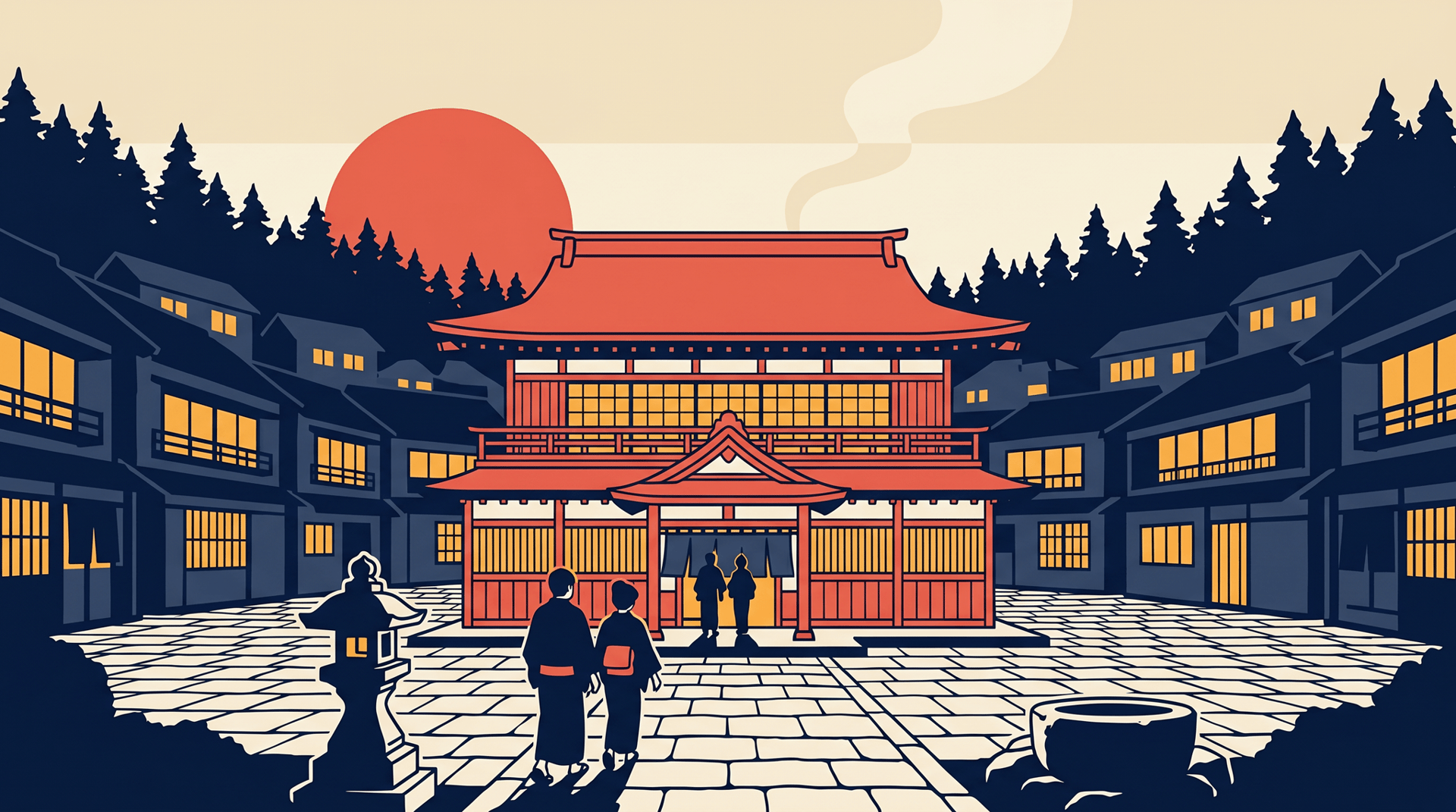

Kaga Onsen-go
Group of four historic spa towns in southern Ishikawa: Yamashiro, Yamanaka, Awazu, and Katayamazu. Each has its own character but shares the Kaga lacquerware tradition.
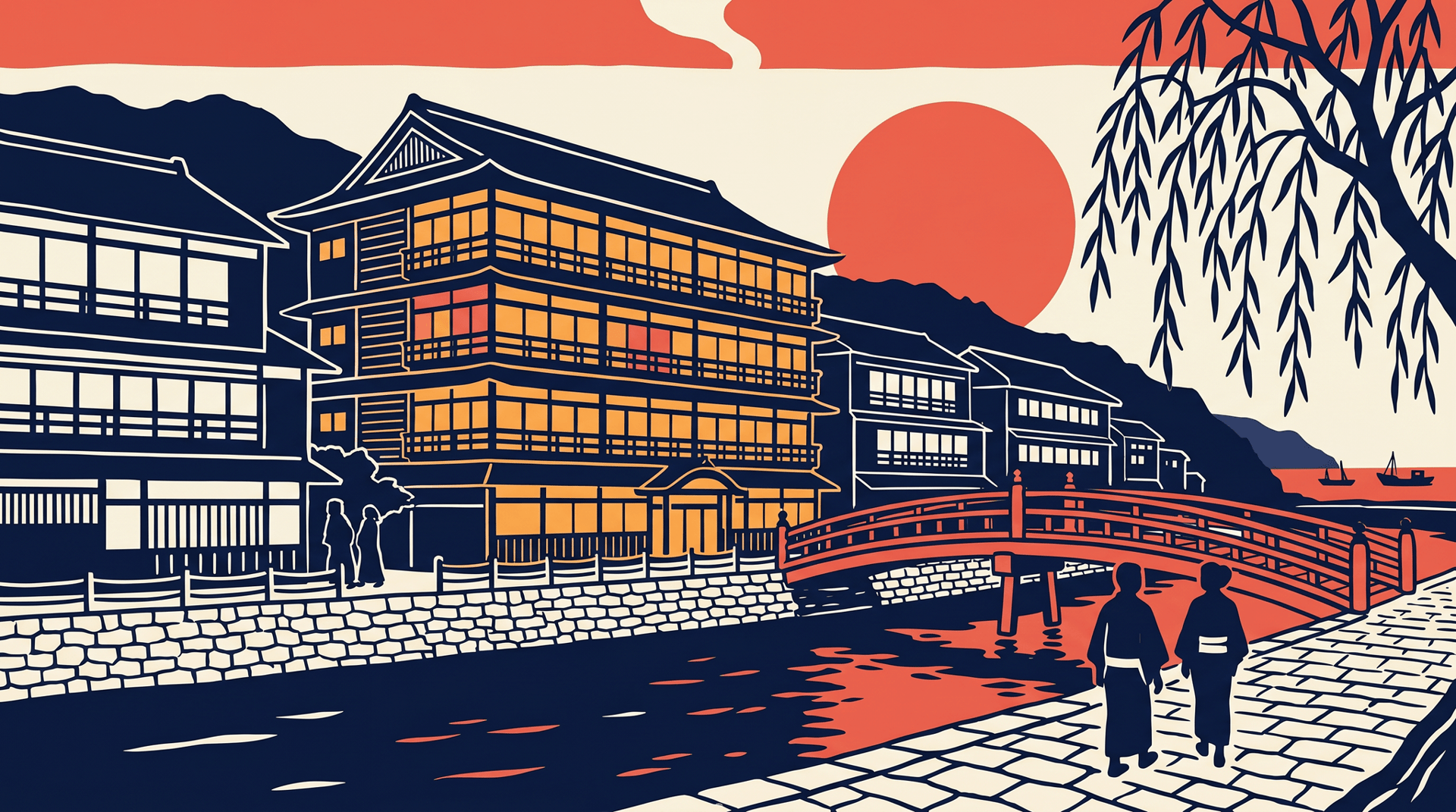

Ito Onsen
Coastal Izu resort with a long Edo-period bathing history. Famous for the wooden Tokaikan inn, sodium chloride springs, and fresh sashimi at the morning market.
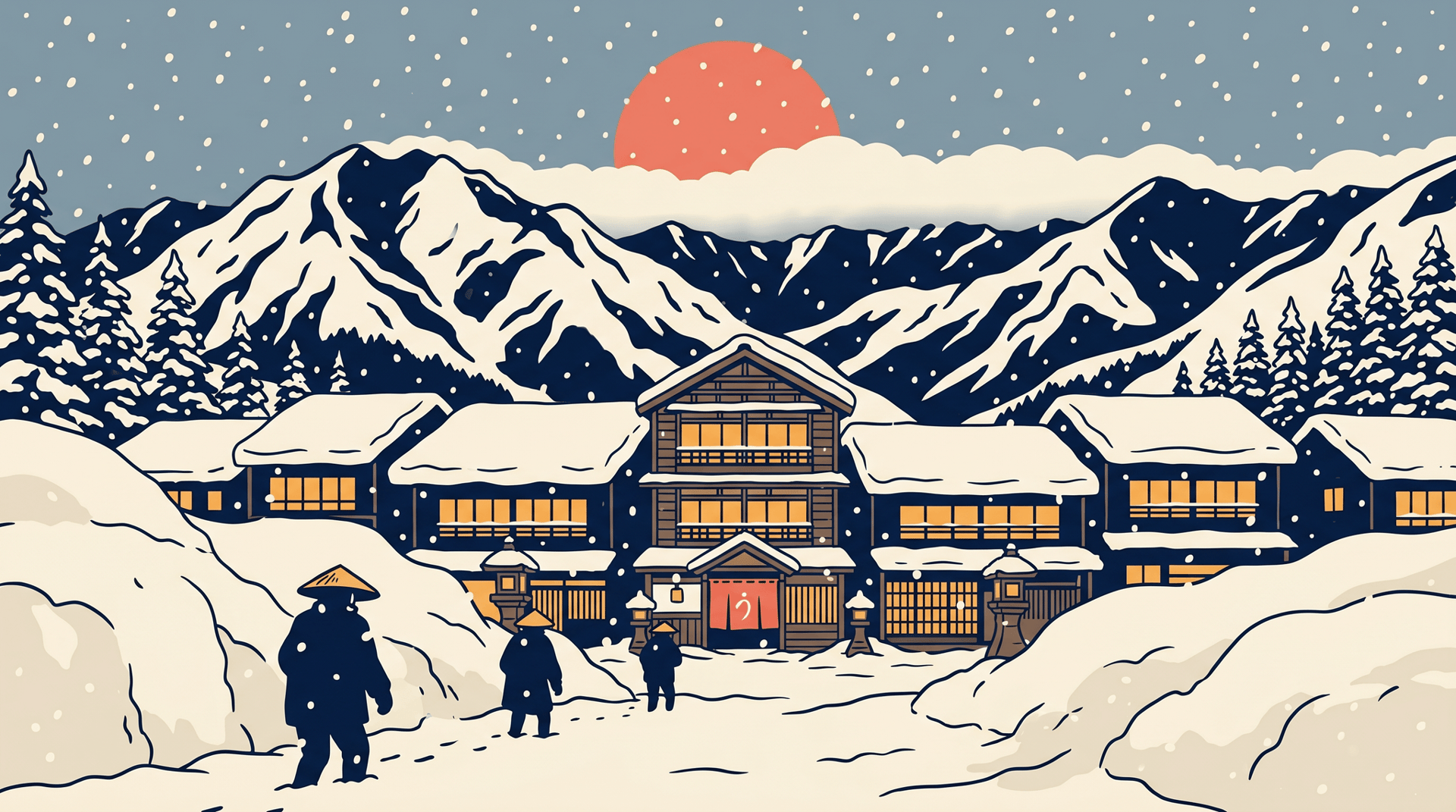

Echigo-Yuzawa Onsen-kyo
Ski-and-onsen town on the Joetsu Shinkansen, immortalized by Kawabata's 'Snow Country'. Cluster of 10+ onsen along the Uono Valley.
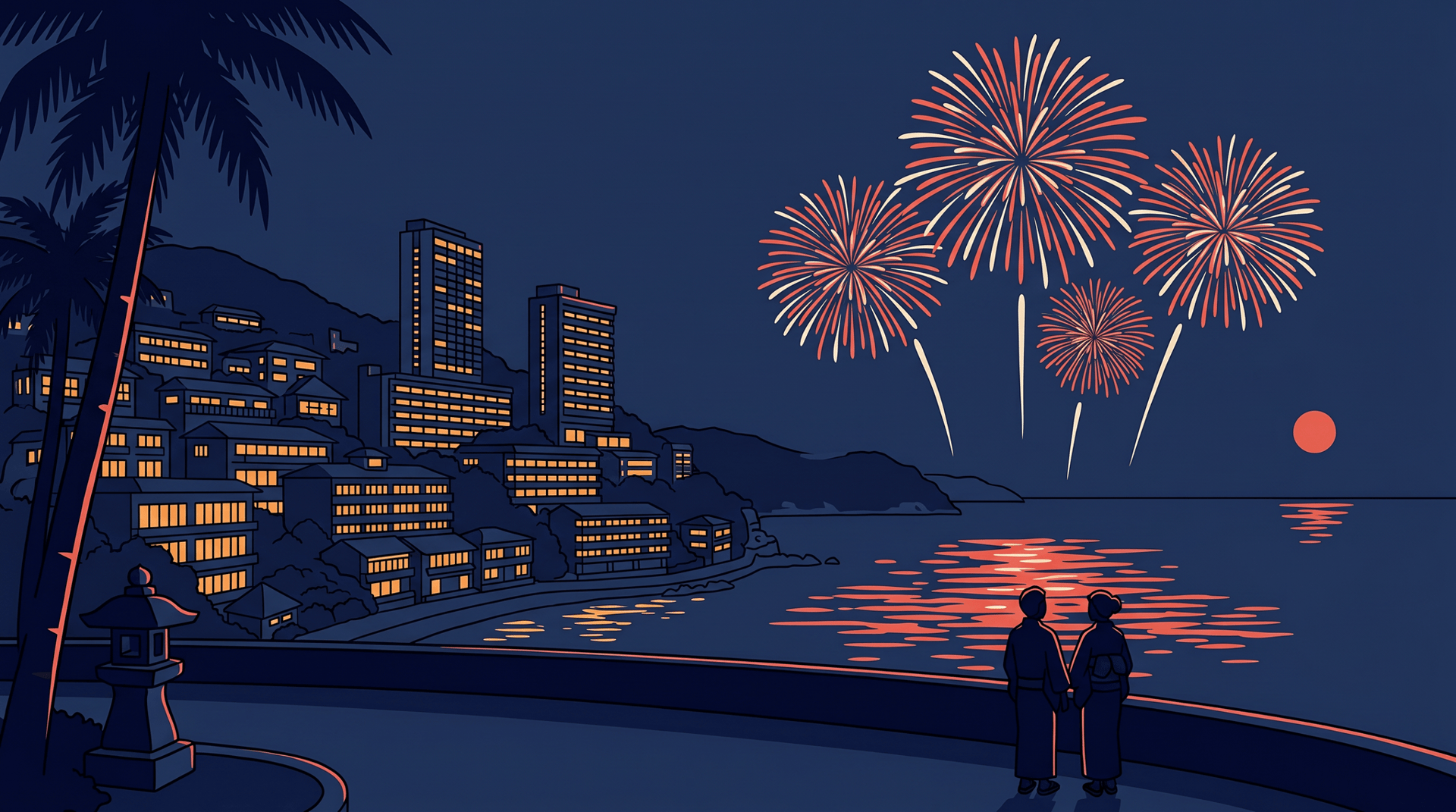

Atami Onsen
Seaside city on the Izu Peninsula, an hour from Tokyo by Shinkansen. Coastal sodium chloride springs; fireworks over Sagami Bay in summer.
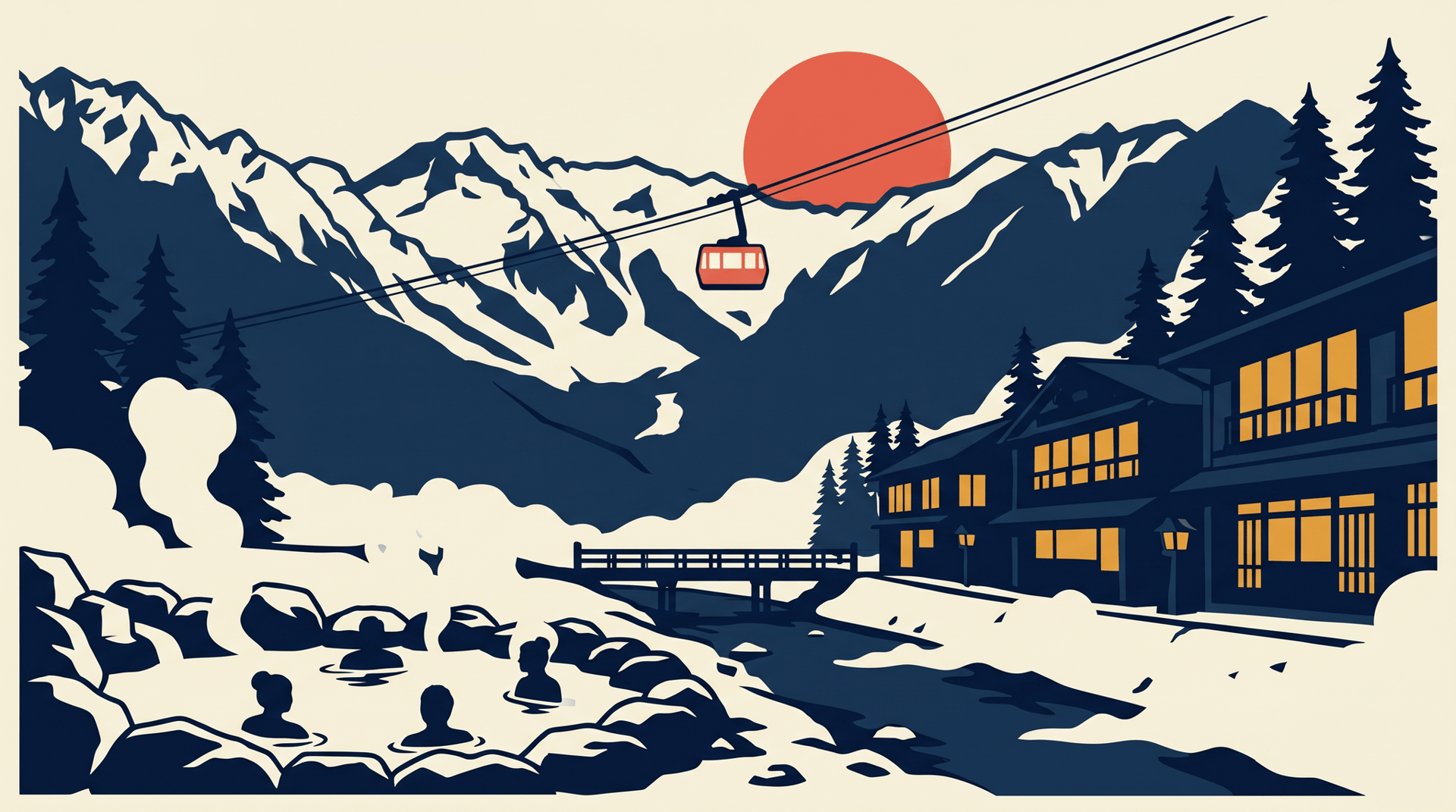

Okuhida Onsen-go
Five mountain hamlets (Hirayu, Fukuji, Shin-Hirayu, Tochio, Shin-Hotaka) in the northern Japanese Alps. Famous for outdoor baths with views of the Hotaka range.
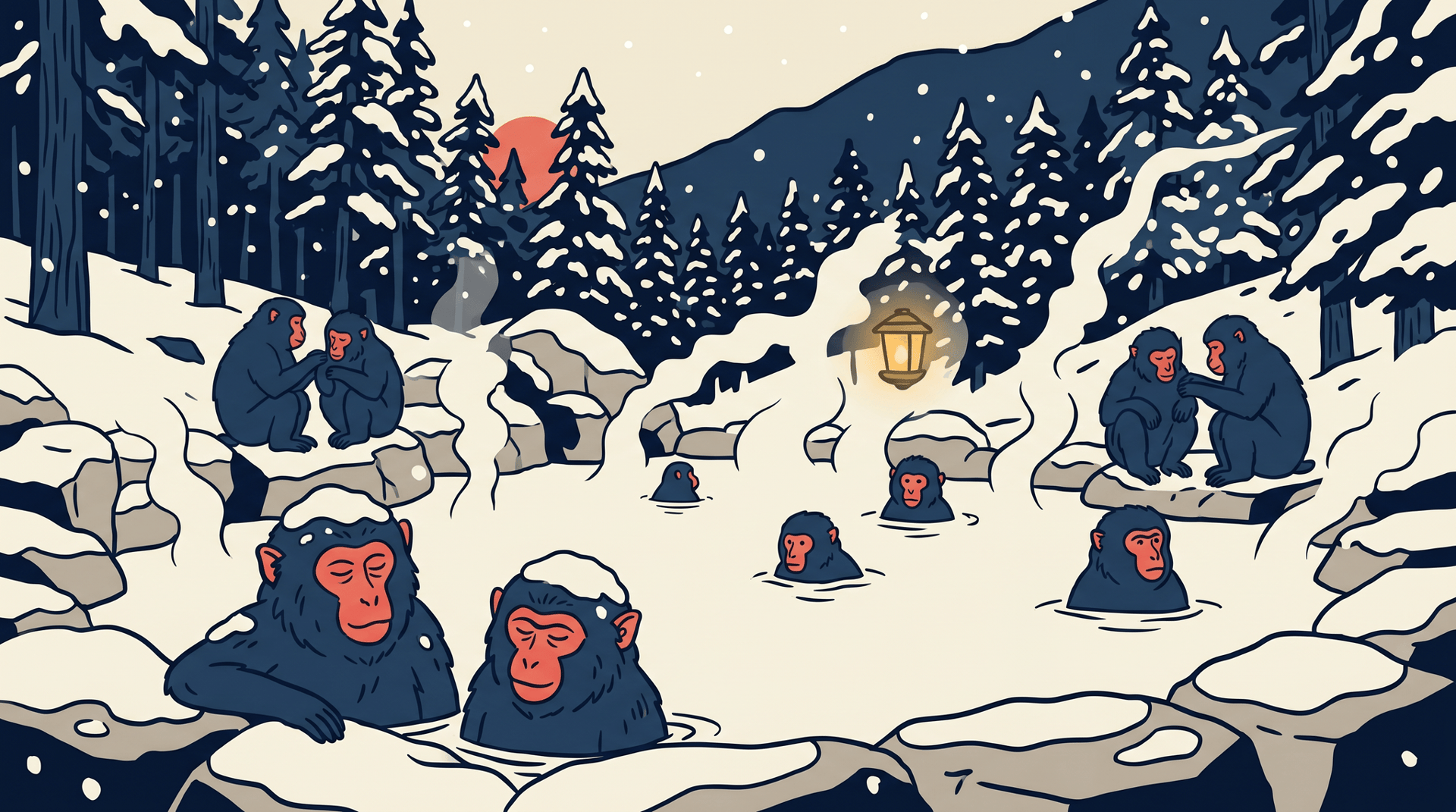

Yudanaka-Shibu Onsen-kyo
Nine-area onsen group along the Yokoyu River. Shibu's nine outer baths, Edo-period townscape, and proximity to the snow monkeys of Jigokudani are the draws.
Kansai
3
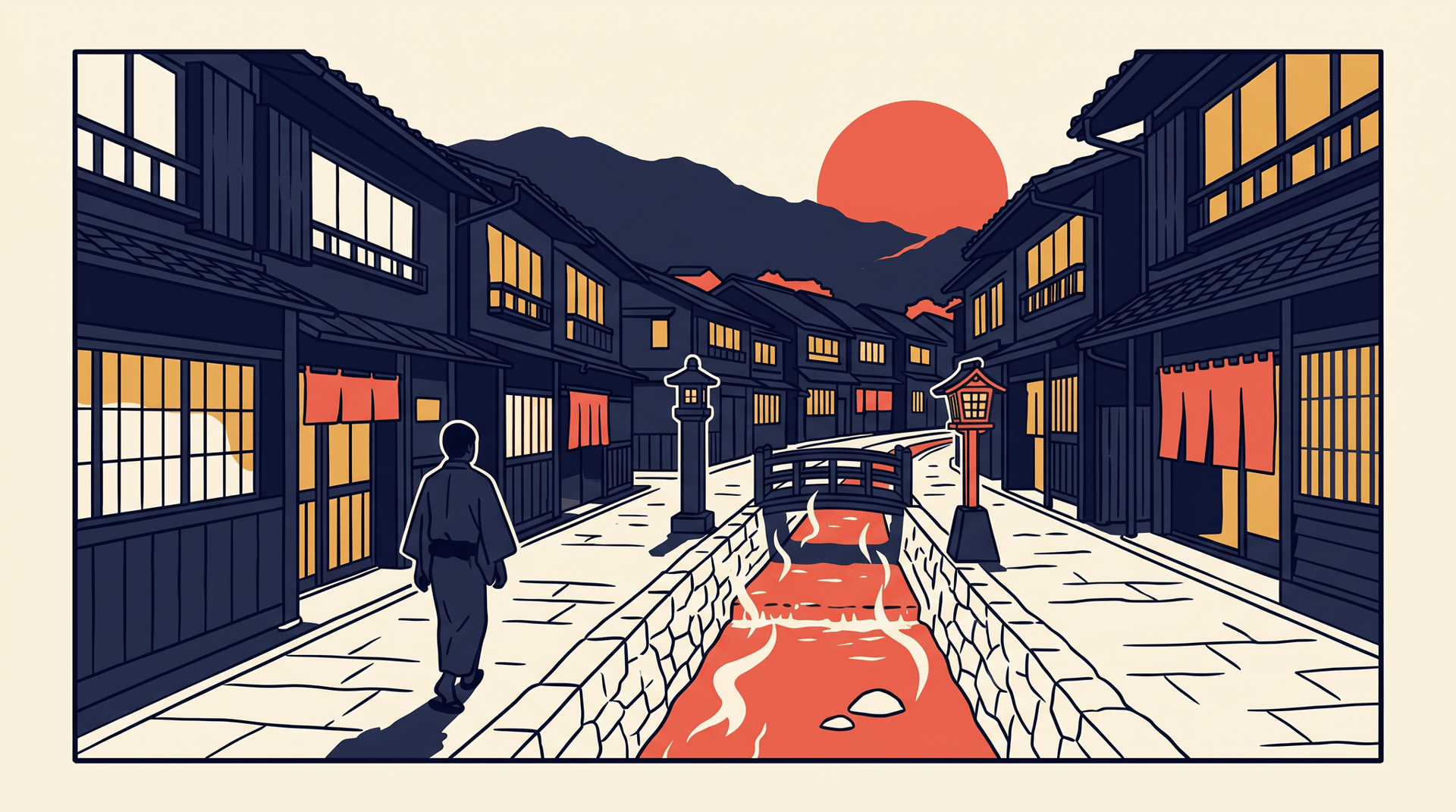

Arima Onsen
One of Japan's three ancient onsen (Sankoyu), tucked behind the Mount Rokko ridge from Kobe. Gold (iron-bearing) and silver (carbonated/radon) springs.
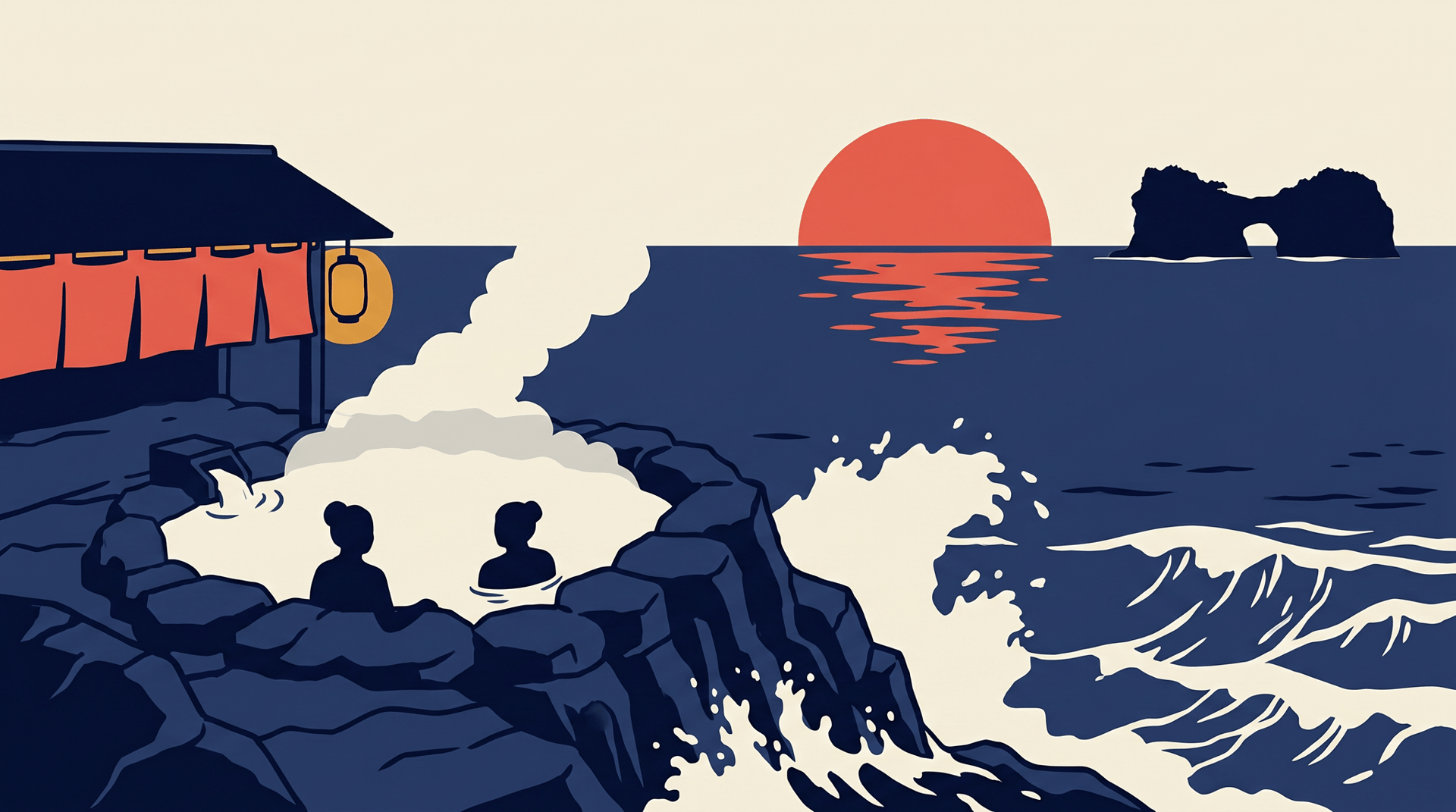

Nanki-Shirahama Onsen
White-sand beach resort on the southern Kii Peninsula. Saki-no-yu's open-air bath sits directly on the rocks above the Pacific.
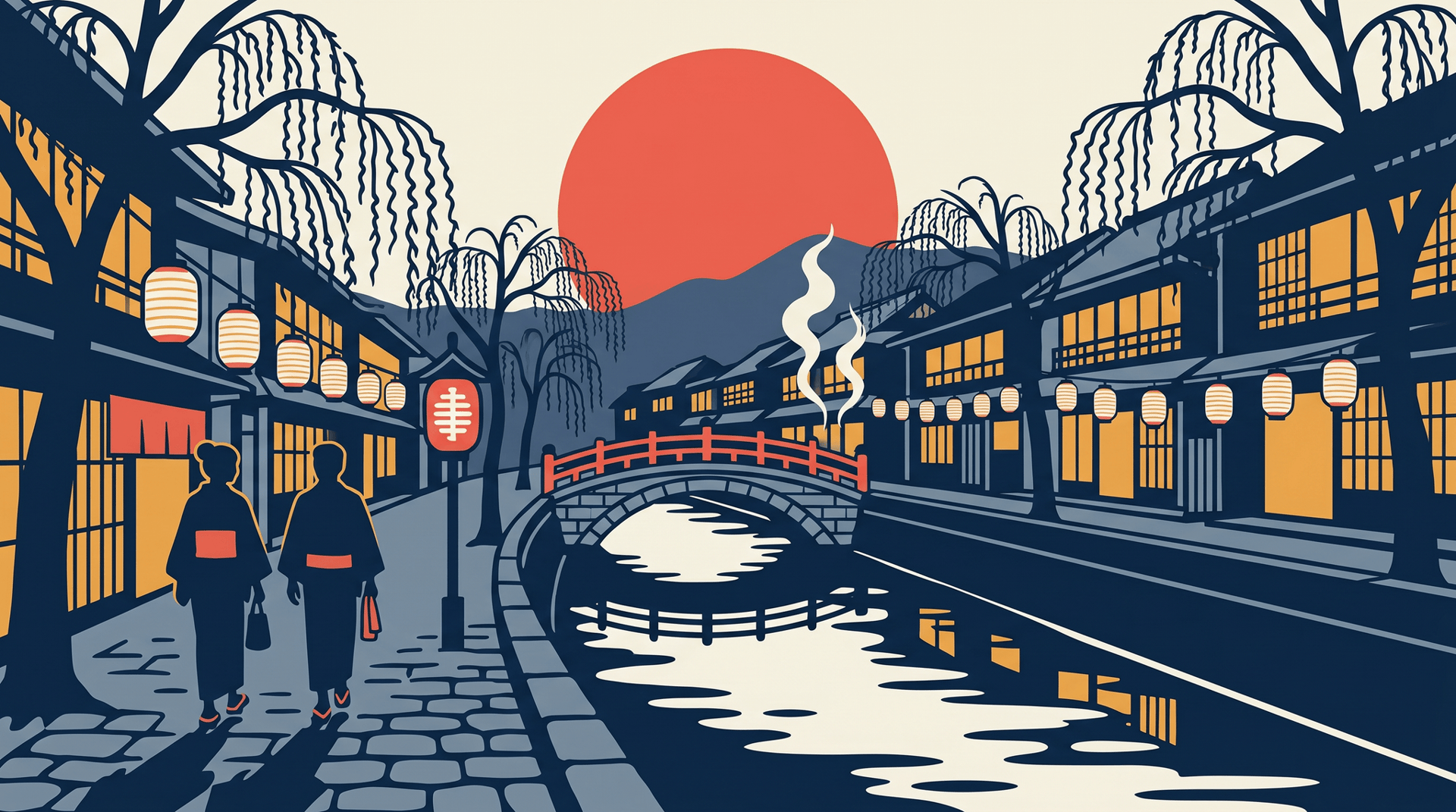

Kinosaki Onsen
Seven public bathhouses strung along a willow-lined canal. Guests walk between them in yukata, geta clacking — the canonical 'onsen town as one big inn' experience.
Chugoku
2


Shikoku
1

Kyushu & Okinawa
6

Ureshino Onsen
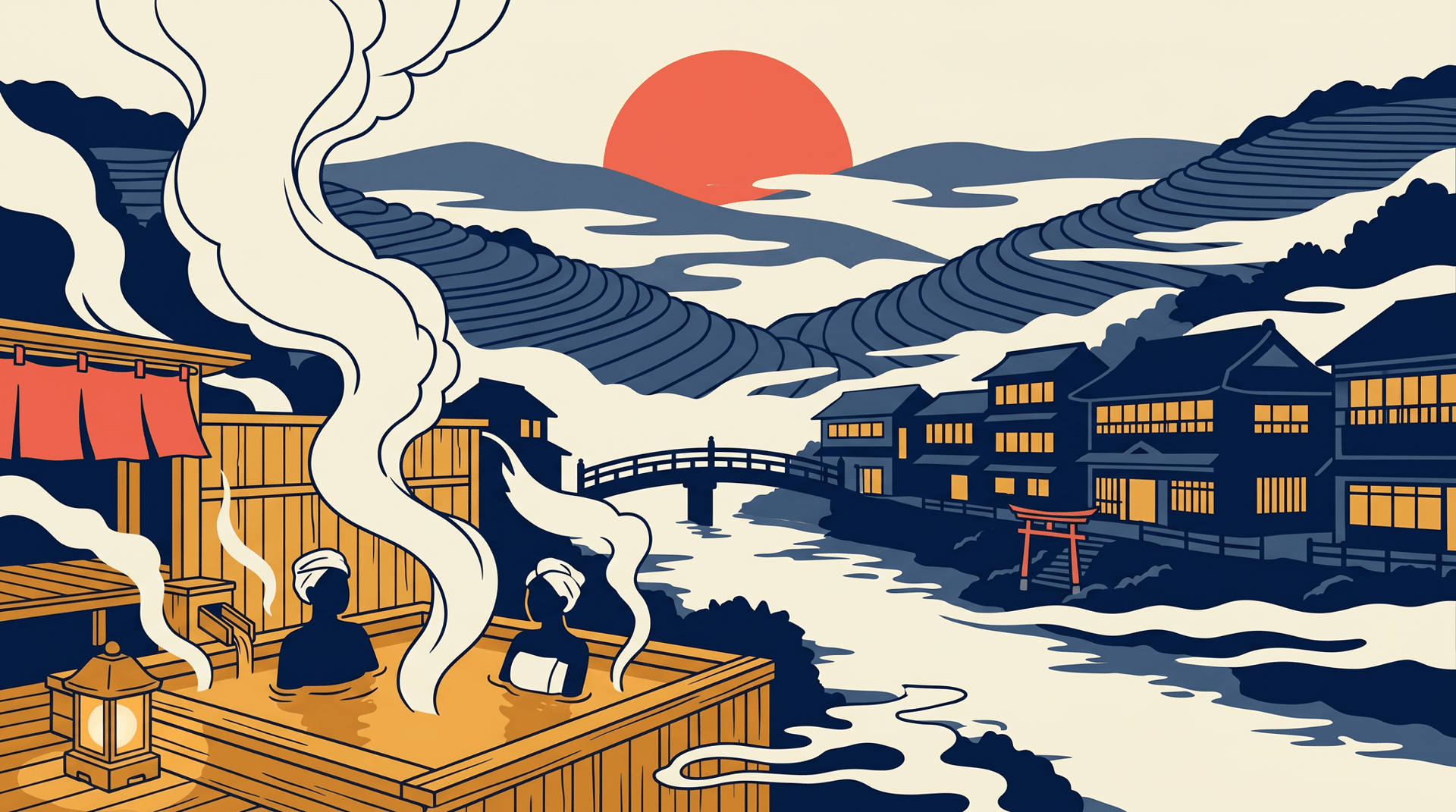
One of Japan's three great beauty-skin springs, in the tea hills of Saga: silky sodium-bicarbonate water that leaves skin smooth, a river running through the resort, and the melting onsen yudofu simmered in the spring itself.

Unzen Onsen
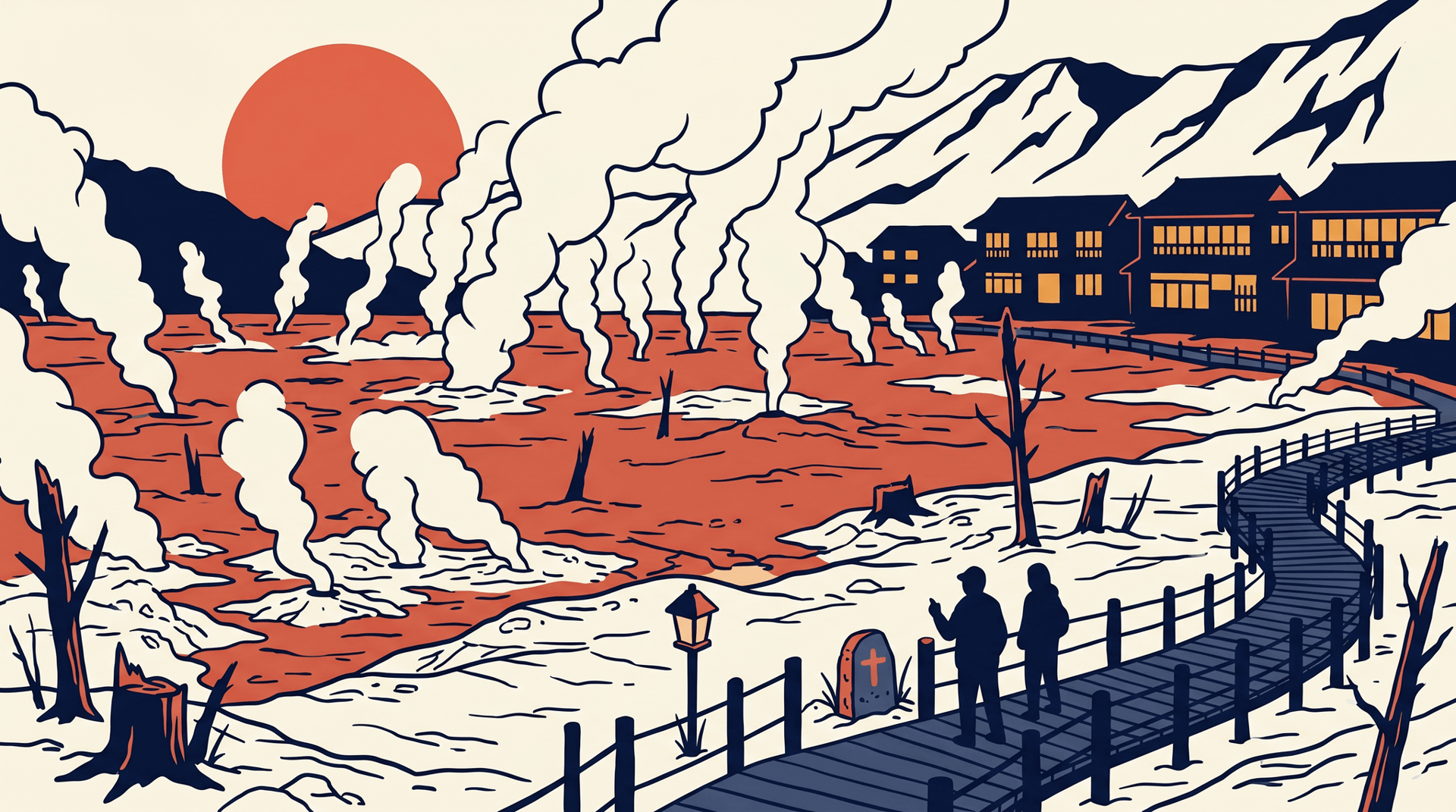
Nagasaki highland onsen inside Unzen-Amakusa National Park (Japan's first, 1934). Steam vents of the Unzen Jigoku spread through the town center.
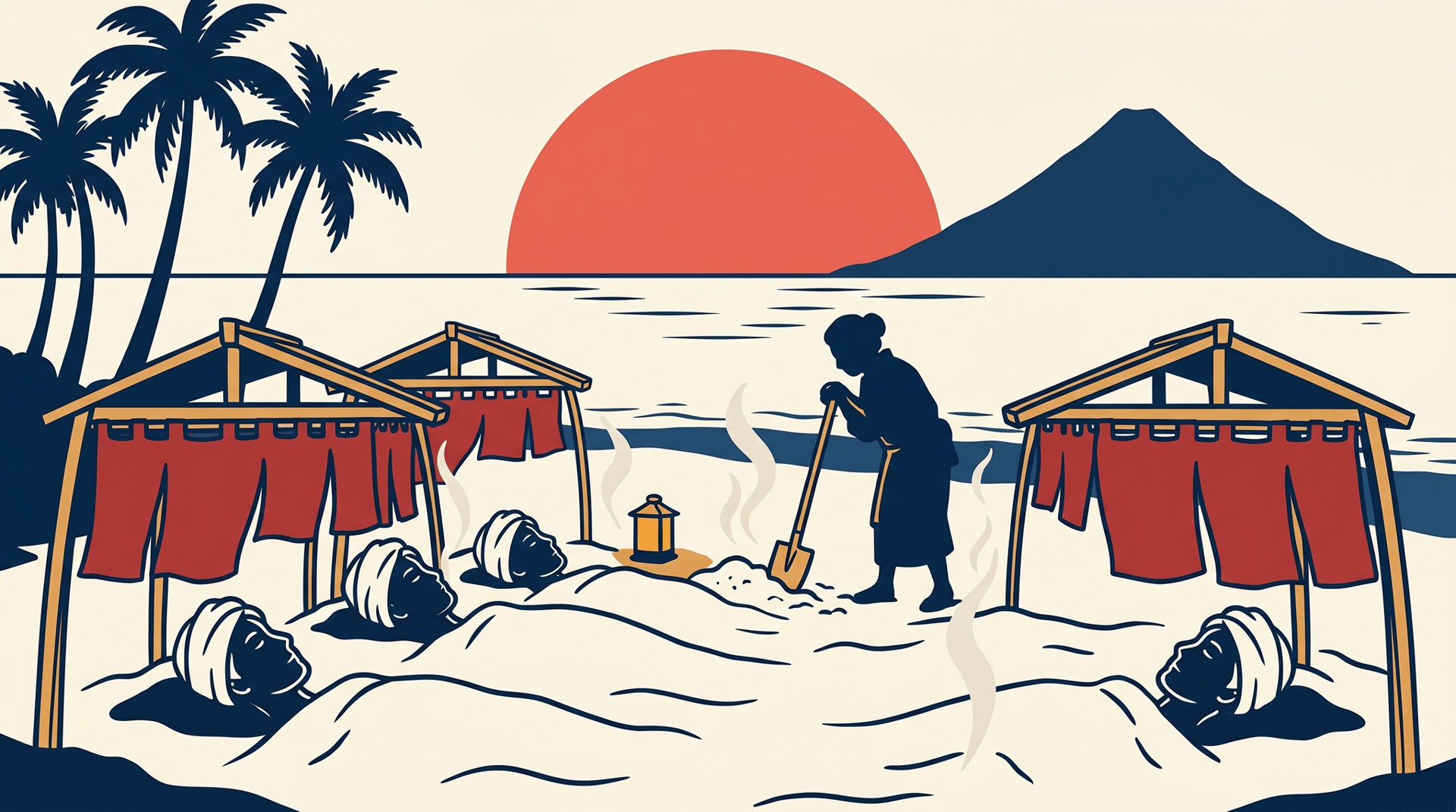

Ibusuki Onsen
Southern-Kyushu beach onsen famous for natural sand baths — bathers are buried in geothermally-warmed sand by the ocean.
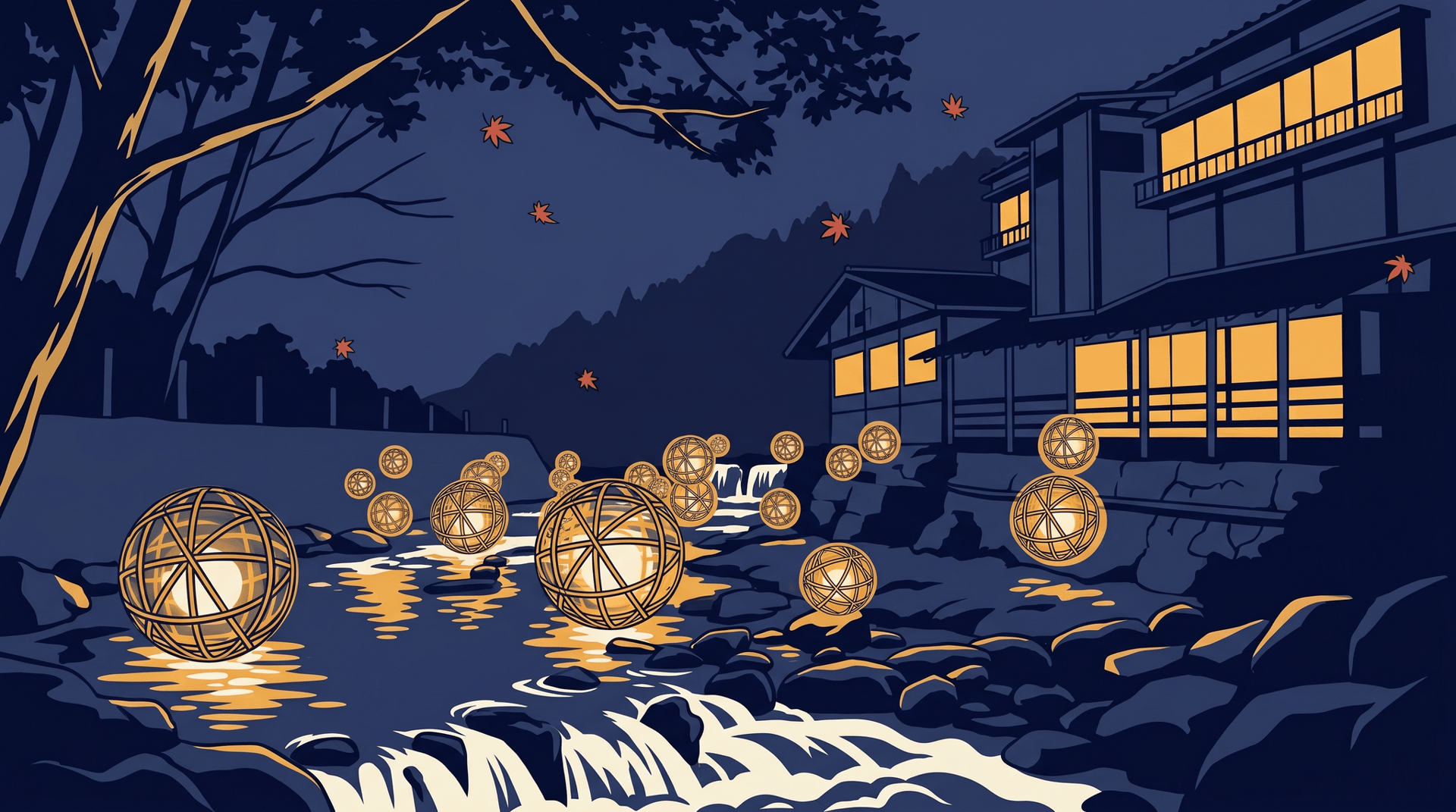

Kurokawa Onsen
Aso-region onsen village treated as a single inn, a wooden bath-hopping pass (nyuto tegata) opens three rotenburo of your choice across the participating ryokan.
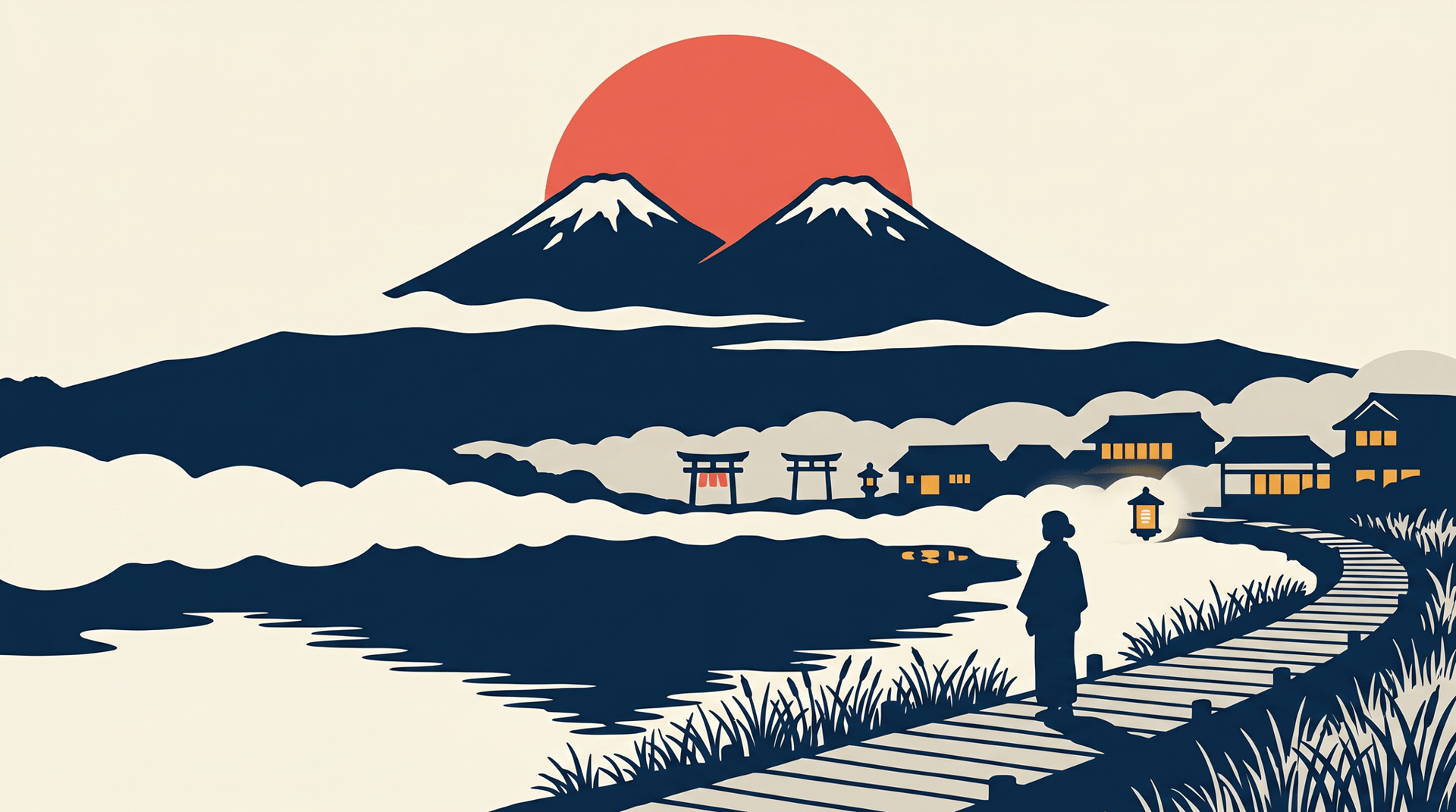

Yufuin Onsen
Pastoral basin under Mount Yufu, famous for ryokan with private rotenburo, craft shops along Yunotsubo Street, and the morning mist over Lake Kinrin.
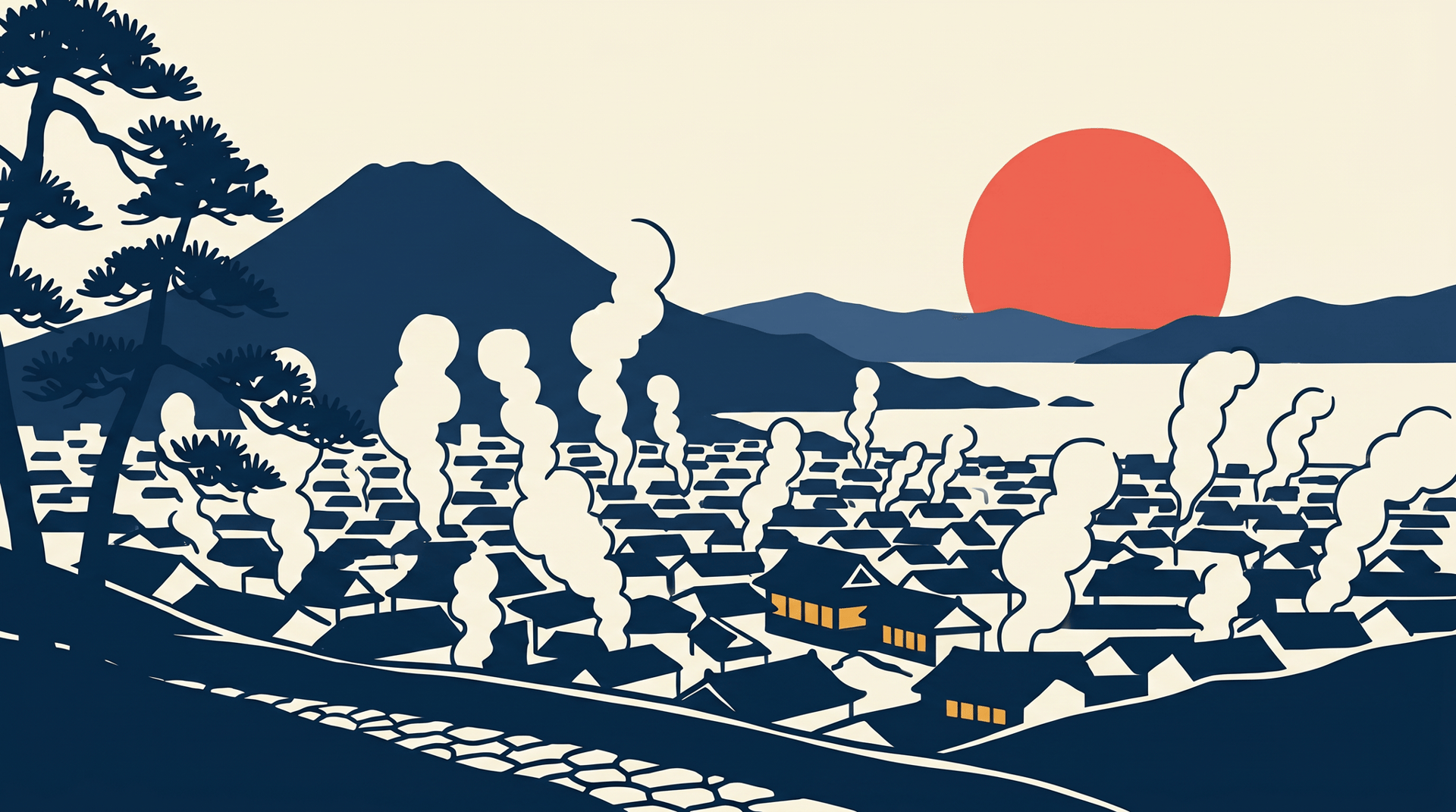

Beppu Onsen
Eight distinct onsen districts (Beppu Hatto) — Kannawa, Myoban, Kankaiji, Hamawaki, Kamegawa, Horita, Shibaseki, central Beppu — and more spring sources than any other city in Japan.