

Kinosaki Onsen
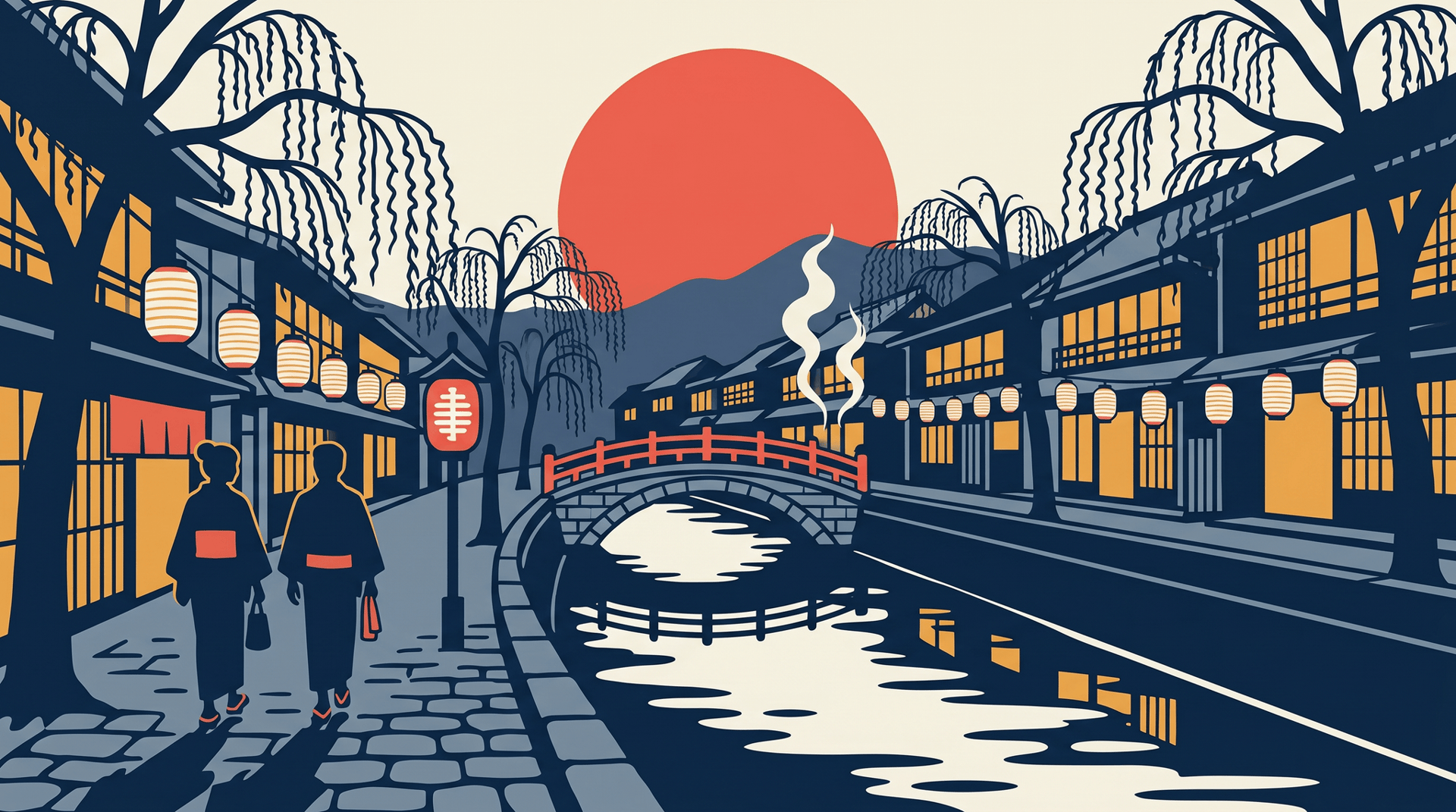
城崎温泉Seven public bathhouses strung along a willow-lined canal. Guests walk between them in yukata, geta clacking — the canonical 'onsen town as one big inn' experience.
A spring opened by prayer
The town's founding story is precise about its year. The Buddhist monk Dochi Shonin arrived in 717, vowed a thousand days of ascetic practice on behalf of the sick, and on the final day in 720 (the fourth year of the Yoro era) a sacred spring rose from the ground at what is now Mandara-yu. A few years later, in 738, Dochi founded Onsenji above the village; to this day the temple keeps the guardianship of the waters and the formal rite of receiving a ladle from its altar.
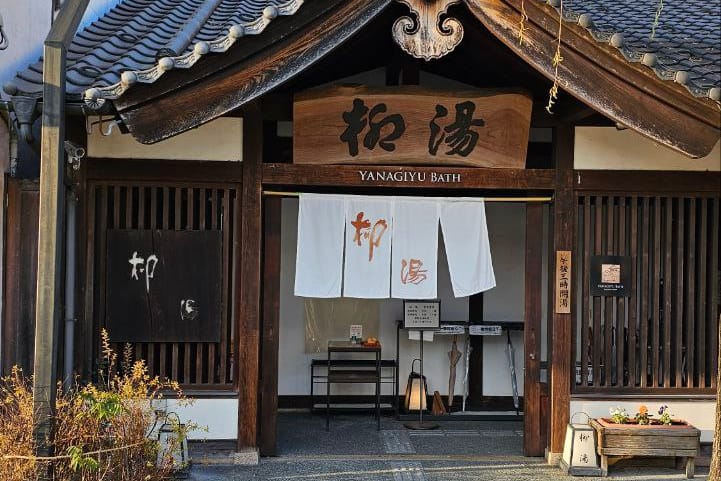
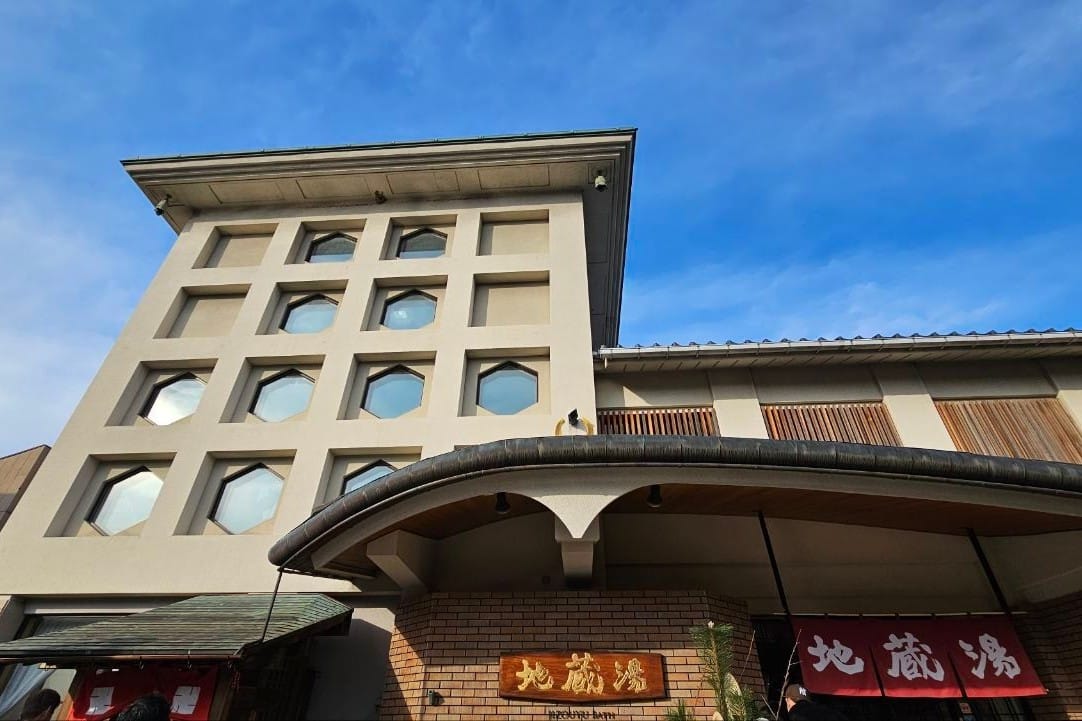
By the Edo period the town had settled into a working spa. Most inns held no private bath of their own, and guests walked between the seven public bathhouses (Kono-yu, Mandara-yu, Goshono-yu, Ichino-yu, Yanagi-yu, Jizo-yu, Sato-no-yu) in the order their inn recommended. The custom hardened into the practice now called sotoyu-meguri (外湯巡り), and Kinosaki is credited as its birthplace. The literary record arrived in 1917: convalescing here in 1913 after being struck from behind by a Yamanote Line train in Tokyo, Shiga Naoya wrote the short story 「城崎にて」 (Kinosaki nite, "At Kinosaki"), a quiet meditation on mortality that has fixed the town in the Japanese literary imagination ever since.
One ryokan with seven baths
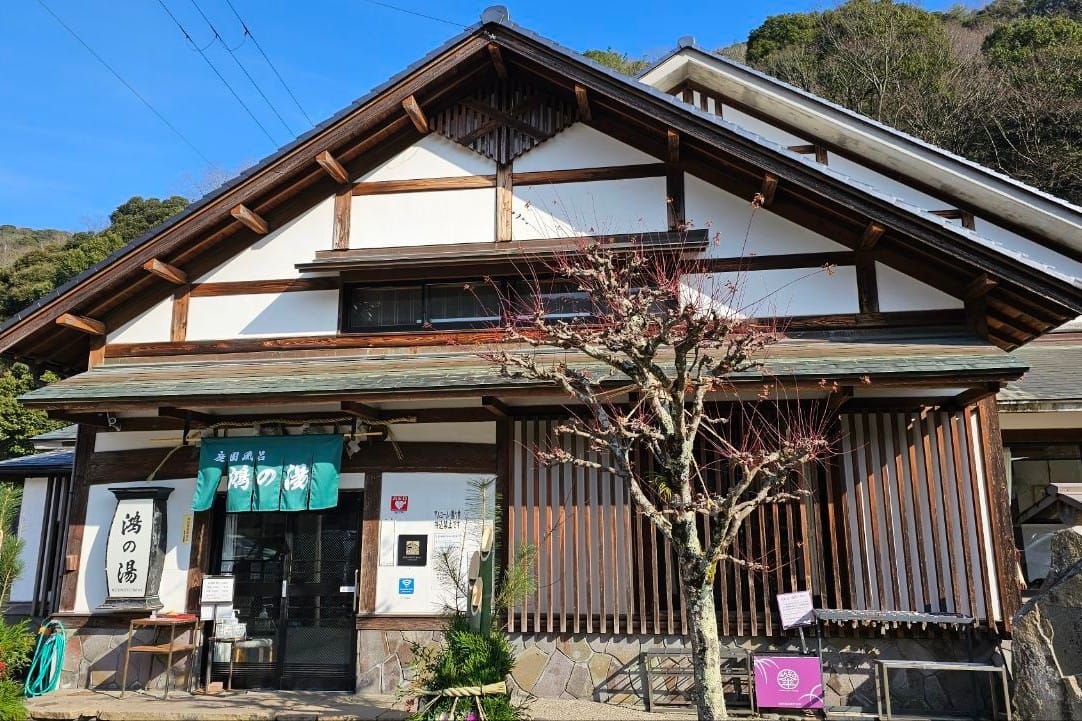
Kinosaki sells itself as a single establishment with the whole town as its corridors. The phrase the association uses is hitotsu no ryokan (一つの旅館): the streets are the hallways, the seven sotoyu are the baths, the shops and stalls along the Otani river are the lounges. Inn guests typically receive a sotoyu pass on arrival and spend the evening hopping between bathhouses in yukata and geta, the wooden sandals clacking against stone bridges under rows of willows. There are no high-rise hotels here; the silhouette is wooden, low, and unbroken, which is the point.
Winter and the San'in coast
From early November through March the town turns to matsuba-gani, Japanese snow crab landed at the nearby ports of Tsuiyama and Kasumi on the Sea of Japan. Most ryokan build their winter kaiseki around it, and the crab tag system (one tag per legally landed crab) is taken seriously in the better houses. Beyond the canal, Kinosaki sits at the edge of the San'in Kaigan Geopark, a coastline of sea caves and basalt columns that pairs well with a slow morning bath.
Programs in this area
1 programPlaces in this area
19 places · Sorted by rating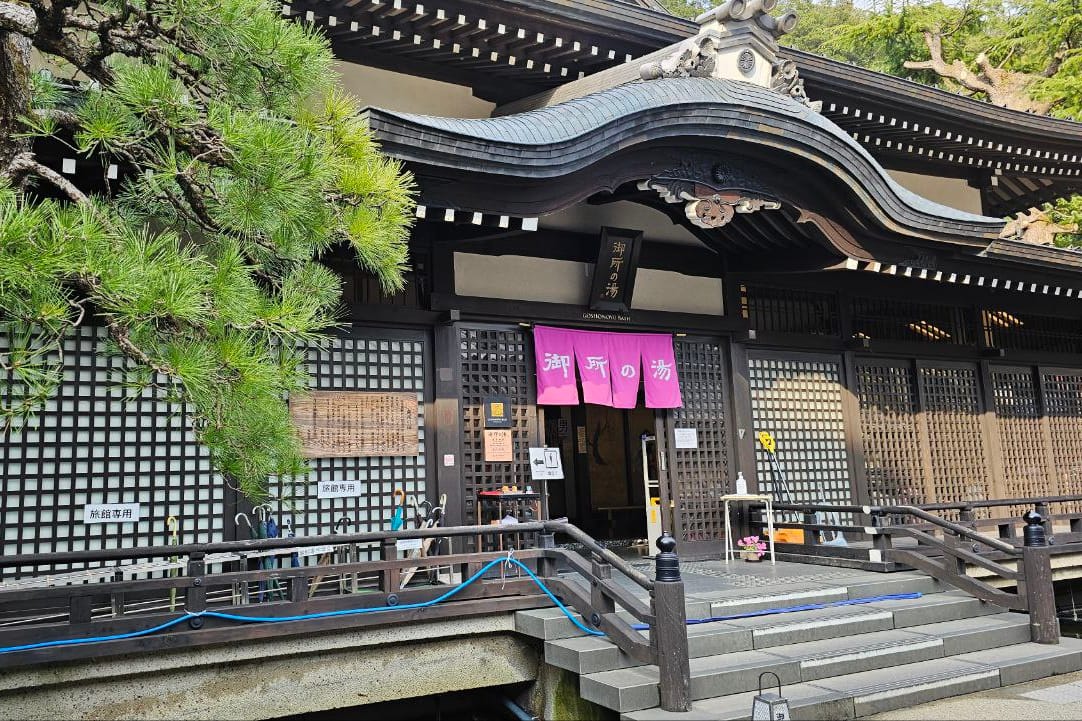
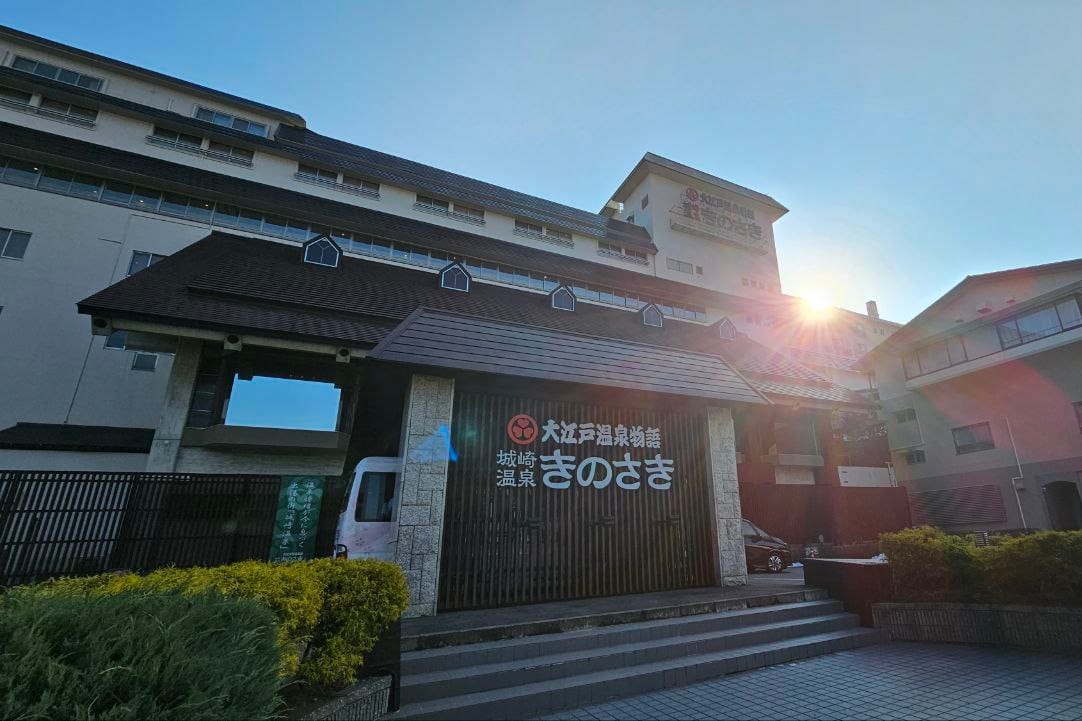
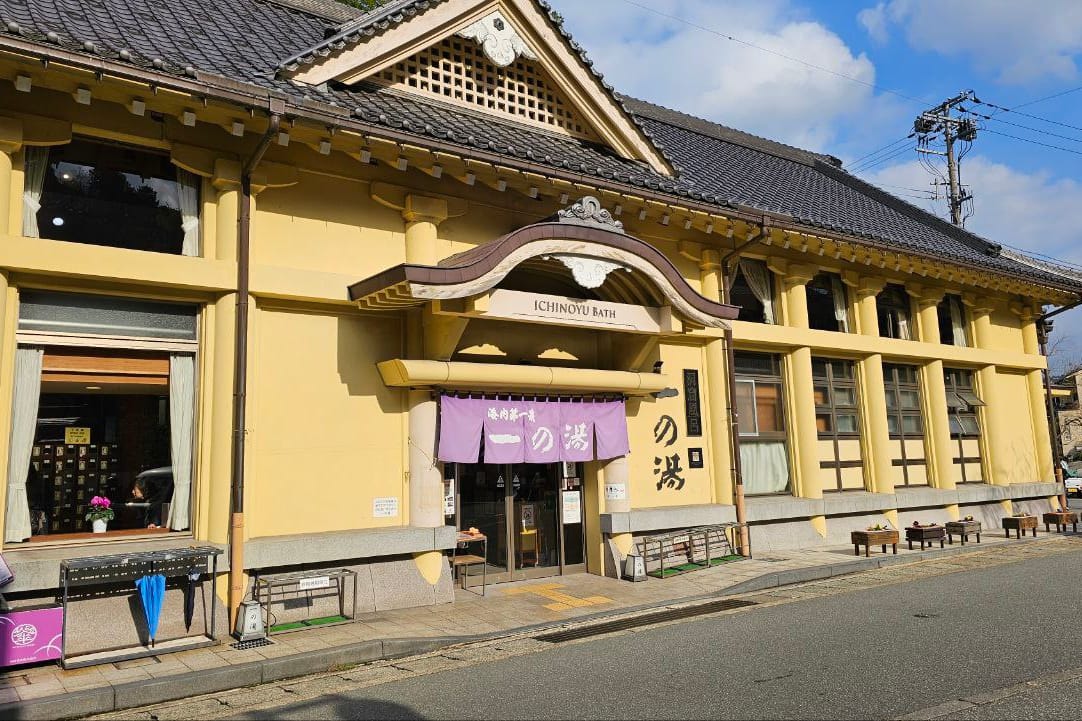
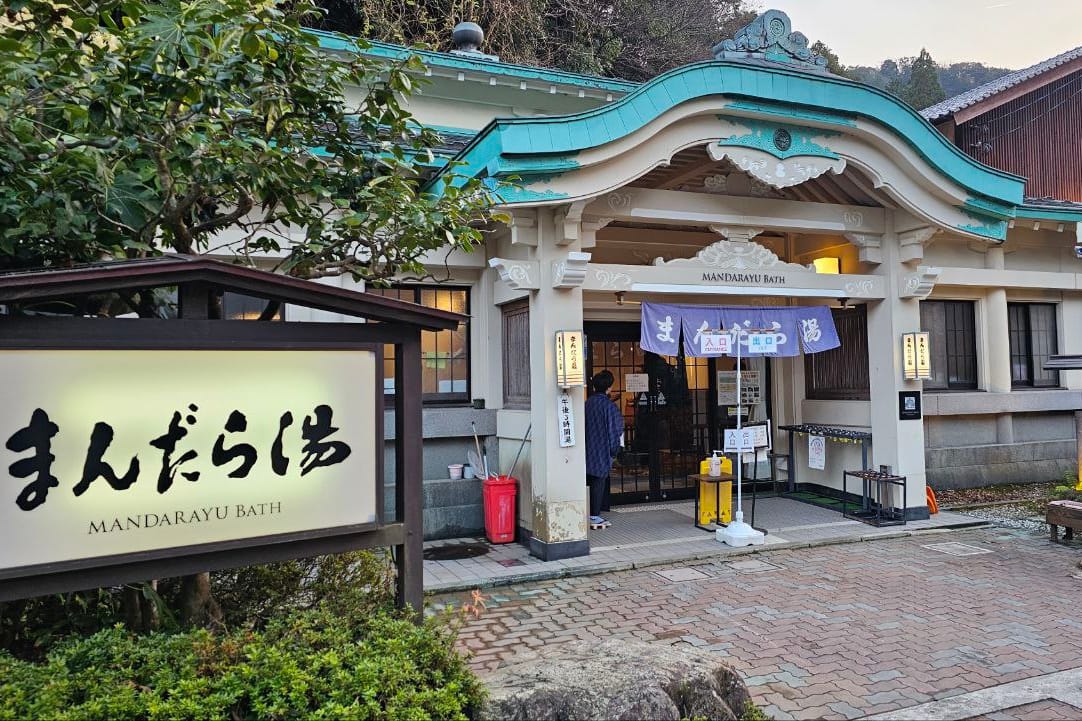
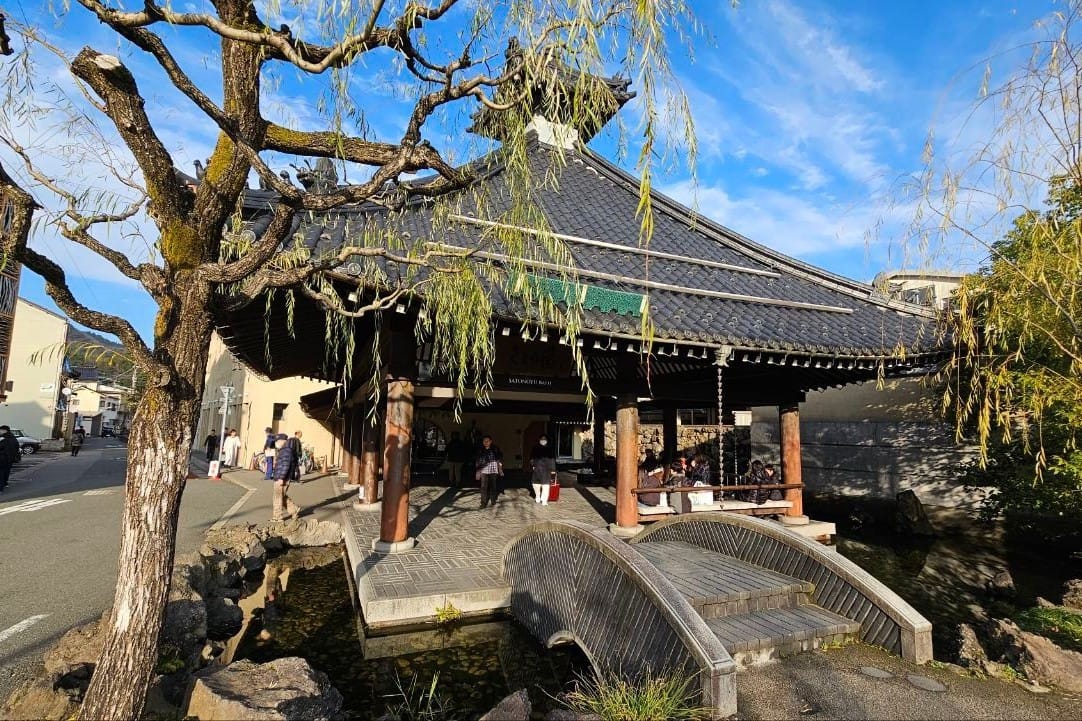
Closed & restricted
1
On the map
Loading map…
Nearby onsenchi
Within 50 kmNo nearby onsenchi within range.
Sources
- Kinosaki Onsen Tourism Associationofficial— Town tourism office. Reference for the seven sotoyu, the "one inn" concept, and seasonal programming.
- Kinosaki Onsen — 1,300 years of historyofficial— Backs the Yoro-era founding account and the role of the priest Dochi.
- Visit Kinosaki — town historyofficial— English overview of the founding legend, Edo-period bath culture, and the literary record.
- Onsenji Temple — officialofficial— The town's guardian temple, founded 738 by Dochi after the springs emerged.
- Kinosaki Onsen — Wikipedia— Cross-reference for the seven bath names and the 1913 visit by Shiga Naoya.