
Shiobara Onsen-kyo
塩原温泉郷Eleven onsen districts strung along a 9-km gorge of the Hoki River in Tochigi. Wide range of spring chemistries within a tight valley.
Eleven baths along the Hoki
Local tradition fixes the opening of Shiobara at the Motoyu spring in the Daido era, around 806 CE, and a written record of organised bathing reaches back beyond a thousand years. What grew out of that single source was not one resort but a chain. Strung along the Hoki river as it cuts west through the southern flank of the Takahara massif, the valley holds eleven separate bath districts: Oami, Fukuwata, Shiogama, Shionoyu, Hatabori, Monzen, Furumachi, Nakashiobara, Kamishiobara, Shinyu, and Motoyu, together known as the Shiobara Juichi-yu, the eleven baths of Shiobara. Roughly 150 sources feed them, and each hamlet developed its own water character and its own circle of regulars over the Heian and Edo centuries. The novelist Tayama Katai, writing his 1918 Onsen Meguri, applied the term onsen-kyo (hot-spring resort) to Shiobara, and the word stuck.
A forested gorge with suspension bridges
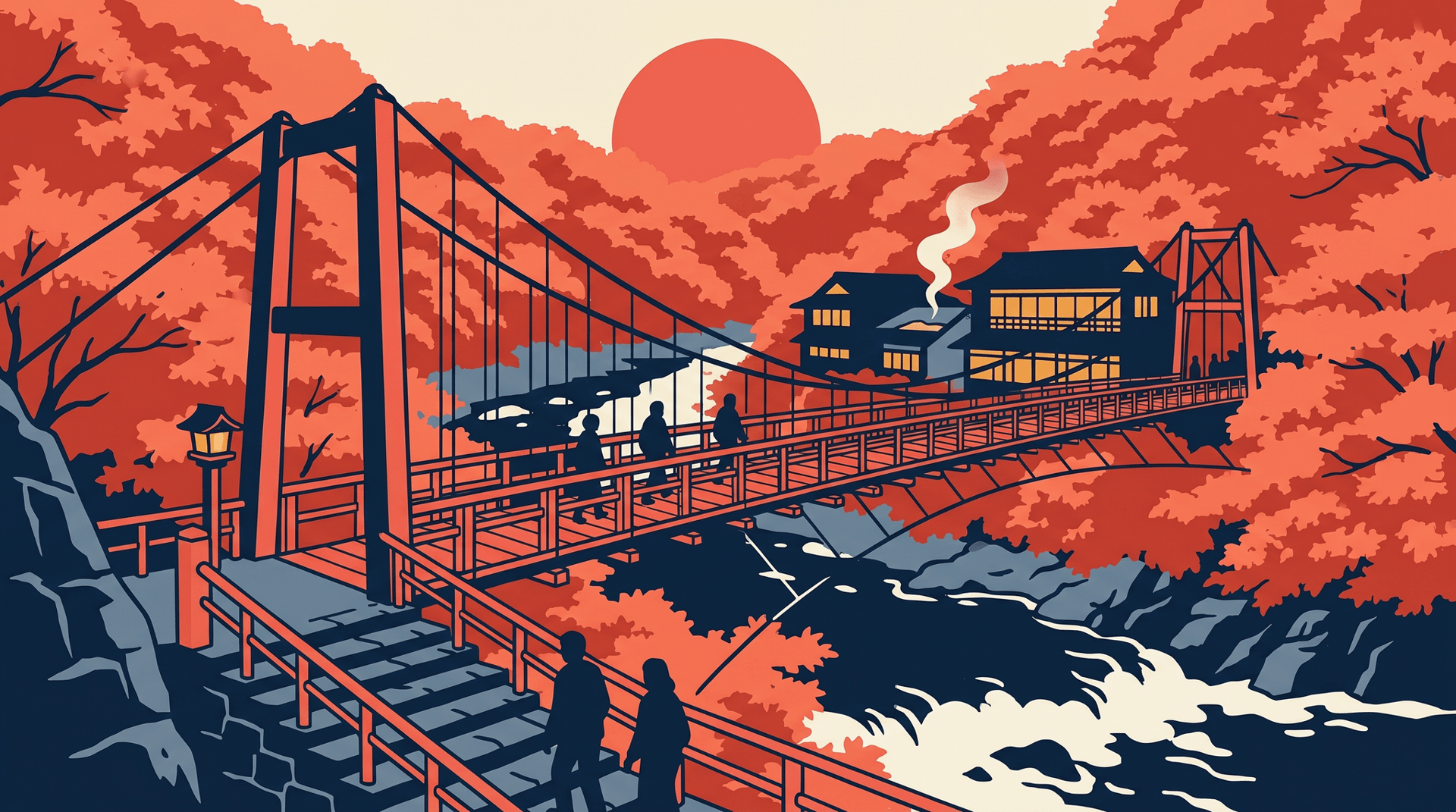
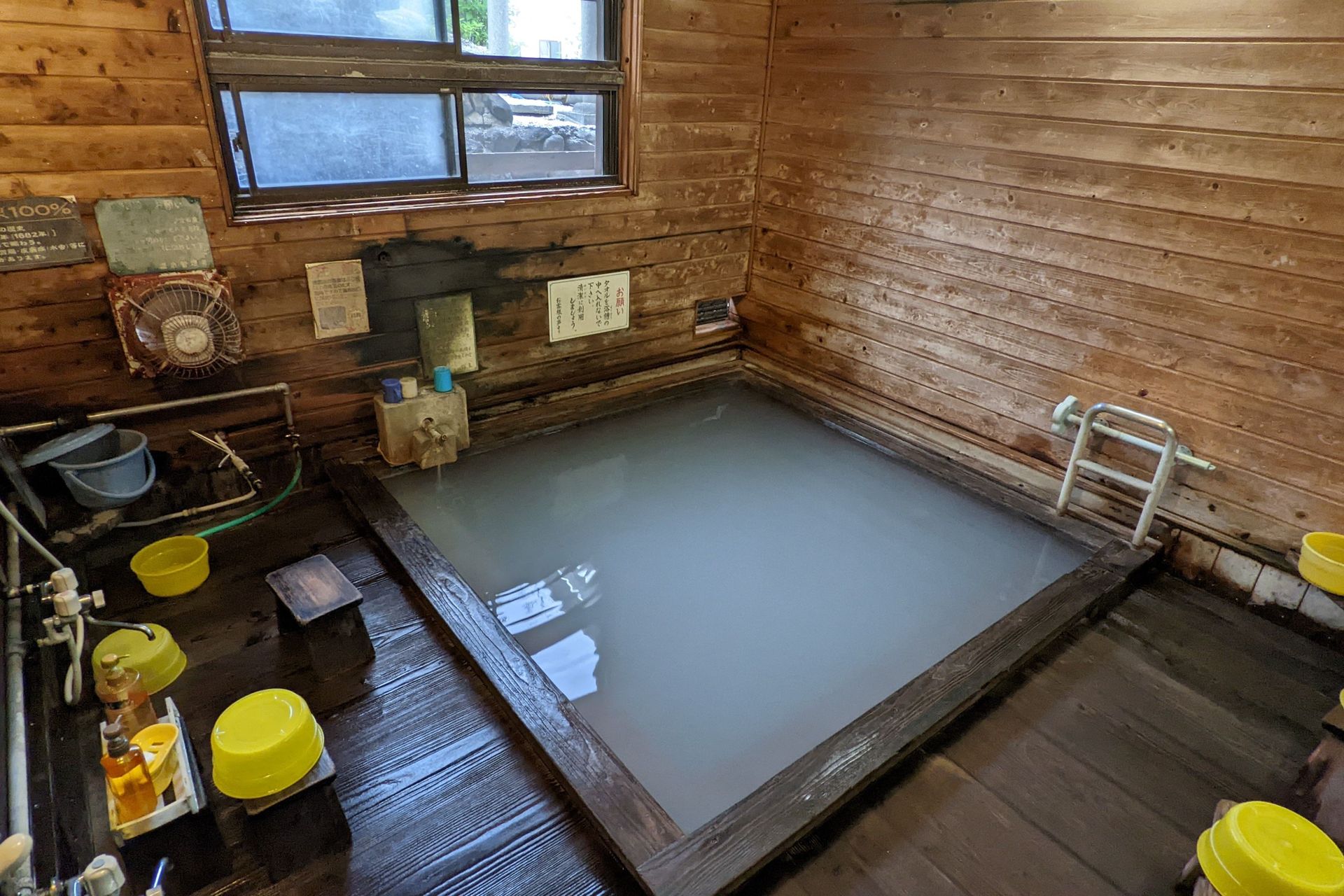
The setting is a deep, wooded ravine, walled by ridges that rise to roughly a thousand metres on either side. Ryokan sit close to the river, many with rotenburo built straight over the rapids, and a footpath threads the valley between them. Several pedestrian suspension bridges, among them the long Momiji-dani Otsuribashi, the Kurenai-no-tsuribashi, and the Nanatsuiwa Tsuribashi, span the Hoki at intervals, and in late October and early November the maples on the slopes turn the whole circuit deep red. The waters across the eleven baths cover an unusual range for one valley: simple alkaline springs at the lower hamlets, sodium-calcium sulfate water in the middle stretch, milky sulfur springs at Shinyu and Motoyu near the head, with iron-bearing and carbonate-tinged waters appearing at individual sources. The overall feel is quieter than the better-known Tochigi resorts to the east, in keeping with the mountain country it sits in.
Beyond the bath
The trailheads for Mount Takahara lie within easy reach for a half- or full-day walk, and the Shiobara valley footpath itself runs about eight kilometres between bridges and small waterfalls. The wider Tochigi food culture is also part of any stop: the prefecture is one of the country's recognised homes of tonkatsu, and Shiobara has its share of long-running cutlet houses for an after-bath meal.
Districts
5 sub-areas within Shiobara Onsen-kyoPlaces in this area
37 places · Sorted by rating
源美の宿 会津屋
Tochigi
甘湯新湯
Tochigi
彩つむぎ
Tochigi
四季味亭ふじや
Tochigi
ホテルおおるり
Tochigi
楓の湯
Tochigi
全室離れの宿 楓音
Tochigi
塩原温泉 渓雲閣
Tochigi
明賀屋本館
Tochigi
旅館まじま荘
Tochigi
ユーフィール
Tochigi
日光ガーデンホテル
Tochigi
Closed & restricted
2
On the map
Loading map…
Nearby onsenchi
Within 50 kmSources
- Shiobara Onsen Ryokan Cooperative — Day-Trip Bathingofficial— Official source for the eleven-bath structure, the roughly 1,200-year history, the spread of water types, and the location along the Hoki river.
- Nasu-Shiobara Tourism Bureau — Shiobara Onsenofficial— City tourism bureau page noting the legendary discovery in 806 CE and the six categories of spring chemistry found across the eleven bath districts.
- 塩原温泉郷 — Wikipedia (Japanese)— Chronology of the eleven baths, the ~150 sources, and Tayama Katai's 1918 use of the term onsen-kyo (hot-spring resort) for Shiobara.
- Japan-guide — Shiobara Onsen— English-language overview of the gorge, the suspension bridges, and the autumn-foliage season.
- Nasu-Shiobara Tourism NAVI — Kurenai (Red) Suspension Bridge— Description of the Kurenai-no-tsuribashi over the Hoki river and its place in the autumn-leaf circuit.