
Kawaji Onsen
川治温泉Quiet gorge onsen at the confluence of the Kinu and Kawaji rivers in Tochigi, just upstream of bustling Kinugawa. The local saying "Kawaji for cuts, Kinugawa for ailments" nods to its gentle alkaline waters and traditional yutoji feel.
Kawaji for cuts, Kinugawa for ailments
Kawaji is the quieter of two onsen towns tucked into the upper gorge of the Kinu river, in what is now the western edge of Nikko City. It sits just a few kilometres above its noisier neighbour Kinugawa, at the V where the smaller Kawaji river runs in from the north. The local saying kizu wa Kawaji, yamai wa Kinugawa (Kawaji for cuts, Kinugawa for ailments) captures the two towns' division of labour and dates back to when both were toji (long-stay healing) destinations on the road from Edo to Aizu. Kawaji's water is a clear, soft, slightly alkaline simple spring, mild enough that bathers could stay in it for hours, which is exactly what toji travellers did. The discovery of the springs is conventionally placed in the late Heian period: a samurai of the Minamoto retinue, wounded on the road, is said to have followed the smell of sulfur down through the gorge and healed his sword-cut in the river.
A bath in the gorge
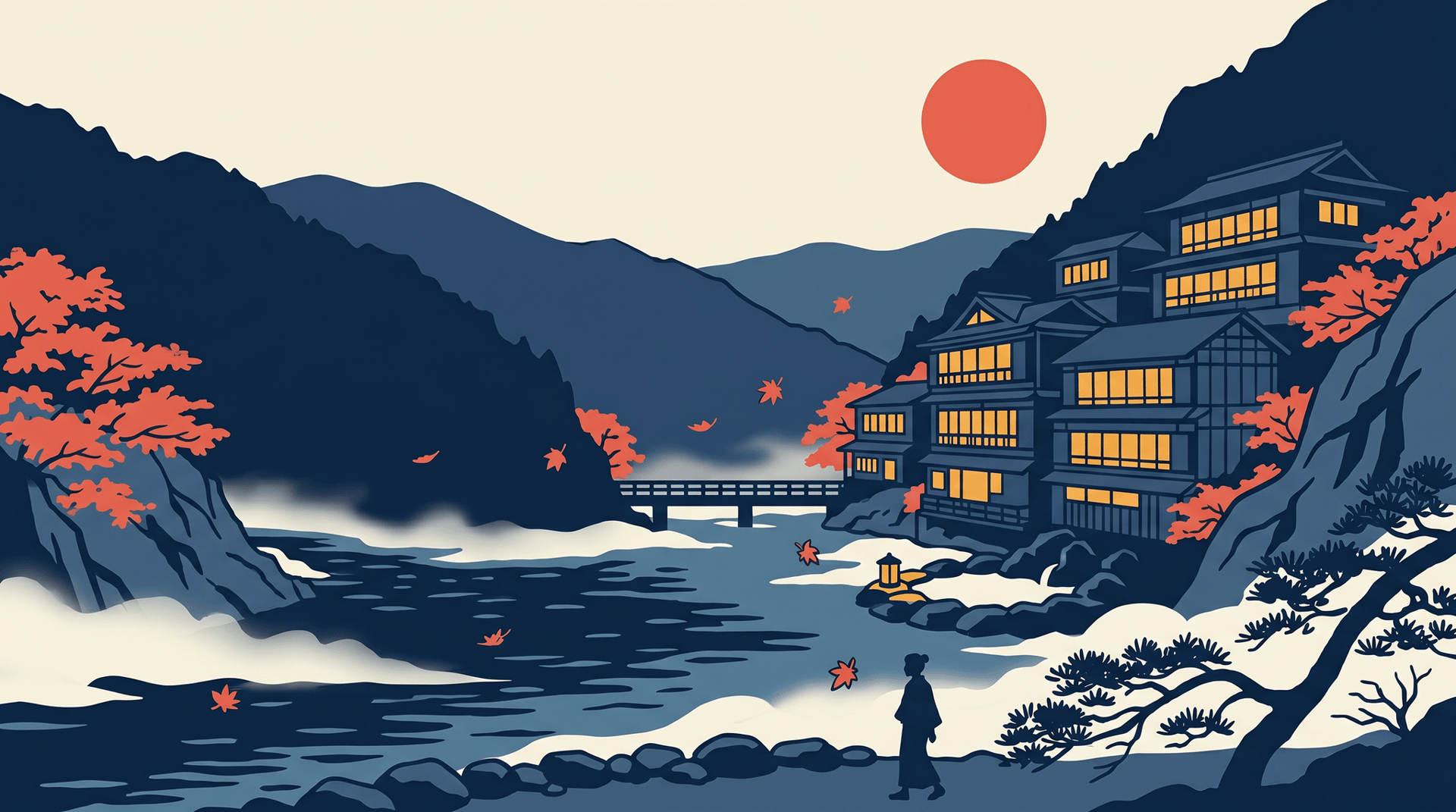
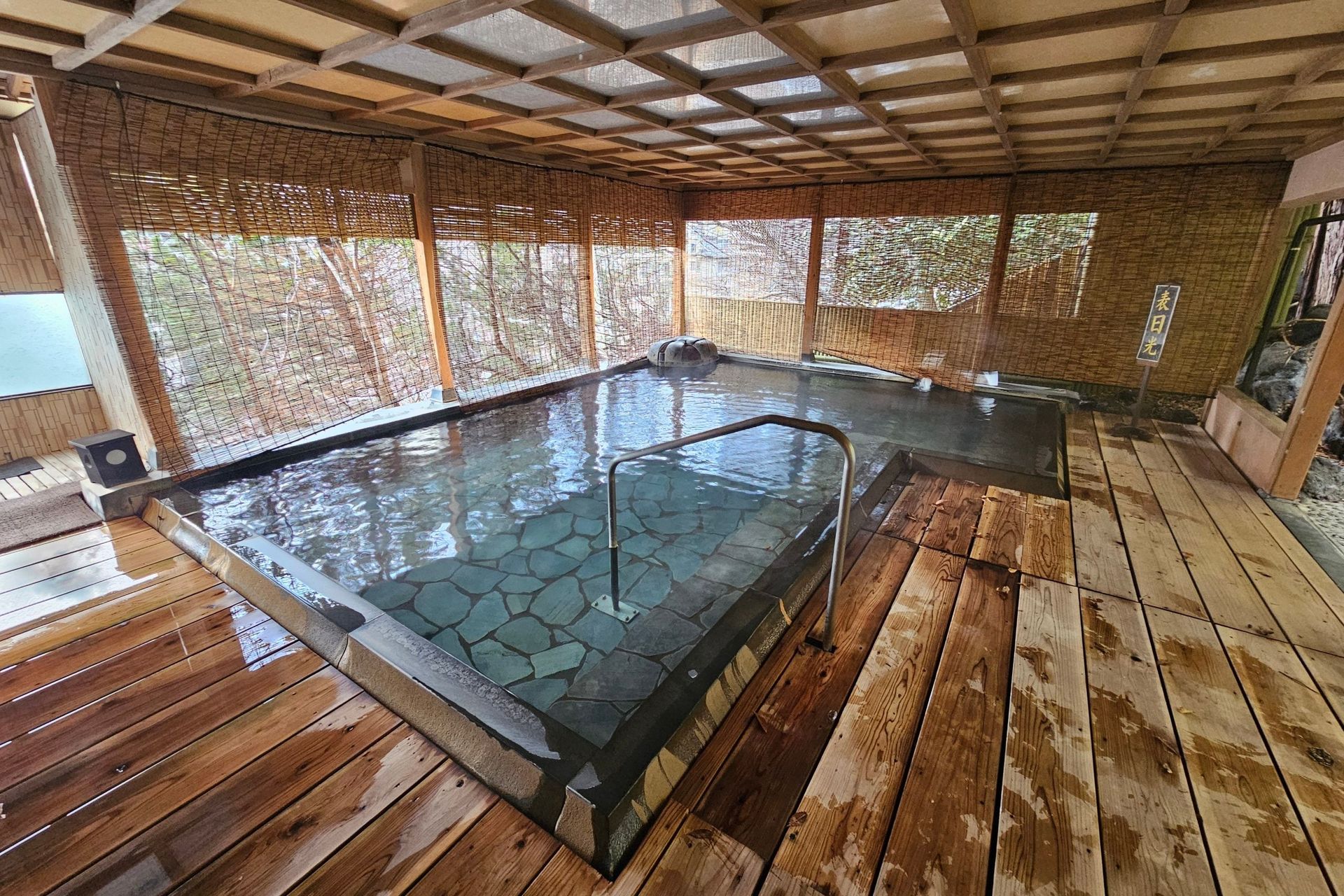
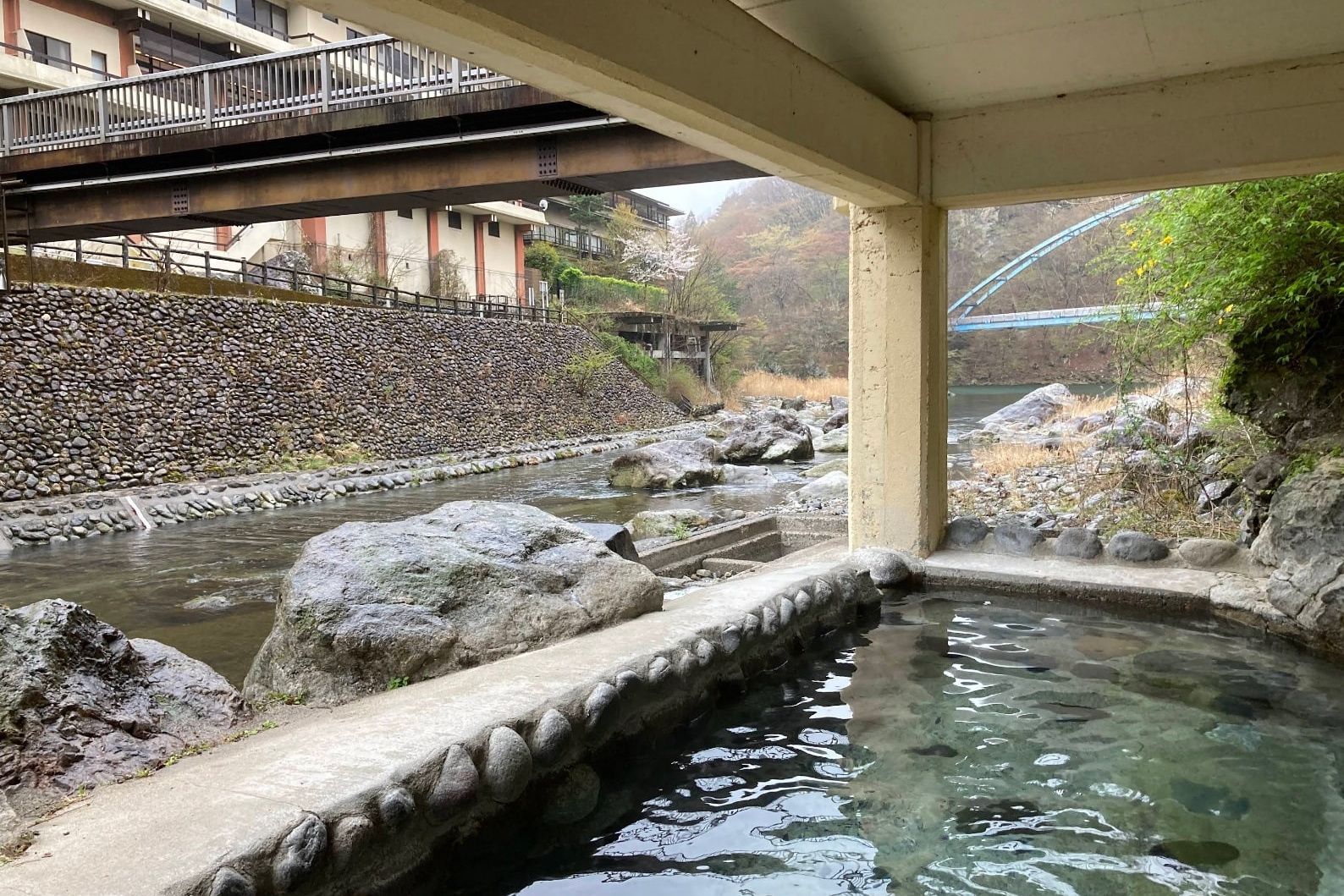
Kawaji's character is the gorge itself. Where Kinugawa spreads out along its broader stretch of river, Kawaji is pinched between two canyon walls, and its ryokan are stacked one above the other on the steep right bank, their wooden balconies hanging over the water. The historic Yakushi-no-yu rotenburo on the river bed survives in name only; most of the open-air baths once cut into the rocks were lost to the great Kanto floods, and the current free public bath stands a short walk above the bridge. The mainstay of the area now is the half-dozen multi-story ryokan along the river bend, several of them still family-run, with private rotenburo overlooking the canyon. The town in late autumn is at its best: the Kinu maples turn together with the higher beech and oak above, and the gorge fills with the dry red-orange light that the Kawaji ryokan windows multiply through their amber paper.
Above the Ryuokyo
Just upstream, the Kinu cuts a five-kilometre stretch of columnar-andesite cliffs called the Ryuokyo (the Dragon-King Gorge), with the most photographed walking path in this part of Tochigi. A loop from Ryuokyo Station drops to a series of pools below the dragon-shaped basalt formations and climbs back up through cedar forest in about two hours. The same gorge holds the small Ikari and Kawaji dams, whose lakes are popular with summer kayakers. Kawaji's transport link is the Tobu Aizu-Kinugawa line, which runs single-track up the valley from Kinugawa-Onsen Station and continues north to Aizu-Tajima and the Ouchi-juku post town, useful for combining a night in the gorge with a winter detour into the snow country.
Places in this area
3 places · Sorted by rating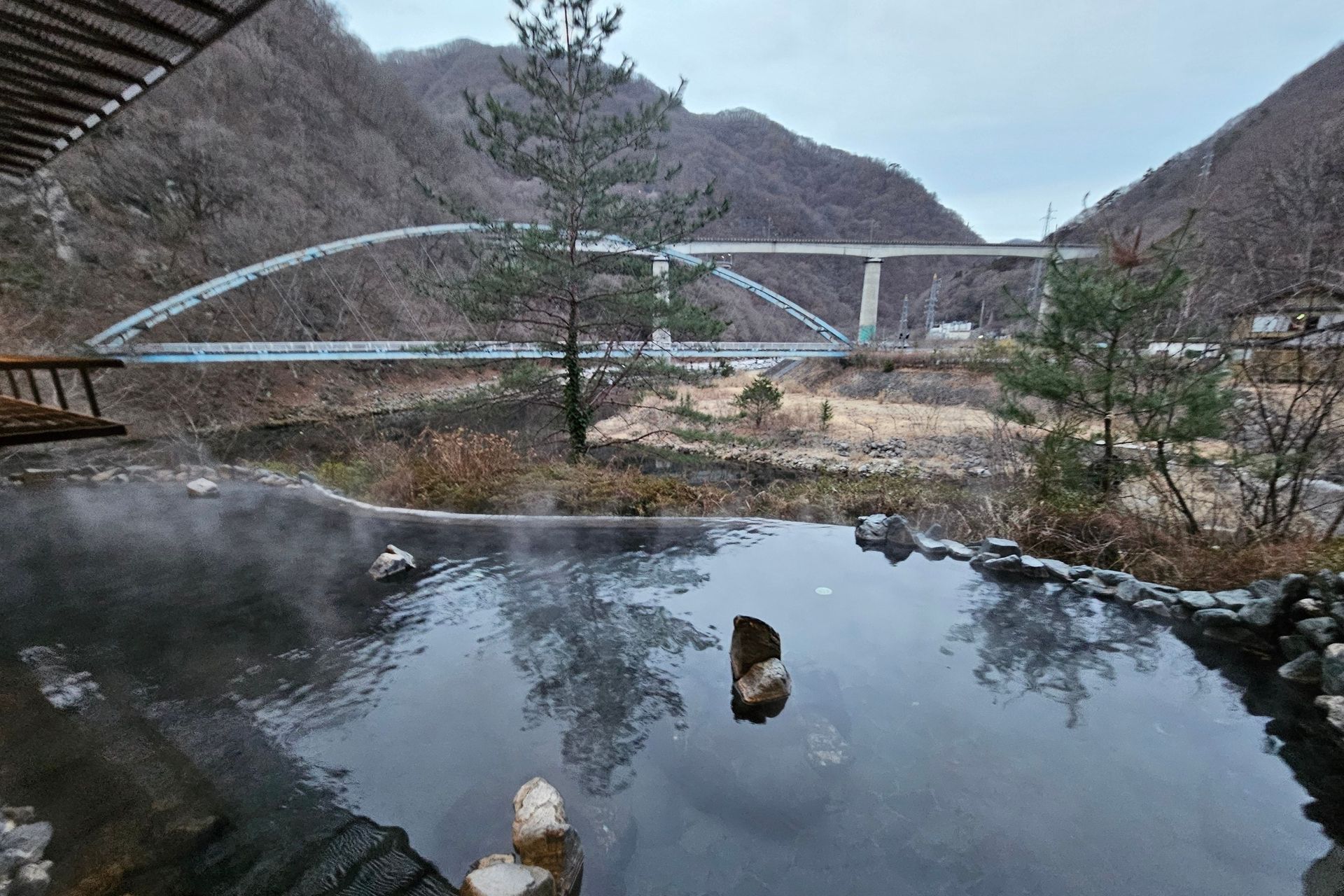
On the map
Loading map…
Nearby onsenchi
Within 50 kmSources
- Kinugawa & Kawaji Onsen Tourism Association — Official Portalofficial— Joint association for the two adjacent onsen towns; lodging lists, free public baths and the saying "Kawaji for cuts, Kinugawa for ailments".
- Kawaji Onsen — Wikipedia (English)— Discovery legend, alkaline simple chemistry, position at the confluence of the Kinu and Kawaji rivers.
- Aizu-Kinugawa Line — Tobu Railwayofficial— The single-track Tobu line that links Asakusa, Kinugawa, Kawaji and onward to Aizu — historically how the valley fills with bath travellers.
- Kawaji Onsen — Japan National Tourism Organization— Visitor-facing overview of the gorge village and its relation to Nikko.
- Kawaji Onsen — Nikko Tourism Association— The official Nikko City page, which now administers the area after the 2006 municipal merger.