
Kinugawa Onsen
鬼怒川温泉Tochigi resort town in the Kinugawa River gorge — gateway to Nikko and a long-time family destination, with cliff-top rotenburo overlooking the canyon.
From a domain bath to a Meiji resort
Kinugawa's recorded story begins in Genroku 4 (1691), when villagers led by Numao Shigobei found a spring on the right bank of the Kinugawa River and named it Taki Onsen, the "waterfall spring." From 1751 the bath fell under the jurisdiction of the Nikko magistrate, which closed it to the public for the rest of the Edo period: only feudal lords, samurai of their entourage, and high-ranking monks returning from pilgrimage to the Toshogu were permitted to bathe. The temple and shrine landholdings were dissolved after the Meiji Restoration, and in 1869 the spring opened to ordinary travellers. A second source, Fujiwara Onsen, was developed on the opposite bank in the early Meiji years, and in 1927 the two were merged under the present name, Kinugawa Onsen. The opening of what is now the Tobu Kinugawa Line two years later turned the valley into one of Kanto's standard weekend cures.
A gorge town stacked on the cliff
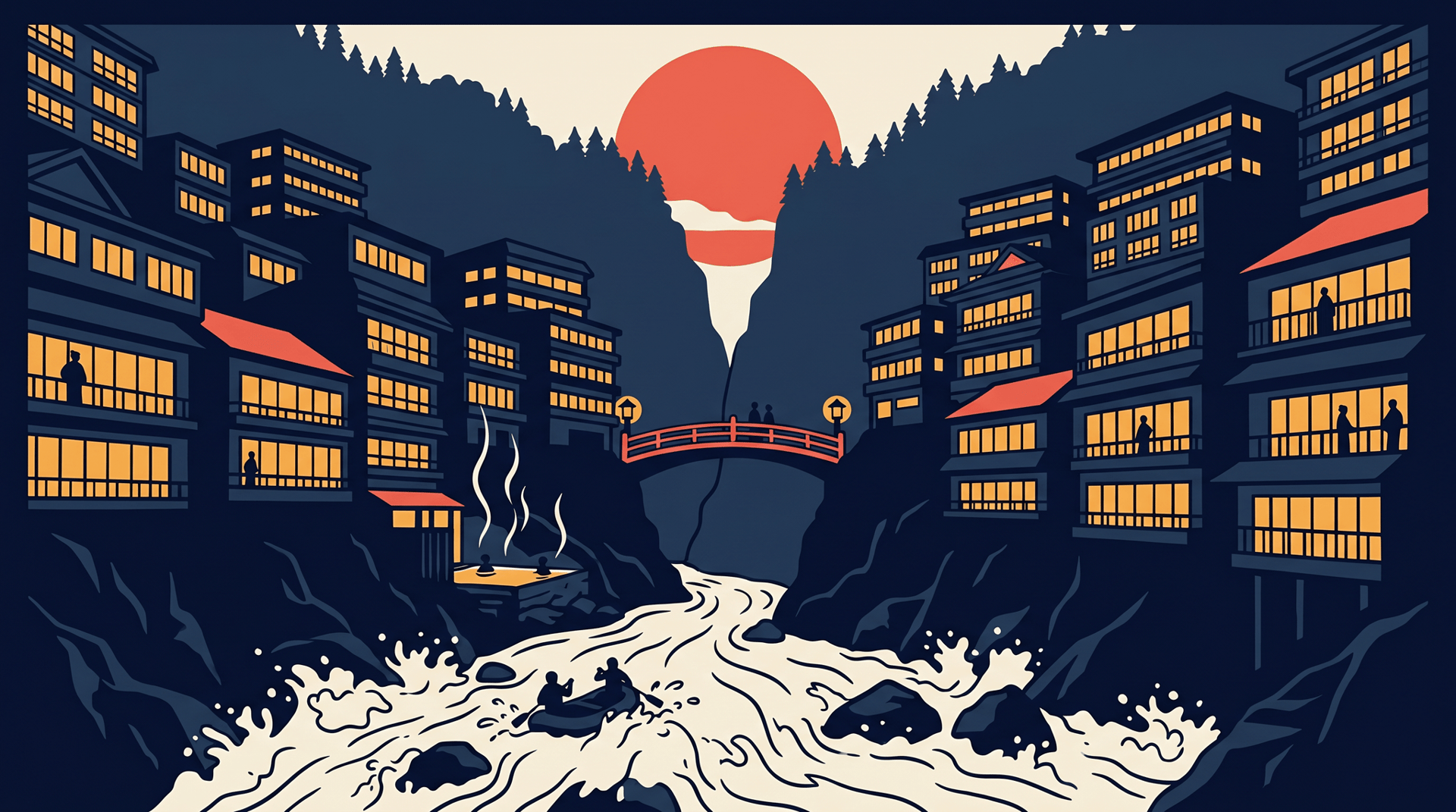
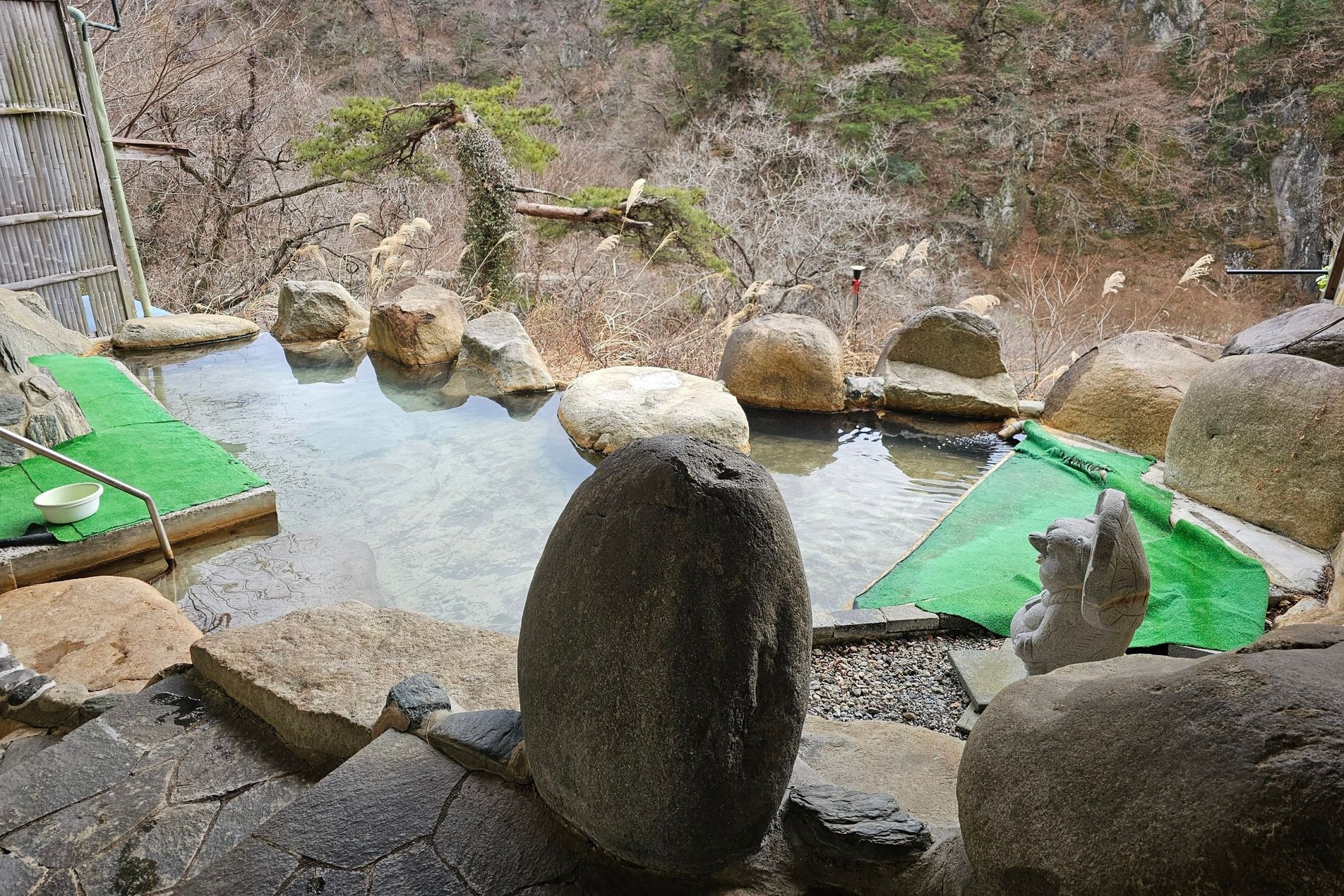
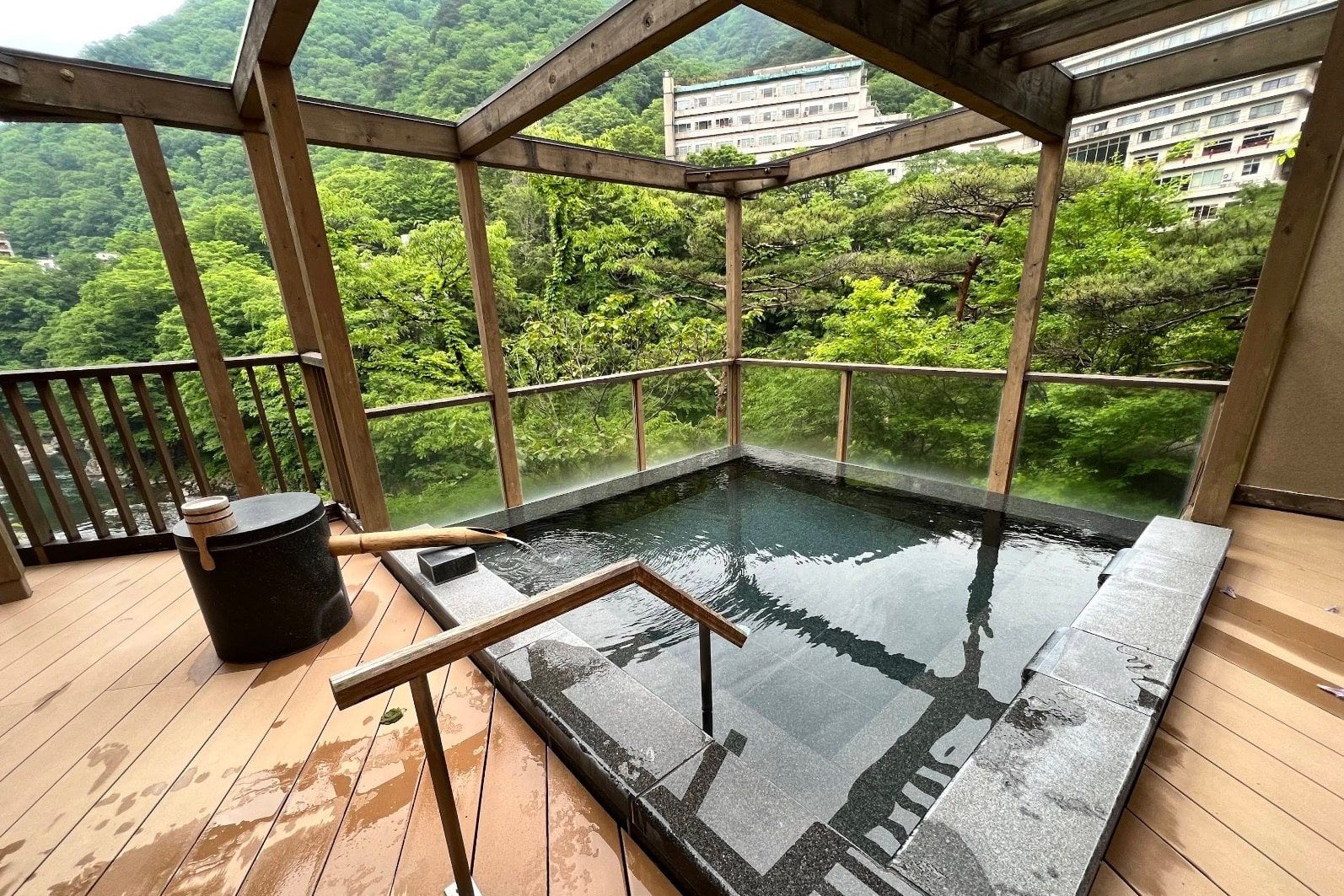
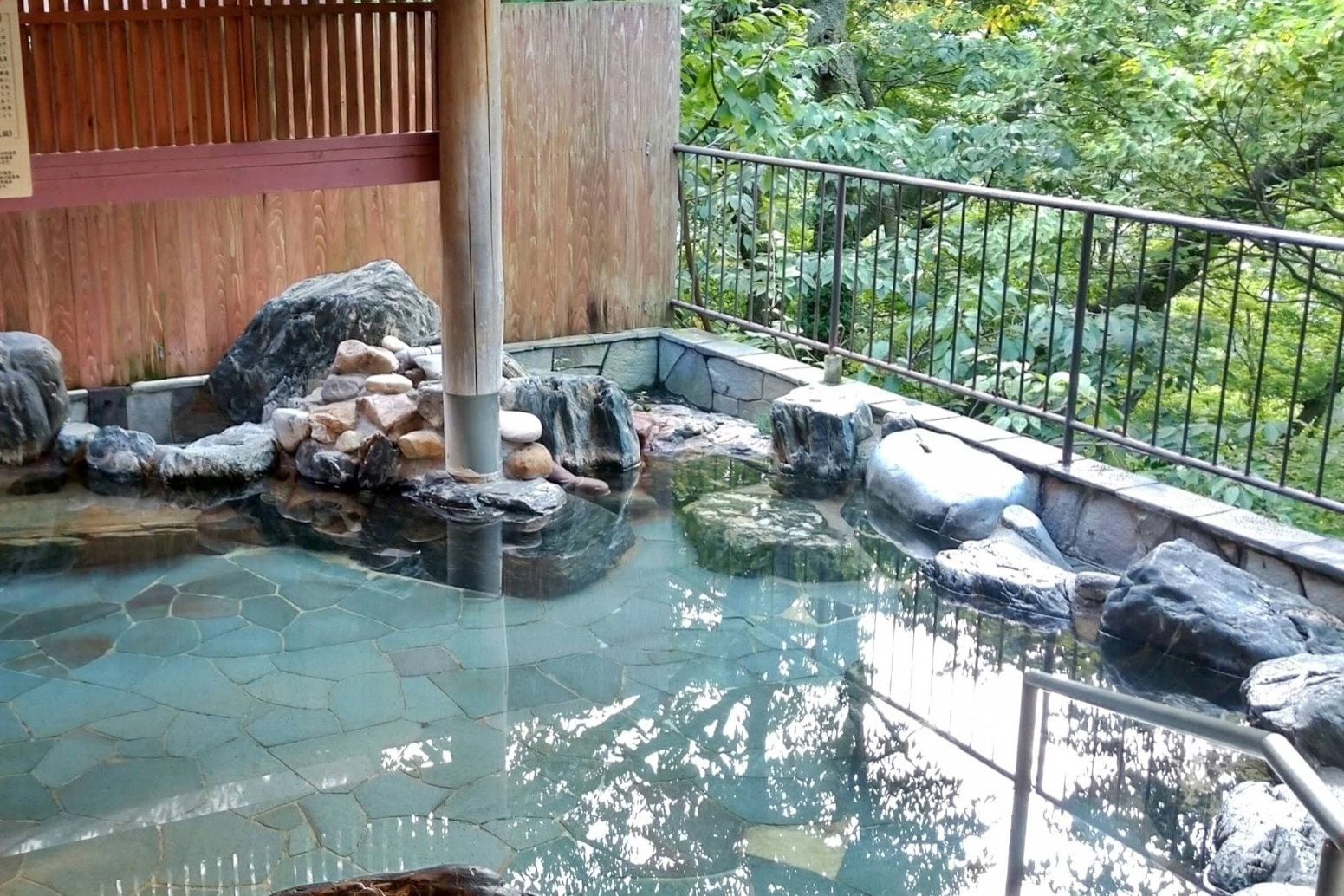
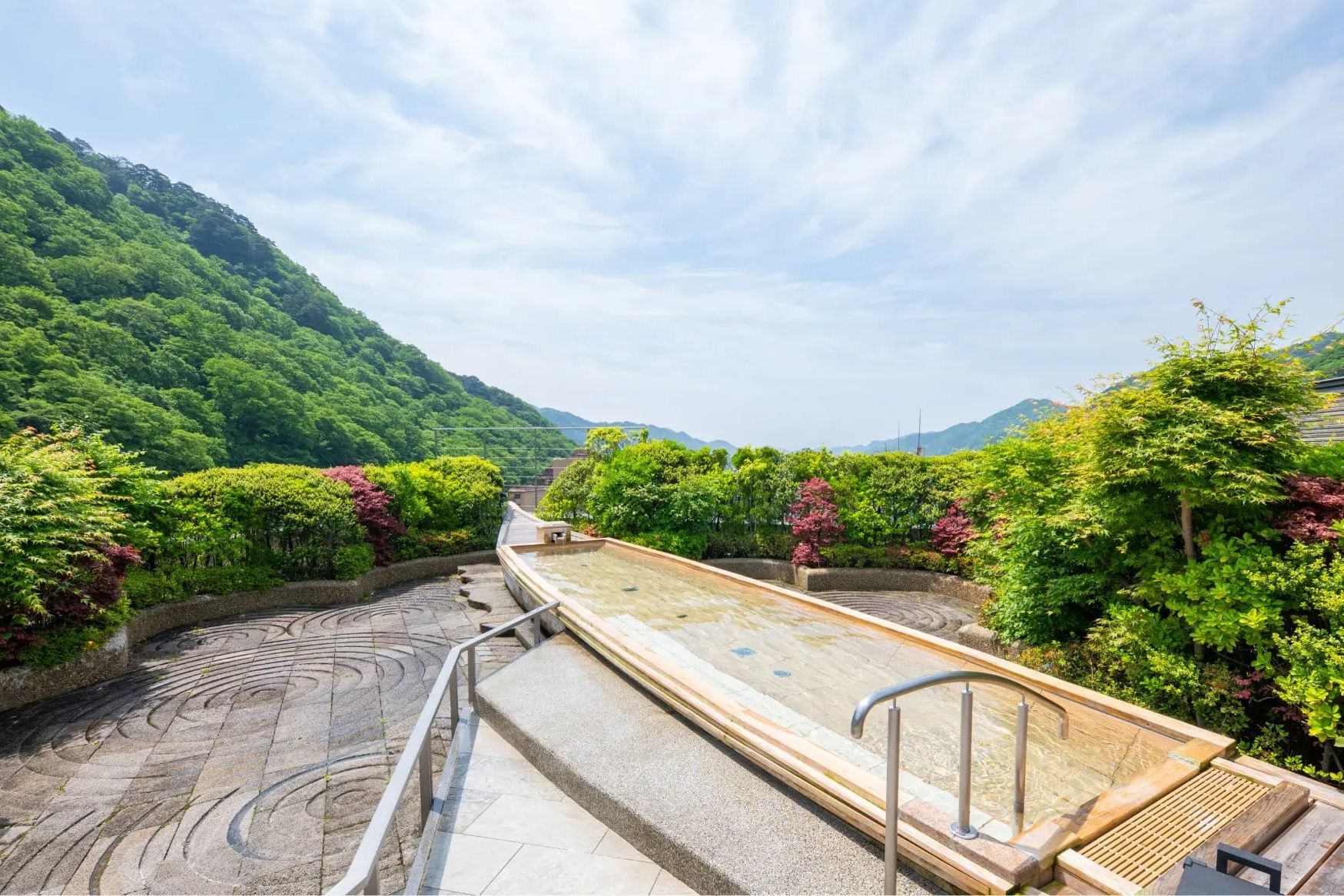
The resort sits in the deep ravine the Kinugawa has cut through the southern edge of the Aizu uplift. Ryokan and concrete hotels rise in tiers along both walls of the canyon, and the better rooms open straight onto the rapids, with outdoor baths cantilevered out over the drop. The water is an alkaline simple spring, near-neutral and almost odourless, easy on the skin and on long soaks. A footnote of the late-Showa tourism collapse is also part of the present landscape: several ferro-concrete hotels along the river were shuttered after the bubble burst and never demolished, and the cluster visible downstream from Takimi-bashi has become an unintended landmark in its own right, drawing a small steady audience of urban-exploration photographers.
Day-trip range
Kinugawa is close enough to Tokyo that many people come and go on the same day: the Tobu line runs limited expresses from Asakusa in about two hours, and the Spacia X continues to Kinugawa Onsen Station at the centre of the resort. Around the valley sit Edo Wonderland (Nikko Edomura), a working-set theme park reconstructing an Edo-period town, and a section of the Kinugawa run as a river-boat course through the gorge, both within a short bus or taxi ride.
Places in this area
25 places · Sorted by rating
 Lodging
鬼怒川温泉 あさや
Tochigi
自然浴 離れの湯 あけび
Tochigi
鬼怒川温泉 ゆらら 丸京
Tochigi
Closed & restricted
1
On the map
Loading map…
Nearby onsenchi
Within 50 kmSources
- Kinugawa Onsen Ryokan Association — About the Springsofficial— Source for the 1691 discovery as Taki Onsen, the Edo-period restriction to daimyo and high-ranking monks, and the 1927 unification under the name Kinugawa.
- Nikko City Tourism Association — Kinugawa Onsenofficial— Official municipal description of the resort, water profile, and Tobu Kinugawa Line access.
- Nikko City — Kinugawa Onsenofficial— Municipal history page noting the 1927 naming and the post-1929 railway-driven expansion.
- 鬼怒川温泉 — Wikipedia (Japanese)— Chronology of Taki Onsen and Fujiwara Onsen, dam-era source expansion, and modern attractions including Edo Wonderland.
- Japan Today — Kinugawa Onsen reversing its ruins image— Background on the post-bubble closures and the abandoned hotels visible from Takimi Bridge.