

Ginzan Onsen
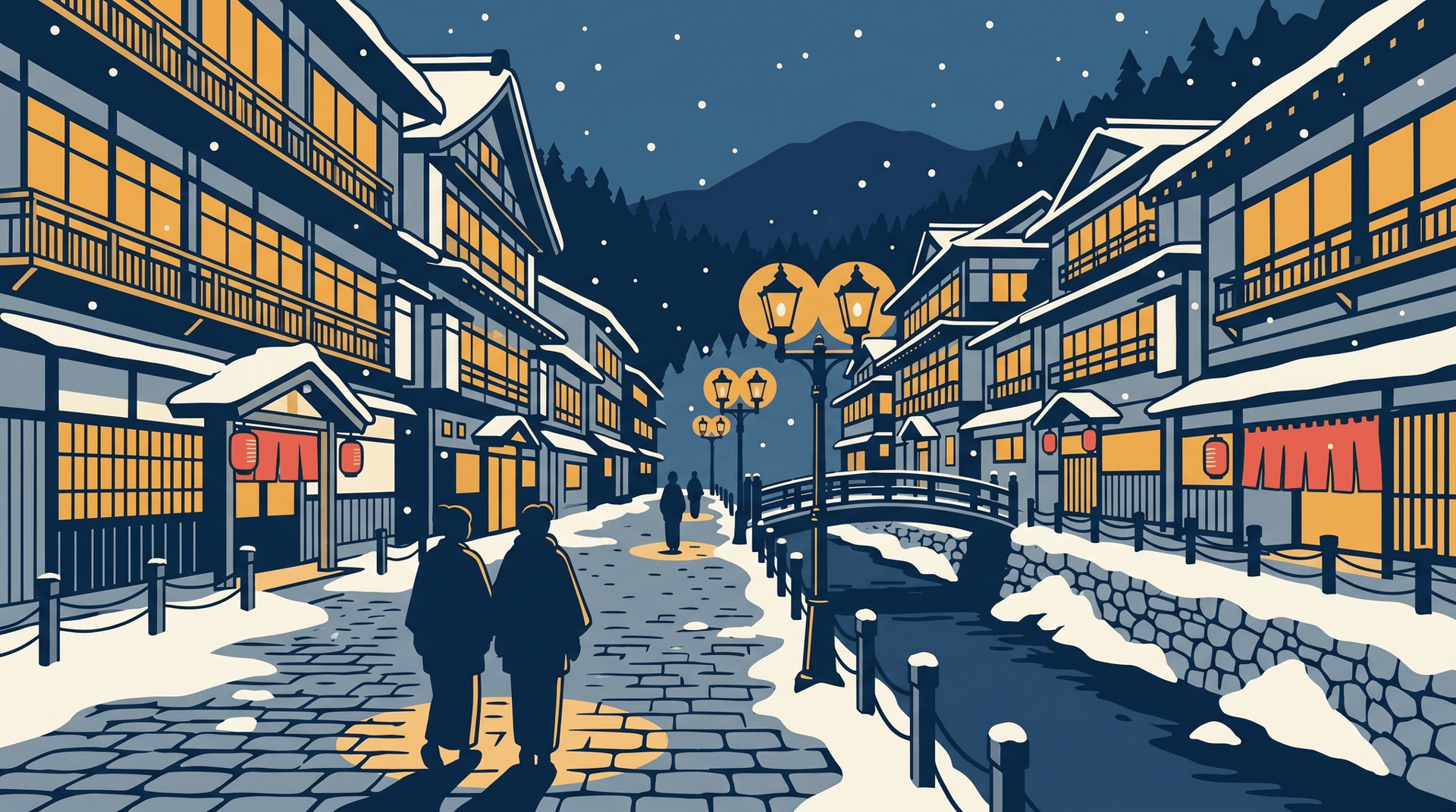
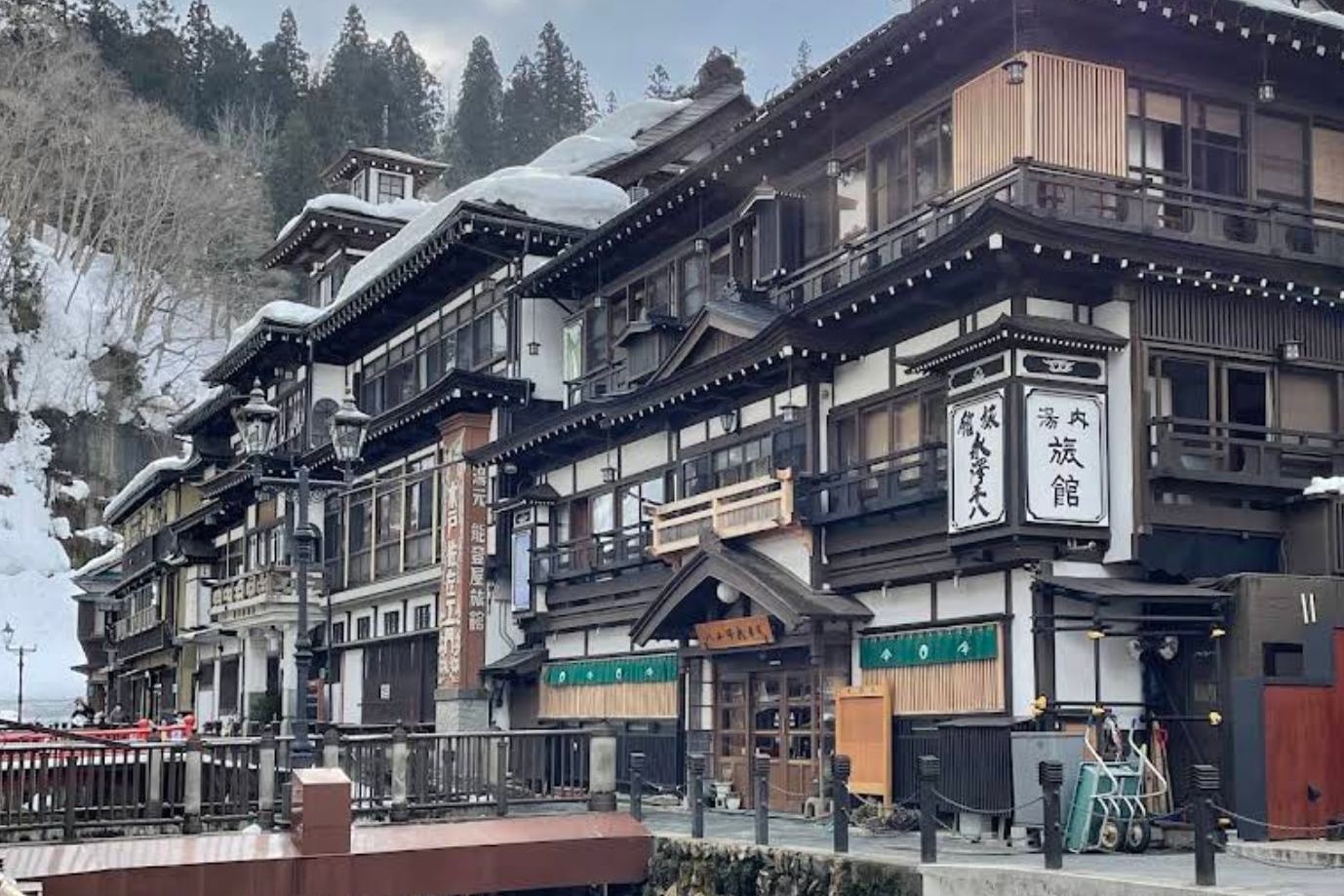
銀山温泉Iconic Taisho-era street of wooden inns lit by gas lamps in the snow. Tucked into a narrow gorge in Yamagata.
From silver shaft to bathing town
The name belongs to the Nobesawa silver mine, discovered in 1456 in the hills above what is now Obanazawa and worked at full tilt through the early Edo period as one of Japan's great shogunate-controlled lodes. As the silver thinned out after the mid-17th century the miners drifted away, and the workings left behind were quietly inherited by the hot springs they had cut into while digging. For two centuries the valley was a modest toji settlement of thatched cottages and small inns, until a flood on the Ginzan River in 1913 swept most of those buildings away. Recovery was slow, helped along first by a small hydroelectric station in the early 1920s and then, decisively, by a 1926 bore that finally brought up hot water in volume. The inns rebuilt themselves in the modern manner of the moment: three- and four-storey timber-framed houses with deep wooden balconies, white plaster panels, and ornamental kote-e relief on the upper walls. Most of what stands along the river today dates to that Taisho-into-early-Showa rebuild, preserved since 1986 under a local townscape ordinance.
Gas lamps over the river
The town is essentially one short street, folded along both banks of the Ginzan and stitched together by stone bridges. Cars stop at the edge; the central lane belongs to people in yukata and geta. At dusk the gas lamps come on along the walkways and the upper-storey lattices, and the river runs gold between the rows of wooden balconies, which is the picture that has put Ginzan on so many lists of Japan's prettiest onsen towns. Winters here are heavy, with the inn eaves carrying real weight of snow from late December through February, and the lit facades reading even more theatrically against a white street.
After Oshin
National recognition arrived through television. The 1983 NHK morning drama Oshin, set partly in the snows of Yamagata, used Ginzan as a stand-in for the heroine's home valley and pulled a generation of viewers up the prefecture road for the first time. The town has been a domestic pilgrimage site ever since, and the preservation rules in place by the mid-1980s ensured the visitors found something close to what the screen had promised.
Places in this area
7 places · Sorted by rating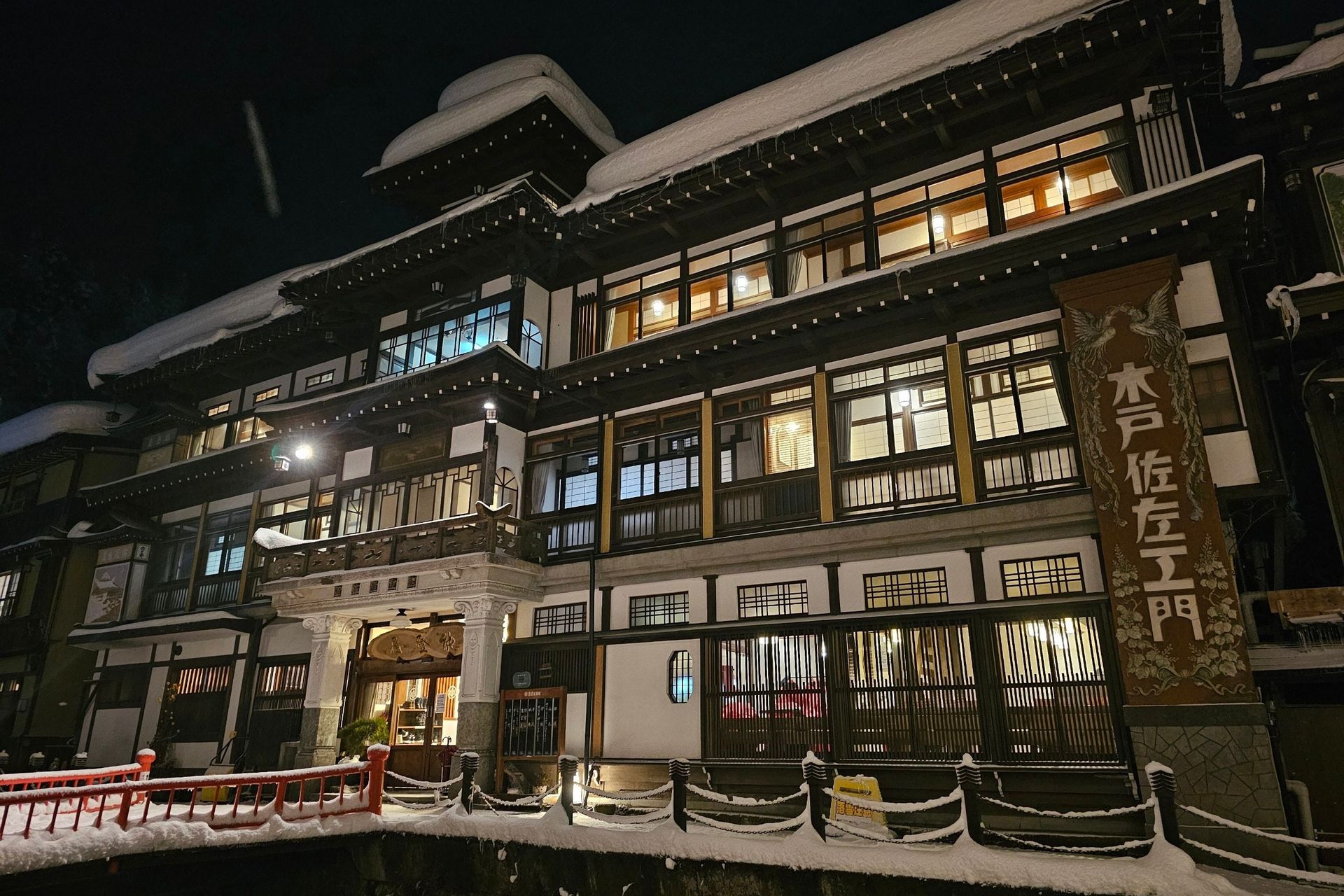 Lodging
銀山温泉 能登屋旅館
Yamagata
 Lodging
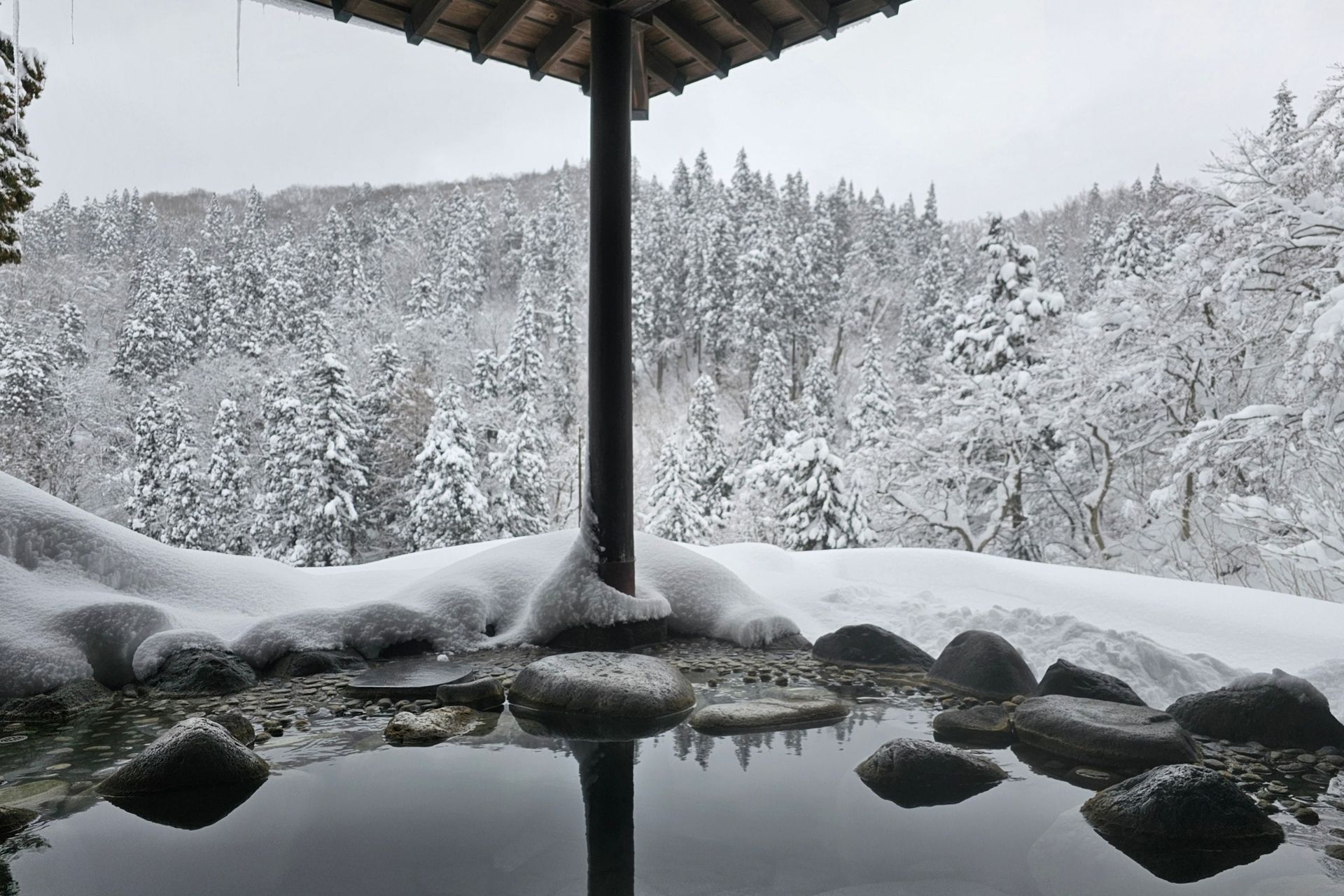
瀧見舘
Yamagata
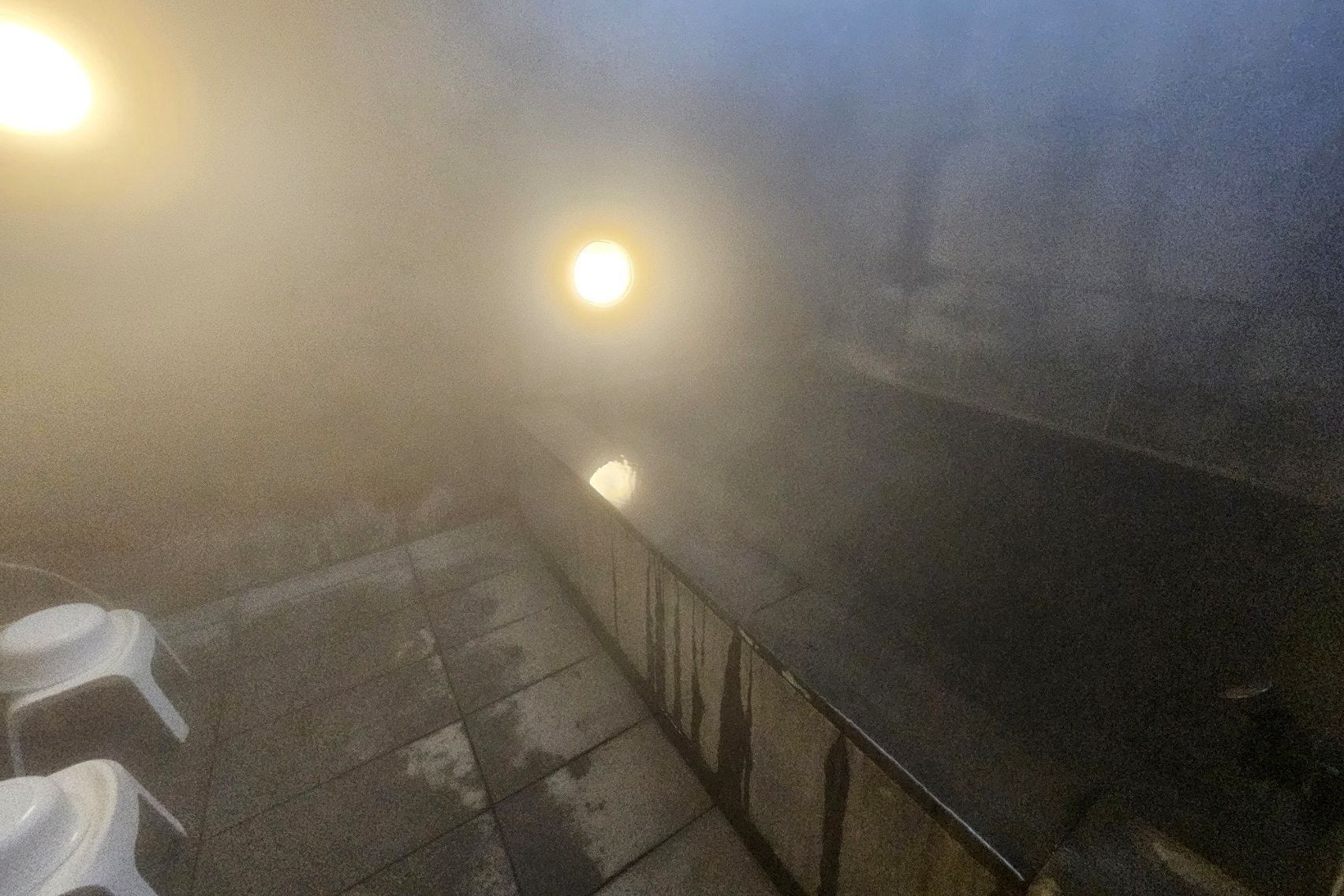
銀山温泉・仙峡の宿 銀山荘
Yamagata
 Lodging
古勢起屋別館
Yamagata
御宿やなだ屋
Yamagata
On the map
Loading map…
Nearby onsenchi
Within 50 kmSources
- Ginzan Onsen Official Siteofficial— Ryokan association portal, source for the gas-lamp Taisho-romance promise.
- Ginzan Onsen Official Site, Historyofficial— Timeline from the Nobesawa mine to the 1926 boring of a hot, high-volume source.
- 銀山温泉, Wikipedia (Japanese)— Chronology of the 1913 flood, the multi-storey wooden reconstruction, and the 1986 preservation ordinance.
- Ginzan Onsen, Wikipedia (English)— General visitor overview, the Oshin connection, the pedestrian-only centre.
- Nippon.com, Ginzan Onsen— English feature on the Taisho architecture and snowbound winter atmosphere.