
Zao Onsen
蔵王温泉Sulfur springs at 880m on Mount Zao. Ski-and-onsen pairing in winter; famous frost-covered 'snow monsters' in late January.
Nineteen centuries on the west flank of Mount Zao
Zao traces its founding to the year 110 CE. The legend belongs to the eastern campaign of the semi-mythical prince Yamato Takeru: one of his retainers, a warrior named Kibitsuhiko no Mikoto (also read Kibi no Takayu), was struck by a poisoned arrow and stumbled on a hot spring deep in the volcanic forest. He bathed, recovered, and gave the place his name. For most of its history the village was known as Takayu, "high springs," and it served as a quiet toji bath for pilgrims walking the Zao ridge.
The modern resort is a twentieth-century creation. Roads reached the springs in the Taisho era, and in 1925 the area opened one of the earliest ski grounds in northern Japan. Inns expanded into hotels and pensions through the post-war decades, and the village was eventually absorbed into the city of Yamagata. Today it sits at about 880 meters on the western slope of the Zao volcanic range, the spa town and the ski mountain functioning as one organism.
Acid sulfur and the ravine bath
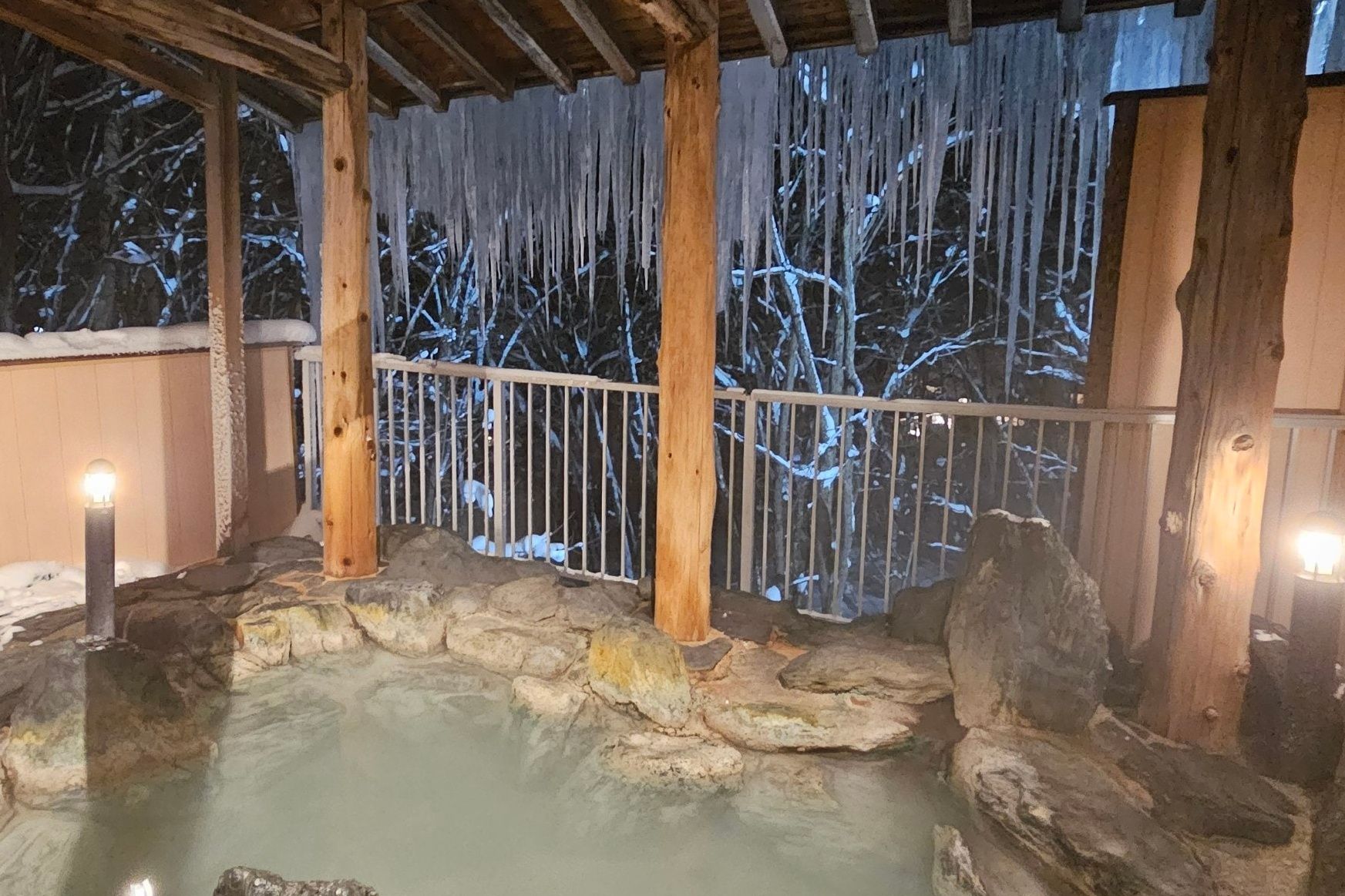
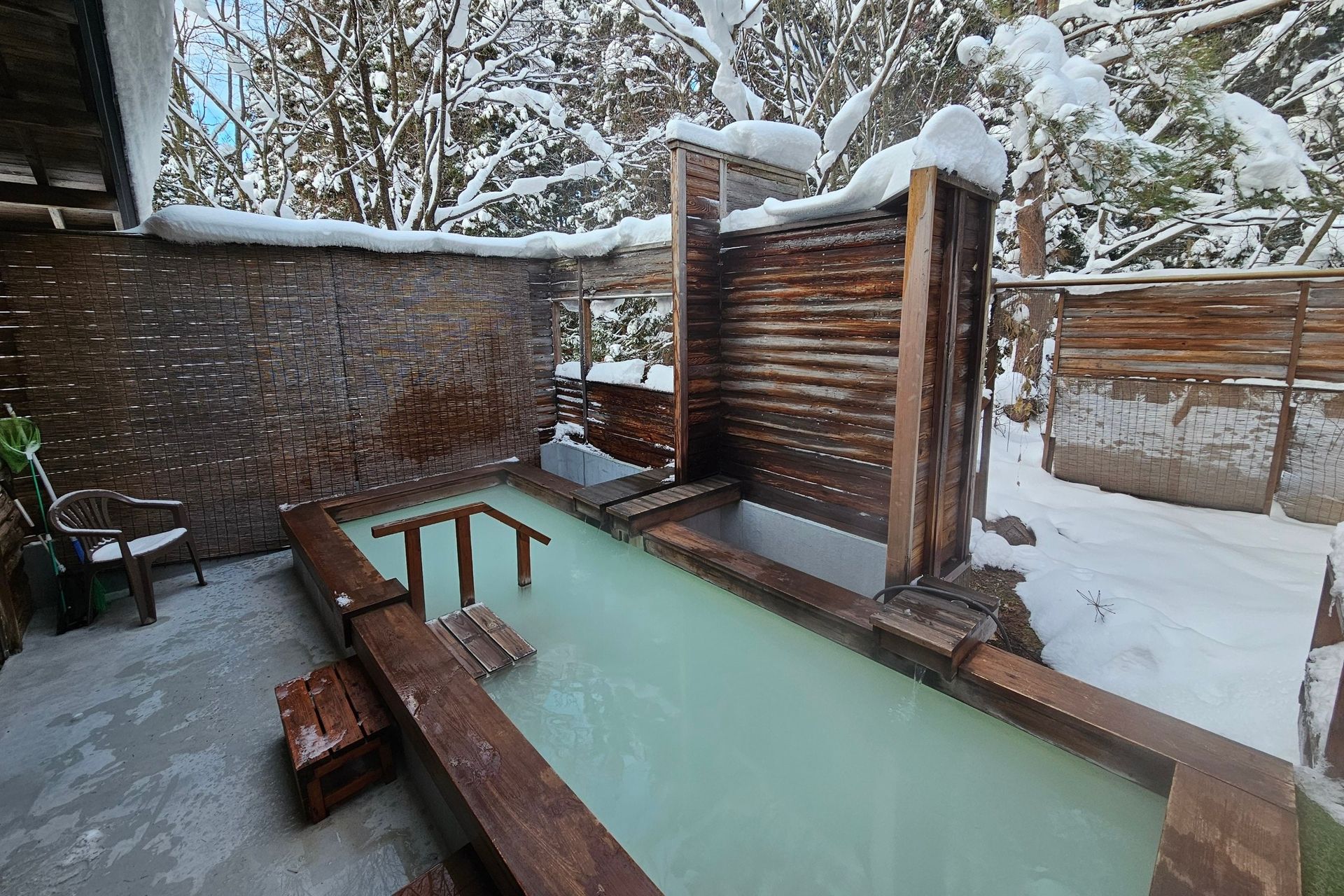
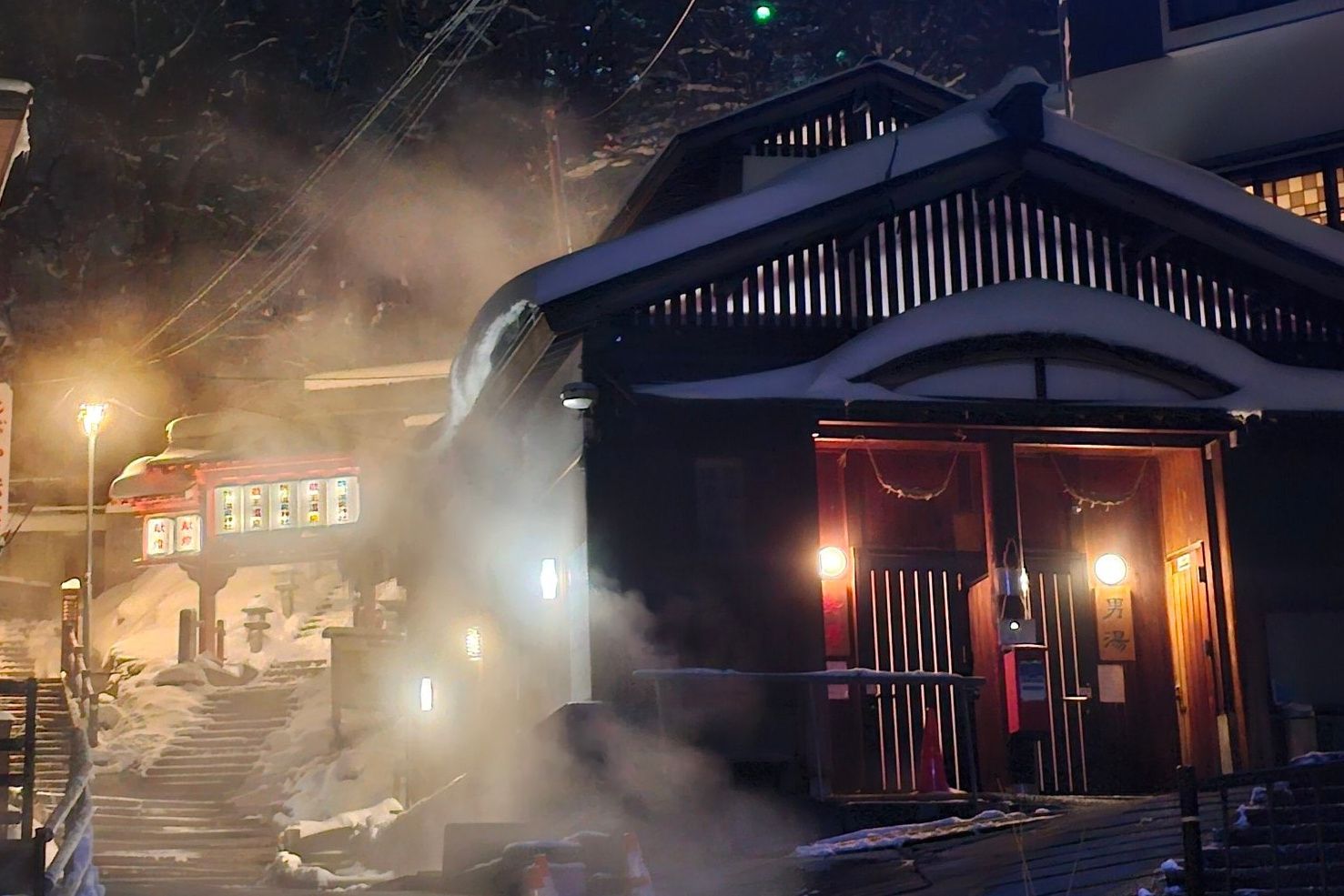
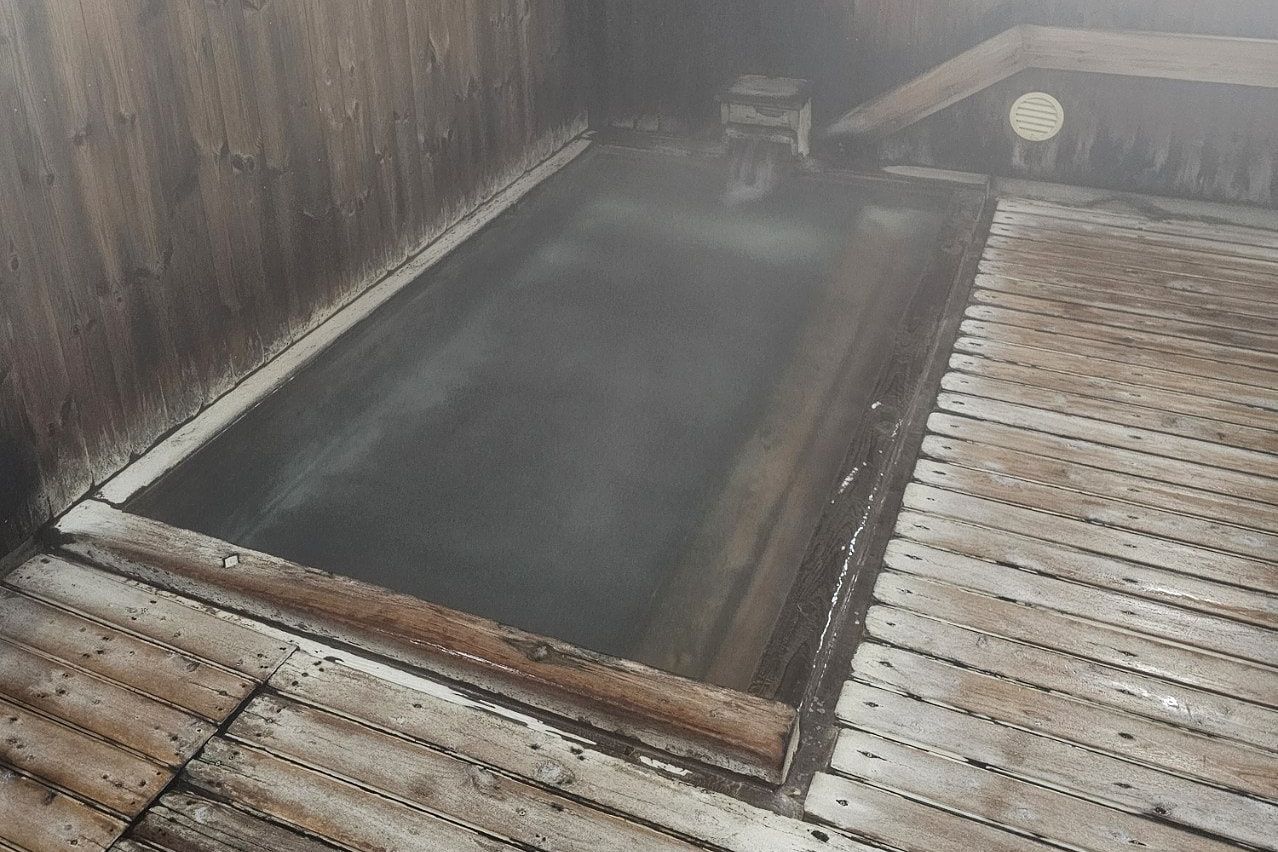
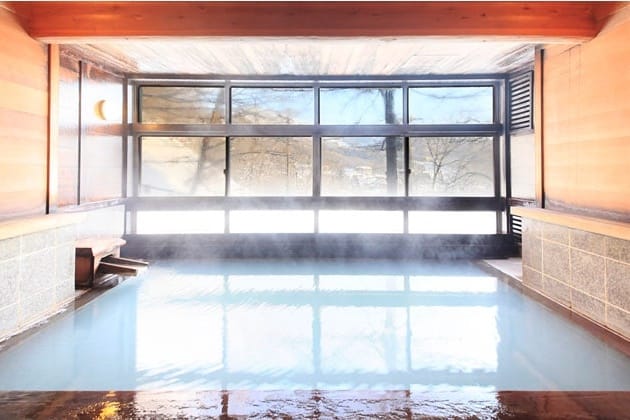
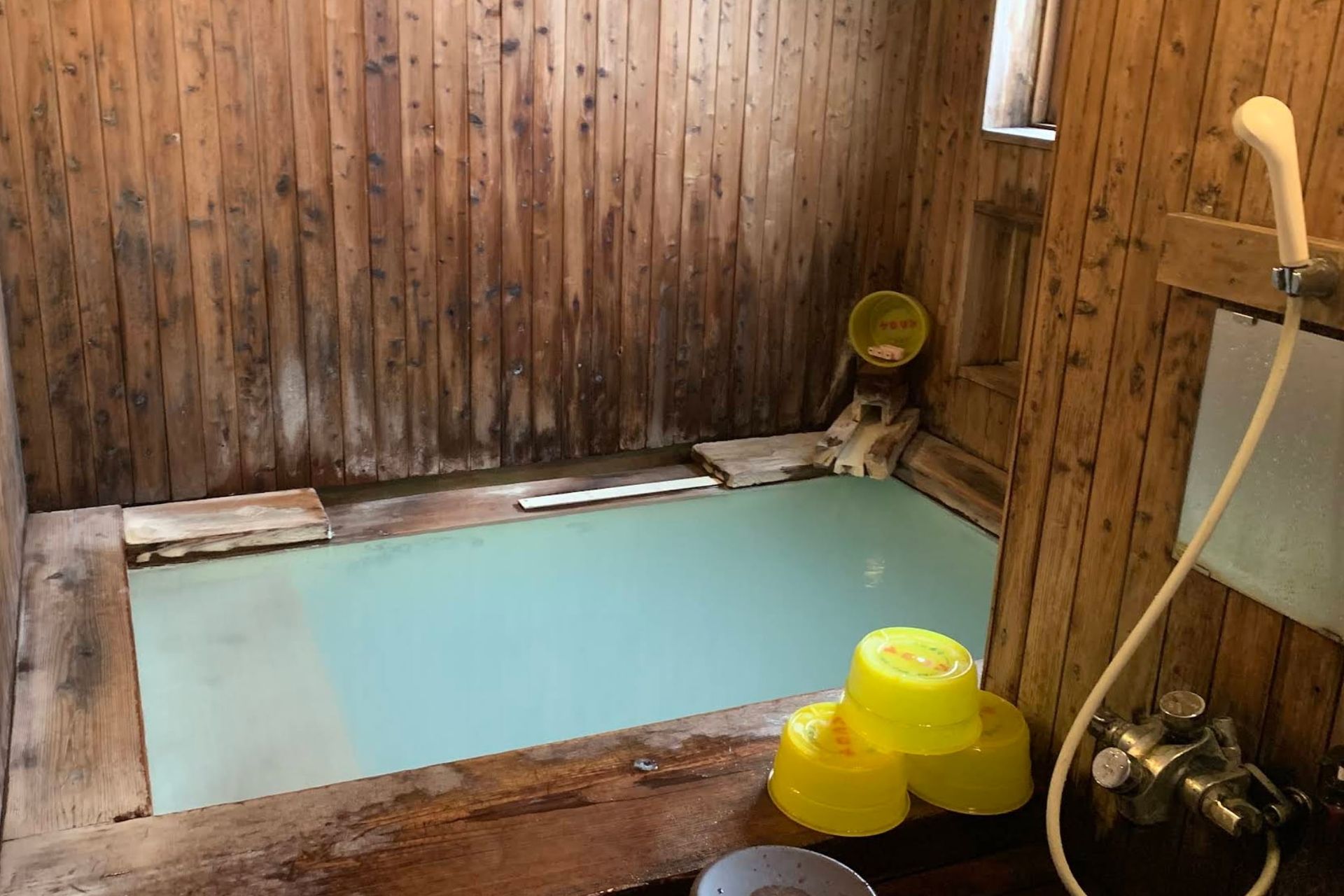
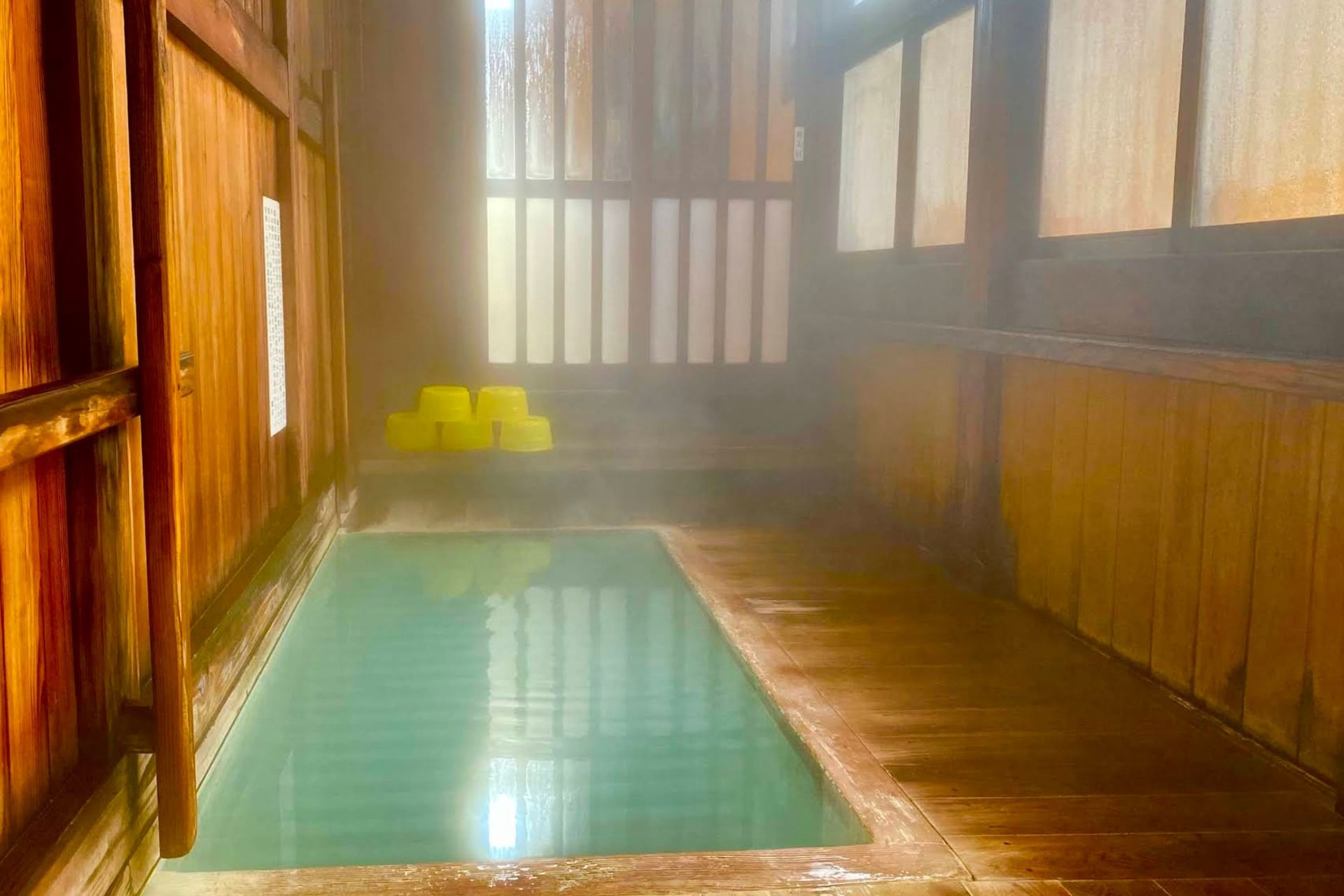
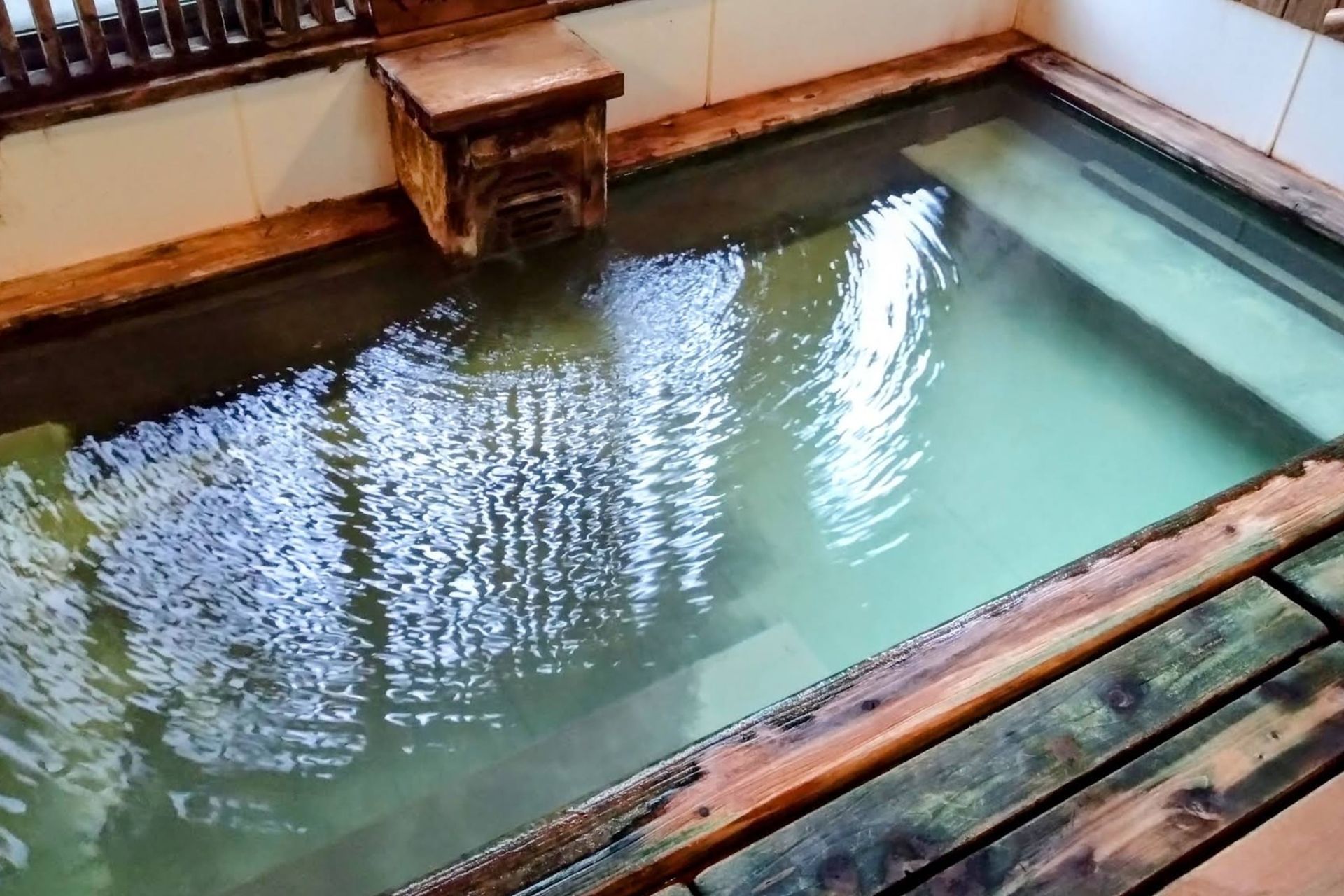
The water is what people come back for. Five source groups feed roughly 47 individual springs, pouring out about 5,700 liters per minute of a strongly acidic sulfur-aluminum-sulfate-chloride water at pH 1.25-1.6, among the most acidic onsen waters in the country. The smell of sulfur hangs over the village, the milky discharge runs through every street channel, and the local nickname bijin no yu (beauty spring) has stuck for centuries because the acid water sloughs old skin in a way few other onsen can match.
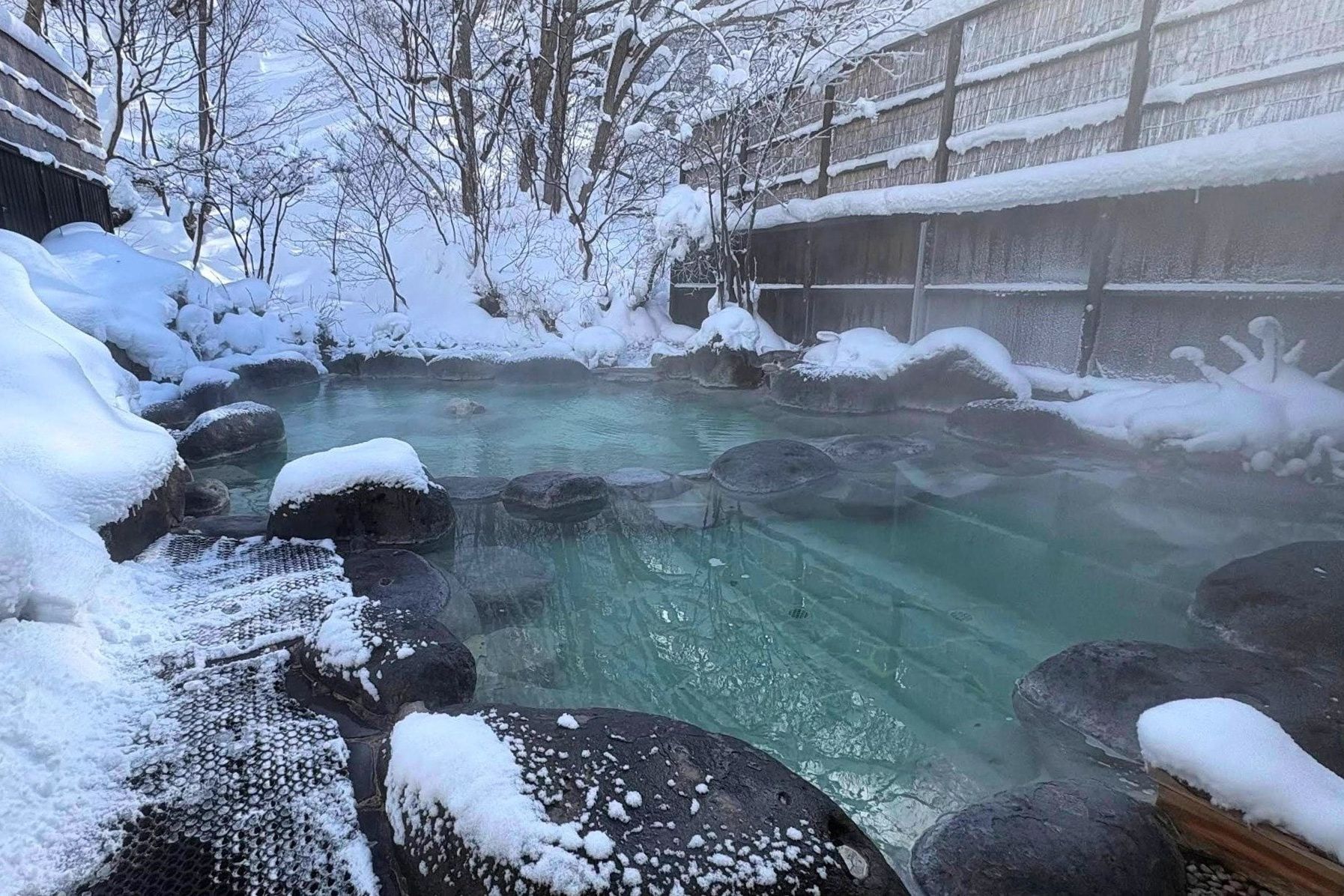
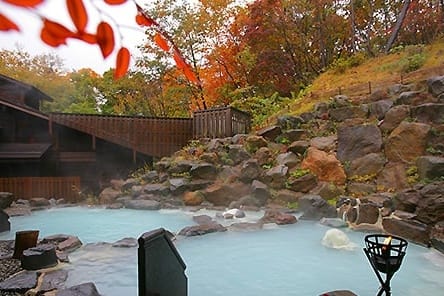
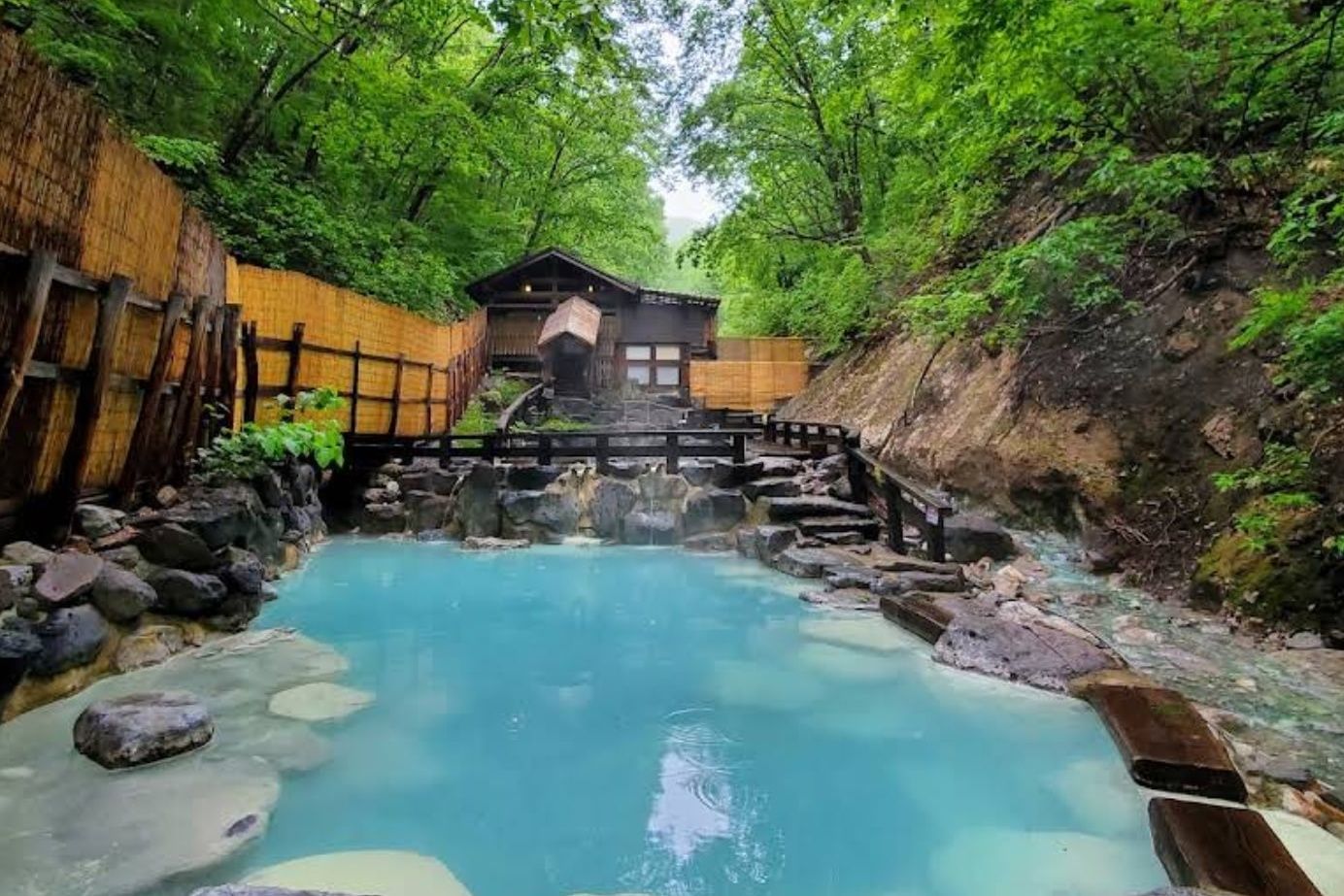
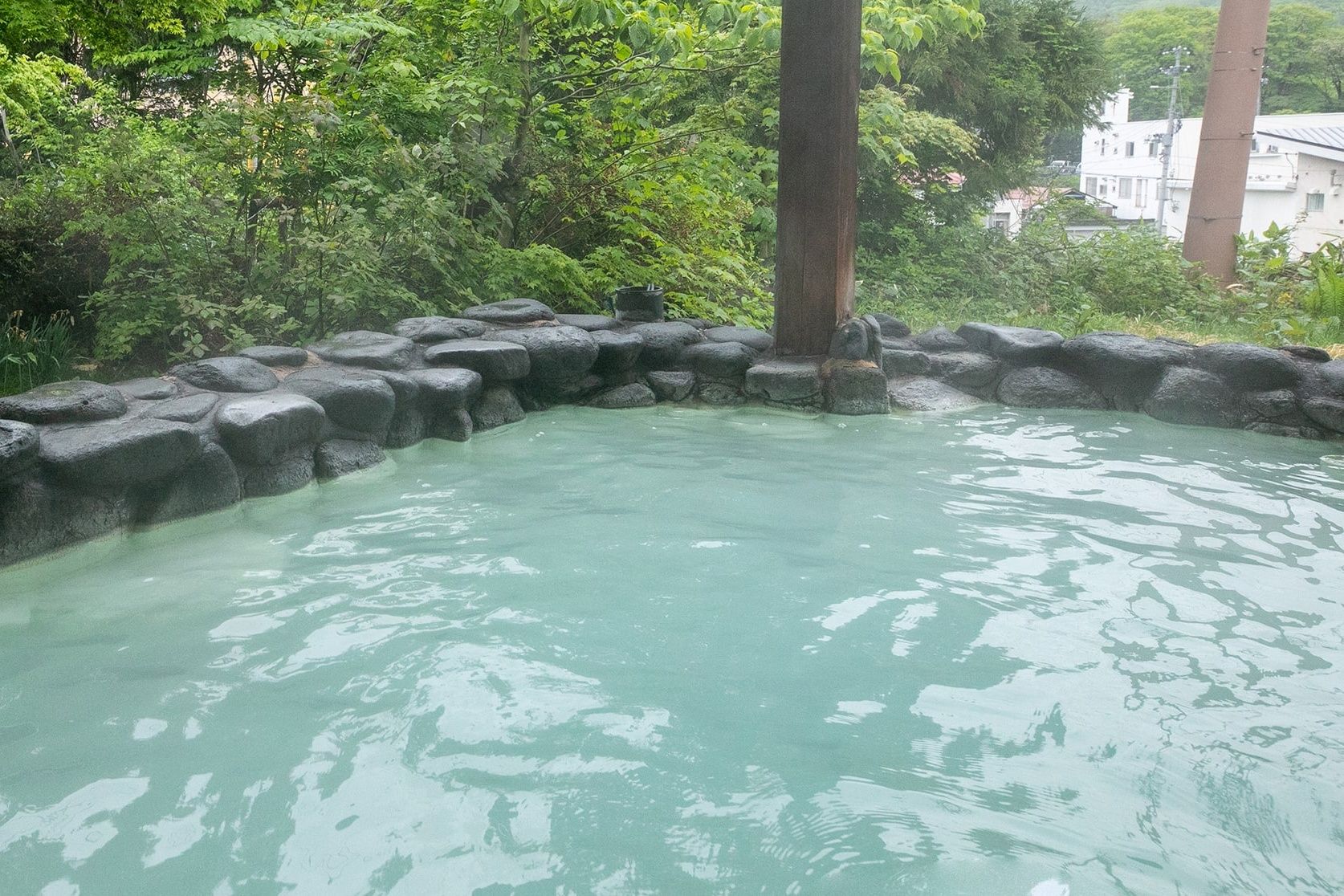
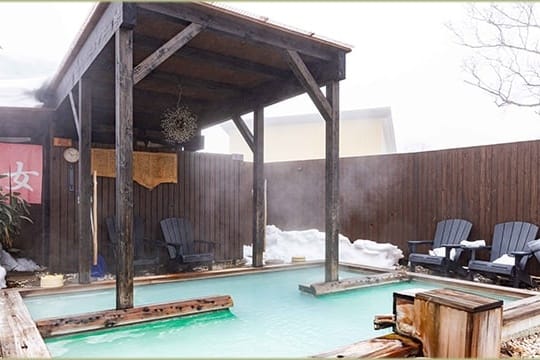
The signature bath is the Dai-rotenburo, a series of open-air pools terraced down a wooded ravine on the edge of town. It runs from spring through late autumn and closes when the snow arrives. Steam rises through the cryptomeria, the water reaches the upper pool at scalding temperature, and the rocks below are stained chalk-white by decades of mineral deposit.
Skis above, crater lake beyond
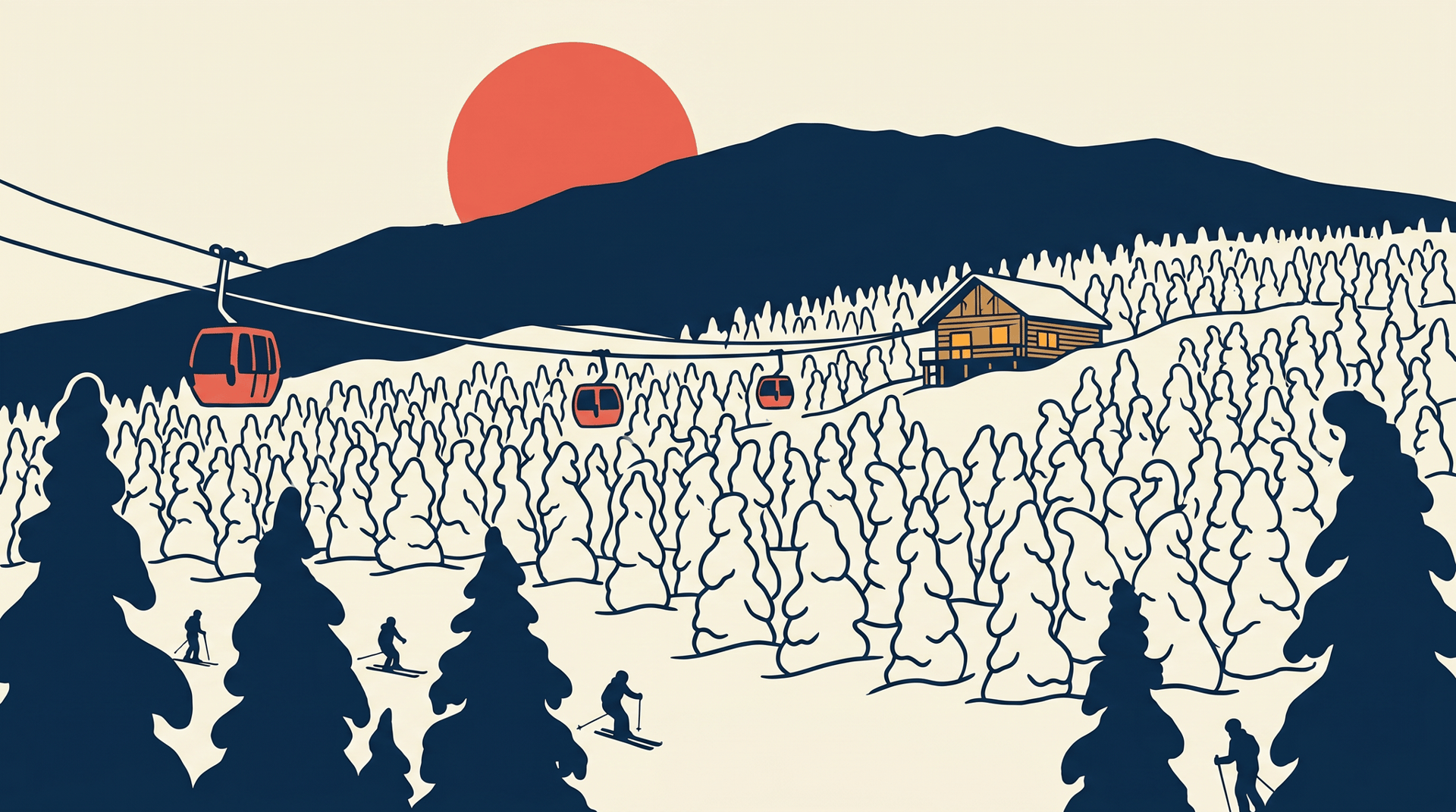
In winter the village turns into the lower station of Zao Onsen Ski Resort, one of the largest in Tohoku and the place most associated with juhyo, the snow monsters: Maries' fir trees on the upper mountain encrusted by rime ice into hulking white forms, lit at night from late December through February. In the green season the same ropeways carry hikers up toward Okama, the cobalt-green crater lake at the summit of the Zao range, perhaps the most photographed volcanic feature in northern Honshu.
Places in this area
36 places · Sorted by rating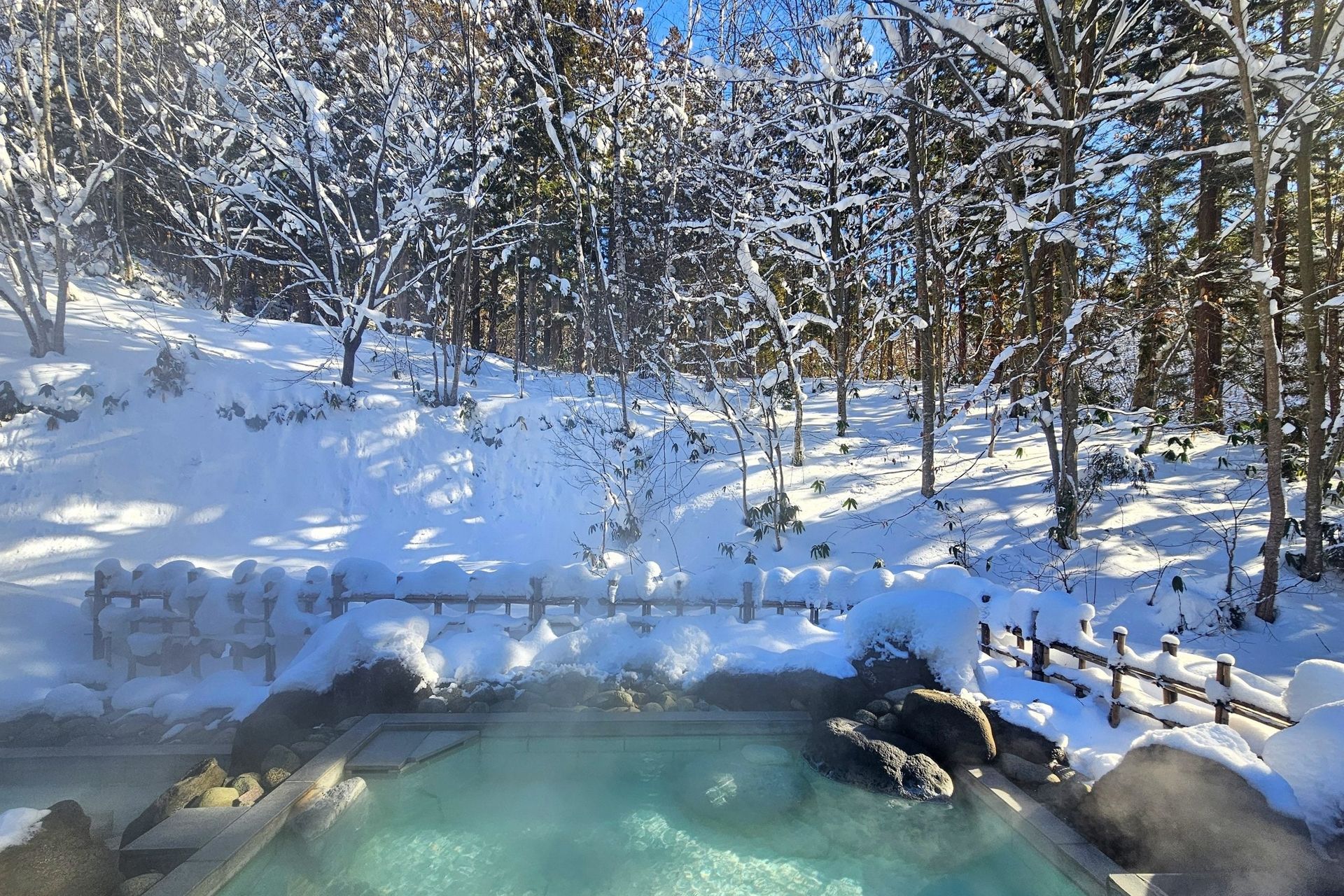 Lodging
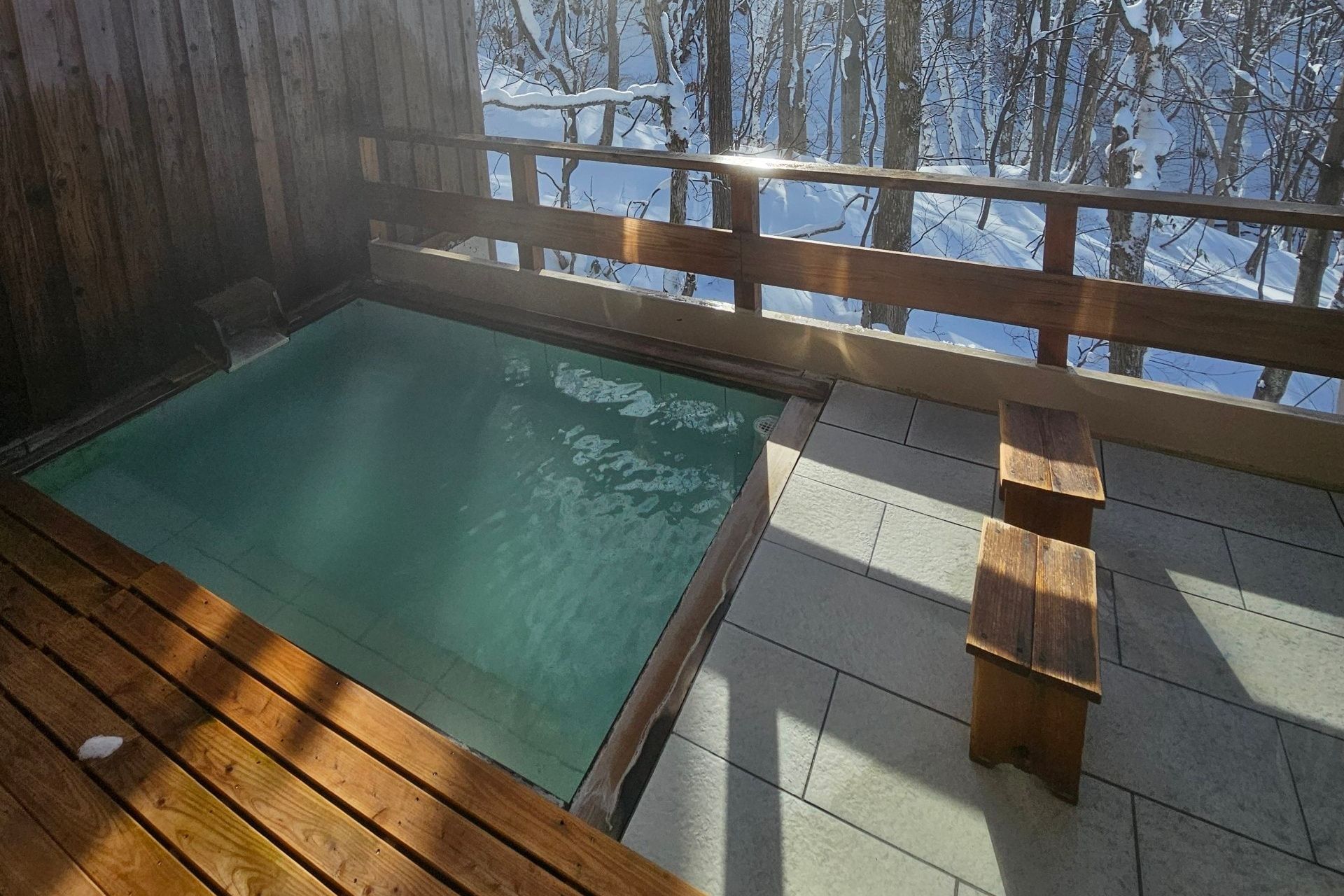
堺屋 森のホテル ヴァルトベルク
Yamagata
 Lodging
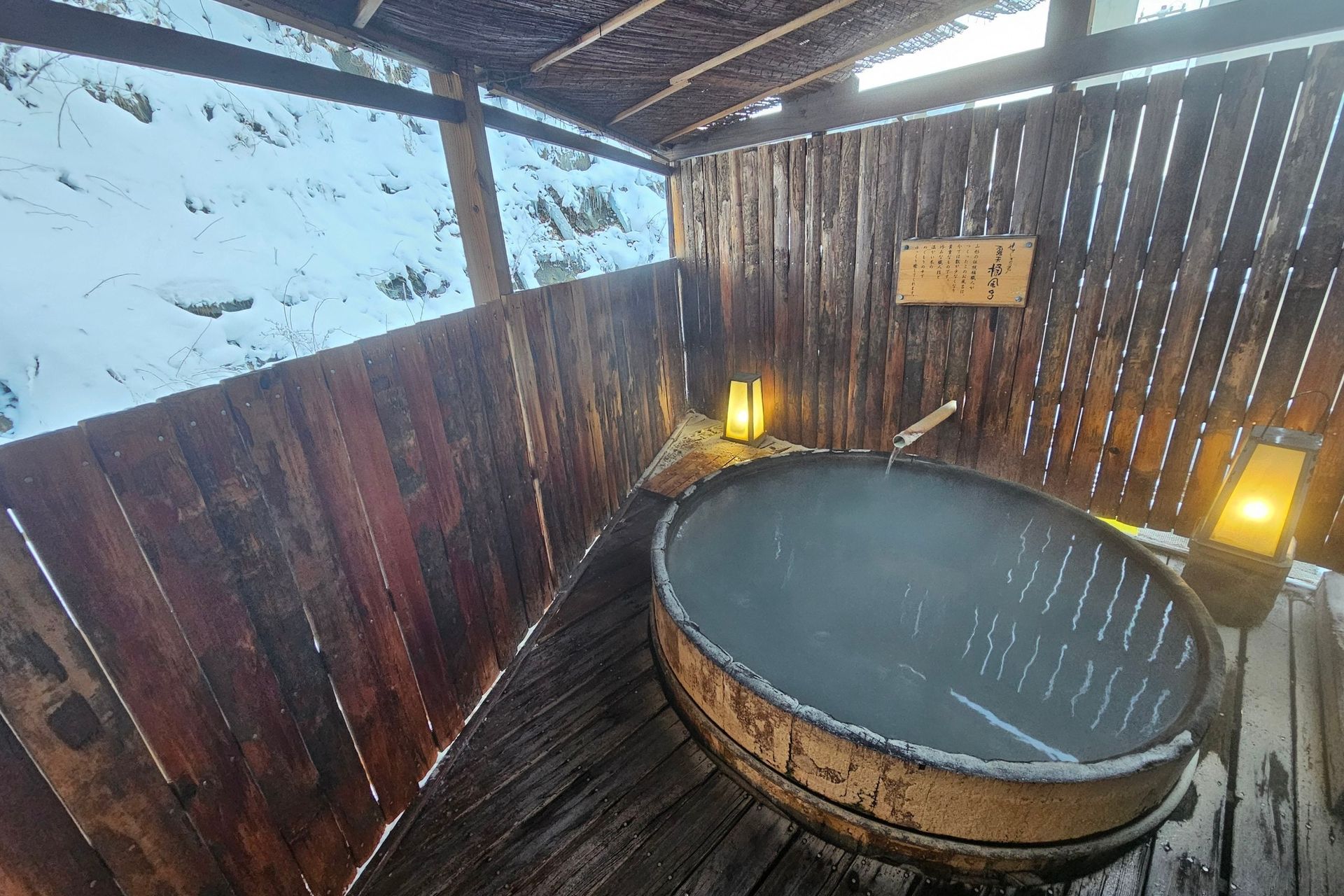
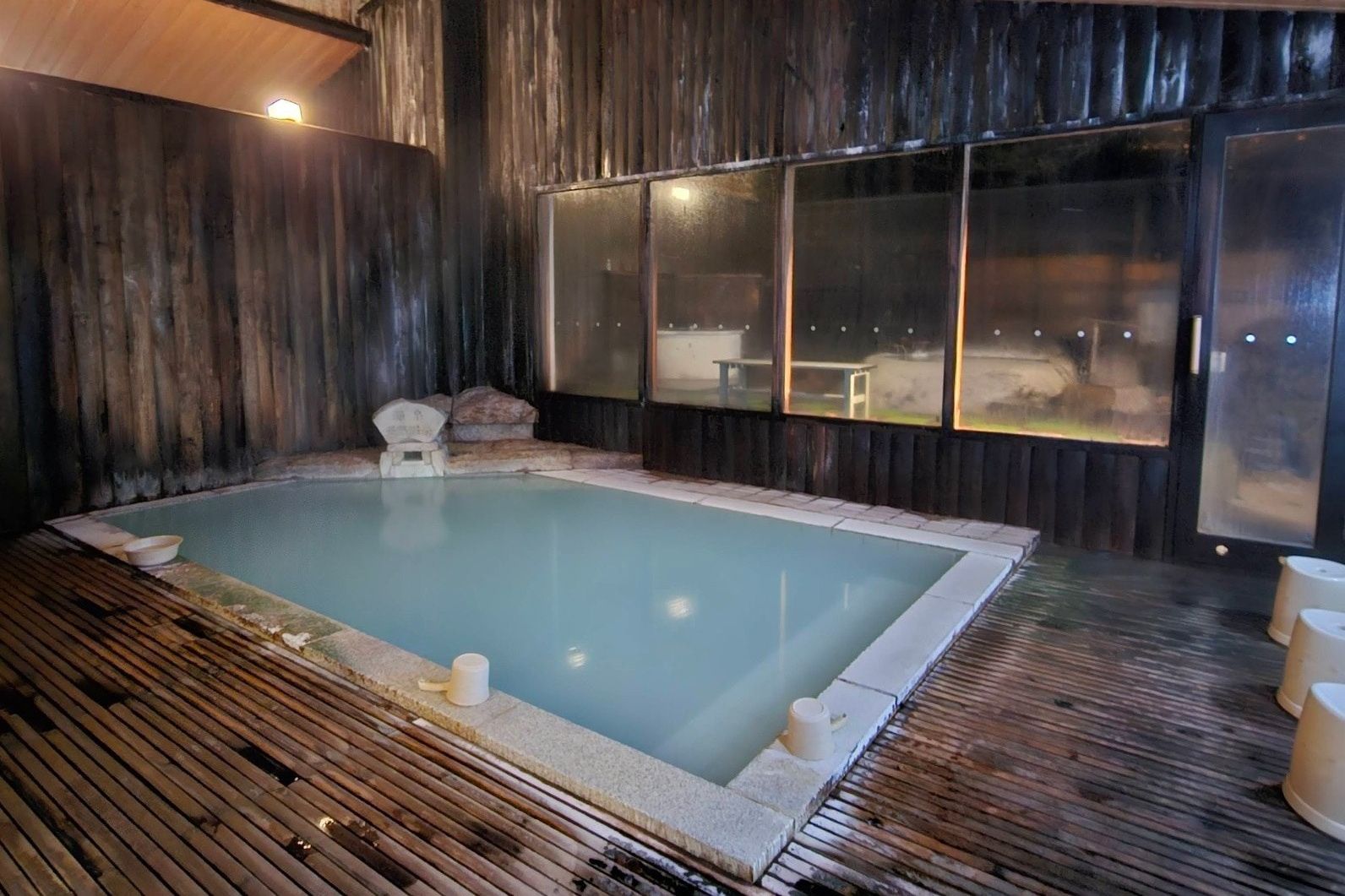
JURIN
Yamagata
 Lodging
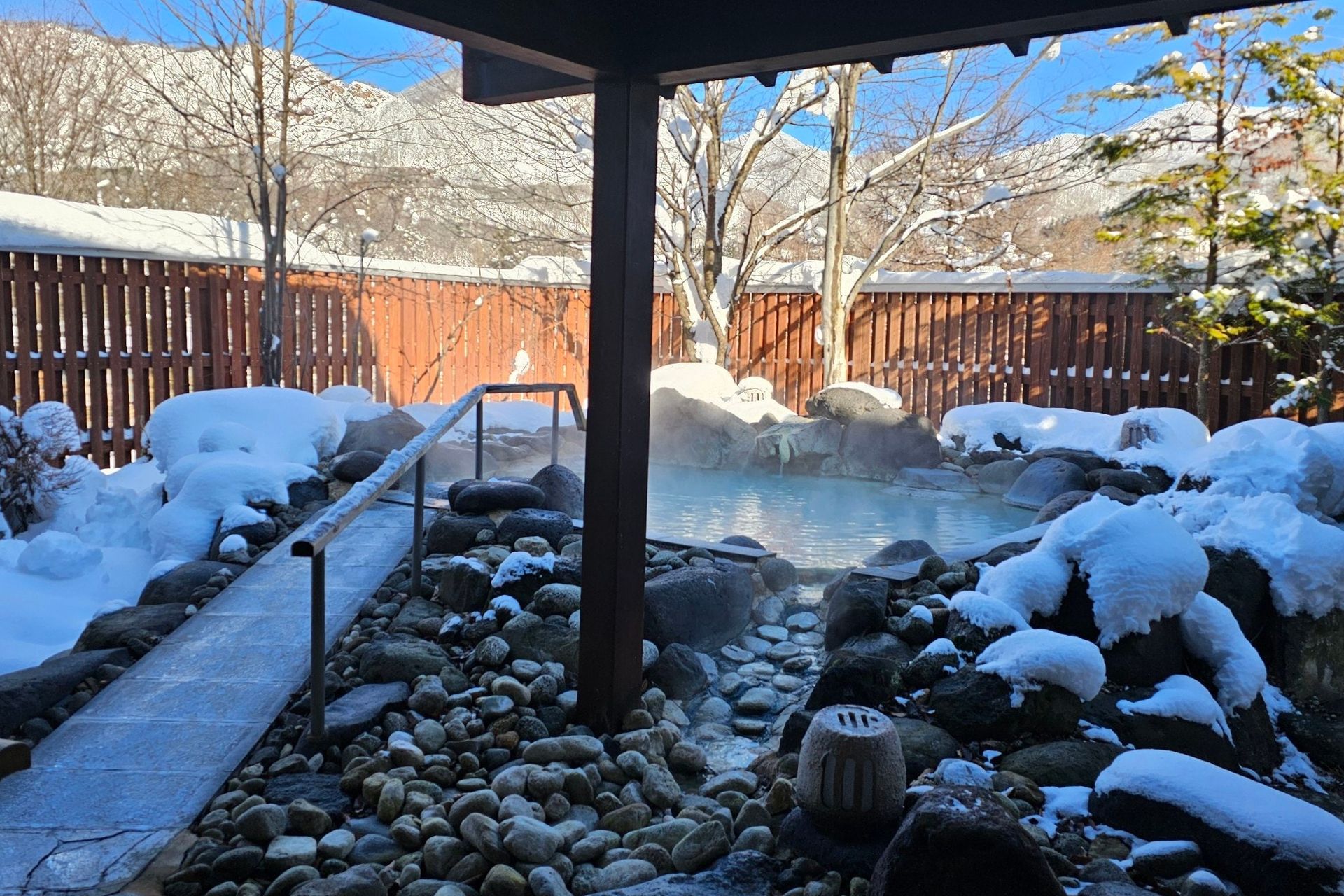
名湯舎 創
Yamagata
 Lodging
蔵王 四季のホテル
Yamagata
 Lodging
蔵王温泉 吉田屋
Yamagata
えびや旅館
Yamagata
ホテル喜らく
Yamagata
 Lodging
おおみや旅館
Yamagata
和歌の宿 わかまつや
Yamagata
 Lodging
蔵王温泉 ろばた
Yamagata
On the map
Loading map…
Nearby onsenchi
Within 50 kmSources
- Zao Onsen Mountain & Snow Resort, official siteofficial— Local tourism authority. Reference for the 1900-year history, five source groups, 47 springs, and roughly 5,700 L/min output at pH 1.6.
- Zao Onsen, Wikipedia— Cross-reference for the founding legend, elevation, water chemistry, and the juhyo rime phenomenon.
- 蔵王温泉, Wikipedia (Japanese)— Source for the Kibitsuhiko discovery story, the 高湯 etymology, and the seasonal Dai-rotenburo.
- JNTO, Zao Onsenofficial— Japan National Tourism Organization overview, used to cross-check the ski resort context and access.
- 5-Star Ryokans, Zao Onsen feature— Background on the strongly acidic sulfur water as a "beauty spring" and on the ravine-side Dai-rotenburo.