Tohoku
12 onsen areas
Aomori
1 →

Iwate
1 →

Miyagi
2 →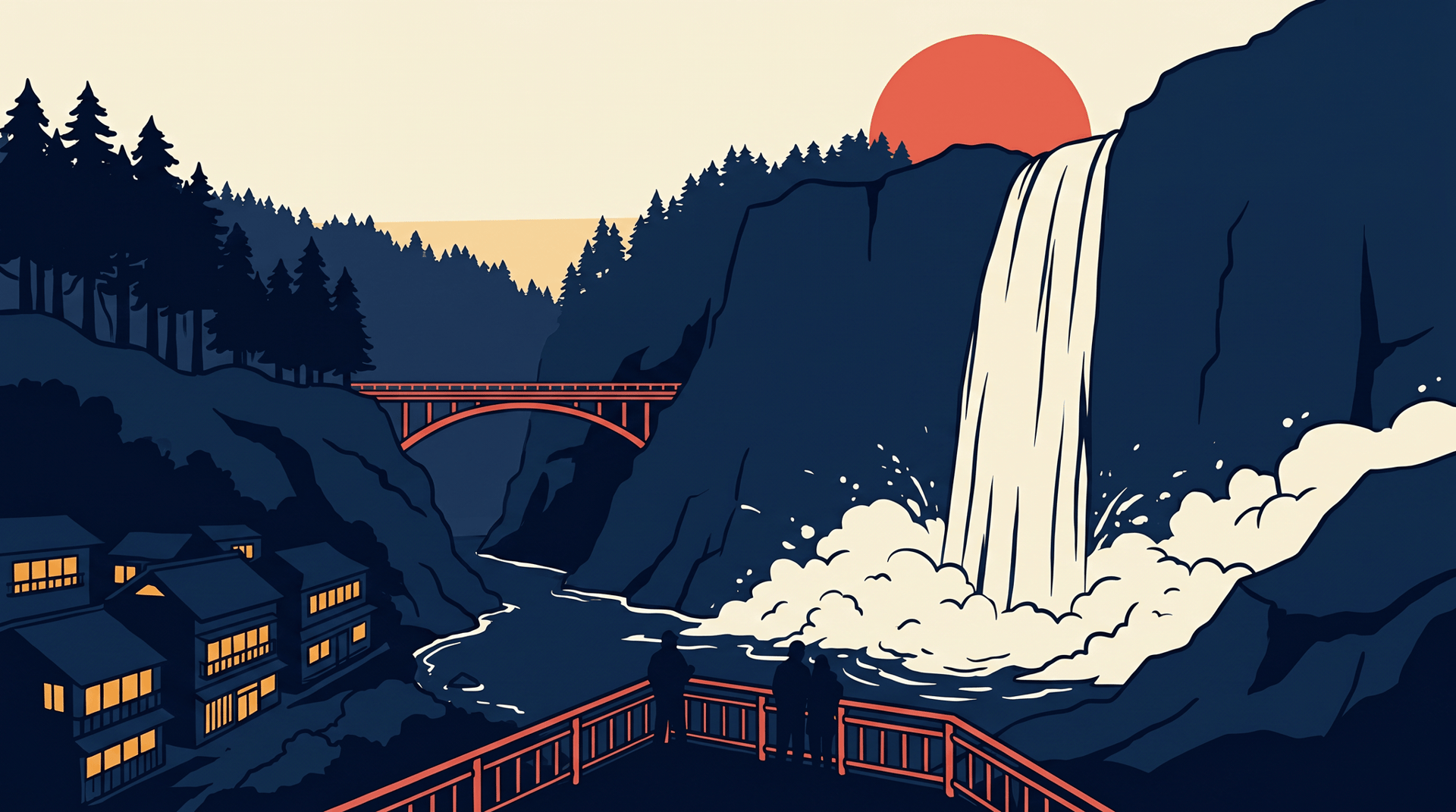

Akiu Onsen
Sendai's century-old onsen valley along the Natori River — 'one of Japan's three Imperial Springs' (御湯) and known for its 60m Akiu Otaki waterfall.
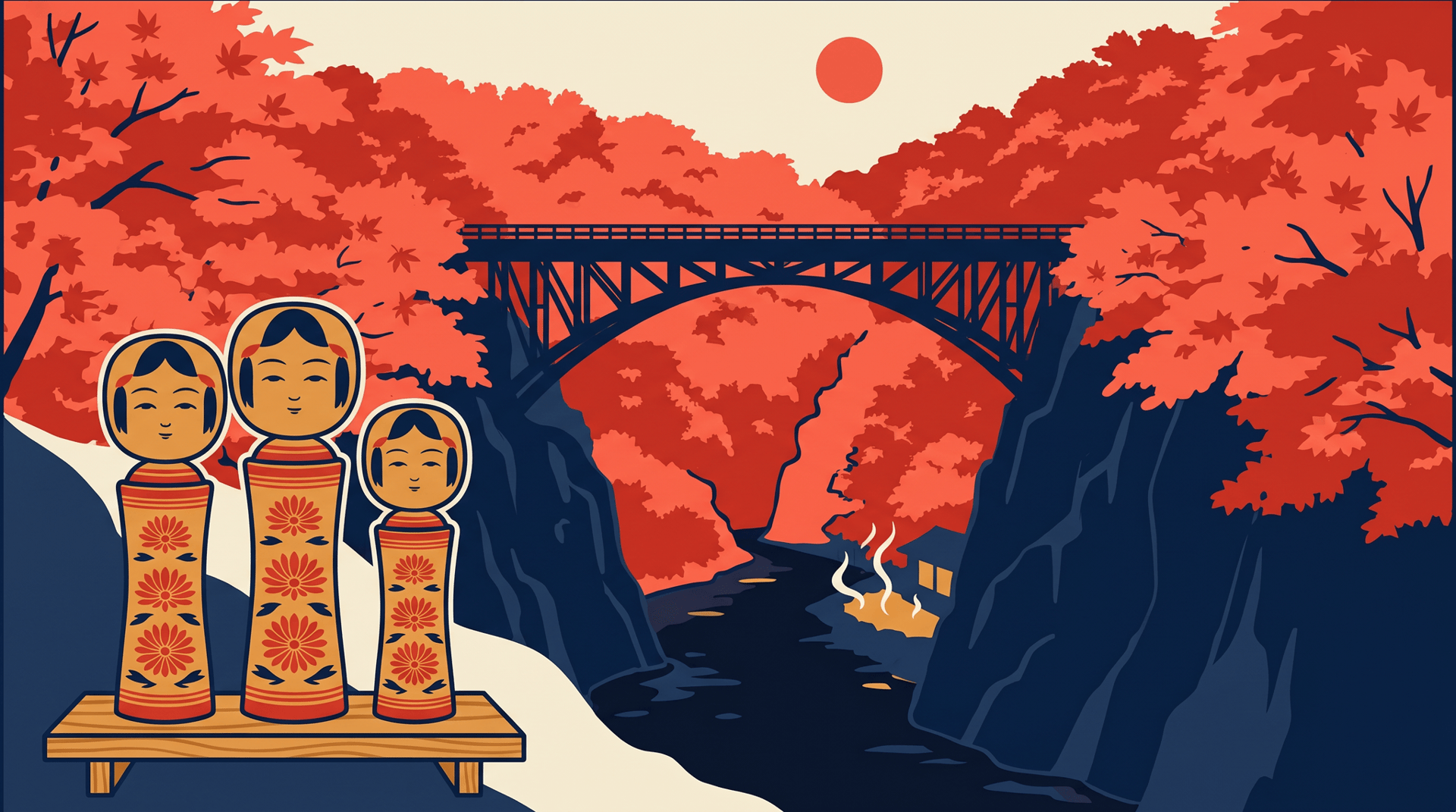

Naruko Onsen-kyo
Five-area onsen group in the Naruko Gorge of Miyagi, famed for a wide range of spring chemistries within a few kilometers and for Naruko kokeshi dolls.
Akita
2 →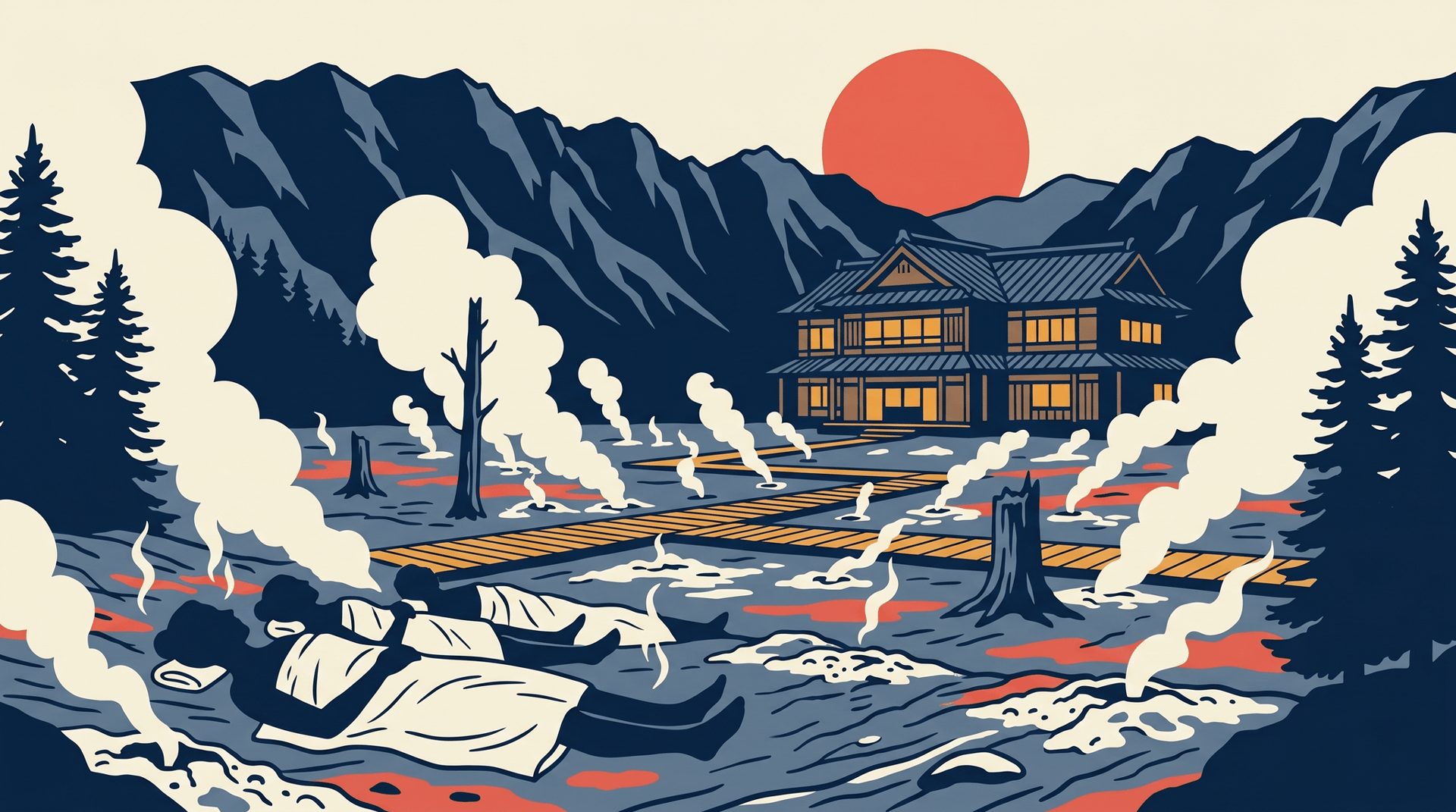

Tamagawa Onsen
Akita mountain onsen with the most acidic natural spring in Japan (pH 1.05) and the highest single-source discharge. Famous for the Hokutolite radon stones.
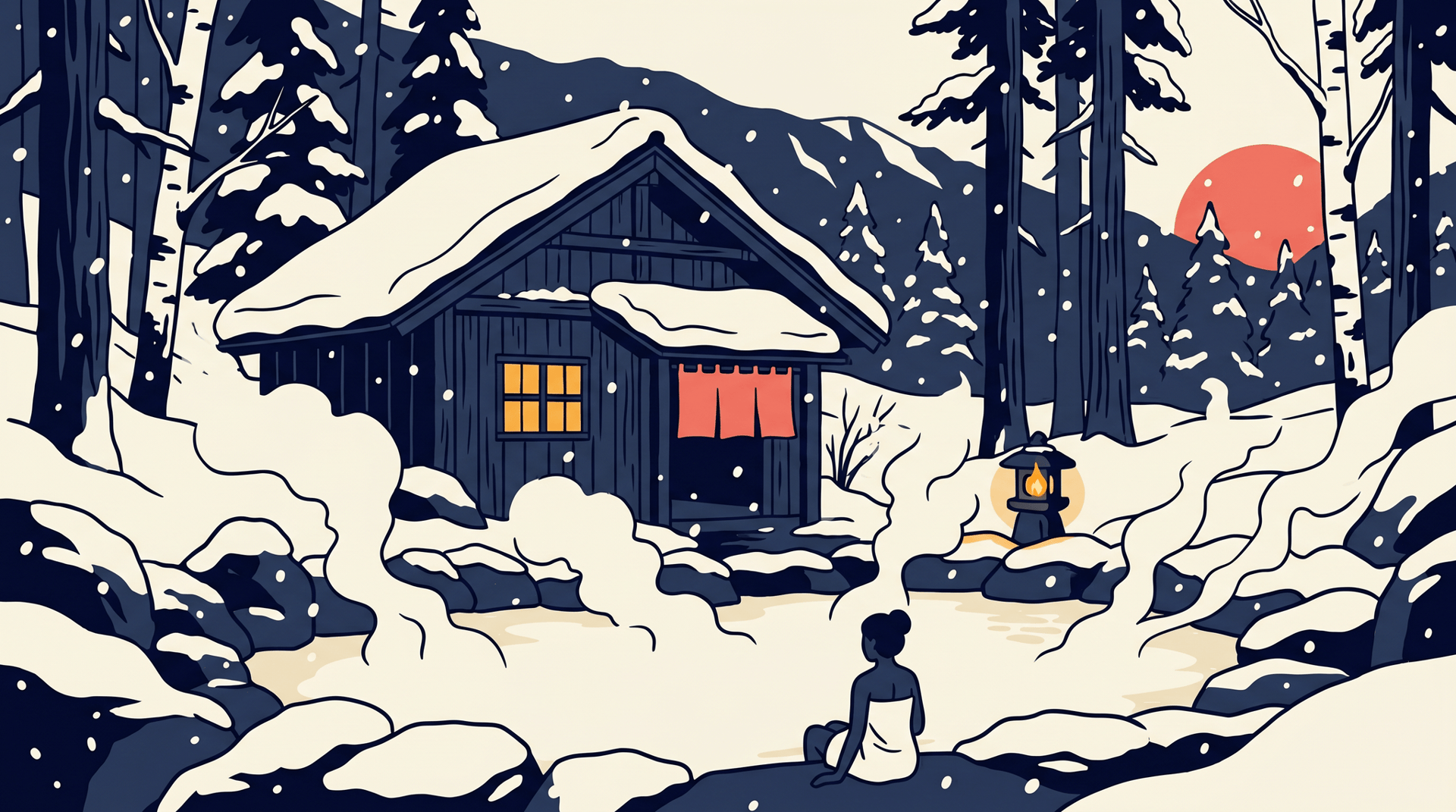

Nyuto Onsen-kyo
Cluster of seven beech-forest hot springs around Mount Nyuto in Akita. Tsurunoyu's milky open-air bath is its most photographed feature.
Yamagata
2 →


Fukushima
4 →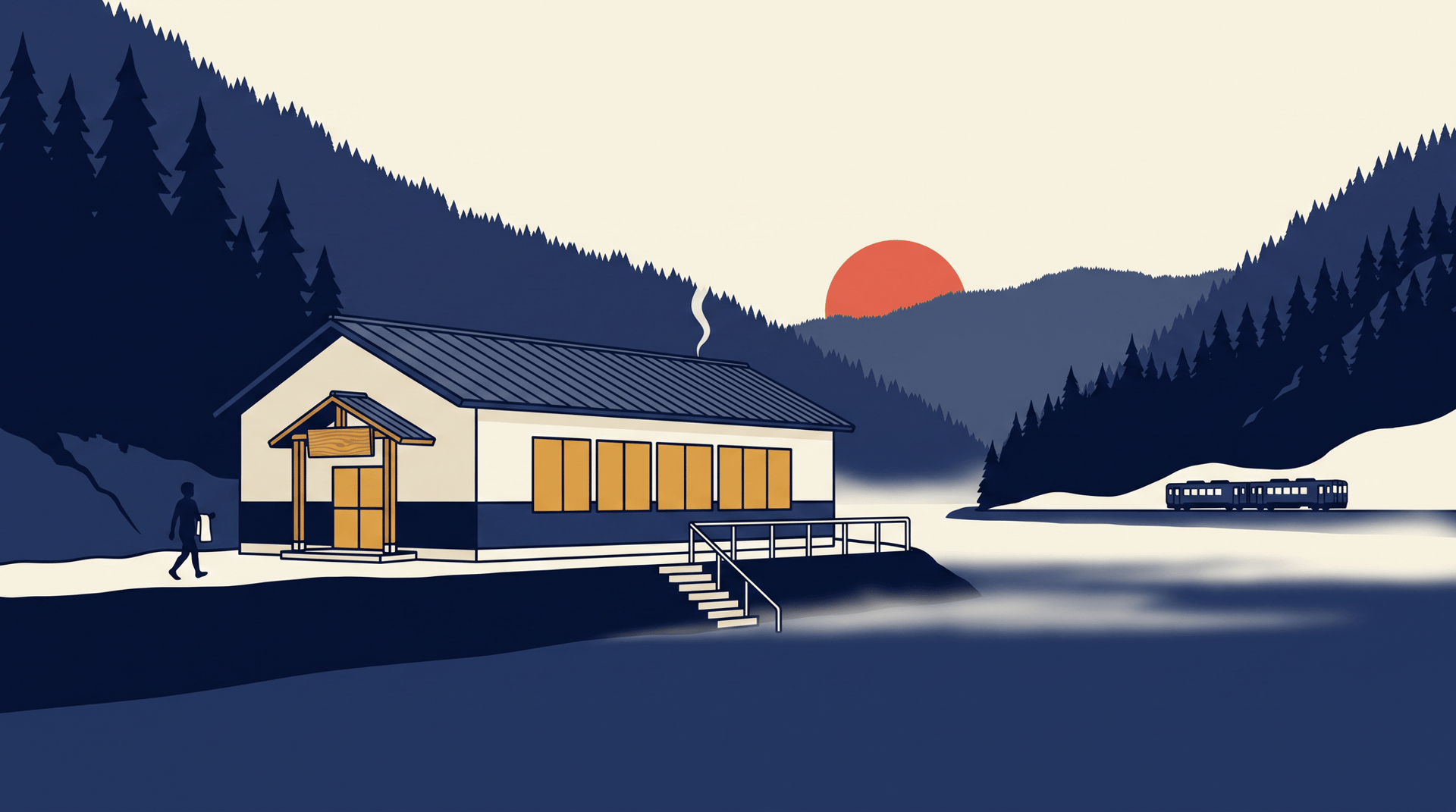

Aizu-Oshio Onsen
A hamlet on the Tadami River in Oku-Aizu with one bathhouse and one minshuku, sharing a 38 °C spring so charged with dissolved carbon dioxide that it ranks among the most carbonated in Japan — tea-brown, faintly salty, lukewarm enough to sit in for an hour, and drunk as well as bathed in. A second spring rises cold a few minutes away: a well of natural sparkling water that Meiji-era traders shipped to Europe and that is still bottled today.

Ashinomaki Onsen
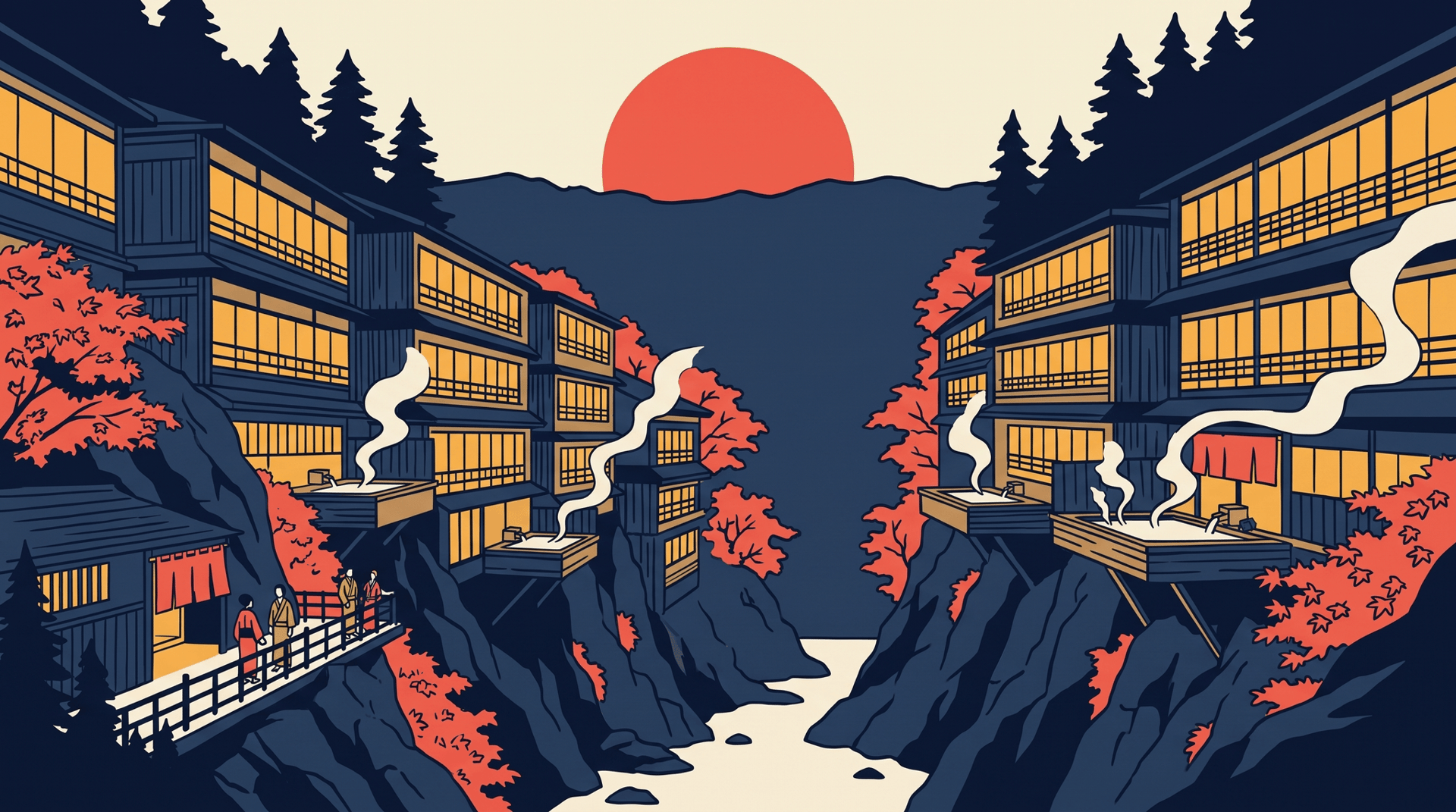
A gorge town south of Aizu-Wakamatsu, where tall inns stand along the cliffs of the Okawa river and their open-air baths hang straight over the water. Tradition credits the priest Gyoki with finding the spring some twelve centuries ago, and the calcium and sodium sulfate-chloride water still rises hot enough to need cooling. Three free foot baths mark the walking route, and the branch-line station at the edge of town keeps a cat as its stationmaster.

Higashiyama Onsen
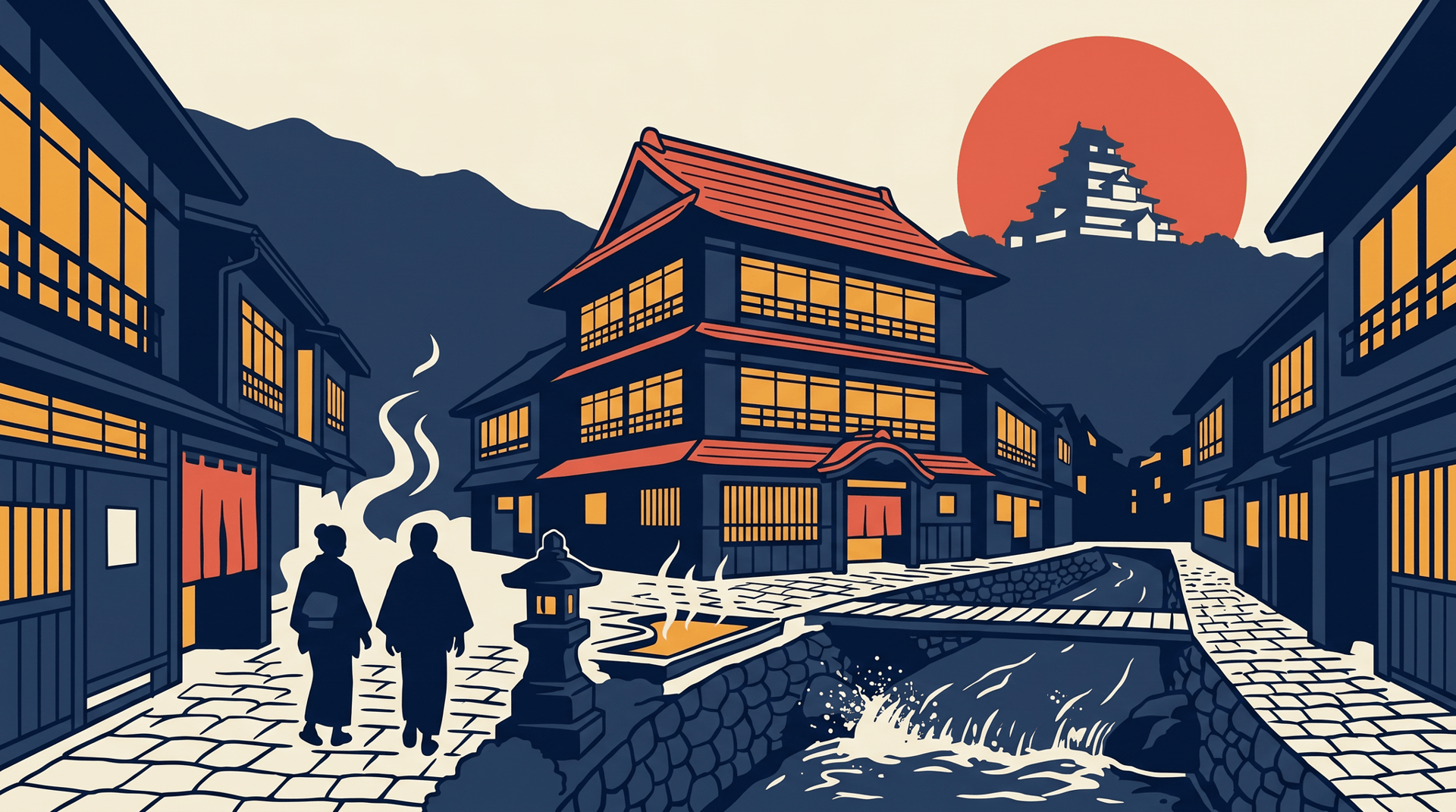
Aizu-Wakamatsu's traditional onsen quarter, founded in the 8th century. Ryokan packed along the Yukawa river gorge below Tsurugajo castle.

Iizaka Onsen
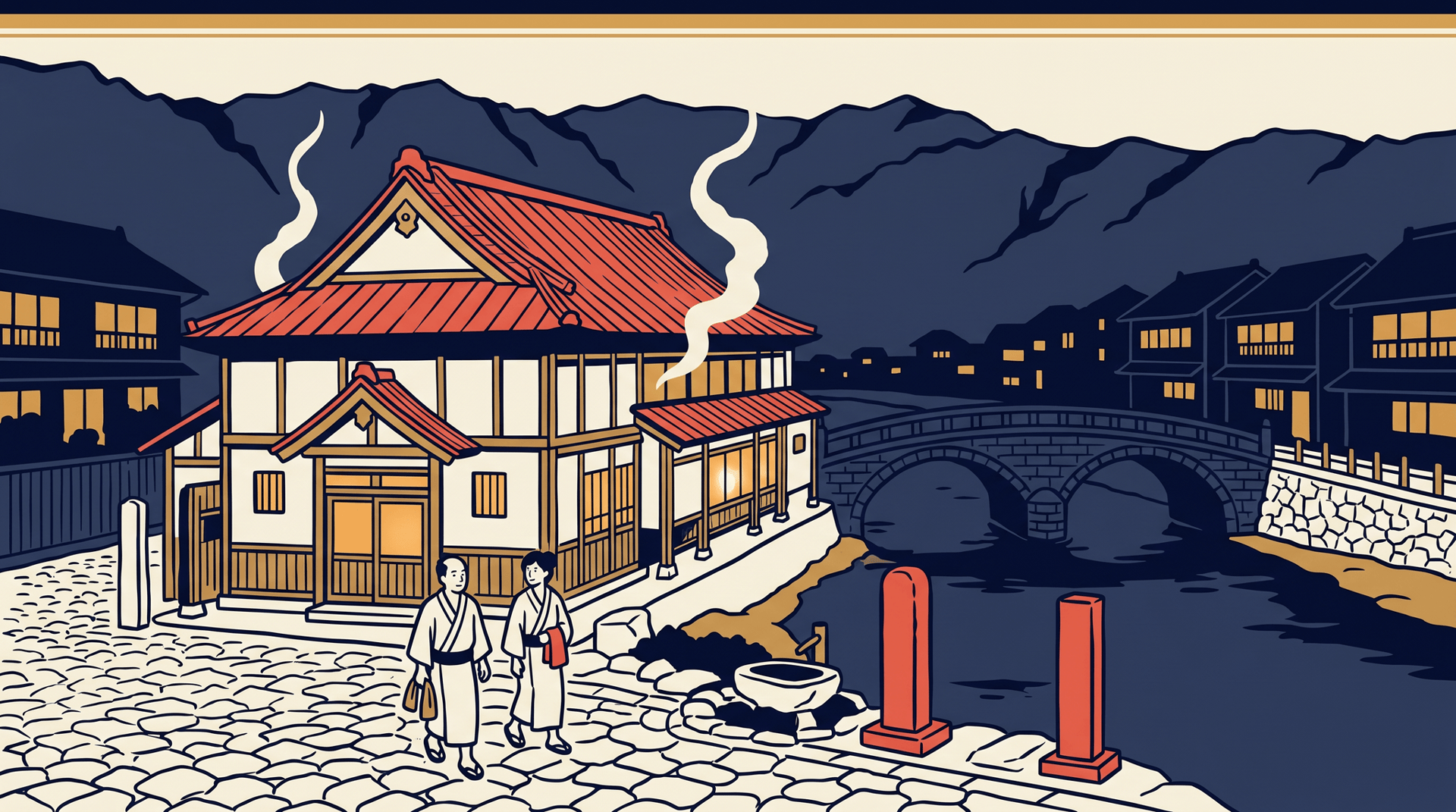
Historic Fukushima onsen town with nine free public bathhouses along the Surikami River, one of Tohoku's three great hot springs (Oshu sanmeisen).