Your First Onsen
What happens, in what order, and the handful of rules that actually matter
An onsen is one of the best hours you can spend in Japan, whether you live here or you are just visiting. It is also far simpler than most people assume: no booking, no kit, no membership, and cheaper than almost anyone guesses before they have been. There are not many rules either, and this page walks you through all of them.
Which kind of place to pick for the first time
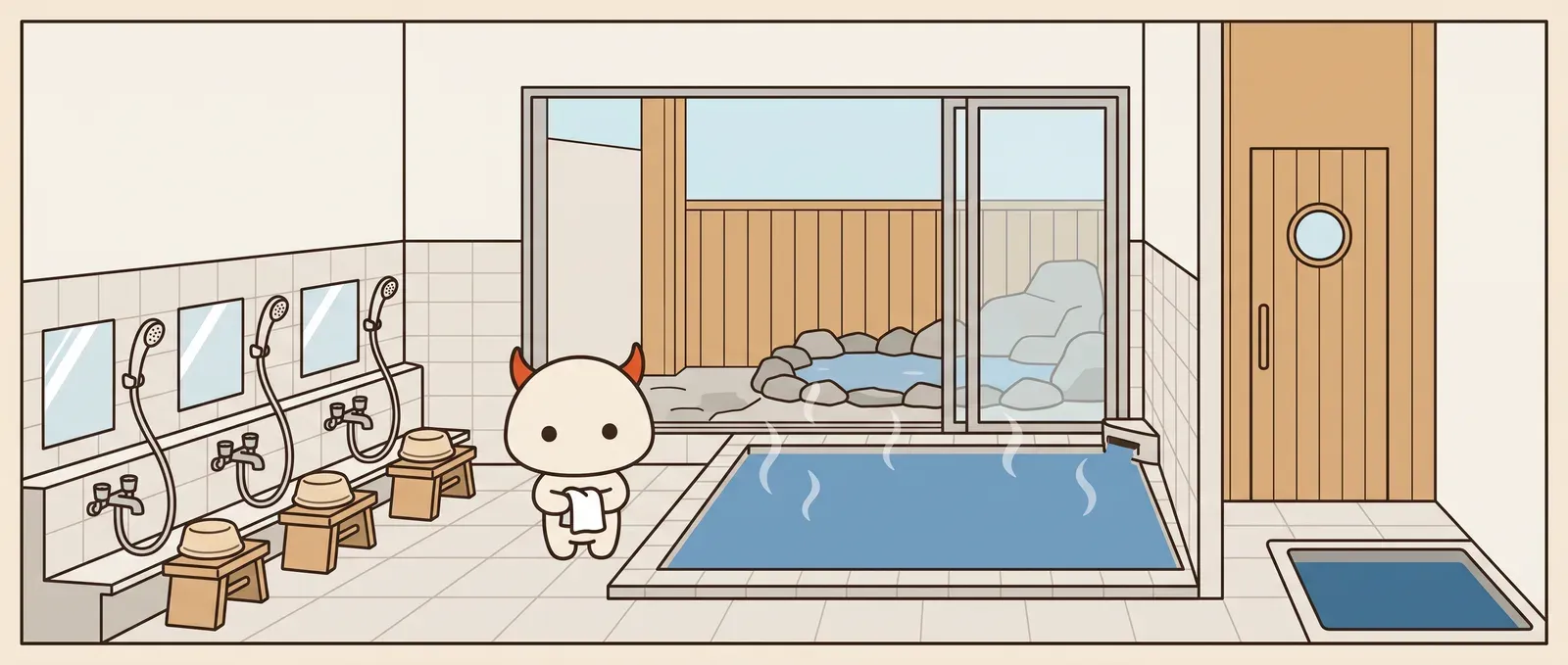
Our recommendation is a super sento: a big day-use bathing complex in the city, the kind of place a family goes on a Sunday afternoon. There is one in almost every town, you can walk in with nothing, and there is the least that can catch you out. A night at a ryokan with its own bath makes a wonderful first onsen too, if that is the trip you are on.
Why a super sento?
You just turn up
No booking, no phone call, no set arrival time. Walk in, bathe, leave when you like. Most are open from morning until late at night.
You can rent everything
Arrive with nothing at all. Towels, soap and shampoo are at the counter or in a machine, and bigger places lend you something to wear around the building too.
Nobody will notice you
Eight or ten baths, a sauna, a rest area, people coming and going all day. A first-timer working out where things are is completely unremarkable here.
We have plenty of day-use complexes in the catalog. Find one near you on the map
The mountain inn and the old wooden village bath are wonderful, and if that is where you are starting, everything here works just the same. What counts as a super sento, and how it differs from a sento
How a visit goes
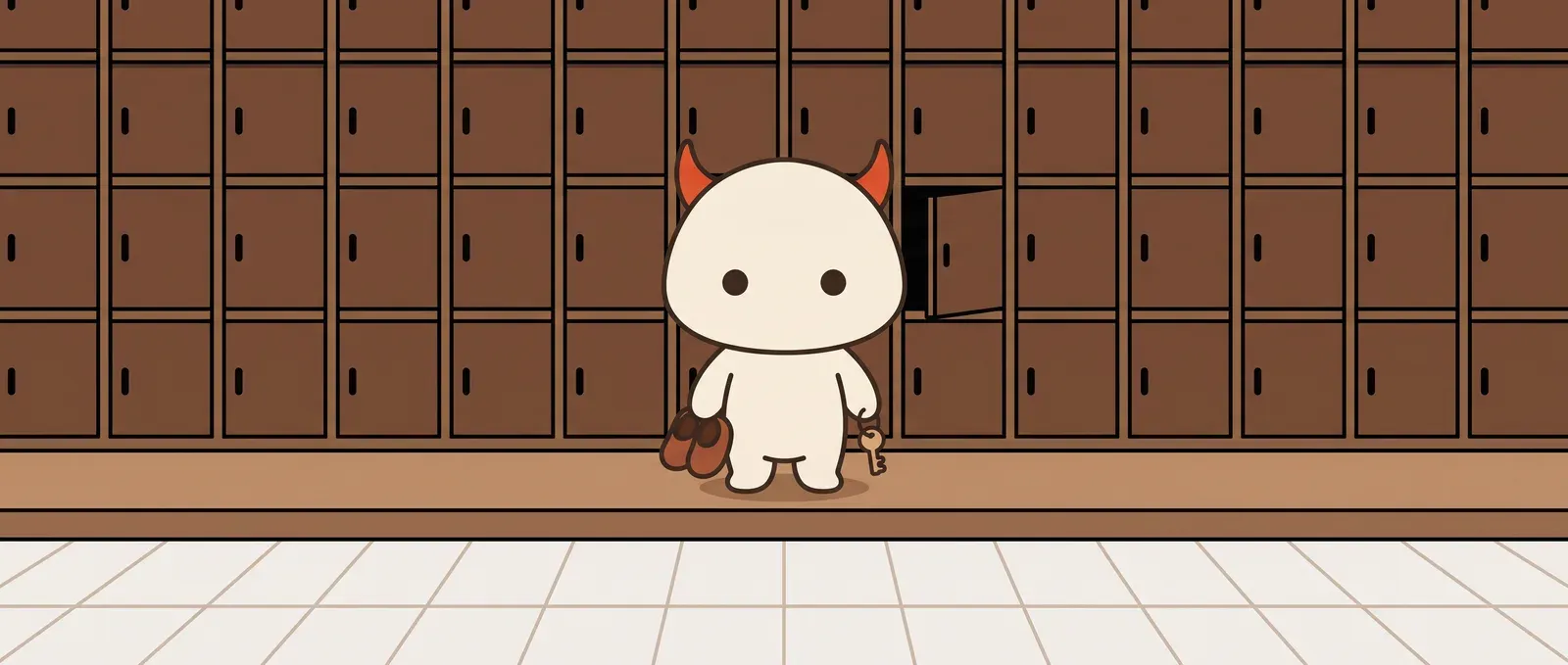
Shoes come off at the door
A step up and a wall of small lockers, just inside the entrance. Your shoes go in one and you keep the key. Everything past that step is floor people walk on barefoot, so if you cannot tell where the line is, look at where everyone else's shoes have stopped.
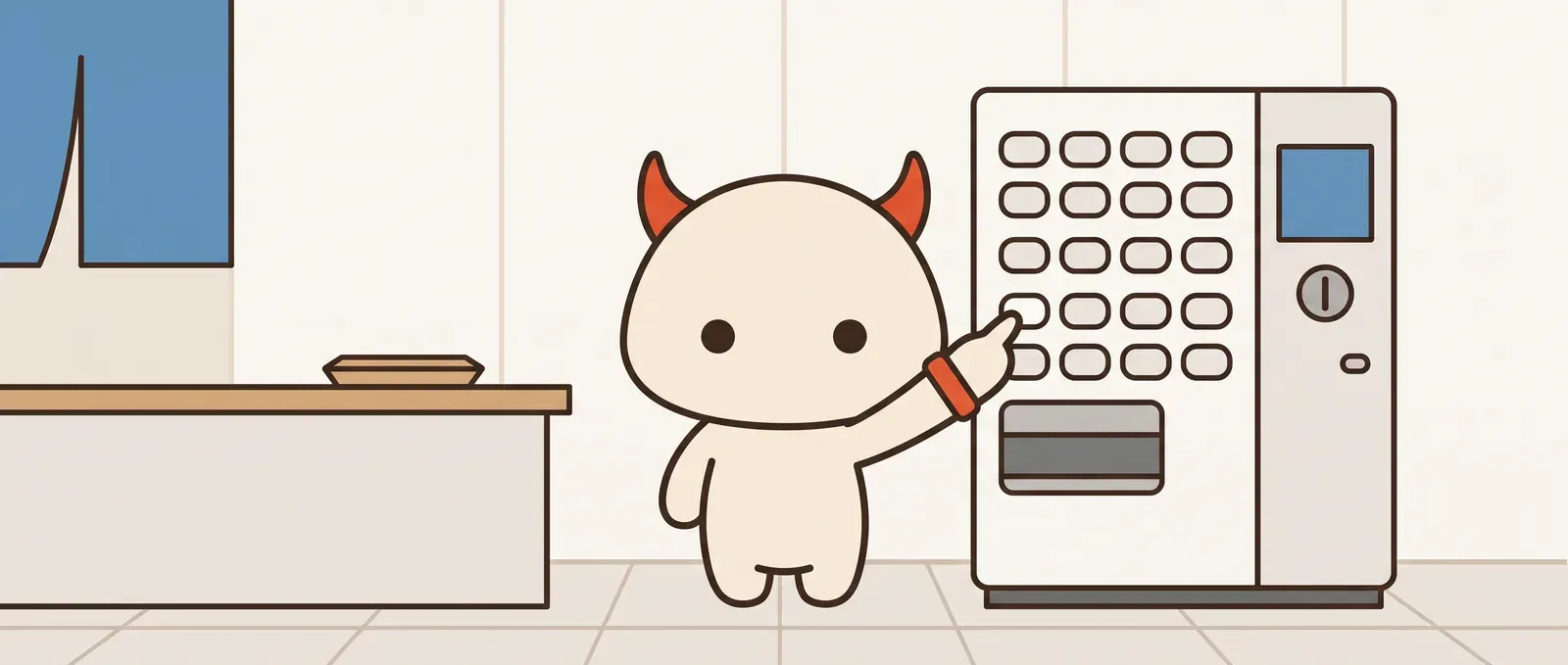
Paying works one of two ways
Older places take a fixed fee on the way in, at a ticket machine or a counter. Many now hand you an electronic wristband instead: you carry no money inside, tap it for a drink, a meal or a locker, and settle everything at a machine on the way out. Entry is a fixed price either way, so the wristband is not a meter you need to keep an eye on.
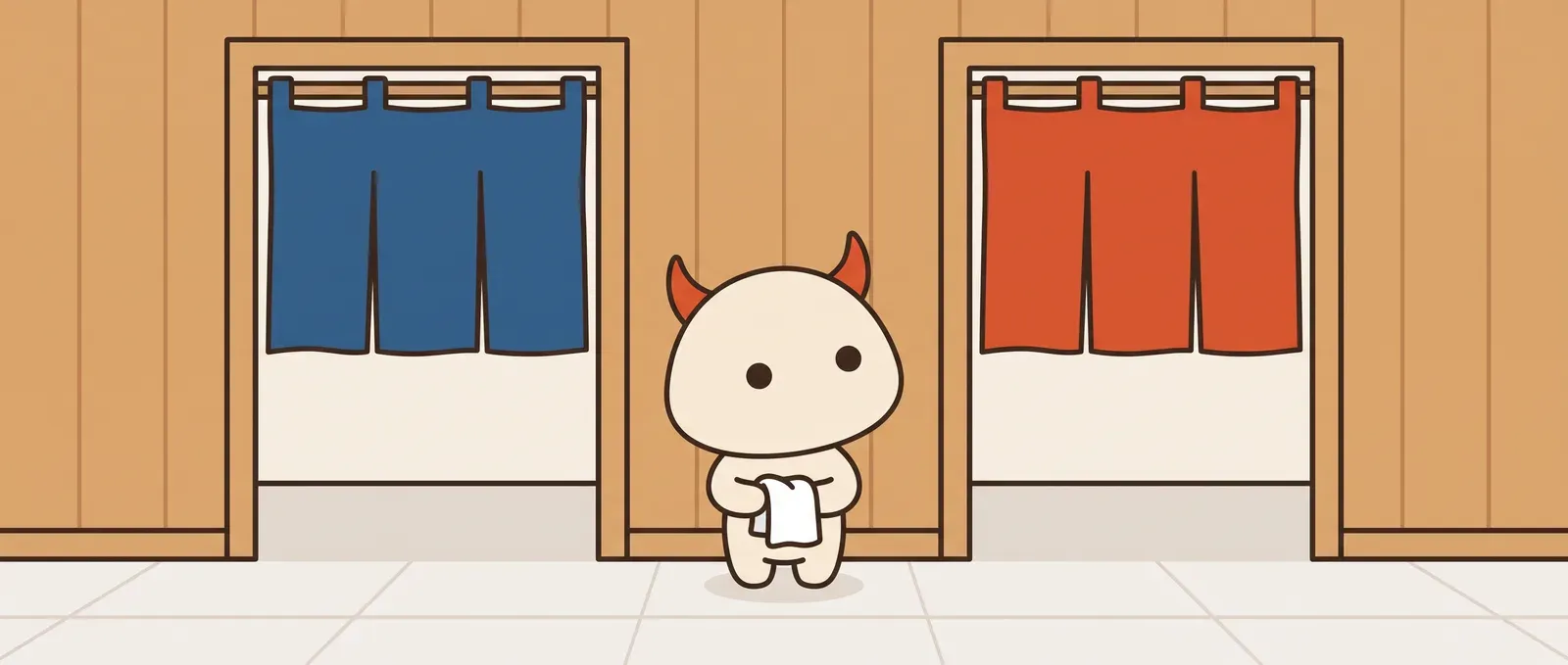
Pick the right curtain
Two doorways, two curtains, and the only thing that decides it is the character on them. Blue for men and red for women is a common convention rather than a rule.
男
otoko
Men
女
onna
Women
You might also see them as otoko-yu (男湯) and onna-yu (女湯), and rarely as tono (殿, lord) for men and hime (姫, princess) for women. Same two doors.
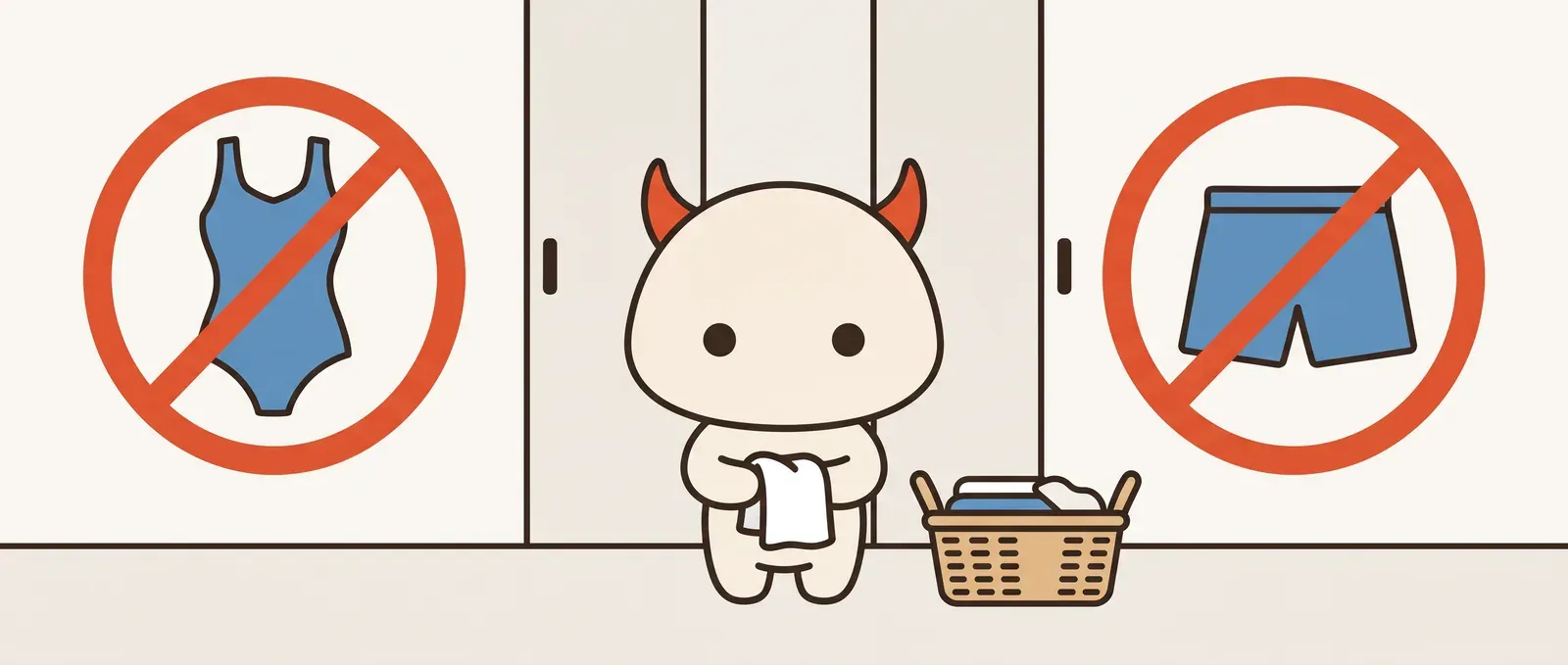
Everything comes off
Clothes and phone go in the locker. No swimsuit, no underwear, no shorts. Turn up in swimwear and you will be sent back out. Glasses are fine if you want them, they will just fog up.
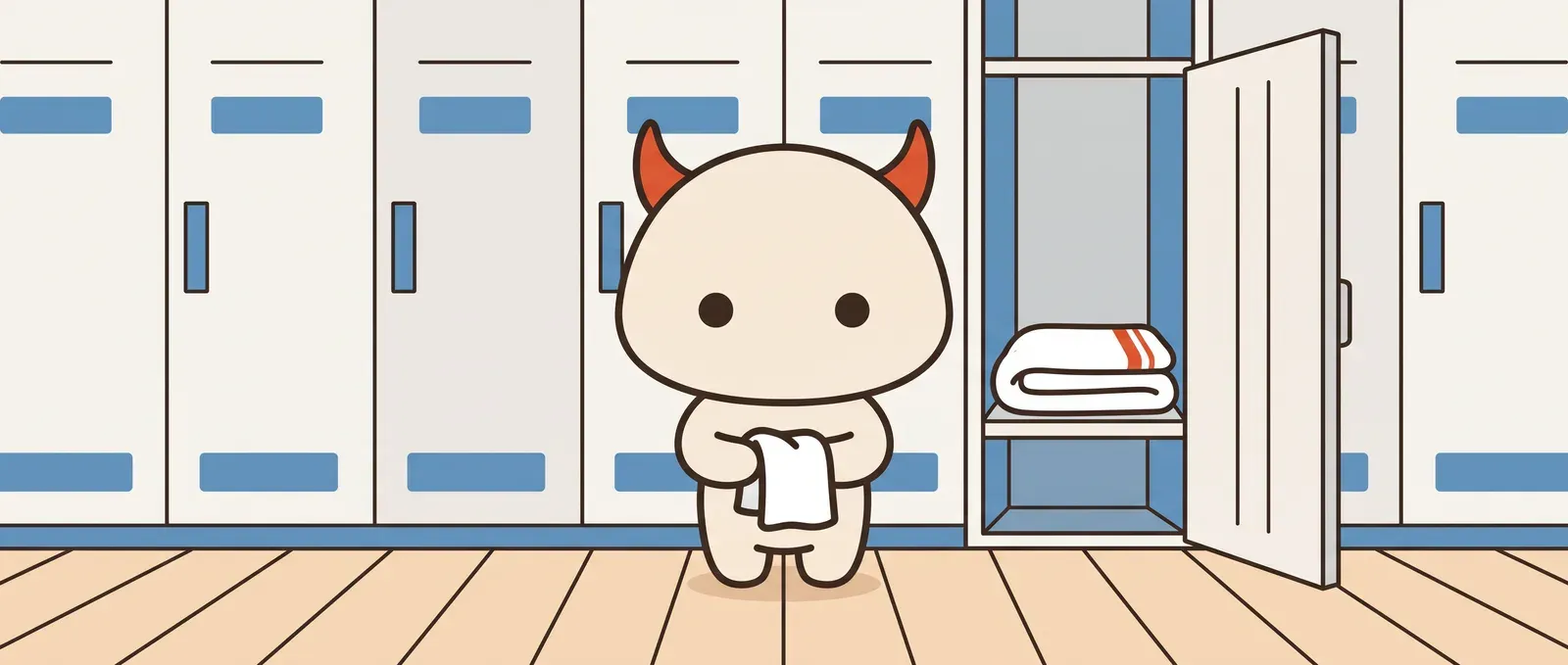
Two towels, and only one comes in
You usually end up with two. The big one stays in your locker, waiting for you at the end. The small one, about the size of a hand towel, is the only thing you carry into the bathing room, and in there it does three jobs: you can wash yourself with it, you wipe the sweat off your face, and you can lightly cover yourself while moving between baths. Its most important job comes at the very end, on the way out.
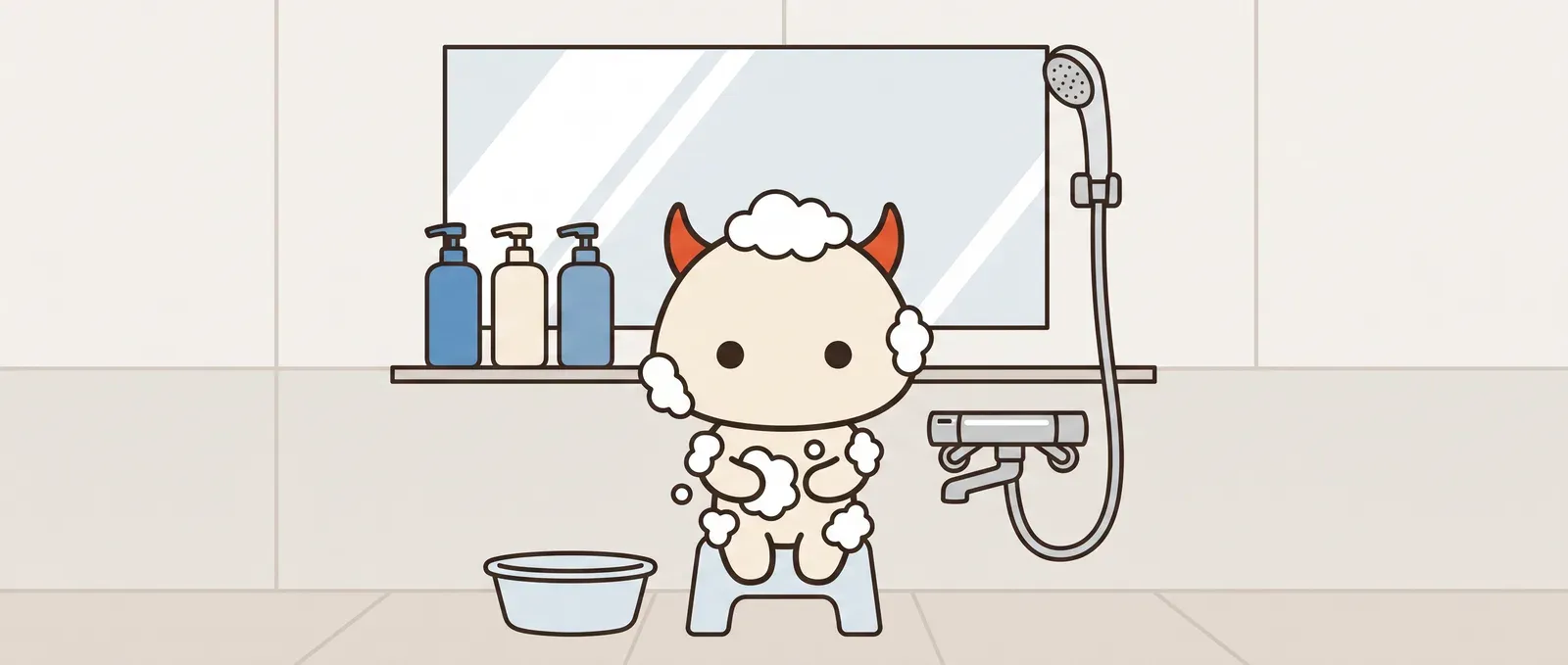
Wash before you get in
Sit down on the low stool, soap yourself properly, and rinse every trace of it off. This is the rule people break and the one that matters most. The bath is for soaking in, not for getting clean in.
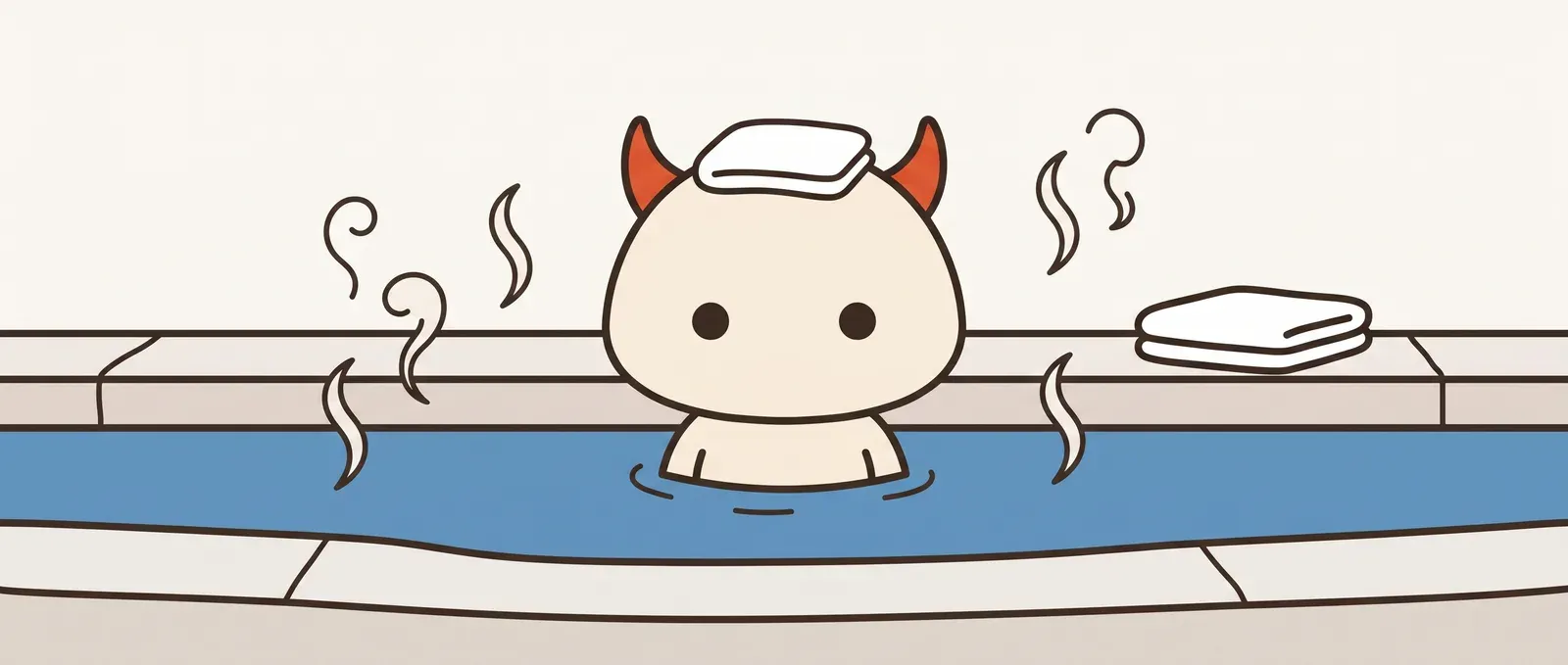
Get in, and keep the towel out of the water
Before you step in, you might want to tip a bowl of the bath's own water over your shoulders and legs, to let your body get used to the heat. Then in you go. Fold the small towel on your head, or leave it on the stone at the edge. Then just relax. This is the part you came for.
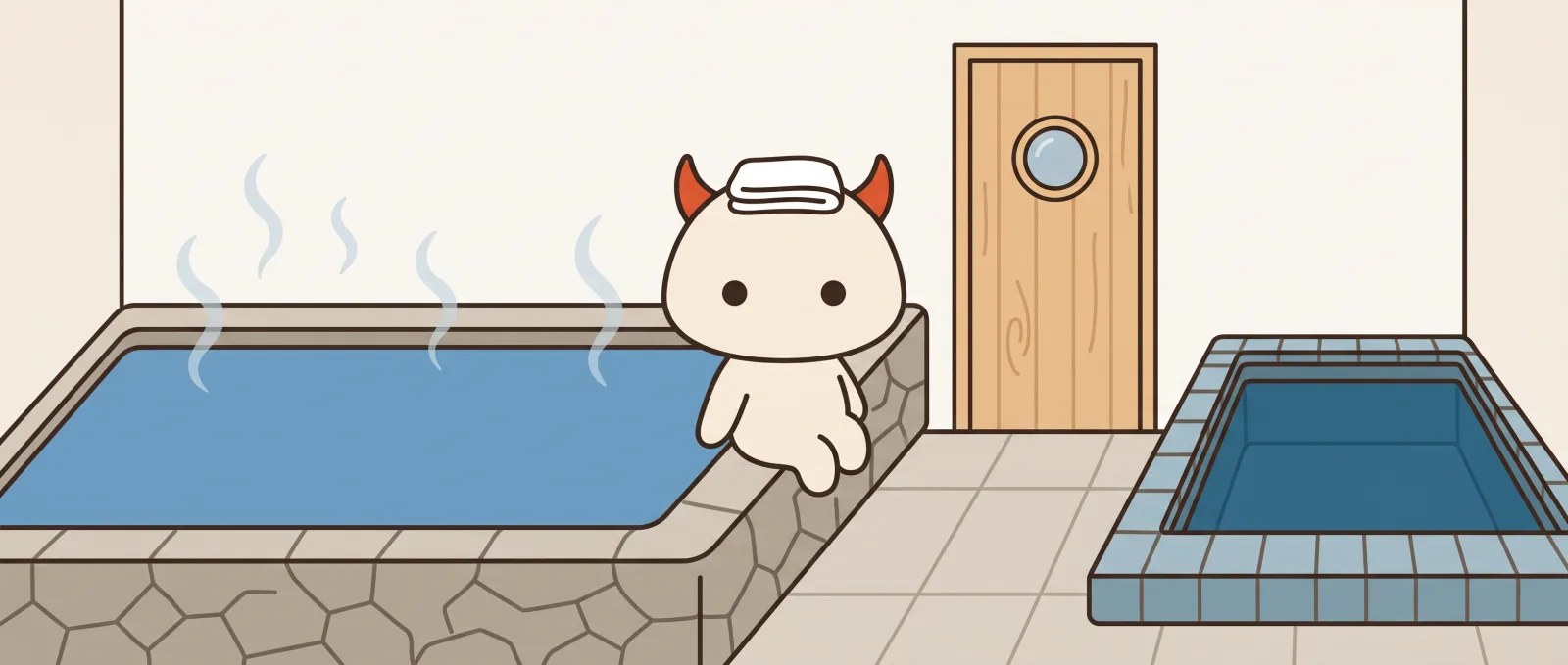
Stay as long as it feels good, then move on
Ten minutes at a stretch is the usual advice, and your body tells you anyway: once your forehead starts to sweat, it is time to get out for a bit. Cool off on the stone rim or in a chair, drink some water, then try the next bath. A visit is a loop rather than one long soak, and at a super sento there is plenty to loop through: the indoor bath, the open-air one, the sauna, and the mizuburo (水風呂) cold plunge that resets you between the hot ones. An hour or two goes quickly.
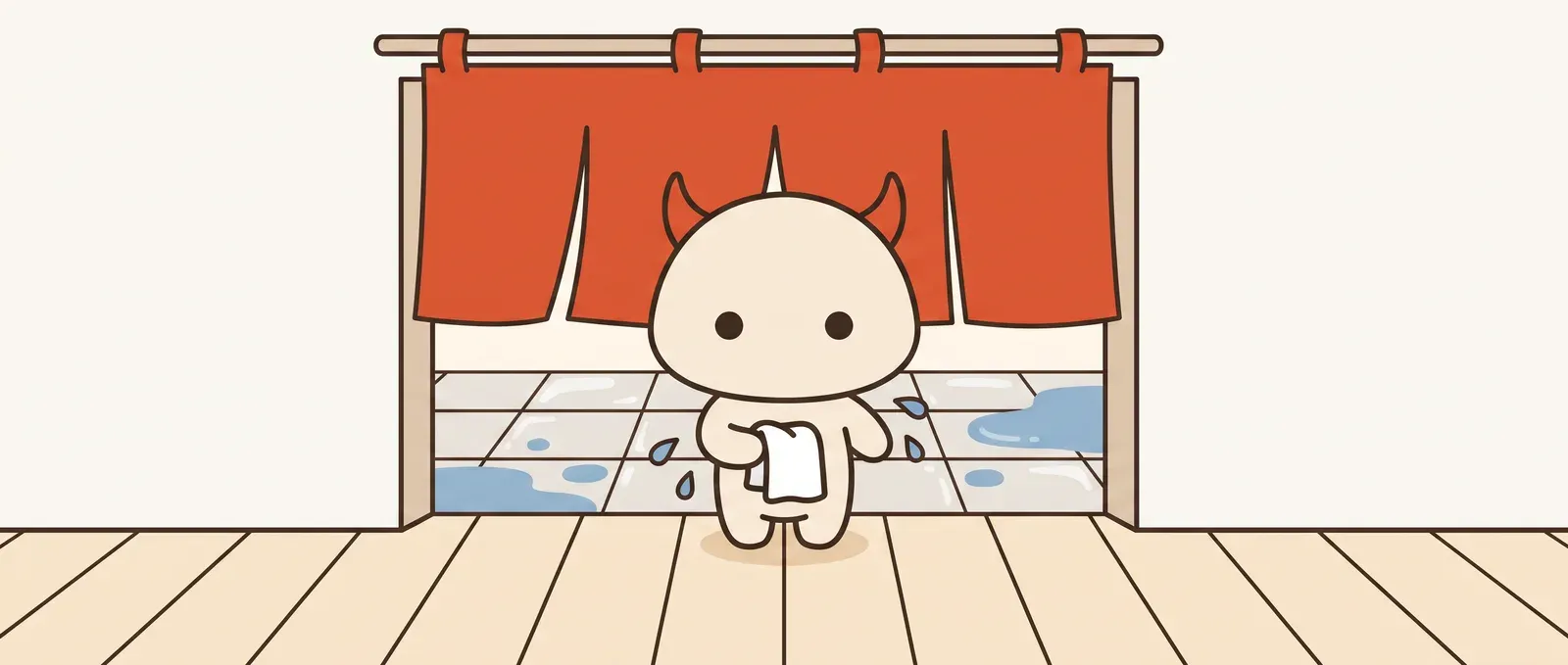
Dry off before you walk out
This is the small towel's real job: wring it out and wipe yourself down while you are still in the bathing room, so the changing room floor stays dry. Most people do not rinse off in the shower at the end, since the minerals go on working on your skin after you leave. If your skin is sensitive or the water is very heavy on minerals, rinse off with plain water. Then get dressed and head for the rest area.
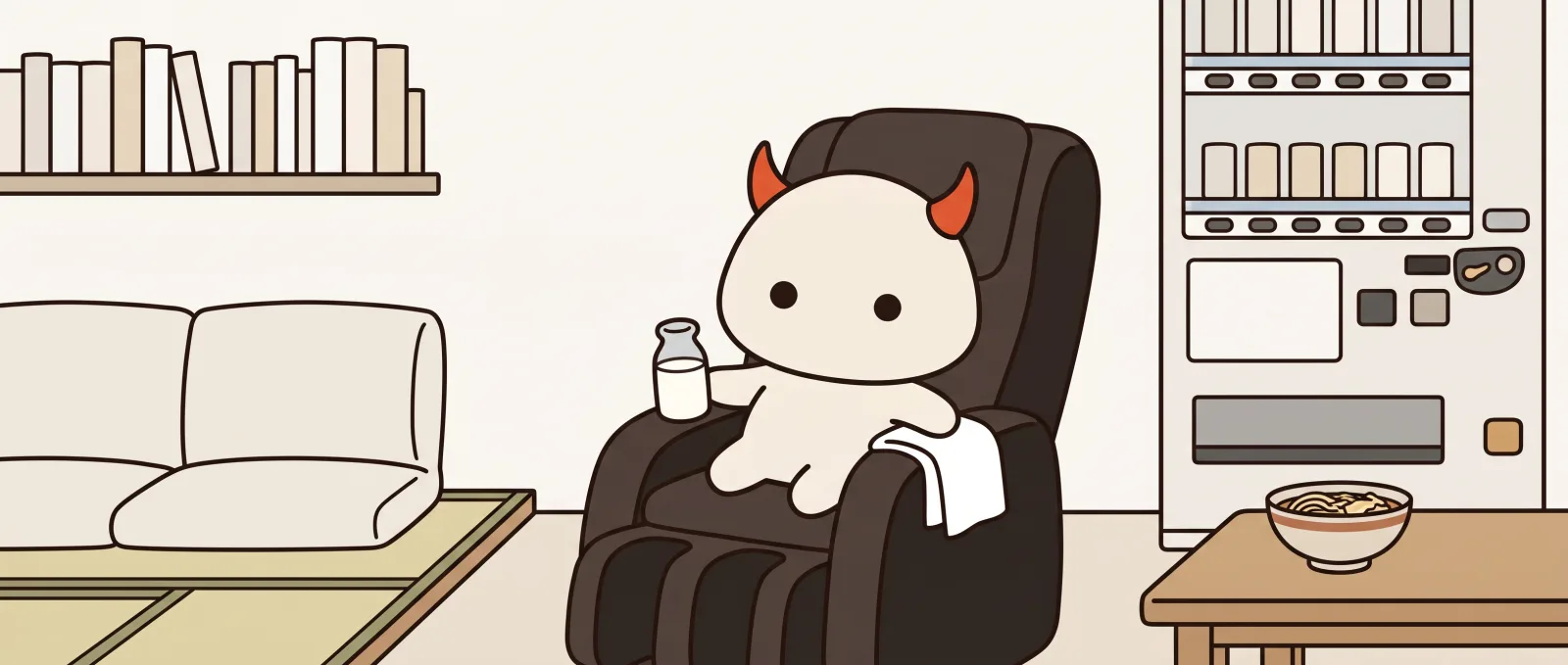
The rest area is part of the visit
Almost every super sento has one: massage chairs, often a tatami corner and a shelf of manga. Get a small bottle of milk or coffee milk from the machine, which is what people drink here once they are out, and sit until you have stopped glowing. Many complexes have a massage room too: you book it at the front desk on your way in, which takes a minute, and it is a treat once the bathing is done. If you are hungry, the restaurant inside is usually good. And nothing says you cannot go back in for one more soak afterwards.
A few more rules to remember
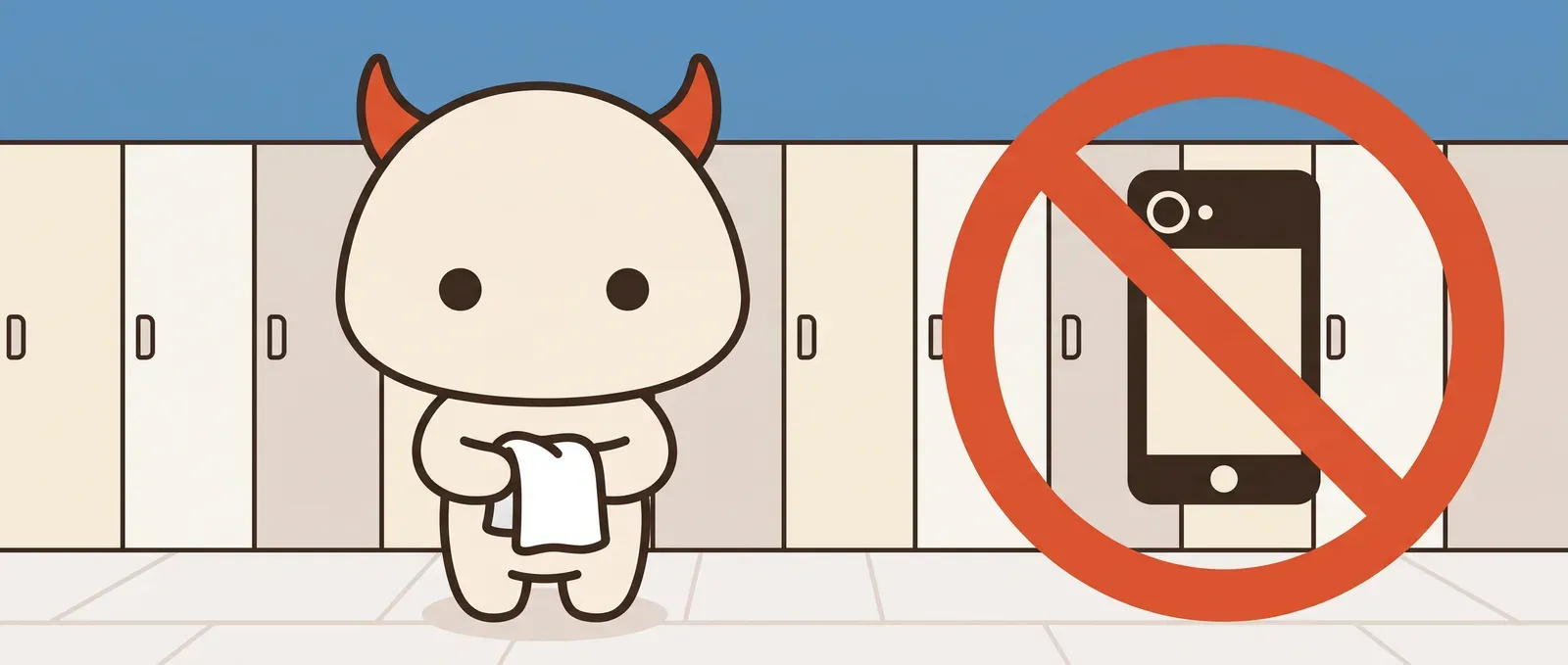
No phone, no photos
Leave it in the locker. Everyone in the room is naked, and a camera is the fastest way to be asked to leave.
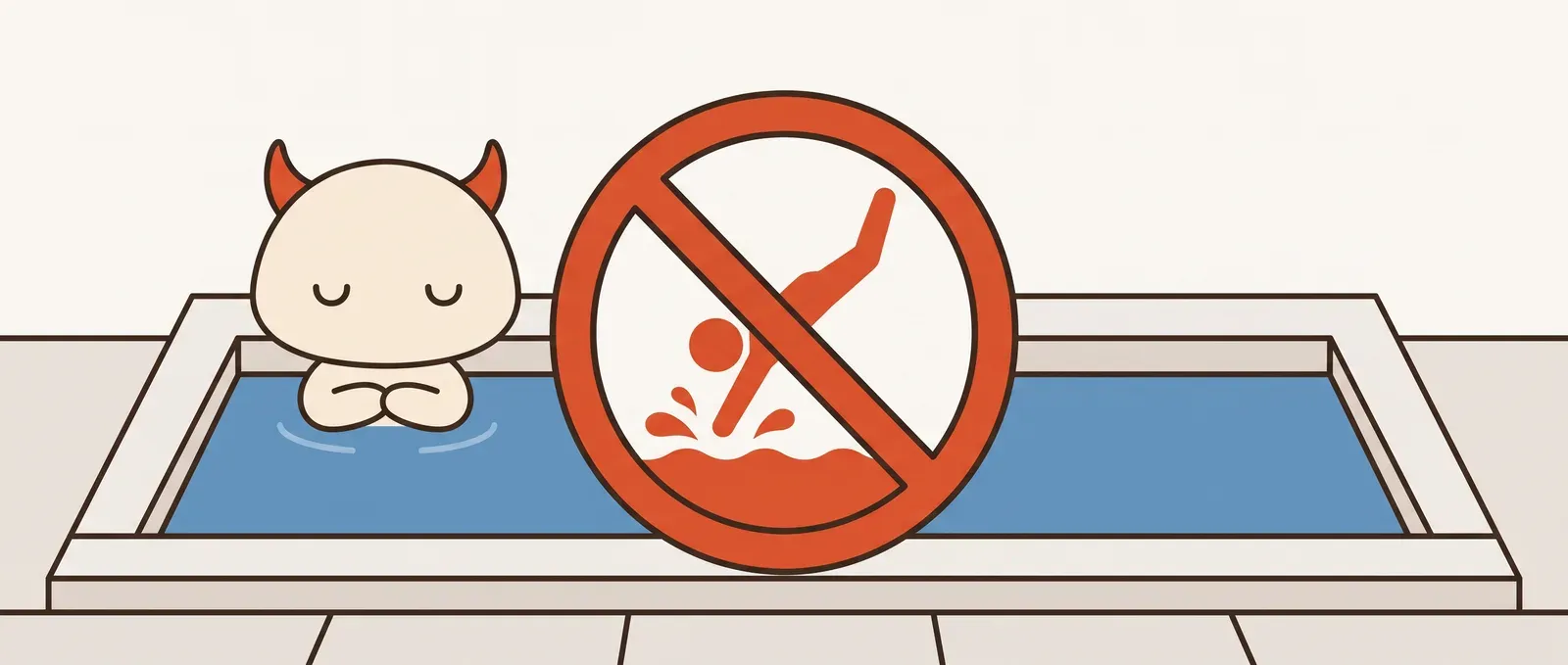
Do not swim, and keep your voice down
No swimming, no diving, no ducking under, no splashing. If you are talking, keep it quiet so you do not disturb anyone.
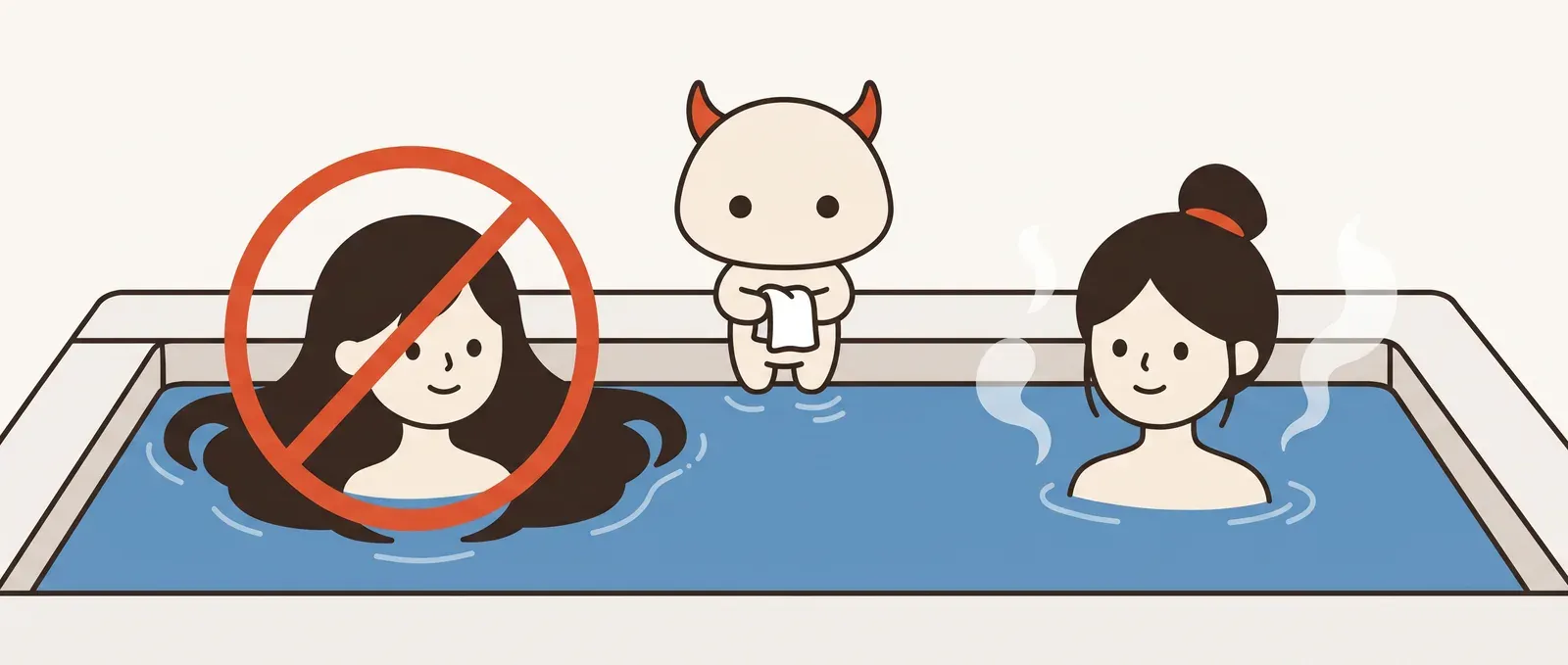
Tie long hair up
Hair in the water is the same problem as a towel in the water. Put it in a bun or a clip before you get in, or wrap it in your small towel. The front desk almost always sells hair ties if you have forgotten one.
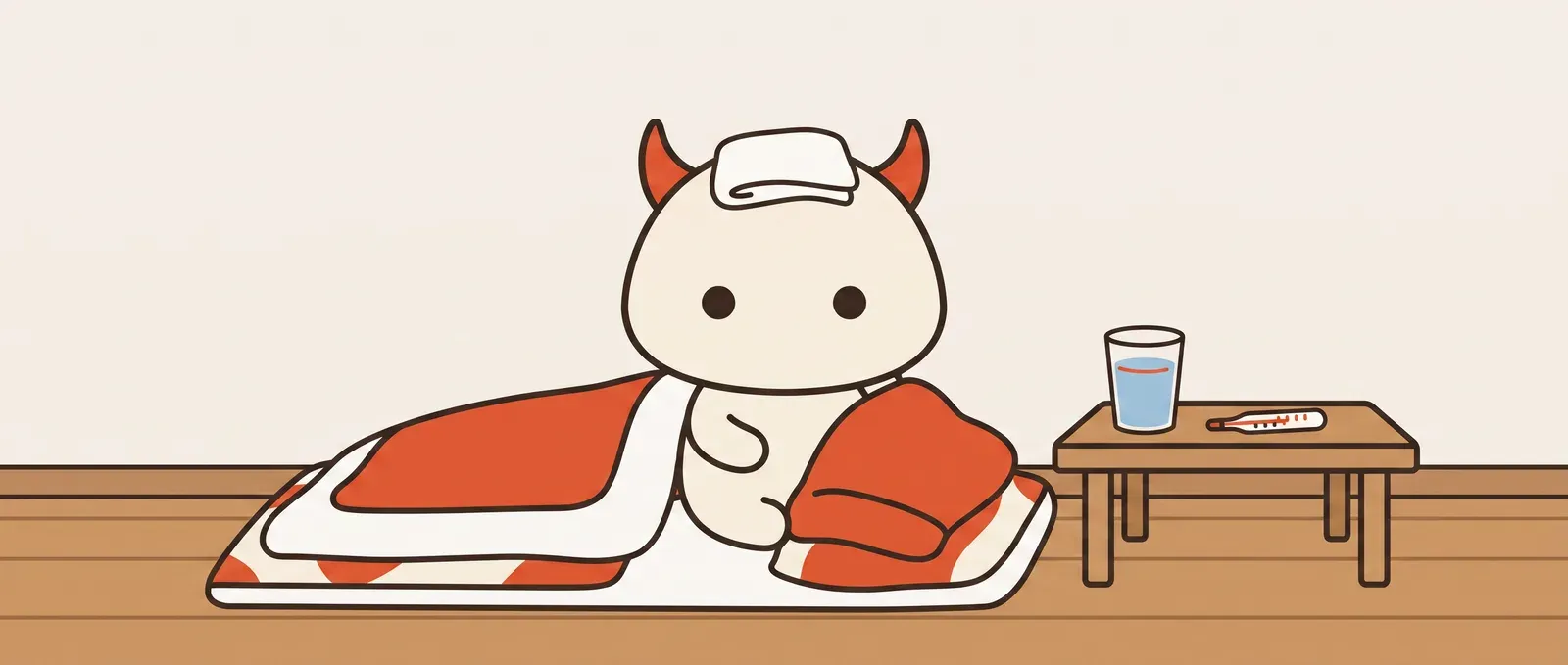
Not if you are unwell
Stay home with a fever or a stomach bug, and never go in drunk: many places turn away anyone visibly intoxicated, and hot water plus alcohol is behind most bathing accidents in Japan. Women are expected to skip public baths during a period. And if you are older, pregnant, or have blood pressure or heart trouble, official guidance is to avoid the hottest baths, above 42°C, and keep the water below your shoulders.
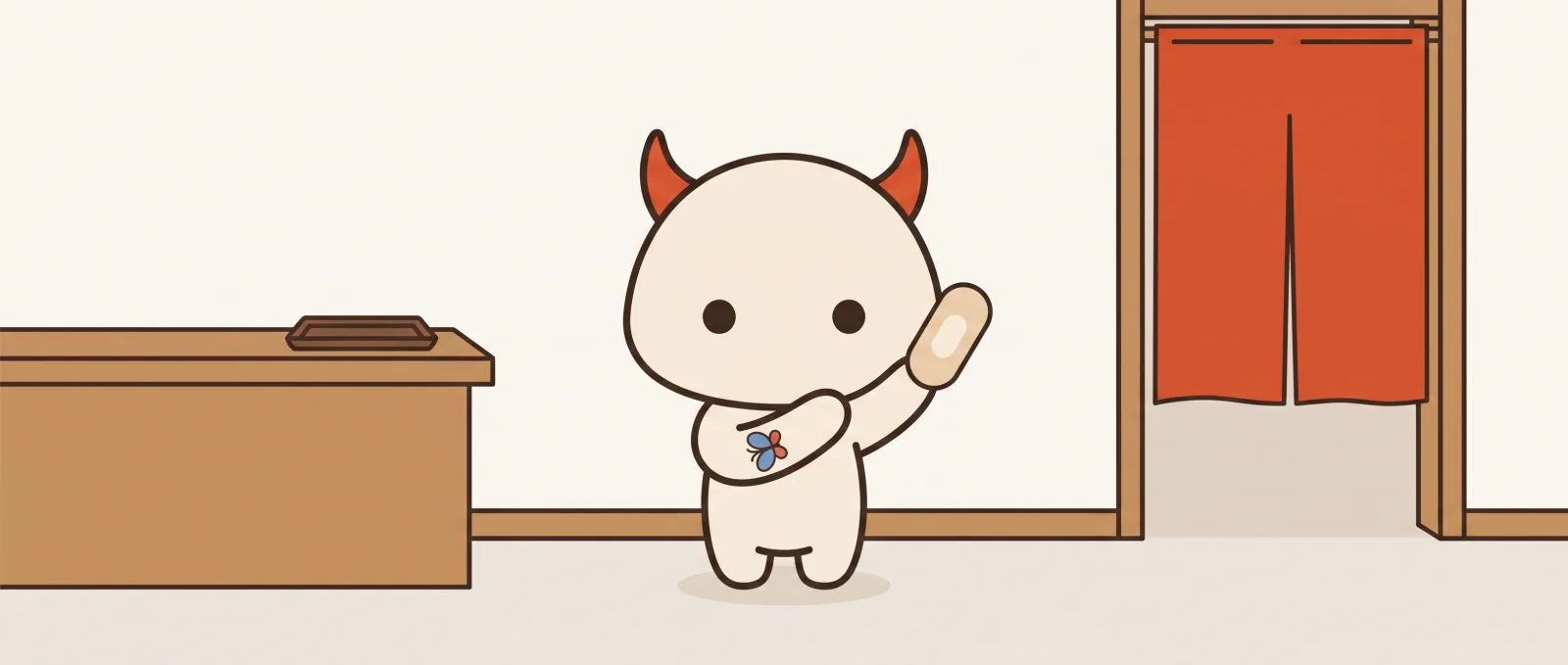
If you have tattoos, check first
Here the advice above works against you. Super sento are usually not tattoo-friendly: they set their own door policy, and most of them turn tattooed guests away. Neighborhood sento and mountain ryokan tend to be far more relaxed about it. So check the specific place before you go, cover small pieces with a waterproof patch, or book a private bath (kashikiri-buro, 貸切風呂) and skip the question entirely.
The tattoo guide: policy map, cover stickers, and the phrases to ask with
Common worries
Do I really have to be completely naked?
In a normal indoor bath, yes: swimwear is not allowed and the small towel does not go in the water. This is the part everyone dreads and it stops mattering about ninety seconds after you get in, which nobody believes until they have done it once. Nobody looks, and the room is full of steam anyway. If it is still the thing stopping you, a private bath (kashikiri-buro, 貸切風呂) gets you the same water behind a door that locks.
Nobody will speak English. Is that a problem?
Not really. The whole sequence is visible, so watch the person ahead of you and copy them. Bigger complexes usually have an English sheet at the desk. The one word worth knowing is sumimasen (すみません), which politely gets someone's attention, and pointing covers the rest.
A few good first stops around Tokyo
Easy day-use complexes within reach of the capital, from the cheap local chain to a proper onsen-town one.
Somewhere else in Japan? Every day-use complex we know of is on the map
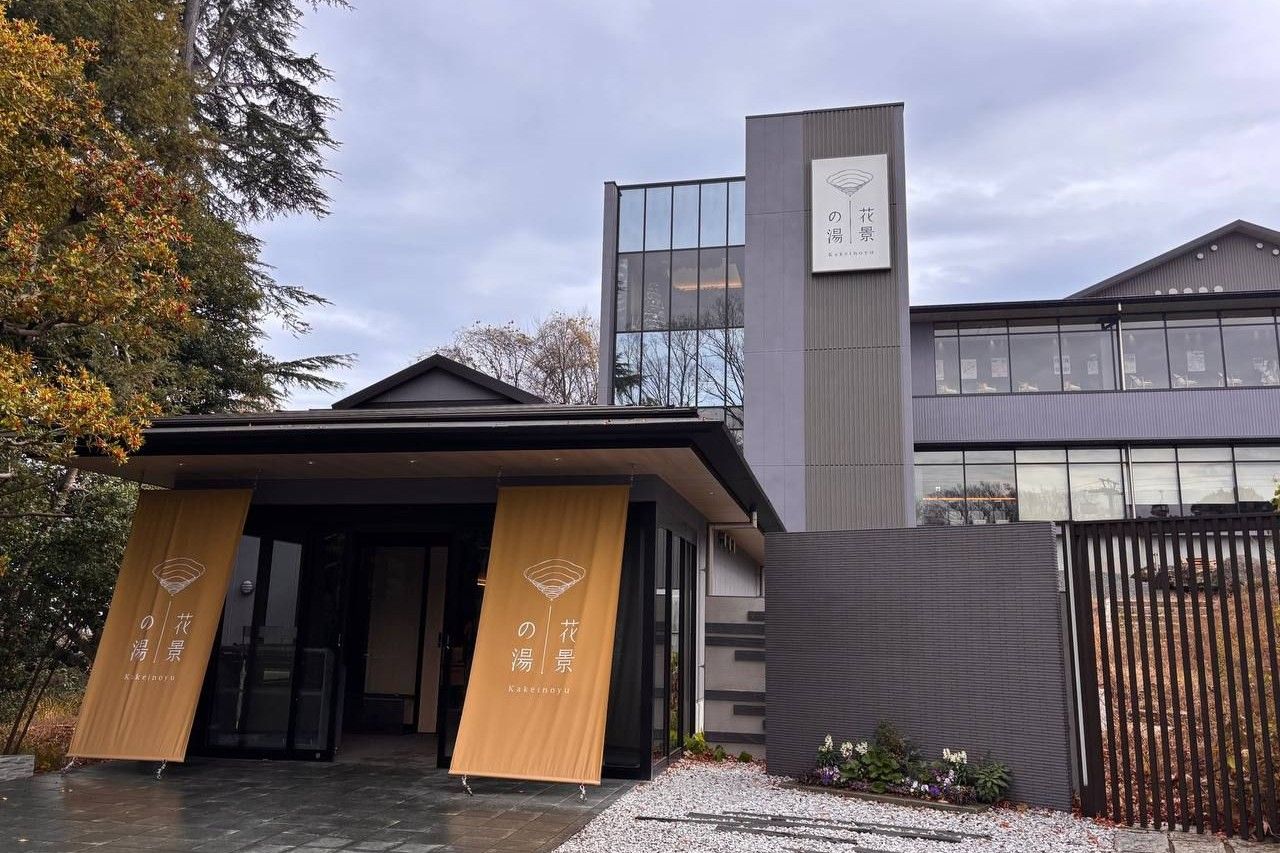
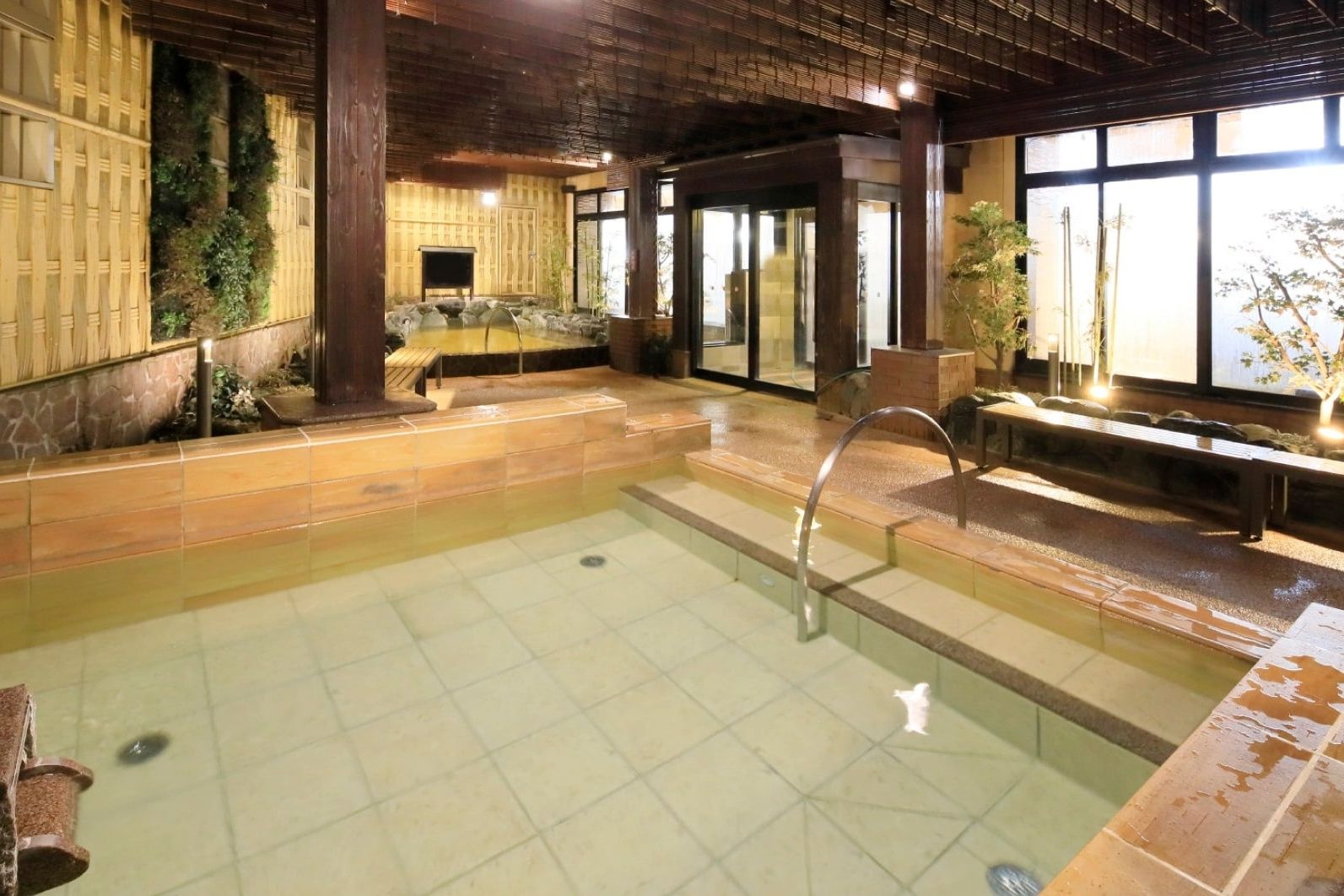
A day-use bathing facility located 2-3 minutes on foot from JR, Tokyu, and Rinkai Line Oimachi Station. The rotenburo features artificial hot spring water replicating natural hot spring components, with high-concentration carbonated spring, silk bath, various jet baths, Kings sauna, and herbal steam bath. The ganbanyoku 'Flame Room' uses projection mapping and offers a löyly experience. Dining area 'Tenpu' and body care, akasuri, and esthetic services are available.
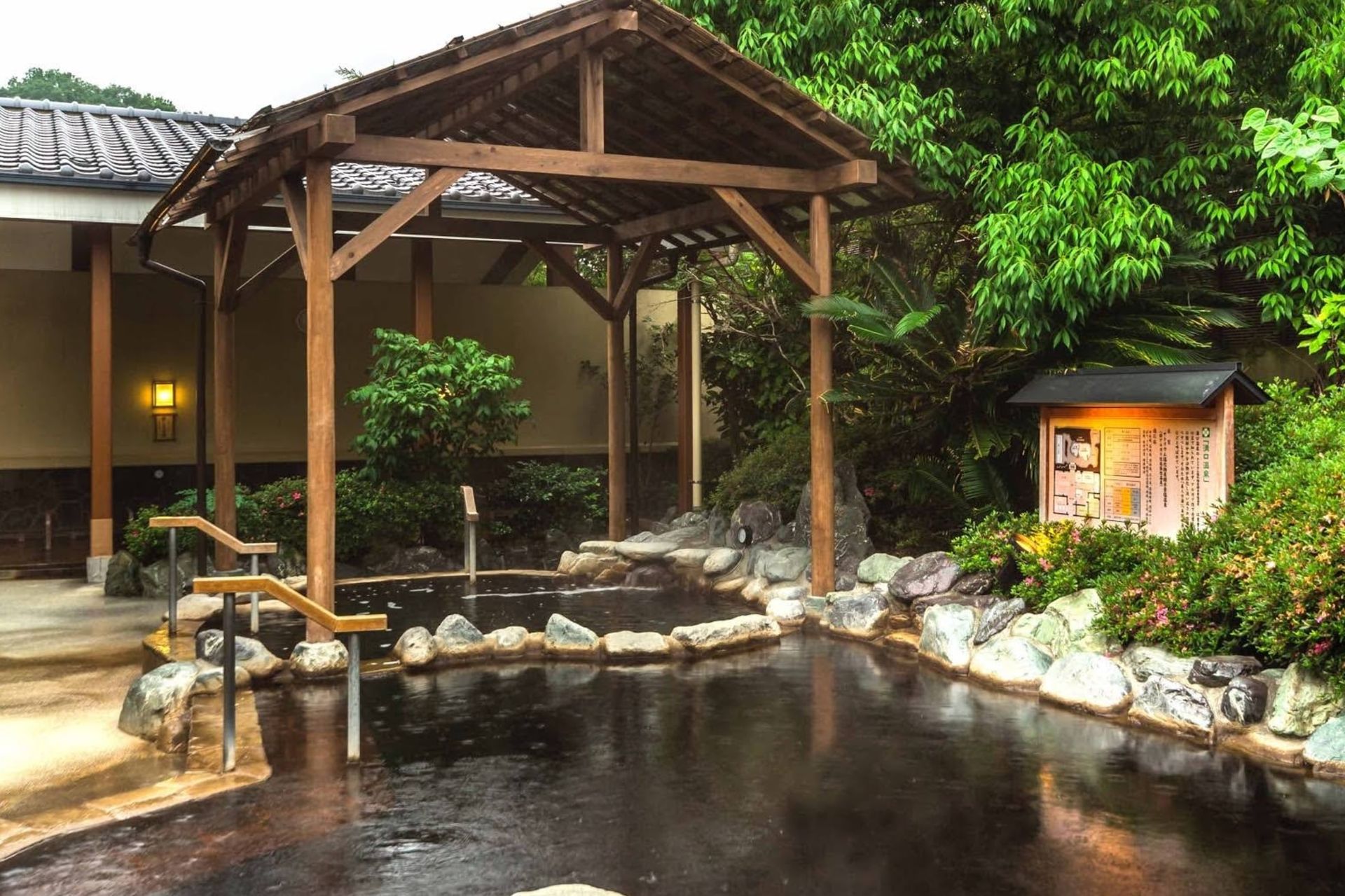
Mizonokuchi Onsen Kirari is a day-use bathing facility in Takatsu Ward, Kawasaki City, Kanagawa Prefecture, offering a natural hot spring of sodium bicarbonate spring (baking soda spring). The rotenburo includes the kakenagashi "Ueno-yu" and the source-heated circulating "Shitano-yu", plus a reclining bath. The indoor baths have high-concentration carbonated spring, silk bath, jet bath, and others. High-temperature sauna and salt sauna, as well as ganbanyoku (free time system), are available. The facility is for junior high school age and above; elementary school children and younger are not admitted.
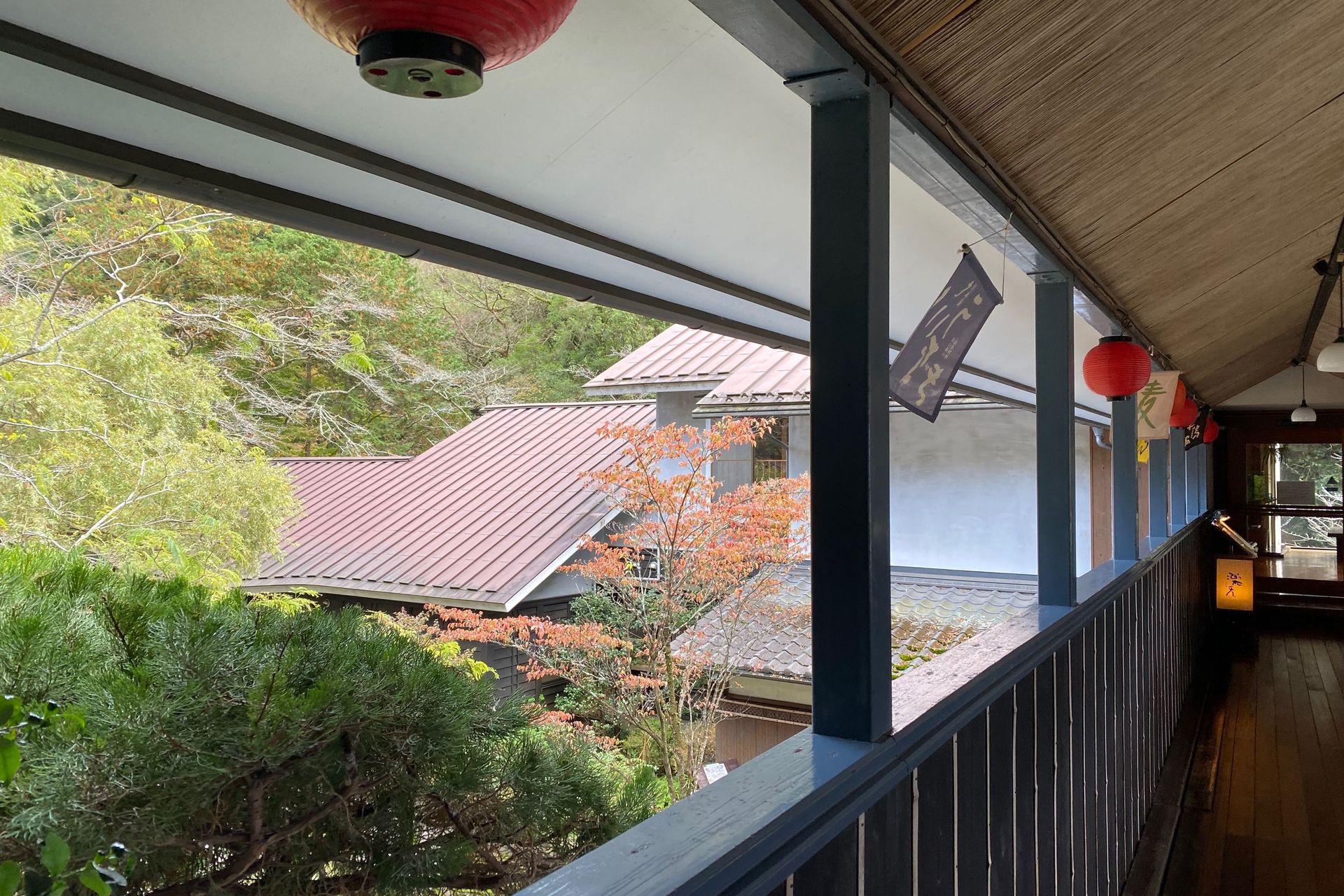

Where to go next
Sources
- Japan National Tourism Organization, “How to Best Enjoy Japan’s Onsen”official— The national tourism body's own etiquette guidance: washing first, the towel, hair, phones and voices.
- Ministry of the Environment, notices and guidelines under the Hot Spring Law (温泉法に関する通知・ガイドライン, Japanese)official— Includes the 2014 notice on contraindications and bathing precautions, which is the source of the soak times, hydration and temperature advice posted in changing rooms.
- Aichi Prefectural Institute of Public Health, general contraindications for hot-spring bathing (温泉の一般的禁忌症, Japanese)official— The prefectural restatement of the same notice, listing the conditions under which bathing is advised against.