Onsen Facility Types
Sento, ryokan, super sento and the rest: what each kind of place actually is
Onsen, sento, ryokan. These words get mixed up constantly because they answer two different questions. Ask them one at a time and it gets simple.
What is in the tub?
Onsen (温泉) is a legal label for the water. It has to come out of the ground, and it has to pass either a temperature test or a mineral one. Anything else is just heated water. The label says nothing about the building.
What kind of place is it?
The sento down the street, a business hotel with a big bath on the top floor, an old wooden ryokan up in the mountains, a spa complex with ten baths and a sauna. Or a pool of hot water in a riverbed with nothing built around it at all. And that says nothing about the water.
The two cross freely, and that is what trips people up. A plain business hotel can pump genuine spring water to its top-floor bath while a handsome mountain inn just heats tap water. It goes the other way too: a neighborhood sento often sits on its own spring. The word sento tells you how a bathhouse is licensed and how its price is set, not what comes out of the pipe.
First, the water
The onsen label is a legal one, and narrower than most people expect
Onsen (温泉)
Water counts as onsen if it leaves the ground at 25°C or warmer, or carries enough of certain dissolved minerals. Either one alone is enough, which is why a genuine onsen can arrive lukewarm and why a cold spring still counts.
Heated water
Tap water, warmed up. Not a lesser thing, just a different one: a good bathhouse with the right atmosphere makes for a fine evening whatever comes out of the pipe. It is simply not an onsen.
Kakenagashi (掛け流し)
Even real onsen water is handled differently everywhere. It may run through the tub once and straight out (kakenagashi), or be filtered and recirculated, heated, diluted, chlorinated. Some places post this on a sign by the changing room, and where we know it we record it on the place's page.
Places for a day visit
You turn up with a towel and go home the same day
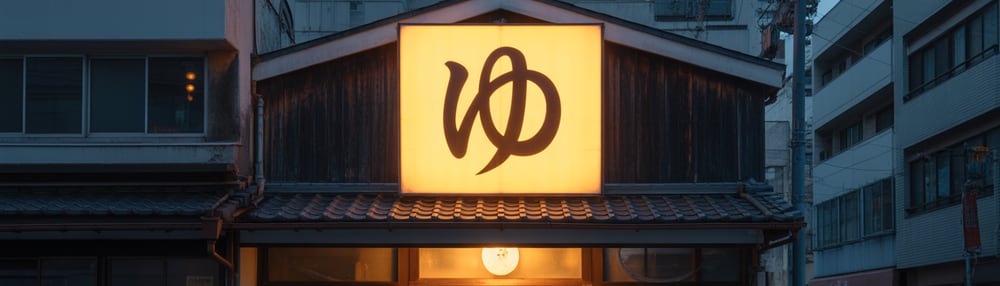
Sento
銭湯
The neighborhood public bath, and a local institution. Fixed price at the door: wash, soak, go home.
- The prefecture sets the ceiling on the price, not the owner, so an adult pays somewhere around 400 to 600 yen, and it barely changes from one bathhouse to the next.
- Sento is a licensing category, not a water type. Many heat plain water, but plenty of sento sit on a real source and serve onsen, especially in east Tokyo and Kyushu.
- Bring soap and a towel, or rent them at the counter. Not every sento supplies them.
- The village version, kyodo-yu (共同浴場) or soto-yu (外湯), works the same way, but the local community runs it: there is often an honor box instead of a counter, and the water is nearly always onsen.
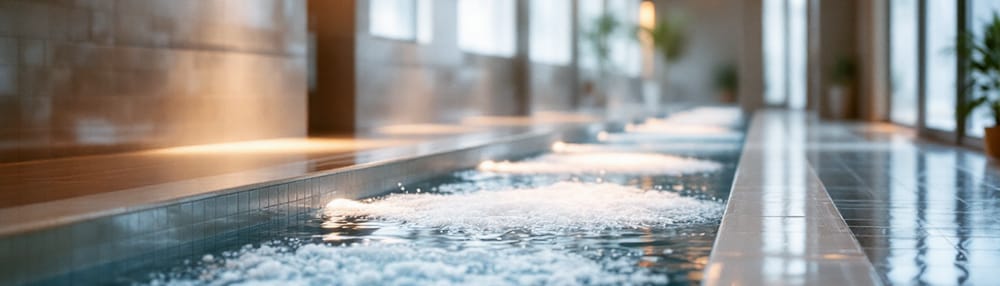
Super Sento
スーパー銭湯supa sento
The sento idea scaled up: a large day-use complex with many baths, a sauna, food, and somewhere to lie down.
- Nothing caps the price here, so entry usually runs 800 to 3,000 yen. What you pay depends on the complex, the day of the week, and whether the sauna is included.
- Built for a full day out: indoor and outdoor baths, sauna, cold plunge, restaurant, reclining chairs.
- Plenty drill a real source, so a super sento can absolutely be an onsen, even though the name gives you no clue either way.
Places you stay
The bath comes with a bed, and usually with dinner
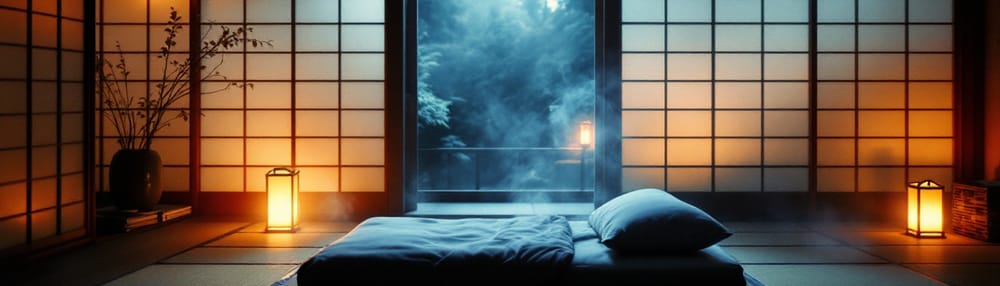
Ryokan
旅館
A traditional inn: tatami rooms, futon, dinner and breakfast included, and baths that are usually why you came.
- The rate is per person and includes two meals, so it looks steep next to a hotel room rate until you remember that dinner is in the price.
- The men's and women's baths often swap overnight, so you get to use both.
- Many open their baths to non-guests during the day. Look for higaeri nyuyoku (日帰り入浴).
- It does not have to be wooden or look traditional from outside. A 1970s concrete block is as much a ryokan as an old timber inn, and often shares its source.
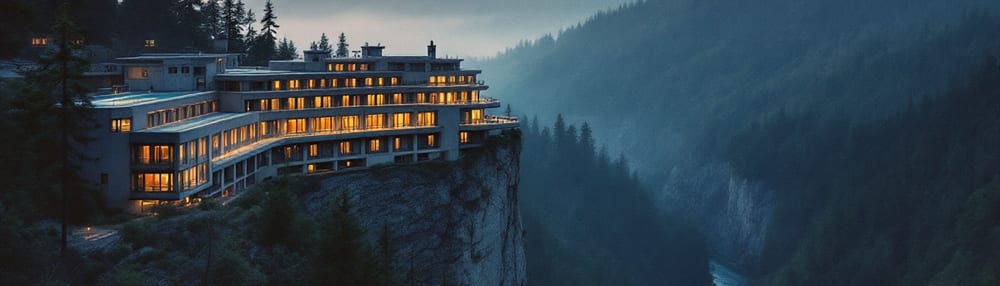
Onsen Hotel
観光ホテルkanko hoteru
The large resort hotel, kanko hotel (観光ホテル): the ryokan idea built out to a few hundred rooms.
- Big communal baths, buffet dinners, a souvenir floor, karaoke. Built for groups and families.
- Rooms come Japanese, Western, or a mix of the two, and the building is usually concrete, put up somewhere between the 1970s and the 1990s.
- This is the easiest kind to book at the last minute, and the easiest to get a day-use bath at without calling ahead.
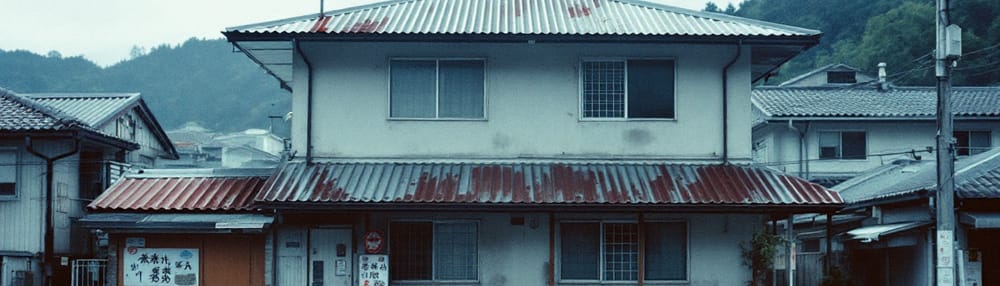
Minshuku
民宿
A family-run guesthouse. Simpler and cheaper than a ryokan, and often someone's actual home.
- A handful of rooms, home cooking, shared washrooms. The bath is often a single family-sized tub that guests take in turns, booked for a time slot.
- Often the only lodging in small onsen villages and near wild baths.
- Cash is still common, and check-in times are firm: someone is cooking your dinner.
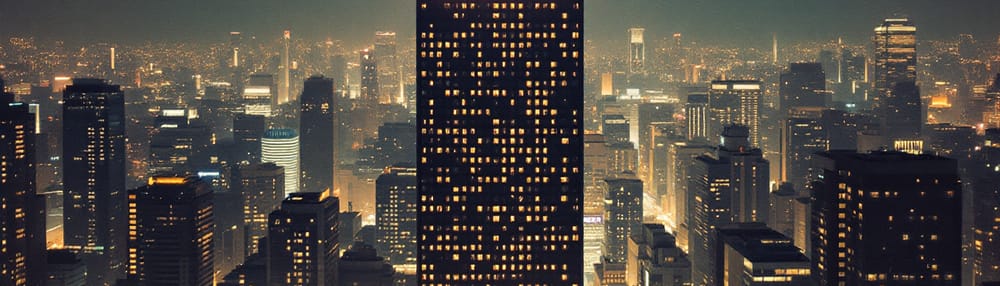
Business Hotel with a Big Bath
ビジネスホテルbijinesu hoteru
A plain, cheap city hotel with a communal bath, daiyokujo (大浴場), on the top floor or in the basement.
- Some chains drill genuine sources, making this one of the cheapest ways to sleep above real onsen water.
- Compact single rooms, nothing included beyond breakfast, a short walk from the station.
- The bath is normally for guests only, unlike a ryokan's.
Special cases
The ones that break the pattern: no building, no changing room, or nothing to take off
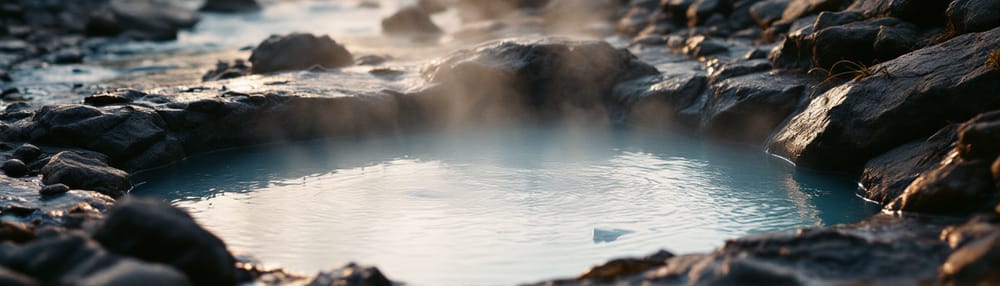
Wild Onsen
野湯noyu
Noyu (野湯): hot water reaching the surface with little or nothing built around it. A riverbed, a beach, a hollow in the mountains.
- Free, or an honor box on a post. No staff, no lockers, often no changing room.
- Conditions shift with weather and season, and some wash out entirely after heavy rain.
- Bathing is mixed almost everywhere, and swimwear rules differ from one spot to the next. Go knowing that, and carry your trash out.
Foot, Hand and Face Baths
足湯・手湯・顔湯ashiyu / teyu / kaoyu
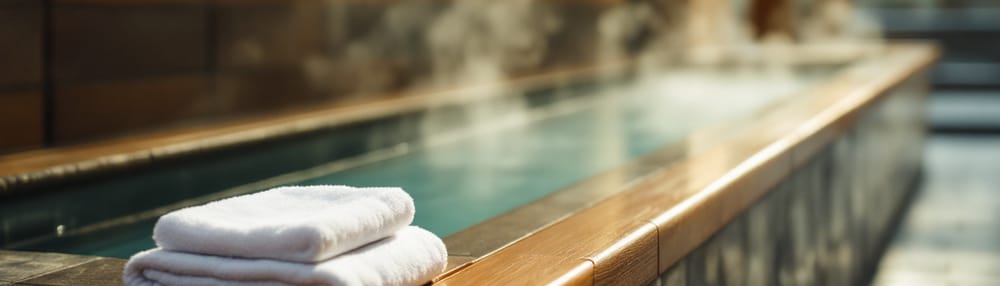
A shallow public basin of spring water you dip one part of yourself into, usually free and right on the street.
- Ashiyu (足湯) for the feet is the common one. Onsen towns also build hand baths (teyu, 手湯), and a few have a face bath (kaoyu, 顔湯) you lean into for the steam.
- Nothing to take off but your socks, and no changing room to find.
- Bring a small towel. Hardly any of them provide one.
Can I bathe without staying the night?
Usually yes. Most places that look like they are only for overnight guests will let you in for a bath in the middle of the day: ryokan, onsen hotels, mountain inns. Late morning to mid-afternoon, a few hundred to around 2,000 yen.
The signs to look for at the entrance:
日帰り入浴
higaeri nyuyoku
日帰り温泉
higaeri onsen
立ち寄り湯
tachiyori-yu
外来入浴
gairai nyuyoku
Where a place offers it, we record the hours and price on its Onsen Oni page.
How to actually ask for it
No sign does not mean no. Plenty of places take day visitors without advertising it, so it is worth asking anyway. There is no ticket machine either: walk in, ask at the desk or the first staff member you see, and pay there. They hand you a towel and point you to the bath.
Two words, and that is the whole question
日帰り温泉?
Higaeri onsen?
Yes. Often it is just the price and a nod
はい、どうぞ
Hai, dozo
No. Often the whole answer
やってません
Yatte masen
You will know which one it was before you parse the words. Crossed forearms making an X, or a hand waved in front of the face, means no. A nod, a beckon, or someone reaching for a towel means yes.
Then, if you need them:
How much is it?
いくらですか?
Ikura desu ka?
Do you have towels?
タオルはありますか?
Taoru wa arimasu ka?
Quick answers
Is a sento an onsen?
It can be. The two are not opposites: sento is about licensing and price, onsen is about the water. Most sento heat plain water, but plenty of them sit on a source and are quietly both, especially in east Tokyo and Kyushu. The sign by the door will say.
Sento or super sento, what is the real difference?
Price control and scale. A sento is legally an ordinary public bathhouse: the fee is capped and there are one or two tubs. No cap applies to a super sento, so it can build ten baths, a sauna and a restaurant, and charge what it likes for them. You drop into one for a quick cheap bath, and settle in at the other for the whole day.
Where to go next
Sources
- Ministry of the Environment, “Definition of Hot Springs” (温泉の定義, Japanese)official— The Hot Spring Law criteria: 25°C at the source, or the listed dissolved components.
- Ministry of Health, Labour and Welfare, Public Bath Houses Act overview (公衆浴場法, Japanese)official— The split between price-regulated ordinary bathhouses and everything else.
- Tokyo Sento Association (東京都浴場組合)official— Current regulated bathing fees, which each prefecture sets and revises.