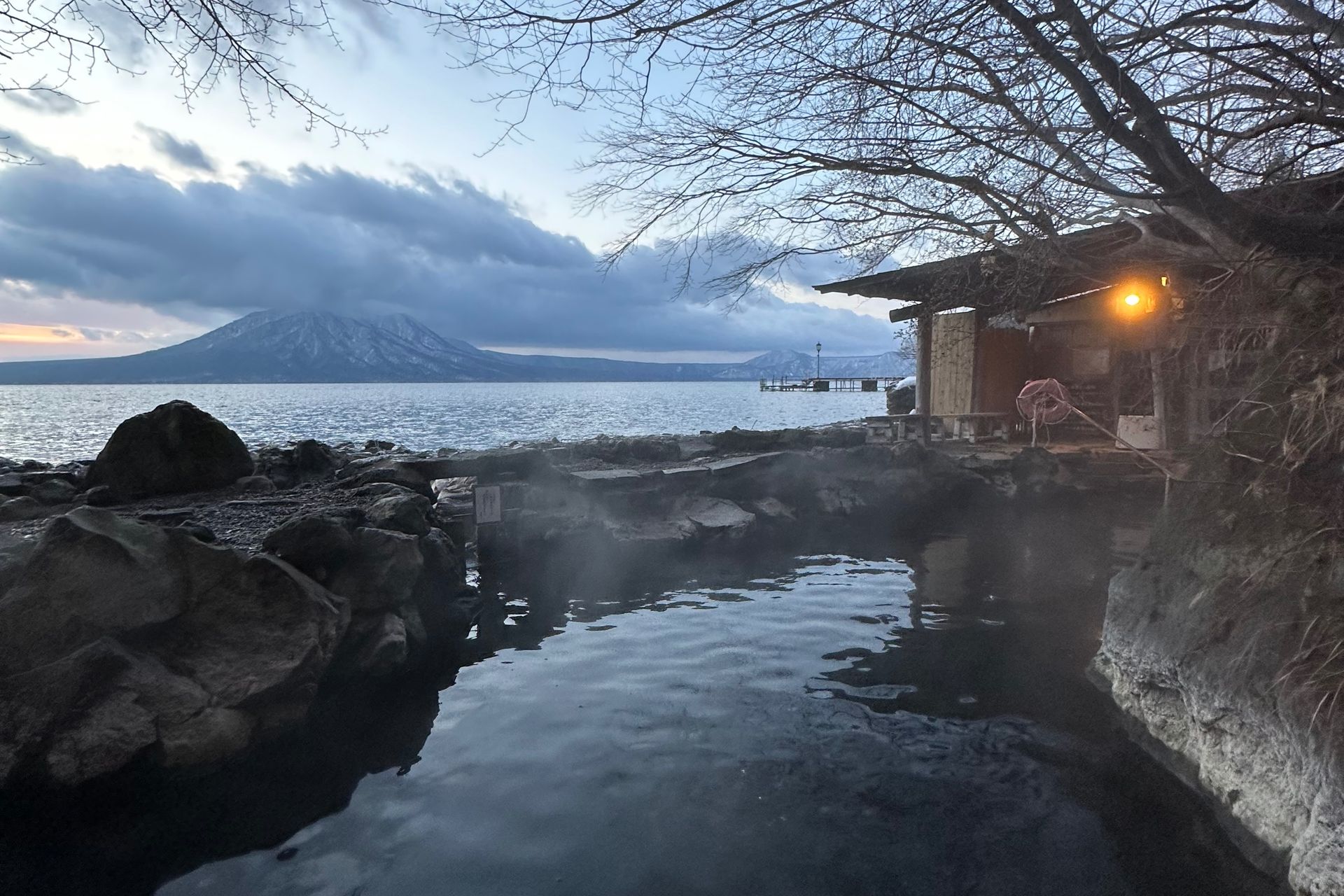
A remote ryokan on Lake Shikotsu whose signature bath is separated from the lake by nothing but rock, plus a view rotenburo, indoor baths with sauna, and two private baths.
Nuru-yu: The Gentle Baths
Hot springs warm enough to stay in for an hour, where the water works slowly and there is nowhere you need to be.
431 lukewarm onsen in our catalog
What Nuru-yu Is
Nuru-yu (ぬる湯) is a bath that is merely warm: roughly 32 to 40°C, a little below body temperature or barely above it. It is not a legal category and appears nowhere in the Hot Spring Law. It is a bathing word, from nurui, lukewarm, and it describes the tub rather than the spring feeding it.
Around 35 to 36°C sits what Japanese bathing culture calls fukan ondo (不感温度), the temperature of no sensation: water that registers as neither hot nor cold, where the heat your body makes and the heat it sheds roughly cancel out. Pulse, blood pressure and breathing barely move. That is why an hour in a nuru-yu goes by like ten minutes in a hot bath.
How Hot Is "Hot", Exactly?
The Mineral Spring Analysis Guidelines, which sit under the Hot Spring Law, sort springs into four bands. Note carefully what is being measured: senon (泉温), the temperature at the wellhead, and not the water you actually sit in.
nuru-yu, in the bath32–40°C
25°
34°
42°
- Cold mineral spring冷鉱泉 reikosenbelow 25°C
- Low temperature低温泉 teionsen25 to 34°C
- Warm温泉 onsen34 to 42°C
- High temperature高温泉 koonsen42°C and up
Why Cooler Water Often Does More
You can stay far longer.
The Ministry of the Environment suggests 15 to 20 minutes, two or three times, for an ordinary hot bath. At Tochiomata in Niigata, whose wellheads measure 35.4 and 28.5°C, the traditional soak runs one to two hours. Everything dissolved in that water gets the whole time to work on you.
Your body is not fighting it.
Ten minutes at 42°C raises blood pressure by 20 to 40 points, pulse by around 40 beats a minute and body temperature by 2°C. Official guidance tells older bathers, and anyone with heart disease, high blood pressure or a stroke history, to avoid baths above 42°C outright. Below that line the parasympathetic side takes over instead: vessels open, the pulse stays put.
The water keeps what it arrived with.
That same guidance calls onsen water namamono (なまもの), fresh produce, and names what perishes: hydrogen sulfide, iron, carbon dioxide, radon. Carbon dioxide in particular gets less soluble as temperature climbs, so heating a cool carbonated spring boils off the very thing that made it worth bathing in.
Nuru-yu Across Japan
Every lukewarm bath we have tagged, on one map.
431 places
Loading map…
Tagged from what facilities and bathers report about the bath itself, so this is a living list rather than a complete one. Found one we are missing? Tell us and we will add it.
How to Bathe in One
A nuru-yu asks for the opposite of what a hot bath asks for. Nothing here is difficult, but the habits are different.
- Give it twenty minutes before you judge it. It will feel underwhelming, even chilly, for the first few minutes. That passes, and then it stops feeling like anything at all. Getting out at five minutes means you never actually had the bath.
- Drink before and after. A long soak dehydrates you far more than it feels like it does, which is exactly the trap: nothing about it feels strenuous.
- Watch for yuatari (湯あたり). Three days to a week into repeated bathing you may get malaise, poor sleep, digestive trouble or a rash. That is a known reaction, not bad luck. Cut back or stop for a day and let it pass.
- Do not rinse off afterwards. Pat yourself dry and leave the minerals on your skin. The exception is acidic and sulfur springs if your skin is sensitive, where a rinse with plain warm water is the safer call.
Where to Start
The baths the tradition is named after, plus a few that are simply easy to get to. Several are famous precisely for how long people stay in them.
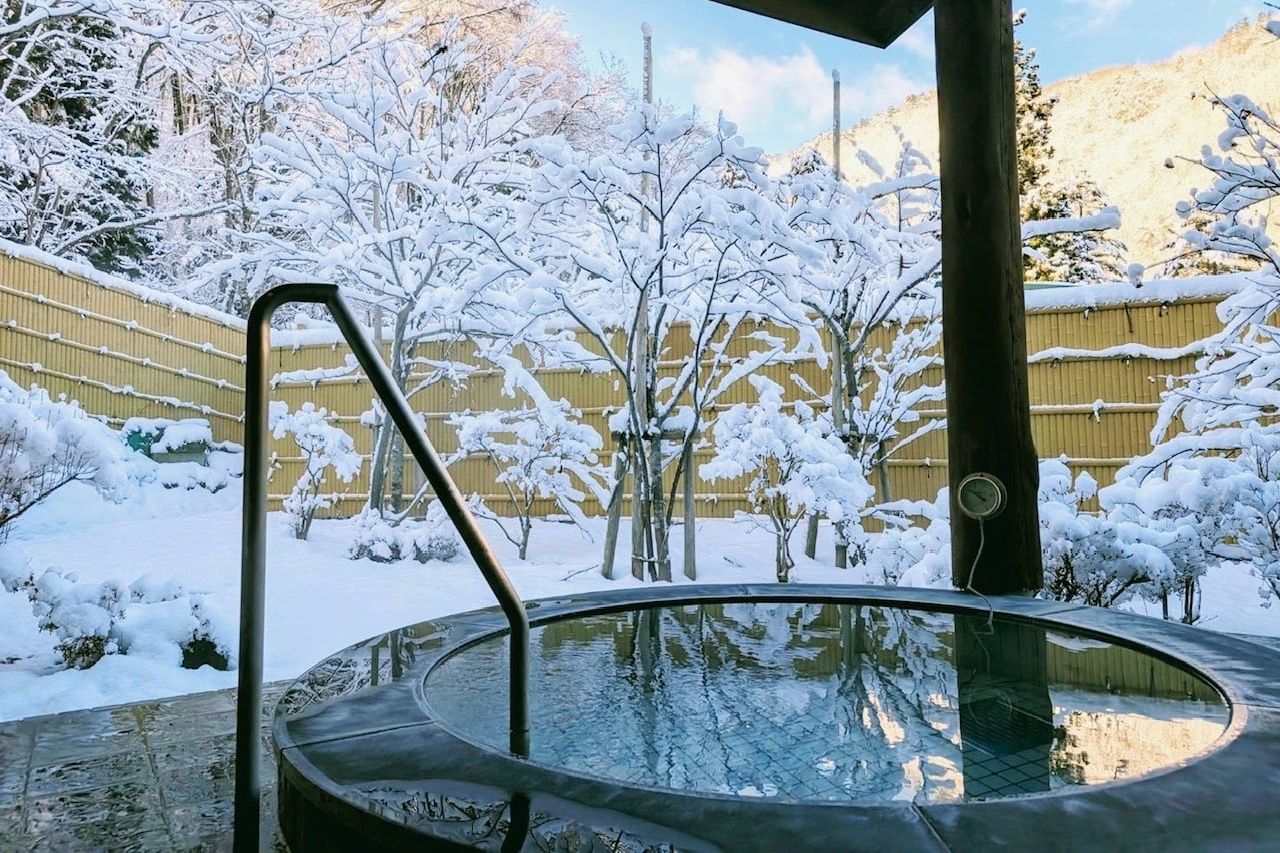
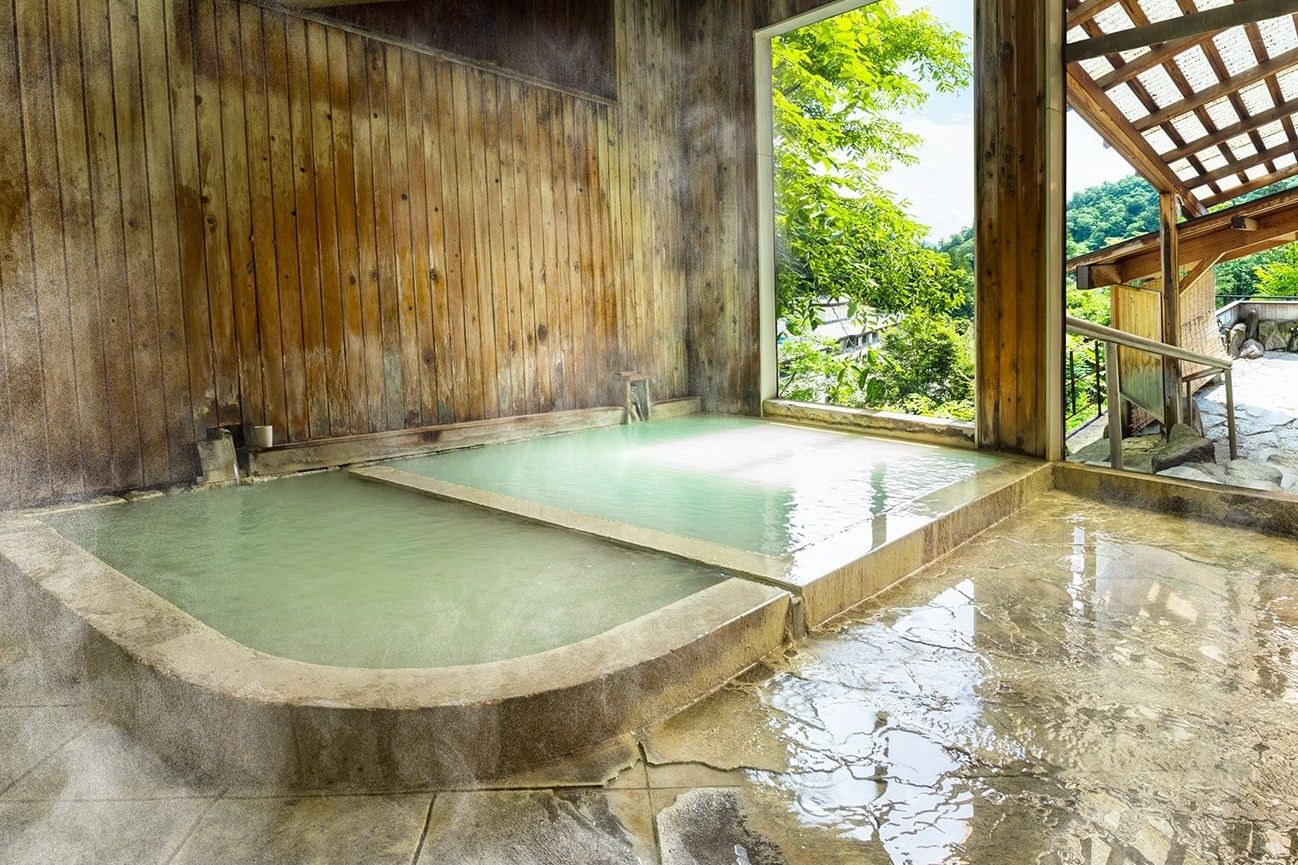
A small mountain ryokan in Kuji known for its strong alkaline spring water, with a big indoor bath at two temperatures, an open-air bath, a source-water cold plunge, and a sauna, all open to day visitors.

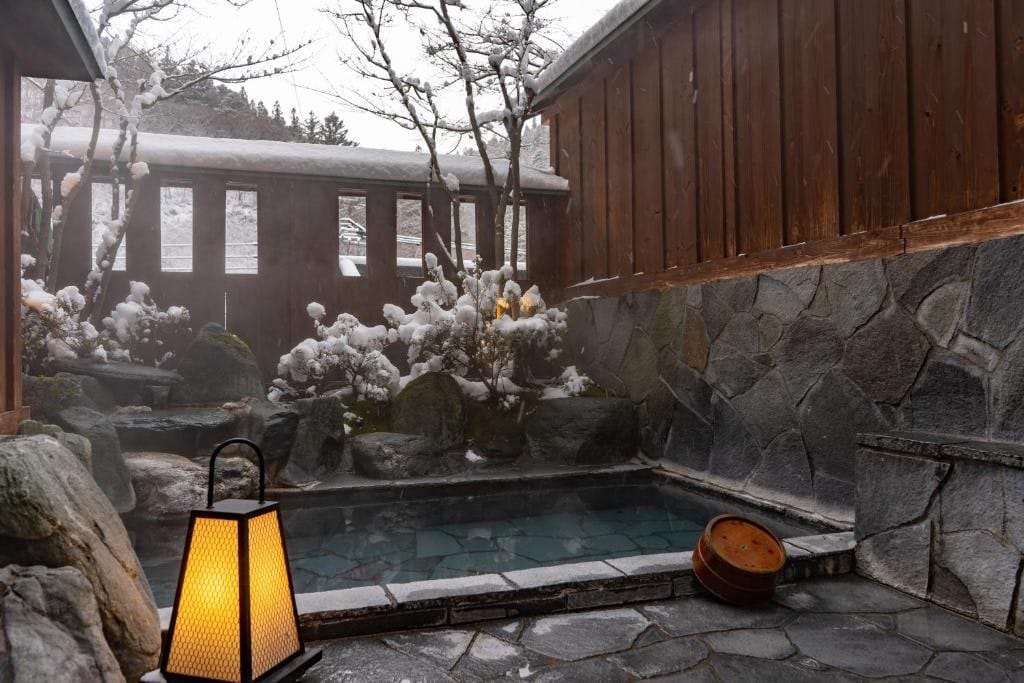
A deep-valley ryokan at Shiobara Motoyu known for the Sumi-no-yu, a sulfur bath that turns coal black and shifts color with the weather.

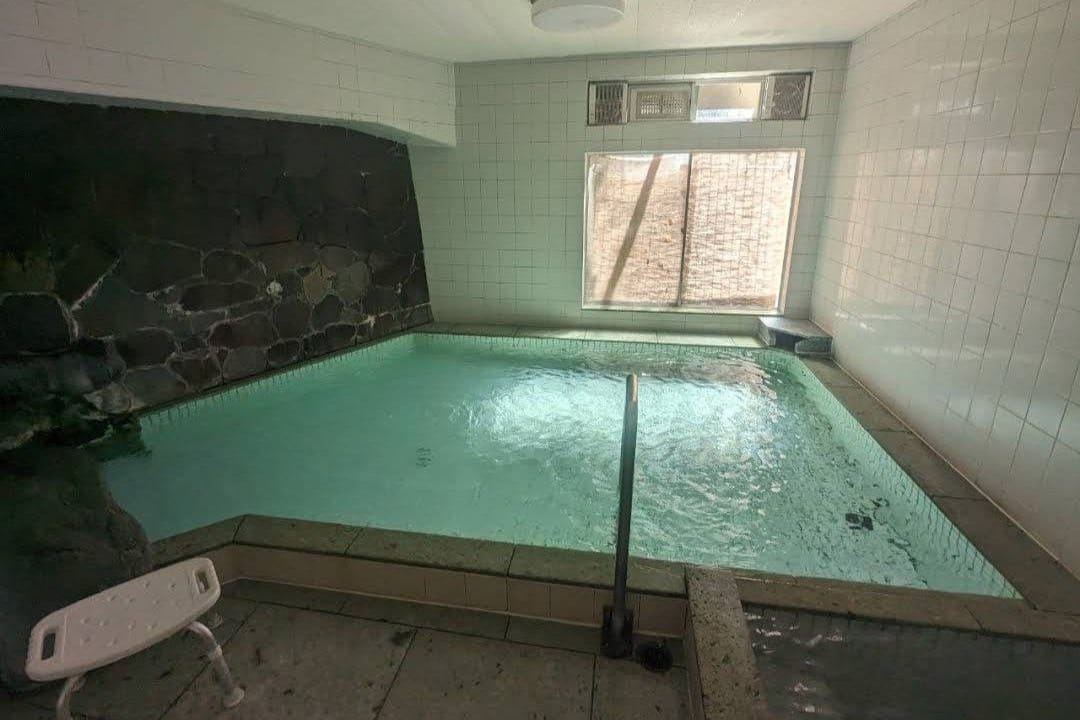
A cozy, old-fashioned ryokan in Shima Onsen where every bath, indoor and outdoor, is fed by real onsen water, including three private baths free for guests to use as often as they like.
Shimobe Onsen has a long association with Takeda Shingen, who allegedly used these cold springs to treat battle wounds, and the alternating hot-and-cold soak that Hashimotoya still practices is said to go back to that tradition. The cold spring here comes out at around 32°C naturally, paired with a drilled hot spring at 50°C, so you move between the two. It's one of only a handful of places in Japan where you can still do this kind of therapeutic cold-mineral-spring bathing.
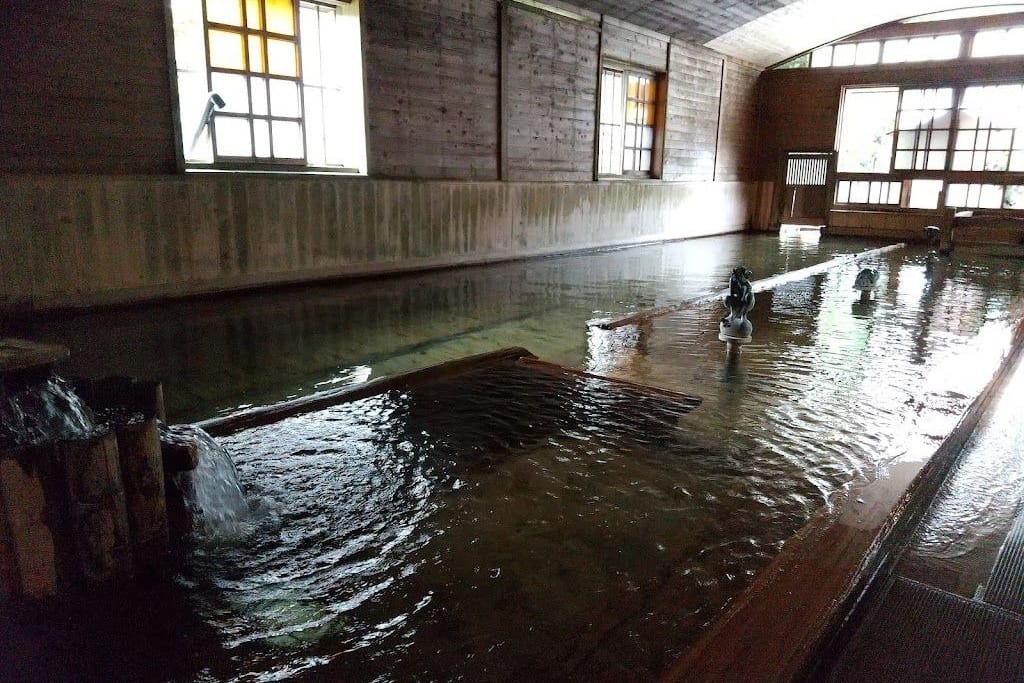
The senninburo at Kanaya Ryokan is, by common account, the largest all-hinoki (cypress) bath in Japan. Built in 1915 (Taisho 4), the vast wooden hall stretches roughly 20 metres and bathes you in the clean, warm scent of cypress throughout. It is a mixed bath (konyoku): women can also enter a connected women's bath and benefit from women-only hours. The ryokan itself was established in 1867 in Izu, Shizuoka, tucked in a quiet valley with spring water flowing directly from the base of Kanaya Mountain. Beyond the great hall, there is also a small outdoor rotenburo for those who want open sky. The combination of hot spring water, cypress, and a 160-year-old inn is genuinely hard to find elsewhere.
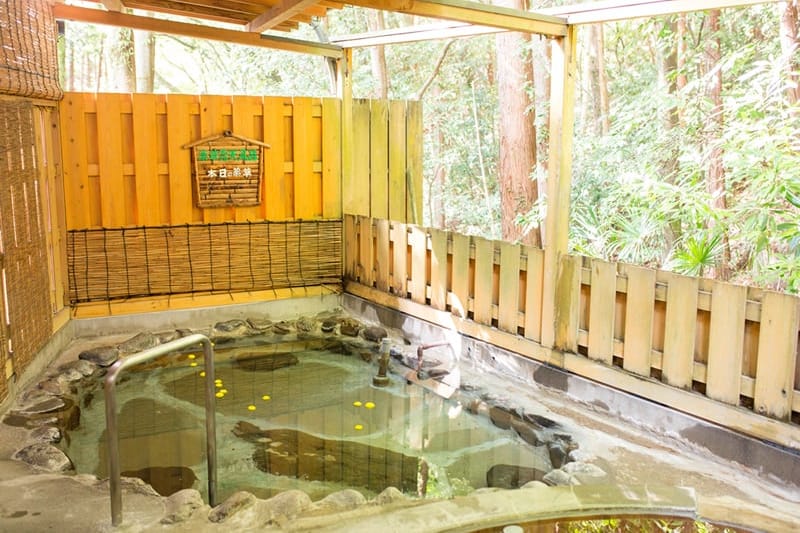
One of the best-known lukewarm baths in Izu, in the hills of Izunokuni. Everything here runs kakenagashi straight from a 38°C spring, and the tubs are held at a spread of temperatures from about 36°C up to 41°C, so you pick the one you want and stay in the cool end as long as you like. There is a waterfall bath (utaseyu, 打たせ湯) as well.
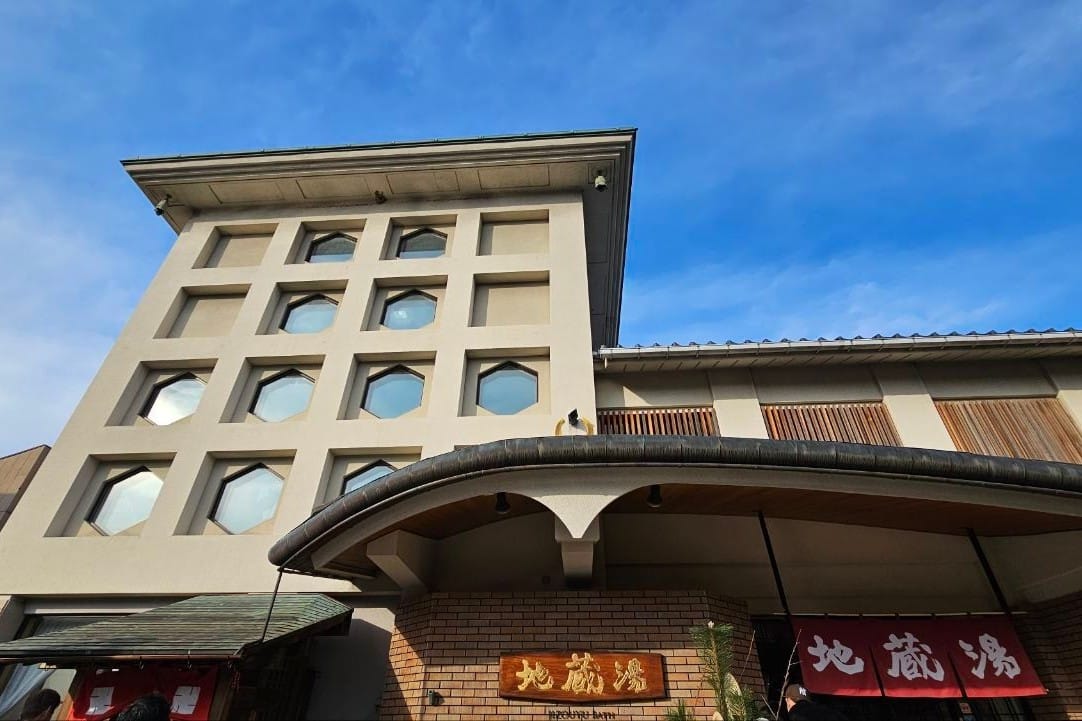

One of Kinosaki Onsen's seven public baths, with a hot indoor tub, a shallow pool for small children, and a Jizo statue enshrined at its spring source.
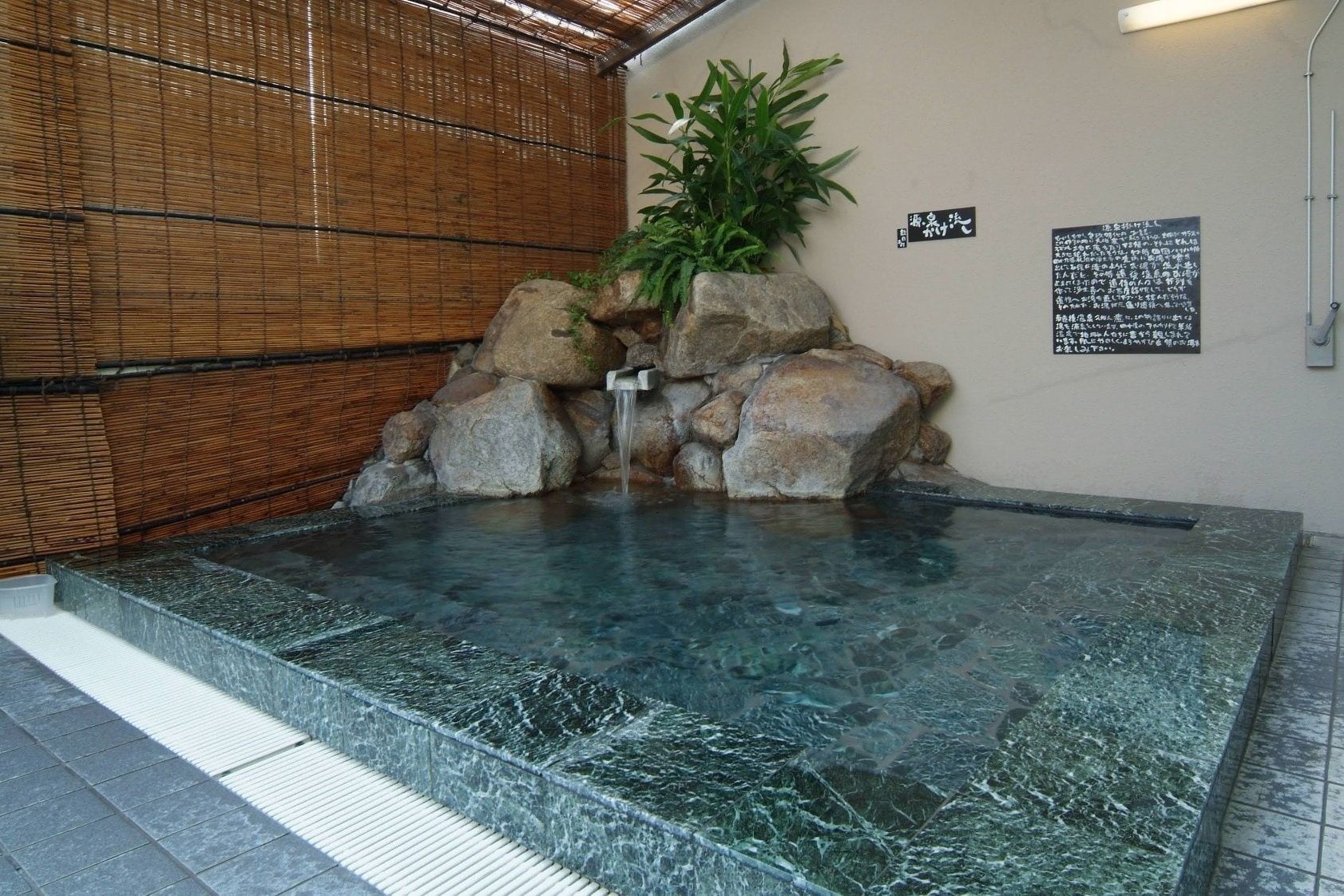
A small neighborhood bathhouse near Dogo Onsen in Matsuyama, known for soft, faintly slippery spring water and a local earthquake legend tied to its source.
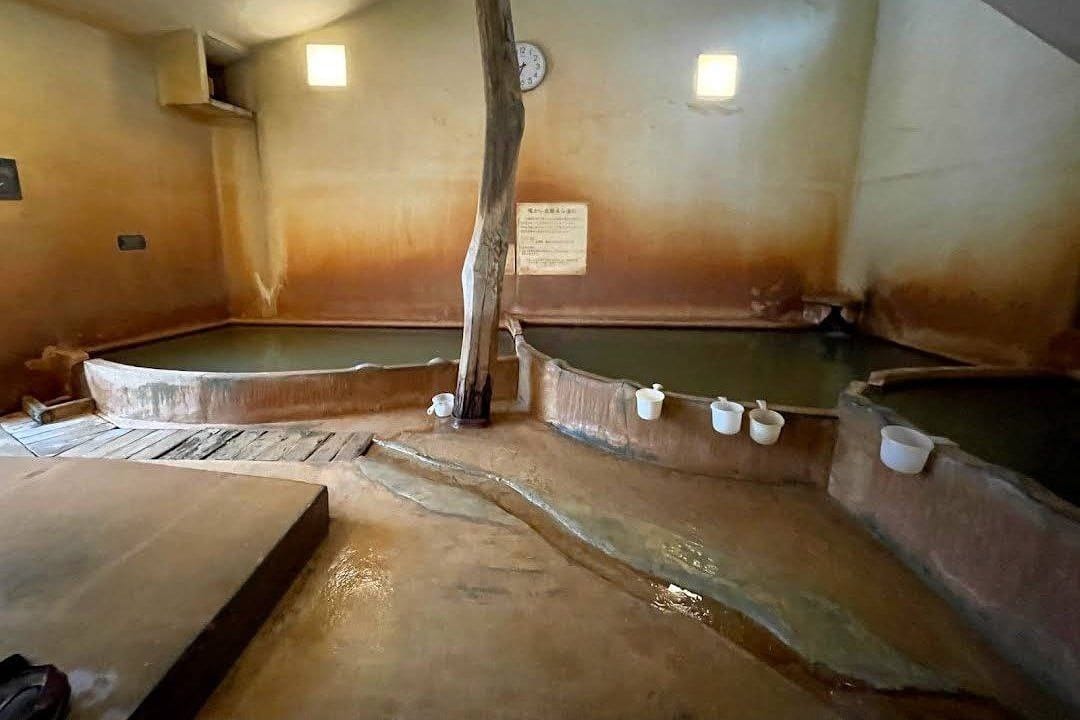
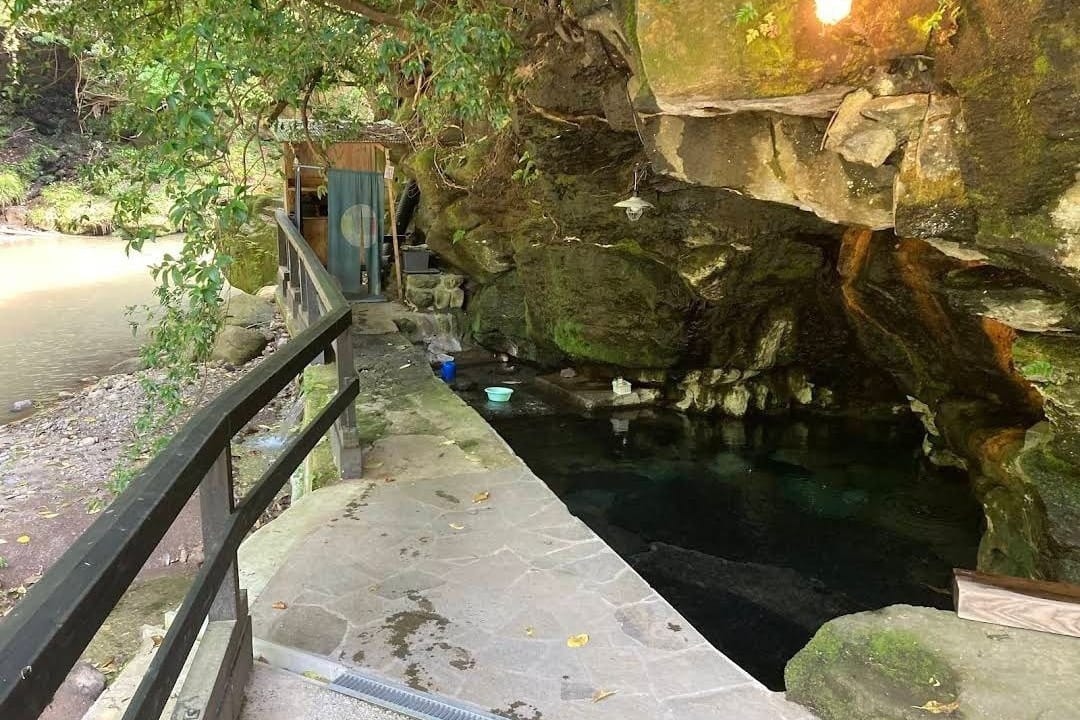
A tiny hot-spring ryokan built around a lukewarm cave bath that's been flowing for over 300 years, with a women-only cave bath and two reservable private baths alongside it.
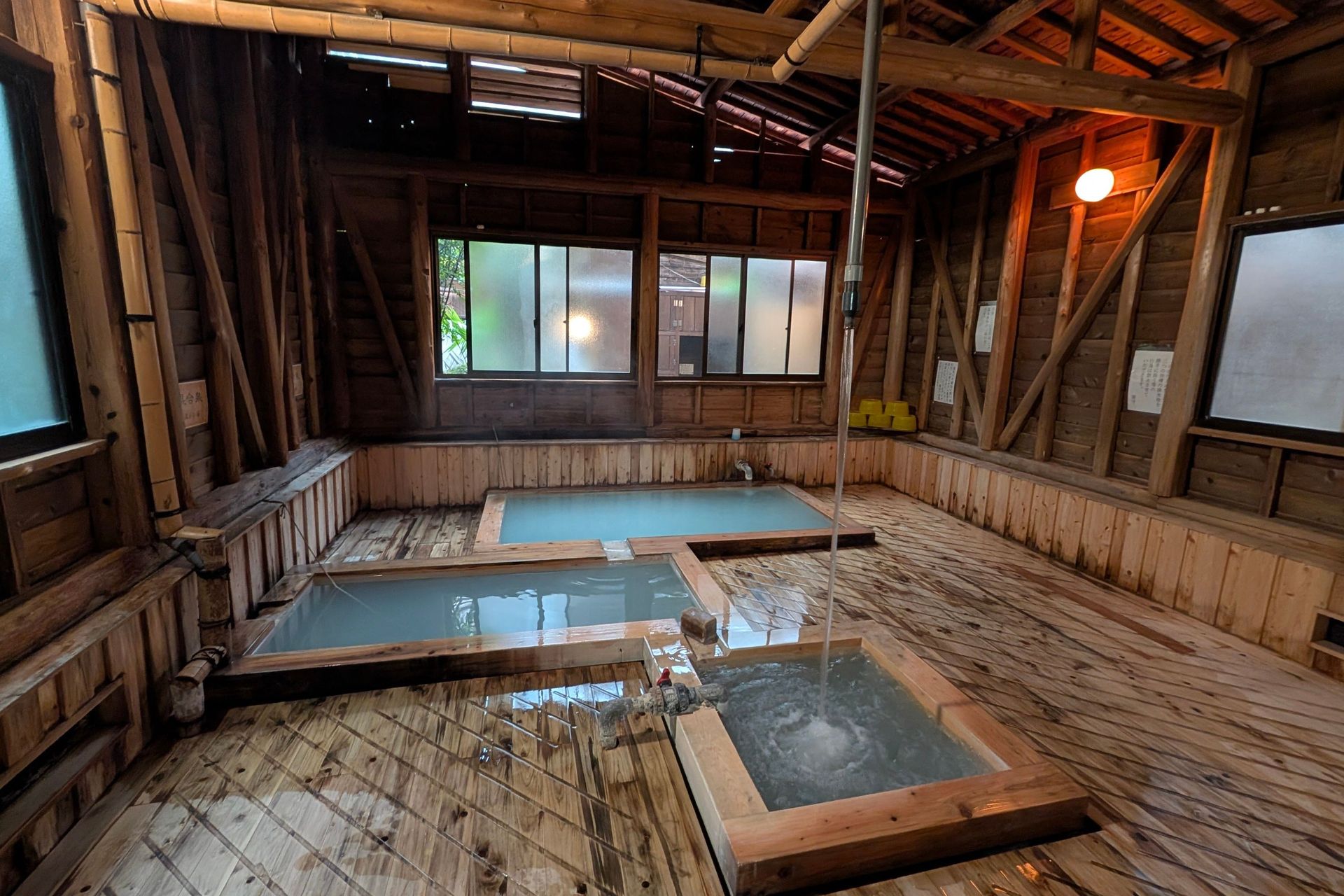
Words on the Wall
What you will see on the analysis certificate posted by the changing room, and what it tells you about the bath.
A lukewarm bath
ぬる湯
nuruyu
Source temperature, at the wellhead
泉温
senon
Free-flowing source water, not recirculated
源泉かけ流し
gensen kakenagashi
Heated
加温
kaon
Diluted with water
加水
kasui
Carbonated spring
炭酸泉
tansansen
Bubbles clinging to your skin
泡付き
awatsuki
An extended stay taking the waters
湯治
toji
The full story
Browse Every Nuru-yu
Open the full map, filtered to lukewarm baths, and combine it with anything else you are looking for.
Open the map