
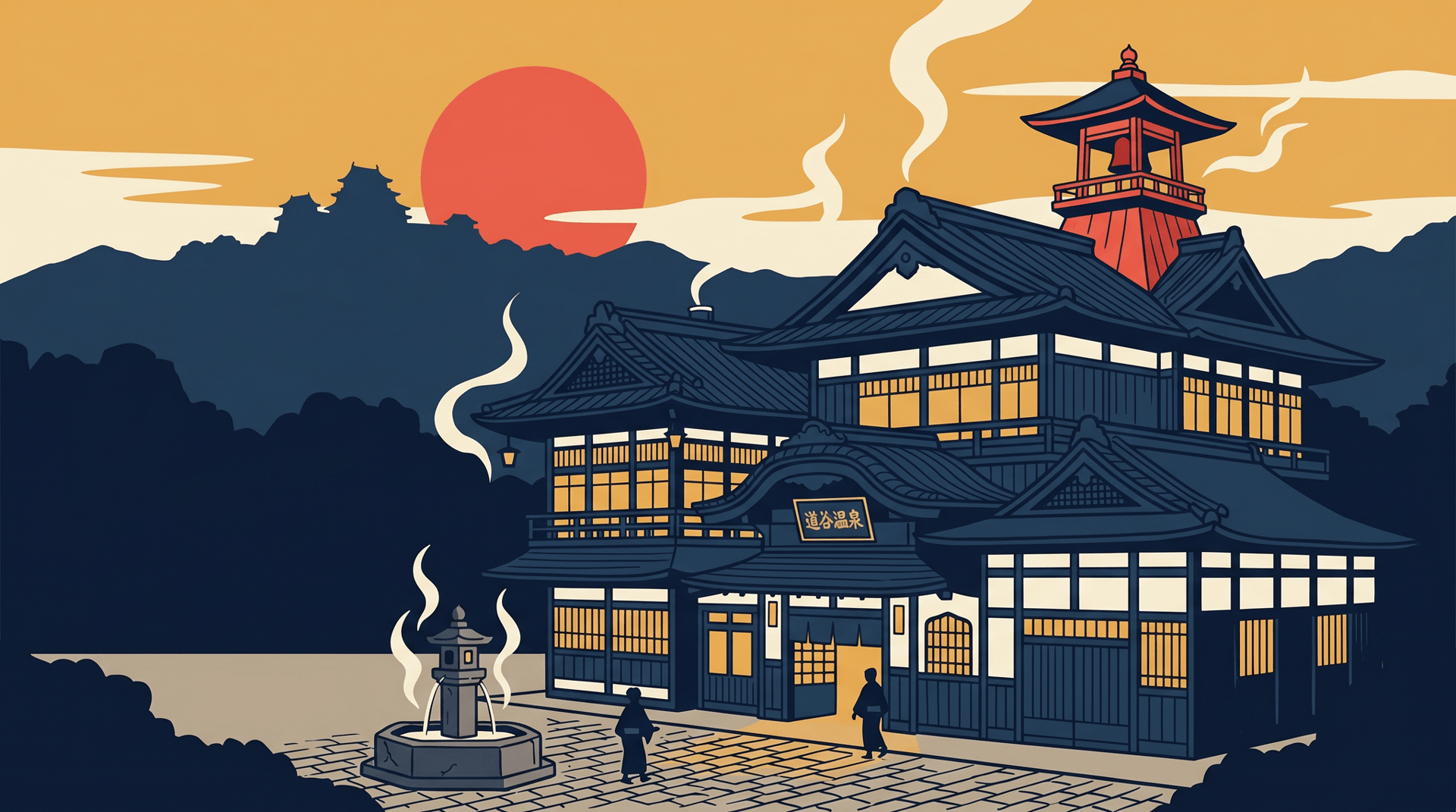

Dogo Onsen
道後温泉郷One of Japan's three ancient onsen (Sankoyu) and the centerpiece of Matsuyama, with the 1894 Dogo Onsen Honkan bathhouse at its heart.
A bath with a written past
Dogo is one of the springs Japan keeps citing when it talks about how old its bathing culture is. The 8th-century Nihon Shoki records imperial visits to the waters of Iyo, and local lore goes further still. The legend of a white heron that healed an injured leg in the spring is the founding story repeated on signage, festival floats, and the rooftop of the main bathhouse itself. Whether one accepts the round "three thousand years" claim or not, Dogo's appearance in the written record is unusually early.
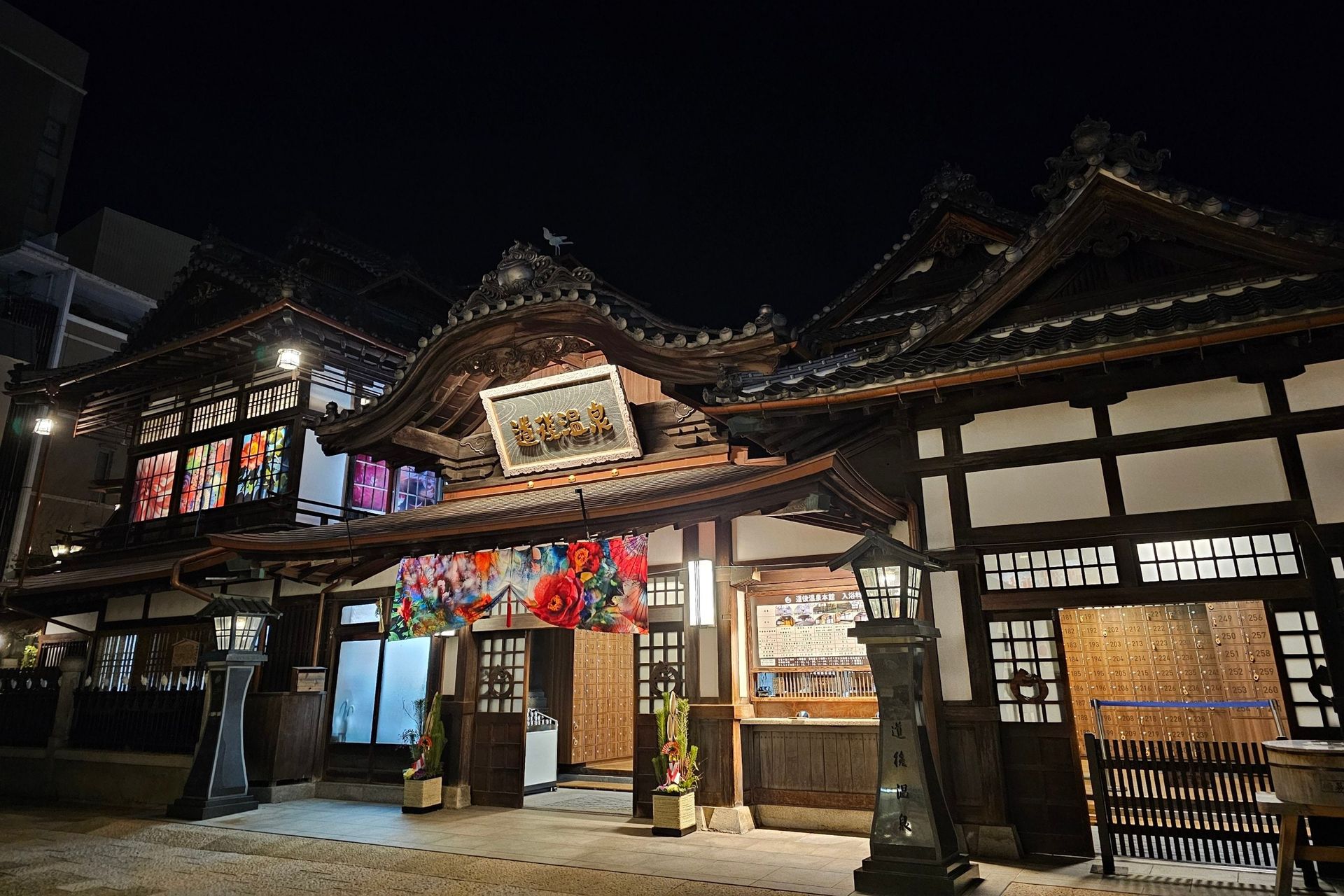
The bath the world recognises today is younger. Dogo Onsen Honkan was completed in 1894 (Meiji 27) by the city carpenter Sakamoto Matahachiro, a wooden three-storey public bathhouse with a small red-glassed drum tower (the Shinrokaku, 振鷺閣) perched on the roof. A drum inside the tower still marks 6 a.m., noon, and 6 p.m., and the soundscape was added to Japan's official "100 Soundscapes" list in 1996. In 1994 the Honkan became the first working public bath designated a National Important Cultural Property.
The Honkan, and what's around it
Inside the Honkan, two baths run in parallel: the larger Kami-no-yu (神の湯), walled in Tobe-yaki tiles depicting the heron legend, and the more secluded Tama-no-yu (霊の湯), sold as a tiered ticket with access to a second-floor tatami rest hall and, with the higher grade, a private resting room. On the third floor's northwest corner is the Botchan-no-Ma (坊っちゃんの間), the room associated with Natsume Soseki, who arrived in Matsuyama in 1895 to teach English and later set his 1906 novel Botchan partly in Dogo. The room was named by Soseki's son-in-law in 1966 and is open to bathers.
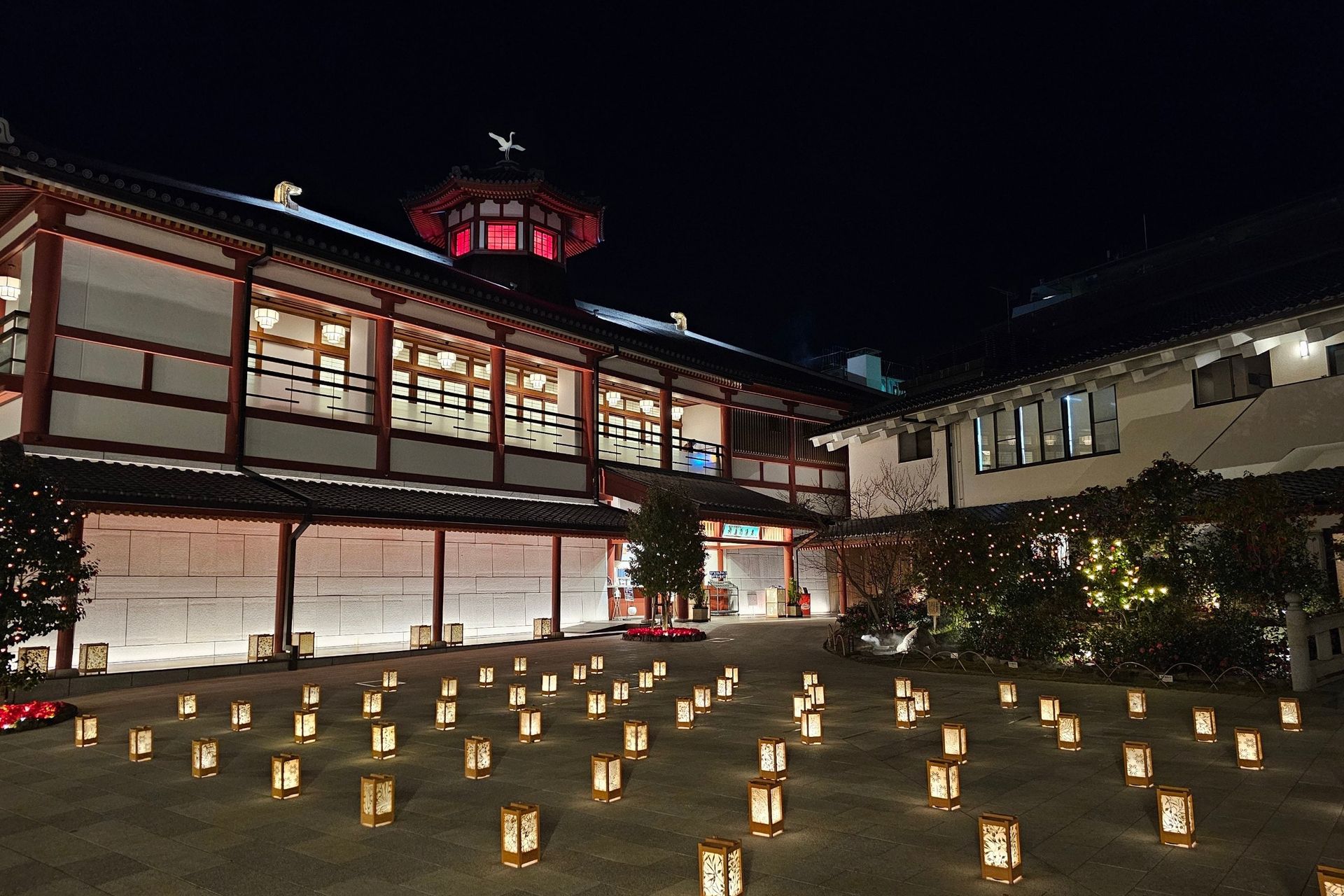
The Honkan reopened for full operation in December 2024 after a five-and-a-half-year preservation campaign that began in January 2019. While work continued, the neighbourhood absorbed the load through two siblings: the locals' bath Tsubaki-no-Yu (椿の湯), and the more recent Asuka-no-Yu (飛鳥乃湯泉), opened in 2017 in an Asuka-period architectural register that nods to the legendary visits of Prince Shotoku and Empress Saimei. The result is a small cluster of three working public baths within walking distance of each other, each tuned for a different mood.
Districts
2 sub-areas within Dogo OnsenPlaces in this area
25 places · Sorted by rating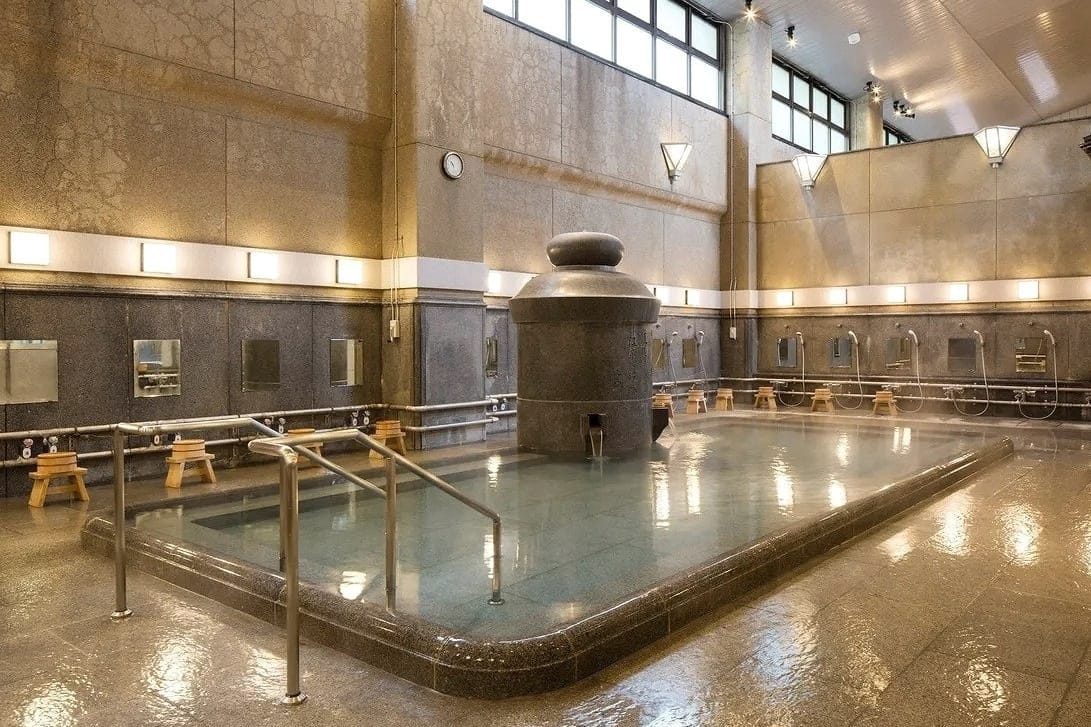
 Lodging
茶玻瑠
Ehime
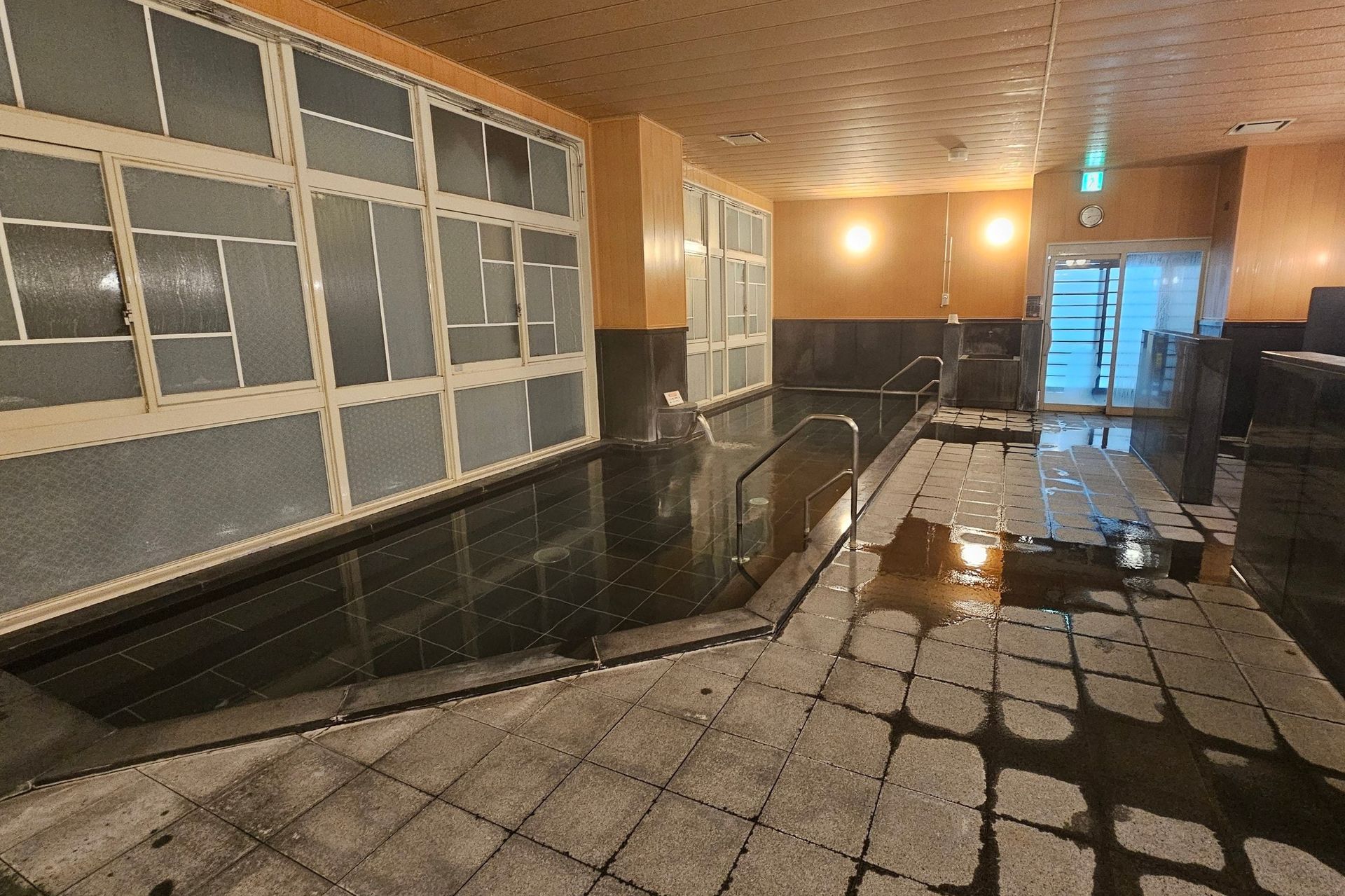
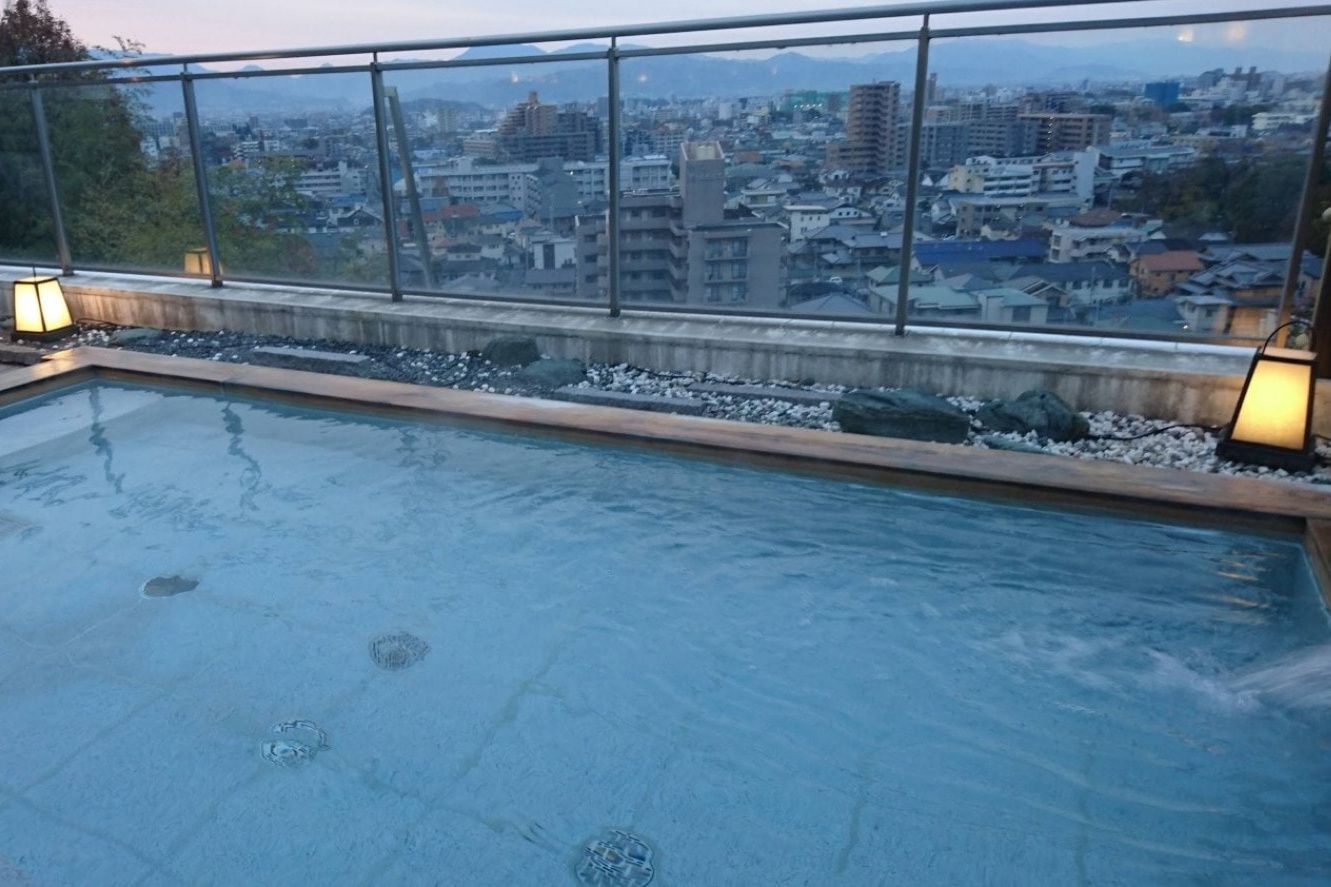
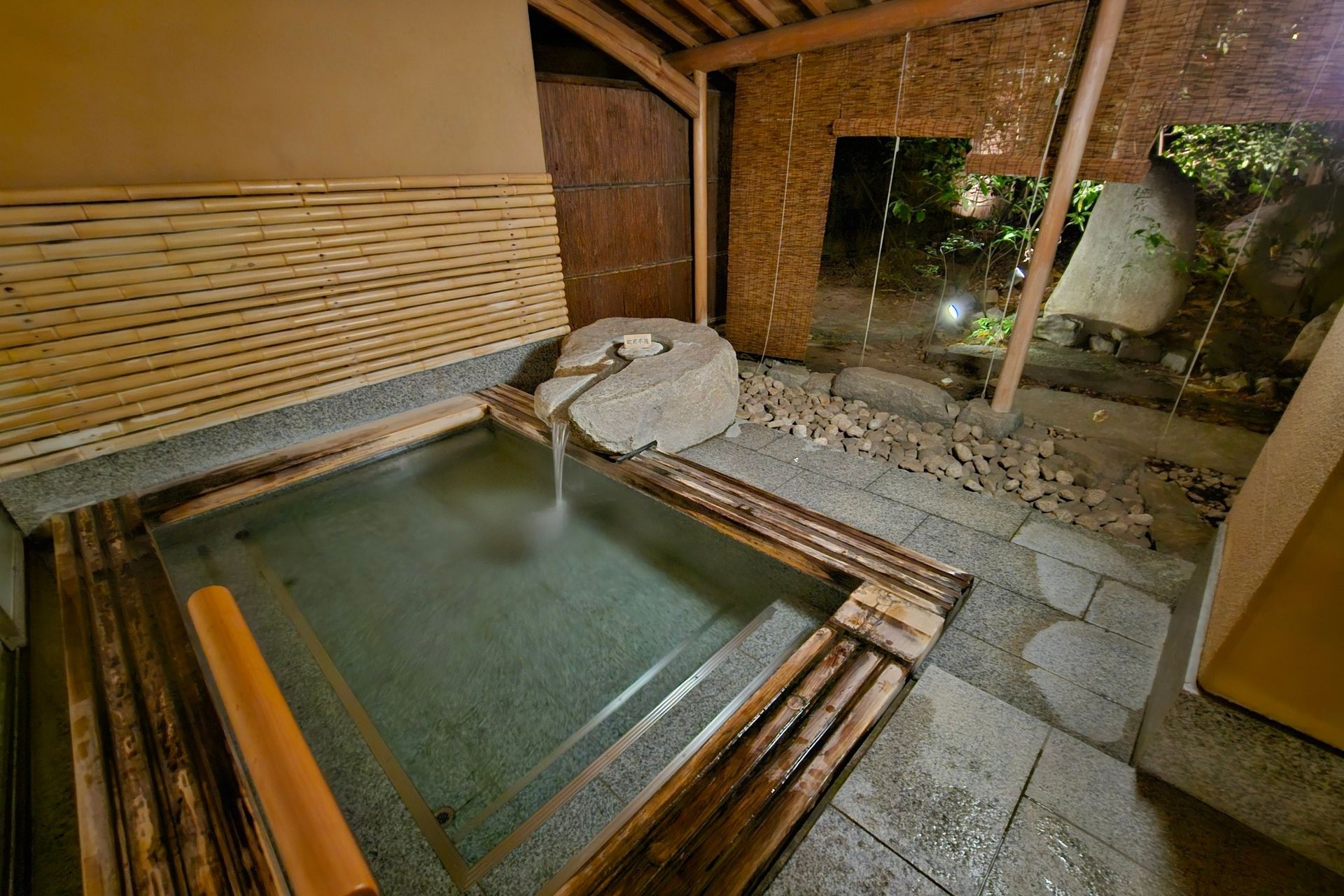
道後舘
Ehime
On the map
Loading map…
Nearby onsenchi
Within 50 kmNo nearby onsenchi within range.
Sources
- Dogo Onsen, official siteofficial— Run by the Matsuyama City public bathhouse operator. Source for opening hours, current bathing options, and the Honkan / Asuka-no-Yu / Tsubaki-no-Yu portfolio.
- Dogo Onsen Honkan, official English pageofficial— Building history, the Kami-no-yu and Tama-no-yu baths, the Shinrokaku drum tower, and the 1894 (Meiji 27) construction.
- Dogo Onsen Annex Asuka-no-Yu, officialofficial— The 2017 annex built in Asuka-period style, referencing Prince Shotoku's legendary visit.
- Nippon.com: The Dogo Onsen Honkan— Cultural Property designation, the Botchan-no-Ma room, and Soseki's stay in Matsuyama in 1895.
- 道後温泉本館, Wikipedia (日本語)— Background on the Honkan, the Shinrokaku tower, Important Cultural Property status (1994), and the 2019–2024 preservation works.