
Gero Onsen
下呂温泉One of Japan's three great onsen (Sanmeisen). Alkaline springs along the Hida River, with a free outdoor bath in the riverbed.
A spring marked by a heron
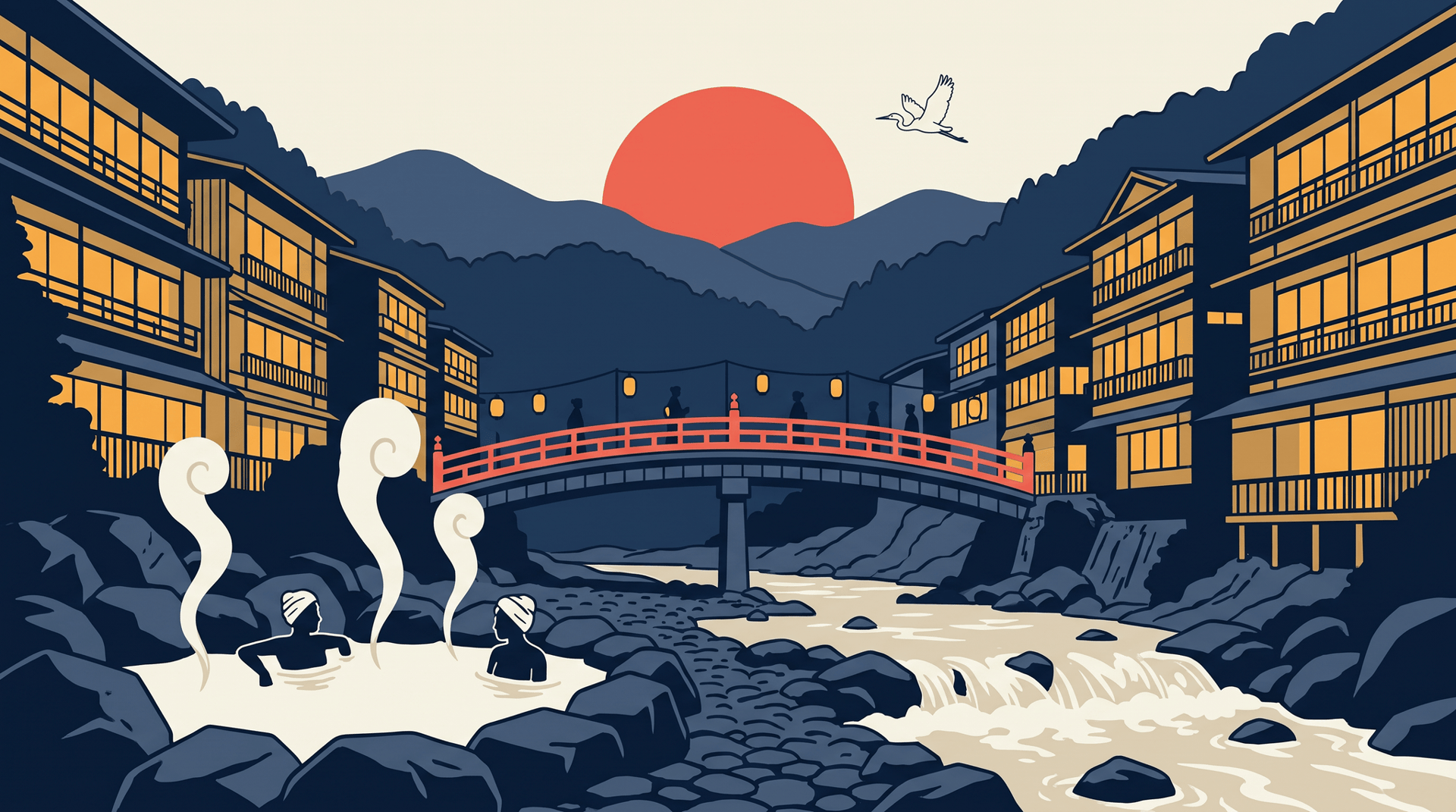
Gero traces its earliest record to the mid-Heian period, around the Tenryaku era (947–957), when a spring was found high on Mount Yugamine. In 1265 an earthquake silenced the source, and the mountain bathhouses fell quiet. The story handed down in town says villagers later spotted a white heron resting on the banks of the Hida River: where the bird had landed, hot water was rising again from the riverbed. The heron then flew up to a pine on nearby Mount Nakane, where a statue of Yakushi Nyorai, the Buddha of healing, was discovered. The temple later raised on that ground, Onsen-ji, still enshrines him.
The town's other identity dates to 1621, when the Edo-period Confucian scholar Hayashi Razan named Gero, Arima, and Kusatsu as the Three Famous Springs Under Heaven (日本三名泉). The phrasing stuck: four centuries later it is still the line that opens almost every guide to the town.
Slick water and a river through the middle
Gero's water is an alkaline simple spring, colorless and almost odorless, rising from the source at 84°C and distributed to the inns through a shared municipal system. The chemistry is its calling card, the alkalinity strips dead surface skin and leaves a noticeably slick finish after bathing, which earned the local nickname bijin-no-yu, the bath for beautiful skin.
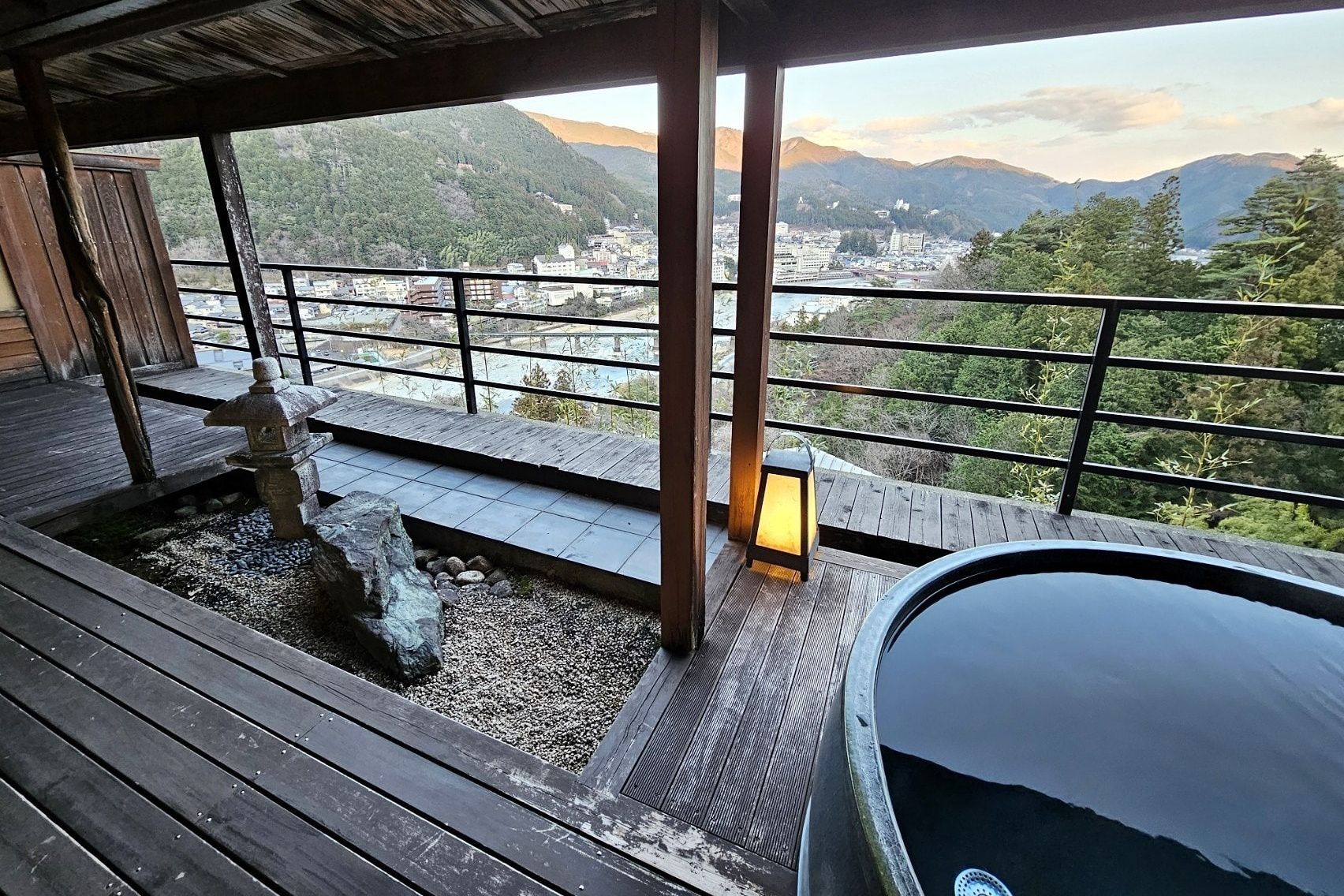
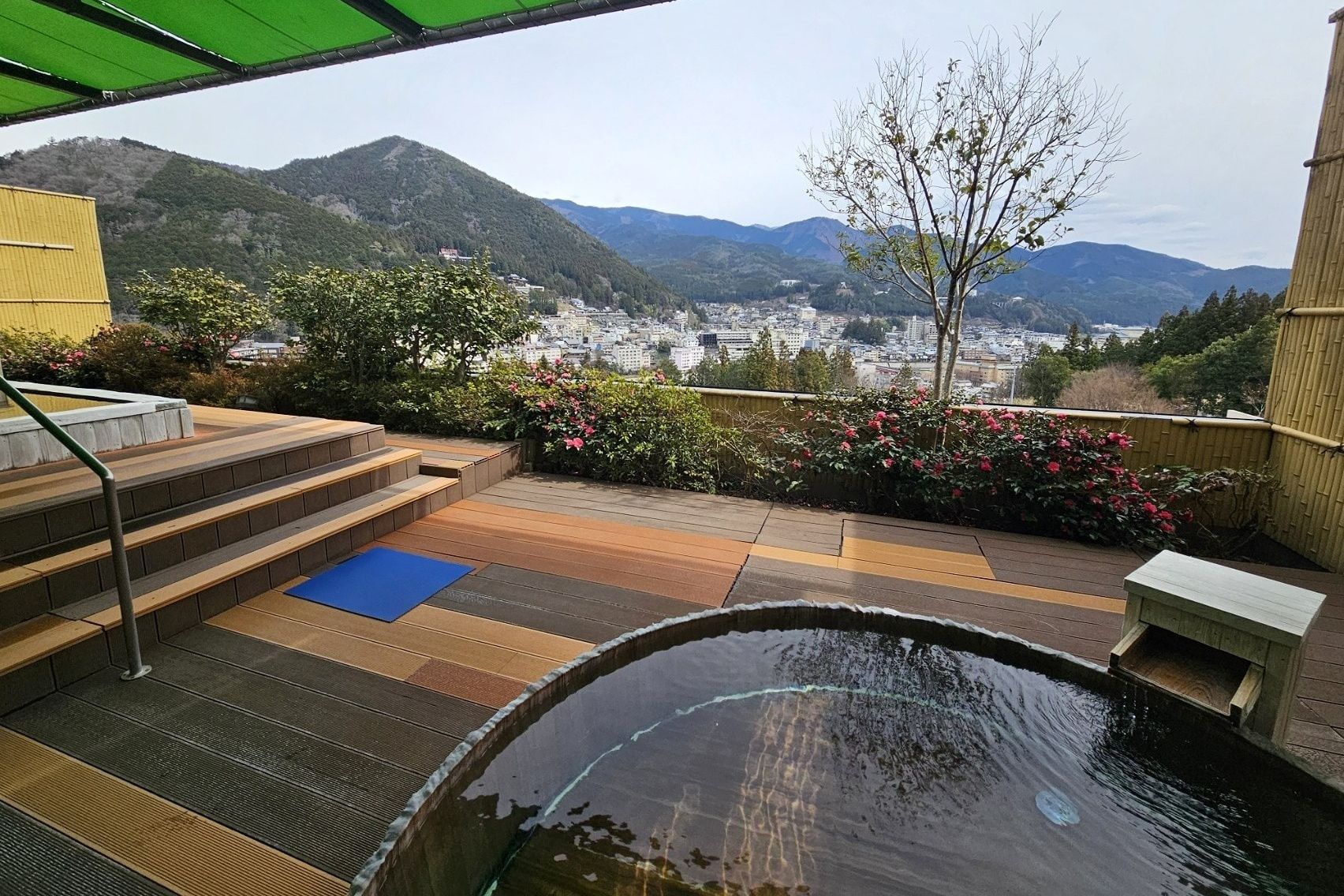
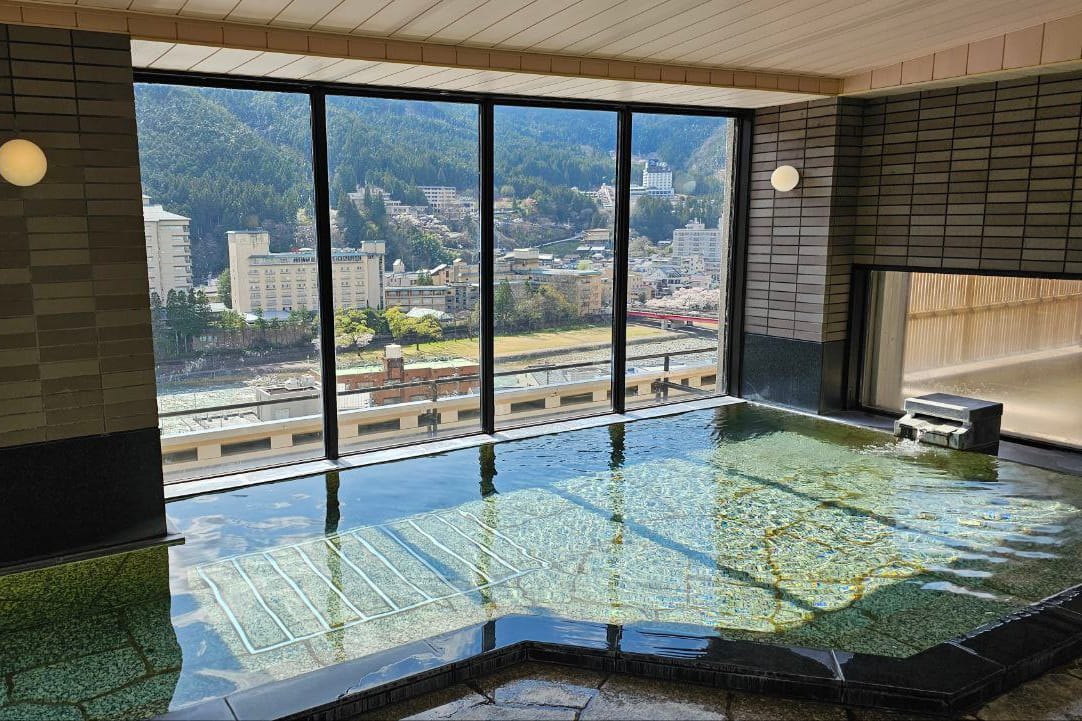
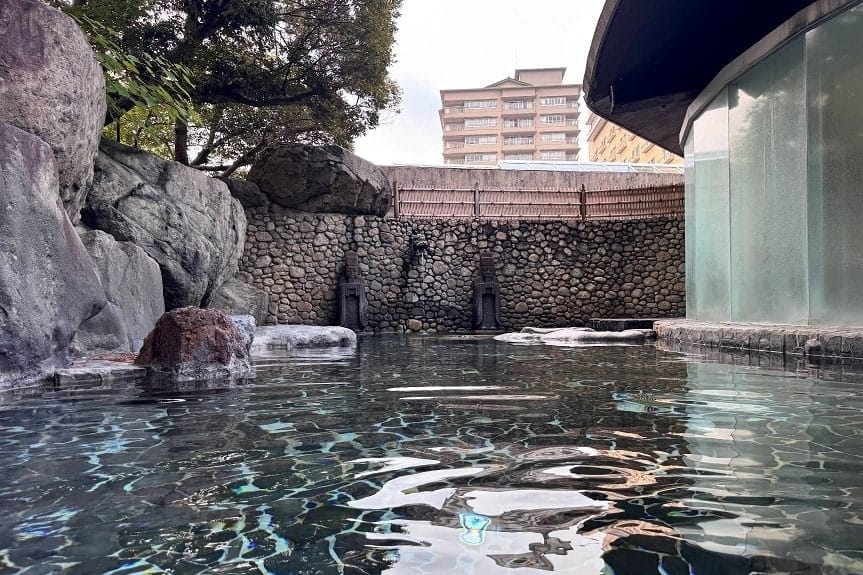
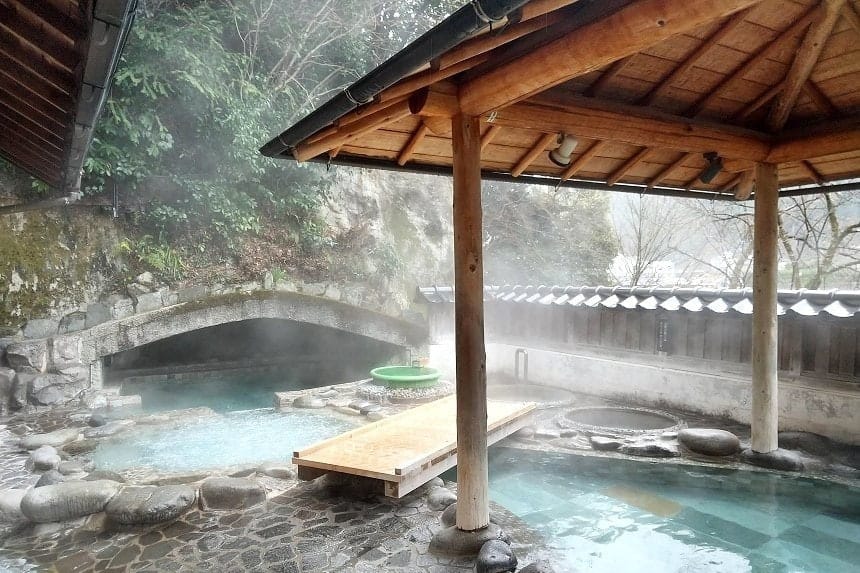
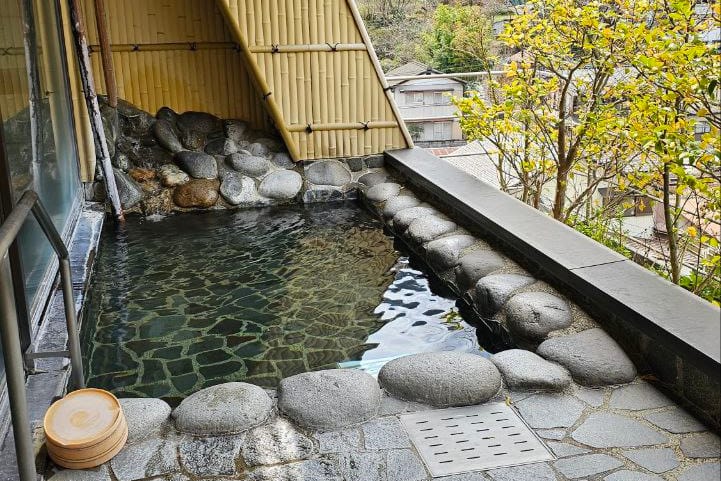
The town is laid out along the Hida River, narrow, walkable, and threaded with free public foot baths every few blocks. The most photographed of them is the Funsenchi (噴泉池), an open-air pool built directly into the riverbank beside the central bridge; swimsuits are required now, but its sightline straight down the Hida is what most people come for. Cedar-clad inns rise on both banks, and the mountains of the Hida region close in tight on either side.
After the bath
Gero pairs naturally with the wider Hida region. Hida-Takayama, with its preserved Edo merchant quarter, is about an hour north by train and the standard second stop on most itineraries. On the southern edge of town, Gero Onsen Gassho Mura gathers ten relocated gassho-zukuri farmhouses from Shirakawa-go into a quiet open-air village, an easy half-day on foot from the main ryokan strip.
Places in this area
42 places · Sorted by rating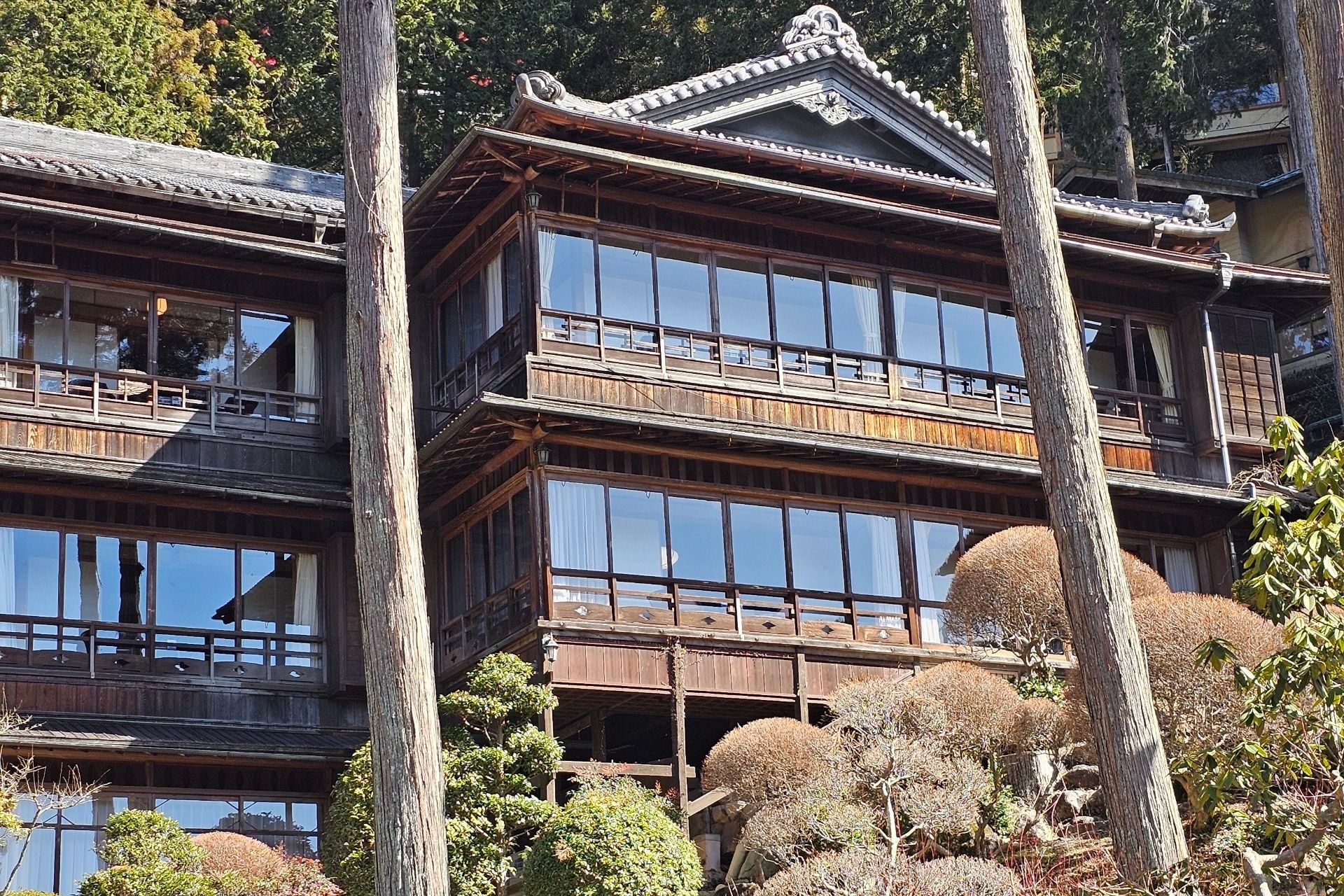
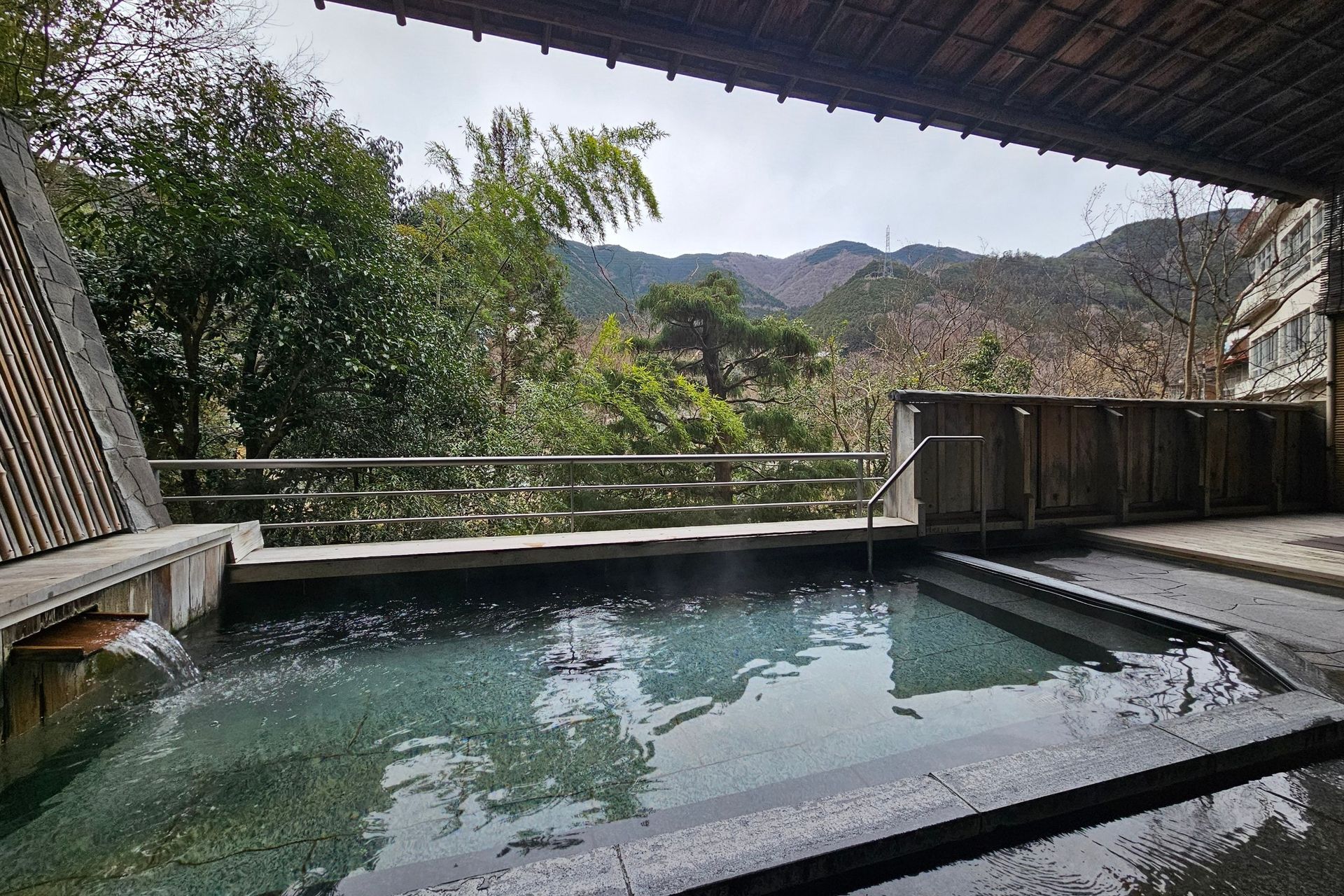
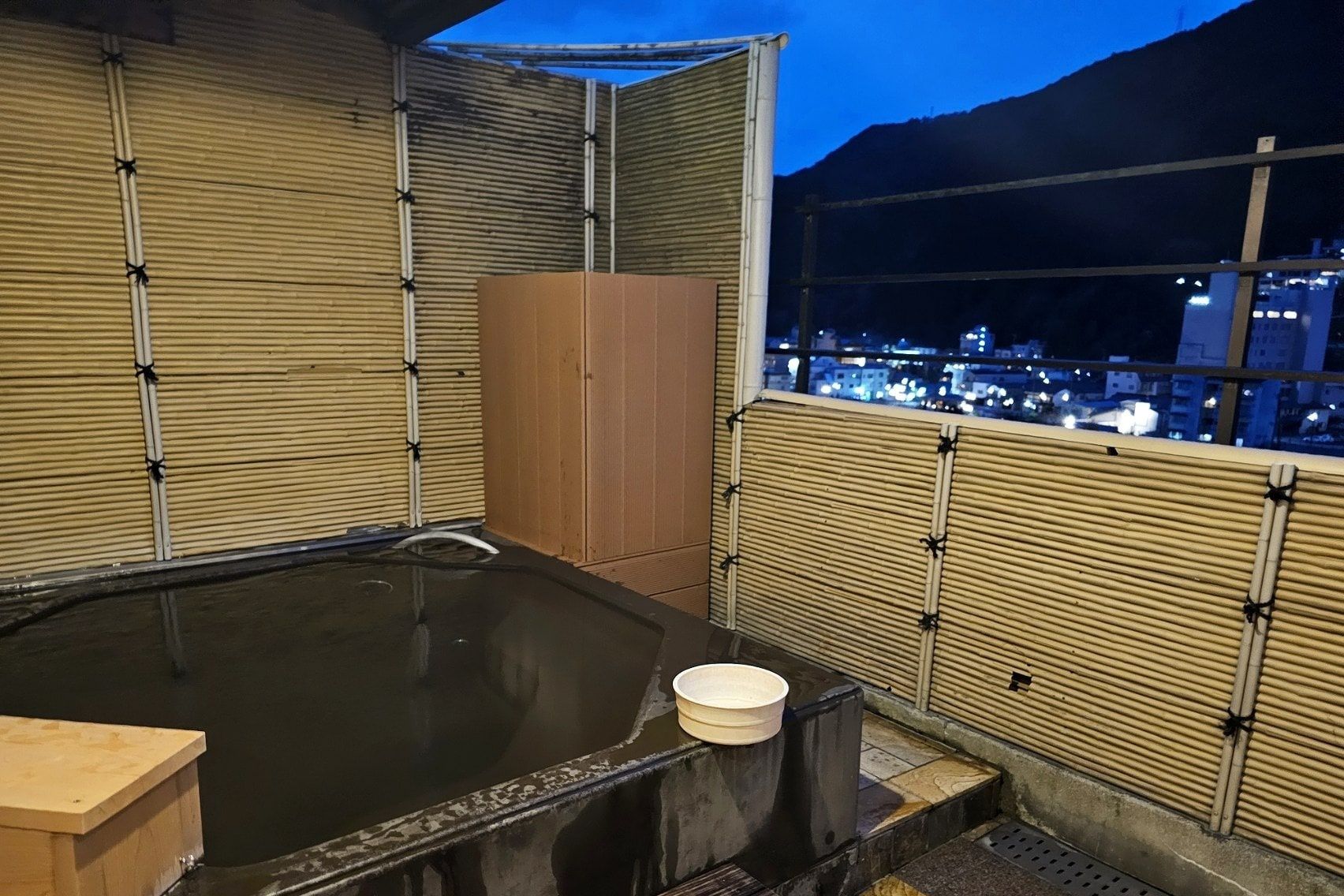
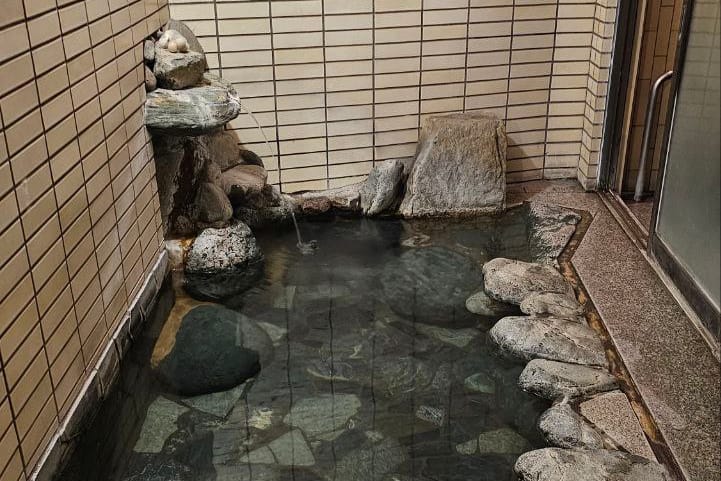
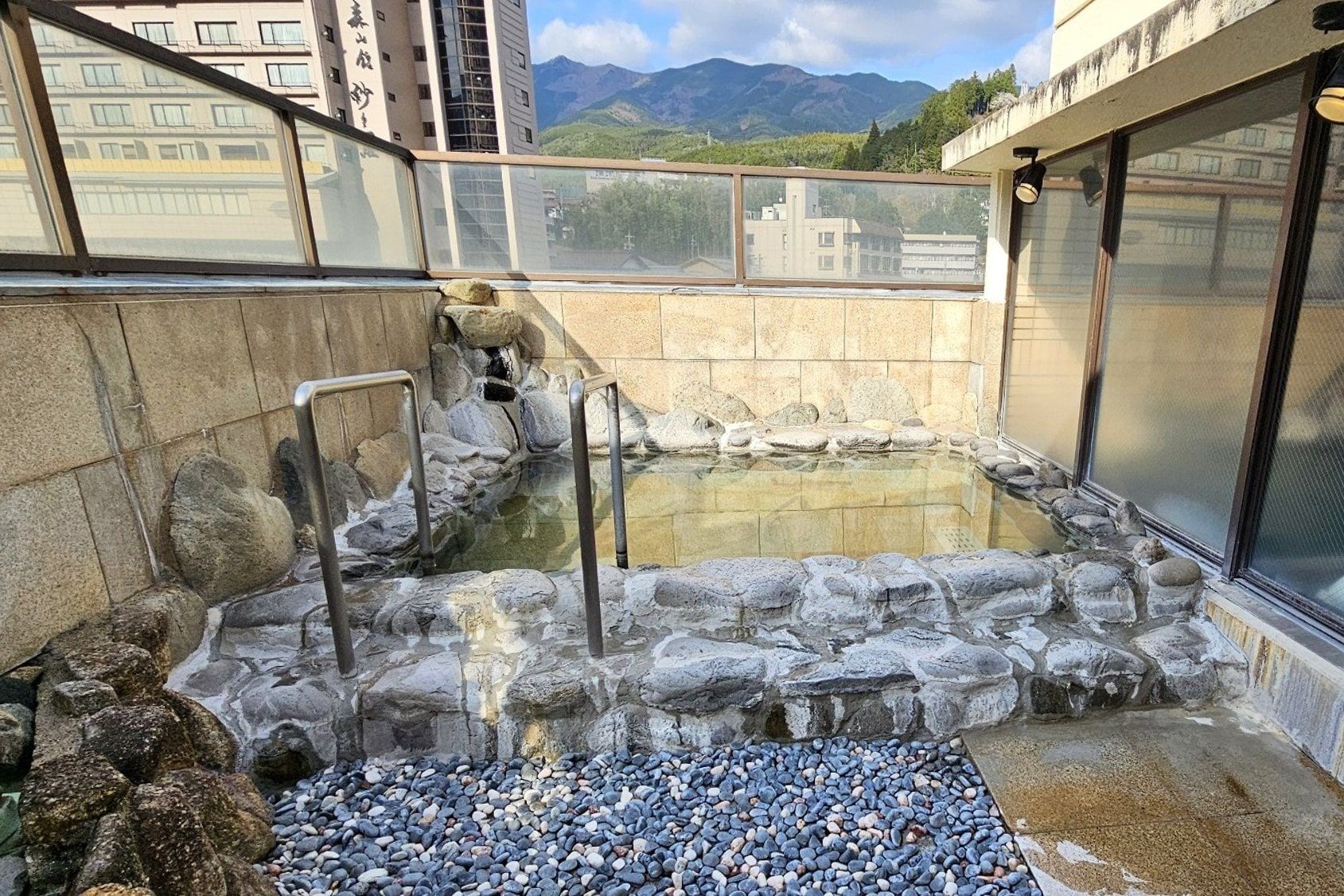
On the map
Loading map…
Nearby onsenchi
Within 50 kmNo nearby onsenchi within range.
Sources
- Gero Onsen Ryokan Associationofficial— Official inn association. Reference for water chemistry (alkaline simple spring, 84°C source) and the centralized source distribution.
- Gero Onsen Tourism Association, About the springsofficial— Town tourism office. Used for the Three Famous Springs designation and the local presentation of history.
- White Heron Legend, Gero Onsen Fanofficial— Local retelling of the Yakushi Nyorai and white heron origin legend.
- Gero Onsen, Wikipedia (Japanese)— Cross-checked the Heian-period discovery dates, the 1265 spring shift, and Hayashi Razan's 1621 ranking.
- Japan Guide, Gero Onsen— English-language overview used to confirm the layout of foot baths, Funsenchi, and Gassho Mura.