
Shima Onsen
四万温泉Quiet Gunma valley onsen designated 国民保養温泉地 #1 in 1954. The 'forty-thousand cures' name nods to its medicinal reputation.
A spring for forty thousand ills
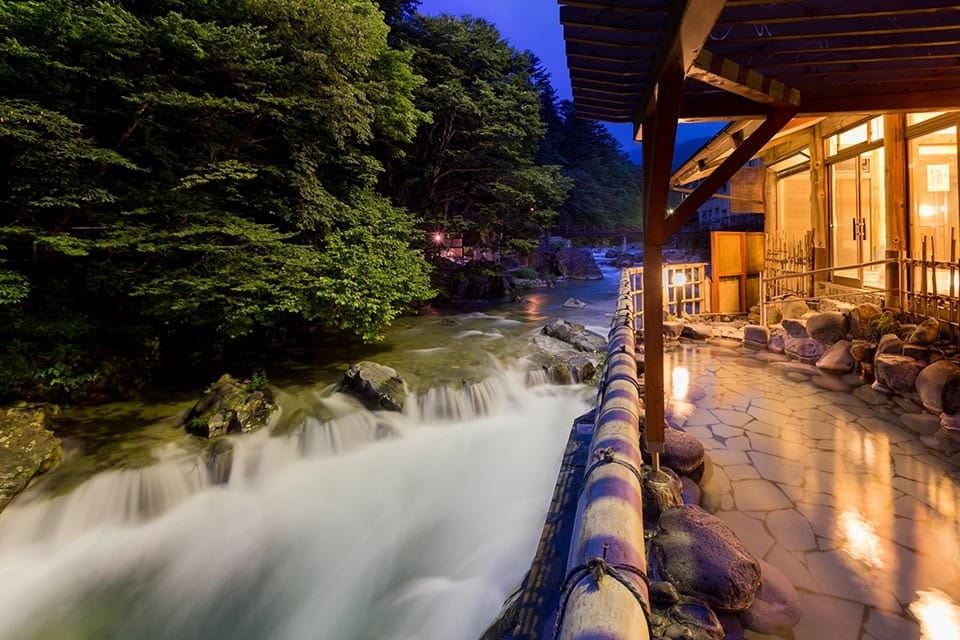
Shima Onsen lies deep in the mountains of northwest Gunma, in Nakanojo town near the Niigata border, strung along the upper Shima river. The name is written 四万, literally "forty thousand," and is tied to an old legend placed in the Enryaku era: Usui Sadamitsu, a retainer in the service of Minamoto no Yorimitsu, is said to have received a dream in which a celestial child told him that the spring rising from the valley would cure forty thousand illnesses. The bathing village that grew around the source has worn the boast ever since. At the centre of its identity stands Sekizenkan, whose Honkan was built in 1691 by Seki Zenbei as a two-storey wooden bathing inn for travellers taking the long, slow toji cure. It is the oldest surviving wooden onsen inn in Japan, the third storey having been added in 1910, and the whole structure is registered as a tangible cultural property. In 1954 Shima became one of the first three places in the country to be designated a National Health Resort (国民保養温泉地) by the Ministry of Health and Welfare, alongside Sukayu in Aomori and Nikko Yumoto in Tochigi.
The valley and the red bridge
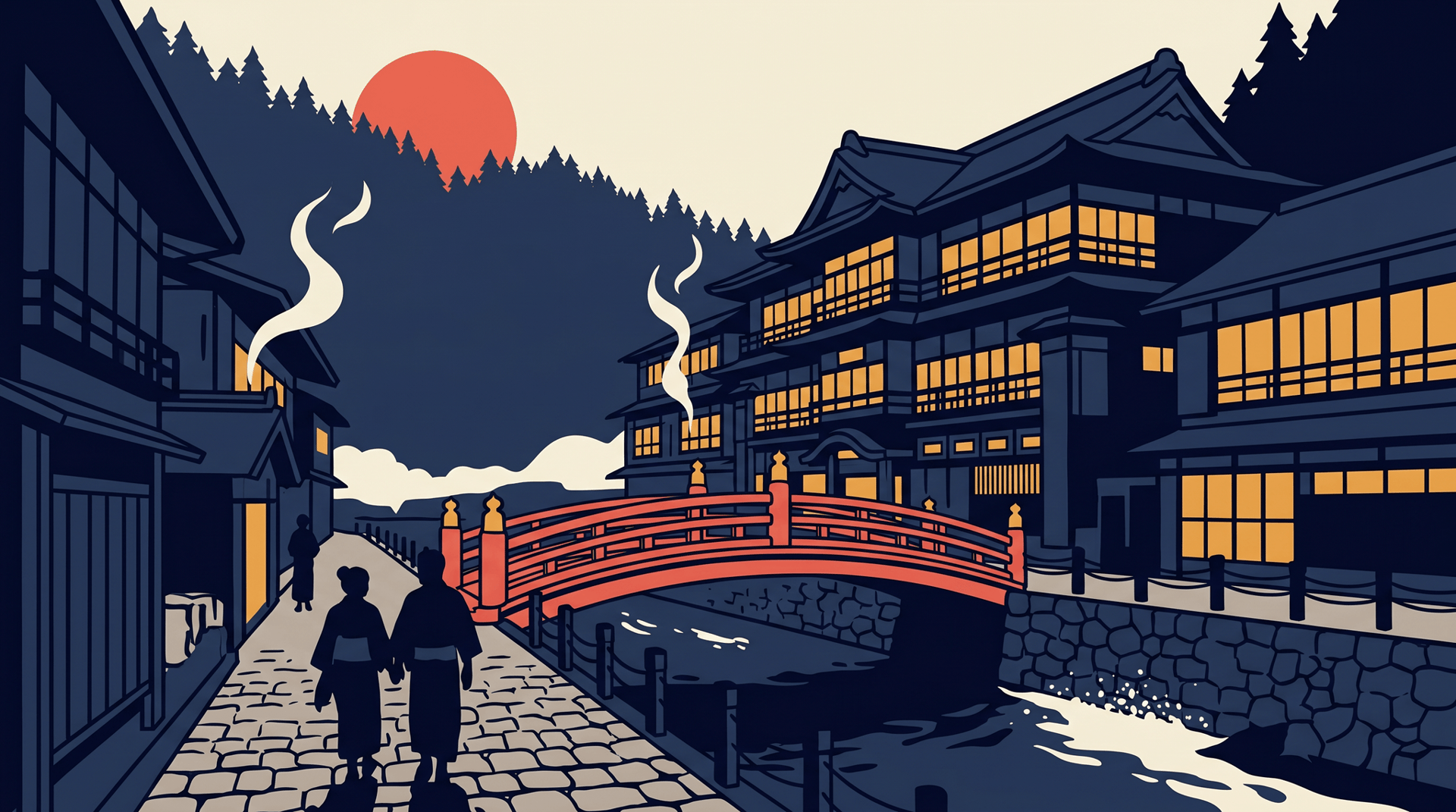
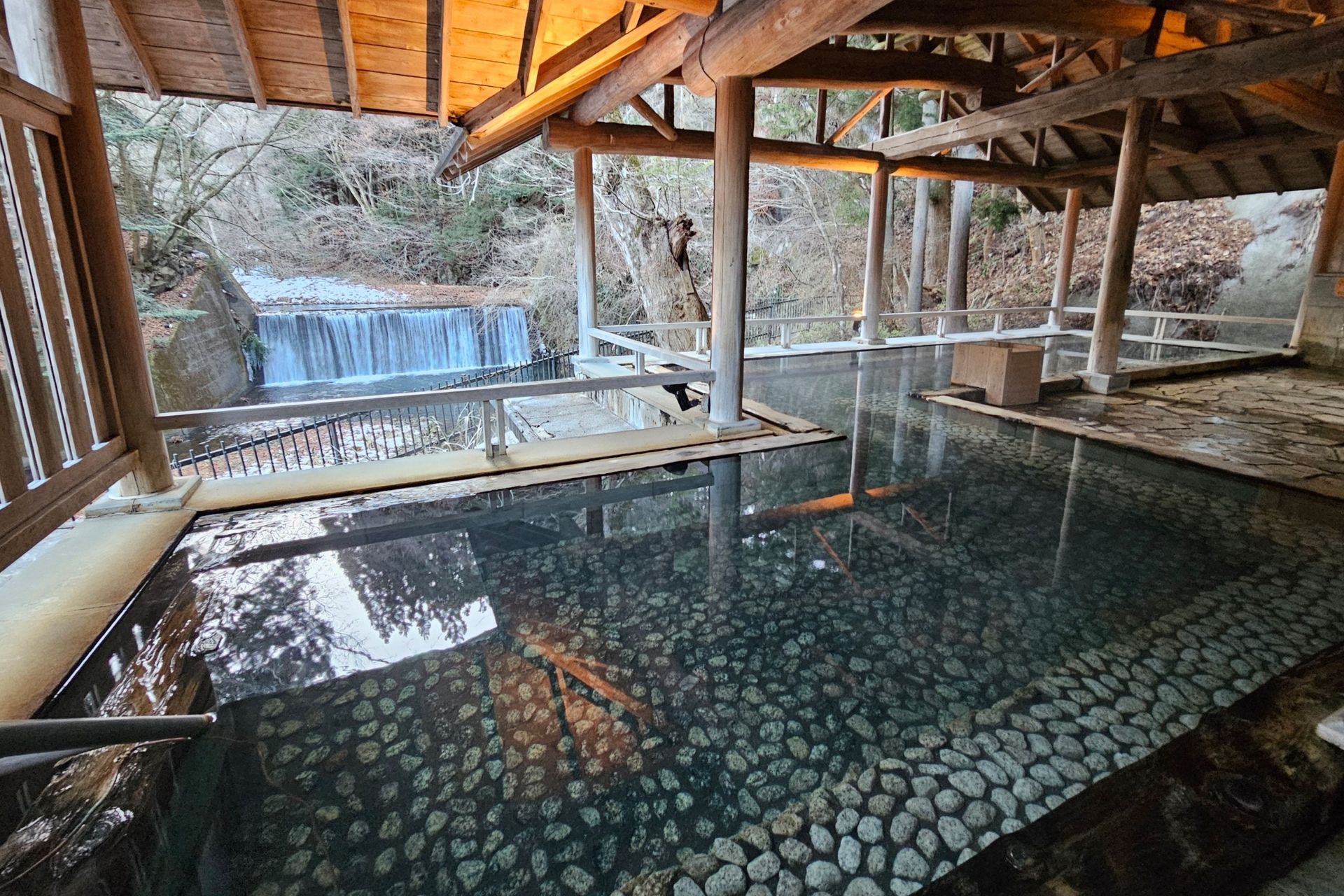
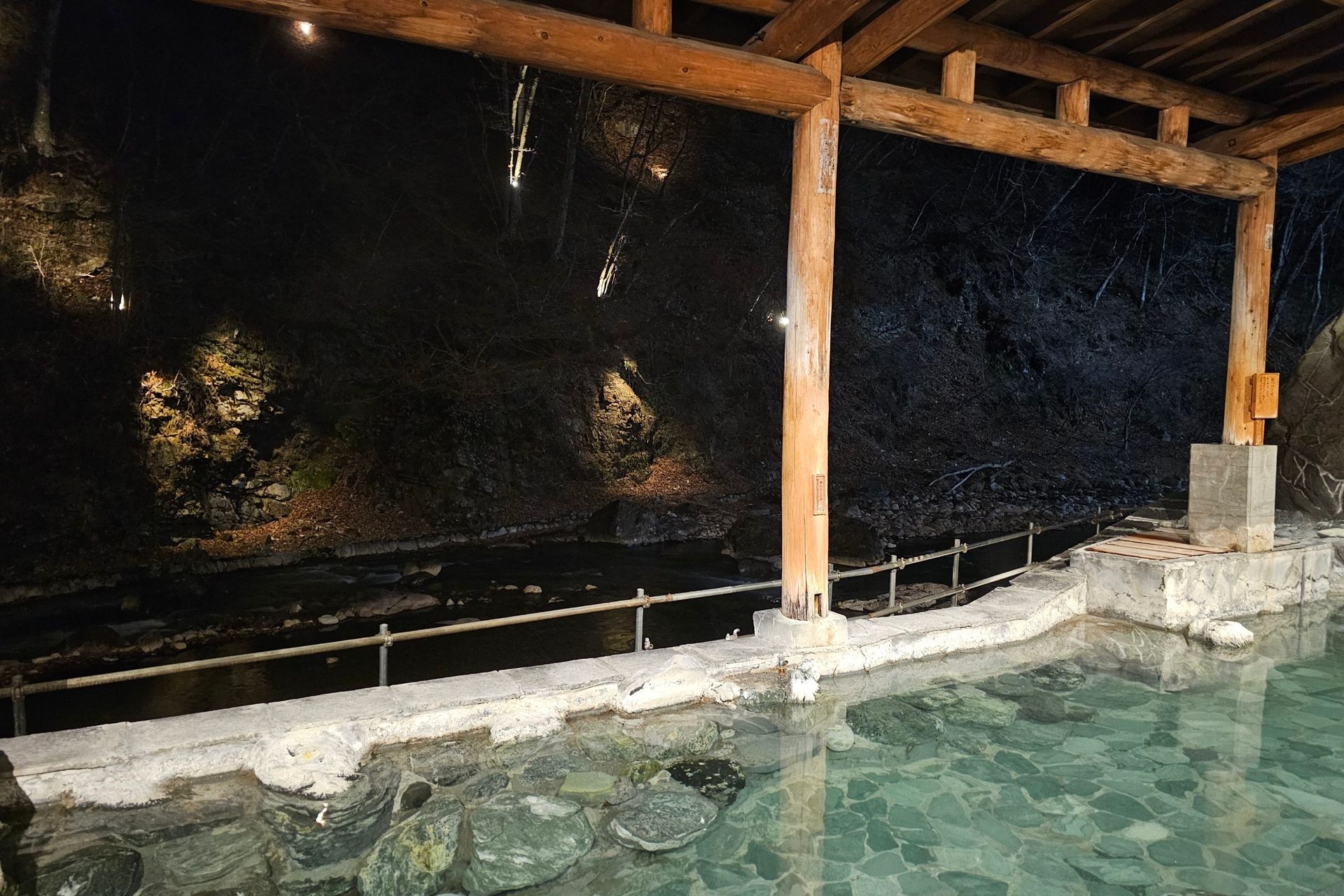
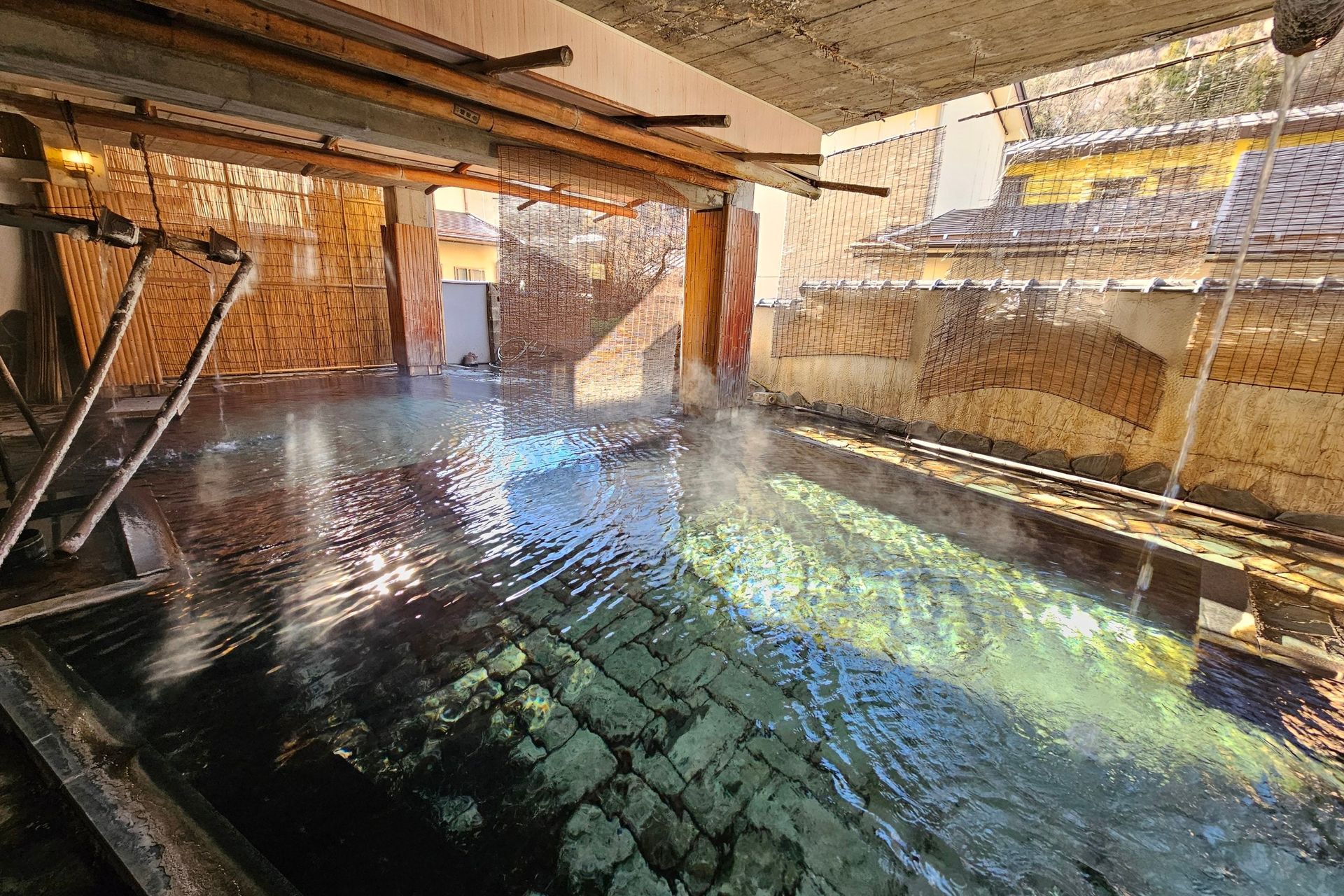
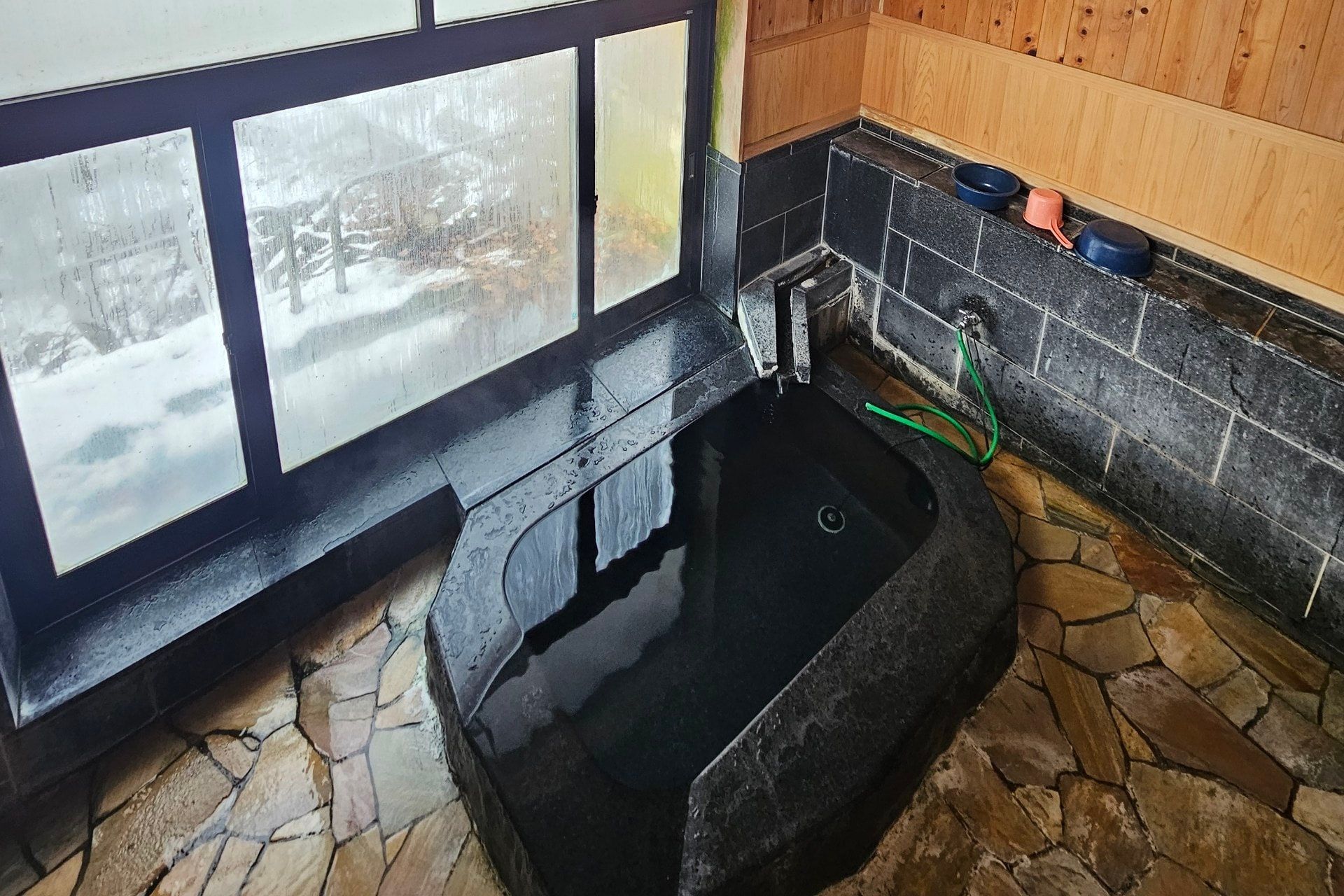
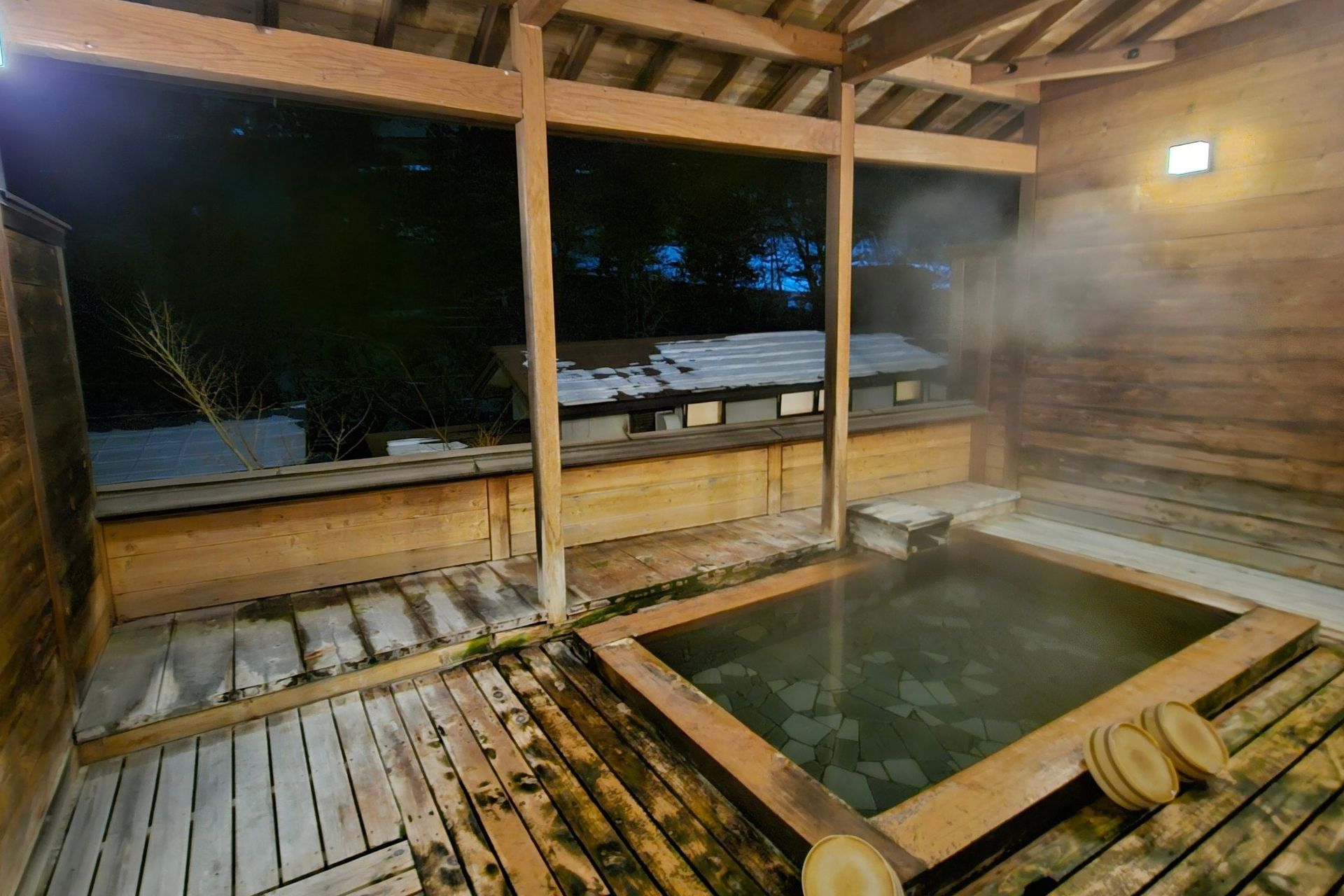
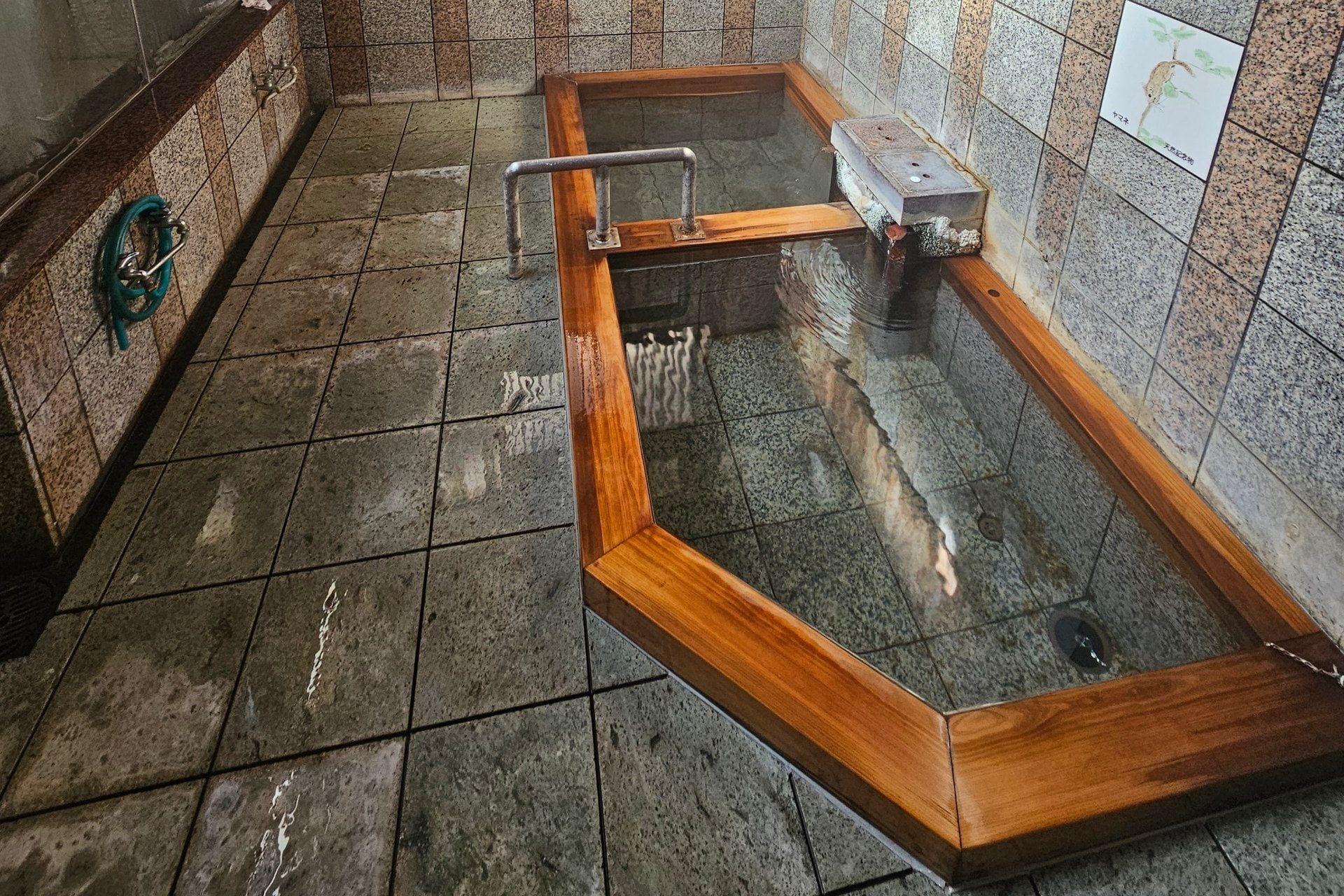
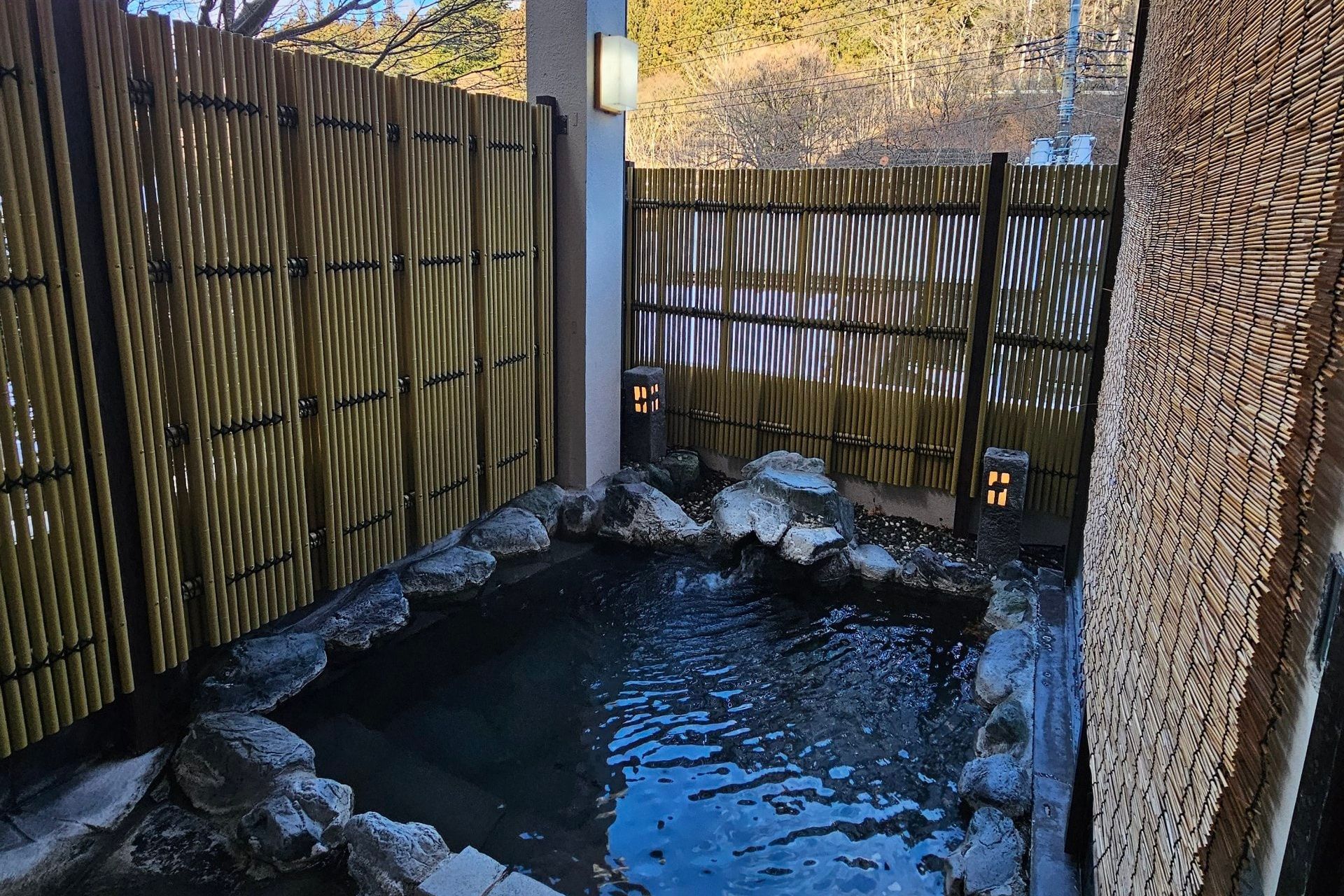
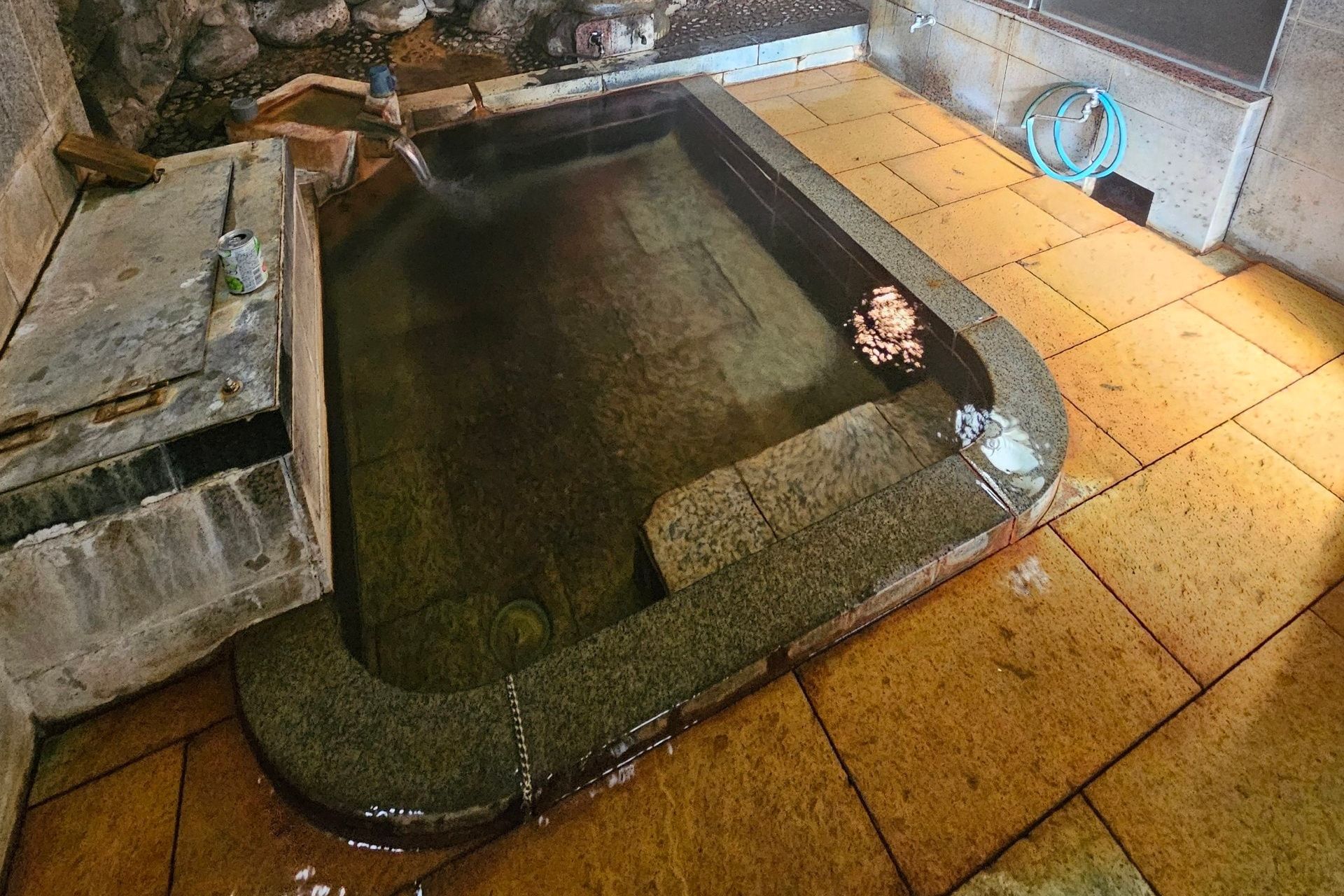
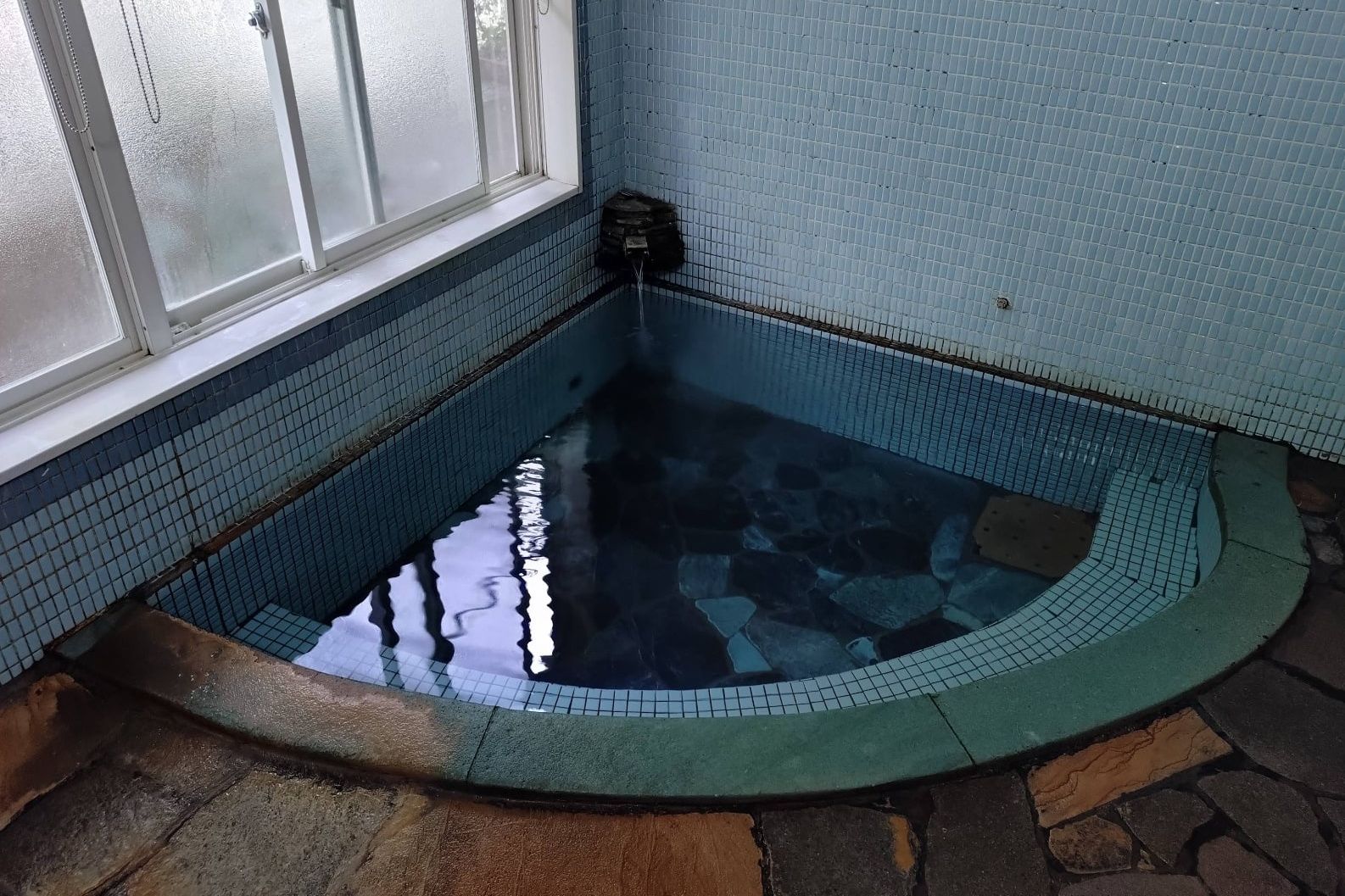
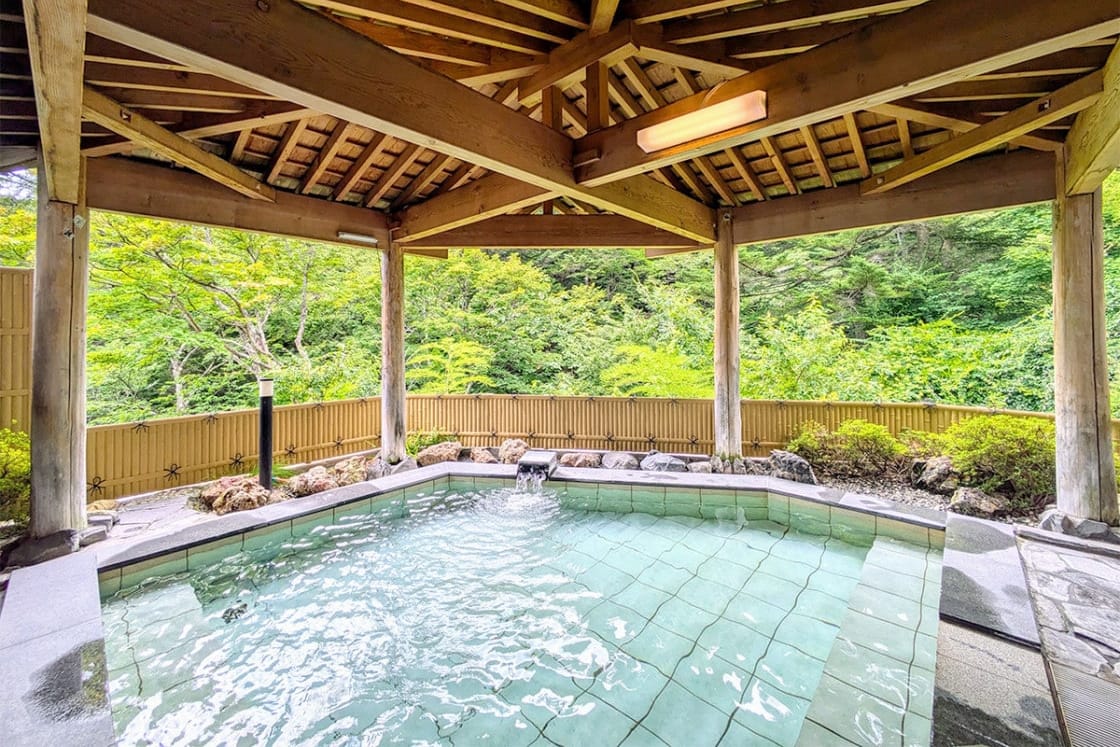
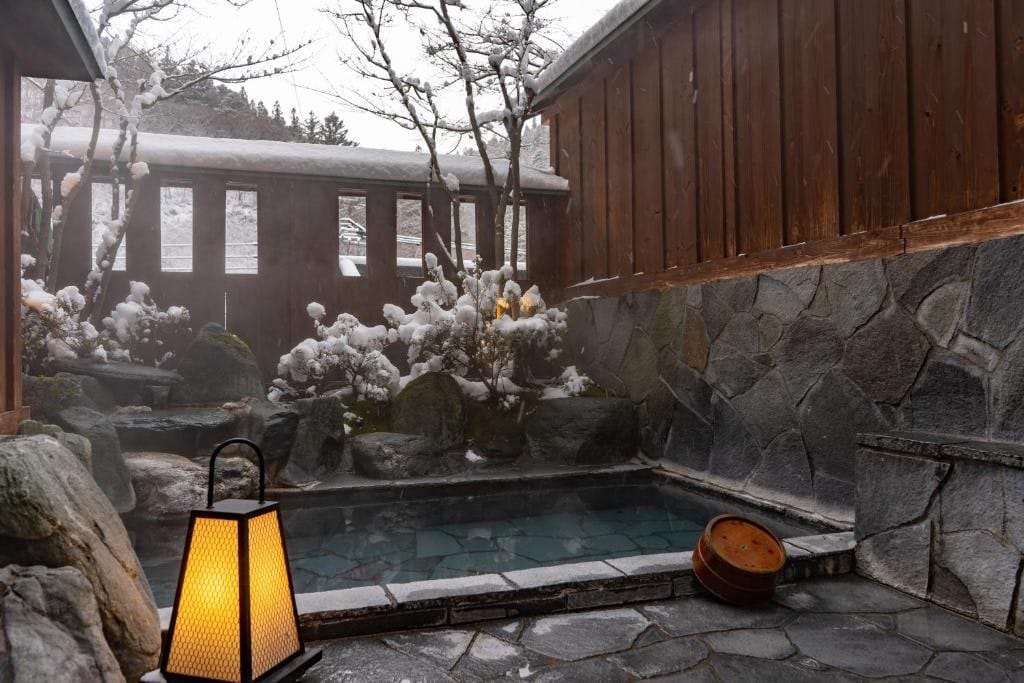
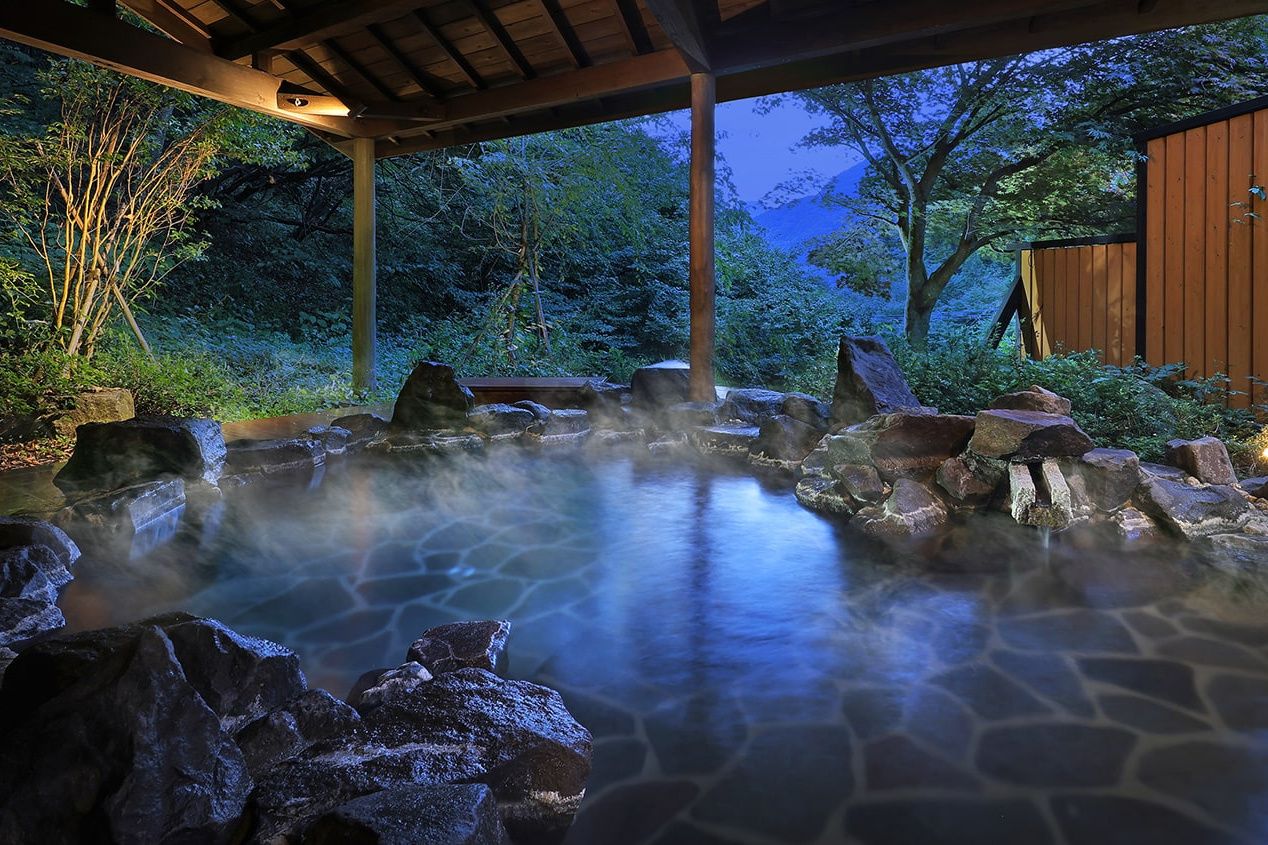
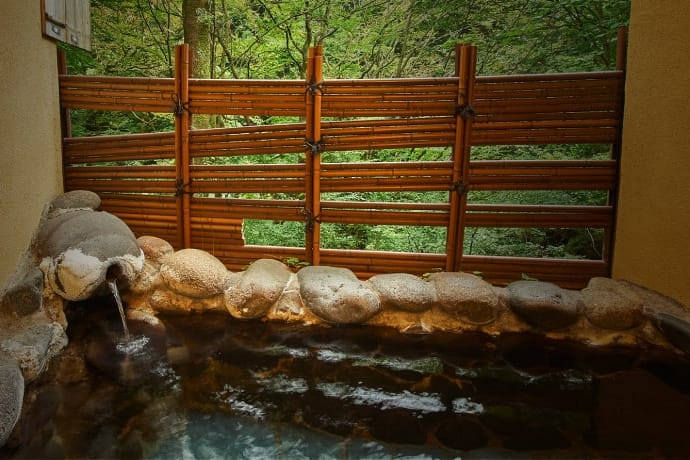
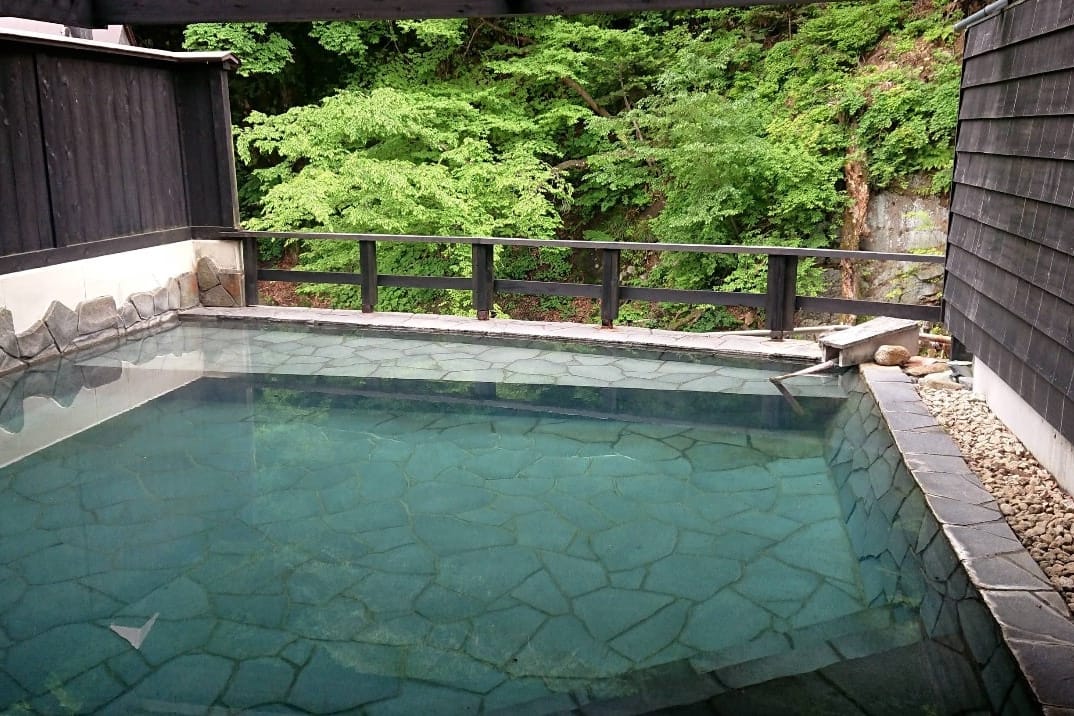
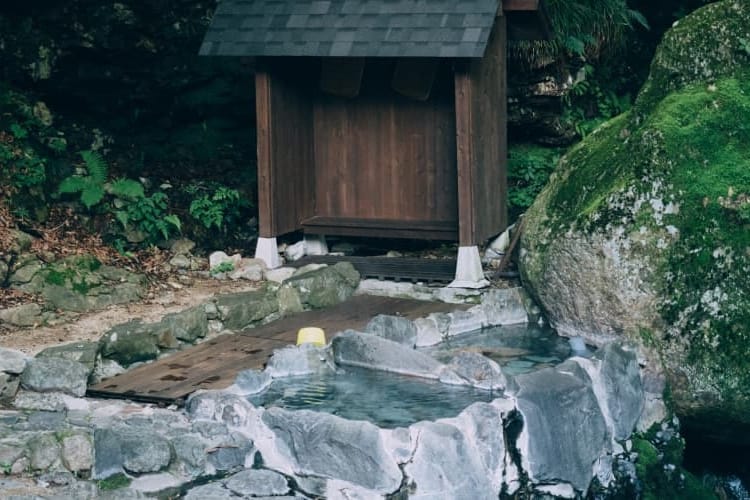
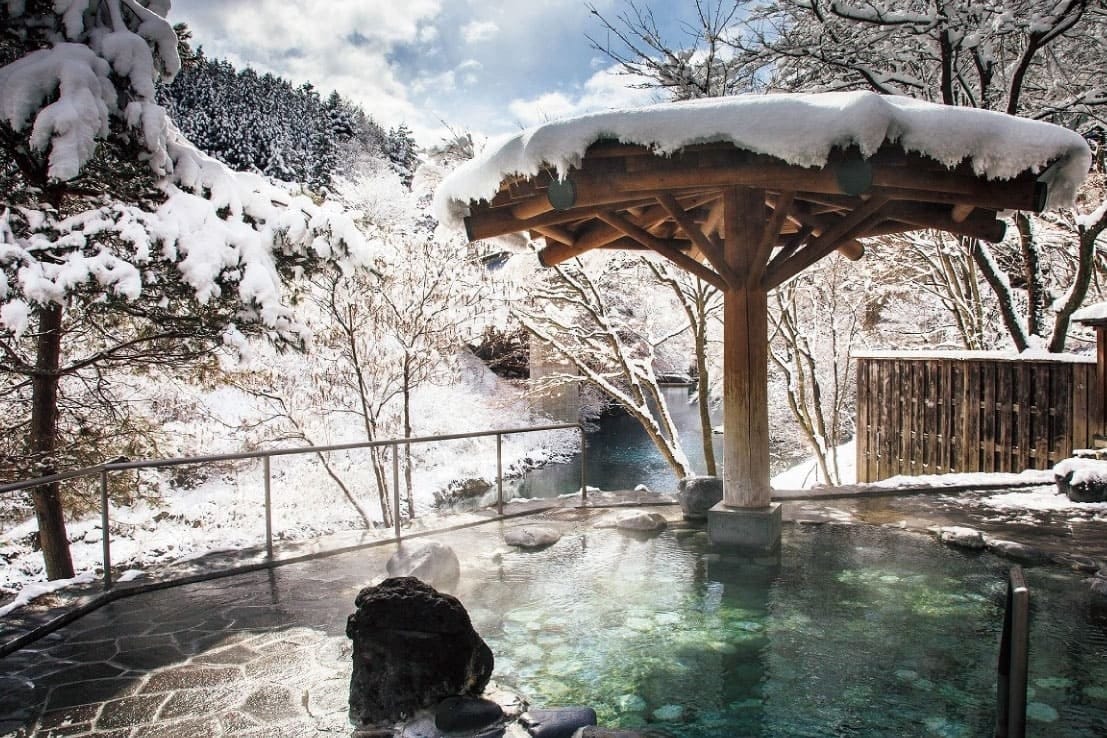
The resort is not a single town but a thin chain of small hamlets (Yamaguchi, Yotsuji, Shinyu, Hinatami and Yunaka) strung for several kilometres along the river, each with its own character and its own small bathhouse. The water is a clear sulfate-saline spring drawn from more than forty sources, often recommended for neuralgia, digestive complaints and the simple business of being tired. Free public baths dot the village (Kawarayu, Kamiyu, Gomuso-no-yu among them), and a string of footbaths invites a pause between walks. The vermilion bridge across the gorge in front of Sekizenkan Honkan is the most photographed corner of Shima and is often cited as one of the inspirations Hayao Miyazaki carried into Yubaba's bathhouse in Spirited Away; the studio has never confirmed a single model, but Miyazaki has been a guest more than once and the resemblance is enough to draw a steady traffic of pilgrims.
Lake Okushima and the waterfalls
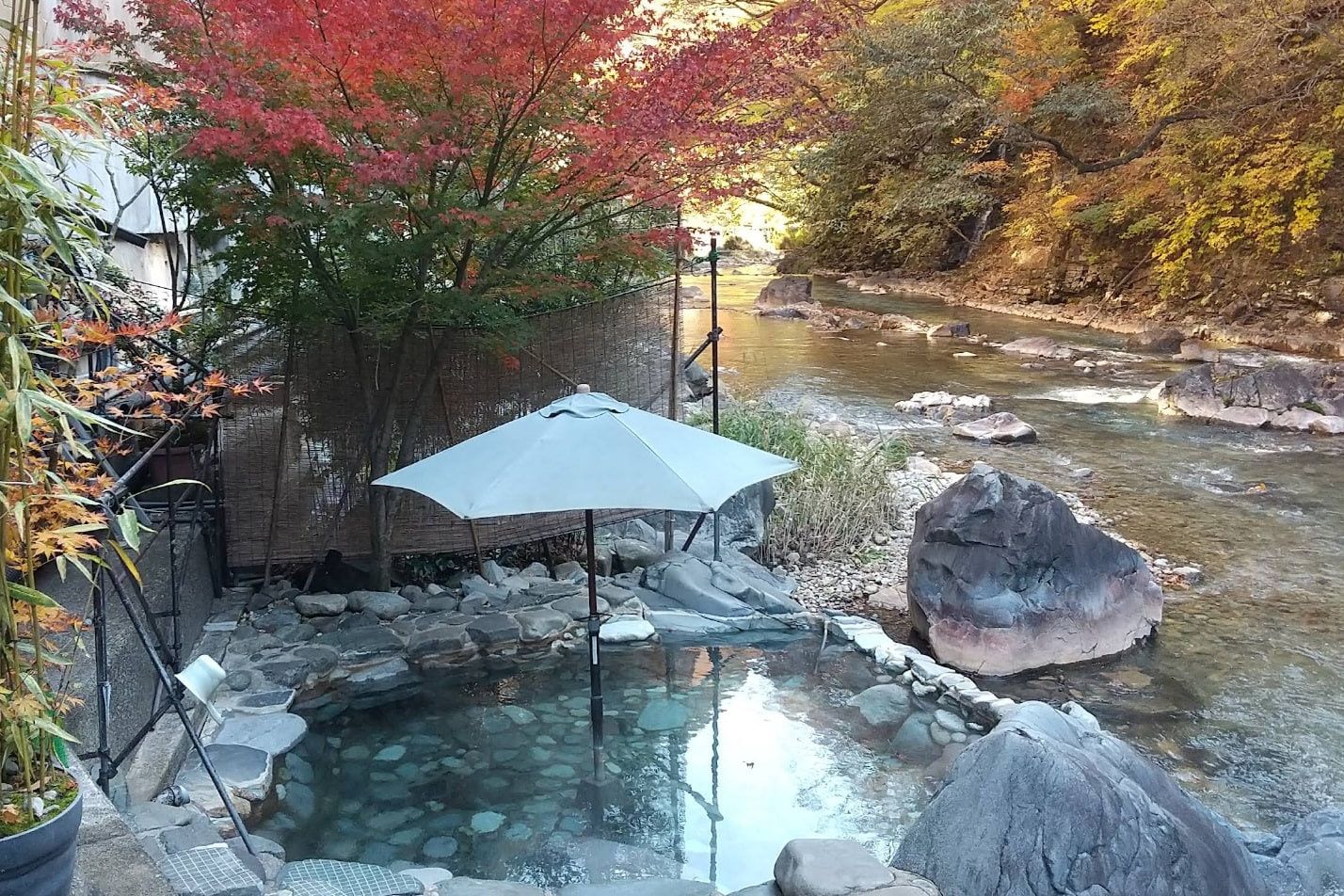
Upstream from the village the road climbs to Lake Okushima, the reservoir behind the Shima river dam, whose deep cobalt surface is known locally as Shima Blue. A four-kilometre loop runs around it on foot or by bicycle. The same valley holds the Momotaro, Koizumi and Okura falls, and in late October to mid-November the maple, beech and oak above the river turn the gorge a hard, bright autumn red.
Places in this area
20 places · Sorted by rating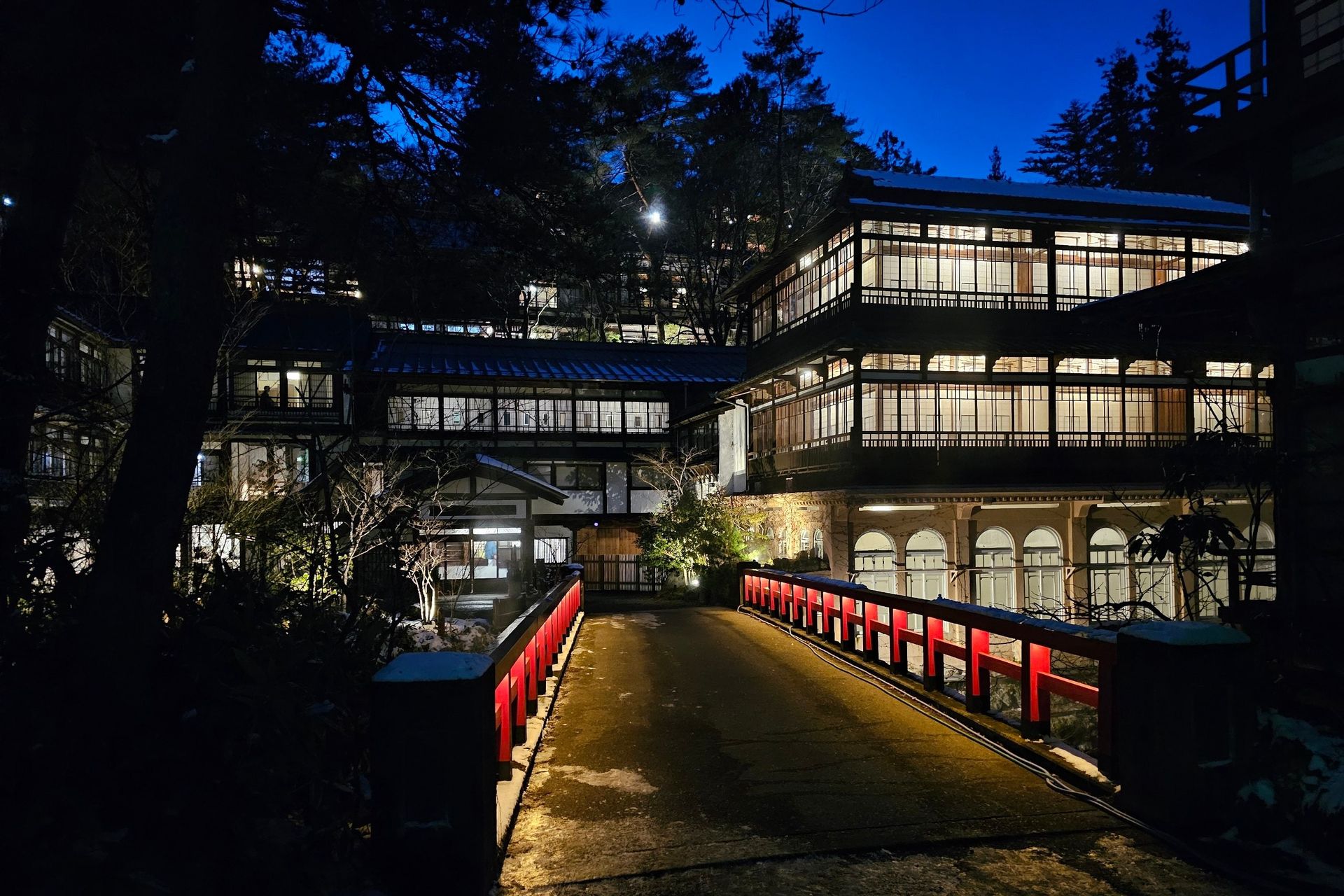
On the map
Loading map…
Nearby onsenchi
Within 50 kmSources
- Shima Onsen Association — Official Portalofficial— Lodgings, public baths, footbaths and shop listings for the five hamlets along the Shima river.
- About Sekizenkan — Officialofficial— 1691 founding of the Honkan as a two-storey timber bathing house; later additions in 1910 and beyond.
- Shima Onsen — Wikipedia (English)— Forty-source figure, valley layout, Important Cultural Asset designation of Sekizenkan Honkan.
- Bath of a Thousand Bathers — Nippon.com— Context for the 1954 inaugural National Health Resort trio (Sukayu, Shima, Nikko Yumoto).
- Shima Onsen — Japan National Tourism Organization— Sulfate-saline water, Nakanojo location and uses for neuralgia and fatigue.