
Ikaho Onsen
伊香保温泉Gunma hillside onsen built around a 365-step stone staircase. Famous 'gold' (iron-bearing) and 'white' (sulfate) waters.
A spa town written into the Manyoshu
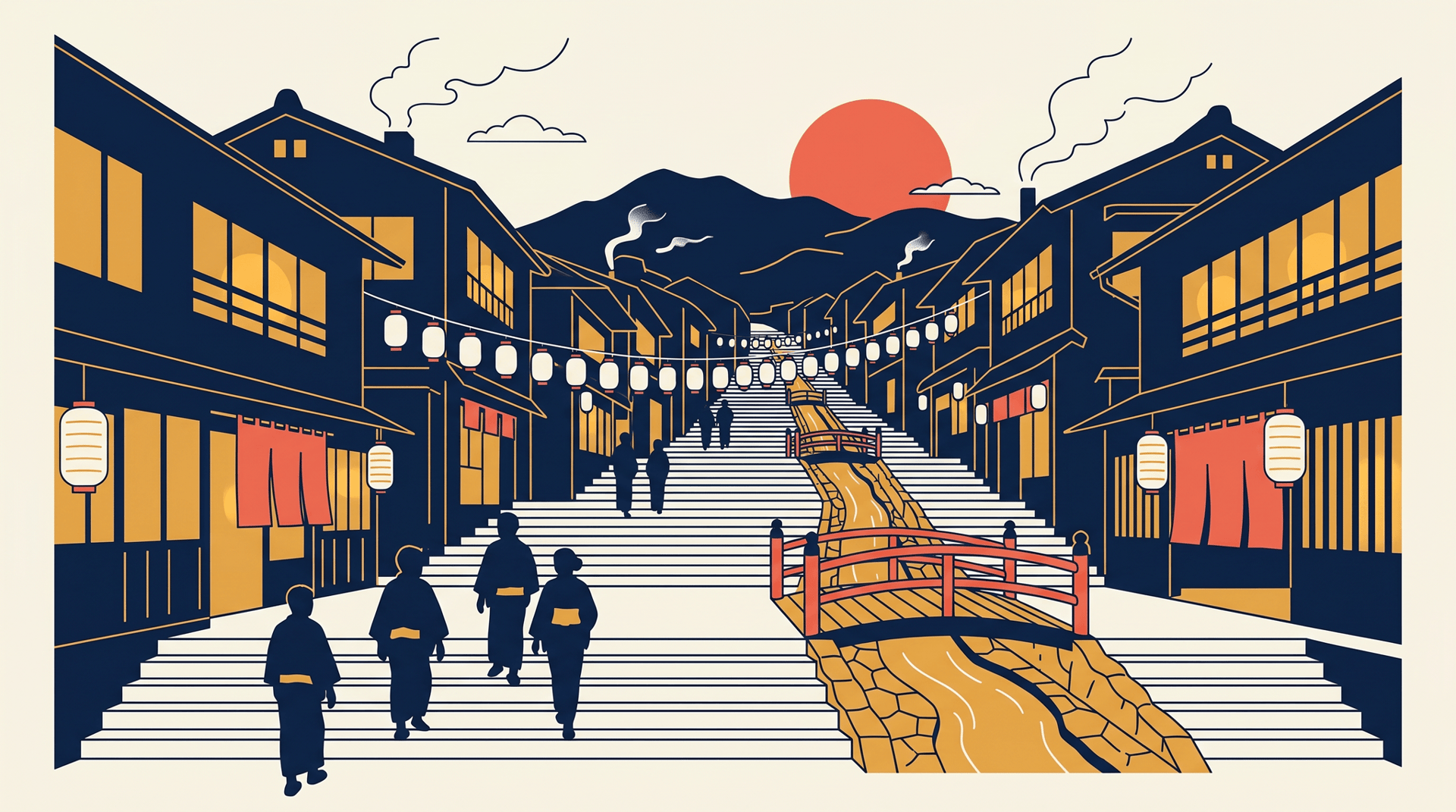
The place name "Ikaho" appears in nine poems of the Manyoshu, the eighth-century anthology, which places these slopes among the oldest hot springs in the written record of eastern Japan. The town we visit today, though, took its present shape much later. In Tensho 4 (1576), during the upheavals of the Sengoku period, a feudal vassal named Kogure Shimosa-no-kami laid out the stone-step street (石段街) to channel the hot water down the steep hillside and to lodge the wounded soldiers of the Takeda army after the battle of Nagashino. The result is often described as Japan's first purpose-built spa-town plan: ryokan and bathhouses arranged in tiers along a single ascending axis.
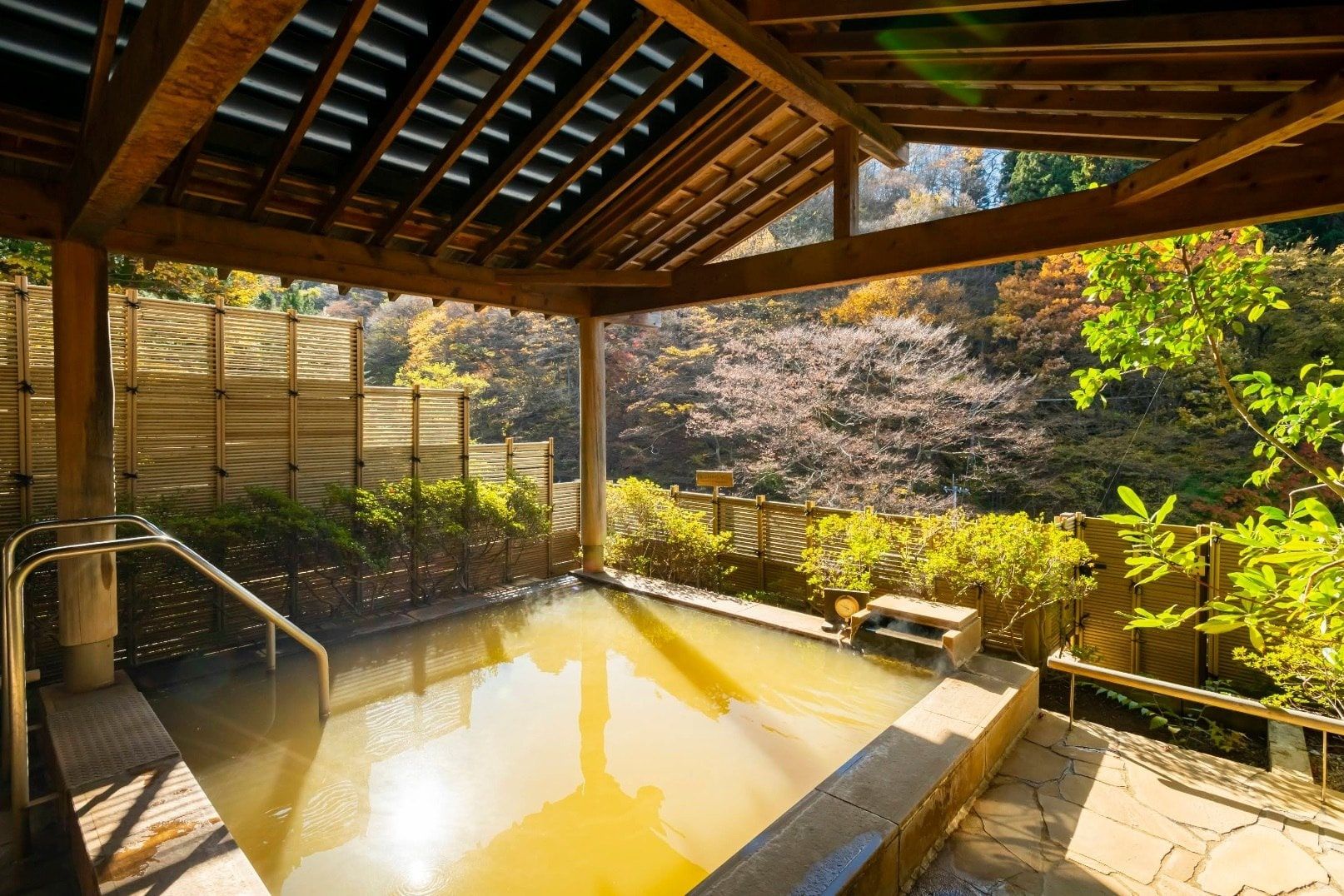
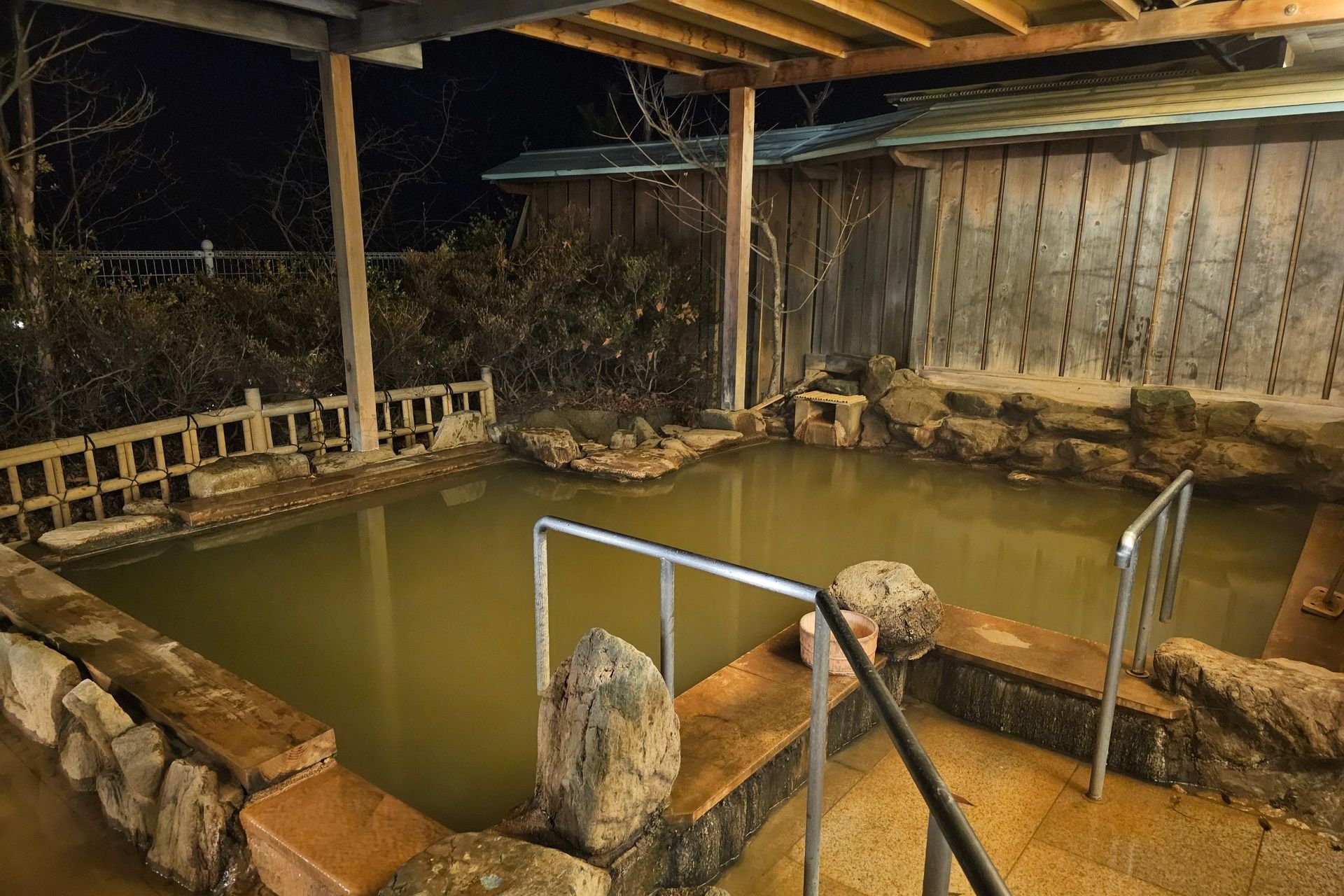
The waters come in two characters. Kogane-no-yu ("golden water") is the historic source, a sulfate spring tinted rust-brown by iron oxidising on contact with the air; long associated with women's health and called the koyasu-no-yu (water of fertility), it is the water that built the town. Shirogane-no-yu ("silver water"), developed in 1996, is clear and metasilicic, used more for general recovery and second baths.
Climbing the steps
Walking Ikaho means climbing. The present staircase, repaved in granite over five years from 1980, was extended in 2010 to 365 steps, one for each day the town wishes to be busy. The risers are lined with souvenir shops, shateki shooting galleries, manju bakeries, and the latticed fronts of old ryokan; small panels carved with Yosano Akiko's poem "Ikaho no machi" and the twelve zodiac plates marking the historic water-rights families are set into the stones as you go. Glass viewing ports let you watch the brown source water running underfoot through the channels that distribute it to the inns.
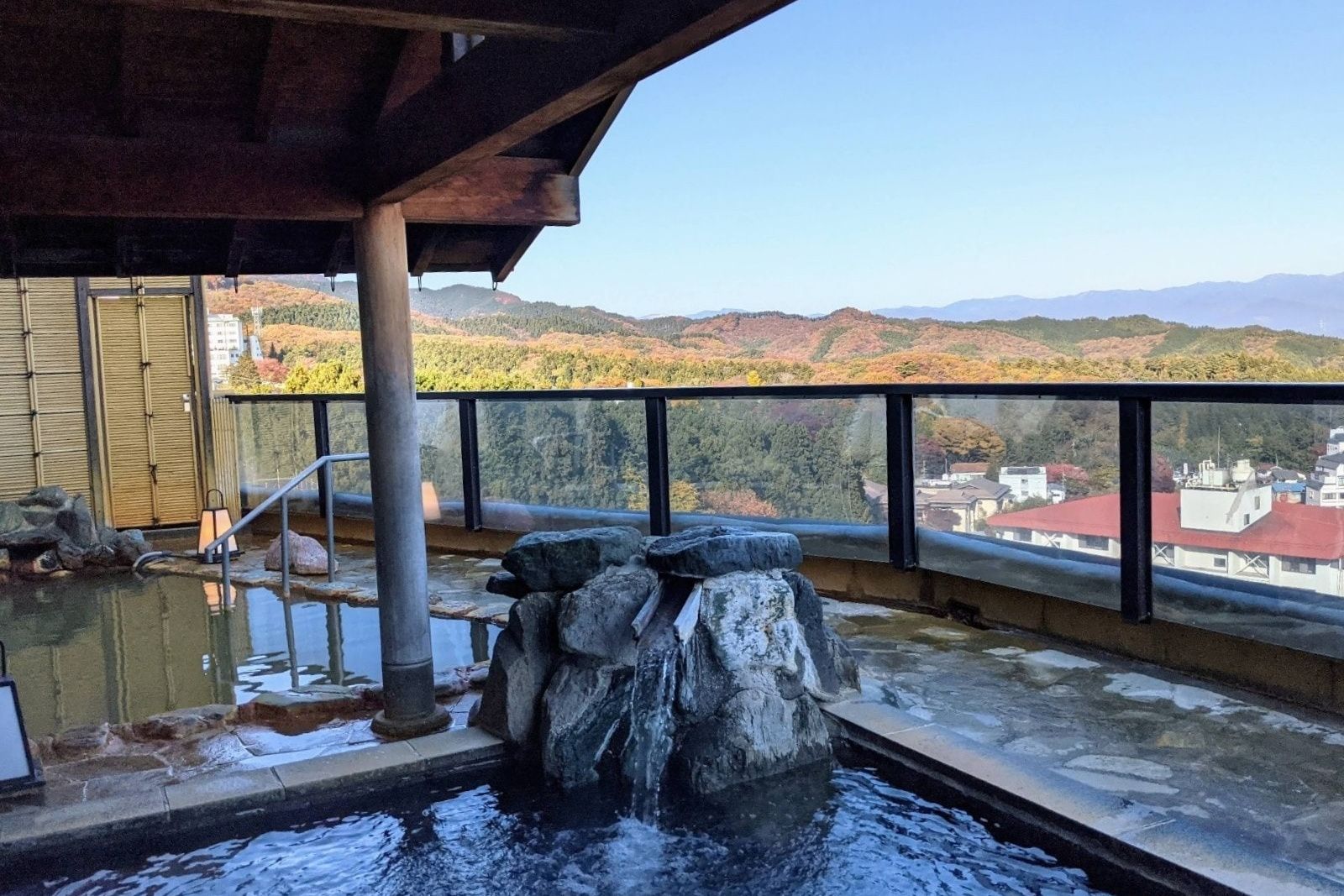
At the top sits Ikaho Jinja, founded in 825 CE and dedicated to the local deities of bathing and childbirth. A short walk further leads to the Ikaho Rotenburo, the open-air bath fed directly from the kogane source, and on a clear day the ridge of Mt. Haruna rises behind the rooftops. Lake Haruna lies twenty minutes up the mountain by road, and on the lower edge of town the small, eccentric Ikaho Toy, Doll and Car Museum keeps a collection of mid-century playthings worth an hour off the climb.
Places in this area
32 places · Sorted by rating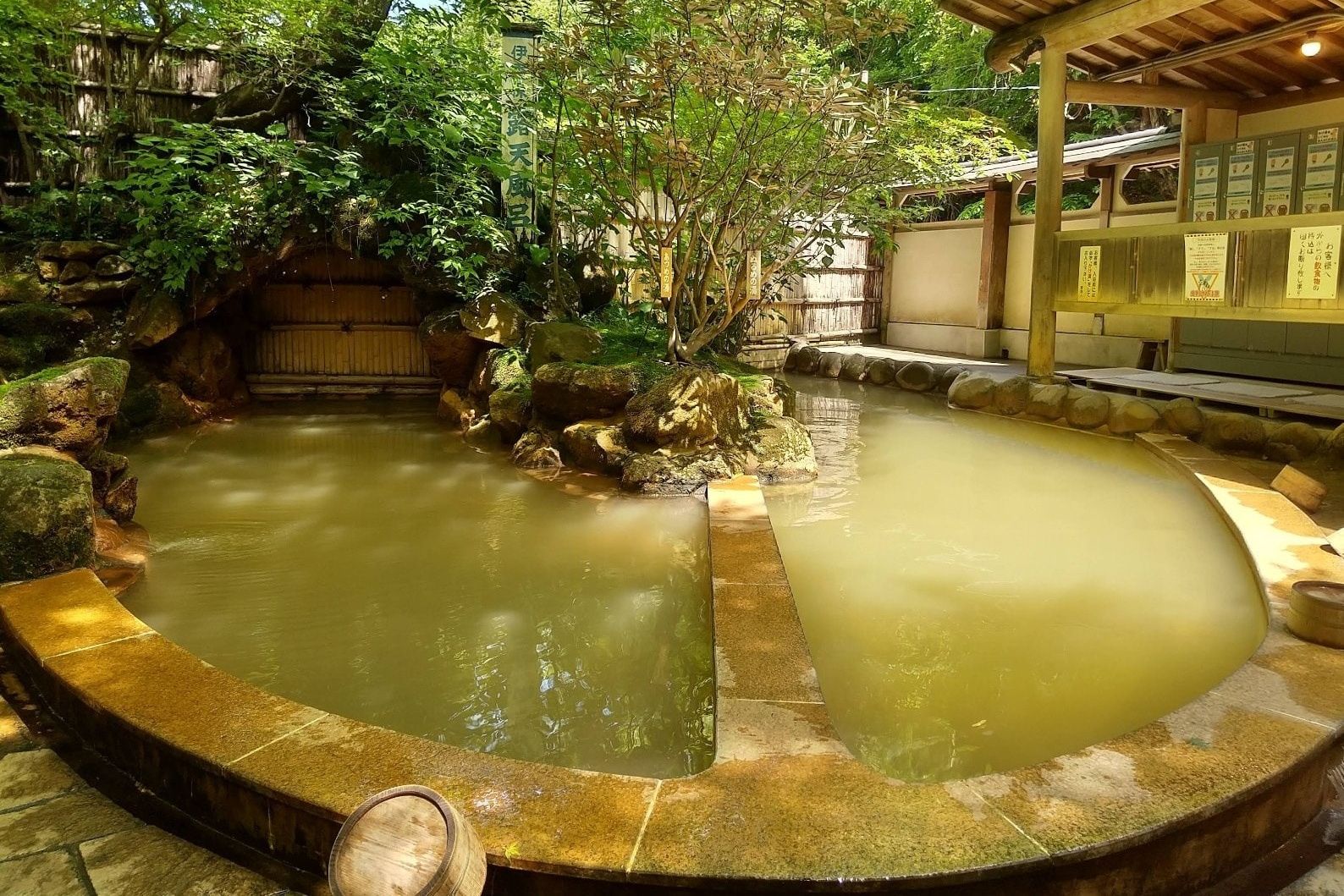
On the map
Loading map…
Nearby onsenchi
Within 50 kmSources
- Shibukawa Ikaho Onsen Tourism Associationofficial— Town tourism office. Reference for the Ishidan stone-step street, the two waters, and the surrounding sights.
- Ikaho Onsen history (official)official— Source for the 1576 (Tensho 4) layout of the stone-step street and the early development of the spa town.
- Ikaho Onsen, Japanese Wikipedia— Reference for the nine Manyoshu poems mentioning Ikaho and the 1996 development of the Shirogane source.
- Kogane-no-yu and Shirogane-no-yu compared— Local tourism site detailing the chemistry and uses of the two waters.
- Visit Gunma, Ikahoofficial— Prefectural tourism page used to cross-check the Mt. Haruna setting and the Ikaho Ropeway access to the summit.