
Noboribetsu Onsen
登別温泉Hokkaido's biggest onsen town, fed by the steaming Jigokudani ('Hell Valley') crater. Nine different spring chemistries within walking distance.
A carpenter, a sick wife, and a steaming valley
Long before any inn stood on the river, the Ainu used these waters as medicinal baths and called the place Nupur-pet, the river of dark, spirit-laden colour, from which the modern name 登別 takes its sound. The tributary that runs through town, Kusuri-Sanbetsu, carried a parallel name: the river of healing baths.
The resort as a built place dates to 1858, when an Edo carpenter named Takimoto Kinzo travelled north hoping the water might cure his wife's skin disease. He raised a simple bathhouse beside the source, she recovered, and word of the cure spread; that bathhouse, enlarged generation after generation, is the ancestor of today's Dai-ichi Takimotokan. Through the Meiji era the surveyor Aiki Hino mapped a second source upstream (the present Karurusu Onsen), military roads reached the valley, and Noboribetsu shifted from a curative retreat into the largest hot-spring town in Hokkaido.
Nine waters and a hell above the rooftops
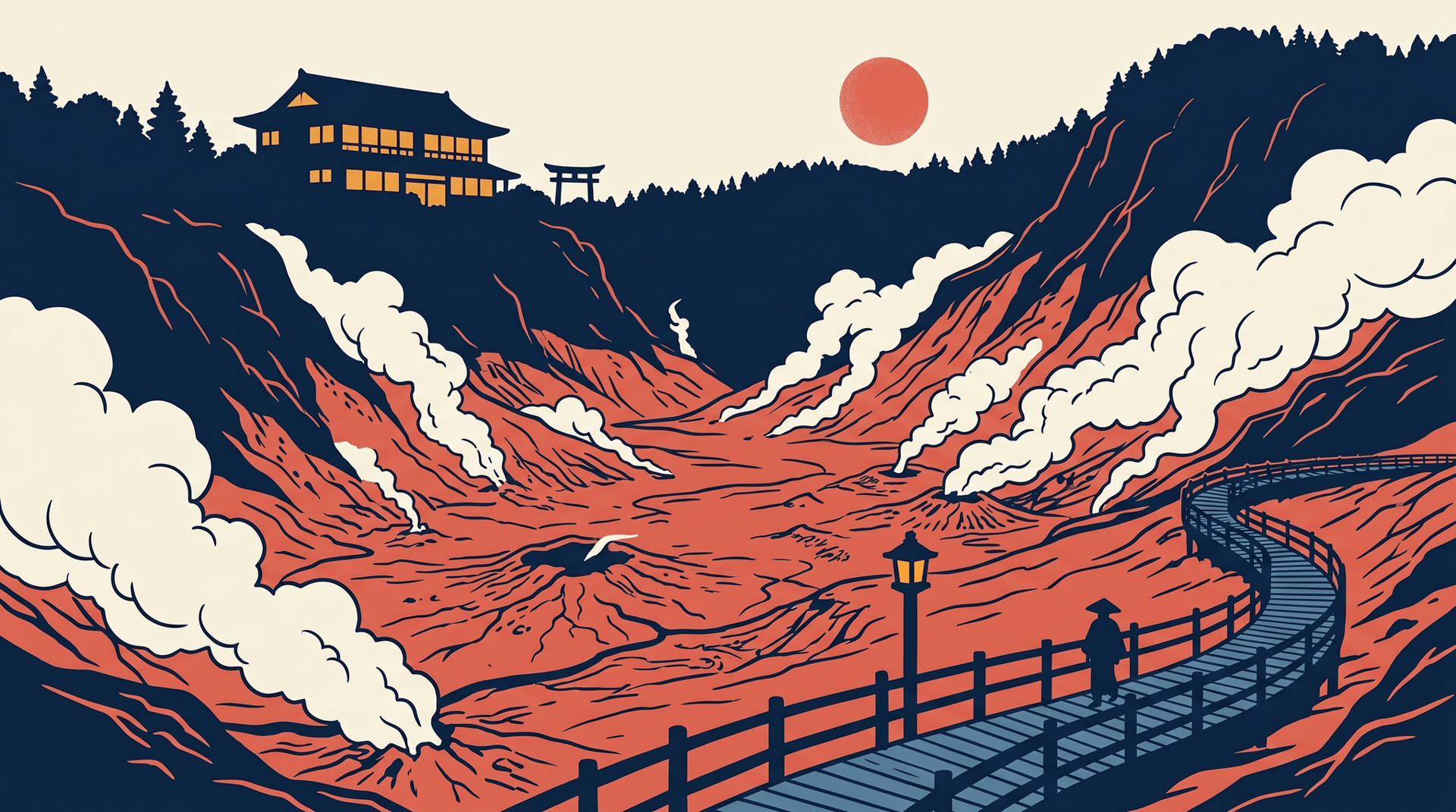
The town owes its character to Jigokudani, "Hell Valley", an explosion crater roughly 450 metres across that opens in the forest a short walk above the inns. Steam pours continuously from its yellow-grey walls and some 3,000 litres of hot water per minute drain down to the bathhouses below. Because the crater taps several distinct vents, Noboribetsu pipes nine different water types into a single town, the highest concentration of mineral varieties anywhere in Hokkaido: sulphur, iron, sodium chloride, acidic iron, alum and others, each ladled into its own bath.
The mascots of the streets are Onikko, small red and blue ogres who make a joke of the valley's name. They appear on lamp-posts, on sticker sheets, and at the summer Jigoku-matsuri, when bathers in costume parade between the inns and the crater rim.
Oyunuma and the road behind the crater
Above Jigokudani the path climbs to Oyunuma, a sulphurous pond fed by the same volcanic system and held at roughly 50°C across its grey surface. A stream runs off downhill into a forest natural footbath, free and open year-round, where visitors sit on cedar logs with their feet in the spring. On clear winter days the views from the upper trail open onto the white cone of Mt. Yotei, far across the Iburi plain.
Places in this area
8 places · Sorted by rating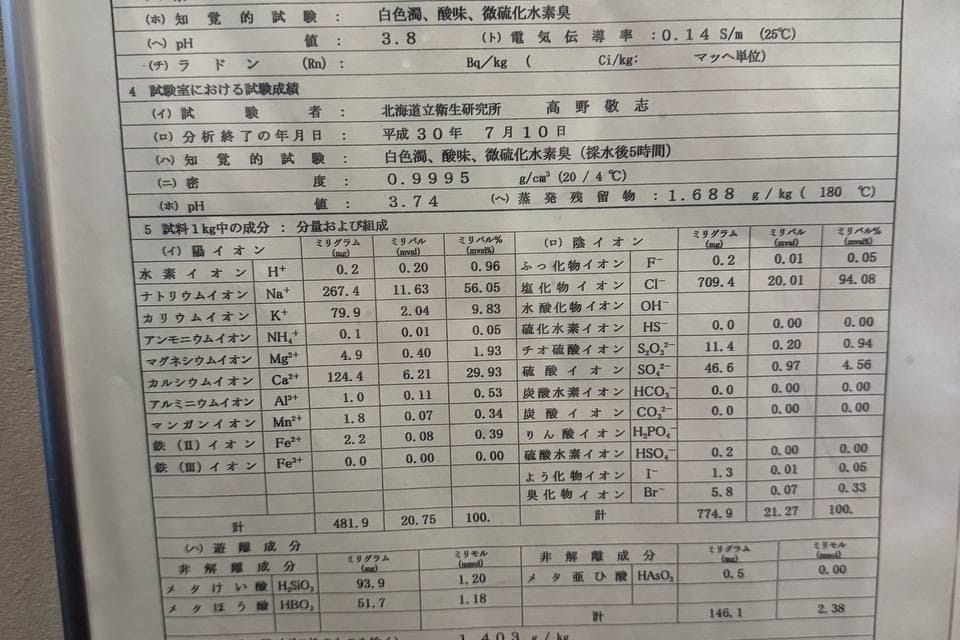
第一滝本館
Hokkaido
花鐘亭はなや
Hokkaido
On the map
Loading map…
Nearby onsenchi
Within 50 kmSources
- Noboribetsu International Tourism and Convention Association — Historyofficial— Town tourism office. Source for Takimoto Kinzo's 1858 founding role and the Meiji-era expansion of the resort.
- Noboribetsu Onsen Tourism Associationofficial— Official Japanese portal. Reference for Jigokudani, Oyunuma, the Onikko mascots, and the "ten tales of the bath" branding.
- Hokkaido Heritage — Noboribetsu Jigokudaniofficial— Prefectural heritage record. Used for the geological description of the explosion crater and its discharge volume.
- Wikipedia — Noboribetsu— Cross-check for the Ainu etymology (nupur-pet) and the town's status as the largest hot-spring town in Hokkaido.
- Wikipedia (JA) — Jigokudani (Noboribetsu)— Background on the crater's dimensions and its post-war development as a tourist landscape.