

Kurokawa Onsen
黒川温泉Aso-region onsen village treated as a single inn, a wooden bath-hopping pass (nyuto tegata) opens three rotenburo of your choice across the participating ryokan.
A village rebuilt as one inn
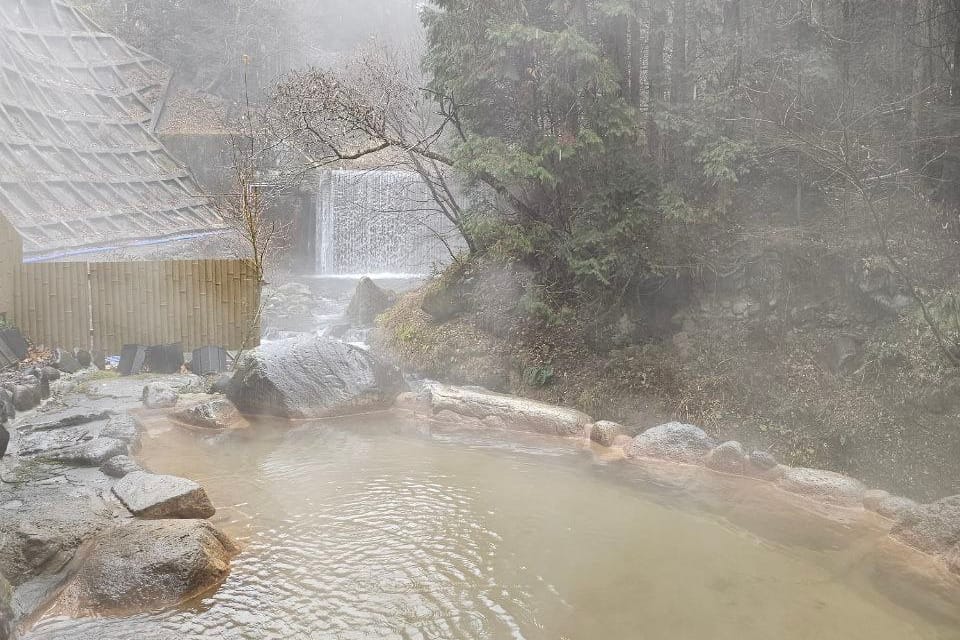
Kurokawa's recognised history reaches back to the mid-Edo period, when feudal lords passing between Hita and Taketa stopped here to rest. By the 1970s the village was nearly forgotten. The turnaround is usually traced to Goto Tetsuya, the young proprietor of Shinmeikan, who at twenty-four spent roughly three and a half years carving a thirty-metre cave bath into the riverside cliff with a chisel. The principle he settled on, that the bath should belong to the forest around it, was eventually adopted by the rest of the village. In 1986 the ryokan association issued the nyuto tegata, a round wooden pass cut from local Oguni cedar that admits the bearer to three outdoor baths of their choosing. A 1994 vision statement formalised the rest: Kurokawa Onsen ikken-yado, meaning the entire village is a single inn, the lanes are its corridors, and each ryokan is one of its rooms.
Cedar, stone, and no neon
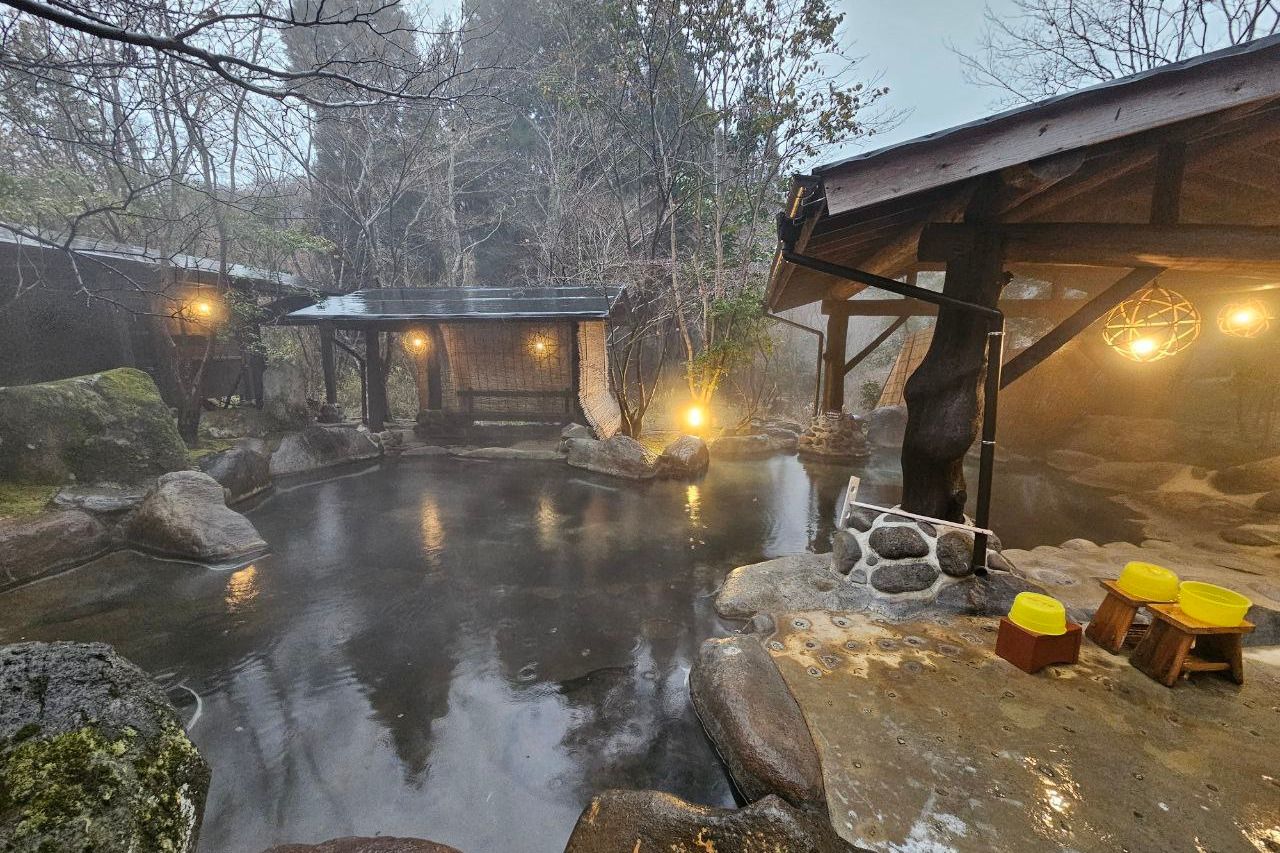
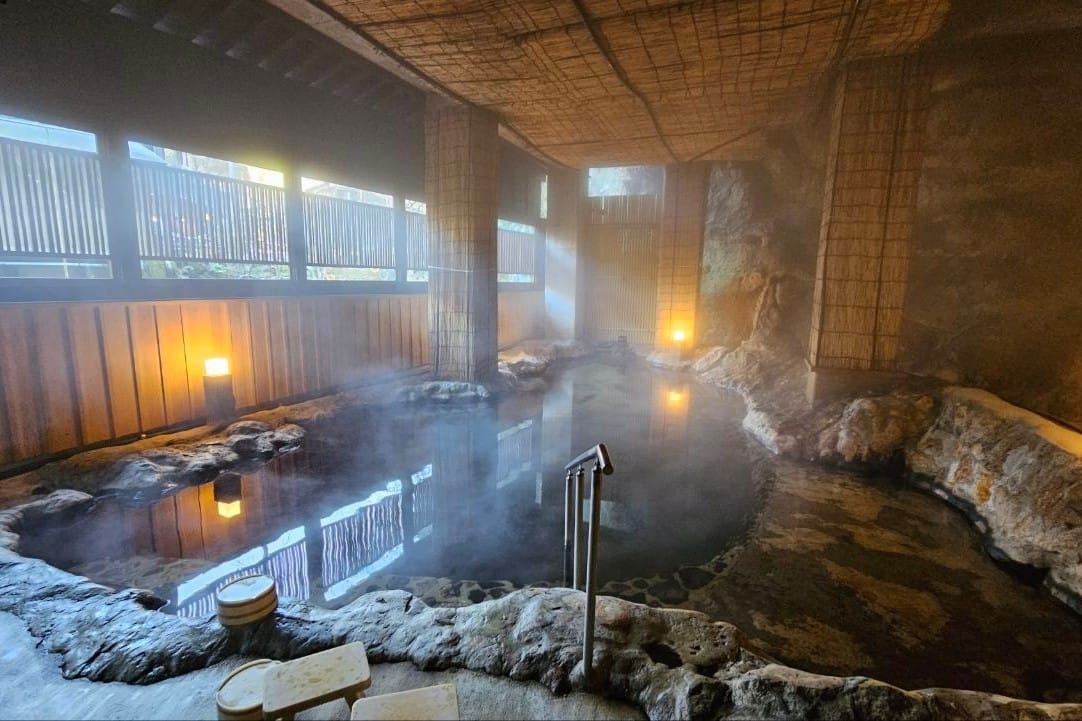
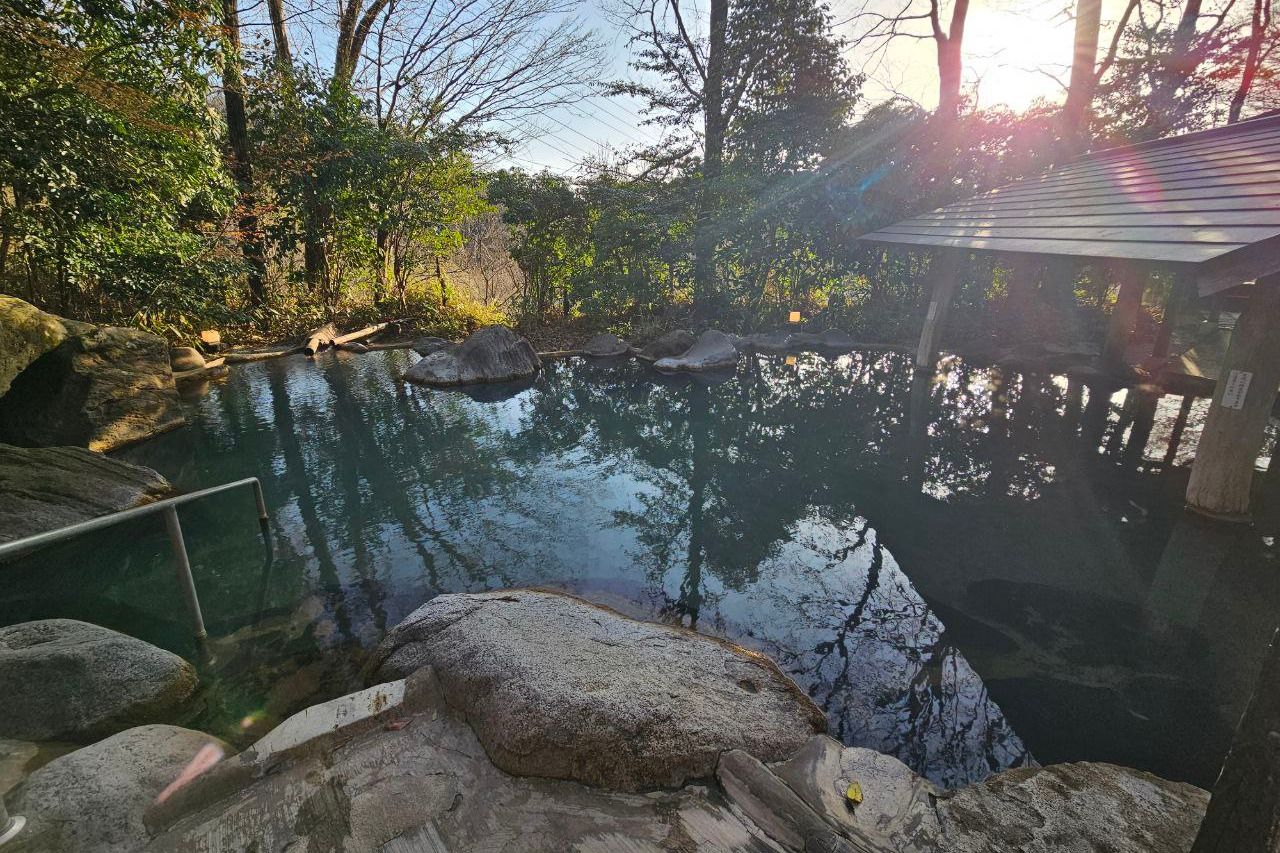
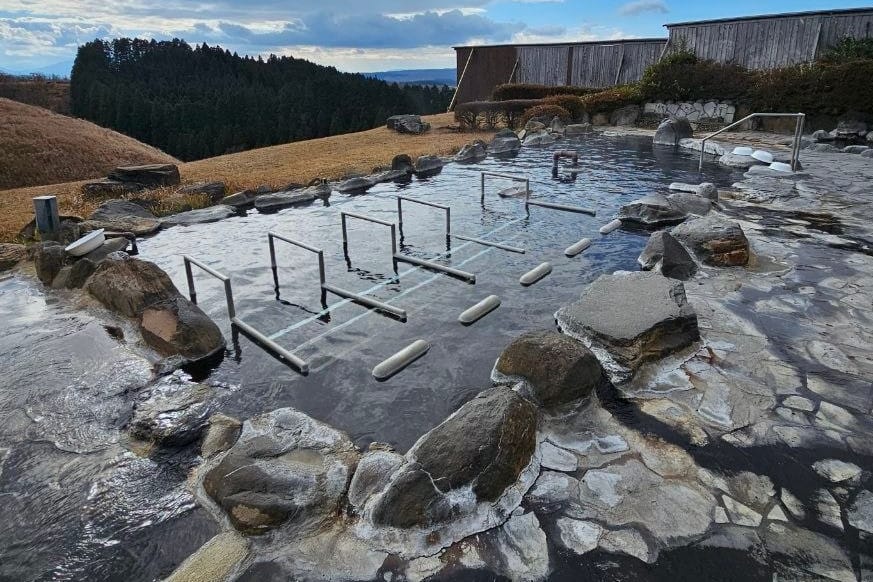
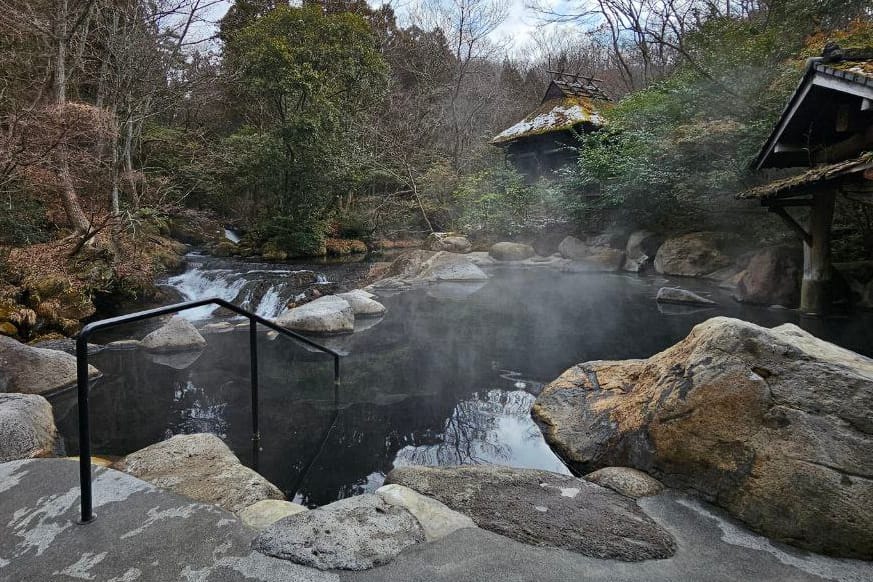
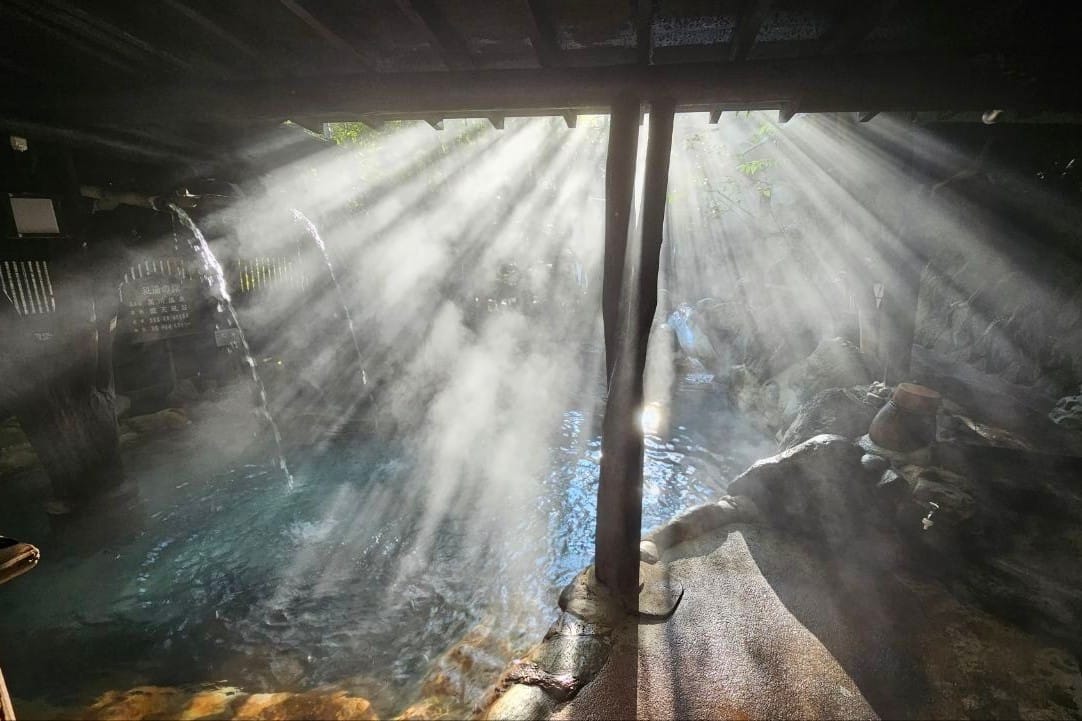
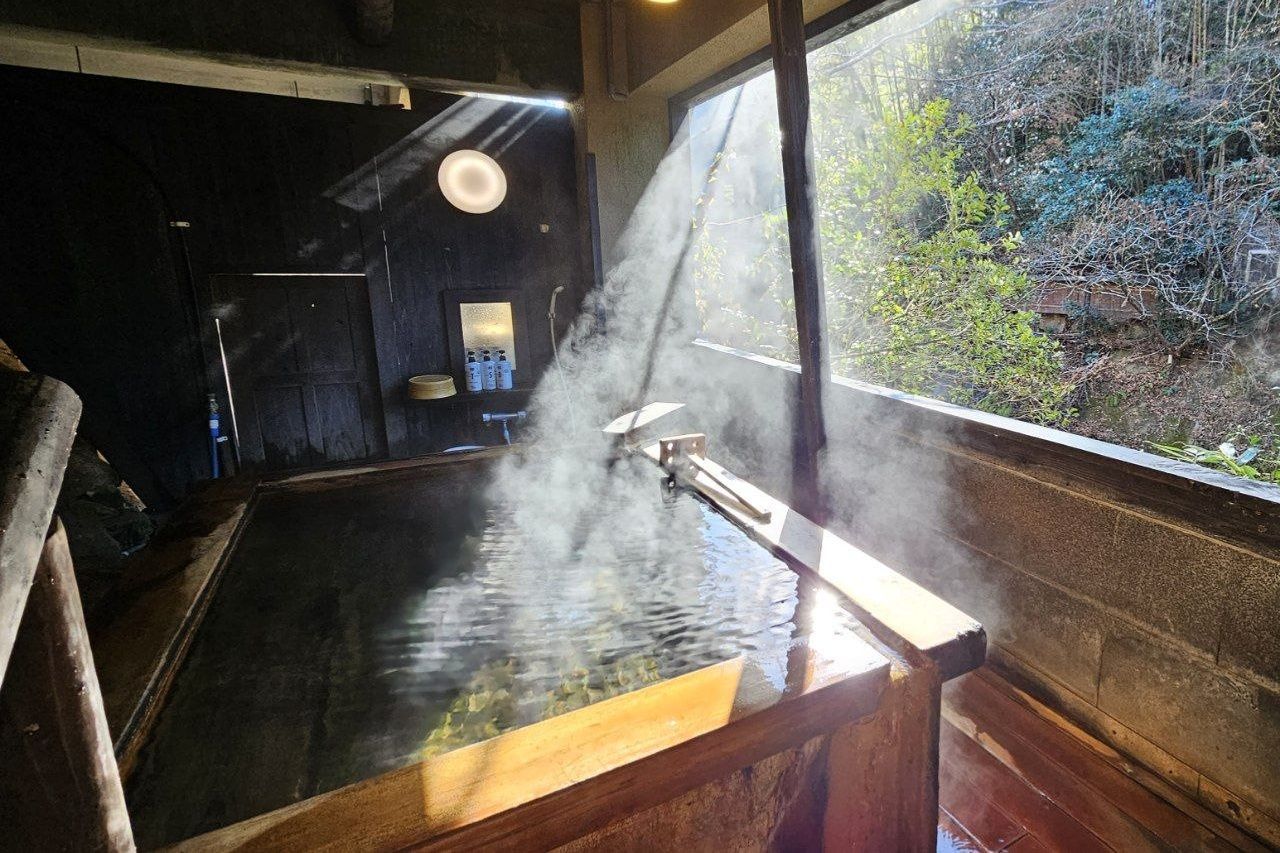
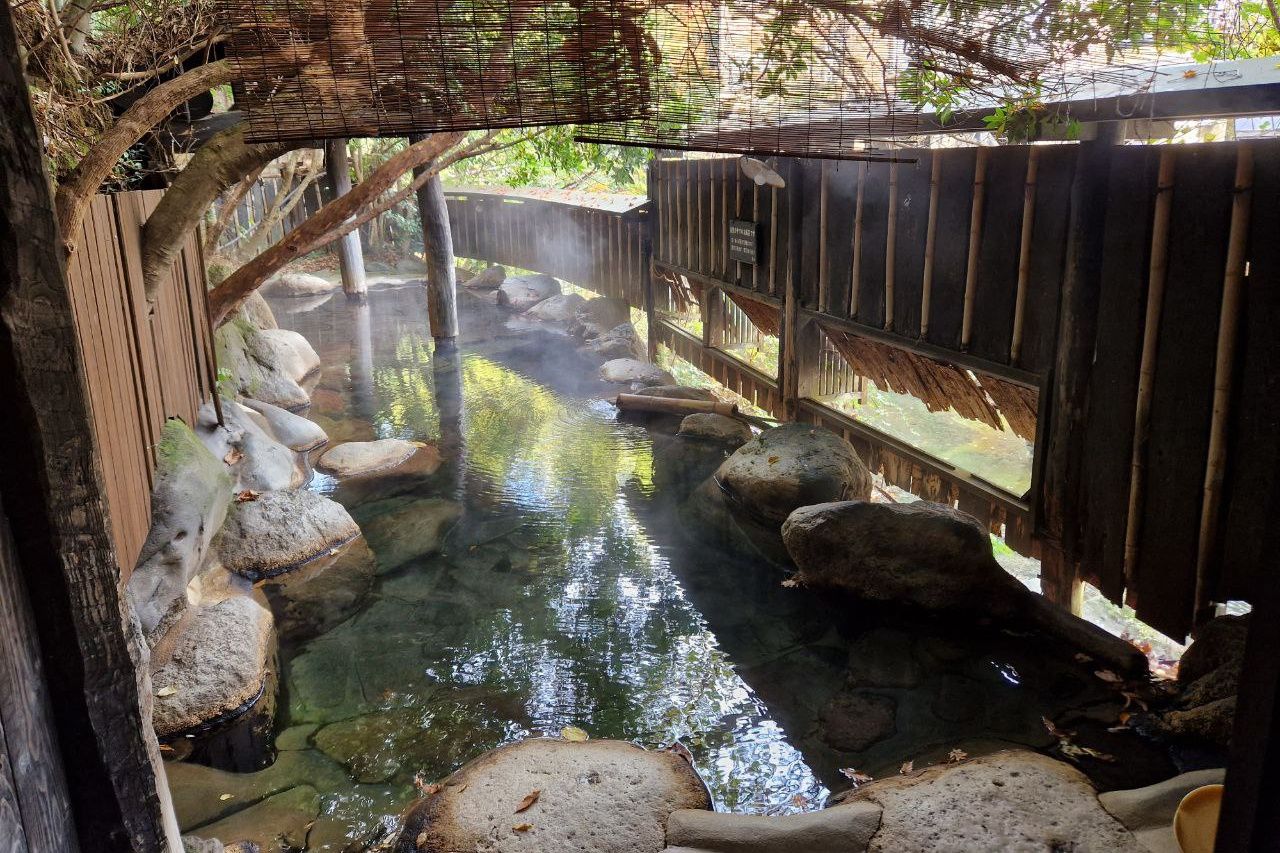
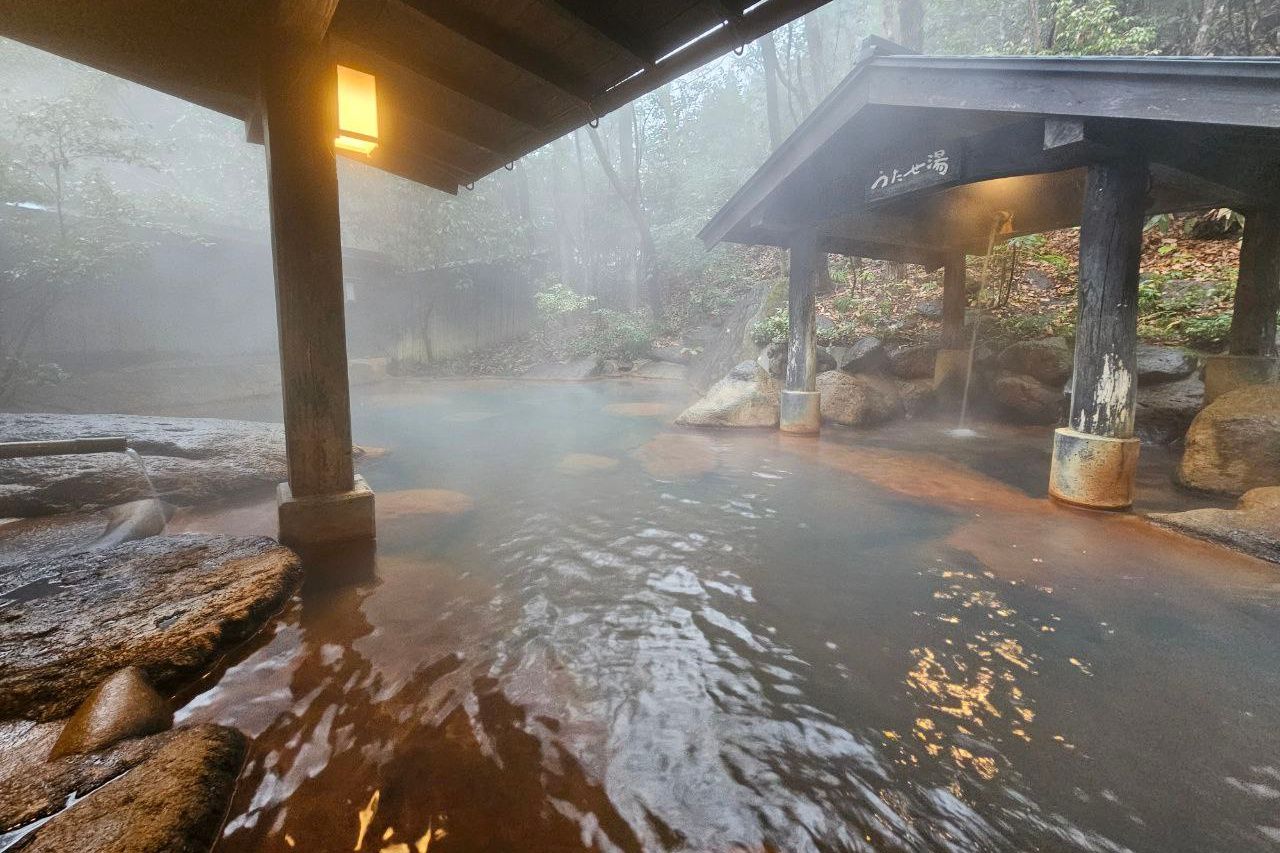
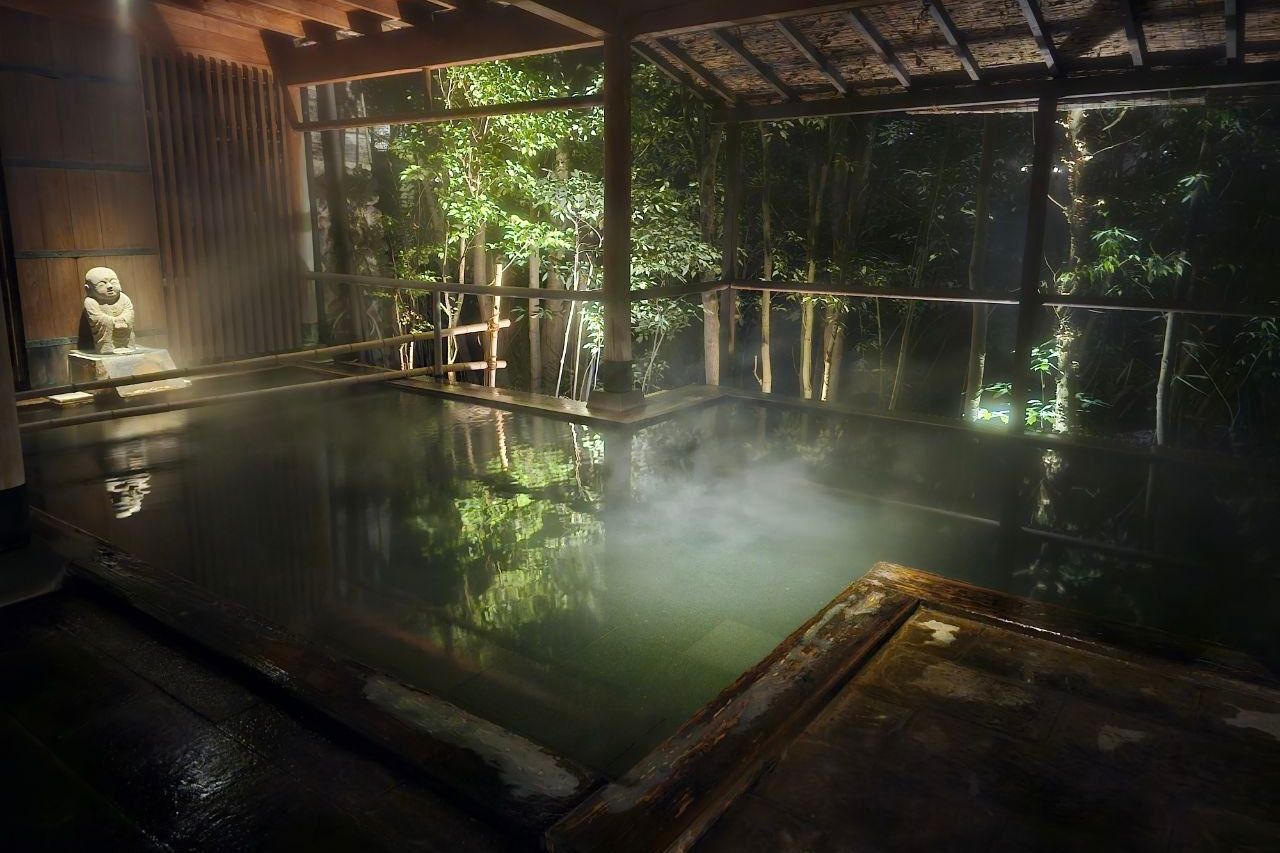
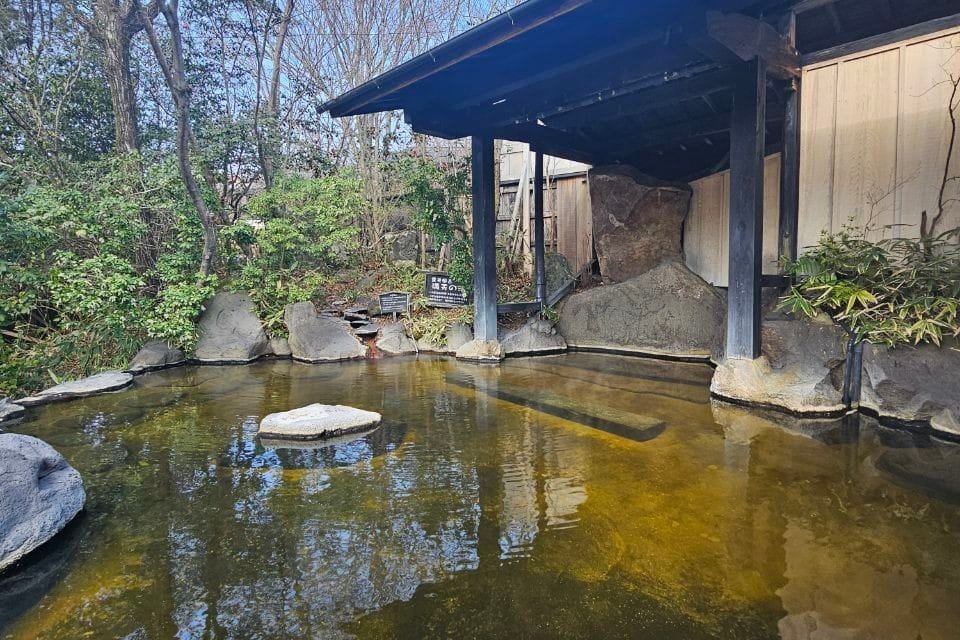
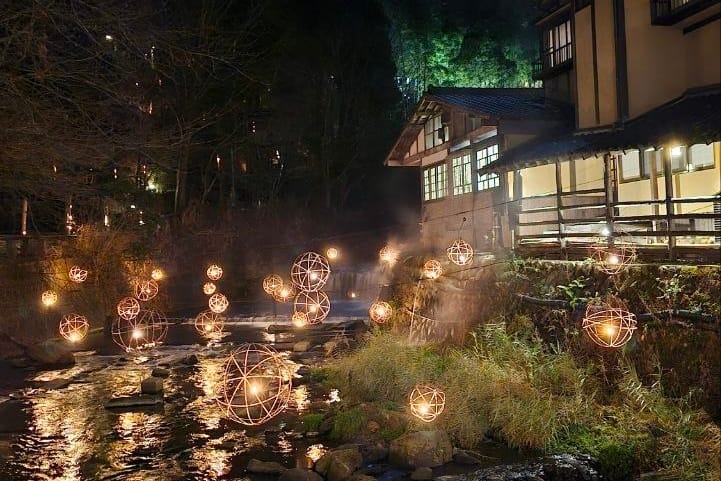
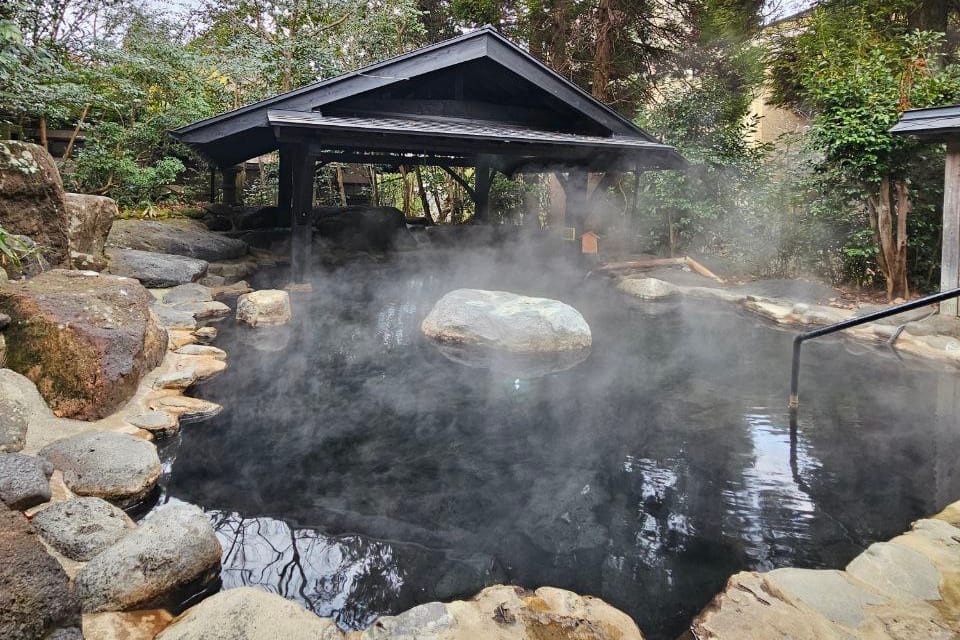
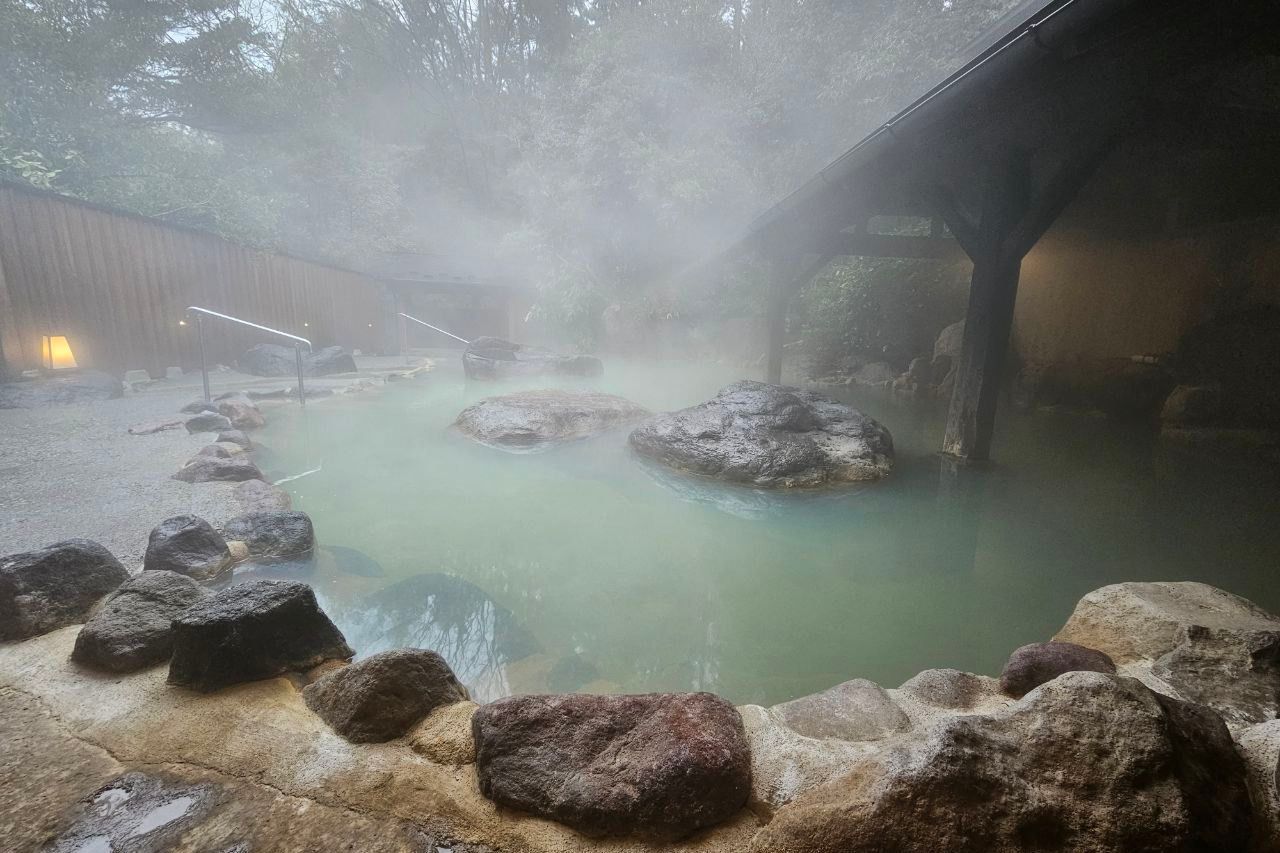
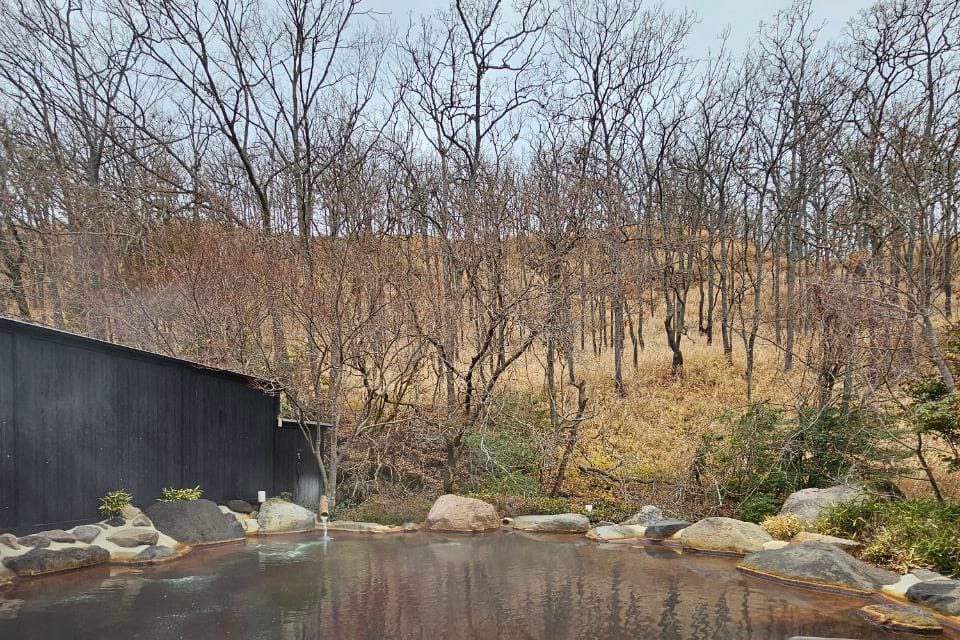
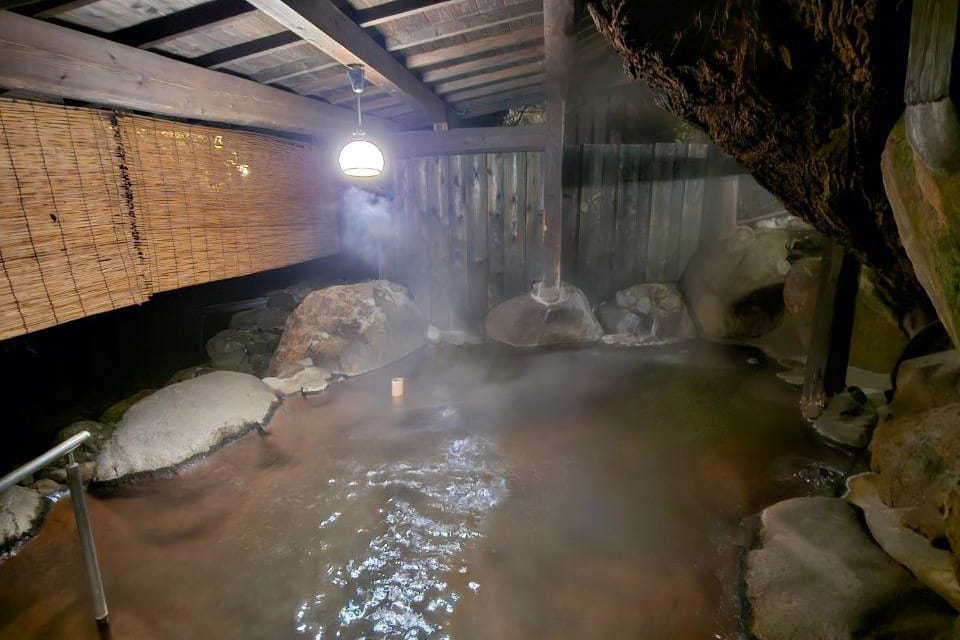
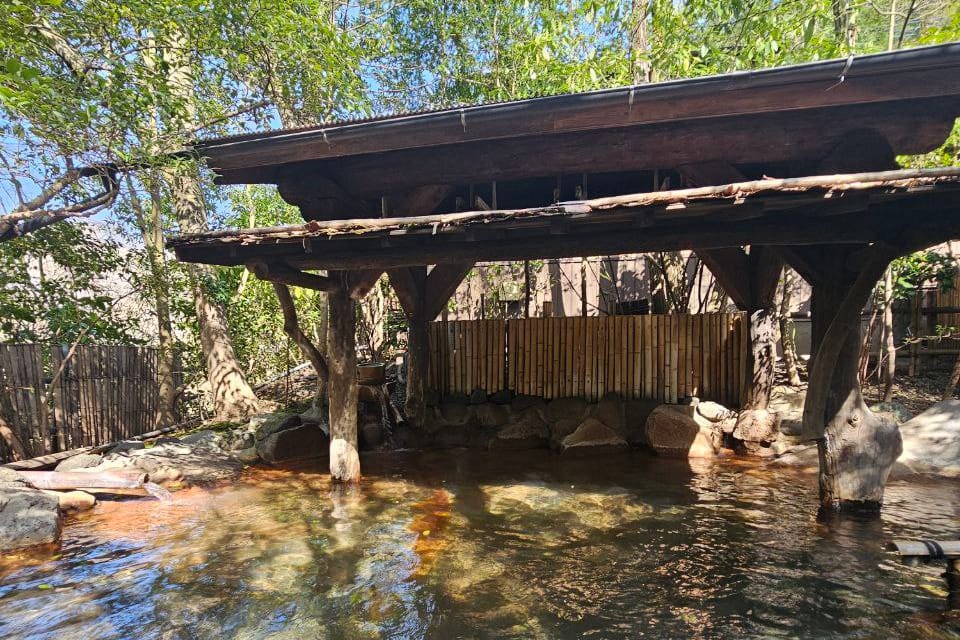
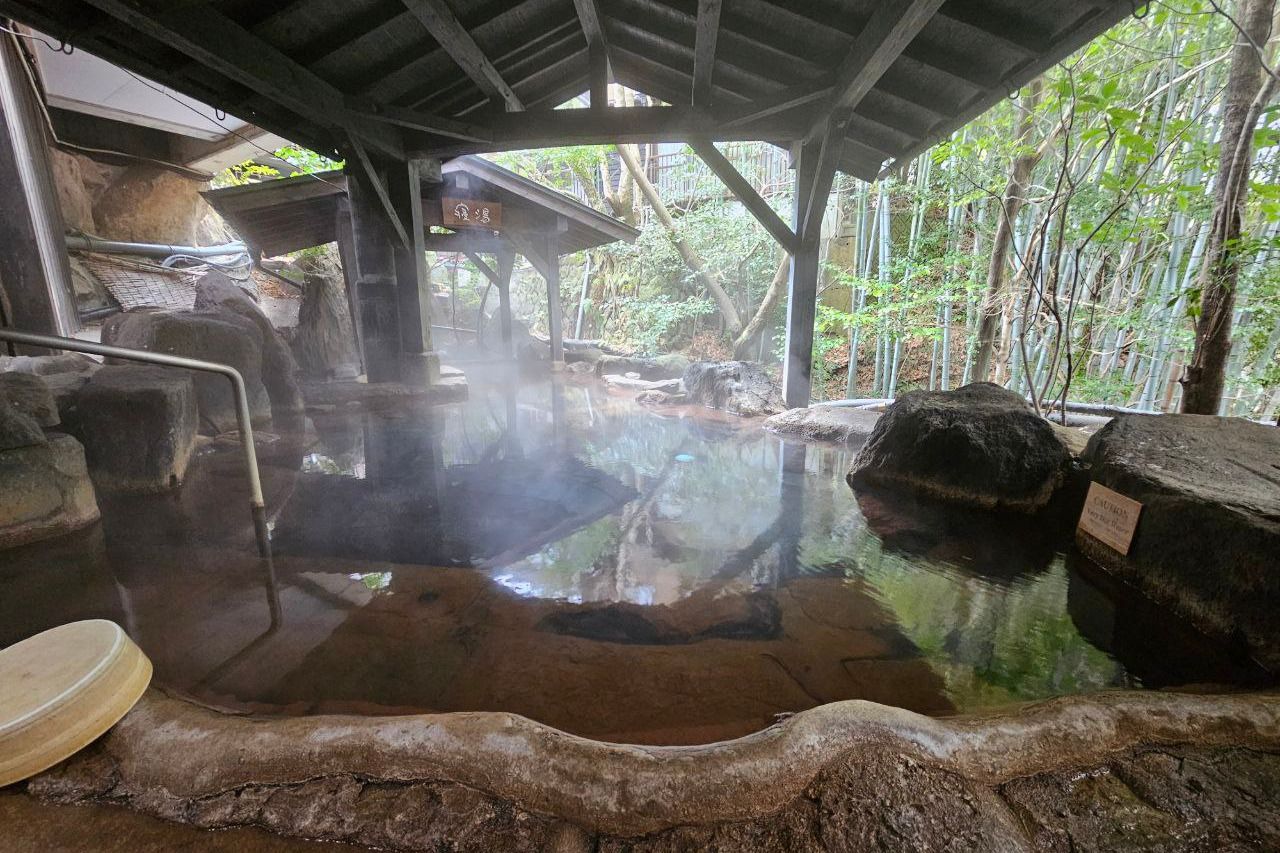
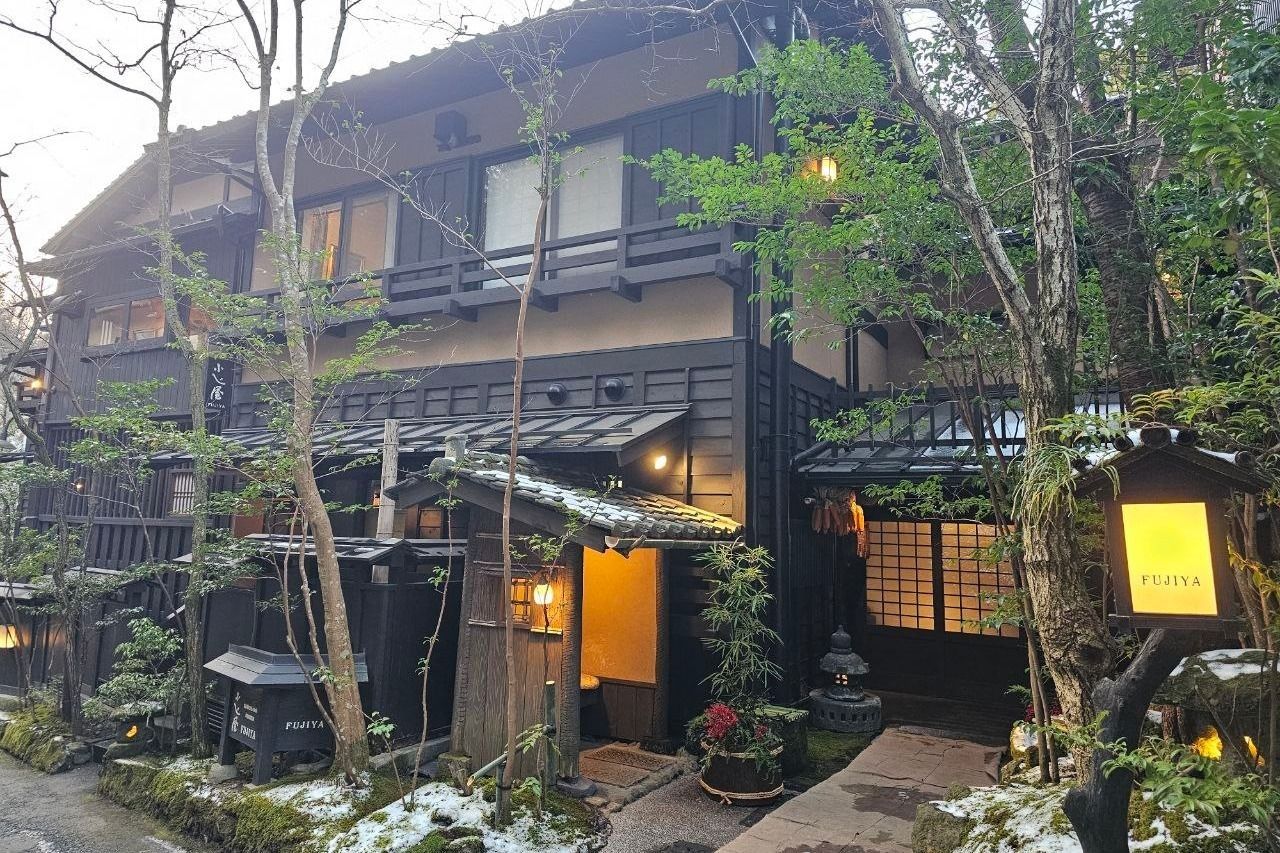
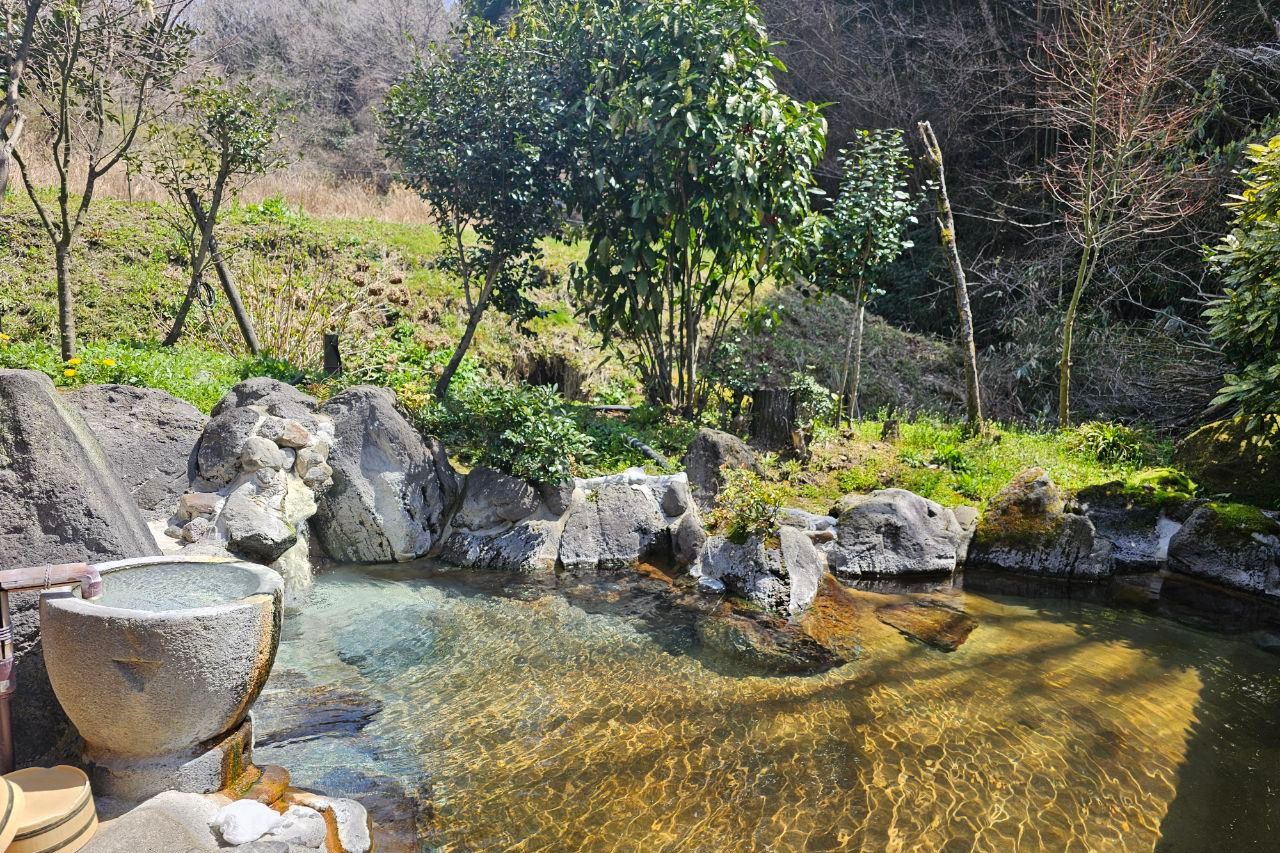
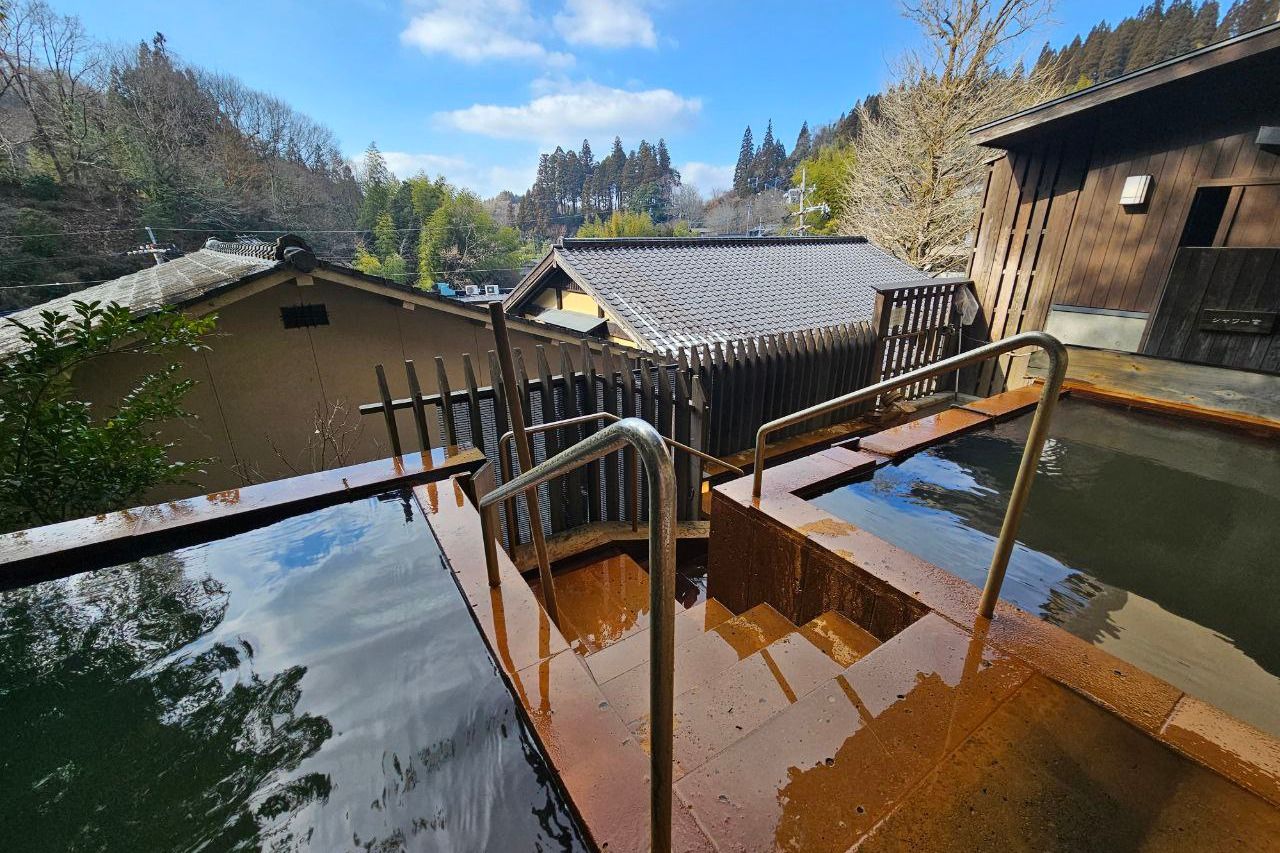
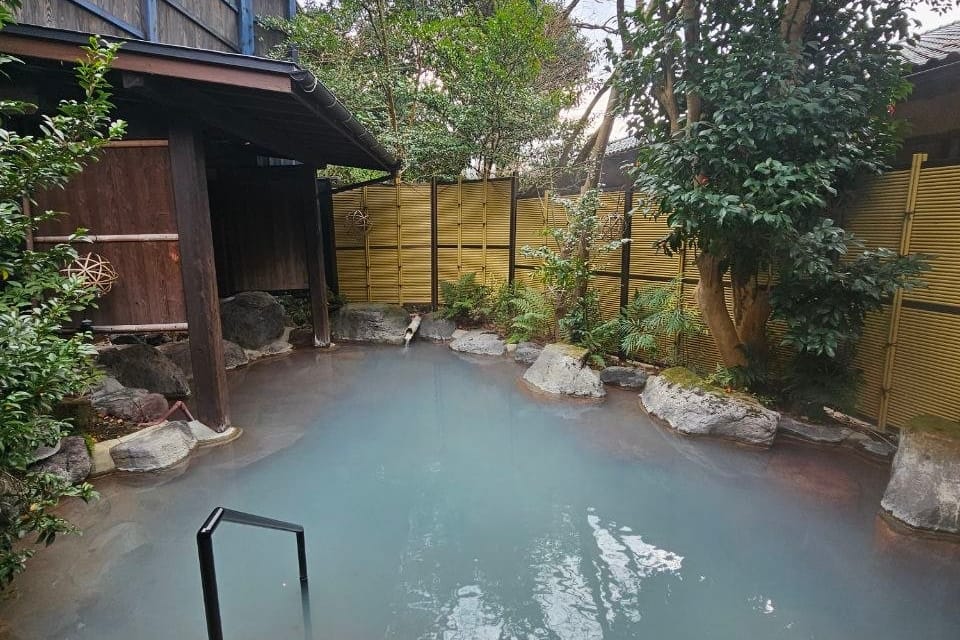
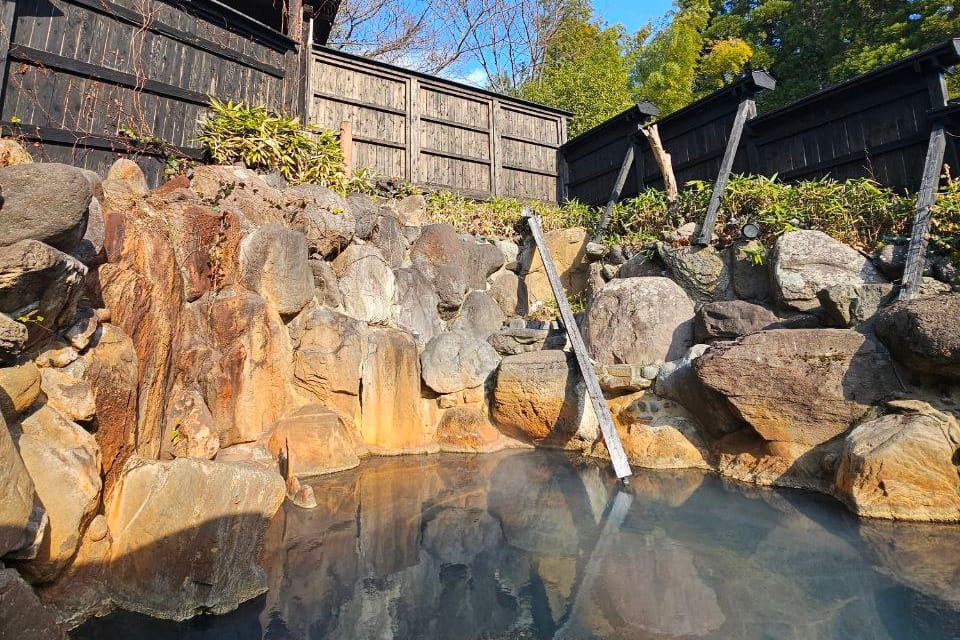
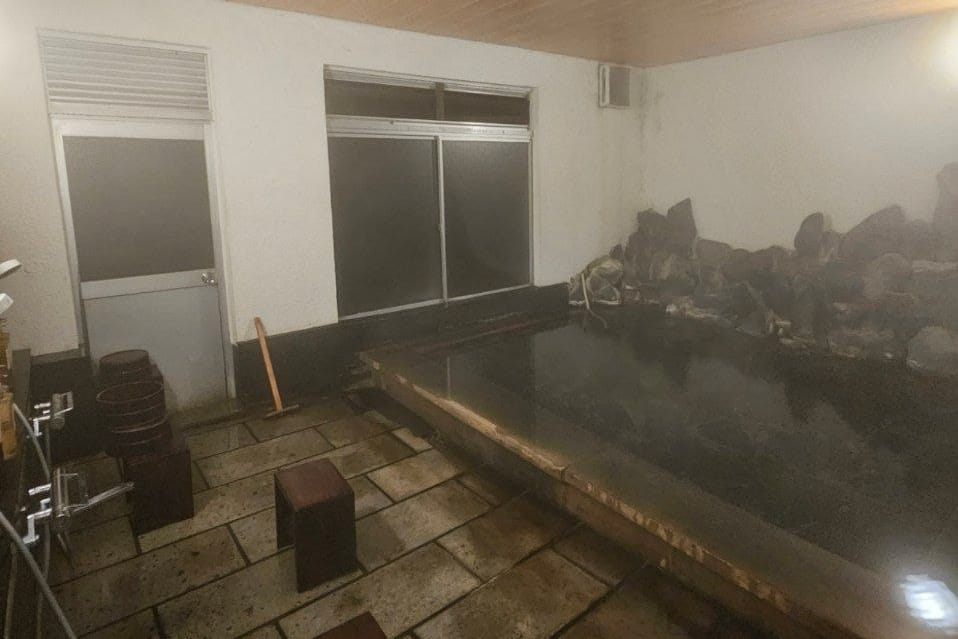
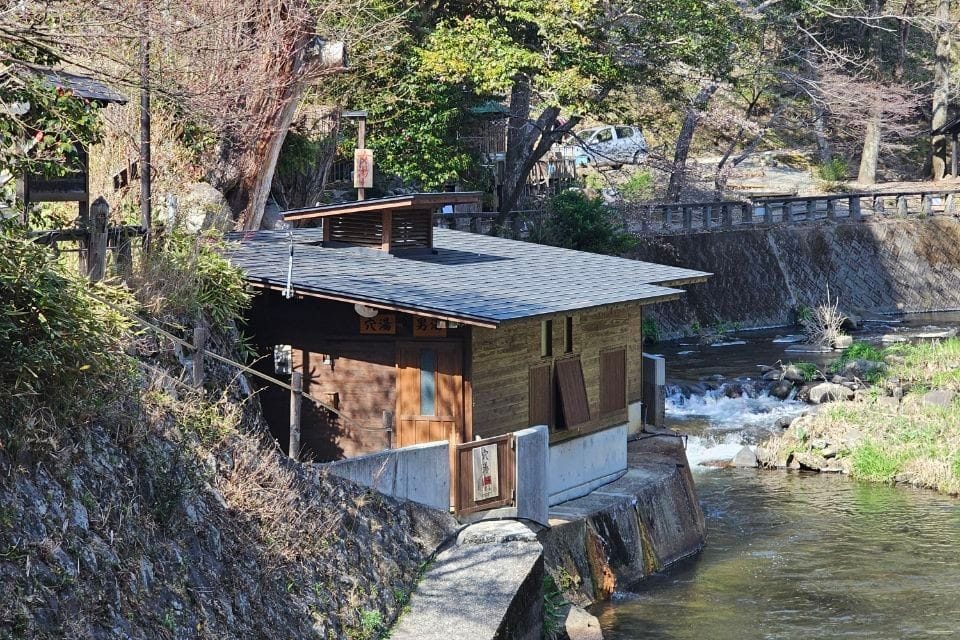
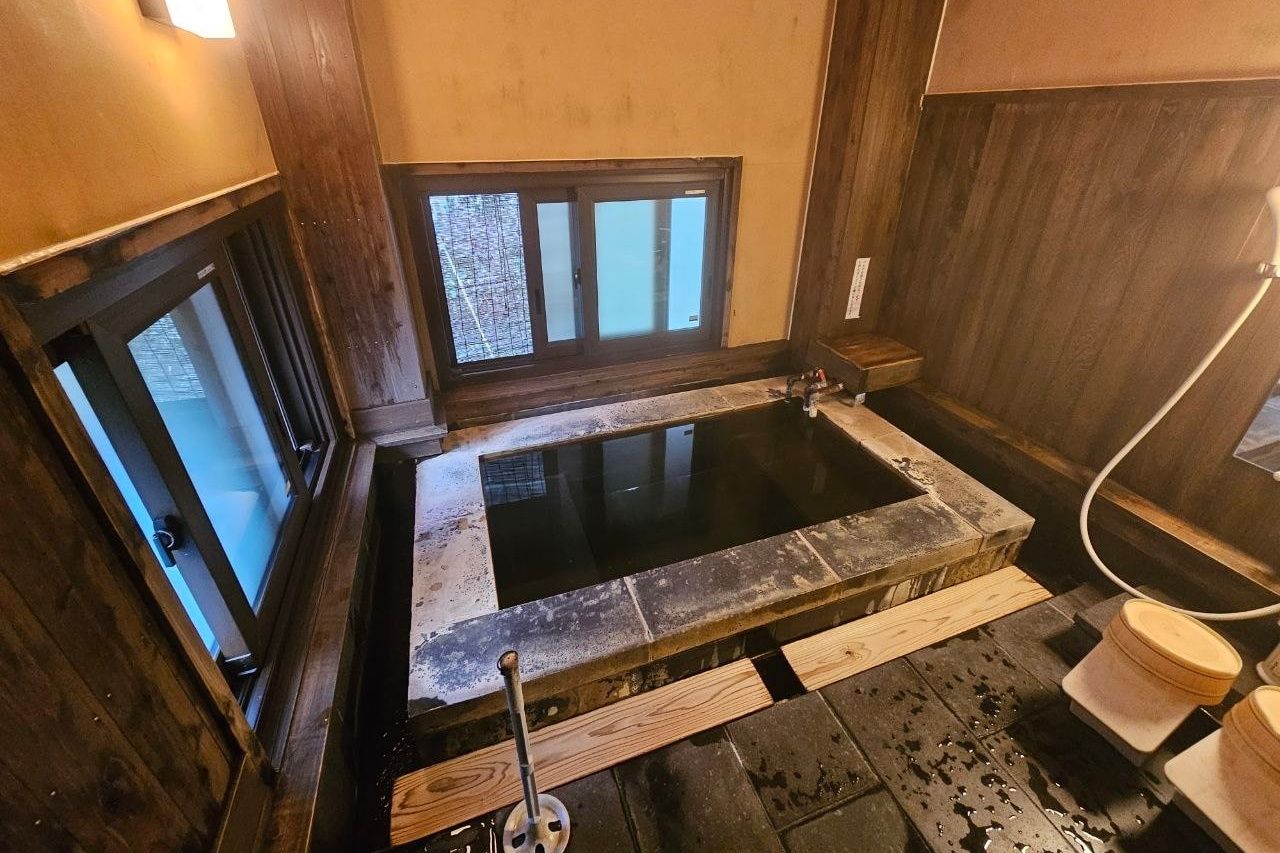
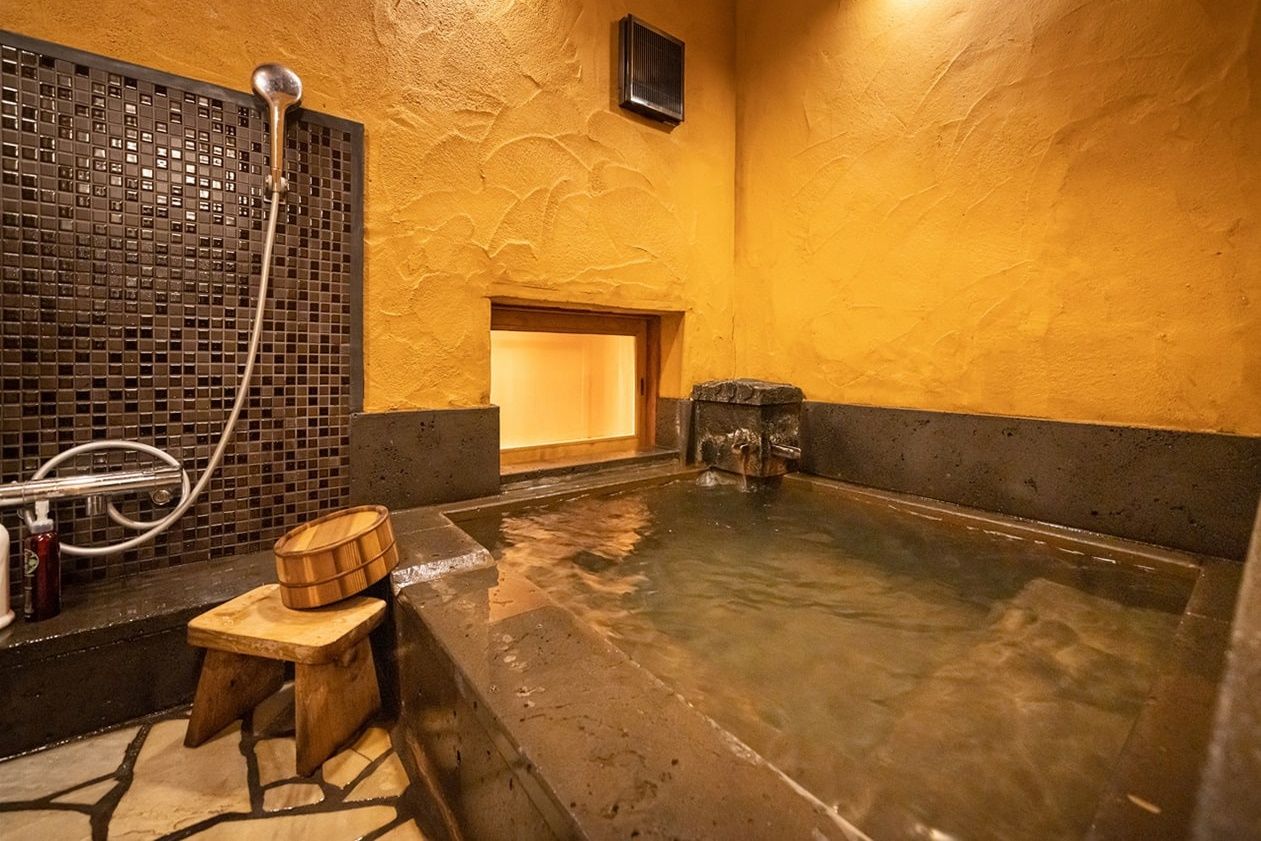
About thirty ryokan line a narrow gorge cut by the Tanoharu River, low wooden buildings stained dark and roofed with cedar shingle or tile. Roughly two hundred signs were taken down by collective agreement in the early years of the revival, and replanting filled the gaps with broadleaf and cedar so the village now reads as a clearing inside a forest rather than a street. The outdoor baths sit at river level, some inside caves, some under wooden eaves, most within earshot of the water. Guests walk between them in yukata and geta in the evening, lit by stone lanterns rather than shopfronts. The setting is the northern edge of the Aso caldera, with the Kuju range to the east, so steam, mist, and the smell of cut cedar tend to be present in roughly equal measure.
When to go
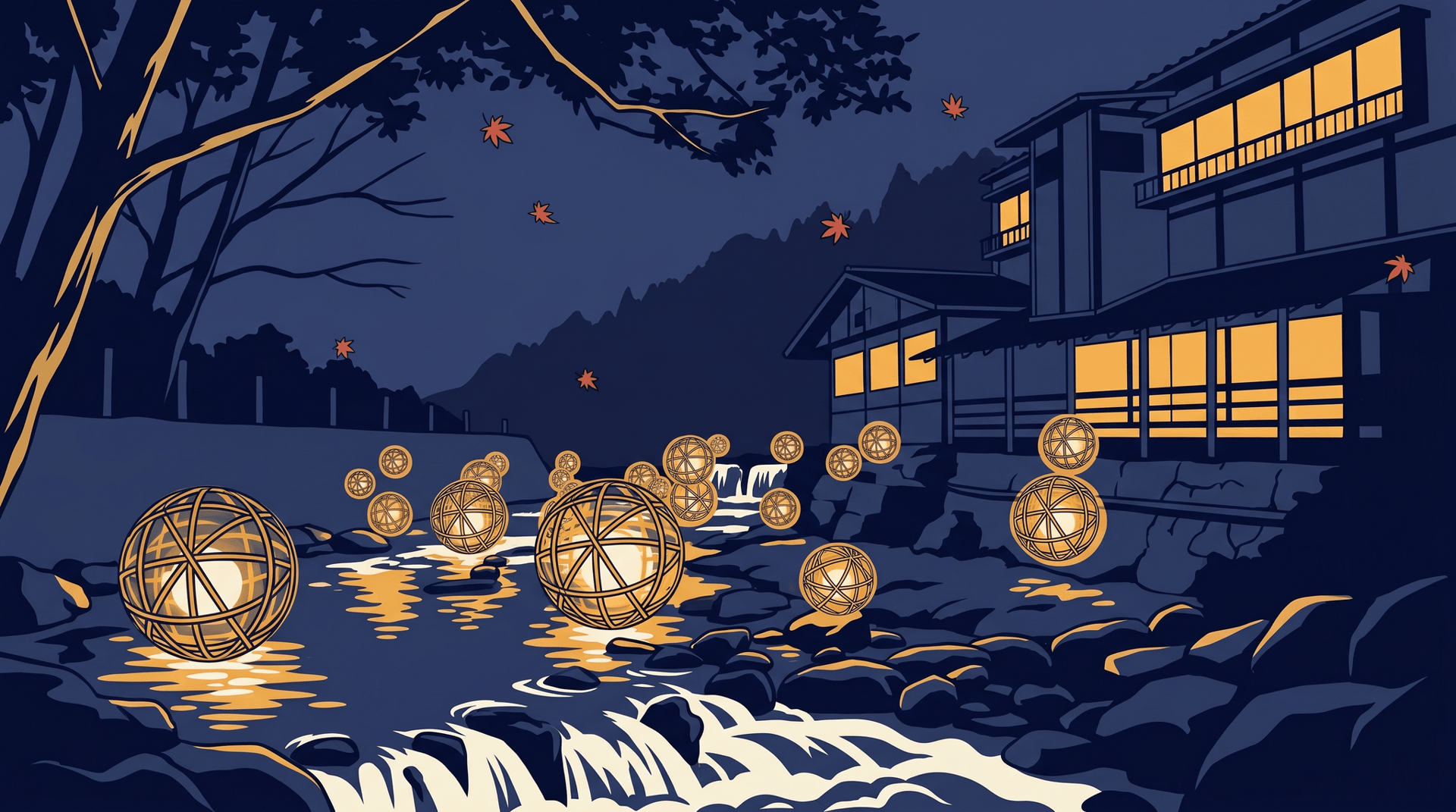
Winter is the most photographed season. From mid-December to early April the association lights the yuakari, hundreds of bamboo lanterns strung along the river, and snow on the cedar roofs is common at this elevation. Early summer brings fireflies along the Tanoharu, and the autumn colour on the surrounding caldera rim runs through late October into November.
Programs in this area
1 programPlaces in this area
33 places · Sorted by rating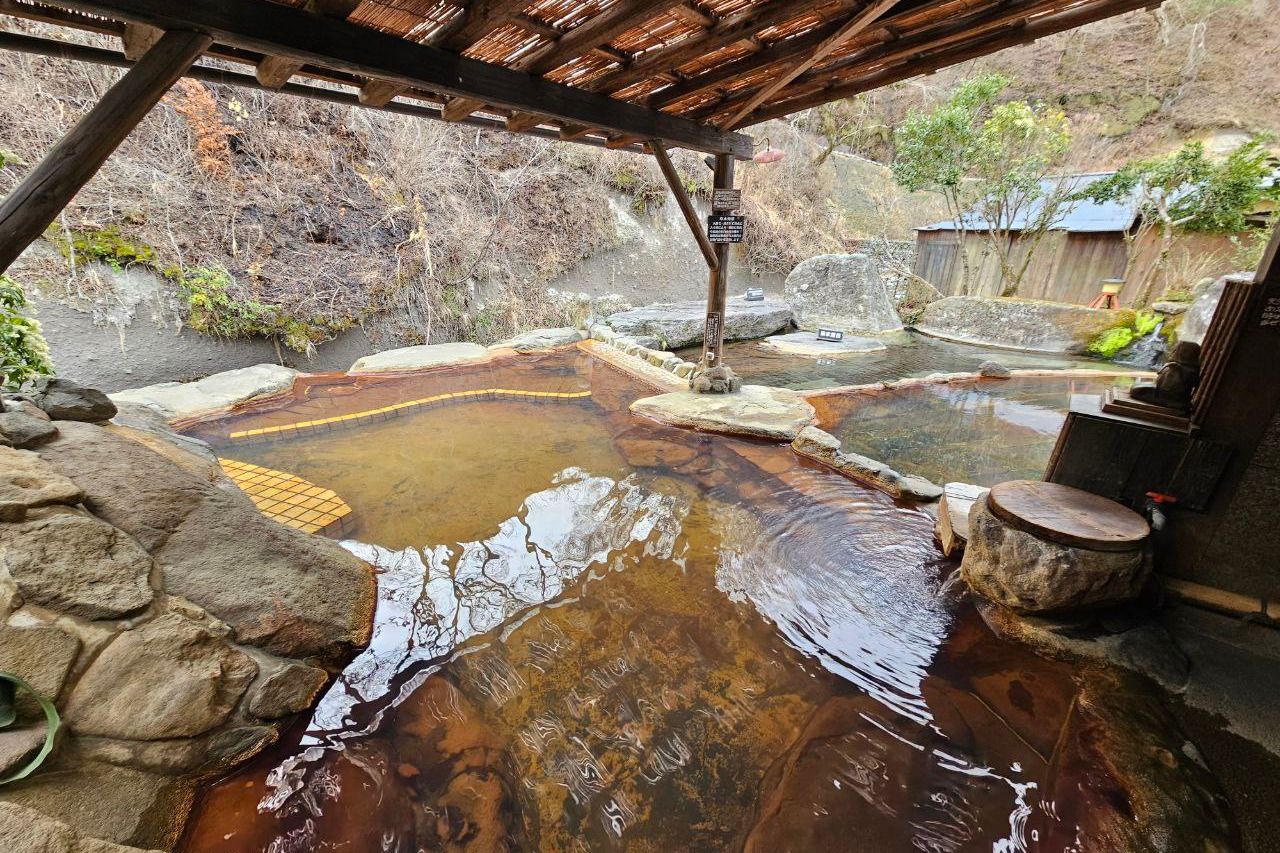 Lodging
源流の宿 帆山亭
Kumamoto
 Lodging
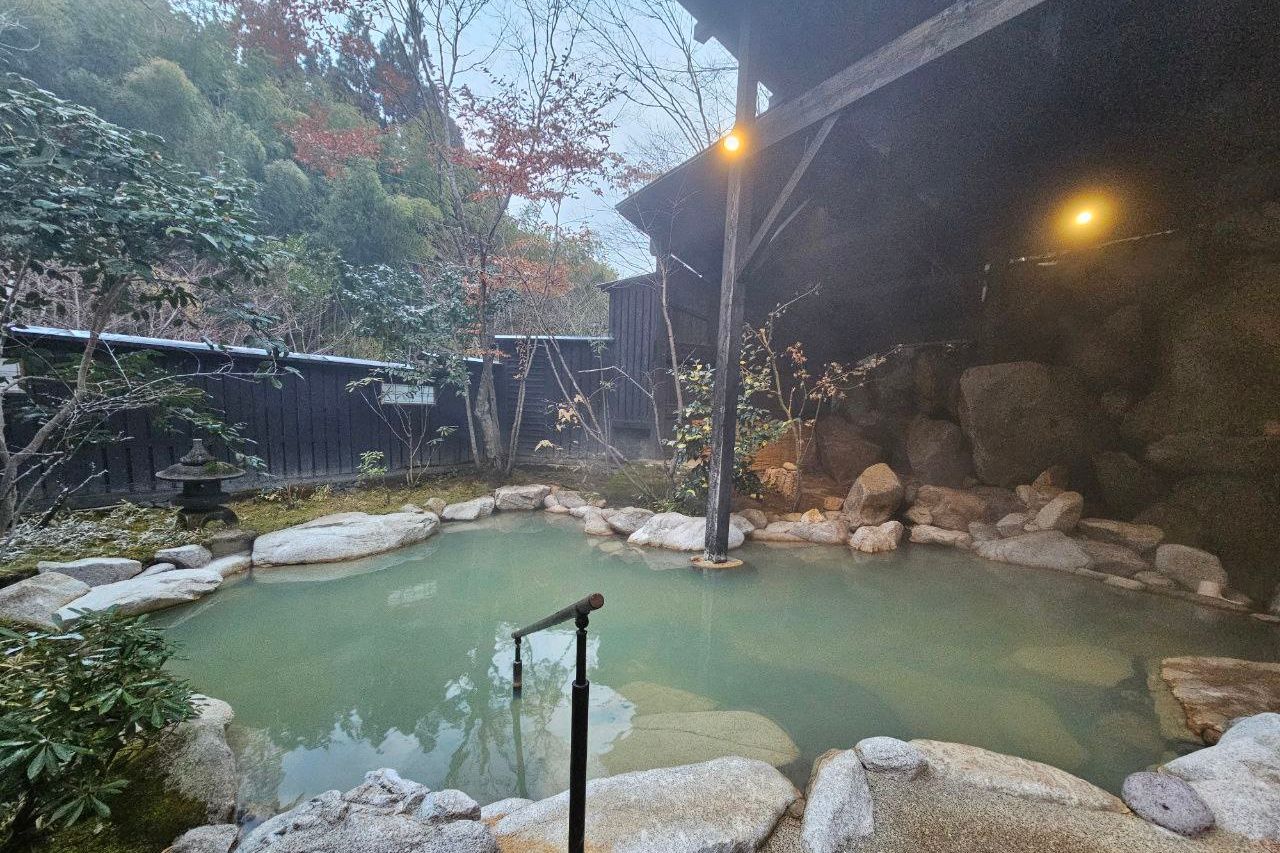
黒川温泉 黒川荘
Kumamoto
 Lodging
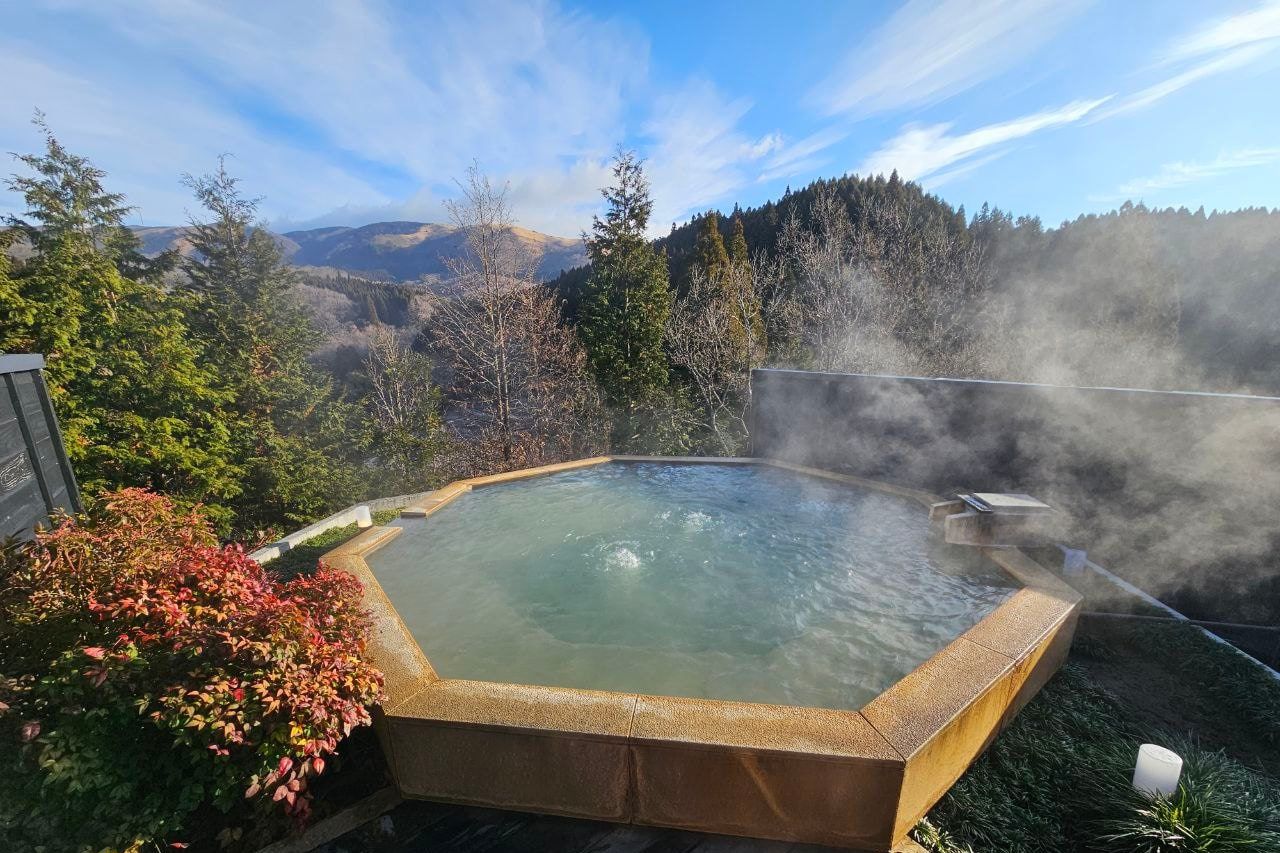
月洸樹 黒川
Kumamoto
 Lodging
山の宿 新明館
Kumamoto
 Lodging
黒川温泉 奥の湯
Kumamoto
 Lodging
黒川温泉 旅館 こうの湯
Kumamoto
 Lodging
山あいの宿 山みず木
Kumamoto
 Lodging
いこい旅館
Kumamoto
 Lodging
ふもと旅館
Kumamoto
 Lodging
黒川温泉 旅館 山河
Kumamoto
 Lodging
御客屋旅館
Kumamoto
 Lodging
夢龍胆
Kumamoto
 Lodging
やまびこ旅館
Kumamoto
 Lodging
山みず木別邸 深山山荘
Kumamoto
 Lodging
お宿 野の花
Kumamoto
 Lodging
お宿 のし湯
Kumamoto
 Lodging
旅館わかば
Kumamoto
 Lodging
黒川温泉 旅館 壱の井
Kumamoto
 Lodging
黒川温泉旅館南城苑
Kumamoto
 Lodging
旅館 やまの湯
Kumamoto
 Lodging
黒川温泉 優彩別館
Kumamoto
 Lodging
inn NOSHIYU
Kumamoto
On the map
Loading map…
Nearby onsenchi
Within 50 kmSources
- Kurokawa Onsen Official Site (Ryokan Association)official— Source for ryokan count, the nyuto tegata, and seasonal events.
- 黒川温泉 — Wikipedia (Japanese)— Chronology of the postwar revival, Goto Tetsuya's cave bath, and the 1986 tegata launch.
- Shinmeikan — Kurokawa Onsen History— First-person account from the ryokan whose owner led the village turnaround.
- Mitsukan Water Culture Center — Kurokawa Onsen's Third Generation— Detailed essay on the cooperative governance behind the village's image.
- Japan-Guide — Kurokawa Onsen— General visitor overview in English.