
Aizu-Oshio Onsen
大塩温泉A hamlet on the Tadami River in Oku-Aizu with one bathhouse and one minshuku, sharing a 38 °C spring so charged with dissolved carbon dioxide that it ranks among the most carbonated in Japan — tea-brown, faintly salty, lukewarm enough to sit in for an hour, and drunk as well as bathed in. A second spring rises cold a few minutes away: a well of natural sparkling water that Meiji-era traders shipped to Europe and that is still bottled today.
The most carbonated water in Aizu
Oshio is a hamlet on the Tadami River in Oku-Aizu, and the reason to come is what rises under it. The spring is a sodium chloride–bicarbonate water charged with carbon dioxide, and the amount of gas dissolved in it is among the highest of any spring in Japan. It surfaces at about 38 °C — body temperature, not bath temperature — clouding tea-brown to blue-grey in the tub, faintly salty, faintly metallic, with fine bubbles that settle on the skin and rebuild the moment you brush them off.
Water that cool would normally chase you out. Here it does the opposite: the carbonation opens the small vessels in the skin, so the heat goes in slowly and stays long after you get out. People sit in it for an hour. It is also a drinking spring, and an old saying in the valley divides the labour between the two baths on this stretch of river — the stomach to Oshio, the piles to Yukura.
One bathhouse, one inn
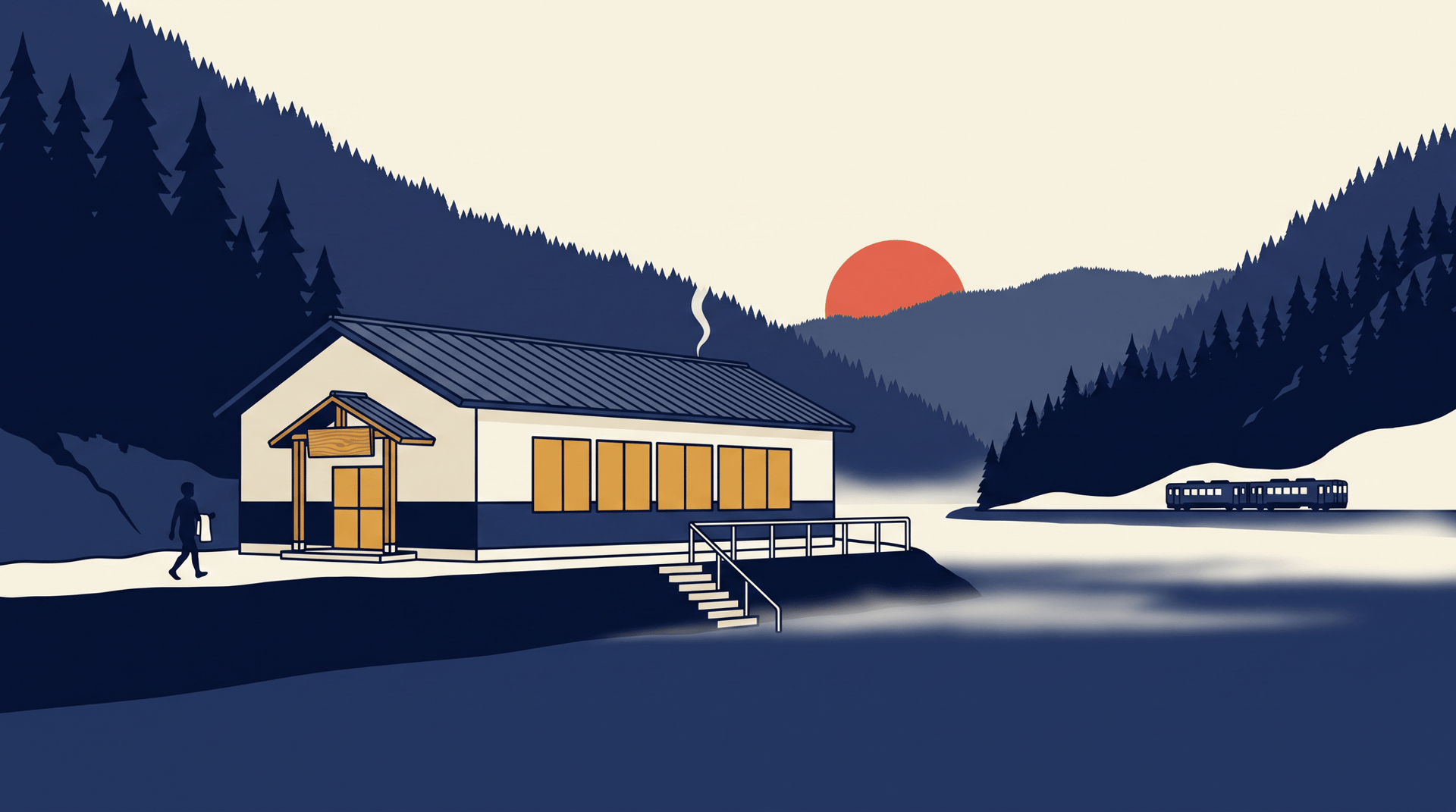
The onsen is two buildings and nothing else. The public bathhouse, rebuilt on 20 August 2015, stands right at the water with windows onto the river; entry is a cooperation fee of ¥400, and it opens 7:30–20:00 from April to October, 8:30–20:00 through the winter. Because the source is only 38 °C, the bath is heated in the cold months — a compromise the town makes openly.
Next door, Minshuku Tatsumiso has taken in bathers since the middle of the Meiji era. It keeps no bath of its own: guests walk across to the public bathhouse and use it as often as they like, including after it has closed to everyone else. Four rooms, from ¥6,500 with two meals of what the valley grows. A third house, the Iwasakiya, once served matagi hunter's stew on Route 252 and is gone.
The bath that only exists in spring
On the cliff above the river, on Tatsumiso's land, sits a rough mixed-bathing open-air tub that fills only in the snowmelt weeks of spring, when the water pushes up of its own accord. It was the village's original communal bath; when the dam brought the bank close it was meant to be demolished, and it simply stayed. Nobody maintains it on a schedule — you may have to clean it before you get in — and it sits on a drop above the reservoir. Ask at the inn, and take the edge seriously.
The well of sparkling water
Ten minutes' walk away is a second spring that is not hot at all: a well of natural sparkling water, soft, lightly carbonated, cold. In the Meiji era a company was formed here to export it to Europe in partnership with a German firm; today a small plant beside the well bottles it, restaurants buy it, and it was served as the mineral water at the 2019 G20 summit in Osaka. Visitors draw it themselves into their own bottles. The well is deep and holds a heavy layer of carbon dioxide gas: two people died in it in August 2019 after losing consciousness while drawing water. It reopened that October with its railing restored. Draw from the rim, do not lean in, and do not climb the fence.
Getting there
Aizu-Oshio station on the JR Tadami Line is a fifteen-minute walk — a line worth riding for its own sake, and the Seventh Tadami River Bridge is just up the valley. Yukura Onsen and the four baths of Tamanashi are a short drive east along Route 252.
Places in this area
4 places · Sorted by rating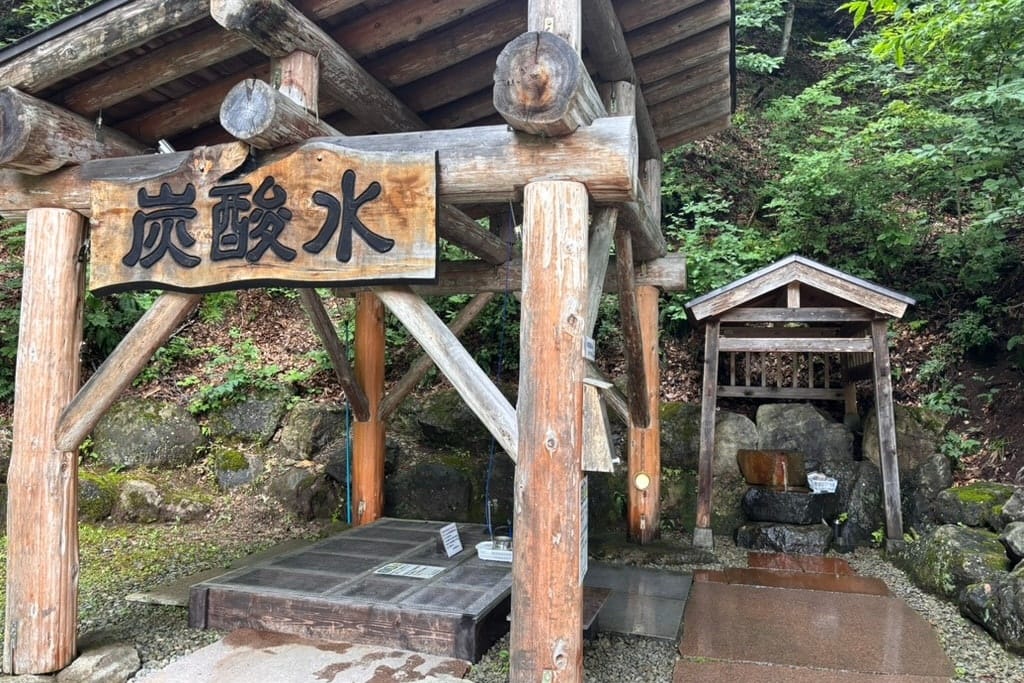
On the map
Loading map…
Nearby onsenchi
Within 50 kmSources
- Oshio Onsen — Kaneyama town tourismofficial— Town page for the bathhouse: address, the two seasonal opening-hour bands, the ¥400 cooperation fee, and the spring name.
- Oshio Onsen Public Bathhouse — Kaneyama Tourism and Products Associationofficial— Association listing: the Tadami River outlook, amenities, and the note that the carbonation keeps you warm after a 38 °C bath.
- Oshio Onsen (Fukushima) — Wikipedia (JA)— Source for the spring analysis, the Kobo Daishi legend, the 1955 dam relocation, the 1967 temperature drop, the 2015 rebuild, and the cliff-top seasonal bath.
- Oshio Natural Carbonated Water Well — Kaneyama townofficial— The town's page for the well, its soft lightly-carbonated water, and its use by restaurants.
- Oshio Onsen: Oku-Aizu's rare natural carbonated spring— Magazine feature: the tea-brown water, the Meiji-era export of the sparkling water to Europe, and the bottling since 2004.
- Minshuku Tatsumisoofficial— The inn beside the bathhouse — four rooms, rates, and its meals.