
Sukayu Onsen
酸ヶ湯温泉Sole-inn onsen high in the Hakkoda mountains, famous for the 'Hiba sennin-buro', a 160-畳 cypress-wood mixed bath fed by strong acidic sulfur springs.
Three hundred years of one inn
Sukayu sits at about 900 metres on the western slope of the Hakkoda range, a single timber inn at the head of a deep beech and aomori-hiba forest. The founding story belongs to the Jokyo era: in 1684 a hunter from Yokouchi named Nagauchi Saemonshiro tracked a wounded deer for three days and found it on its feet again beside a steaming spring. He called the source Shika-no-yu, the Deer's Bath, and the name only later shifted to Suka-yu, "acid water," once the chemistry made itself plain. Through the Edo and Meiji periods bath-keepers ran the springs as a cooperative for hunters and mountain-vegetable foragers, eventually consolidating into a single company in 1933. In 1954 the Ministry of Health and Welfare designated Sukayu the first National Health Resort (kokumin hoyo onsenchi, 国民保養温泉地) in Japan, citing the strength of the water, the volume of the source, the size of the lodgings and the cleanliness of the surrounding environment. The toji tradition of long, slow self-catered stays for healing has never really stopped here.
The Hiba Sennin-buro
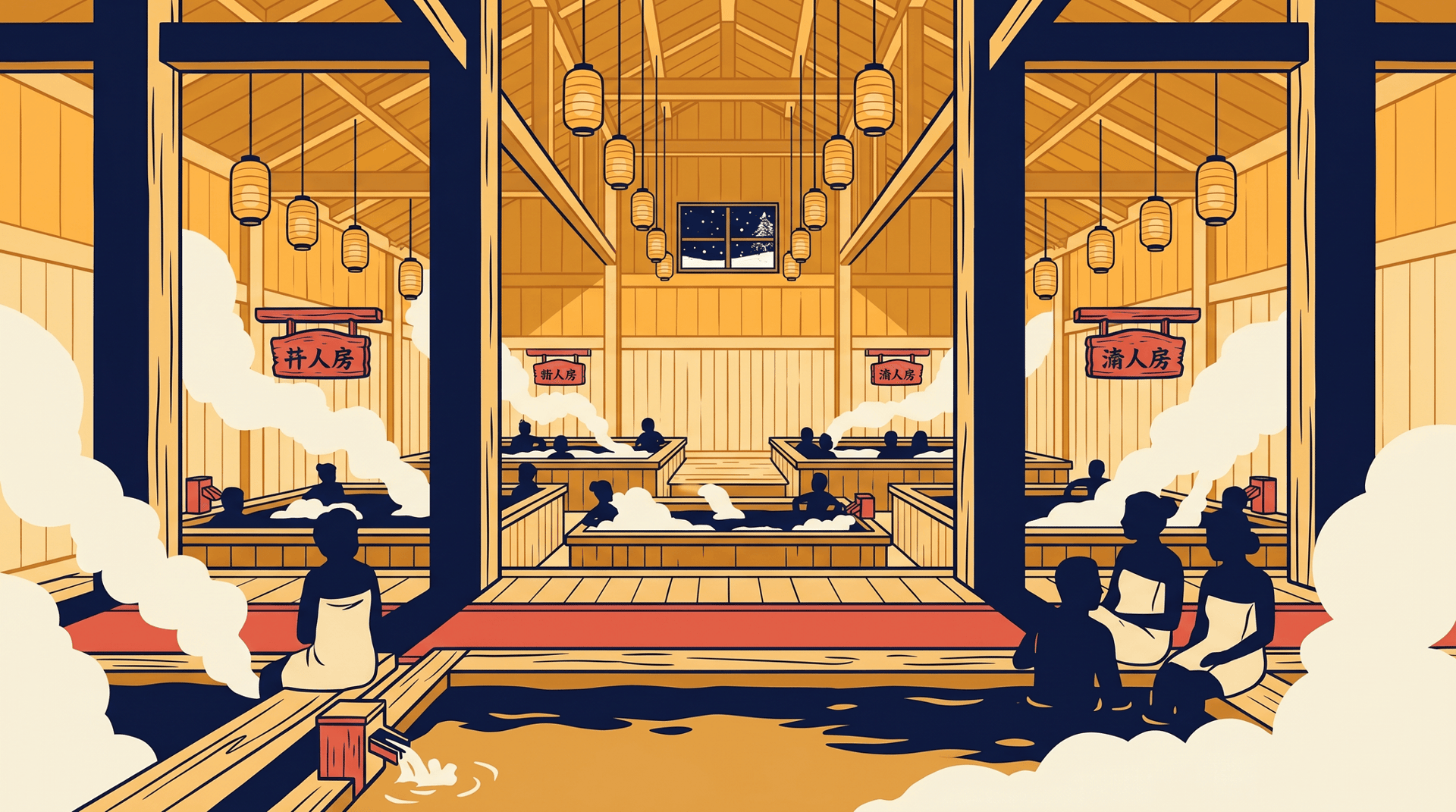
The room people come for is the Hiba Sennin-buro, the cypress thousand-person bath: a single 160-tatami hall built entirely of fragrant aomori-hiba, no pillars, ceiling rising four metres overhead. Four separate sources feed five named tubs inside the one space: Netsu-no-yu (the hot bath), Reisen (the cold spring), Shibu-rokubu-no-yu, the standing Kakuhi (a "rod-hitting" pour), and the small waterfall Yudaki. The water is strongly acidic and sulphurous, milky white, and runs hot. The hall is mixed by tradition, with women-only hours each morning and evening for guests who prefer them. There is a smaller, gender-separated bath called Tamanoyu down the corridor for anyone who would rather not enter the big hall at all.
Snow country and the Hakkoda march
Hakkoda is one of the snowiest inhabited places on earth; the road in is walled by ploughed drifts well into spring, and the inn's roof is engineered around the load. The same terrain that brings powder skiers to Hakkoda Ropeway killed 199 soldiers of the Imperial Army's 5th Infantry Regiment in a January 1902 training march toward Tashiro hot spring, the worst mountaineering disaster in modern Japanese history; the bronze of Corporal Goto at Umatateba and the Hakkoda Disaster museum near the army cemetery in Aomori City keep the memory close. In summer the trailheads behind the inn open onto the Hakkoda peaks and the Towada-Hachimantai plateau, with a marked nature walk through the wetlands above the source.
Places in this area
2 places · Sorted by rating
On the map
Loading map…
Nearby onsenchi
Within 50 kmNo nearby onsenchi within range.
Sources
- Sukayu Onsen Ryokan Official Siteofficial— Single inn on the site; rooms split between the ryokan wing and the toji long-stay wing.
- Sukayu Onsen — History (official)official— Founding legend (1684), Edo-period cooperative, 1933 incorporation, 1954 designation.
- Bath of a Thousand Bathers — Nippon.com— Description of the four named tubs inside the hall and the mixed-bathing convention.
- Hakkoda Mountains incident — Wikipedia (English)— Context for the 1902 Imperial Army march and its memorial near Sukayu.
- Sukayu Onsen Nature and Culture Walk — National Parks of Japan— Setting inside Towada-Hachimantai National Park and the walking course behind the inn.