


Atami Onsen
熱海温泉Seaside city on the Izu Peninsula, an hour from Tokyo by Shinkansen. Coastal sodium chloride springs; fireworks over Sagami Bay in summer.
From shogunal favourite to Tokaido getaway
Atami's earliest written notice goes back to the Izu no Kuni Fudoki of 713, and a local foundation legend dates the inland flow to 749, when the priest Mangan is said to have prayed the offshore springs ashore at the site of the later Oyu (大湯) geyser. The town entered national memory in the early Edo period. Tokugawa Ieyasu stayed seven days for cure in 1604 (Keicho 9) and later had barrels of Atami water shipped first to Fushimi and then, under the fourth shogun Ietsuna, regularly up to Edo Castle as お汲湯 (o-kumiyu), tribute water. The eighth shogun Yoshimune is recorded as ordering some 3,640 barrels over an eight-year stretch in the 1720s and 30s. With the Tokaido line reaching the coast in the Meiji era, the same waters that had been carted to Edo became a weekend retreat for Tokyo, and the country's first imperial villa at a hot spring opened here in 1891.
A hillside town on Sagami Bay
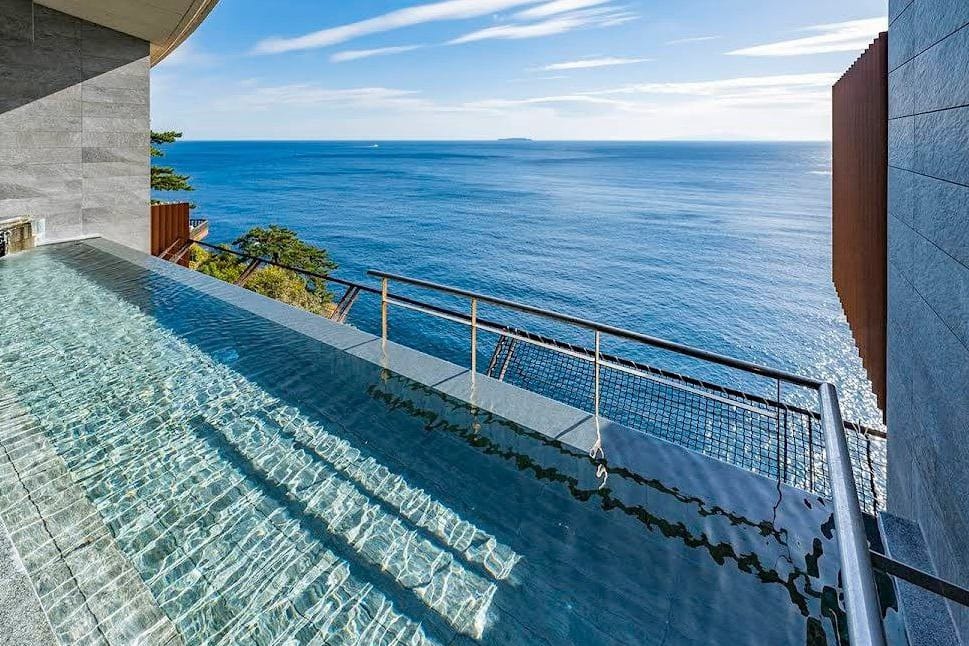
Atami climbs the slope where the Tanna fault drops to the sea, and the chloride brine rises hot enough that more than 90 percent of the city's several hundred sources sit above 42 °C. The geography fits the chemistry: ryokan terraces stack down the hill so that bath windows look out over Sagami Bay and the lights of Hatsushima offshore. The bay itself supplies the second signature, the Atami Kaijo Hanabi, fireworks staged from pontoons in the harbour several times a year, with the cliffs acting as a natural amphitheatre. Much of the old town survived the bubble-era resort boom unrenovated, and the result is a particular Showa-retro texture: covered shopping arcades, steam-pudding stalls, neon kissaten, public foot baths set into the pavement, and the geyser pool of Oyu preserved as a small civic monument.
Around the town
Two stops nearby anchor a longer visit: the MOA Museum of Art on the hill above Atami station, with its Ogata Korin and Nonomura Ninsei pieces set behind a long mosaic-lined entry tunnel; and Kinomiya Shrine, whose okusu (giant camphor) is reckoned at around two thousand years old and still ringed daily by visitors making the prescribed walk around its trunk.
Places in this area
13 places · Sorted by rating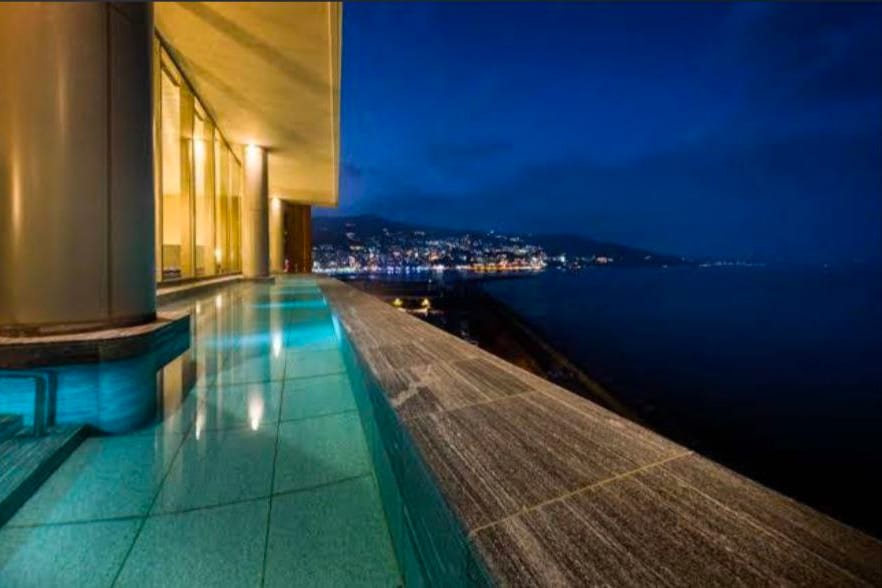
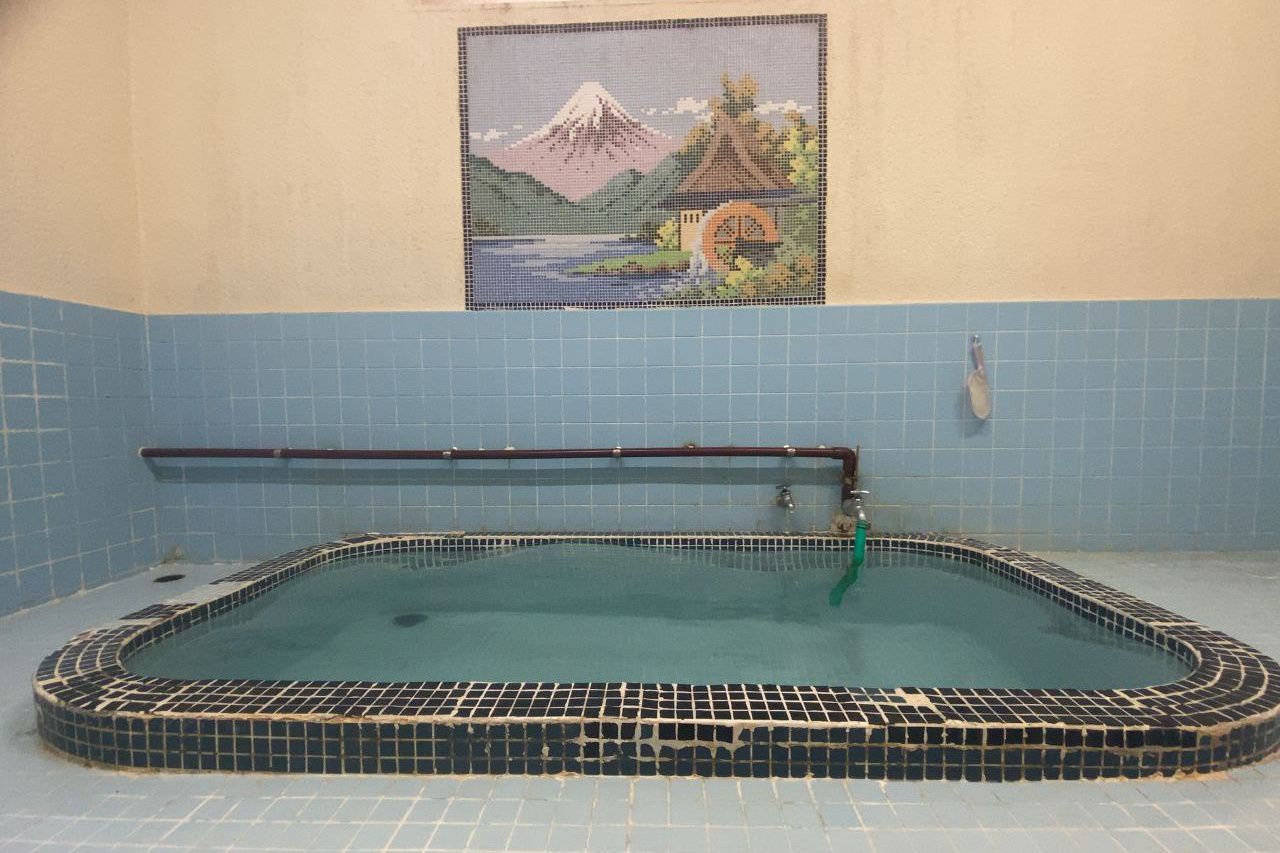 Public Bathhouse
山田湯
Shizuoka
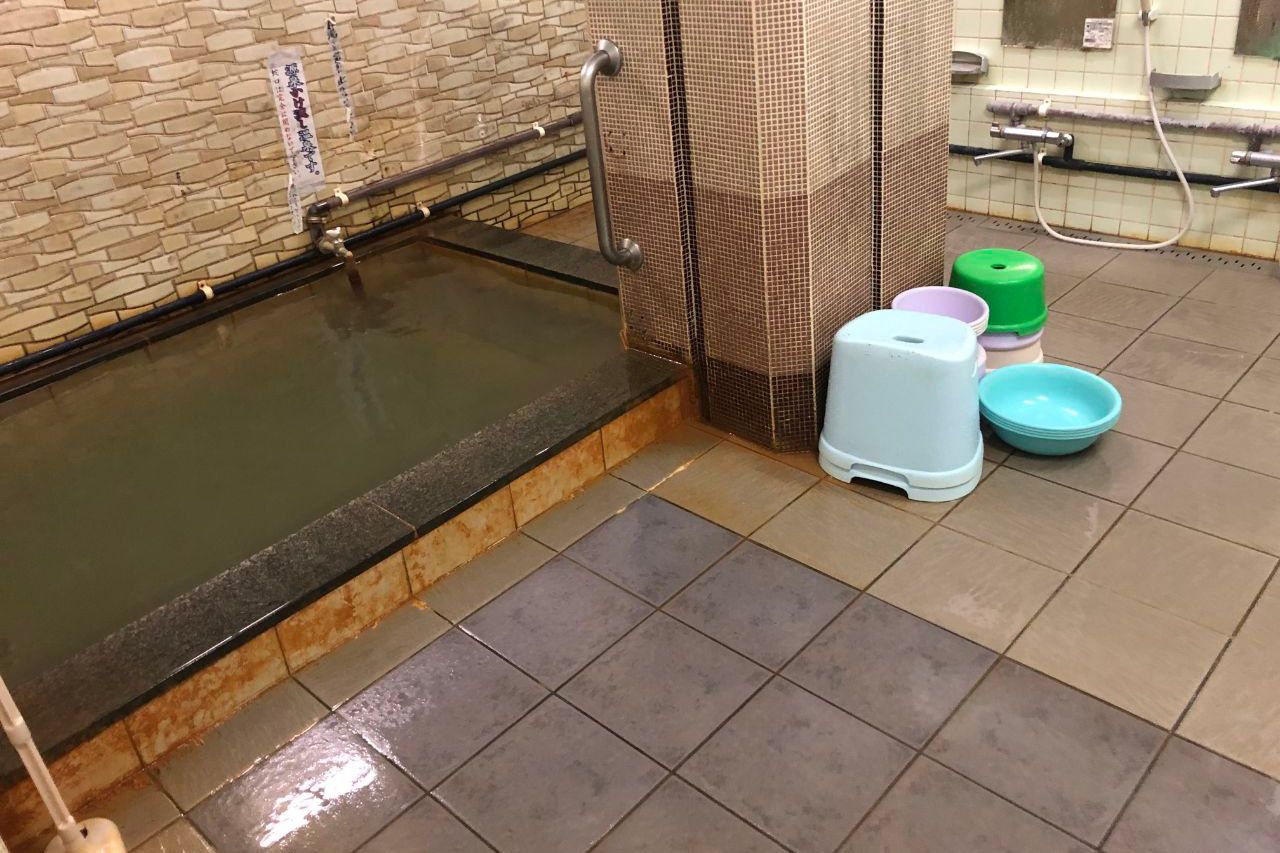
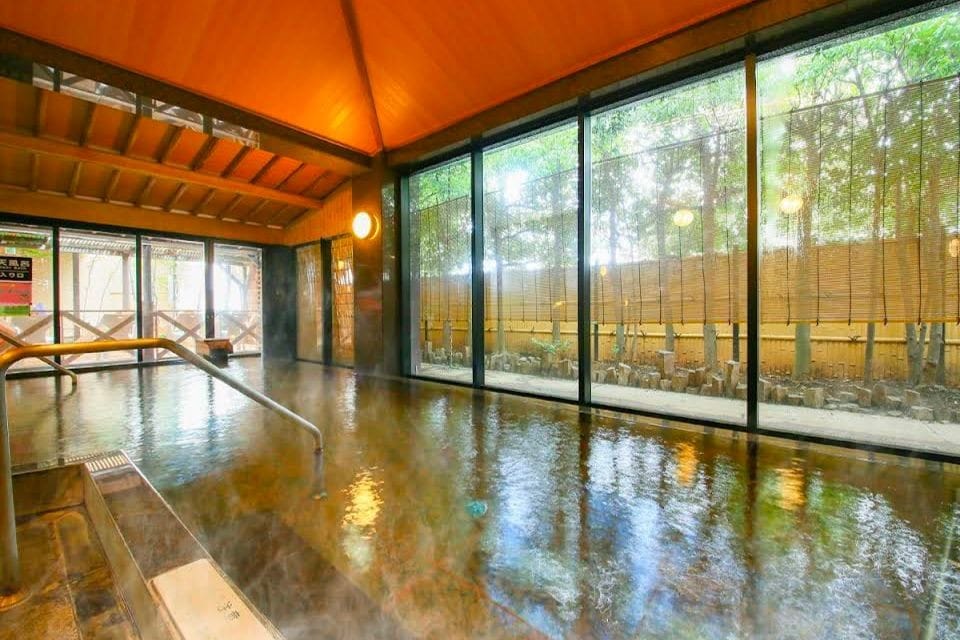
ホテル貫一
Shizuoka
ホテルリゾーピア 熱海
Shizuoka
熱海温泉ホテル 夢いろは
Shizuoka
Closed & restricted
1
On the map
Loading map…
Nearby onsenchi
Within 50 kmSources
- Atami Onsen Hotel & Ryokan Cooperative Associationofficial— Official portal for the association representing over 60 member lodgings.
- Atami City — About the Hot Springsofficial— Municipal page covering the five spring districts, source counts, and average temperatures.
- Atami Roman Kiko — Tokugawa Ieyasu and Atami Onsenofficial— Tourism site documenting Ieyasu's 1604 stay and the later o-kumiyu tribute system.
- Atami Onsen — Wikipedia (EN)— General reference for location on Sagami Bay, the chloride spring composition, and overall scale.