
Izunagaoka Onsen
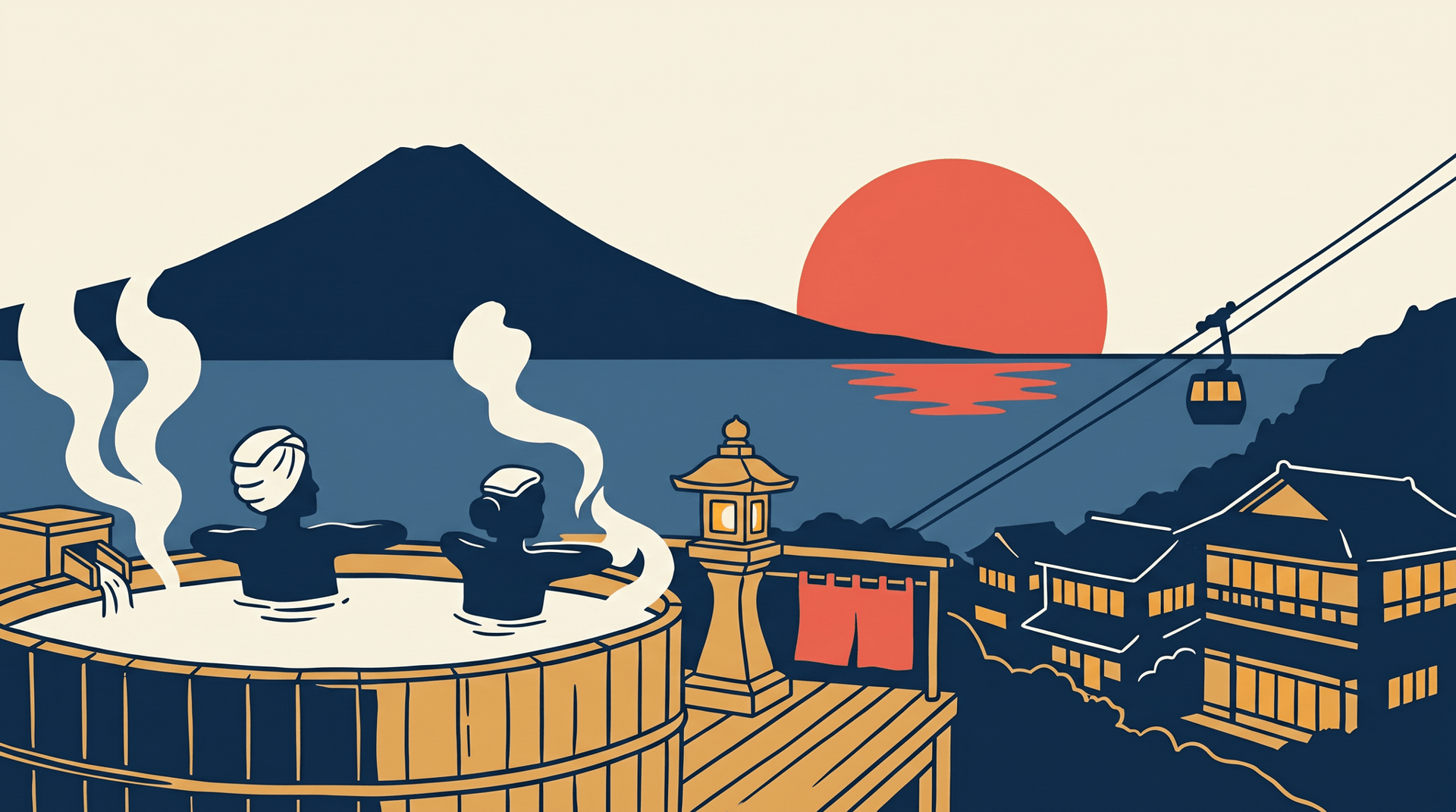
伊豆長岡温泉A hot-spring town on the central Izu plain, joining the ancient Kona spring — named in the Azuma Kagami and tied to the Hōjō clan — with Meiji-era Nagaoka. Gentle alkaline "beauty water," Mt. Katsuragi's Fuji-and-Suruga-Bay views, and the Genji history of nearby Hirugakojima.
Two springs across one hill
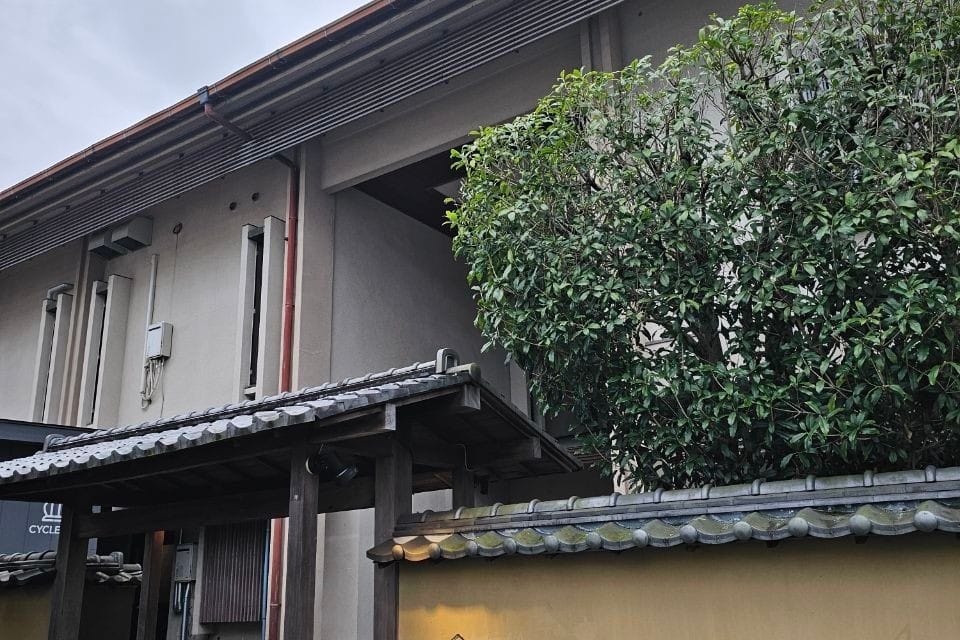
Izunagaoka sits on the inland plain of the central Izu Peninsula, in Izunokuni (伊豆の国市), and the name covers two onsen on either side of a low rise once called Genji-yama (源氏山). To the east is Kona (古奈温泉), the older of the pair, reckoned to have been drawn some 1,300 years ago and named in the Azuma Kagami (吾妻鏡): the Kona of Izu was a curative bathing place known to the military houses and the court. Its location was no accident: this district was the home ground of the Hojo (北条) clan, the family of Hojo Masako (北条政子), and Kona served the warrior class that rose with them. To the west is Nagaoka (長岡温泉), a far younger spring that took shape only in the Meiji era, when wells were dug and smaller sources such as Tabata and Tamon were merged into a single resort. Twentieth-century drilling multiplied the wells across the basin, and by the late twentieth century the two halves were promoted together as one hot-spring town.
A skin-gentle hot-spring town
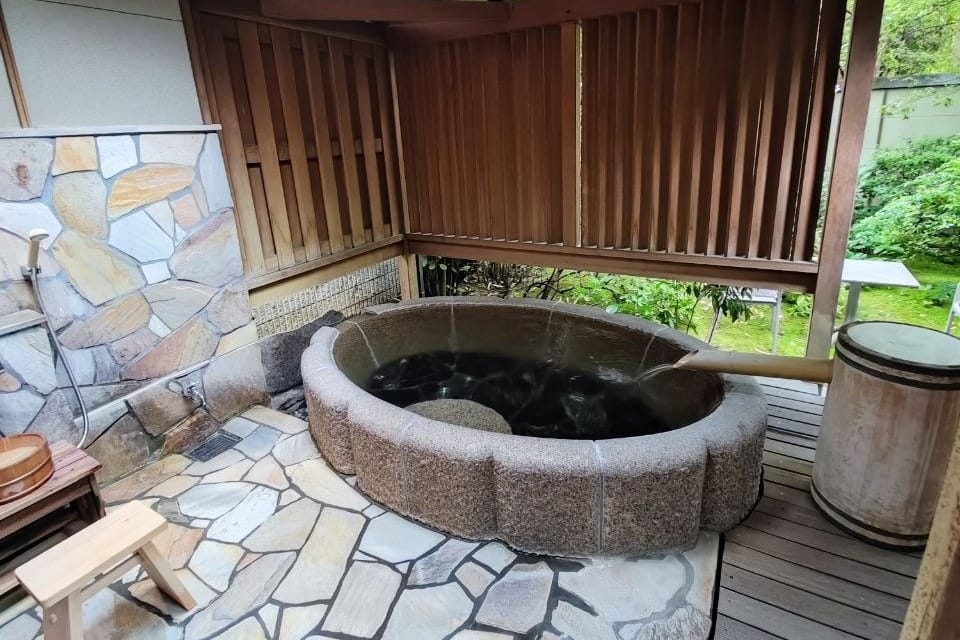
The water here is an alkaline simple spring (アルカリ性単純泉), clear and near-odourless, sitting high on the pH scale (Kona's source is cited around pH 9), which gives the bath its slightly silky touch and the local label of bijin-no-yu (美肌の湯), "water for beautiful skin." It is the kind of gentle, mineral-light water that suited a leisurely cure rather than a shock treatment, and the town grew accordingly: a flat grid of ryokan, geisha (芸者) traditions that still surface at seasonal events, and a hospitality culture that, with neighbouring Shuzenji, made central Izu a draw for centuries. The surrounding plain is strawberry country, and ichigo-gari (いちご狩り), pick-your-own strawberry farms, runs through the winter and spring as the standard daytime outing between baths. Access is straightforward: the Izuhakone Railway Sunzu line (伊豆箱根鉄道駿豆線) runs down from Mishima to Izunagaoka station, with the lodgings a short bus ride beyond.
Around the town
The signature view rises just west of the baths at Mt. Katsuragi (葛城山), where a ropeway climbs to the 452-metre summit and the Izu Panorama Park terrace, looking out over Mt. Fuji (富士山) and the deep arc of Suruga Bay (駿河湾). The plain below is unusually thick with history: at Hirugakojima (蛭ヶ小島) the exiled Minamoto no Yoritomo (源頼朝) spent his years of banishment before the Genji rising, and it was here that he met Masako and bound his fortunes to the Hojo. A short way off stand the Nirayama Reverberatory Furnaces (韮山反射炉), the late-Edo cannon-casting furnaces inscribed in 2015 as part of the Meiji Industrial Revolution UNESCO World Heritage sites, and among the very few of their kind still standing in Japan.
Places in this area
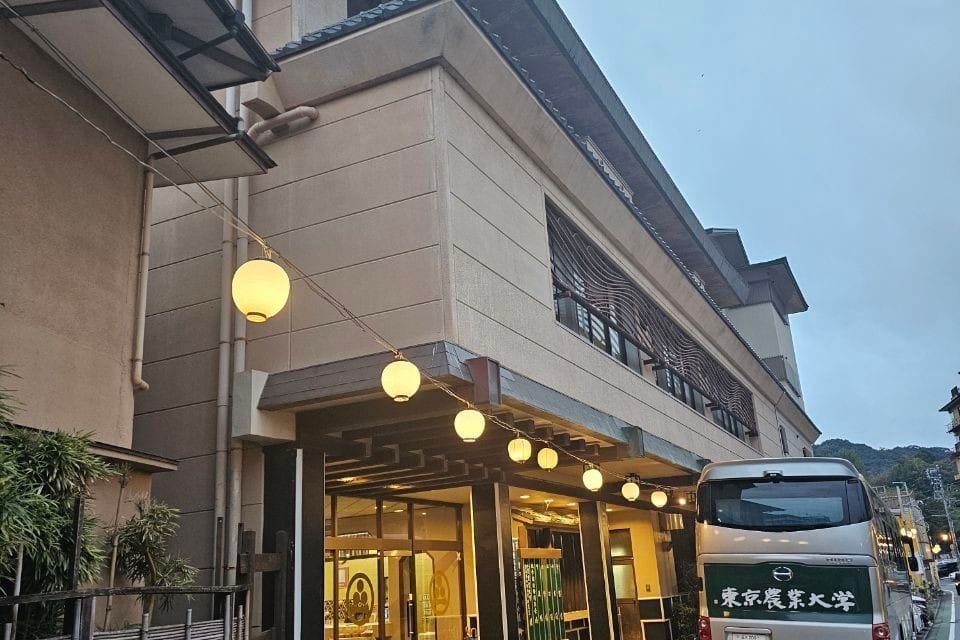
5 places · Sorted by rating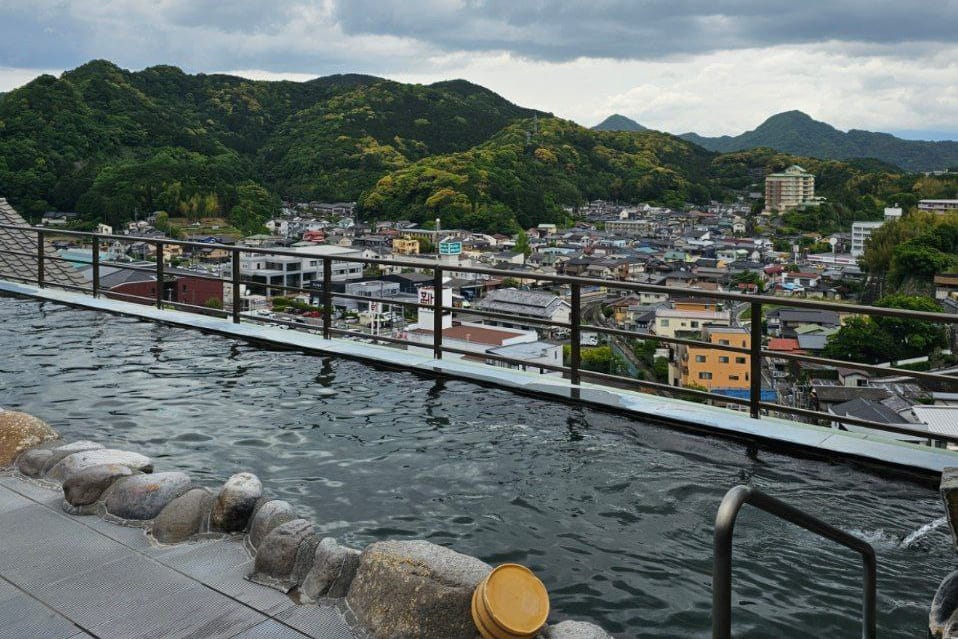
On the map
Loading map…
Nearby onsenchi
Within 50 kmSources
- Izunokuni City — Hot Springs & Healingofficial— Municipal page describing how Nagaoka and Kona springs combine under one name, with the alkaline simple spring type.
- Izu Panorama Park (Aoi Terrace)official— Official site for the Mt. Katsuragi ropeway and the 452 m summit terrace overlooking Mt. Fuji and Suruga Bay.
- Izunokuni City — World Heritage Nirayama Reverberatory Furnacesofficial— City page on the furnaces as part of the Meiji Industrial Revolution UNESCO World Heritage serial listing.
- Izunagaoka Onsen — Wikipedia (JA)— General reference for the Kona and Nagaoka history, the Azuma Kagami notice, and the spring chemistry.