
Manza Onsen
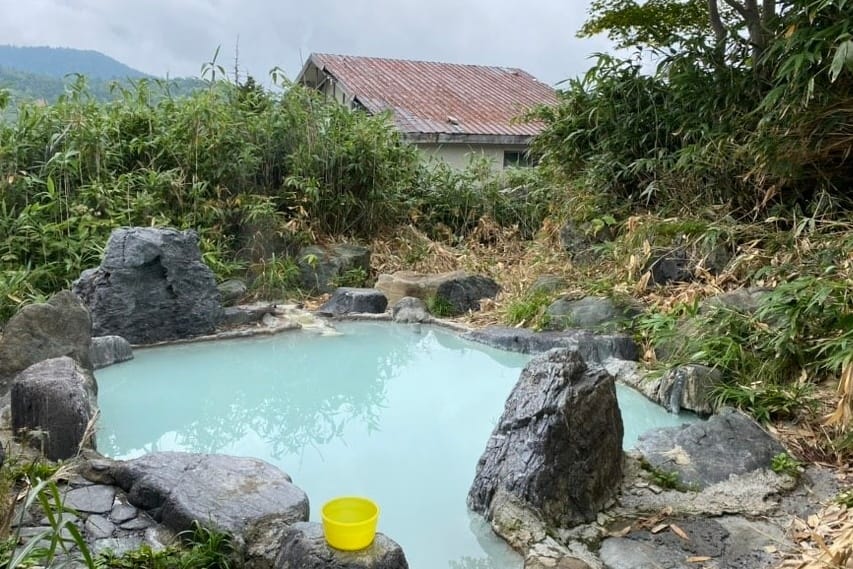
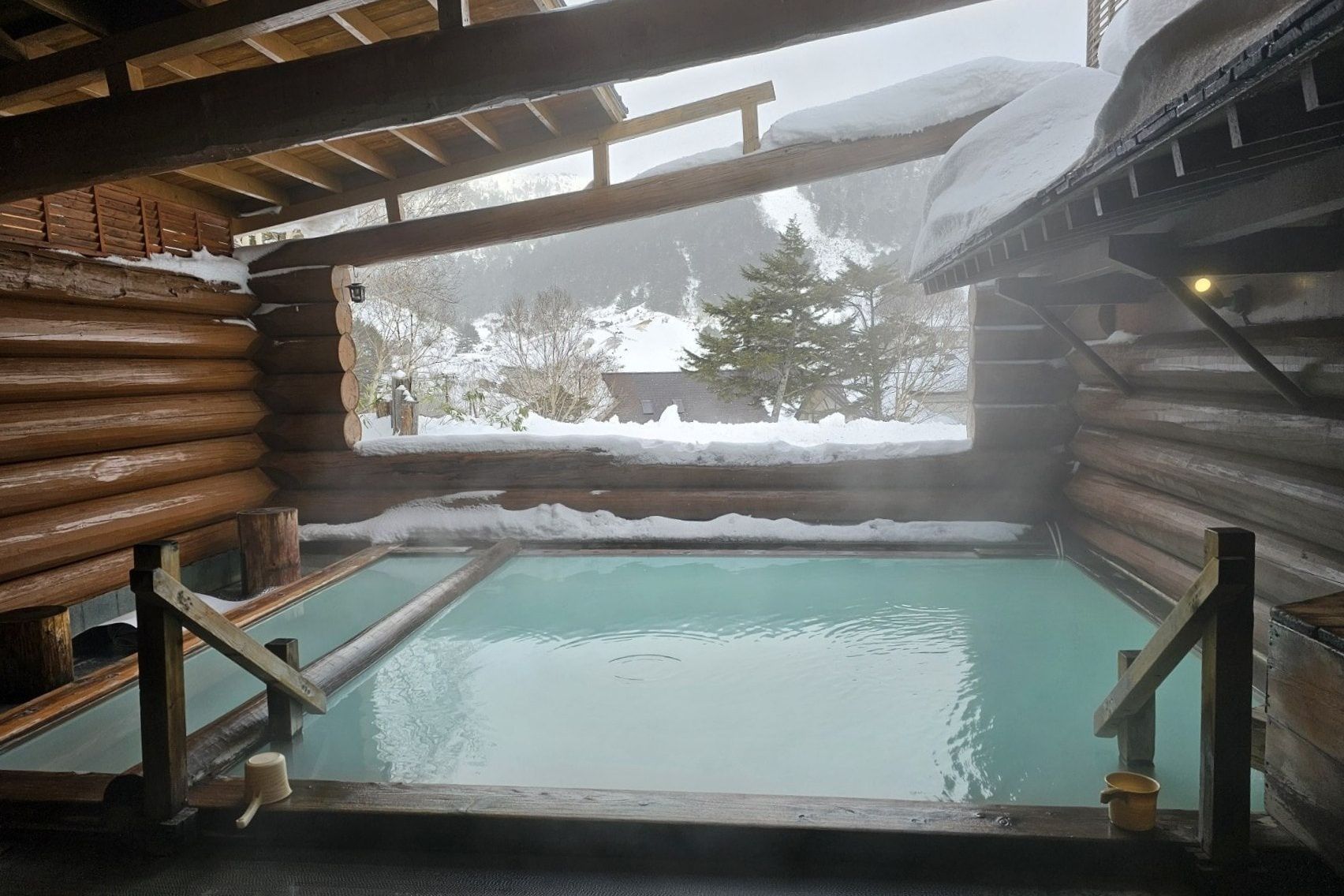
万座温泉Japan's highest onsenchi, at 1,800 m on the slopes of Mt. Shirane in Gunma. Strongly acidic milky-white sulfur waters (pH 2.5) from one of the country's most active geothermal fields, with rotenburo open to alpine views year-round.
Japan's highest hot-spring town
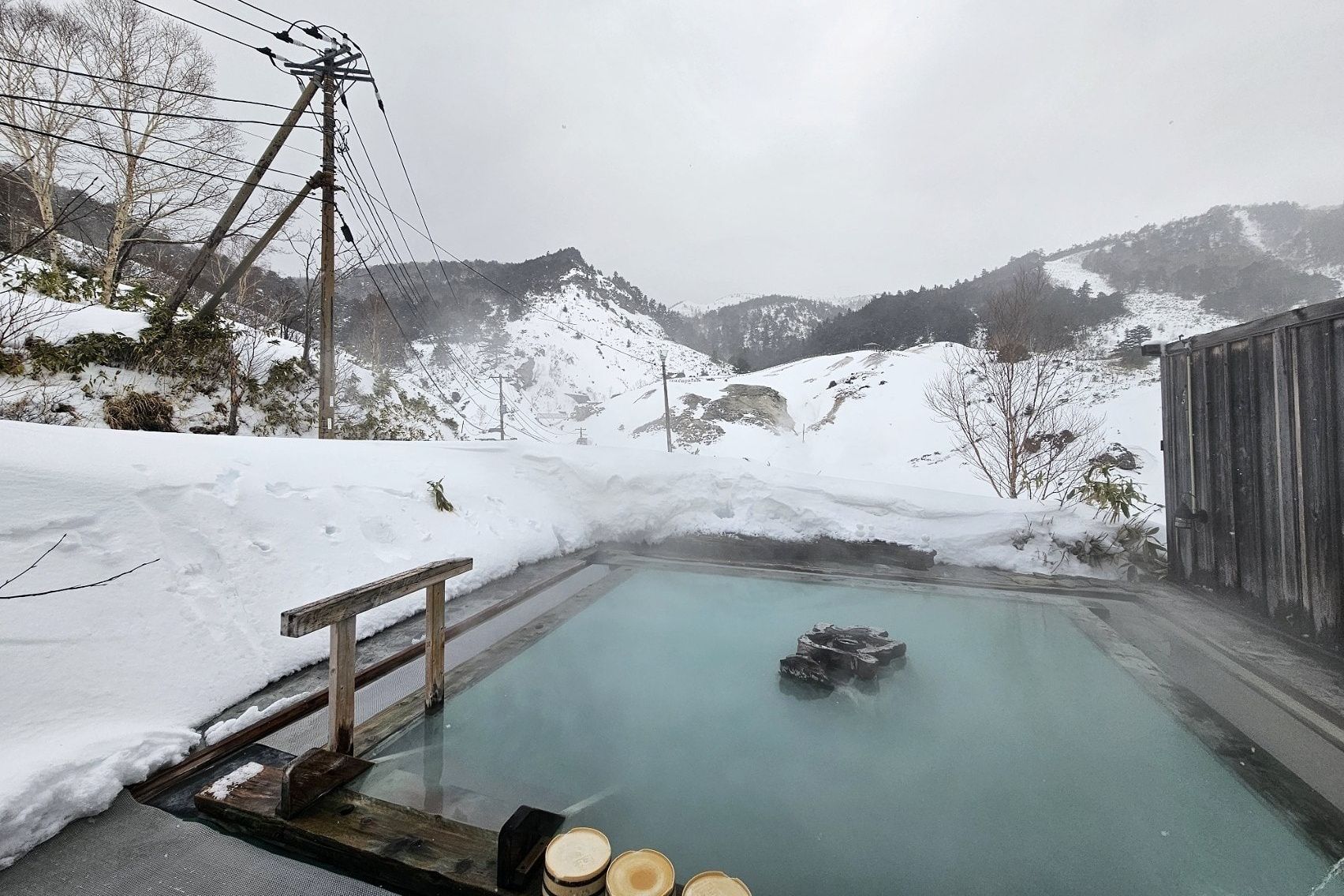
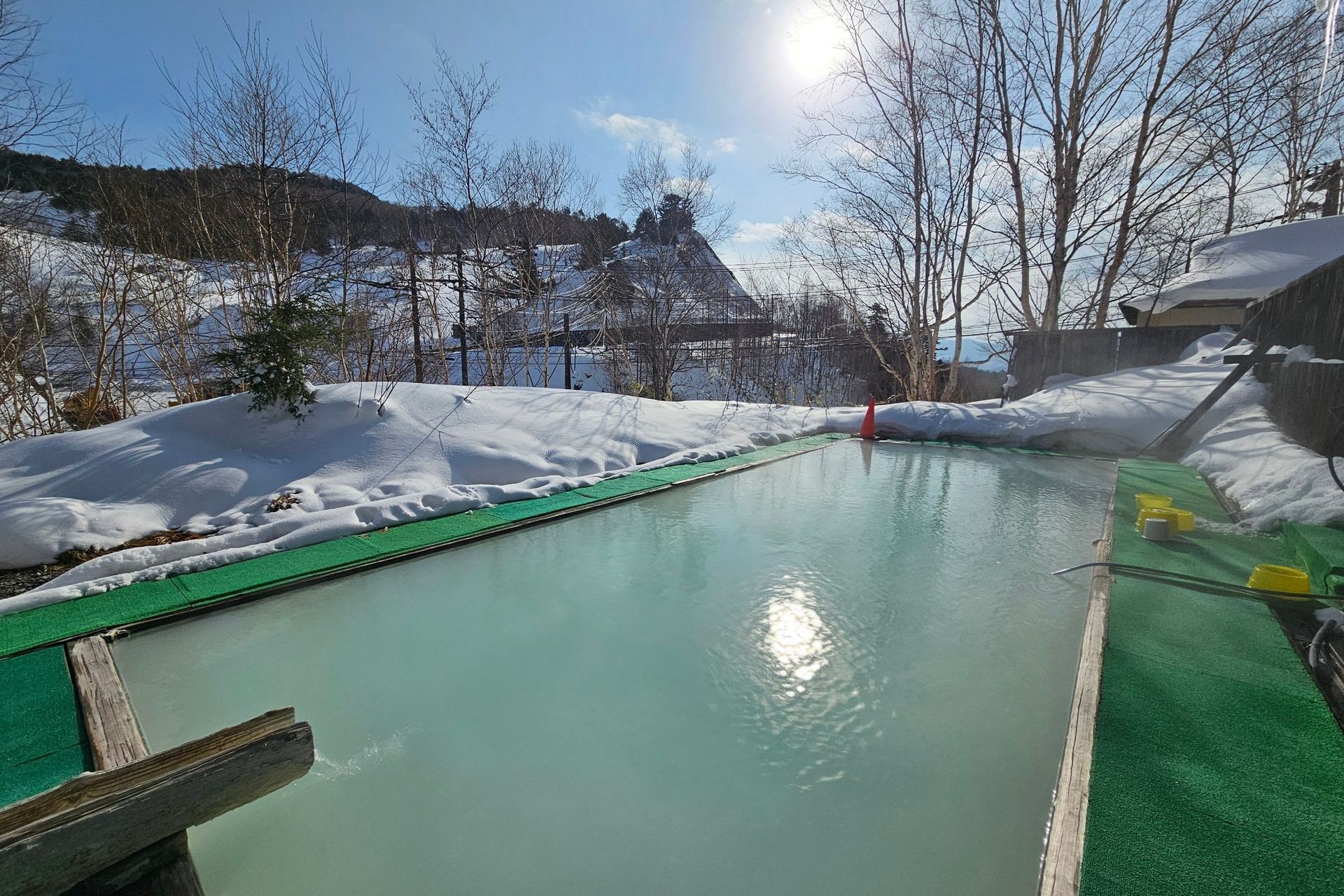
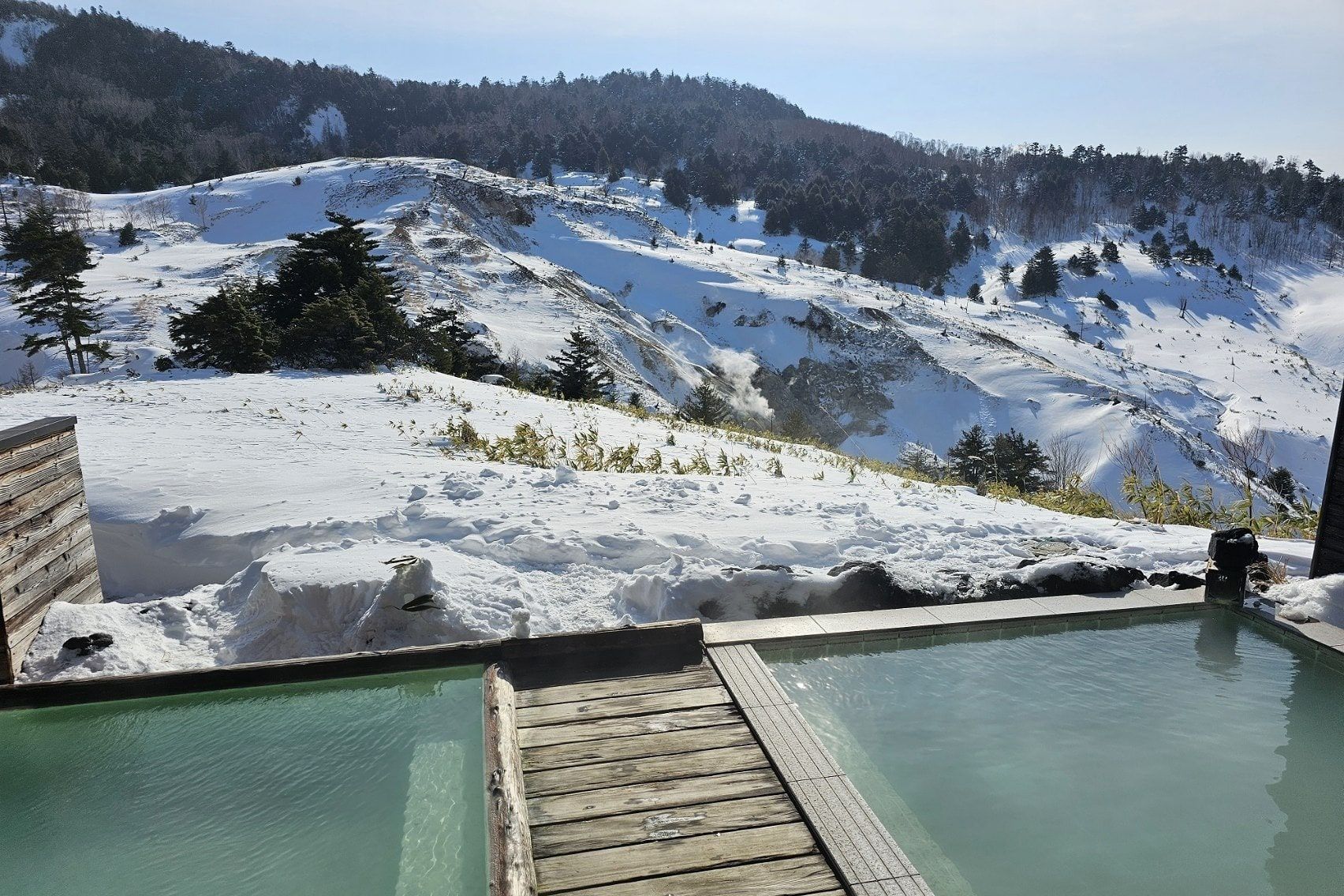
Manza sits at 1,800 metres on the southern flank of Mount Kusatsu-Shirane, an active stratovolcano on the border of Gunma and Nagano, and is by some margin the highest onsen-go in Japan. The springs are tied directly to the volcano: water boiled inside the mountain rises through fumaroles on the bare slope above the village and pours out at a sustained 50–80 °C, milky-white with suspended sulfur. Discharge is enormous for so small a place. The chemistry is correspondingly fierce: strongly acidic at around pH 2.5, with hydrogen-sulfide concentrations among the highest of any inhabited bathing village in the country. Manza was used by Tsumagoi villagers as a sulfur mine and a bathing retreat well before the road was put through; the modern road from Karuizawa was only finished after the war, and even now the upper sections close from late autumn until spring, which is part of the place's character: in winter it can only be reached from the Kusatsu side over the high Shirane pass.
A milky bath in the snow
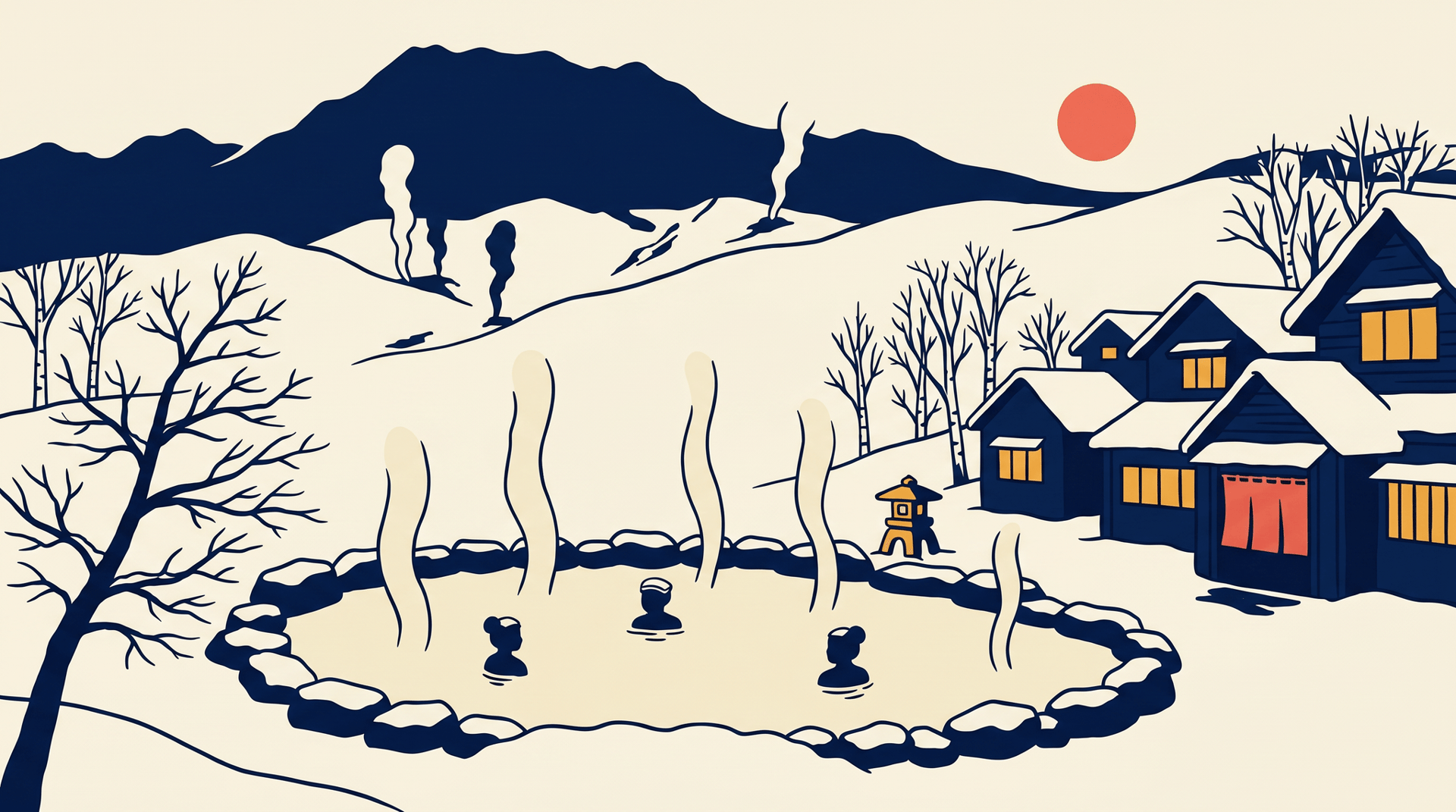
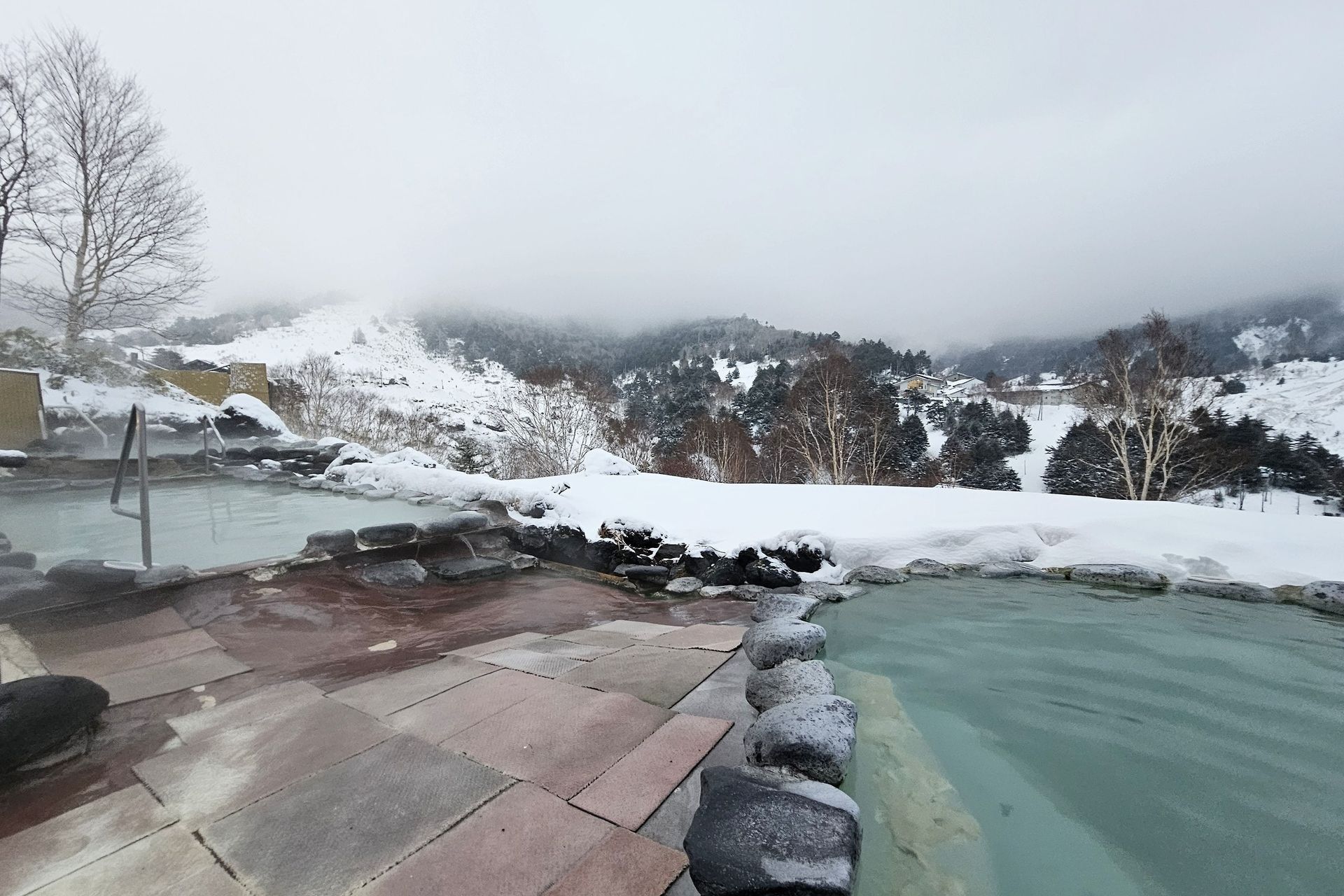
The bathing village itself is a tight ring of seven or eight inns gathered around the source field, every one of them a destination ryokan rather than a town. They share the same milky water, but each has its own outdoor bath cut into the slope, and most are open to day visitors. Nisshin-kan's Komakusa-no-yu is the postcard image: a low stone-rimmed open-air bath under bare birch, steam rising vertically into the cold air, the Shirane ridge filling the back. Manza Prince Hotel's Komakusa rotenburo is the largest and the easiest to reach for a winter day trip; Manza Kogen Hotel keeps a long indoor sulfur pool warm right through the deepest snow. The water is genuinely strong, so most ryokan limit single immersions to ten or fifteen minutes and provide rinsing water for the face and eyes. Because of the altitude, the season runs essentially year-round: Manza is one of very few onsen in Japan where you can ski straight off the lift into the bath.
Joshinetsu-Kogen and the Shirane plateau
The whole basin sits inside Joshinetsu-Kogen National Park, on the volcanic plateau that links Kusatsu, Shirane, Asama and the Tsumagoi cabbage country. Mount Shirane itself is closed to climbing during heightened volcanic activity but the lower walks around Manza Pond and along the Sky-Line ridge open in early summer, when alpine plants flower above the timber line and the air smells permanently of sulfur. To the south, the road drops past the Manza ski runs to the wide Tsumagoi plateau and onward to Karuizawa; to the north it crosses the Shirane pass into Kusatsu, an hour by bus when the road is clear. Most visitors stay one or two nights, long enough to soak twice in the milky bath, walk a single ridge, and ride the road back down through cloud.
Places in this area
7 places · Sorted by rating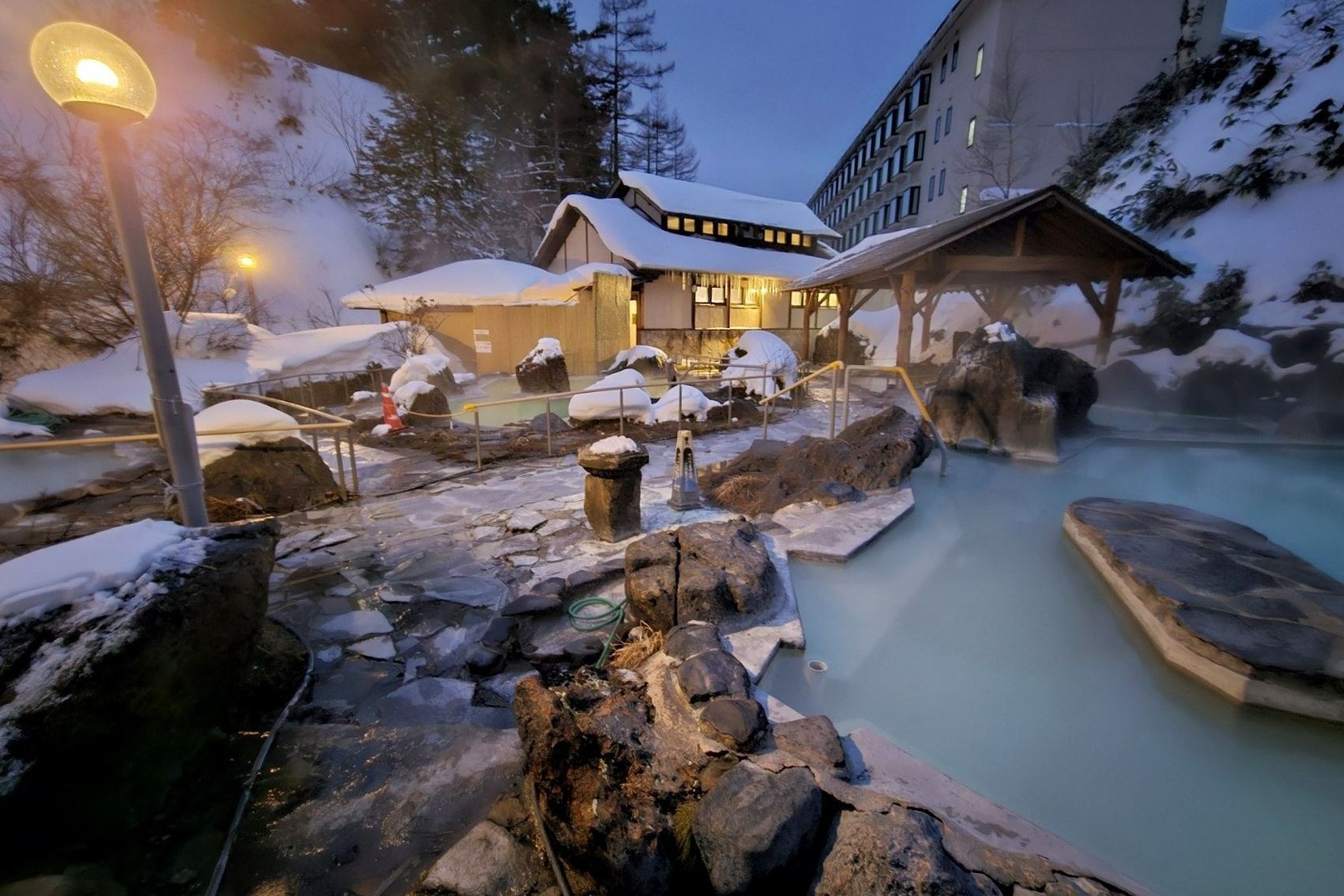
On the map
Loading map…
Nearby onsenchi
Within 50 kmSources
- Manza Onsen Tourism Association — Official Portalofficial— The half-dozen ryokan that make up Manza, with seasonal road conditions, sulfur-spring chemistry and access notes.
- Manza Onsen — Wikipedia (English)— Elevation, pH and discharge figures; relation to the Mount Kusatsu-Shirane volcano group.
- Joshinetsu-Kogen National Park — Ministry of the Environmentofficial— Park-level context for the Shirane / Manza plateau and the volcanic activity that feeds the springs.
- Manza Onsen — Japan National Tourism Organization— Visitor-facing overview of the bathing village, sulfur chemistry and the open-air baths in winter.
- Manza Onsen — Tsumagoi Tourism— Local Tsumagoi page on the road from Karuizawa, ski-and-bath history and seasonal closures.