
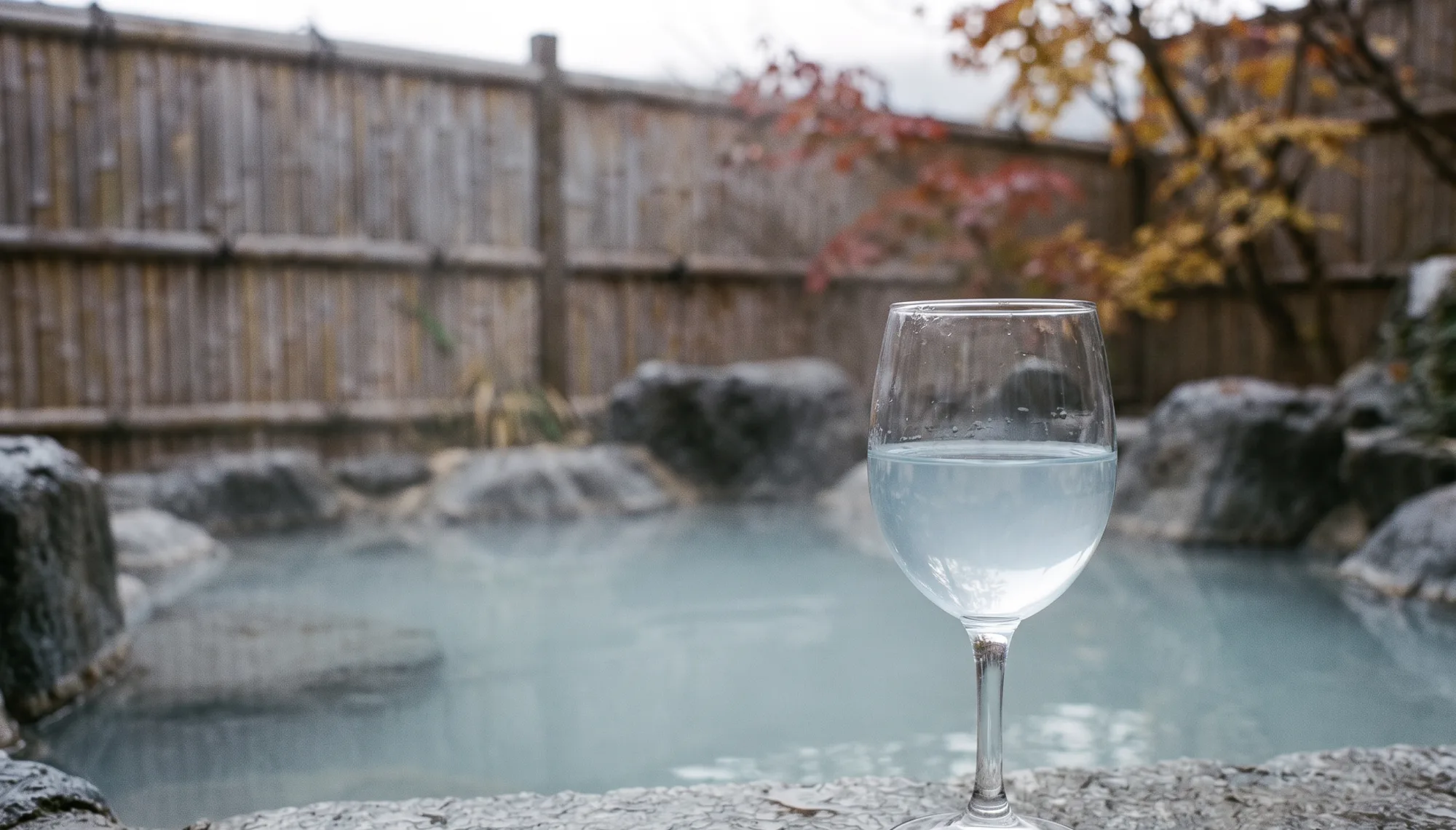
Becoming an Onsen Sommelier in Akakura, Where the Title Was Born
Spend enough time in onsen and the water itself starts to raise questions. Why is this water milky and the spring down the road clear? Why does one feel slippery and another sting a little? Is the water in the tub the same water the sign by the changing room describes, or has it been heated, diluted, filtered, recirculated? And what is that sign actually saying?
If those questions are yours, there is a title in Japan made for you: Onsen Sommelier (onsen somurie, 温泉ソムリエ). Over 36,000 people hold it. Innkeepers put it in their staff bios, travel writers in their bylines, and onsen lovers wear it the way a wine lover wears a sommelier pin. In October 2026 I became one, in the town where the title was born. Here is what it is, how you can get it, and what that weekend was like.
The short version
- What it is: a certification from the Onsen Sommelier Association, for people who want to understand onsen properly: the water and its chemistry, its effects on the body, and how to bathe in it well.
- Who can take it: anyone. There is no entry requirement and no prior knowledge needed, only real interest.
- How you get it: by taking the certification course in one of several forms: an overnight tour in Akakura Onsen, a seminar in Tokyo, Osaka and other cities, a seminar held in an onsen town, or online. More on each below.
- What happens after: the title is yours for life, with no renewal. And if you want to go deeper, step-up courses lead on into spring analysis, running onsen facilities and more.
- How many people hold it: 36,292 as of 8 October 2026, by the association's own roll.
Where it came from
The title was born in Akakura Onsen (赤倉温泉), a hot spring town on the slopes of Mount Myoko in Niigata, in November 2002. Its founder is Toma Kazuhiro (遠間和広), who grew up in the town, spent five years at a management consultancy in Tokyo and then came home to run his family's ryokan, an inn with about two hundred years of history.
Akakura had a problem many Japanese onsen towns share. People knew it as a ski resort, and once the snow melted, the visitors went with it. The town decided that instead of building something new it would offer what it already had: a spring people had bathed in since the Edo period. But when the innkeepers tried to explain their water to guests, they found they did not know as much about it as they thought. So they studied it together, and gave the result a name borrowed from wine: a sommelier pairs deep knowledge of the product with the craft of serving it, and here the product was the spring and the craft was how to bathe in it.
Outsiders soon asked to join, and in July 2005 the first public certification tour ran in Akakura. Seminars in Tokyo followed from 2008, the same year the work moved to a dedicated Onsen Sommelier Association, and by June 2024 seminars had been held in all 47 prefectures. Toma still leads it, with the title iemoto (家元), the word for the head of a school in a traditional Japanese art.
My weekend in Akakura
I took mine in Akakura, where the title was born, on the overnight certification tour.
The 53rd Myoko Kogen certification tour ran on Saturday 3 October 2026, and there were about thirty of us. We gathered in the tatami hall of an Akakura inn, and Toma himself ran the day.
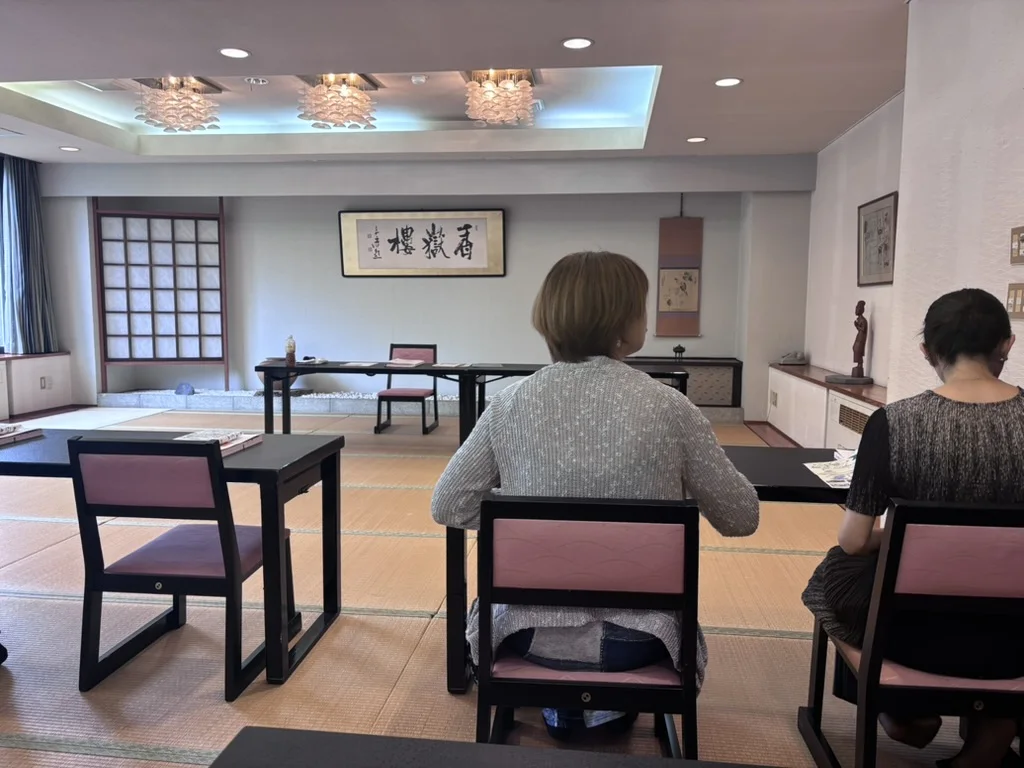
Over the afternoon we covered:
- what legally counts as an onsen, and the stricter definition of a therapeutic spring (ryoyosen, 療養泉)
- the ten spring types and what sets them apart
- how the water acts on the body, and how to bathe safely and get more out of a soak
- and, for almost two hours, how to read the analysis certificate (onsen bunsekisho, 温泉分析書), the chemistry behind the notice every hot spring bath has to display
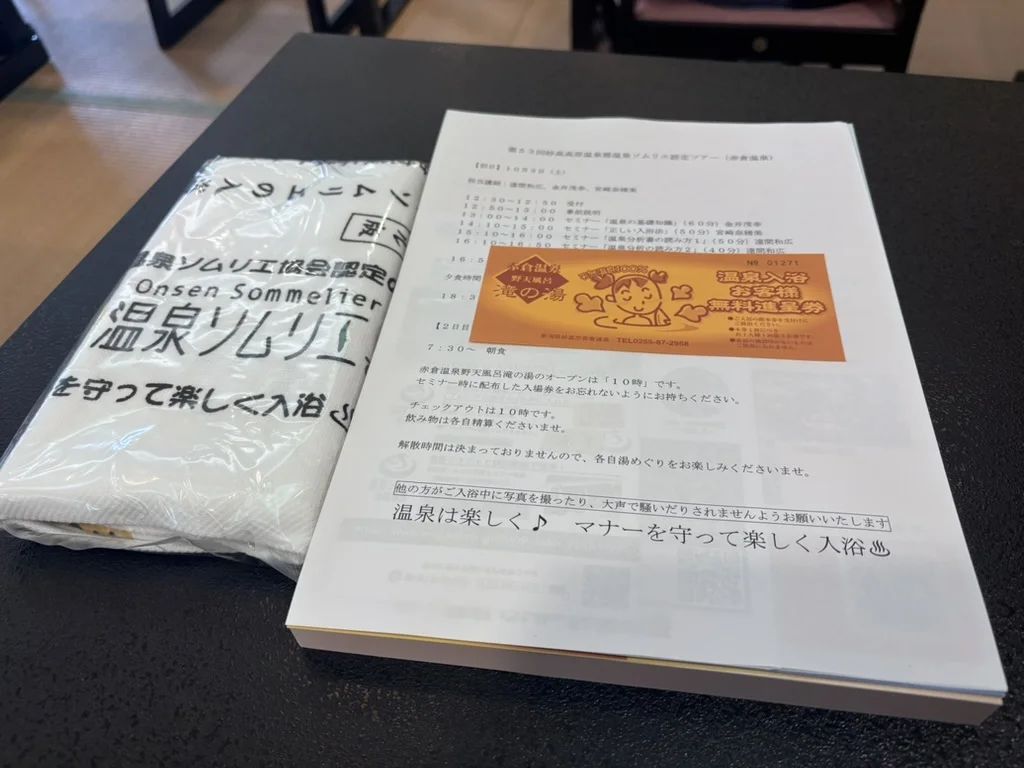
The certificate part changed how I look at a bath. A certificate is a dense table: cations and anions in milligrams per kilogram, dissolved gases, the temperature at the source, the official spring type. We went through it line by line until the numbers started to mean something, to the point where you can work out a spring's type yourself before you read the name printed at the top. You start to see why a spring is sold as a "beauty bath" (bijin-no-yu, 美人の湯), and whether that claim has anything behind it, why some chloride springs keep you warm for hours, and what the small print says about how the water reaches the tub. For us at Onsen Oni this is close to home: reading these certificates is exactly what our chemistry pages are built on.
The day ended with a short ceremony where each of us received the certificate and the title. Then came the part a city seminar cannot give you: an evening at the inn. You stay at a ryokan, you make friends with other onsen lovers, and you go to the baths together, with people who care about the water as much as you do.
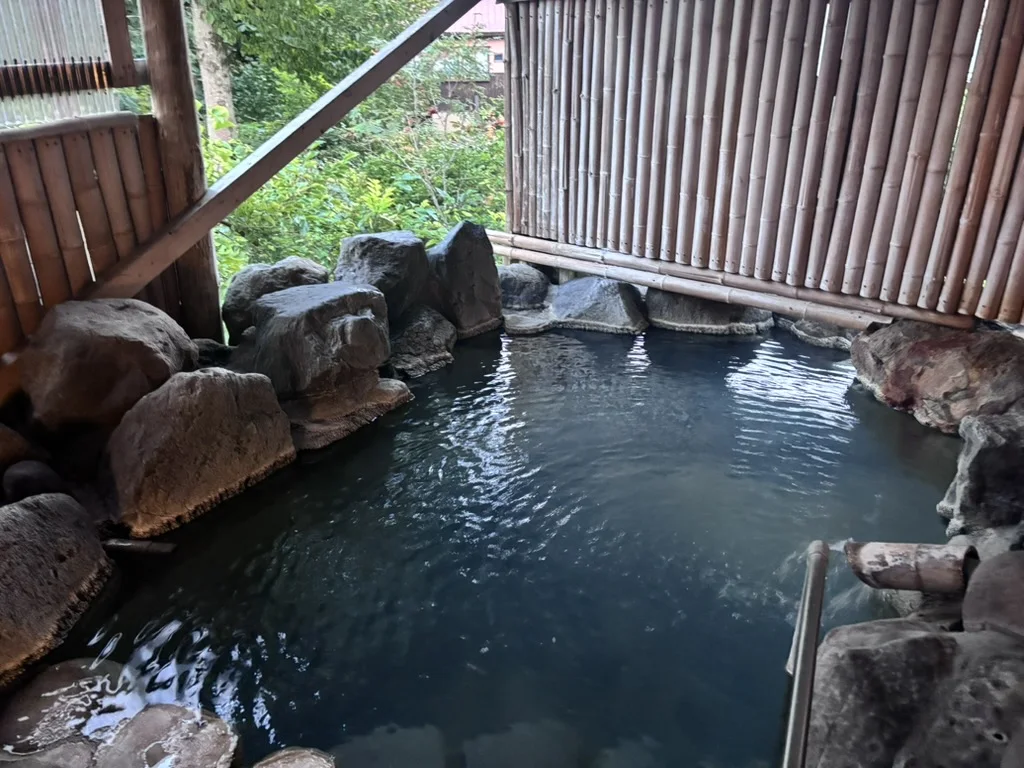
The next morning was free for exploring, with the ticket for Akakura's open-air bath in our pockets, and we even went up into the mountains to Tsubame Onsen (燕温泉), a little higher up Mount Myoko, where the outdoor baths sit in the forest and the water comes out milky blue. It is one thing to read "sulphur spring" on a certificate. It is another to sit in one the day after you learned what that means.
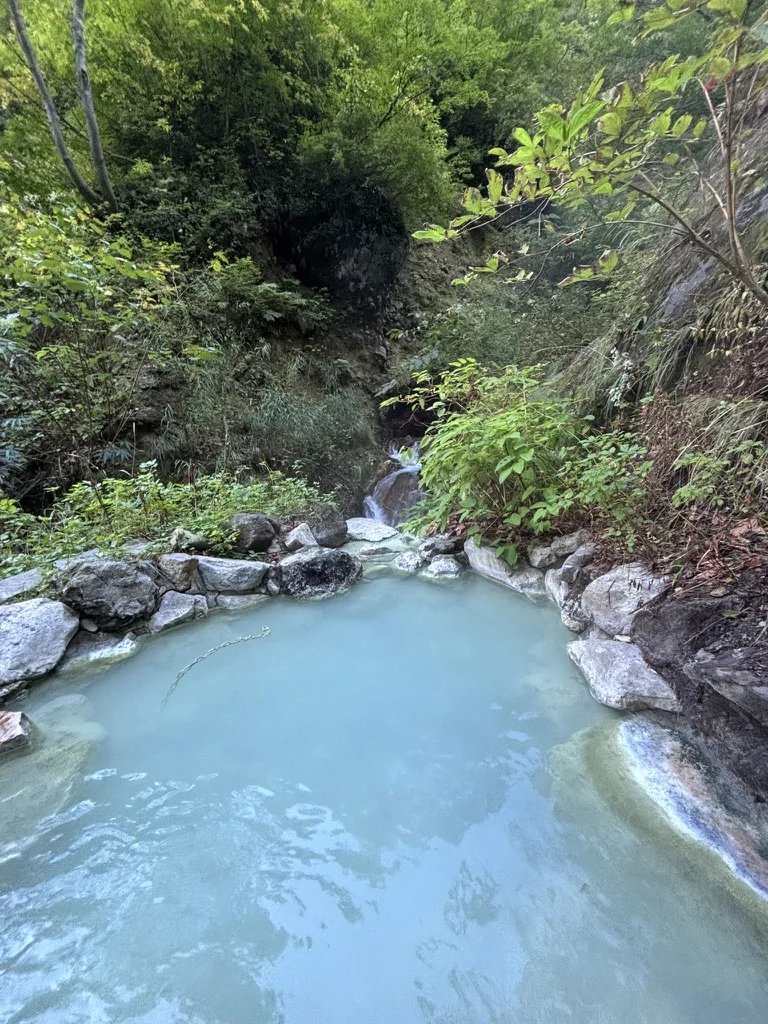
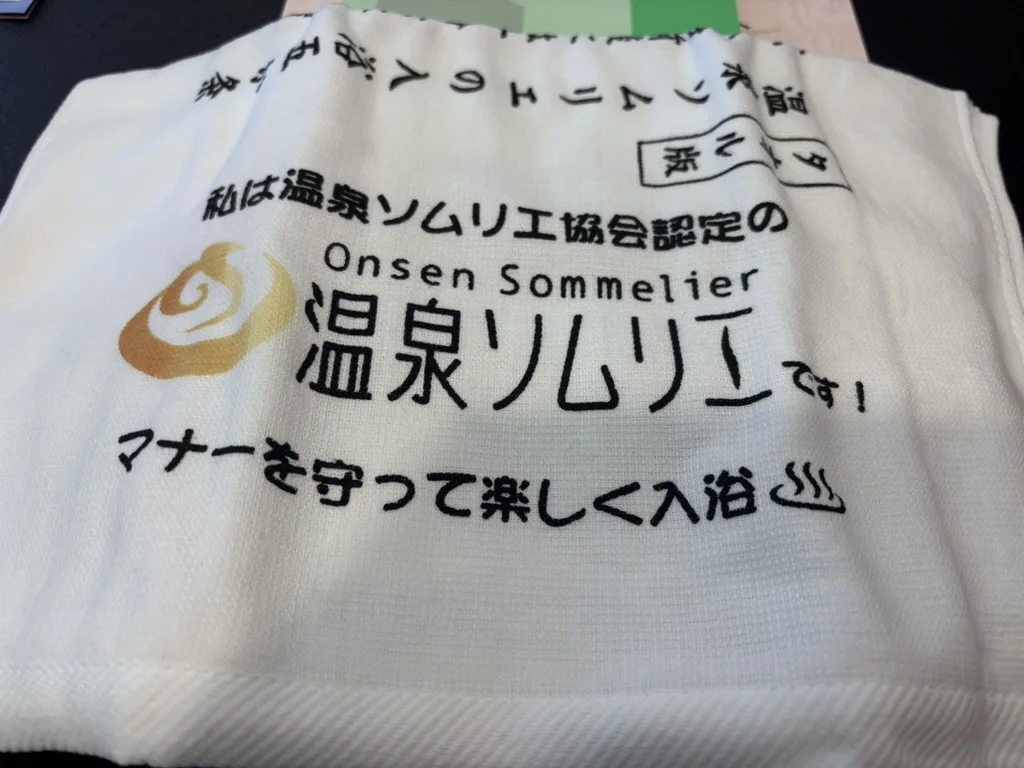
Akakura, Tsubame and their neighbours on the slopes of Mount Myoko.
Every way to get the title
The content is the same core course whichever way you take it; what differs is the setting and how much time you spend around it.
- The certification tour in Akakura (nintei tsua, 認定ツアー). The way I did it: the seminar on day one, a night at an Akakura inn with dinner and breakfast, and the next morning to bathe and explore. It runs a few times a year (mine was the 53rd since 2005) and is the most complete experience, because you learn the material where the title was born and spend the evening with people who just learned it too.
- City seminars. One afternoon, about four hours, in a seminar room. Tokyo has them most often (¥28,600 in 2026), and they also run in Osaka, Fukuoka, Sapporo, Okinawa and other cities, taught by the same small group of lecturers.
- Seminars in onsen towns. Pop-up sessions held right where the springs are, often together with the local tourism association. Kusatsu, Hakone and Nasu have all hosted them. Organisations can also book an on-site seminar for a group of 20 or more, which is how many ryokan and travel companies train their staff.
- A joint seminar with health experts. A full day run with the Japan Health Development Foundation, taught partly by a doctor who specialises in balneotherapy, and ending in three certificates at once: Onsen Sommelier, Onsen Sommelier Master, and the foundation's Onsen Health Instructor.
- Online. On N-Academy, about three and a half hours of video with the full 458-page textbook. The certificate and towel arrive by post. Best if you live far from any seminar, or abroad.
What you take home
Two things, mostly. The first is the analysis certificate: once you can read one, every bath you visit has more to say. The second is a way of bathing. The association proposes its own approach, and the textbook goes through a whole range of bathing methods, depending on the type of spring, what you want from the day, and how your body feels.
You also get the 458-page textbook, written with contributors who include balneotherapy doctors and onsen researchers.
Going further
The basic title is the first step on a ladder of licences counted in stars:
- ★ Onsen Sommelier Master. One step-up course, each another full afternoon: the Analysis Certificate Master, which goes much deeper into spring chemistry and certificates; the Regional Revitalisation Master, about onsen towns and running onsen businesses; or Onsen Beauty & Diet Sommelier. Some related qualifications, such as Onsen Bathing Instructor, also lead to Master.
- ★ Ambassador, for people who regularly share onsen knowledge under the title in the media, and ★ Instructor, for those who go on to teach the course.
- ★★ and ★★★ for combinations of those, with three stars also given to people the association recognises as major contributors to the onsen world.
- ★★★★ Shihan (師範), master teachers who run seminars in their own name. There are five.
- ★★★★★ Iemoto: only Toma himself.
About 5,260 people hold at least one star. The Analysis Certificate Master is the most popular next step, with roughly 2,260 holders.
Who you will meet
Mostly people like me: the association estimates that about nine in ten attendees are onsen enthusiasts, with the rest from ryokan, travel companies, the media and writing. Some companies send whole teams; the travel site Yukoyuko had about 190 staff certified by 2019. The association keeps public lists of inns with a sommelier on staff, of onsen towns where several inns have one, and of well-known holders, from the comedian Sugi-chan to the actress Shaku Yumiko. The title has reached English speakers too: Kyle Card of the YouTube channel The Onsen Guy was made an Ambassador in 2026.
Toma himself says this community is what sets the title apart. Official meet-ups (ofu-kai, オフ会) run several times a year, often alongside a seminar in an onsen town, and on the Akakura tour you get a taste of that community from the first evening.
What the title means
Onsen Sommelier is a private title, not a professional licence. If you want to guide bathing in a medical setting, the credential for that is the government-recognised Onsen Use Instructor, a much longer and more expensive course. The sommelier title does not claim that role.
What it does certify is something a licence cannot: that you cared enough about onsen to learn how they really work, and that you bathe with more knowledge and more care because of it. A guest who can read an analysis certificate asks better questions, and an innkeeper who can answer them keeps a better bath.
An Onsen Sommelier badge for your passport
If you hold the title, there is now a badge for it. The Onsen Passport's Onsen Sommelier badge is awarded by Onsen Oni moderators: open the badge page, apply, and attach a photo of your certificate.
Onsen Oni is not affiliated with the Onsen Sommelier Association. The badge is our way of recognising a title many of our members hold, and its art is our own: a sommelier's tasting cup, filled with spring water instead of wine.
BadgeOnsen SommelierHold the certificate? Apply for the badge with a photo of it.
Sources
- 温泉ソムリエ協会 — 温泉ソムリエ認定者official— the roll of every session since 2002, and the total of 36,292 on 8 October 2026
- 温泉ソムリエとは — 温泉百貨店official— no expiry, the four-part seminar, the star ranks and the outside qualifications that lead to Master
- 温泉ソムリエ認定セミナーのご案内official— the seminar timetable
- 東京温泉ソムリエ認定セミナーofficial— the current Tokyo fee and lecturers
- 温泉ソムリエ認定セミナー・認定ツアーofficial— the seminar and the overnight certification tour
- 温泉ソムリエ 団体・出張セミナーofficial— on-site seminars for groups of 20 or more
- 温泉健康指導士・温泉ソムリエ合同セミナーofficial— the joint seminar with the Japan Health Development Foundation
- N-Academy — 温泉ソムリエ認定講座official— the online course and its video length
- 温泉ソムリエ ステップアップライセンスとはofficial— requirements for each star
- 温泉ソムリエ ステップアップライセンス認定者official— holders of each step-up licence and the current shihan and instructors
- 温泉ソムリエ協会 — 公式サイトofficial— the seminar schedule and the association's list of well-known holders
- PR TIMES (2026-08-20) — The Onsen Guy— Kyle Card's Ambassador title
- 温泉ソムリエテキストofficial— the 458-page textbook's table of contents
- 温泉ソムリエがオンラインで取得可能に (2013)— the founder's background and the 2002, 2005 and 2008 milestones
- 温泉宿繁盛 — 温泉ソムリエ家元 遠間和広 インタビュー (archived)— why Akakura created the title, how it got its name, and the community as its strength
- 日本健康開発財団 — 温泉利用型健康増進施設official— the Onsen Use Instructor's role in ministry-certified health facilities
- アガルート — 温泉ソムリエ協会インタビュー (2025)— the share of enthusiasts among attendees
Written by
Slava Minamoto(Onsen Passport)opens in a new tab
Founder of Onsen Oni. Passionate about Japan's hot springs and on a mission to help people discover the lesser-known, more unique onsen beyond the tourist trail.