
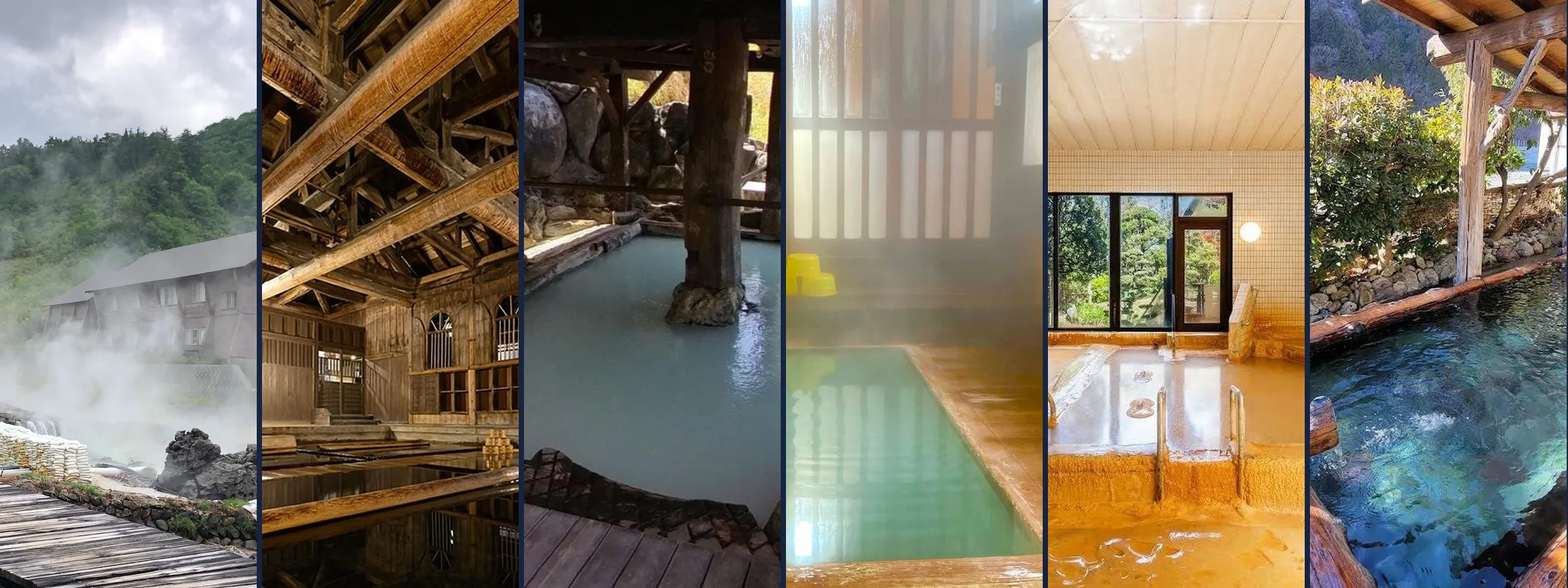
Yuchelin's First 21 Three-Star Onsen, Rated on Their Water
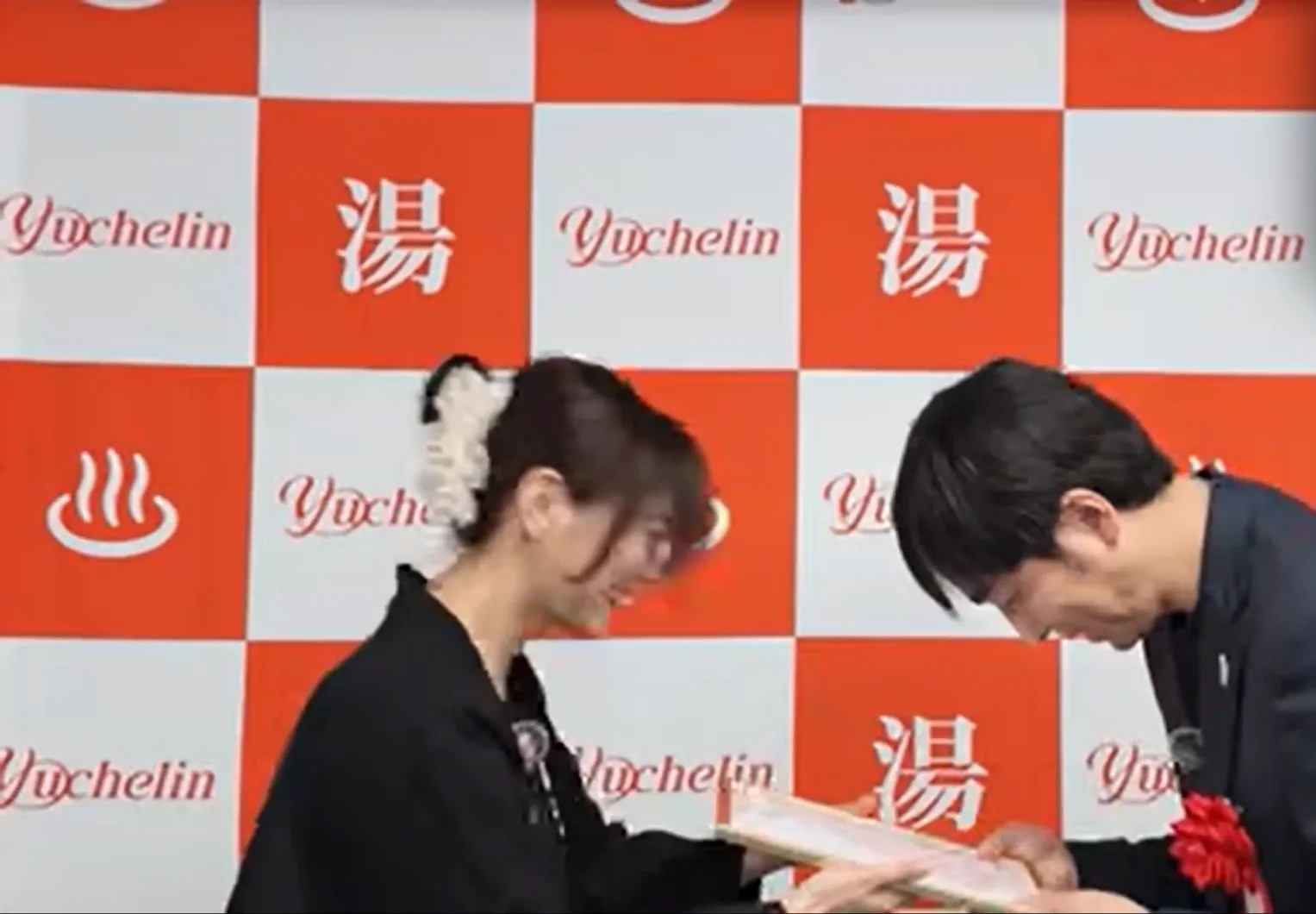
There are plenty of ways to pick an onsen inn, and plenty of rankings to help: by its dinner, its hospitality, its view, its architecture or its rooms. What there has hardly been, says a new rating, is a shared yardstick for the water itself. Yuchelin (Yushuran, 湯シュラン) sets out to be one. It rates the water that reaches the tub: what the water is like, how it is delivered from the source and looked after, and the landscape, history and culture around it. This afternoon, at its first award, it announced its first 21 three-star facilities.
Yuchelin has no connection with the Michelin Guide, but it does reach for a food comparison. Think of the source as a fish swimming in the sea, and the water in the tub as the fish dish that comes to the table: however good the fish, the way it is carried, kept fresh and cooked changes how it tastes. Hot water is the same. The distance to the tub, the piping, the temperature control and the daily care all change its colour, smell and feel. Yuchelin doesn't hold water straight from the source as an absolute standard, though: it weighs each spring's temperature, flow and setting, and judges every bath on its own terms.
The short version
- What it is: a rating of onsen by the water as delivered to the tub, including how it gets there and how it is looked after, and the landscape, history and culture around it.
- How it judges: five criteria: the water's character, its freshness and how it is delivered, its rarity, safety and hygiene, and its environmental and cultural value.
- The stars: three stars, the top rating, for "a bath experience that could change your life", two for a famous bath worth travelling to for the water itself, one for a bath worth stopping at if you are nearby. Yuchelin says the stars are not a simple ranking: they tell you what a bath is worth visiting for.
- This year: three stars only, as model cases. The first list has 21 facilities in 15 prefectures, from Hokkaido to Kagoshima.
- Next year: one- and two-star certifications start in 2027, and the inspector system goes into full operation in fiscal 2027.
- On Onsen Oni: every one of the 21 is in our catalog, gathered on the Yuchelin program page.
What Yuchelin is
Yuchelin is run by a general incorporated association of the same name, based in Tokyo. Its representative director is Kitade Kyoko (北出恭子), who goes by the title onsen-ka (温泉家), roughly "onsen specialist". Inspectors visit the facilities, and an evaluation committee judges them and decides the stars. Above both sits a board of trustees, specialists in onsen science, onsen medicine, public health, tourism, history and culture, and regional development. The board oversees the system and advises on it, watching that the criteria, the selection process and the way it all runs are fair and open, and it takes no part in selecting, surveying, judging or certifying individual facilities.
Two rules make it worth taking seriously. Facilities pay nothing to be evaluated, and Yuchelin does not accept sponsorship from facilities that could be rated, their operators, or local governments and organizations with a direct stake in the results. The process runs in four steps: gathering and analysing information on the spring and the facility, a visit by an inspector, a review by the evaluation committee, which certifies the facility and decides its stars, and then publication. The award has the backing of Japan's Ministry of the Environment.
The five criteria, as Yuchelin describes them:
- Character: the water's components, pH and temperature, and what you actually meet in the tub: its colour, smell, taste and feel on the skin.
- Freshness and delivery: how far and how long the water travels from the source to the tub, how it is piped, whether it is stored on the way, and whether it is diluted, heated, filtered and recirculated or disinfected.
- Rarity: the geology behind the spring and how it emerges, its character, the ways of bathing in it and its setting: what only this place has.
- Safety and hygiene: cleaning and hygiene in the tubs and the bathhouse, safety measures while you bathe, and keeping to the relevant laws.
- Environmental and cultural value: the landscape and care for the environment, the local history and culture, and the people who look after the water and pass it on.
Part of the money came from crowdfunding. The campaign on CAMPFIRE ran from 24 September to 20 October 2026 with a first goal of ¥1,126,000 (read in Japanese as ii furo, "a good bath") and closed at ¥6,493,026 from 432 backers, 576% of the goal. The campaign also leaned on a pun for the year itself: the 026 in 2026 reads as o-fu-ro, "bath", which made 2026 a bath year that comes round once in a thousand years. The money is set aside for the award, the website, a digital Yuchelin map, survey work for 2027 and running costs.
Bathing like a guest

Yuchelin also publishes five rules for visiting, put together under the supervision of the Touristship association, around the idea that you are borrowing the water (yu wo okari suru, 湯をお借りする). Many of the certified baths, it notes, are places local people have looked after as part of daily life, so it asks you to come in the spirit of o-jama shimasu, "excuse me for intruding". Before you go: check the facility's page for whether it is open and call if you need to, bring cash and coins, a towel, soap and shampoo, and a white cup, and keep your group small enough for the size of the bath. Yuchelin doesn't say why the cup should be white; our guess: it shows the water's real colour, and lets you taste it where drinking is allowed.
Then, in five rules: let locals go first, and stay away at the busy hours; say hello; enjoy the water at whatever temperature it is that day, and ask a local before you adjust it; do the basics properly (no photos in the bath or changing room, rinse and wash before you get in, don't hog the spout or the washing spot, wash and put back the bucket and stool, take your rubbish home, dry off before the changing room); and treat the water, a gift of the earth, with gratitude and respect. Some of the 21 are small communal baths, so none of this is idle advice.
The 21 three-star onsen
For this first year, Yuchelin says, it picked 21 facilities that are especially rare and whose water's character is easy to feel with all five senses. Here is the full list in Yuchelin's official order, grouped by region. The descriptions are ours, paraphrased from the notes Yuchelin presented for each facility at the award.
Hokkaido
- Toyotomi Onsen (豊富温泉), Toyotomi-cho Fureai Center (豊富町ふれあいセンター), toji bath. Yellow-brown water containing crude oil, with a strong smell of petroleum and a rich, heavy feel; Yuchelin calls it rare even by world standards. You can rub the oil onto your skin, and a toji (hot-spring cure) culture aimed at skin conditions lives on here.
- Noboribetsu Onsen (登別温泉), Dai-ichi Takimotokan (第一滝本館), Noboribetsu. Seven sources and five spring types under one roof, all free-flowing (kakenagashi), so you can go from bath to bath and compare colour, smell and feel side by side.
- Obihiro Onsen (帯広温泉), Roma no Izumi (ローマの泉), family baths, Obihiro. Coffee-coloured moor water (moru-sen, モール泉) from the facility's own source, with that peaty moor smell plus hints of oil and sulphur. Fine white bubbles floating on the surface show how freshly it has come out of the ground.
Tohoku
- Tamagawa Onsen (玉川温泉), Senboku, Akita. Hydrochloric-acid water at pH 1.1, one of Japan's most strongly acidic springs, with a tingling sting you feel all over. There are baths at different strengths, natural ganbanyoku (bedrock bathing), the huge Obuki (大噴) source, and a toji culture of its own that lives on.
- Kunimi Onsen Ishizuka Ryokan (国見温泉 石塚旅館), Shizukuishi, Iwate. Water of a vivid emerald green, smelling strongly of sulphur and oil, and slippery on the skin. Take a sip and the taste is startlingly strong.
- Zao Onsen Sunoko-no-yu Kawaraya (蔵王温泉 すのこの湯 かわらや), Yamagata. Strongly acidic sulphur water at pH 1.7 rises straight up through the gaps in the slatted wooden floor (sunoko, すのこ) of the tub, fresh from the ground. It is clear, with a sparkling blue cast.
Kanto
- Hoshi Onsen Chojukan (法師温泉 長寿館), Hoshi-no-yu (法師乃湯), Minakami, Gunma. A historic bathhouse built in 1895, where water at about 42°C bubbles up between the pebbles under you.
- Kitsuregawa Sootome Onsen (喜連川 早乙女温泉), Sakura, Tochigi. A dense, salty, cloudy water that smells of sulphur and oil, and changes colour from day to day, somewhere between green and milky white. The big tub is scrubbed to every corner and refilled with fresh spring water every morning.
Chubu
- Narada Onsen Shiranekan (奈良田温泉 白根館), Hayakawa, Yamanashi. Deep in the Southern Alps, an intensely slippery water that wraps the skin like a beauty cream, with notes of sulphur and ammonia. Its colour shifts daily too.
- Kagai Onsen Ichiyokan (加賀井温泉 一陽館), Nagano City. Rich in carbon dioxide, iron and salt, a dense water that has built up thick mineral deposits on the tubs and floor. The indoor and outdoor baths each run a different source of the inn's own, free-flowing.
- Okutateshina Onsen Shibu Tatsunokan (奥蓼科温泉 渋・辰野館), Chino, Nagano. A 21°C cold mineral spring pours like a waterfall into the Shingen no Kusuriyu (信玄の薬湯), "Shingen's medicine bath", with a sulphur smell and white flakes of yu-no-hana. You can go back and forth between it and a heated tub, and you can drink it.
- Niitsu Onsen (新津温泉), Niigata City. A spring born from oil-field drilling: a strong petroleum smell with notes of bromine and iodine, a film of oil on the surface, and a thick, silky feel.
Kansai
- Arima Onsen Kamiobo (有馬温泉 上大坊), Kobe, Hyogo. Arima's kinsen (金泉), "golden water", here richer in minerals than seawater and the dark brown of red miso soup. The source comes out at about 99°C and is cooled naturally by a traditional bamboo contraption on its way to the tub.
- Hanayama Onsen Yakushi-no-yu (花山温泉 薬師の湯), Wakayama City. The water gushes up on the pressure of its own carbon dioxide, rich in iron and salt, and has layered deposits over the tub edges. A tub of the source at about 25°C sits next to a heated one for hot-and-cold rounds, and you can drink it.
Shikoku
- Iya Onsen, Wa-no-yado Hotel Iya Onsen (和の宿 ホテル祖谷温泉), Miyoshi, Tokushima. A cable car takes you down to open-air baths in the gorge. Fresh water at about 39°C is poured in unheated and in quantity, smells faintly of sulphur, and covers you in fine bubbles.
Kyushu
- Shichirida Onsenkan Shitan-yu (七里田温泉館 下ん湯), Taketa, Oita. A self-flowing source at about 36°C, one of Japan's few strongly carbonated natural springs. Countless silvery bubbles wrap your whole body, like bathing in natural cider.
- Tsukahara Onsen Kakonoizumi (塚原温泉 火口乃泉), Yufu, Oita. Clear green, iron-rich water at pH 2, and you can visit the crater of Garandake (伽藍岳) where its source rises.
- Beppu Onsen Hoyoland (別府温泉保養ランド), Beppu, Oita. Natural mineral mud wells up with the water straight from the floor of the bath at Kon'ya Jigoku (紺屋地獄): thick sulphur mud and fine clay mud, in rustic outdoor baths.
- Takenoyu Onsen Horei-no-yu (岳の湯温泉 豊礼の湯), Oguni, Kumamoto. Cobalt-blue water, a rare "blue water" made by its minerals and the light, with a view of Mount Waita (涌蓋山).
- Jigoku Onsen Seifuso (地獄温泉 青風荘), Minamiaso, Kumamoto. Milky, acidic sulphur water surges naturally up through the floor of the tub, strongly enough that you feel it underfoot. A toji culture more than two hundred years old lives on here.
- Onoaida Onsen (尾之間温泉), Yakushima, Kagoshima. A communal bath where hot water bubbles up between the pebbles under your feet, a rare kind of spring. Clear and hot at pH 9.8, smelling of sulphur and remarkably slippery.
What comes next
2026 is what Yuchelin calls its founding period, "term zero", before its full launch, and it limited this round to three stars so that people could first get to know model cases of what it certifies. It calls the 21 a first step in introducing great baths from across the country. From 2027 it starts awarding one and two stars as well, and its inspectors, who as a rule visit without saying who they are, go into full operation from fiscal 2027. Yuchelin plans to survey more facilities in 2027, partly with the crowdfunding money.
All 21 on Onsen Oni
Every facility on the list is on Onsen Oni, with its location on the map, its features and, where we have them, photos and water analysis. We have gathered them on one page, so you can see them on the map or plan a route through the ones nearest you.
ProgramYuchelinAll 21 three-star facilities, on the map and in Yuchelin's order.
Onsen Oni is not affiliated with Yuchelin. Congratulations to the 21 facilities, and thanks to Yuchelin for doing something we care about: putting the water first. For the official list, the criteria and Yuchelin's notes on each facility, go to yuchelin.org.
Sources
- 湯シュラン Yuchelin 公式サイトofficial— the 21 three-star facilities, Yuchelin's notes on each and the five visiting rules
- 湯シュランとはofficial— the fish comparison, the five criteria, the star definitions, the four-step process, the evaluation committee and the board of trustees, and the rule that facilities pay nothing
- 「湯シュランアワード2026」三ツ星認定21施設を発表しましたofficial— why these 21 were chosen, and the list as a first step
- CAMPFIRE: 温泉選びの新基準「湯シュラン」を創設したい!official— the crowdfunding campaign (goal, 432 backers, ¥6,493,026 raised), the founding period, one and two stars and the inspectors from 2027, the sponsorship rule and the note on the Michelin Guide
Written by
Slava Minamoto(Onsen Passport)opens in a new tab
Founder of Onsen Oni. Passionate about Japan's hot springs and on a mission to help people discover the lesser-known, more unique onsen beyond the tourist trail.