
Kiyotsukyo Onsen
清津峡温泉Two inns and a foot bath at the mouth of the Kiyotsu gorge, counted among the three great gorges of Japan for the columnar rock walling it in. The sulfur water at Kiyotsukan is said to have been located through a vision of Yakushi Nyorai, and the inn belongs to the association that keeps Japan's hidden hot springs. Most visitors come for the gorge tunnel, whose far chamber holds a shallow pool that mirrors the cliffs.
A gorge cut in columns
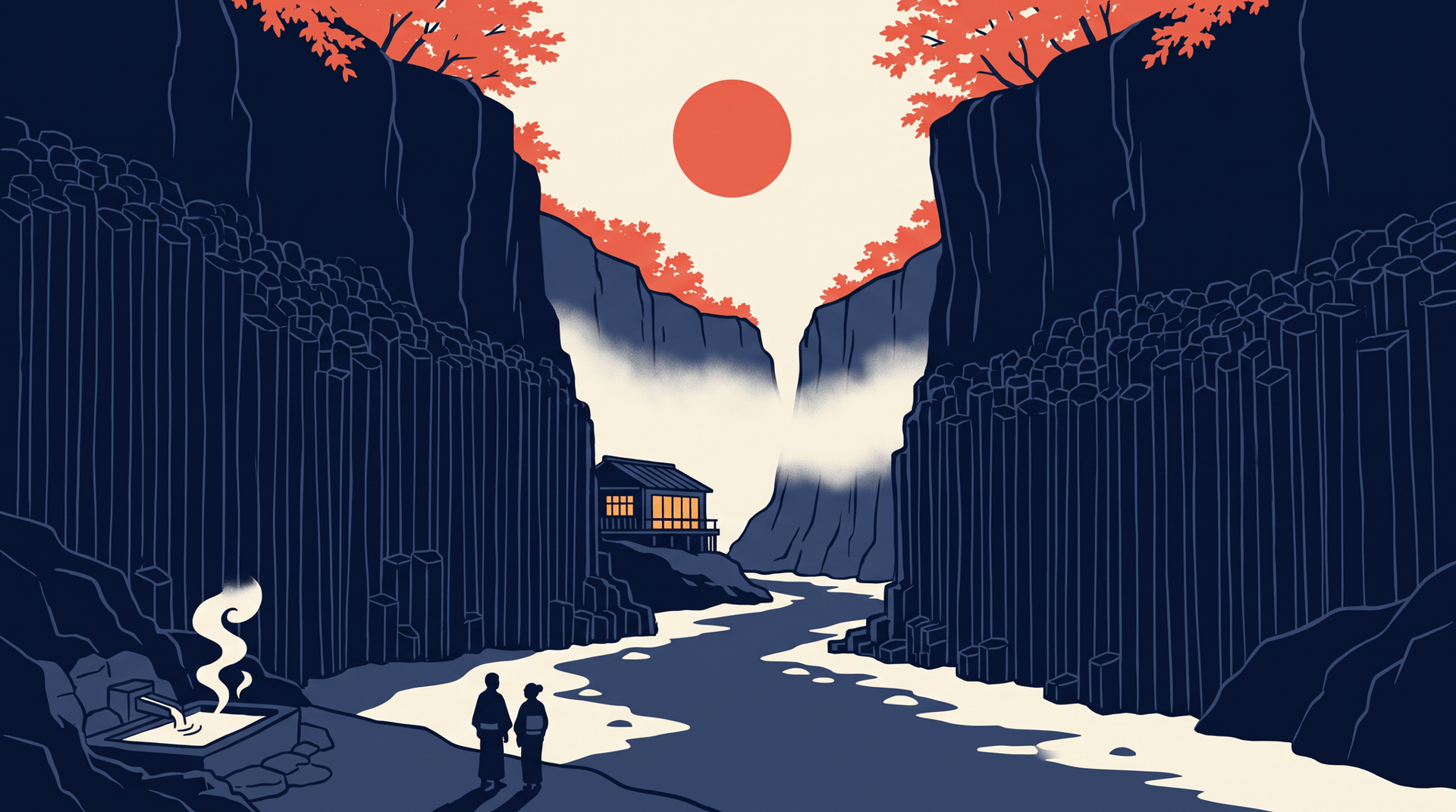
The rock here cooled and cracked into columns, and the Kiyotsu river then cut down through them, so the valley walls stand in vertical bundles like a stack of pencils on end. It is one of the reasons Kiyotsu is counted among the three great gorges of Japan, with Kurobe in Toyama and Osugi in Mie. The columnar jointing came out of magma that cooled and contracted here a very long time ago; the gorge itself was designated a national place of scenic beauty and natural monument in 1941, and it sits inside Joshinetsu Kogen National Park.
For most of the twentieth century you walked into it on a riverside trail. On 31 July 1988 a rockfall killed people on that path and it was closed for good. What replaced it took eight years: a 750 metre pedestrian tunnel bored into the cliff, opened on 1 October 1996, with lookout windows cut through to the gorge at intervals.
The tunnel that became an artwork
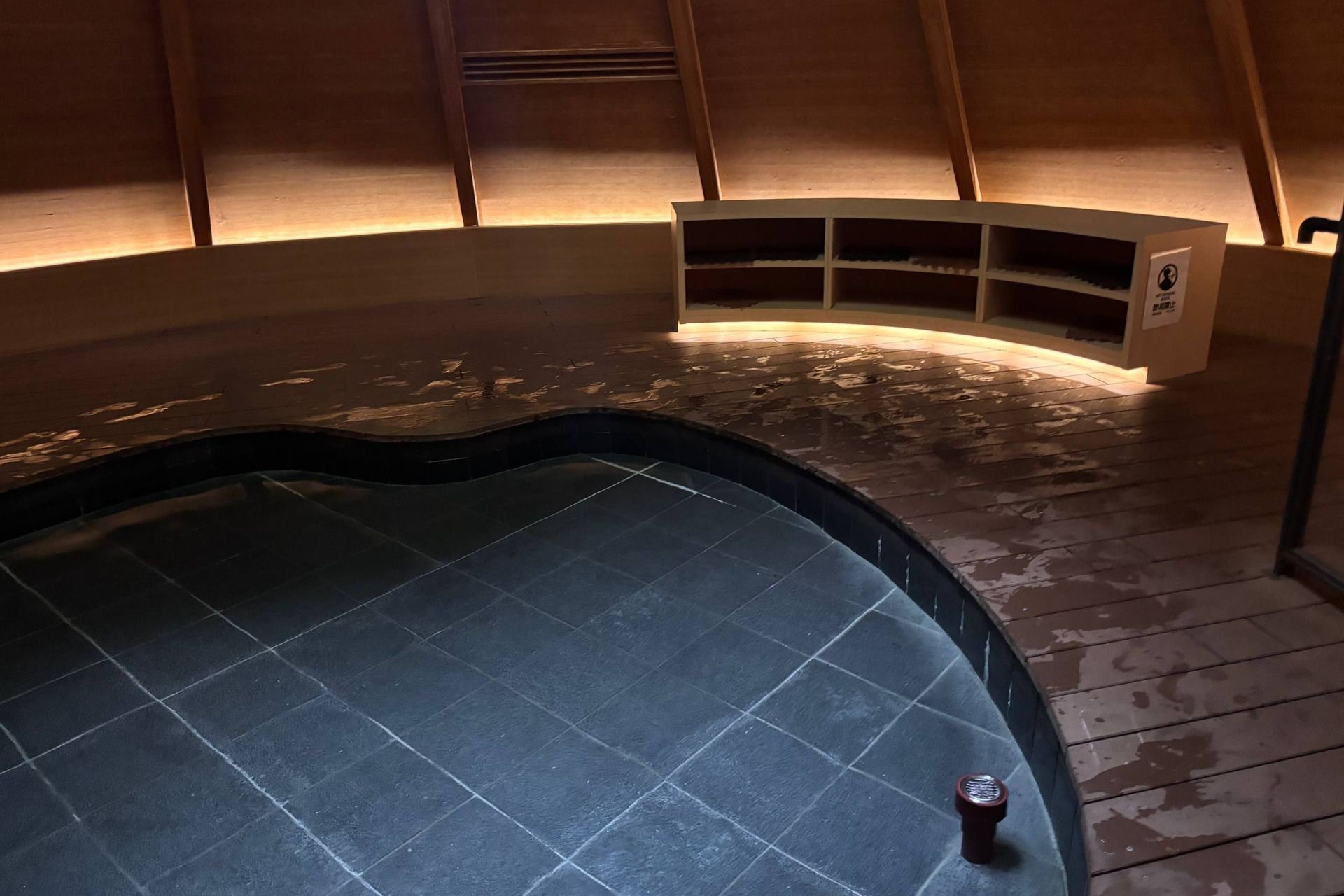
In 2018, for the seventh Echigo-Tsumari Art Triennial, the Chinese architect Ma Yansong of MAD Architects was given the tunnel to rework. The lookouts were rebuilt one by one, and at the far end the Panorama Station was floored with a thin sheet of standing water and lined with polished stainless steel, so the gorge appears twice, once above and once reflected at your feet. The piece is called Tunnel of Light, and it turned a regional walking attraction into something people fly in for. The entrance building was rebuilt with it: a cafe and shop below, and upstairs a free foot bath fed by Yaken-no-yu, a spring that rises inside the tunnel itself. It runs in the warm half of the year and closes for winter.
Two inns and three springs
The onsen is small, and honest about it: two inns, a foot bath, and three separate sources. Kiyotsukan, the older house, sits right at the gorge mouth on the Yakushi-no-yu, a simple sulfur spring that legend says was located through a vision of Yakushi Nyorai connected to Uesugi Kenshin. It belongs to the association that keeps Japan's hidden hot springs, and it runs its water free-flowing. A few minutes down the valley, Setoguchi occupies a wooden building put up in 1937 and cooks over an open hearth; its water is a weaker sodium-chloride spring, mild and slow. The third source is the one under the tunnel entrance, which feeds the foot bath and nothing else.
Places in this area
3 places · Sorted by rating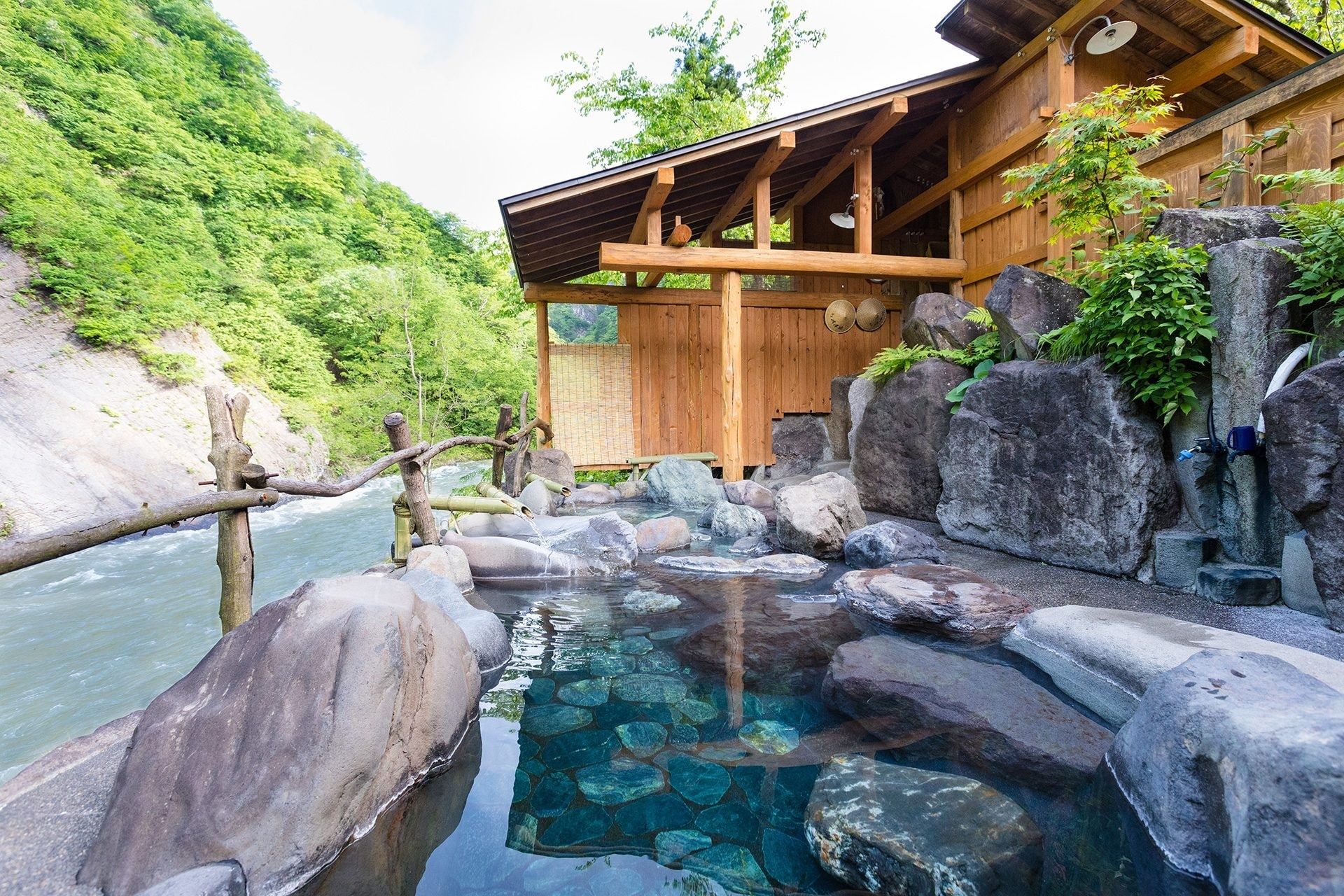
On the map
Loading map…
Nearby onsenchi
Within 50 kmSources
- Kiyotsu Gorge Tunnel — official siteofficial— Run by the Tokamachi city tourism body: tunnel hours and admission, the entrance building and its second-floor foot bath, and the winter closure.
- Kiyotsu Gorge — Wikipedia (JA)— Source for the three-great-gorges ranking, the columnar jointing, the 1941 designation, the 1988 rockfall and trail closure, the 1996 tunnel opening, and the 2018 artwork.
- Kiyotsukyo Yumoto Onsen Kiyotsukanofficial— The older of the two inns, on its own Yakushi spring, a member of the association that keeps Japan's hidden hot springs.
- Kiyotsukyo Onsen Setoguchiofficial— Official site of the second inn: the 1937 wooden building, the hearth-cooked meals, and the sodium-chloride water.
- Niigata Prefecture Tourism Association — Kiyotsukyo Onsen-kyoofficial— Regional tourism board page listing the three separate springs of the area with their chemistry and temperatures.