Glossary
Toji: Staying at a Hot Spring to Rest
Not a day at the bath but days of them: bathe, eat, sleep, and bathe again, for as long as you can stay.
湯治とうじtoji
What toji means
Toji (湯治) is staying at a hot spring to rest and recover: not a bath on the way somewhere, but days or weeks in one place, bathing several times a day, eating simply and sleeping well. The two characters say it plainly: yu (湯), hot water, and ji (治), to treat. Dictionaries define it as bathing in a hot spring to treat an illness, and the older ones add baths with medicinal herbs in them; one records the word as early as 1090.
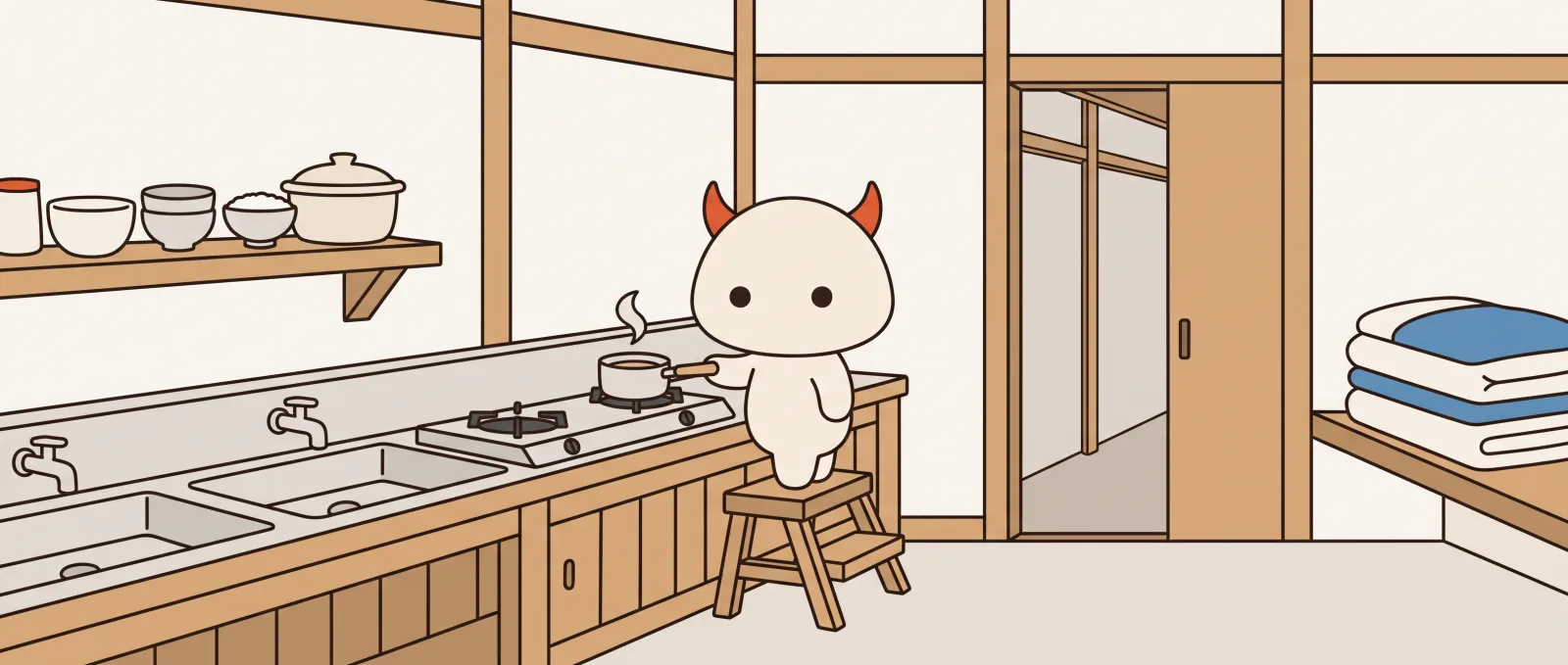
In practice it meant more than treatment. An encyclopedia of Japanese culture describes it as staying at a spring inn and resting there, often cooking for yourself, and calls the towns where people did it toji-ba (湯治場). Many onsen towns began as toji-ba, and a few inns still run the old way, with rooms let without meals and a shared kitchen down the corridor.
The word, piece by piece
- 湯とうhot water; at an onsen, the spring's water itself
- 治じto treat or to heal, as in treating an illness
Weeks at the spring
The court went first. According to a surviving fragment of the Iyo Fudoki, Prince Shotoku visited the hot spring at what is now Dogo Onsen in 596, and the Nihon Shoki records emperors and princes at the springs of Iyo and of Ki, now Shirahama, in the seventh century. Those visits were long, and the National Diet Library reads them as stays for toji. In 658 Prince Arima even feigned illness to get away to the spring at Ki. Nobles who could not travel had the water brought to them: one diary records Arima's water carried to the house of the courtier Saionji Kintsune, 200 buckets a day.
By the Middle Ages there was a measure for it. Seven days made one round, a hitomeguri (一廻り), the smallest unit of a stay, and three rounds, twenty-one days, was held to be the least a proper toji should take. In the Edo period townspeople began to travel for it too, helped along by printed guides to the springs, and many came as much for rest and sightseeing as for any cure. In 1805 a one-night stay, the ichiya toji (一夜湯治), was in effect allowed, and the idea that a visit had to be long began to give way.
In the countryside, toji was how farmers rested. After the rice was planted, or in the quiet season, families and whole groups went to a spring together, carrying rice and miso, and cooked for themselves in the inn for days or weeks. That kind of stay shrank with Japan's fast economic growth after the war: the onsen became a place for leisure and sightseeing, and toji inns fell sharply in number. The ones that remain are the ones this page is about.
The toji inns that remain
A toji inn is usually two inns in one: a ryokan wing with meals, and a jisui-bu (自炊部), the self-catering wing, where you rent a plain room and cook for yourself. These are some that say so on their own sites.
Osawa Onsen, Iwate
In Hanamaki, Osawa Onsen keeps its self-catering wing, Tojiya, in a building about 200 years old, a place linked with the poet Miyazawa Kenji. Guests cook in a shared kitchen with coin-operated gas, bring their own food or buy it at the shop, and rent their bedding by the day.Tamagawa Onsen, Akita
Tamagawa describes itself as an inn for long stays, for rest and recuperation, with a ryokan wing with meals and a room-only self-catering wing. Its water is strongly acidic, a sansei-sen, and the inn keeps its 100% spring bath cooler because the water is so strong.Sukayu Onsen, Aomori
Sukayu has drawn toji guests since the Edo period, and at first its only building was a toji wing; the ryokan came later. In 1954 it was the first spring named a national health resort, one of three that year. Its big bath is the Hiba Sennin-buro, the thousand-person bath of hiba wood.Sekizenkan, Gunma
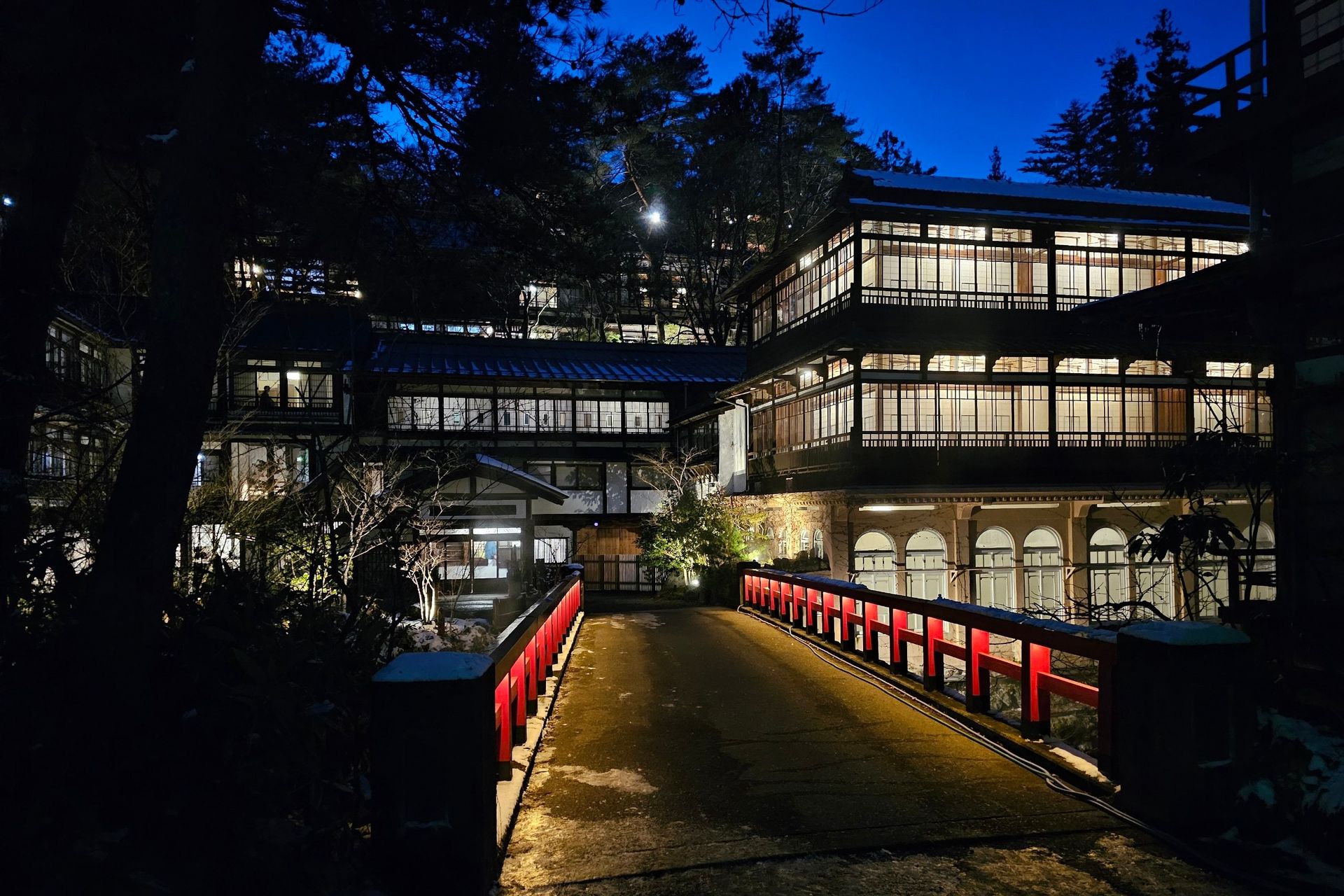
In Shima Onsen, Sekizenkan's main building is its toji wing, built in 1691 and an important cultural property of Gunma Prefecture. Cooking is not allowed in it, so meals come as bento, a different one each day for guests who stay on. There is no room attendant: you lay out and put away your own bedding.Sekizenkan, Shima Onsen
Shirasagi, Wakayama
At Tsubaki Onsen, Shirasagi has been a toji inn since 1954. It offers a self-catering stay of three to five nights, with dishes and cooking tools provided, and calls that rare in the Kansai region. It also has toji plans with two meals a day in its dining room.Jigoku Onsen Seifuso, Kumamoto
In Minami-Aso, Seifuso has five toji rooms of six tatami mats, each with its own kitchen, and a shared kitchen for other guests who want to cook. There is a laundry corner for long stays. The inn's Meiji-era main building was damaged in the 2016 Kumamoto earthquake and has been restored.Jigoku Onsen Seifuso, Minamiaso Onsen
How a self-catering stay works

A self-catering stay is simpler and cheaper than a ryokan night, and you do more of the work. Details differ from inn to inn; Osawa Onsen's self-catering wing, which publishes its rules in full, gives a good idea.
A room, not a meal plan
You pay for the room, by the person and by the night. At Osawa's self-catering wing that was 3,780 to 5,630 yen a night depending on the season and how many share the room, plus 70 yen bathing tax. Rooms come with a TV, an empty fridge, a hot water pot and a tea set.Bedding by the day
Bedding may be included or rented. Osawa lists each piece, from 20 yen for a pillow to 220 yen for a futon, and charges every rented item per night, a yukata too. You can bring your own futon if you like.A shared kitchen
The kitchen is shared. Osawa's has gas burners at 10 yen for seven or eight minutes, a microwave, and pots, kettles, rice pots, bowls, plates and chopsticks to borrow. Grilling is done in the kitchen; in your room you may only simmer.Bring food, or buy it there
Bring your own ingredients or buy them at the inn's shop. Osawa will cook rice for you, from half a go, about one bowl, and miso soup, and its restaurant serves meals for those who would rather not cook.As long as you can stay
The old measure was a week, and three weeks a full course. Today the inns take you for less: Sekizenkan's toji wing from a single night, Shirasagi's self-catering plan for three to five. Ask for a long-stay rate; some inns, like Fujimikan at Hatake Onsen, have one.Bathe a little, often
The bathing notes every onsen has to post set the pace for a stay of many days: one or two baths a day at first, two or three once you are used to it, and three to ten minutes each to begin with, working up to fifteen or twenty.
What it does, and what it does not
Toji began as a way to treat illness, and the tradition still talks that way. The evidence is more modest. In the first large nationwide survey of its kind, run for the Ministry of the Environment, researchers asked 11,830 visitors to 55 hot spring areas from 2018 to 2021 how they felt after their stay. Most had stayed a single night. 98.3% said they felt soothed, 82.7% happier and 81.5% less stressed. Everything it measured was what people reported themselves, and the authors say only that a stay may do body and mind some good.
So take a toji stay as rest: time away, hot water, early nights and plain food. It is not a cure, and an onsen that promises one is promising more than anyone has shown. If you have a condition, ask your doctor before a long course of baths; the official notes allow even people for whom bathing is not advised to take a course under a doctor who knows the field.
Yu-atari: the dip a few days in
Three days to a week into a course of baths, some people feel unwell, sleep badly, get an upset stomach or a skin rash. This is yu-atari (湯あたり). The official advice is to stop bathing or bathe less until it passes.When not to bathe
The notes list times to stay out of the water: a fever or an illness at its height, active tuberculosis, advanced cancer or severe anaemia, a heart or lung condition so serious that a little movement leaves you breathless, and any visible bleeding.The lists on the wall are labels
Many onsen post the conditions their water is said to suit. Those lists follow standards the Ministry of the Environment last revised in 2014, from the medical findings of the time. They are official labels for kinds of water, not proof that a stay will help you.
New toji: the ministry's version
In July 2017 a panel of experts advising the Ministry of the Environment proposed shin-toji (新・湯治), new toji: a way of spending time at a hot spring town that fits modern life. Bathing is part of it, but so are the town's nature, history, culture and food, and the aim is that visitors stay, come back refreshed and keep the towns alive. In May 2018 the ministry launched Team Shin-Toji, a network of local governments, onsen towns and companies, with itself as the secretariat.
Alongside it the ministry keeps the kokumin hoyo onsenchi (国民保養温泉地), the national health resorts: hot spring areas the Minister of the Environment designates under Article 29 of the Hot Spring Act. The first three, in 1954, were Sukayu in Aomori, Shima in Gunma and Nikko Yumoto in Tochigi, and 79 were designated as of October 2022. To qualify, an area needs therapeutic spring water, enough of it for its visitors (about half a litre a minute for each), and arrangements for medical advice.
Finding a toji stay in the catalog
The catalog does not mark toji as a feature of its own, because what makes a stay a toji stay is how long you stay and how you spend it. These help you find one.
Start from an onsen area
Many toji towns are in the catalog as onsen areas, each with its places on a map. A town with several old inns and shared baths is a good sign: a long stay goes better with more than one bath to walk to, as on a yumeguri.Filter for places to stay
On the map, the Stay filter shows inns and hotels. Not every one takes long stays, and few of them have a self-catering wing.Check the inn's own site
The catalog does not record whether an inn has a self-catering wing, a long-stay rate or bedding to rent. Look on the inn's own site for 湯治 (toji) or 自炊 (self-catering), or call and ask.
Where to try it
Inns that offer toji stays on their own sites, one per region we could confirm, from Tamagawa in Akita to Minami-Aso in Kumamoto.
Photos from the catalog
Hatake Onsen Fujimikan, Shizuoka Ryokan Shirasagi, Tsubaki Onsen Jigoku Onsen Seifuso, Minamiaso Onsen
Tamagawa Onsen玉川温泉
- Day use 10:00–15:00
- ¥1,000 for a day bath
- Private bath
- Outdoor bath
Sekizenkan積善館
- Day use 10:00–17:30
- ¥1,500 for a day bath
- Tattoos with conditions
- Private bath
- Outdoor bath
- Chloride spring, pH 7.0, 75°C at the source
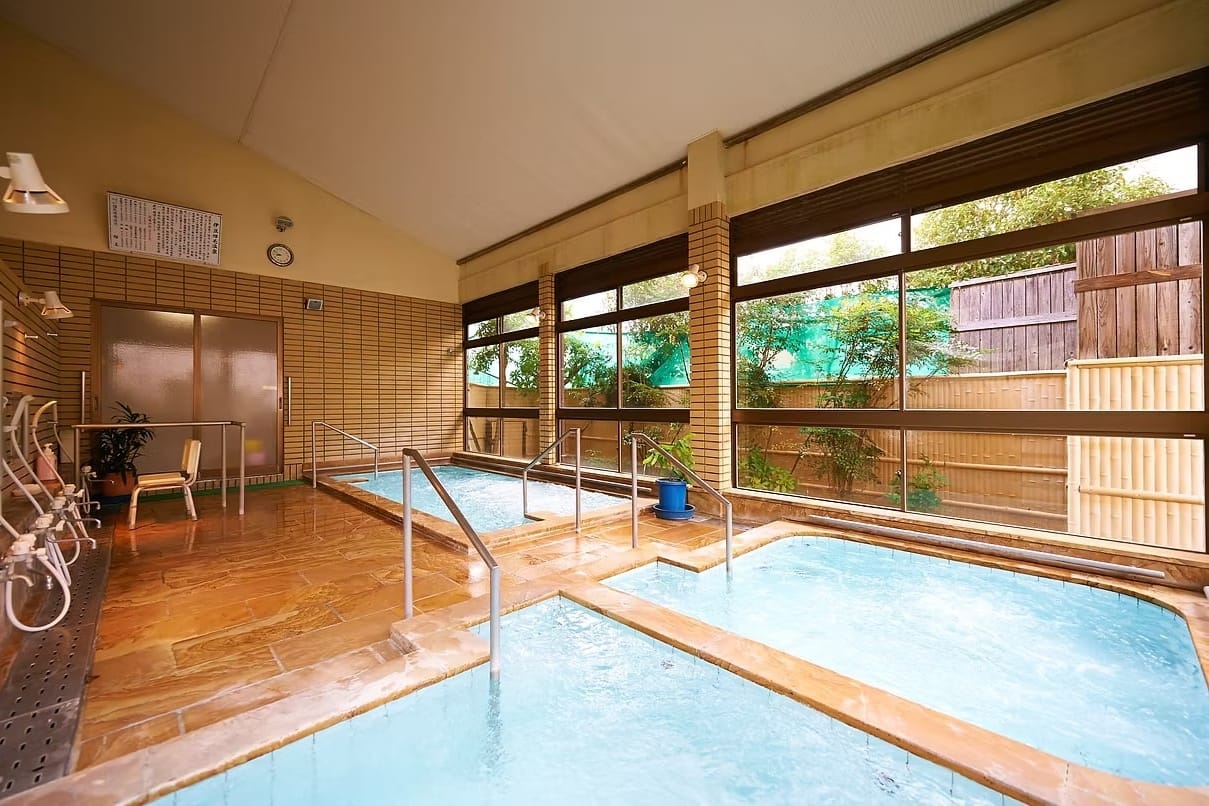
Hatake Onsen Fujimikan畑毛温泉 富士見館
LodgingNatural onsen waterShizuoka1 review
- Day use 07:00–17:00, 18:00–20:00
- ¥700 for a day bath
- Simple spring, pH 8.7, 30°C at the source
Ryokan Shirasagi湯治のできる宿 しらさぎ
- Day use 11:00–20:00
- ¥600 for a day bath
- Sulfur spring, pH 10.1, 32°C at the source
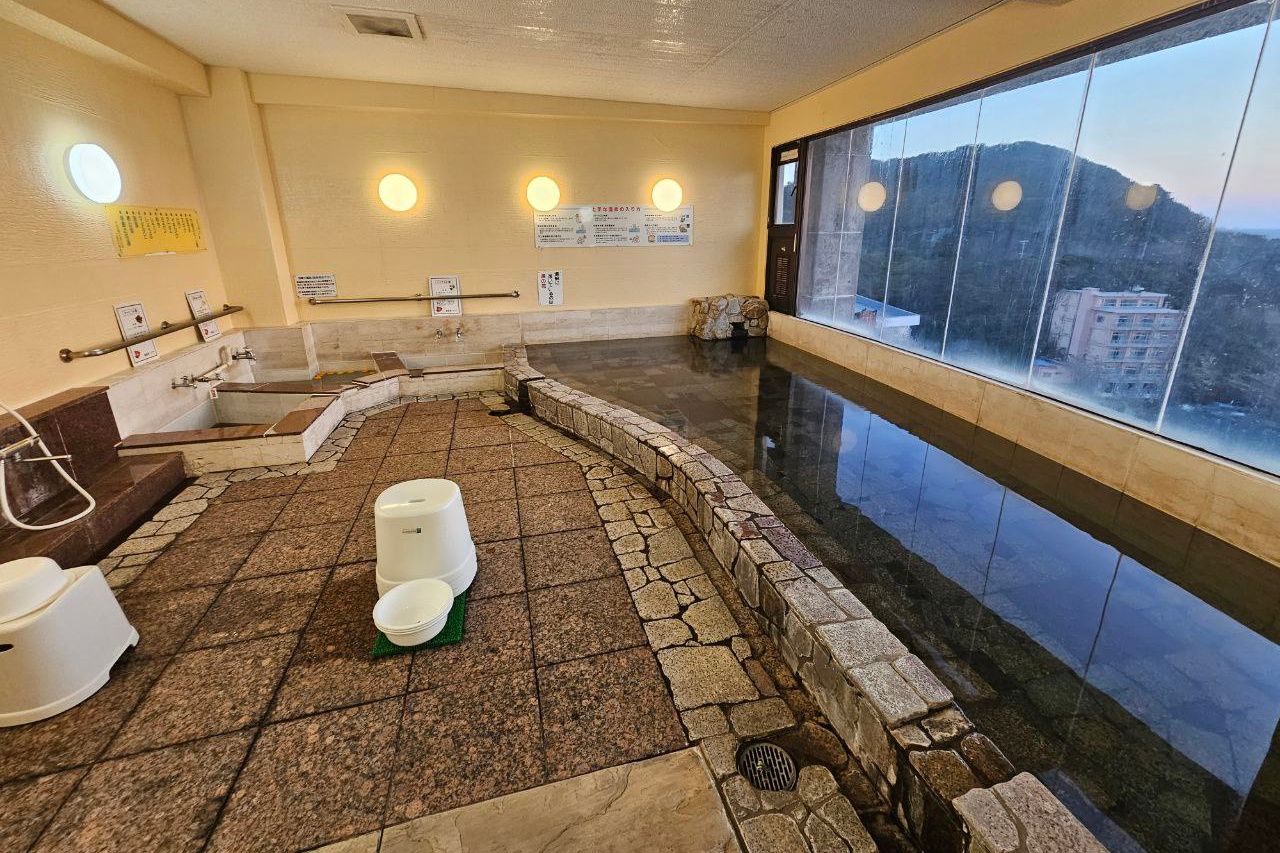
Jigoku Onsen Seifuso地獄温泉 青風荘
- Day use 10:00–17:00
- ¥2,000 for a day bath
- Outdoor bath
- Konyoku (mixed bathing)
- Acidic spring, pH 2.8, 48°C at the source
Questions people ask
- How long is a toji stay?
- Traditionally a week was one round and three weeks a full course. Today there is no rule: some toji wings take you for a single night, and in a recent survey for the Ministry of the Environment most visitors to hot spring areas had stayed just one.
- Do I have to cook?
- No. Most toji inns also have a wing or a plan with meals, and some, like Sekizenkan's toji wing, do not allow cooking at all. Self-catering is an option that keeps a long stay affordable.
- What should I bring for a self-catering stay?
- Your food, unless the inn has a shop, and whatever you need to be comfortable for days. Pots, dishes and bedding are usually there to borrow or rent, but check the inn's list before you go.
- Will toji cure my illness?
- There is no good evidence that it will. Surveys find that people feel rested and less stressed after a stay, but they measure what people report, not cures. If you are ill, ask your doctor before a long course of baths.
- What is shin-toji?
- New toji, a way of spending time at a hot spring town proposed to the Ministry of the Environment in 2017: bathing, together with the town's nature, history, culture and food, in a way that fits modern life.
Related words
- Onsen ryoho温泉療法Onsen therapy: the formal practice of using hot spring bathing for medical and therapeutic purposes, combining traditional knowledge with modern wellness approaches.
- Higaeri日帰りDay-use visit without overnight stay. Not always available at ryokan and hotels, so check in advance.
- Yumeguri湯めぐりHot spring hopping: visiting multiple baths in a row, often using a special pass available in onsen resort towns.
- Onsengai温泉街Hot spring town or district: an area where ryokan, onsen facilities, restaurants, and tourist shops have historically developed around a spring source.
- Hito秘湯"Secret hot springs": a brand of the Japan Association of Secluded Hot Spring Inns (Nihon Hito wo Mamoru Kai), which curates ryokan primarily by remoteness and difficulty of access.
- Sansei-sen酸性泉Acidic spring with powerful sterilizing properties. Found in highland volcanic areas; can be harsh on sensitive skin.
- Kakenagashi掛け流しFree-flowing: water from the source runs into the bath and overflows instead of being filtered and recirculated. A place that adds water, heats it or recirculates it has to say so, with its reasons, on a notice for bathers.
- Yukata浴衣Lightweight cotton robe commonly provided at ryokan and onsen hotels, worn to and from the bath and around the facility.
Where to go next
Find a toji town
The onsen area pages list every place in each town, with its baths and inns on a map.
See the onsen areasSources
- コトバンク「湯治」(デジタル大辞泉・精選版 日本国語大辞典・日本大百科全書・山川 日本史小辞典)
- 国立国会図書館「第1章 湯治場としての温泉」(本の万華鏡 第23回)official
- 環境省「新・湯治の推進-温泉地の活性化に向けて-」official
- 環境省「第3回全国温泉地サミットの結果及び国民保養温泉地の指定について」(2018年)official
- 環境省「国民保養温泉地」official
- 早坂信哉ほか「全国「新・湯治」効果測定調査(2018–2020年度)」日本健康開発雑誌 43, 2022
- 北海道「温泉入浴施設において安全に入浴するための注意事項」(環境省の掲示基準より)official
- 広島県「温泉の禁忌症及び入浴又は飲用上の注意の掲示等について」(平成26年7月1日改訂)official
- 大沢温泉 湯治屋「客室・料金」
- 大沢温泉 湯治屋「よくあるご質問」
- 玉川温泉「客室について」
- 酸ヶ湯温泉「温泉の歴史」
- 積善館「本館」
- 湯治のできる宿 しらさぎ「湯治プラン」
- 地獄温泉 青風荘「宿泊」