Glossary
Higaeri: Bathing for the Day
A bath without the overnight stay: what the word means, where you can go, and how a day visit works.
日帰りひがえりhigaeri
What higaeri means
Higaeri (日帰り) means going somewhere and coming home the same day, without staying the night: a higaeri ryoko (日帰り旅行) is a day trip. At an onsen it is short for higaeri nyuyoku (日帰り入浴), bathing without staying. You pay at the desk, bathe, and leave the same day.
Signs and websites have more than one name for it. Tachiyori-yu (立ち寄り湯) is a bath you drop in on, and higaeri onsen (日帰り温泉) is used both for the visit and for the places that offer one, including bathhouses with no rooms at all. On Onsen Oni it is called day use.
The word, piece by piece
- 日ひthe day; also the sun
- 帰りかえりgoing home, coming back (read gaeri after another word)
From long stays to a day out

For a long time, going to a hot spring meant staying there. By the Middle Ages, a cure at the springs (toji) was counted in rounds of seven days, and people held that it should last at least three rounds, 21 days.
Shorter visits grew in the Edo period. From the middle of the period more people came to rest or to see the sights rather than to be cured, helped by printed guides to the springs, and travellers who stayed only briefly, such as pilgrims on their way to Ise, became more common. In 1805 the one-night cure (ichiya toji, 一夜湯治) was in effect officially allowed, and the idea that taking the waters meant a long stay began to change.
Bathhouses built for day visitors are more recent still. In a 2003 report to the Ministry of the Environment, the geographer Yamamura Junji counted the public onsen baths up by 268% between 1972 and 2002, against 20% for places to stay. He tied the fast growth of day onsen facilities to the Furusato Sosei programme, which gave every municipality 100 million yen whatever its size, alongside deeper drilling that brought onsen to new areas.
Where you can bathe for the day
Almost any kind of bath can be a day visit. What changes from one to the next is the hours, the price and what comes with it.
An inn's baths
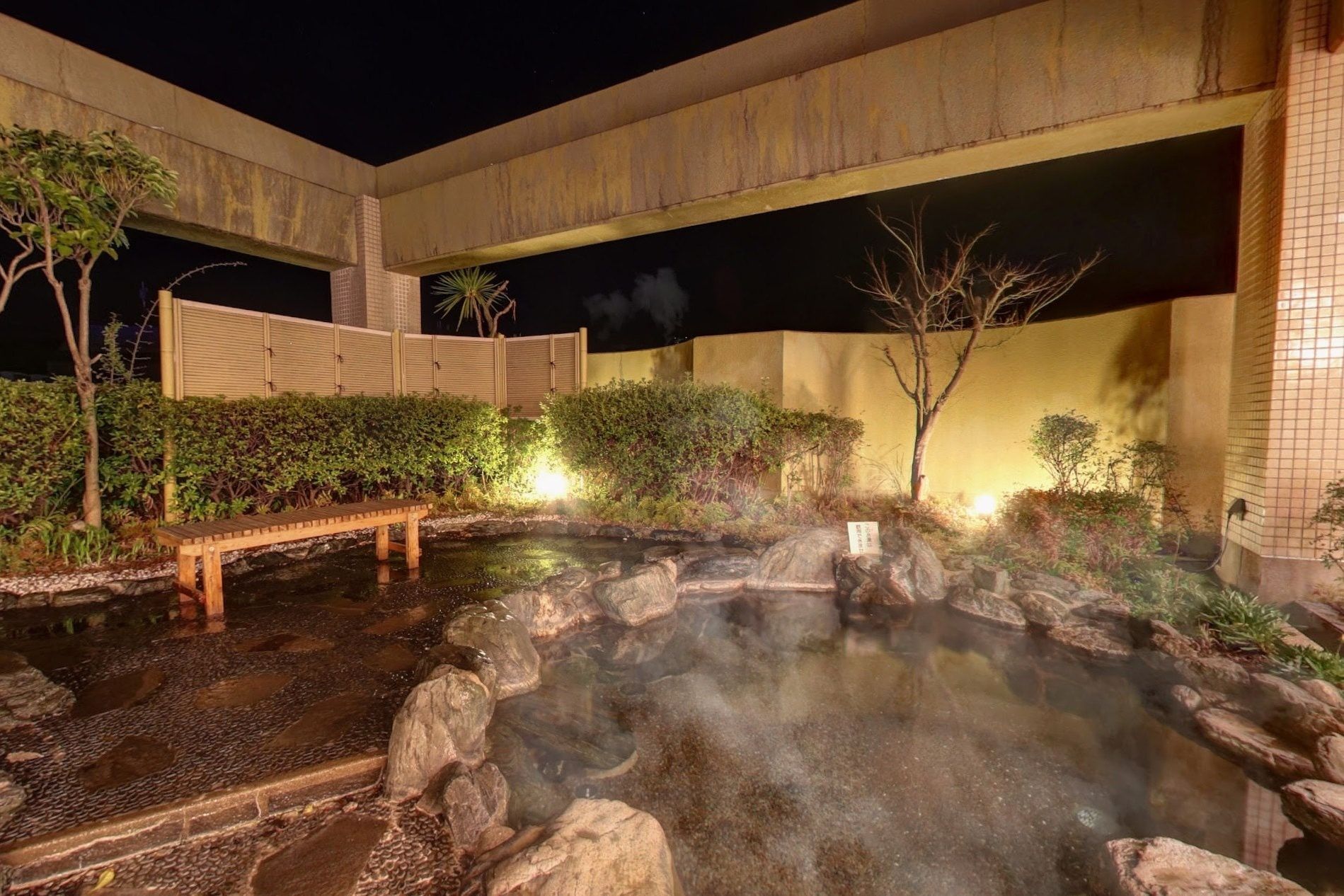
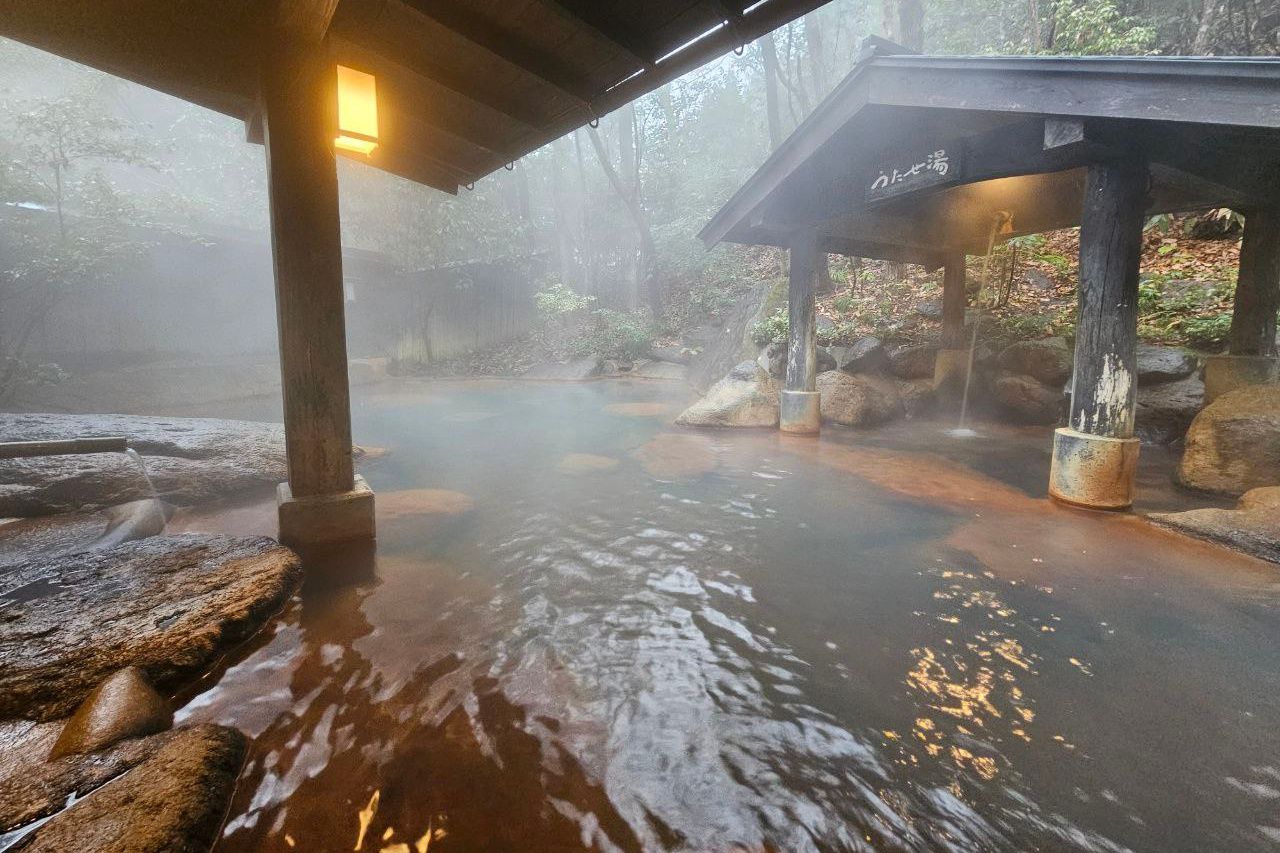
Many ryokan and hotels open their baths to day visitors for a fee, usually for a few hours a day, though not every inn does. It is the way to bathe in an old inn's bath without booking a room: Hoshi Onsen Chojukan in Gunma takes day visitors from 11:00 to 14:00.Ryoso Makibanoie, Yufuin Onsen Yamada Bessou, Beppu Onsen Meto Onsen Hotel, Hokkaido
Sento
The neighbourhood bathhouse is a day visit by nature. Its admission is capped by the prefecture: from August 2026, 600 yen for an adult in Tokyo. Some sento run on hot-spring water, many on heated tap water.Bunka Yokusen, Tokyo Ishida-yu, Kyoto Yume no Koushuu Yokujou Goshiki, Osaka
Super sento
Larger bathhouses with many baths, saunas, a restaurant and a rest area. They set their own prices: the prefectures leave super sento out of the cap on sento admission.Ofuro no Osama - Tamamogusaten, Tokyo Tenko-no-Yu, Gifu Spa World, Osaka
Communal baths (共同浴場)
Many onsen towns have baths shared by the community, called kyodo yokujo (共同浴場) or soto-yu (外湯), and the rules differ from town to town. Nozawa Onsen's 13 soto-yu are open to anyone who keeps the manners, with a box for a donation in place of a fee. In Shibu Onsen, day visitors can use only the ninth, Shibu Oyu; the other eight are free for the town's overnight guests and closed to everyone else.Zao Onsen Sunoko-no-yu Kawaraya Oyu Hot Spring, Nozawa Onsen Shinoyu Onsen, Beppu Onsen
Day plans
Some inns sell a day plan: the bath with lunch, or with a room to rest in. At Ginsuiso Choraku in Arima the day plans start at 7,700 yen with lunch, must be booked, and include towels; Nanadaru Onsen Hotel in Shizuoka has one with a Japanese-style room and the private bath.
A day visit at an inn

An inn's baths belong first to the people staying the night, and a day visit fits around them. A few things come up again and again.
The hours are a window
Day bathing at an inn often runs for a few hours in the middle of the day, when the overnight guests are not using the baths: Tae no Yu in Nyuto Onsen, Akita, takes day visitors from 10:30 to 15:00 and Hoshi Onsen from 11:00 to 14:00. Not every inn works this way: Sanga in Kurokawa takes them from 8:30 to 21:00.Last entry comes first
The desk stops taking day visitors before the bath closes: 30 minutes before at Hoshi Onsen (last entry 13:30), an hour before at Tae no Yu (14:00) and at Hotel Grand Toya on Lake Toya (20:00 for a 21:00 close). Arrive with time to spare.Closed days and cleaning
Baths close for cleaning and maintenance, on set days and sometimes at short notice: Hoshi Onsen on Wednesdays, Tae no Yu on Tuesdays. At Hotel Urashima in Wakayama each of the four baths has its own cleaning hours, the sea cave bath Bokido from 10:00 to 13:00, so the one you came for may be closed when you arrive.When it is busy
An inn may turn day visitors away when the baths are crowded or on special dates, as Hotel Grand Toya says it may, and some change the rules at the busiest times: Ginsuiso Choraku takes no day bookings for about a week over the New Year.Not every bath is yours
Day visitors may get only some of an inn's baths. At Sanga in Kurokawa they use the two outdoor baths, which have no washing area, showers or soap, while the private baths and an indoor bath are kept for staying guests. Where there is nowhere to wash, rinse with kakeyu before you get in.Sometimes a time limit
Some inns limit how long a day visit lasts: three hours at Nanadaru Onsen Hotel. Ask at the desk when you pay.
What to bring, what it costs
A day visit needs less than a stay, but nobody lays out towels for you the way an inn does for its guests.
The price
You pay at the desk when you arrive. Sento prices are capped by each prefecture: 600 yen for an adult in Tokyo, 550 in Saitama, 520 in Shizuoka in 2026. An inn sets its own: 600 yen at Sanga, 1,000 at Tae no Yu, 1,500 at Hoshi Onsen, with lower prices for children at all three.Towels
Bring a small towel and a bath towel, or plan to rent or buy them. Hoshi Onsen rents bath towels and sells face towels, Nanadaru Onsen Hotel charges 100 yen for a towel, and Hotel Urashima includes both. At a sento it is simpler: Tokyo's official guide says most sento sell what you need, so you can turn up empty-handed.Booking
Some inns take day visitors as they come and some only by booking, so check which before you go. The extras are what you are most likely to book: a plan with a meal (Choraku's must be booked) or a private bath, which Tae no Yu offers day visitors at 3,300 yen an hour.The bathing tax
An onsen visit can carry a local tax, nyutozei (入湯税). The law sets a standard of 150 yen per bather per day, and each city sets its own rules for day visits: Kobe charges 75 yen, and nothing at a public bath or for a day visit under 1,200 yen. Some places include it in the price, as Sanga does; others add it, as Choraku does.More than one bath
A day out is also the time for yumeguri, going from bath to bath. Sanga's outdoor baths are on Kurokawa's nyuto tegata, the wooden pass to the outdoor baths of three inns.
Day use on Onsen Oni
Each place page says what we know about day visits, and the map can show only the places that take them.
On a place page
The Day Use section says Yes or No, then the bathing hours, the usual adult price and any notes, such as the last entry or which baths day visitors get. When the hours change from day to day, it lists each weekday and public holidays.No section means we don't know
If a place has no Day Use section, the catalog has no answer yet. That is not the same as No.Open now
The section shows Open while a place is within its bathing hours, Japan time, and Closed outside them. On the map, the Open now filter hides the places known to be closed at this moment and keeps the ones whose hours we don't know.On the map
Turn on Day Use in the map's filters, one of the quick filters at the top, to see only places that take day visitors. Add Stay to see only the inns and hotels among them.Private baths and towels
Day-Use Private Bath means a day visitor can book the private bath, not only staying guests, and Towels means you can rent or borrow them at the desk. The private onsen pages count, prefecture by prefecture, the places that take day visitors for one.Check before a long trip
Hours and prices change, and inns close at short notice. Before a long trip, look at the place's own site or phone ahead.
Inns that take day visitors
One inn or hotel in each region where you can bathe without staying, from the Hokkaido forest to Kurokawa in Kumamoto. Each row shows today's hours and the price.
Photos from the catalog
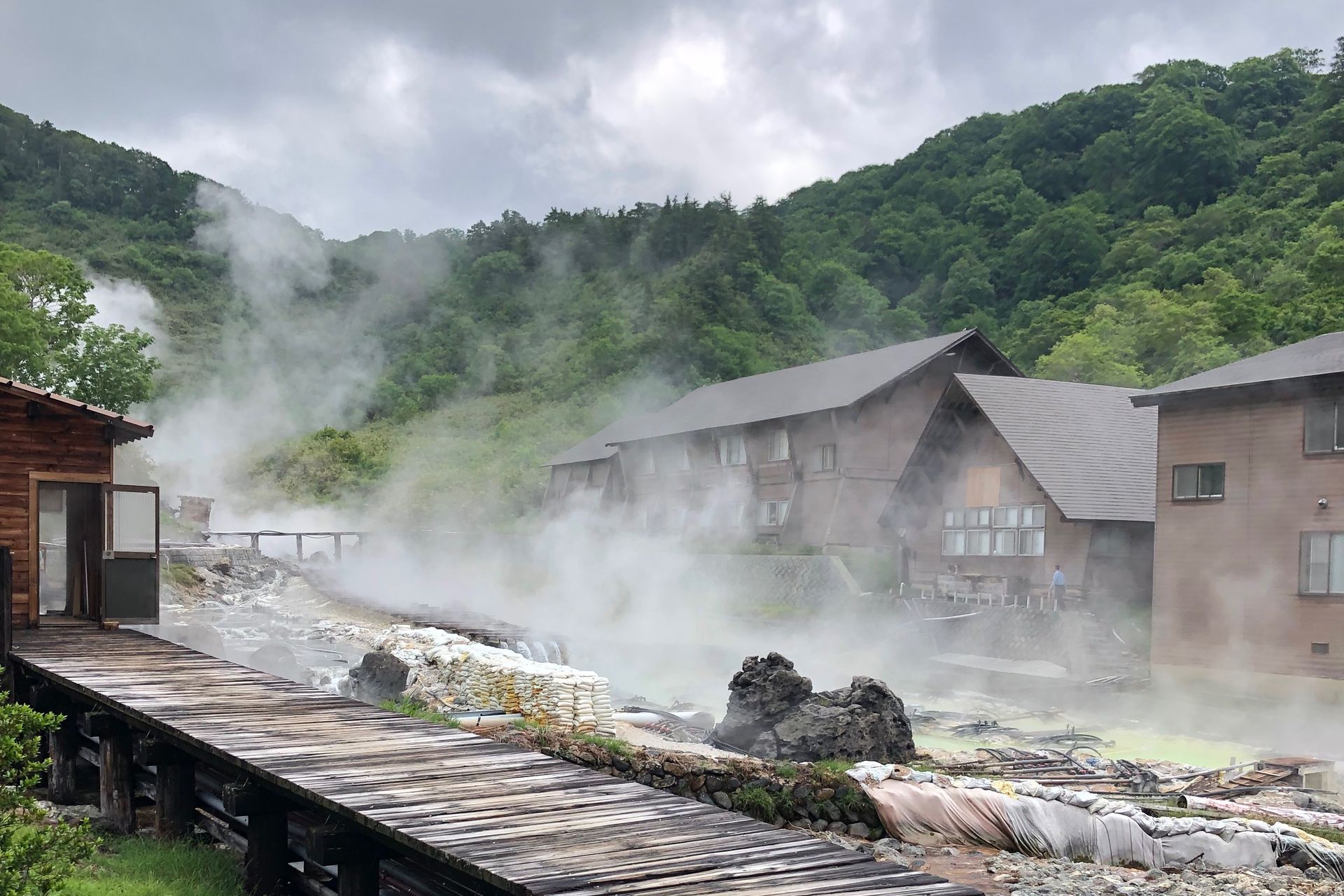
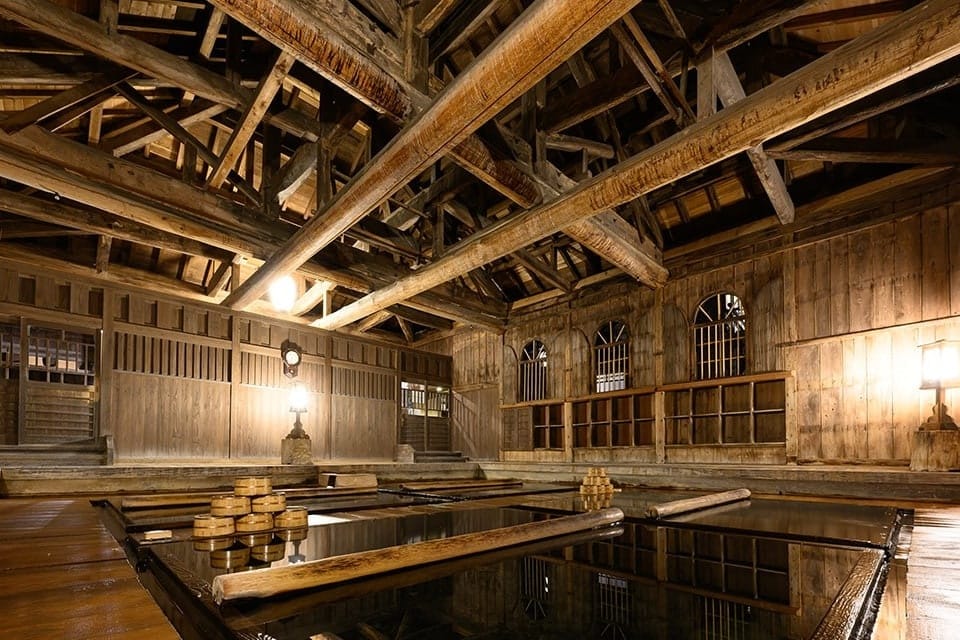
Hotel Urashima, Katsura Onsen Nanadaru Onsen Hotel, Kawazu Onsen-go Midorinokaze Resort Kitayuzawa, Kitayuzawa Onsen
Midorinokaze Resort Kitayuzawa緑の風リゾートきたゆざわ
- Day use 15:00–20:00
- ¥2,500 for a day bath
- Outdoor bath
Tamagawa Onsen玉川温泉
- Day use 10:00–15:00
- ¥1,000 for a day bath
- Private bath
- Outdoor bath
Hoshi Onsen Chojukan法師温泉 長寿館
LodgingNatural onsen waterGunma6 reviews
- Day use 11:00–13:30
- ¥1,500 for a day bath
- Outdoor bath
- Konyoku (mixed bathing)
- Sulfate spring, pH 8.3, 42°C at the source
Nanadaru Onsen Hotel七滝温泉ホテル
- Day use 09:00–20:00
- ¥1,000 for a day bath
- Private bath, day visitors can book
- Outdoor bath
- Konyoku (mixed bathing)
- Sulfate spring, 54°C at the source
Hotel Urashimaホテル浦島
- Day use 09:00–19:00
- ¥2,500 for a day bath
- No tattoos
- Outdoor bath
- Sulfur spring, pH 8.3, 42°C at the source
KYUKAMURA OHKUNOSHIMA休暇村大久野島
LodgingNatural onsen waterHiroshima1 review
- Day use 11:30–17:00
- ¥550 for a day bath
- Radon spring, 20°C at the source
Hanayuzuki花ゆづき
- Day use 15:00–21:00
- ¥1,500 for a day bath
- Outdoor bath
- Simple spring, pH 8.9, 37°C at the source
Sanga Ryokan黒川温泉 旅館 山河
- Day use 08:30–21:00
- ¥600 for a day bath
- Tattoos allowed
- Private bath
- Outdoor bath
- Simple spring, pH 6.1, 49°C at the source
See all 1,973 inns and hotels that take day visitors on the map
Questions people ask
- Can I use a ryokan's bath without staying?
- Often, yes. Many ryokan and hotels take day visitors for a fee, usually for a few hours a day, and some not every day or only by booking. Not every inn does, so check the inn's own site or the Day Use section on its page before you go.
- What time can I go for a day bath?
- It depends on the place. At an inn, day bathing is often a window of a few hours around the middle of the day, such as 11:00 to 14:00, with the last entry 30 minutes to an hour before the end. Sento and super sento set their own hours. Check the hours and the last entry for the day you go.
- Do I need to book a day visit?
- For bathing alone, many places let you walk in and pay at the desk, but some inns take day visitors only by booking, and day plans with a meal or a private bath are often booked ahead. Check the place's own site.
- Do I need to bring a towel?
- It is safest to bring a small towel and a bath towel. Some places rent or sell them and some day plans include them, but not all do.
- Is tachiyori-yu the same as higaeri?
- In practice, yes. Tachiyori-yu (立ち寄り湯) is a bath you drop in on, and higaeri nyuyoku (日帰り入浴) is bathing without staying the night. Both mean you visit the bath without taking a room.
- Can I book a private bath on a day visit?
- At some places. A private bath (kashikiri) is often for staying guests only, but some inns and bathhouses let day visitors book one for a set time and a fee. On Onsen Oni, look for Day-Use Private Bath on a place page, or use the private onsen pages by prefecture.
Related words
- Kashikiri貸切Private or family bath you have to yourselves for a set time, often for an extra fee. Some are booked ahead and some are first come, first served, and not every place opens them to day visitors.
- Yumeguri湯めぐりHot spring hopping: visiting multiple baths in a row, often using a special pass available in onsen resort towns.
- Toji湯治Therapeutic hot spring cure: extended stays focused on healing through regular bathing. Usually used in a historical context, or for sanatorium-style facilities where patients bathe regularly over long periods to treat ailments.
- Sento銭湯Neighbourhood public bathhouse whose price each prefecture caps. Many heat ordinary water, some run on a hot spring of their own.
- Supa sentoスーパー銭湯Large commercial bathing complex offering a wide variety of baths, saunas, restaurants, and entertainment: a modern evolution of the traditional sento.
- Kyukeijo休憩所Rest area for relaxing after bathing, often with tatami seating, beverages, and sometimes massage chairs.
- Kakeyu掛け湯Pouring hot water from the bath over yourself with a basin before you get in, starting with your feet and hands, to rinse off and get used to the temperature. Some baths have a small tub of hot water just for this.
- Rotenburo露天風呂Open-air outdoor bath. One of the most iconic features of Japanese onsen, offering views of nature and seasonal scenery.
- Onsengai温泉街Hot spring town or district: an area where ryokan, onsen facilities, restaurants, and tourist shops have historically developed around a spring source.
Where to go next
Find a bath for the day
The map shows every place in the catalog that takes day visitors.
Open the mapSources
- コトバンク「日帰り」(デジタル大辞泉)
- 国立国会図書館「第1章 湯治場としての温泉」(本の万華鏡 第23回)official
- 環境省「温泉の保護と利用に関する懇談会」報告要旨(山村順次、2003年)official
- コトバンク「ふるさと創生事業」
- 文京区「公衆浴場事業」(東京都の入浴料金統制額、2026年8月1日改定)official
- 埼玉県「公衆浴場入浴料金の統制額の改定について」official
- 静岡県「公衆浴場入浴料金統制額の改定について(令和8年1月1日から施行)」official
- GO TOKYO「銭湯でリラックス」official
- 地方税法 第701条の2(入湯税の税率)official
- 神戸市「入湯税」official
- 野沢温泉観光協会「野沢温泉 外湯めぐりガイド」official
- 信州 渋温泉「日帰り温泉」official
- 法師温泉 長寿館(日帰り入浴)
- 乳頭温泉郷 妙乃湯「温泉」
- 黒川温泉 旅館 山河「温泉」
- 南紀勝浦温泉 ホテル浦島「日帰り温泉」
- 洞爺湖温泉 ホテルグランドトーヤ「温泉」
- 有馬温泉 銀水荘 兆楽「日帰りプラン」
- 七滝温泉ホテル「日帰り入浴」