
Glossary
Yumeguri: Bath-Hopping Through an Onsen Town
Going round the baths of an onsen town, one after another: what the word means, how the passes work, and how to pace a day of it.
湯めぐりゆめぐりyumeguri
Passes, tags and stamp books
Every town runs its own. These are the kinds you will meet.
The town's public baths
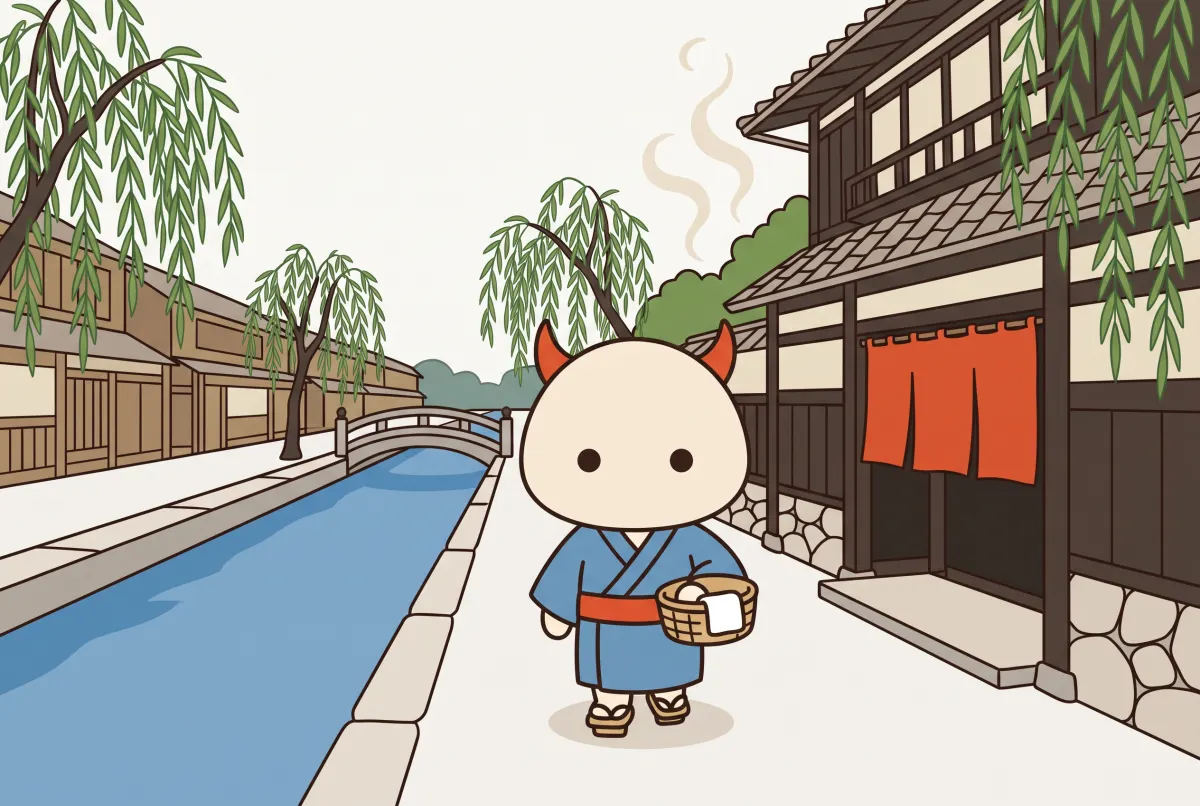
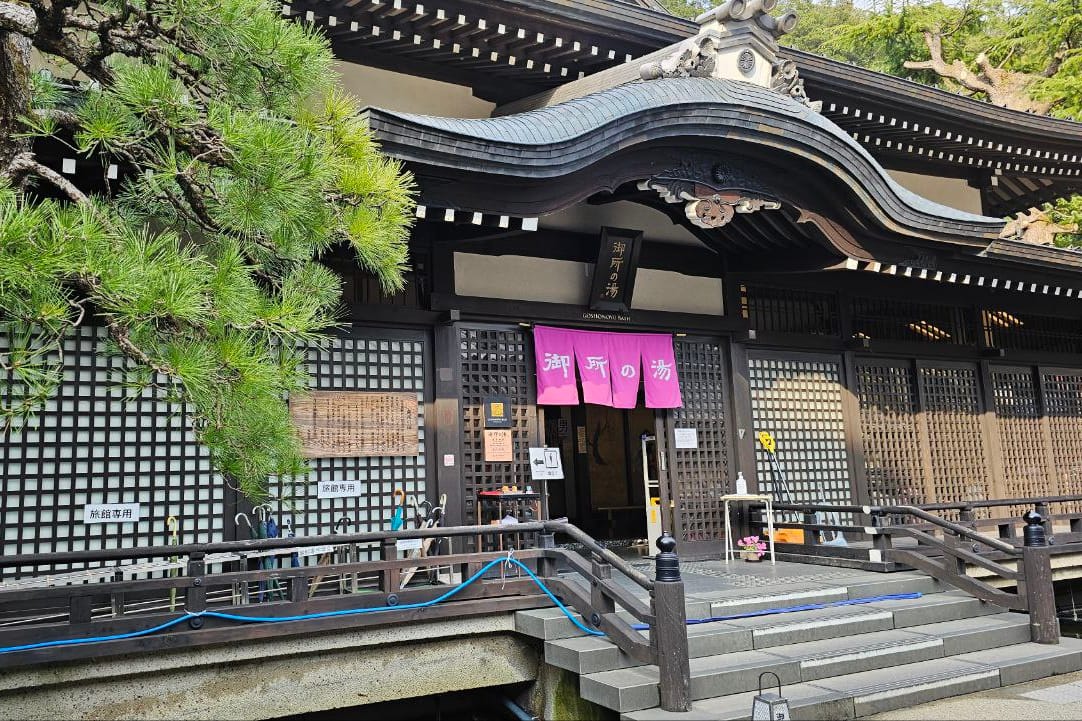
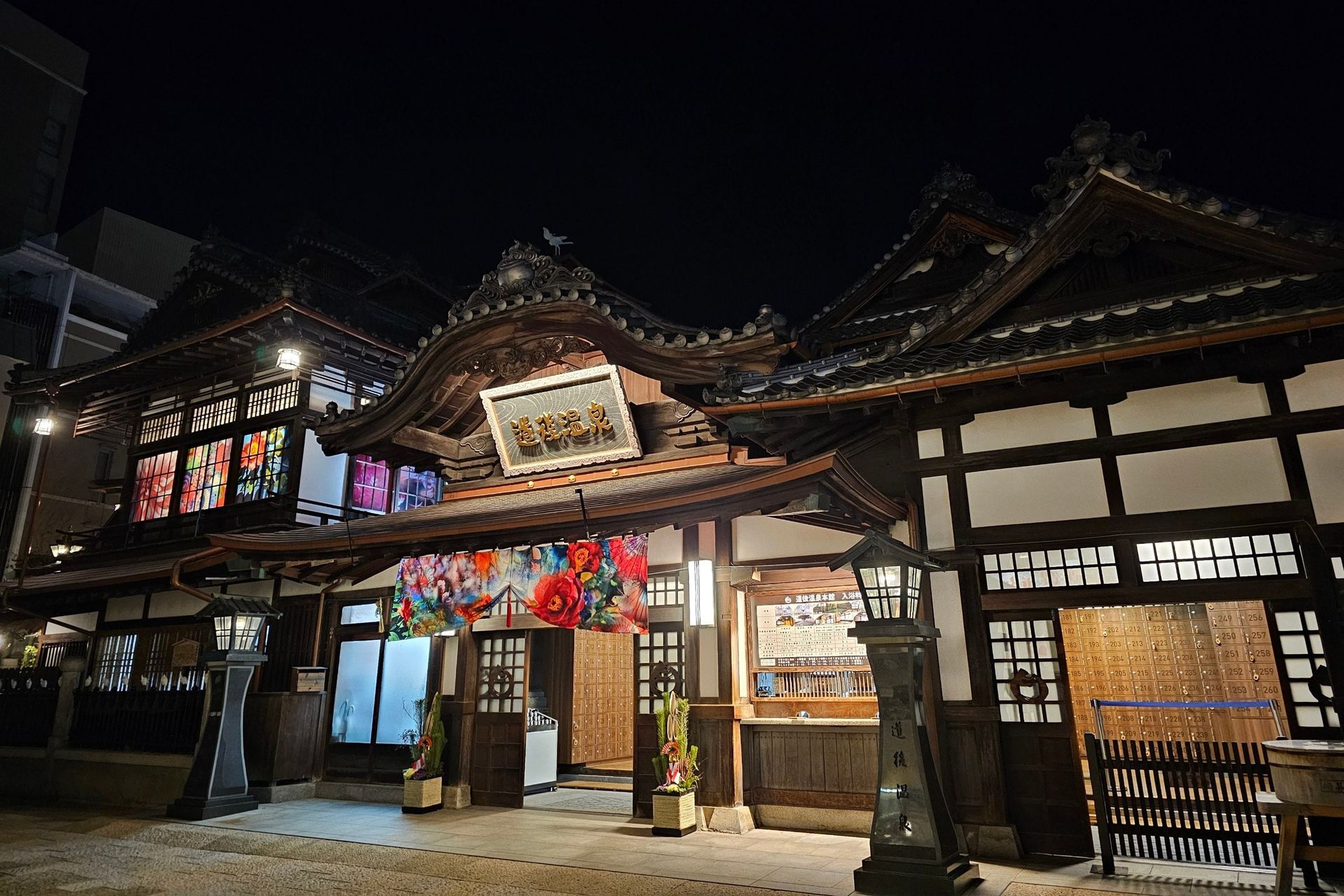
In a town built around its sotoyu, the yumeguri is simply walking between them: Kinosaki's six, or Shibu's nine. Dogo Onsen in Ehime runs a stamp rally across its three public baths. Collect the stamps of the Honkan and Asuka-no-yu, or of all three, within a month, and trade the card for a small prize.Goshonoyu Onsen, Kinosaki Onsen
A wooden pass (tegata)
Kurokawa's nyuto tegata (入湯手形), a wooden tag first sold in 1986, takes you into any three of the 25 inn outdoor baths that accept it, between 8:30 and 21:00. It costs 1,500 yen for adults and lasts six months, and each inn stamps it with a seal of its own design. One of the three can go on a snack or a souvenir in town instead, and afterwards you can keep it or leave it at the village's Jizo hall. In Okuhida Onsen-go in Gifu, the Yukemuri Tatsujin tegata costs 1,200 yen and takes you into the baths of two or three member inns across the area's five onsen villages. Kusatsu's Choina Sanyu Meguri tegata is a card that doubles as a picture postcard: it covers the town's three day baths for 2,100 yen, against 2,900 yen paid one by one, and never expires.Yamabiko Ryokan, Kurokawa Onsen Shinhotaka Onsen Yarimikan, Okuhida Onsen-go Shinhotaka Onsen Yarimikan, Okuhida Onsen-go
Stamp rallies
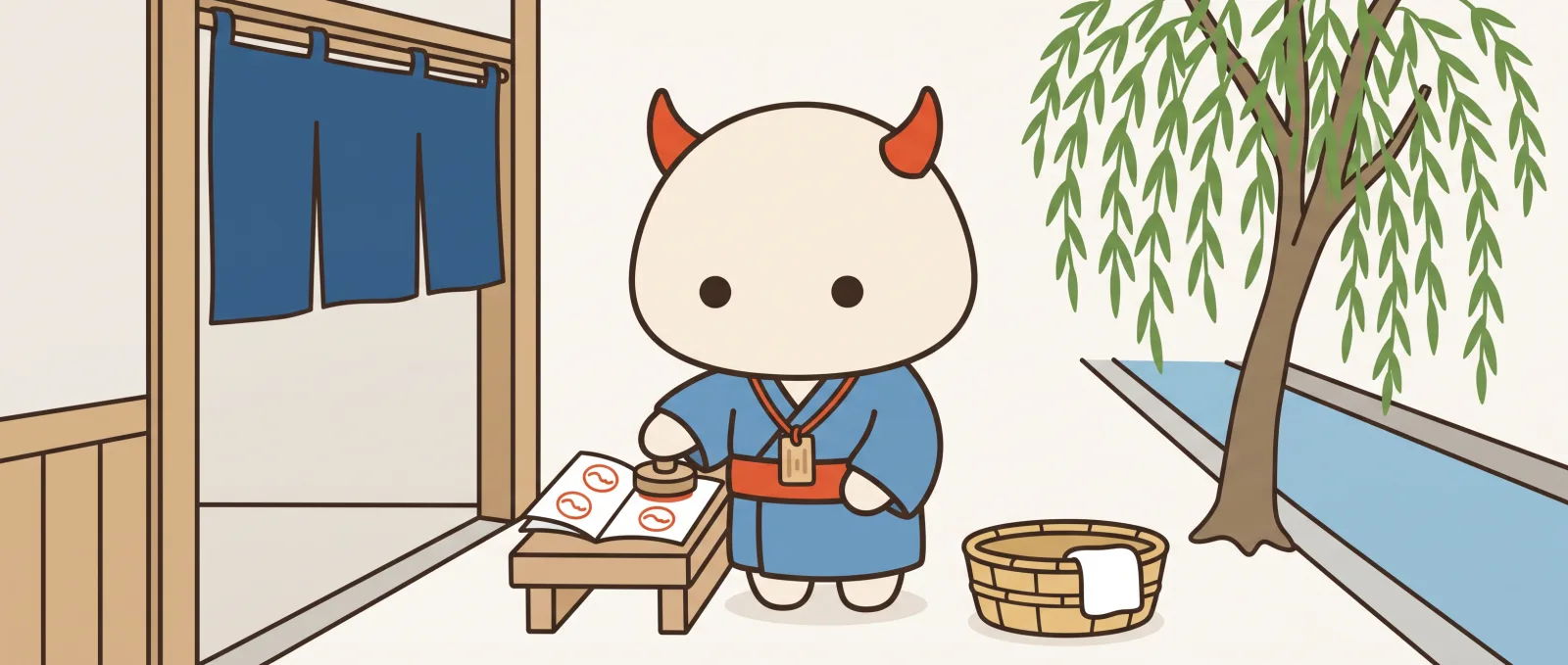
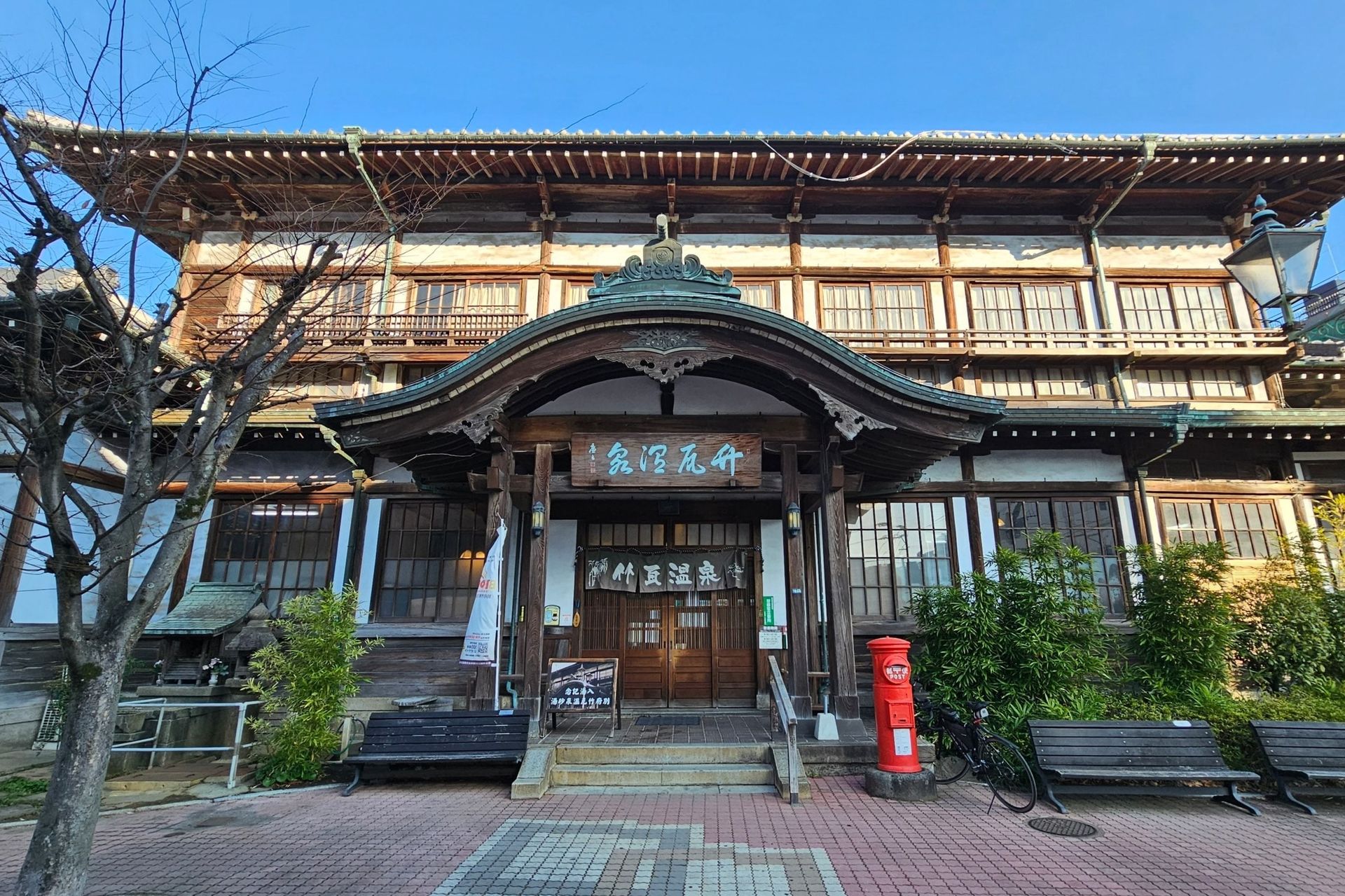
Beppu Hatto Onsen-do counts about 150 baths across Beppu. You stamp a booklet, the Spa Port, at each one you bathe in, and 88 different stamps make you an Onsen-do Meijin. The Kyushu 88 (九州八十八湯めぐり) was modelled on it: you choose 88 from baths picked by a selection committee across all seven prefectures of Kyushu, in a 100-yen stamp book, for the title of Sennin (泉人). Each bath counts once, and you stamp after you bathe, not as you pass.Takegawara Onsen, Beppu Onsen Kasuga Onsen, Beppu Onsen Ekimae Koutou Onsen, Beppu Onsen
A towel to stamp
In Shibu you stamp a prayer towel (kigan tenugui) at each of the nine baths, then climb to the temple hall of Shibu Takayakushi above the town for the last seal. Nine, ku (九), can also be read as ku (苦), hardship, so going round all nine is said to wash your troubles away.Public Bath No.3 Wata-no-yu, Yudanaka-Shibu Onsen-kyo Public Bath No.1 Ichiban yu Hatsu-yu, Yudanaka-Shibu Onsen-kyo Public Bath No.7 Nanakuri-no-yu, Yudanaka-Shibu Onsen-kyo
On your phone
Some rallies now run on a phone. Beppu's Onsen Hunter is a free game in the browser that uses GPS: open it after you bathe, wait about fifteen seconds, and the bath's stamp appears. A bath stamped in the app is not stamped in the paper Spa Port as well.
Between baths
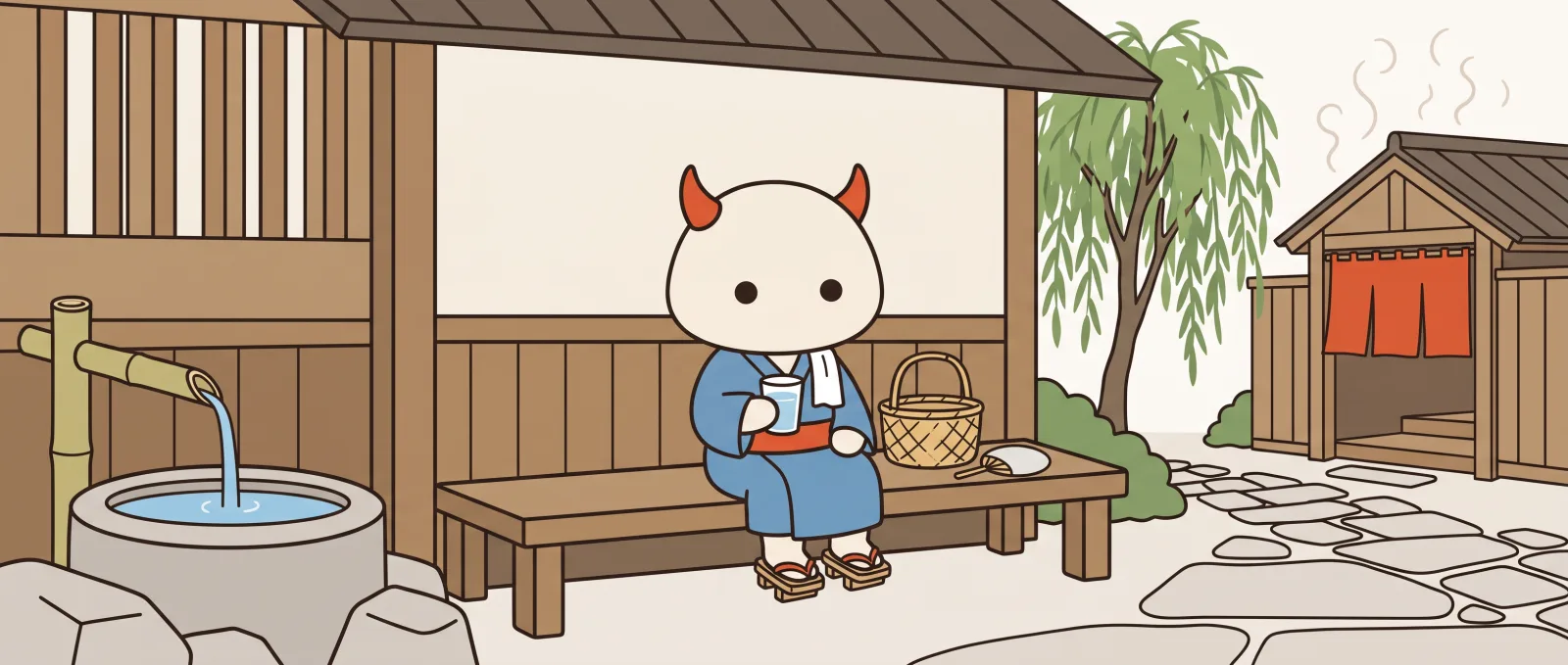
A yumeguri is more bathing than most people do in a day. The bathing notes every onsen has to post, from the Environment Ministry's standard, cover most of what follows.
Drink water before and after
The notes say to drink about a cup of water before you bathe and another after, against dehydration. On a day of several baths, that is a cup at every stop.Rest after each bath
After a bath, dry off, keep warm and rest for about half an hour. Sit down, cool off and let your body settle before the next one.Keep each soak short
The water in many sotoyu is hot. The Tourism Agency's note on Kinosaki puts it at about 42°C and suggests no more than five minutes in each bath. Get out slowly so you don't feel faint, and if you are older, have high blood pressure or heart disease, or have had a stroke, the notes say to avoid baths of 42°C or more.Mind meals and drinks
Avoid bathing right before or after a meal, and after drinking. Kurokawa's pass can be spent on a beer at some stops, so keep that for the last one.Start fresh at every bath
Each bath is a new bath: wash before you get in, or at least pour hot water over yourself (kakeyu), from your feet and hands up. Beppu's bather's code asks for it too, not least because some of its baths are very hot.You are a guest in someone's bath
Many sotoyu are the neighbourhood's own bath. Beppu's code asks you to remember you are a guest, be friendly with the people in it, and ask before you run cold water into a bath that feels too hot. In Kurokawa, photos are not allowed in the outdoor baths, and food and drink stay out.Stop when you have had enough
The Kyushu 88 organisers warn that bathing many times in one day can leave you drained. If you feel dizzy or worn out, skip the next bath. A pass that lasts lets you come back: Kurokawa's for six months, Kusatsu's with no end date.
Where to try it
One bath on a yumeguri route in each region, from Niseko in Hokkaido to Beppu in Oita.
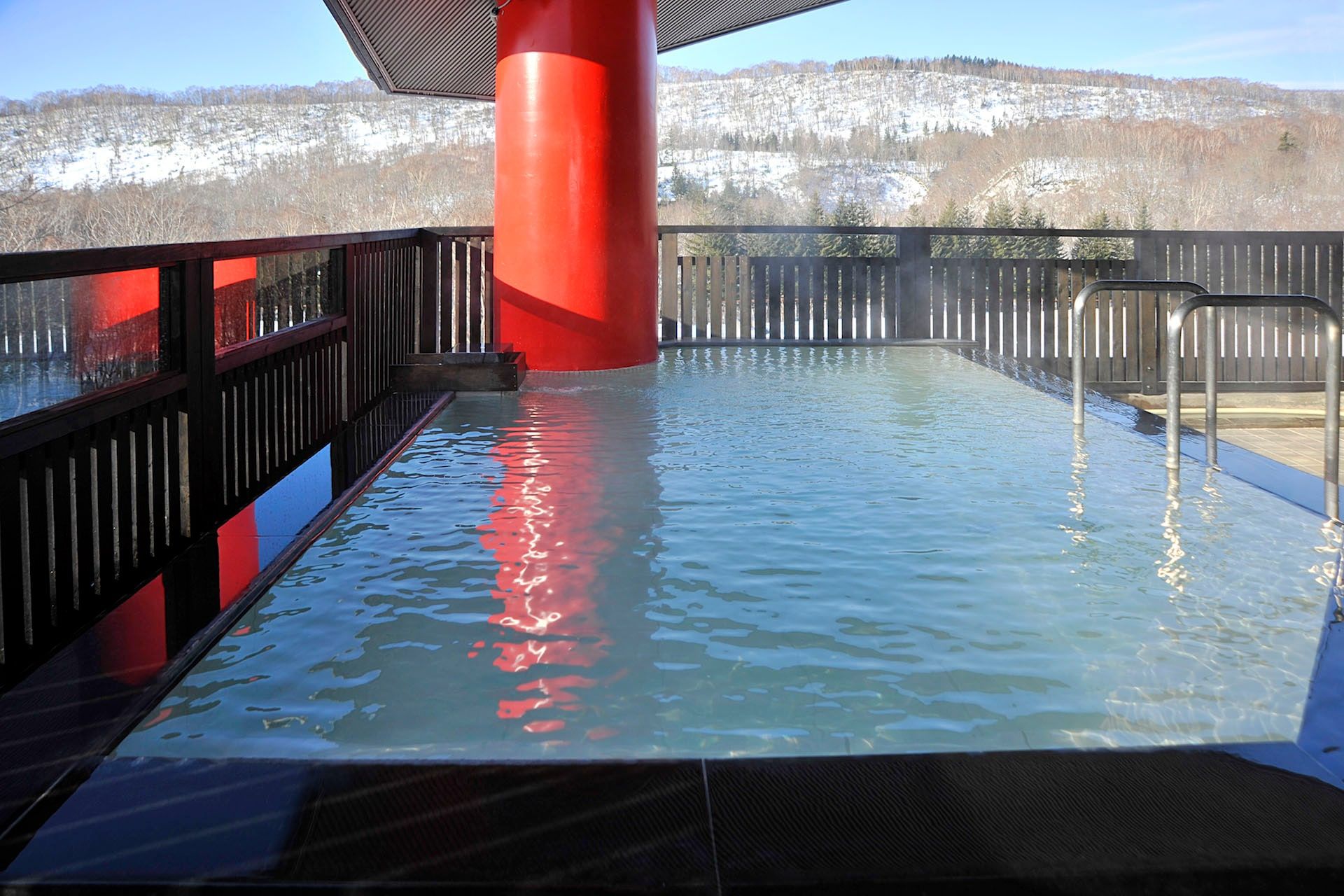
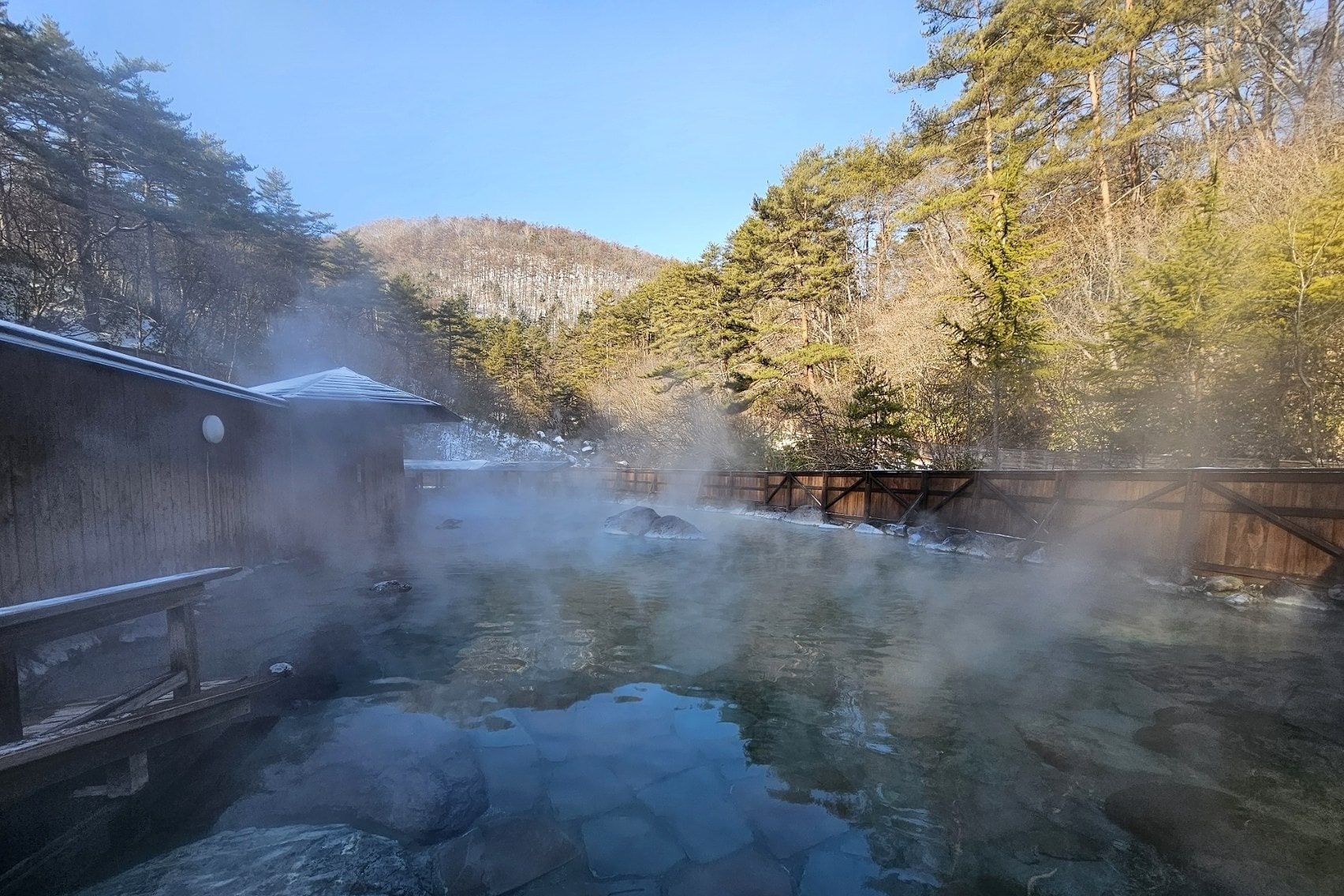
- Hotel KANRONOMORI
ニセコ昆布温泉ホテル甘露の森
- Day use 11:00–20:30
- ¥800 for a day bath
- Tattoos allowed
- Outdoor bath
- Sulfur spring, pH 7.4, 53°C at the source
- Kamiyu
蔵王温泉 上湯共同浴場
- Day use 06:00–22:00
- ¥300 for a day bath
- Acidic spring, pH 1.6, 54°C at the source
- Sainokawara Rotenburo
西の河原露天風呂
- Day use 07:00–20:00
- ¥800 for a day bath
- Tattoos allowed
- Outdoor bath
- Konyoku (mixed bathing)
- Acidic spring, pH 1.7, 95°C at the source
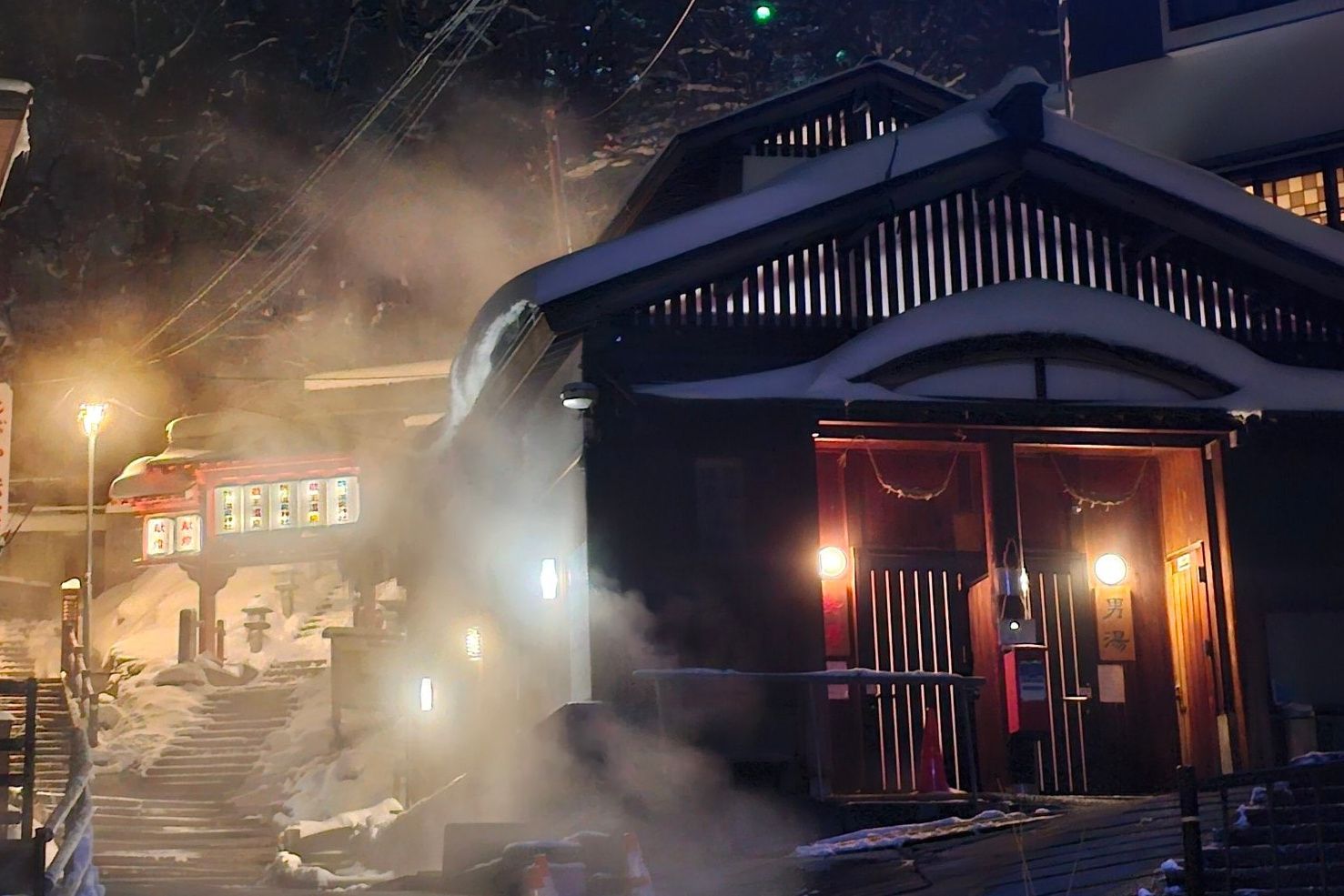
- Public Bath No.9 O-yu
九番湯 渋大湯
- Day use 10:00–17:00
- ¥800 for a day bath
- Sulfate spring, pH 4.9, 62°C at the source
- Goshonoyu Onsen
御所の湯
- Day use 07:00–23:00
- ¥800 for a day bath
- Tattoos allowed
- Outdoor bath
- Chloride spring, 58°C at the source
- Dogo Onsen Main Building
道後温泉本館
- Day use 06:00–23:00
- ¥700 for a day bath
- Tattoos allowed
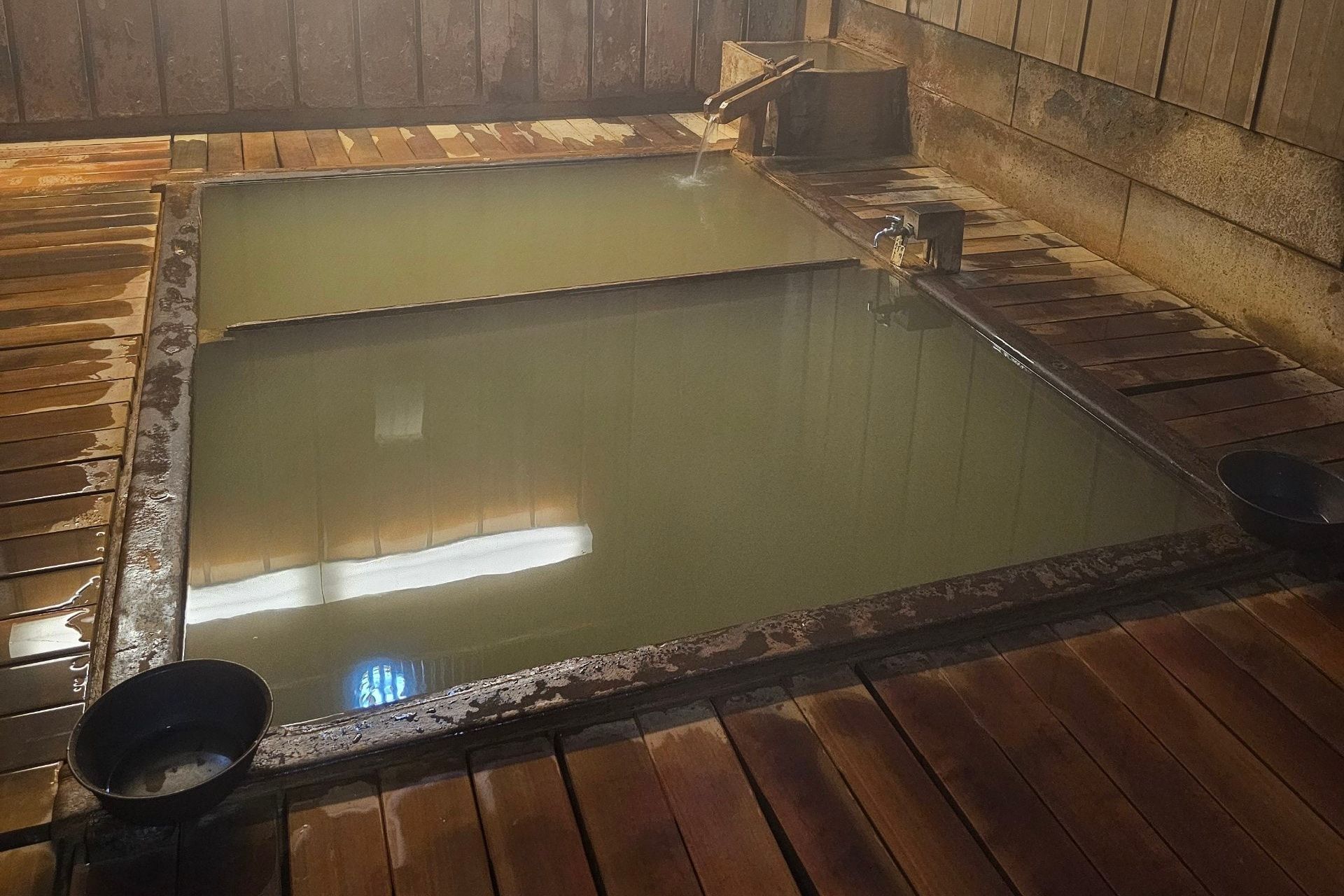
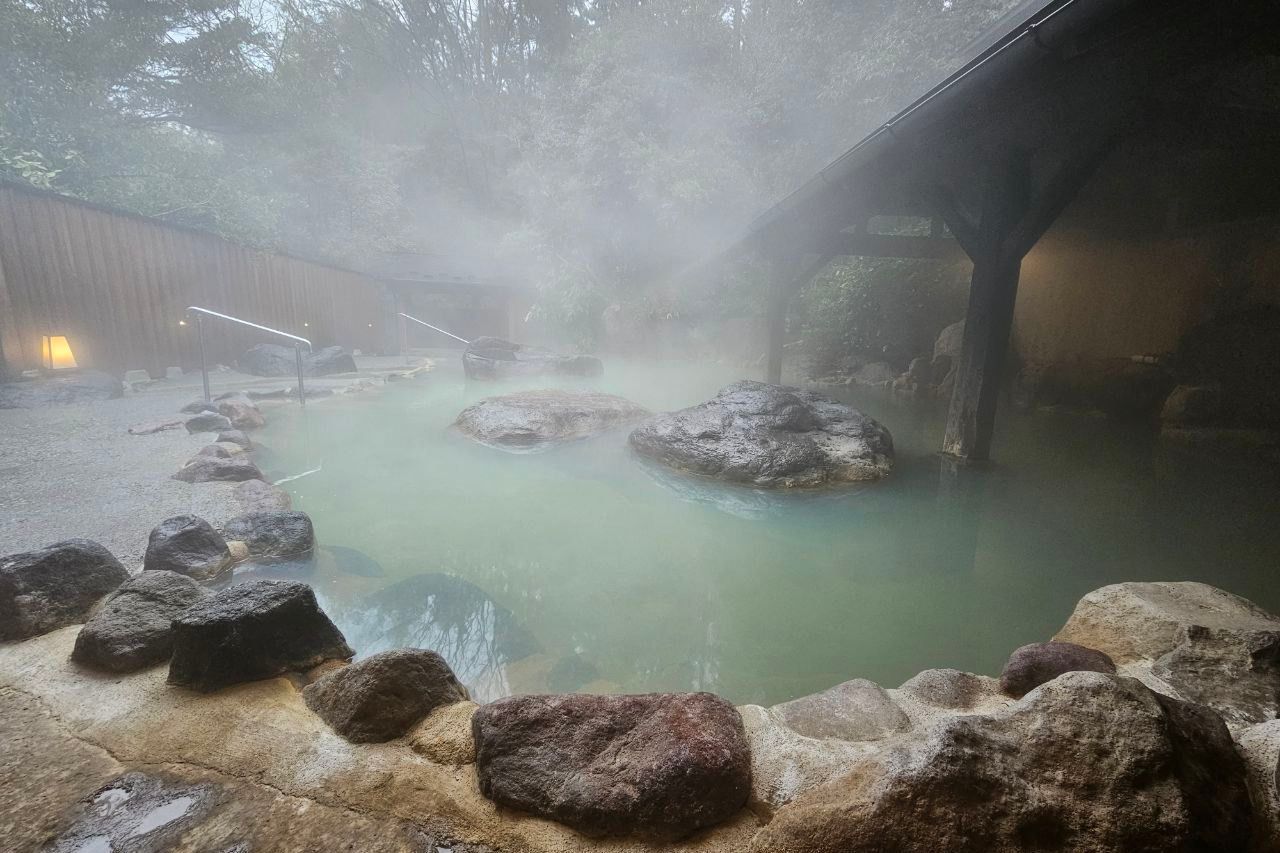
- Yamabiko Ryokan
やまびこ旅館
- Day use 08:30–21:00
- Private bath
- Outdoor bath
- Sulfate spring, 83°C at the source
- Takegawara Onsen
竹瓦温泉
- Day use 06:30–22:30
- ¥300 for a day bath
- Tattoos allowed
- Chloride spring, pH 7.5, 49°C at the source
 Lodging
 Public Bathhouse
Yumeguri in the catalog
Each program lists its baths on a map, with how its pass or stamp book works.






Where to go next
Find a yumeguri
The programs pages list each pass and stamp rally the catalog knows, with every bath on a map.
See the programsSources
- コトバンク「巡る」(デジタル大辞泉)
- コトバンク「湯」(デジタル大辞泉・精選版 日本国語大辞典)
- 城崎温泉観光協会「外湯」official
- 城崎温泉観光協会 パンフレット 2025(外湯めぐりと散策)official
- 豊岡市「城崎温泉交流センター(愛称:さとの湯)整備基本計画[概要版]」official
- 観光庁 地域観光資源の多言語解説文データベース「Kinosaki Onsen: The Soto-Yu」official
- 黒川温泉観光旅館協同組合「黒川温泉の入湯手形」official
- 信州 渋温泉 公式サイト「九湯めぐり」(渋温泉旅館組合)official
- 草津温泉 草津三湯「ちょいな三湯めぐり手形」official
- 奥飛騨温泉郷観光協会「奥飛騨湯けむり達人」official
- 松山市「道後温泉湯めぐりスタンプラリー」official
- 別府八湯温泉道「温泉道とは」official
- 別府八湯温泉道「スパポートと温泉ハンター」official
- 別府八湯温泉道「温泉道表泉家の心得」official
- 九州八十八湯めぐり〜九州温泉道〜「参加方法」official
- 九州八十八湯めぐり〜九州温泉道〜「九州温泉道とは」official
- 北海道「温泉入浴施設において安全に入浴するための注意事項」(環境省の掲示基準より)official