Skip to the page

Glossary

Ashiyu: The Foot Bath

Shoes off, trousers up, feet in: a bath you can stop at on the way to somewhere else.

足湯あしゆashiyu
What an ashiyu is

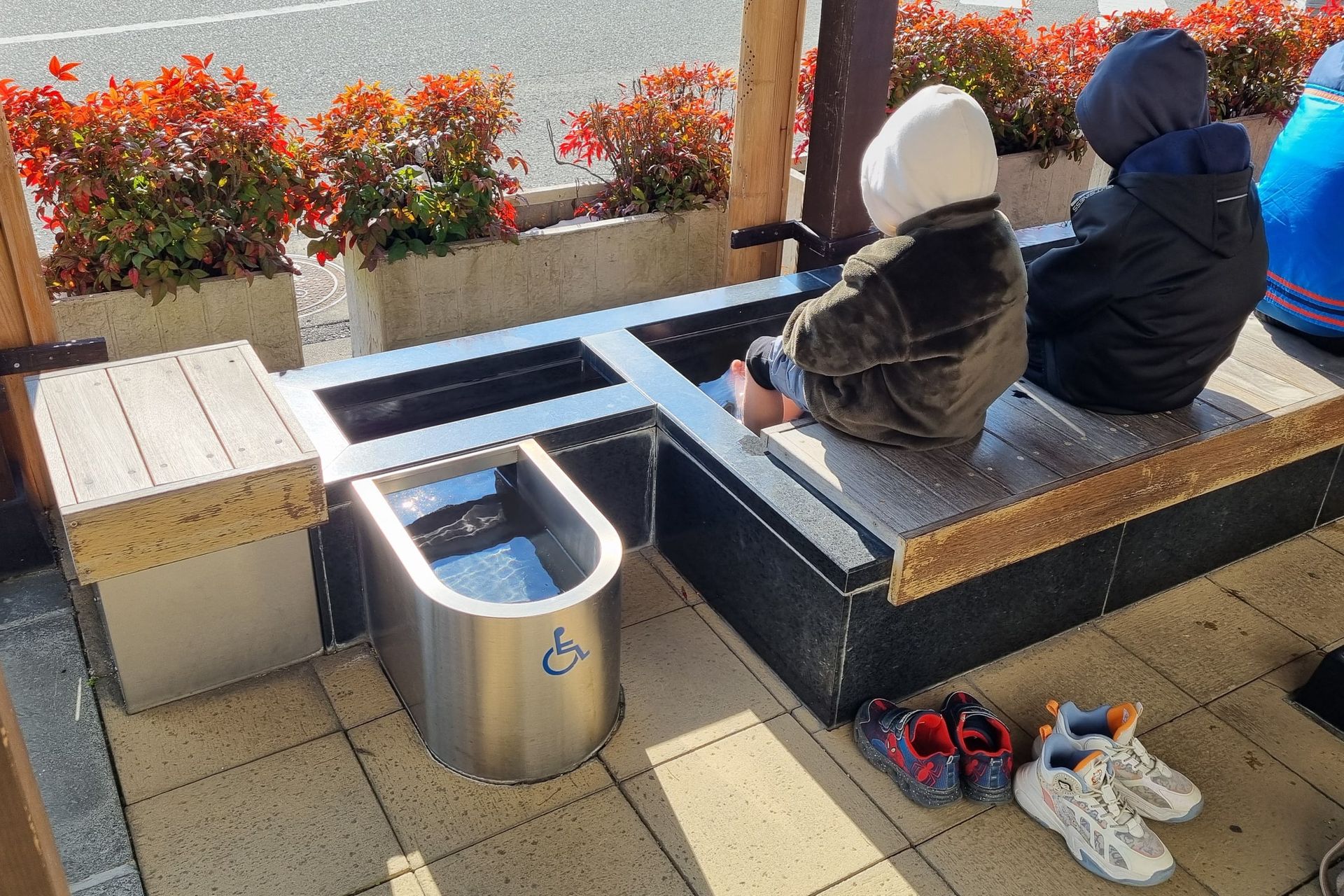
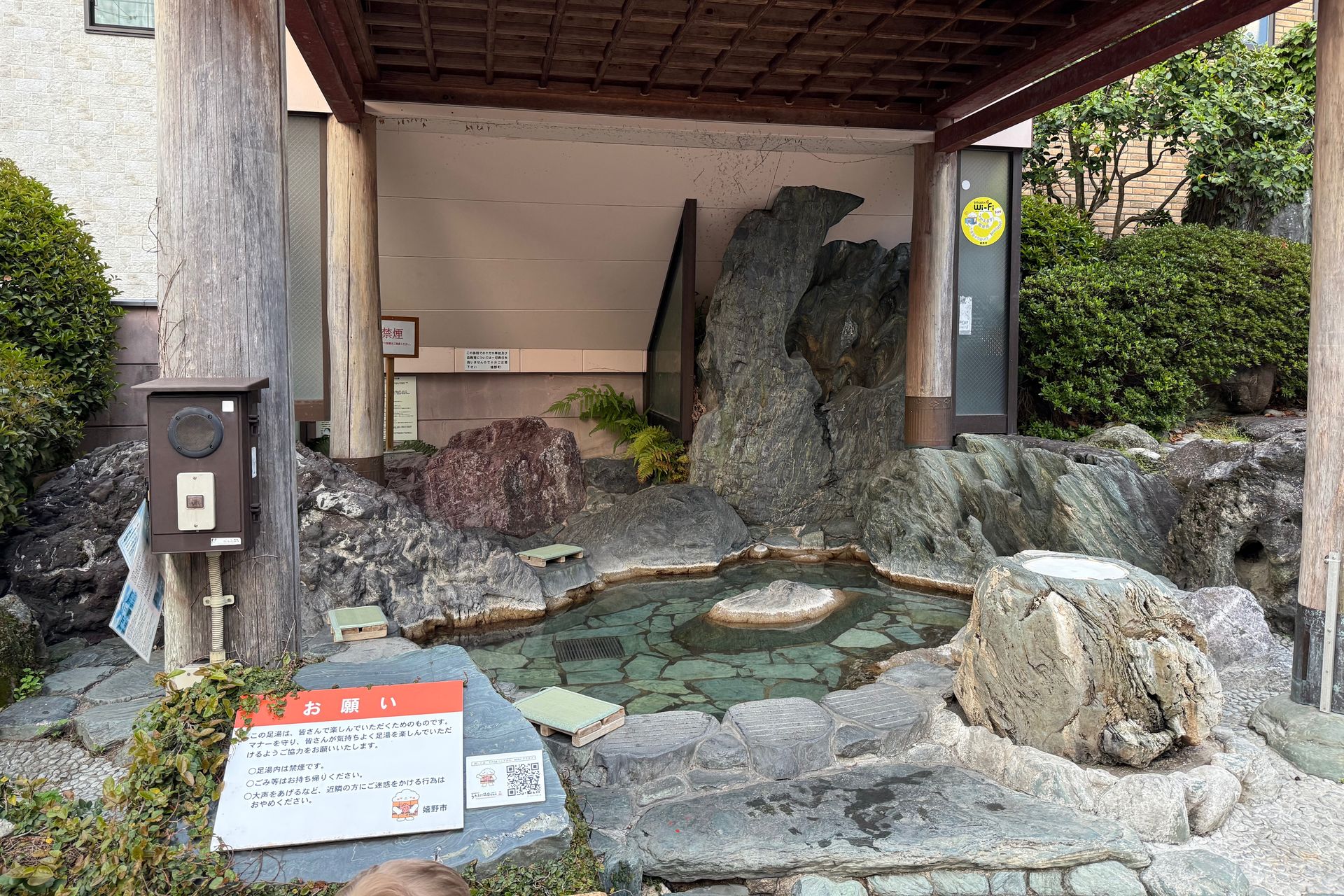
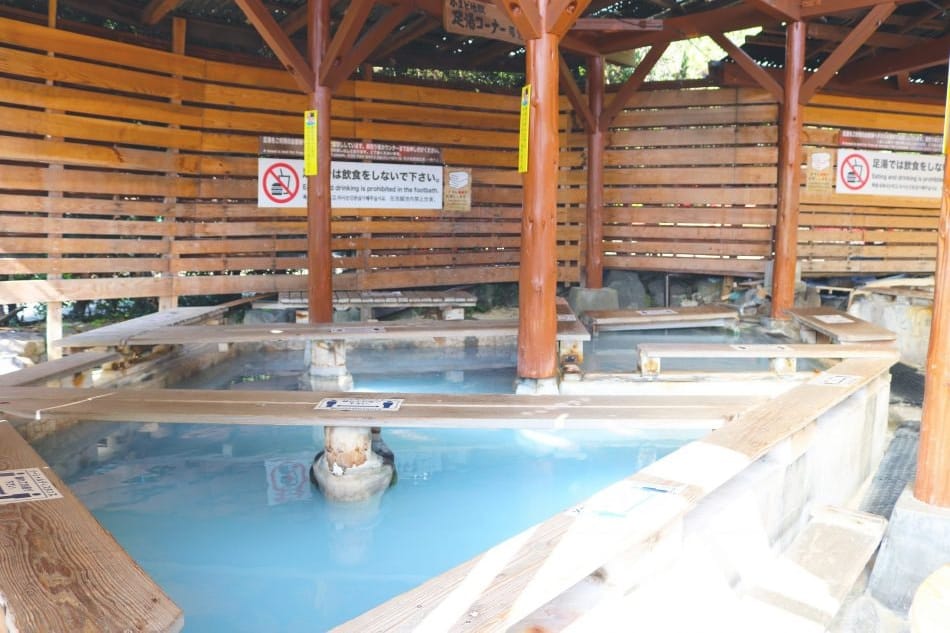
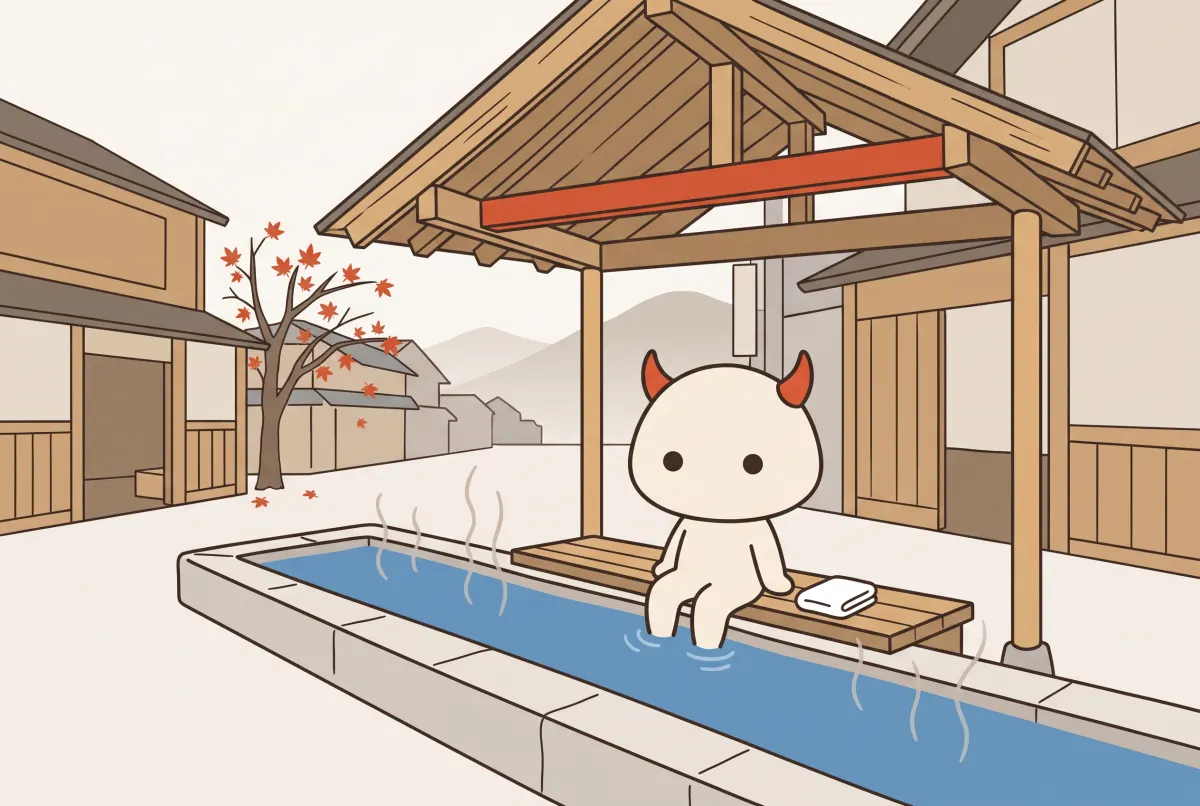
An ashiyu (足湯) is a foot bath: a shallow pool or trough of hot water with a bench or a ledge along it, where you sit, take off your shoes and socks, and put your feet and shins in the water. Dictionaries define the word as soaking the legs from the knees down. You keep your clothes on, there is nothing to book and often nothing to pay, and it takes as long as you like, which is why you find them where people are passing through.

Many use the same spring as the town's baths. In Japan, offering onsen water for people to bathe in needs a permit from the prefecture under the Hot Spring Act, and the Ministry of the Environment has read that rule as covering foot baths too, even a temporary one put up for an event. Not every foot bath is spring water, though: one in a city building may simply be heated water.

The word, piece by piece

  1. 足あしfoot; also the leg
  2. 湯ゆhot water; at an onsen, the spring's water itself

Why it warms you

Only your feet go in, but the warmth does not stay there. In a 2009 study, Japanese nursing researchers gave 19 healthy young men a 15-minute foot bath at 40°C: the skin of their feet and of their chest stayed warmer, and the blood flow in their feet higher, for the half hour after it. It was a small study, and it measured warmth, not cures.

It is also the gentlest way to try a hot spring. The bathing notes every onsen has to post suggest that people whose heart or lungs are weak take a half bath or a partial bath rather than going in up to the shoulders, and a foot bath is the most partial of all: no undressing, no washing first, and you can stop the moment you have had enough.

Where you find them

Foot baths sit wherever people stop for a moment: on the street, at the station, at a rest stop, by the sights.

  • In onsen towns

    An onsen town often has several along its streets. Gero in Gifu has nine, seven of them free and open to anyone and four of those open around the clock; Kaminoyama in Yamagata has five, all free. Walking from one to the next is part of the visit.
  • At the station

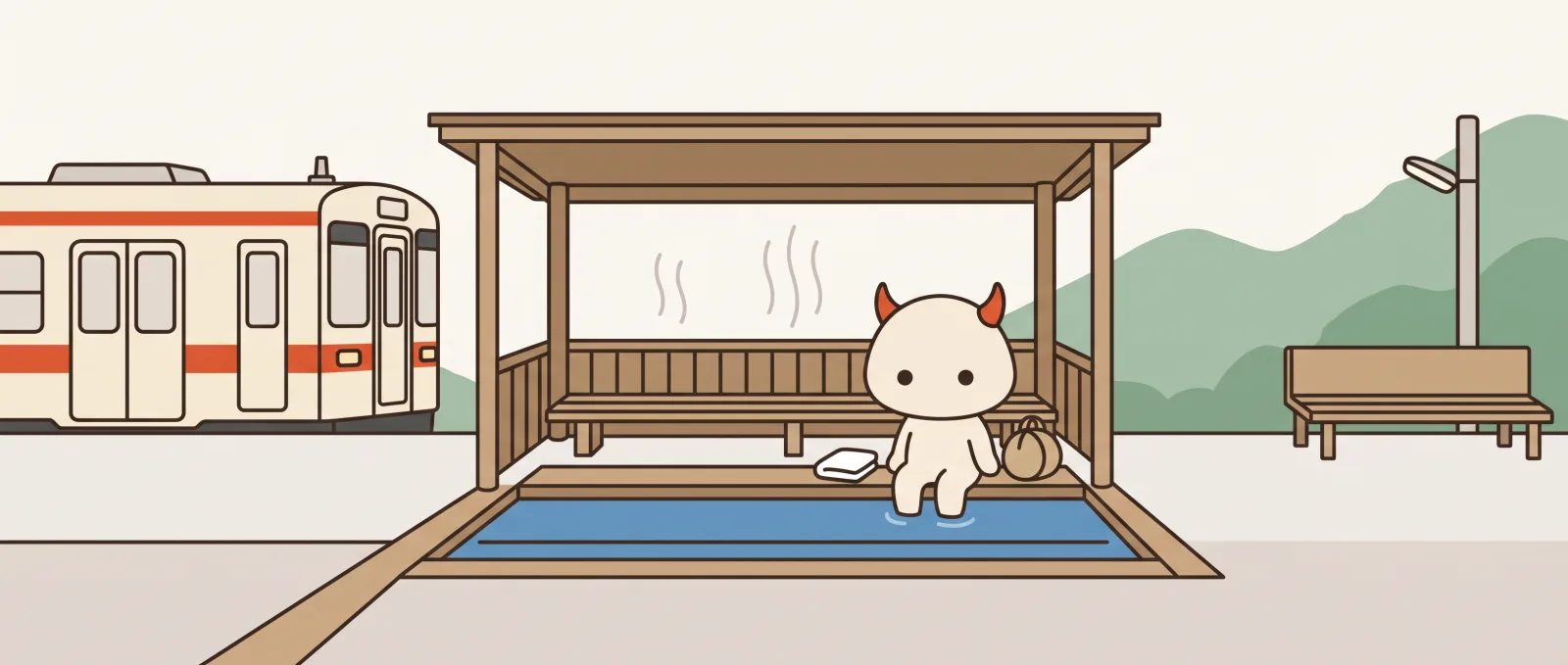
    At Kami-Suwa Station in Nagano, the foot bath is on the platform itself, open from 9:00 to 21:00 to anyone with a JR ticket or a platform ticket. At JR Ibusuki Station in Kagoshima, the gateway to the Ibusuki onsen area, local volunteers set one up in front of the station.
  • At roadside stations

    Some michi no eki, the registered rest stops along Japan's roads, have one. At Michi no Eki Tarumizu in Kagoshima, a long foot bath of natural hot spring water, flowing straight through, looks across Kinko Bay to Sakurajima. It opens from noon until sunset.
  • Under a cafe table

    A few cafes put the foot bath under the table. At Ashiyu Cafe Casval in Tsuchiyu Onsen, Fukushima, you take off your shoes and eat with your feet in spring water flowing in from the source. It opens at weekends only.
  • In the city

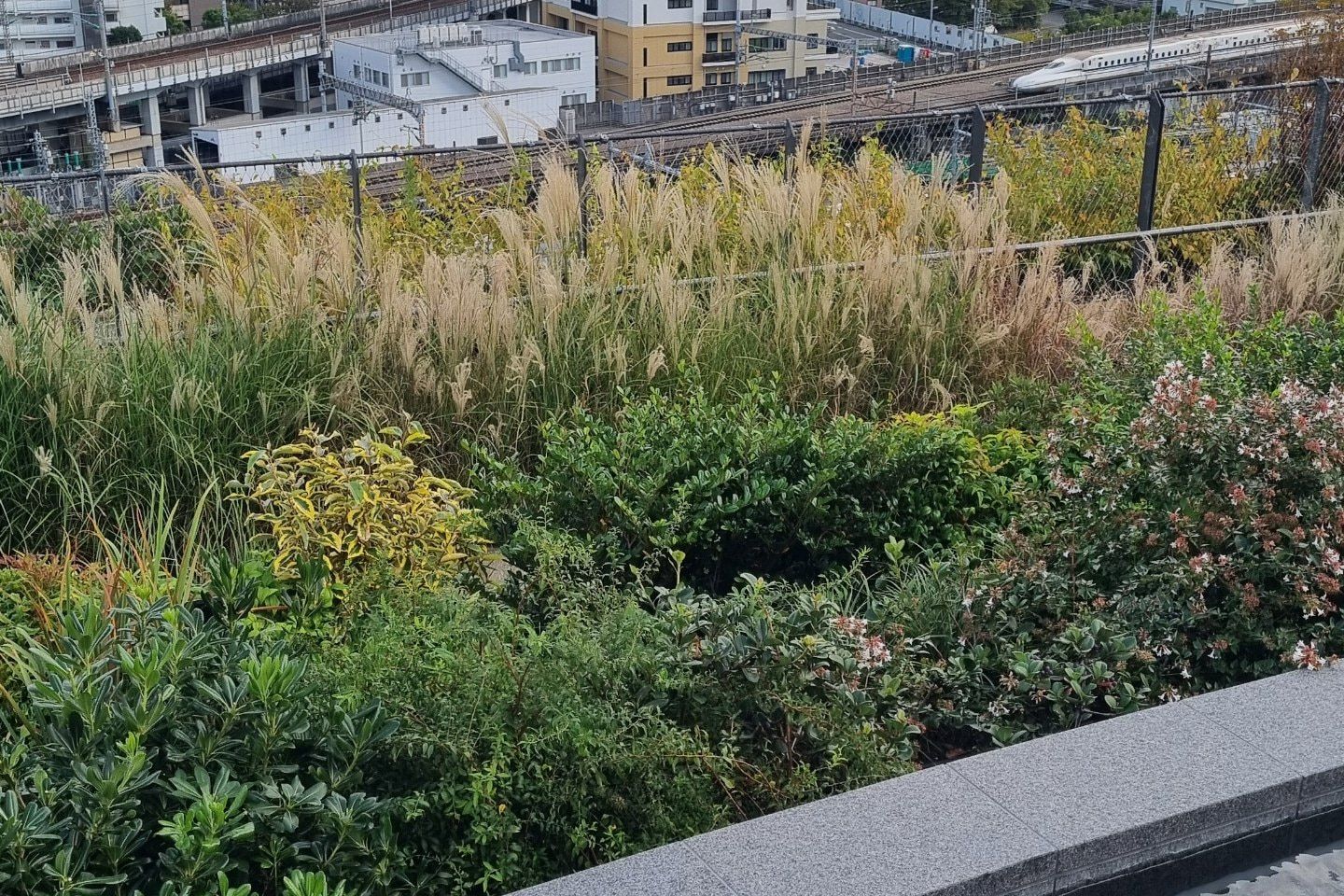
    Even in Tokyo: the MoN Takanawa museum building in Minato has a foot bath terrace on its sixth floor, half outdoors among the plants, with a warm section and a cold one. It is free to use, and no towels are provided.
  • At the sights

    Some sights keep one for their visitors. Several of Beppu's jigoku, the boiling ponds you look at rather than bathe in, have a foot bath: Umi Jigoku's is free once you are inside, and its roof keeps the rain off.

How to use one

There is no changing room and nothing to undress for, so the rules are few, and most of them are about sharing the water.

  • Bring a small towel

    Many foot baths have no towel to lend, so carry a small one to dry your feet. Some sell them: the tourist information centre at Yuda Onsen in Yamaguchi does, and Umi Jigoku in Beppu sells one for 250 yen.
  • Roll up your trousers

    The water comes up to your shins or your knees, so roll trousers up above the knee before you sit down, or come in a skirt or shorts. Socks and tights come off. If you are in tights, a nearby toilet is the easiest place to take them off; if your trousers won't roll up far enough, put your feet in only as deep as they allow.
  • Feel the water first

    Test it with your hand, then lower your feet in slowly. When Kaminoyama measured its five foot baths, they ranged from 39.5°C to 43.3°C, and the town suggests stirring the water gently so it is the same heat all through.
  • Five or ten minutes

    Kaminoyama suggests five to ten minutes in its foot baths. Take your feet out sooner if the water feels too hot, and dry them well before your shoes go back on.
  • Share the seat

    Sit side by side on the edge, keep wet feet off the bench, and keep your voice down. When it is crowded, take turns: those are the rules Kaminoyama posts for its foot baths.
  • It is not for washing

    The water is shared, so no soap and no scrubbing your feet in it, and the towel stays out of the water, as in any bath. If your feet are muddy from a walk, rinse them at a tap first.
  • Not with an open cut

    The bathing notes every onsen has to post say not to bathe while you have visible bleeding. With a cut or a sore on your feet, give the foot bath a miss, or warm your hands at a teyu instead.

Teyu: the hand bath

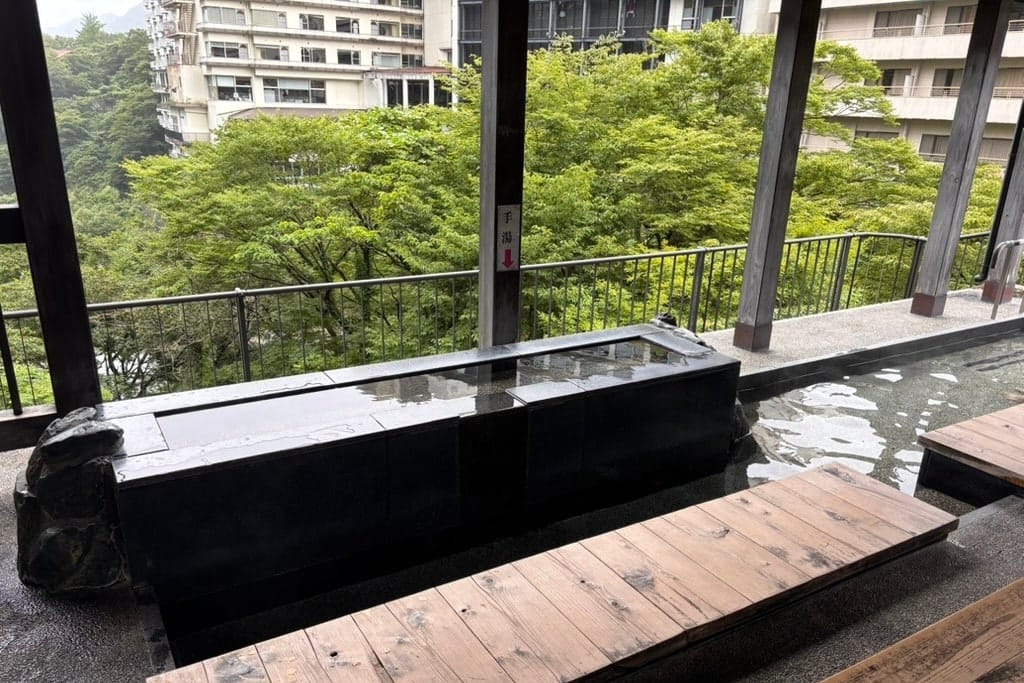
A teyu (手湯) is the same idea for your hands: a small basin or spout of hot spring water where you stand, push your sleeves back and warm your hands. They are rarer than foot baths. In Gero, hand baths stand at Onsen Shrine and in front of JR Gero Station, a short walk from the town's foot baths.

Some places put the two side by side. At the Hakone Open-Air Museum, beside a 28-metre foot bath fed from the museum's own spring, a hand bath runs with water straight from the source. A hand bath needs no shoes off at all, which helps when you are short of time or in boots.

A few worth the trip

Most foot baths are a trough and a bench. A few are a reason to go.

  • Hot Foot 105, Nagasaki

    In Obama Onsen, Unzen, the foot bath is 105 metres long, named for the 105°C of the town's spring, and Unzen City calls it the longest in Japan. Part of it is a walking foot bath, there is one for pets, and beside it are steam ovens where you can cook vegetables and seafood in the spring's steam. It is free.
  • Kiyotsukyo Gorge, Niigata

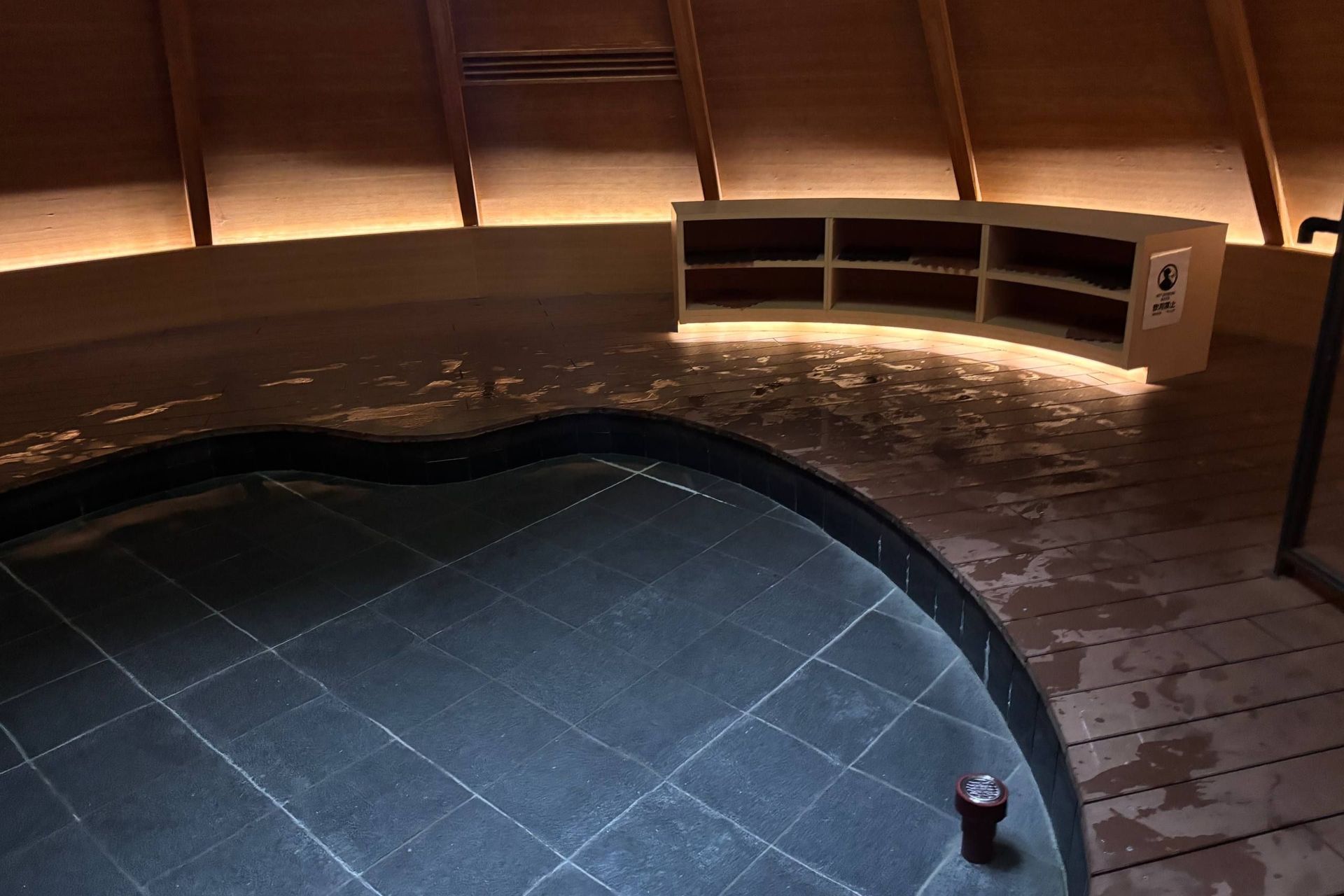
    At the mouth of the tunnel into the Kiyotsukyo Gorge, the entrance building, Periscope, was designed by MAD Architects for the 2018 Echigo-Tsumari Art Triennale. Its upper floor is a hot spring foot bath under a round mirrored opening in the ceiling that reflects the surroundings. The building and its foot bath are free; the tunnel charges an entry fee.
  • Mine Onsen geyser, Shizuoka

    In Kawazu, a geyser throws 100°C water 30 metres into the air for about a minute, on the half hour from 9:30 to 15:30, and the park around it has a free foot bath to wait in. The park closes on Tuesdays and Fridays.

Through the year

Many foot baths are outdoors or under an open roof, so the weather and the season decide a lot.

  • Winter

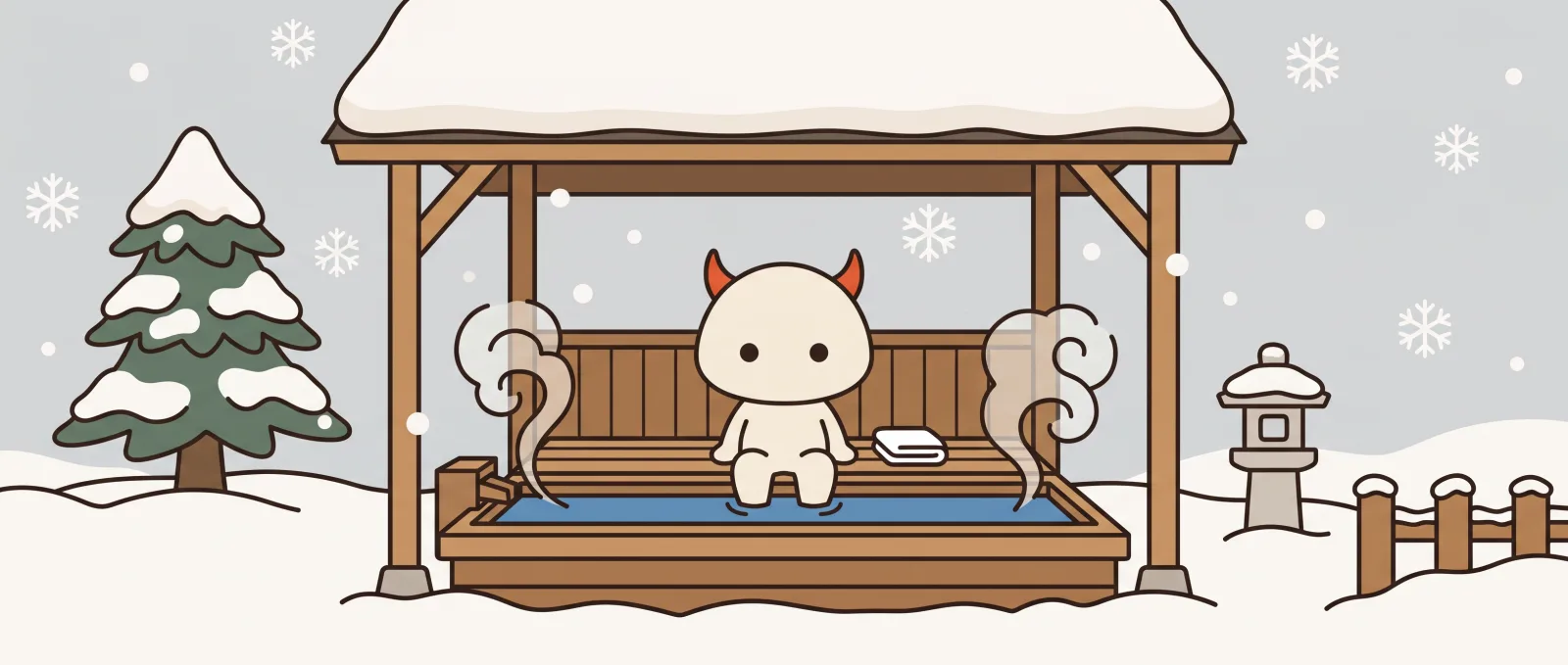
    Warm feet in cold air is the foot bath at its best. Hours are often shorter in winter: Kami-Suwa's lakeside foot bath closes at 17:30 from December to March instead of 18:30, and Hot Foot 105 at 18:00 from November to March. Dry your feet well before you walk on.
  • Mountain seasons

    A mountain foot bath keeps the mountain's season. The free foot bath at Kamikochi Onsen Hotel is open only while the hotel is, from late April to mid-November, and the Kiyotsukyo tunnel normally closes from mid-January to the end of February.
  • Rain

    Rain stops some. The foot bath at Sandanbeki in Shirahama shuts off its hot water when it rains, while a roofed one, like Umi Jigoku's in Beppu, carries on.
  • Summer

    On a hot day, go in the morning or the evening, or find one in the shade. Some have cold water too: MoN Takanawa's terrace has a cold section beside the warm one.
  • Cleaning days

    Some close at fixed times for cleaning: the foot bath at Tendo Onsen from 10:00 to noon on Mondays and Thursdays, the Mine Onsen geyser park on Tuesdays and Fridays. Check before you plan a stop around one.

Where to try one

One foot bath in each region we have a good one for, from Kinugawa in Tochigi to a roadside station facing Sakurajima.

See all 101 foot baths on the map

Questions people ask

Are foot baths free?
Many are, especially in onsen towns and at stations. A foot bath inside a paid sight is free only once you have paid to get in, Kami-Suwa's platform foot bath needs a train or platform ticket, and a few charge a small fee of their own.
Do I need a towel?
Bring a small one. Many foot baths have no towel to lend, though some sell one nearby.
Is the water in a foot bath onsen water?
Often, but not always. Many foot baths use the town's own spring, and offering onsen water for bathing, foot baths included, needs a permit under Japan's Hot Spring Act. A foot bath in a city building may use heated water instead, so if it matters to you, look at what the place says about its water.
How long should I keep my feet in?
Five to ten minutes is plenty; that is what Kaminoyama Onsen suggests for its foot baths. Take them out sooner if the water feels too hot.
What if I am wearing tights or long trousers?
Socks and tights come off, and trousers roll up above the knee. If yours won't roll up that far, put your feet in only as deep as they allow, or warm your hands at a hand bath where there is one.
Is an ashiyu the same as an ashimoto yushutsu onsen?
No. Ashimoto yushutsu (足元湧出) means the spring rises straight up through the floor of the bath you are sitting in. An ashiyu is a bath for your feet. The two words share the character for foot and nothing else.

Where to go next

Find a foot bath

The map shows every foot bath in the catalog.

Open the map