Glossary
Sento and Super Sento: Japan's Public Bathhouses
The neighbourhood bathhouse and its big modern cousin: what the words mean, how a visit goes, and how the two differ.
銭湯せんとうsento
What a sento is
A sento (銭湯) is a neighbourhood public bathhouse: you pay at the door, wash, soak and go home. Sen (銭) is money and to (湯) is hot water, so the word is close to "the paid bath". Japan's public bath rules give it a class of its own, the general public bath (一般公衆浴場), which the health ministry describes as a bath local people use for everyday hygiene.
That is why its price is capped. Under the Price Control Ordinance of 1946, each prefecture's governor sets the most a general public bath may charge. In Tokyo the adult price went up from 550 to 600 yen on 1 August 2026, with 200 yen for children aged 6 to 11 and 100 yen for younger ones. The same class takes in many town-run communal baths in onsen towns, and that is why the catalog files both as public bathhouses.
The word says nothing about the water. Many sento heat ordinary water, and some sit on a hot spring of their own: a sento can be an onsen, and plenty are.
Ishida-yu, Kyoto Yume no Koushuu Yokujou Goshiki, Osaka Funato-yu, Kyoto
The word, piece by piece
- 銭せんmoney, coins (zeni)
- 湯とうhot water, a bath (read yu on its own)
A little history
Paid baths are old in Japan. An encyclopedia records a sento in the grounds of the Gion shrine in Kyoto at the end of the Kamakura period, and the word turns up in a diary in 1450. In Edo, the Tokyo Sento Association dates the first to 1591, when a man called Ise Yoichi built a bathhouse by the Zenigame bridge, near today's Tokiwabashi. An account of the time complains that inside, the steam and smoke left you unable to speak or open your eyes. By the early 1800s Edo was said to have more than 600.
The shogunate kept trying to tidy them up. In 1657 it shut down the yuna baths, bathhouses with women attendants. Mixed bathing was banned again and again, under the Kansei and the Tenpo reforms, and only really ended in the middle of the Meiji period. Meiji also did away with the zakuro-guchi, the low screen you stooped under to reach the hot tub, and the new "improved baths" had high ceilings and vents to let the steam out. After the Great Kanto Earthquake of 1923, temple carpenters are said to have rebuilt Tokyo's sento in grand temple style, to lift the spirits of a city that was rebuilding.
Tokyo had 2,687 sento in 1968, the most since the war. That year 42.2 percent of homes in Tokyo had a bath of their own; by 2008 it was 97.6 percent, and Tokyo was down to 879 sento. There were 476 in April 2022, and the shared discount ticket sold in 2026 works at about 420. Across Japan, the national bathhouse association counted 17,999 sento in 1968 and 1,493 in April 2026.
Inside a sento

Every sento is a little different, but many share a layout, the old ones in Tokyo most of all. From the street to the bath, this is what you meet.
The building
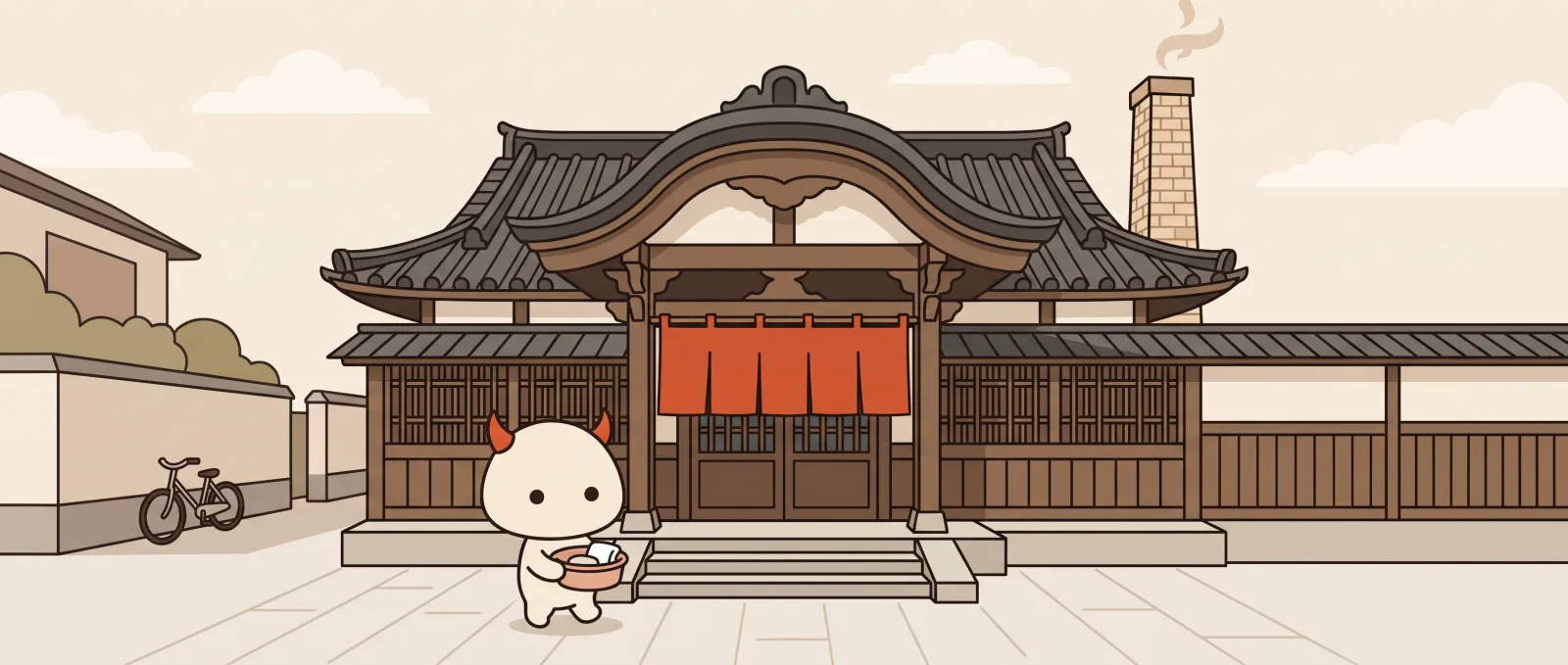
Many Tokyo sento have a curved temple-style gable over the entrance and a high coffered ceiling inside. A tall chimney used to show the way, though many sento no longer have one. A noren curtain hangs in the doorway, and there is usually one for men and one for women.Nakanobu Onsen Matsu no Yu, Tokyo Denki-yu, Tokyo
Shoe lockers
Shoes come off at the entrance and go in a small locker. Its key is often a wooden tag: take it with you so it does not get lost.Bandai (番台)
A raised seat at the entrance, where the attendant takes your money and can see over the changing rooms. Some sento still have one. Others have a front desk in a lobby, and some a ticket machine.Changing room (脱衣所)
Most have lockers; keep the key on your wrist while you bathe. Some old sento have baskets instead, and then valuables are left with the attendant.Washing area (洗い場)
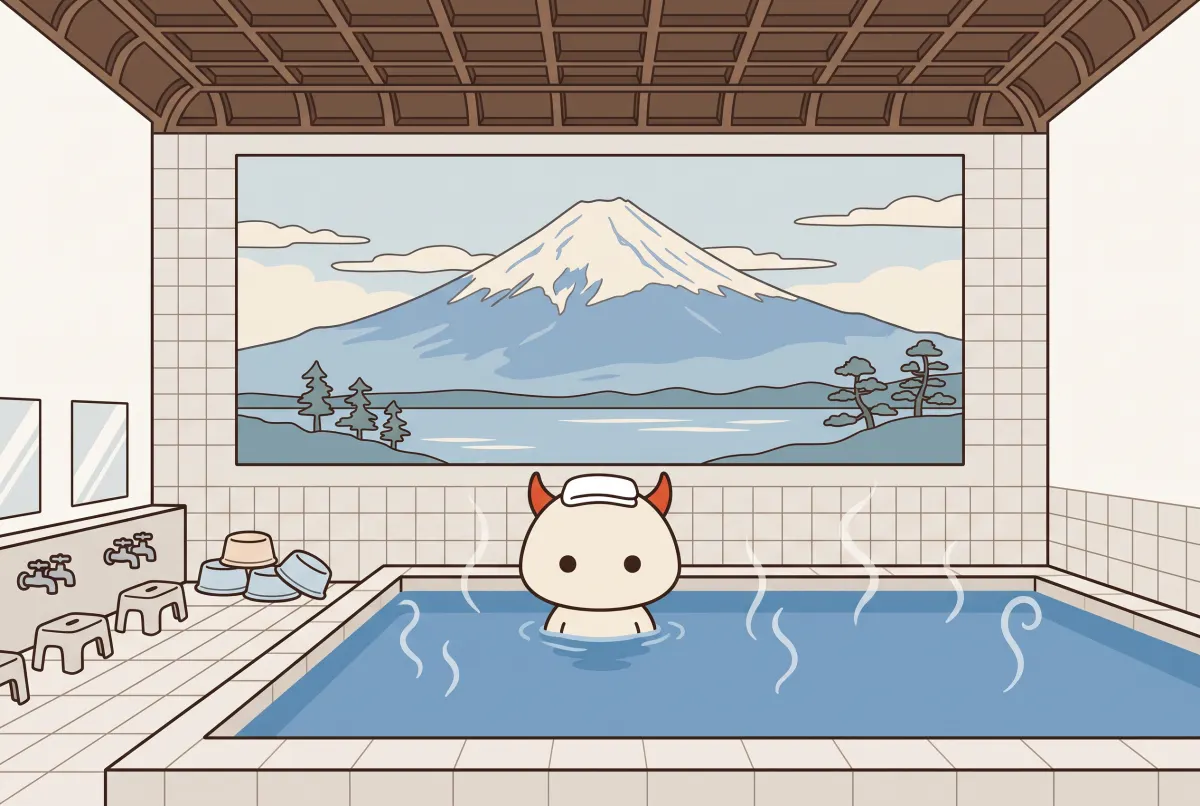
Rows of low stations along the walls, each with a stool, a basin and a pair of taps, one hot and one cold, often with a shower and a mirror. You sit, wash and rinse here before you get in the bath.The mural (ペンキ絵)
Above the bath, many Tokyo sento have a big painting on the wall, usually Mt Fuji, called penki-e, a picture in paint. The custom is usually traced to Kikai-yu, a sento in Kanda, around 1912. Some have a local view or a tile picture instead.Nakanobu Onsen Matsu no Yu, Tokyo Minato Ward Public Bath, Tokyo Yume no Koushuu Yokujou Goshiki, Osaka
Onsen water at a sento
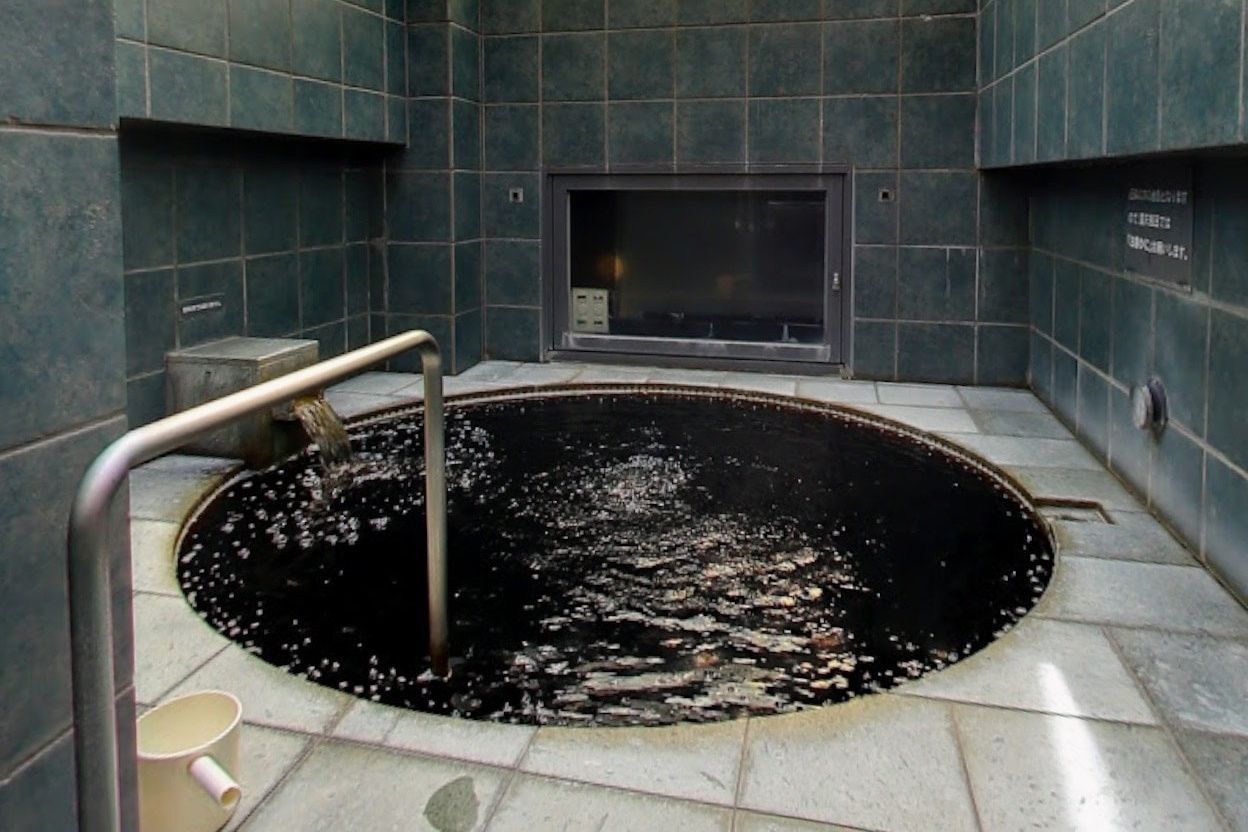
Since sento is a class of bathhouse, not a kind of water, nothing stops a sento from being an onsen. Around Tokyo Bay, in Ota ward and beyond, a dark brown spring water called kuroyu (黒湯), black water, rises from the ground. It comes out below 25°C and counts as onsen water for what it carries rather than for its heat: Ota ward describes it as ancient seawater, rich in metasilicic acid and bicarbonate, and long used in the local sento.
In Kagoshima city, which has 267 hot-spring sources, many people use an onsen as their everyday neighbourhood bath. If the water matters to you, look for the water analysis, the onsen bunsekisho, on the wall or at the front desk.
Togoshi Ginza Onsen, Tokyo Musashi-Koyama Onsen Shimizu-yu, Tokyo Shiroyama Chojusen, Kagoshima
Sento manners
The rules are the same as at any Japanese bath. These are the ones a sento adds, or makes more likely to come up.
Bring your own towel and soap
Not every sento supplies a towel, soap or shampoo, so bring your own. If you come with nothing, most sell small soaps, shampoos and towels at the counter, and some sell a whole bathing set.Ask about the sauna
Many Tokyo sento have a sauna, and some charge extra for it. Ask when you pay.Wash first, and mind your neighbours
Wash at the taps before you get in, or at least rinse well and pour water over yourself with kakeyu. Showers splash, so point yours at yourself, not at the next station.Ask before you cool the bath
Sento water is often hotter than a bath at home. Stay in for a short time if it is very hot. If you want to run cold water into the bath, ask the people around you first: it is their bath too.Towel and hair out of the water
The small towel stays out of the bath, and long hair goes up so it does not touch the water.Dry off before the changing room
Wipe yourself down with your small towel, the soles of your feet too, before you step back into the changing room, so its floor stays dry.Children
In Tokyo, since January 2022, children aged 7 and over bathe on their own side, not with a parent of the other sex. Other prefectures set their own age, so check if you are travelling as a family.Tattoos
In 2017 Japan's national sento association said its members do not turn people away for tattoos, and it does not ask them to put up signs that do. A super sento makes its own rules, so check before you go.
Super sento

A super sento (スーパー銭湯) takes the sento idea and makes it big: a day-use bathing complex with many kinds of bath, saunas, a restaurant and somewhere to lie down afterwards. The format appeared in the mid-1980s, is said to have spread from the Kansai region, and took off in the 1990s. Under the public bath rules it is not a general public bath but one of the "other public baths", like a health centre, so the prefecture's price cap does not apply.
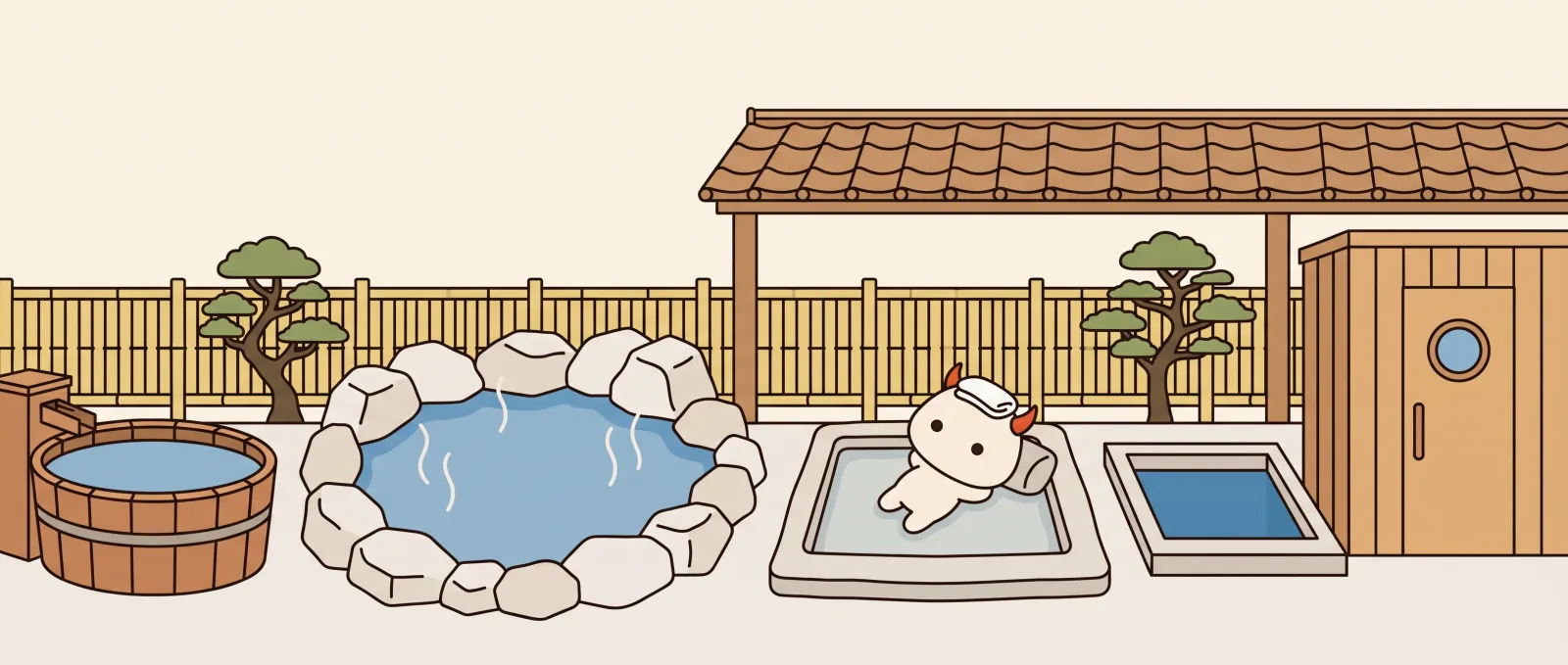
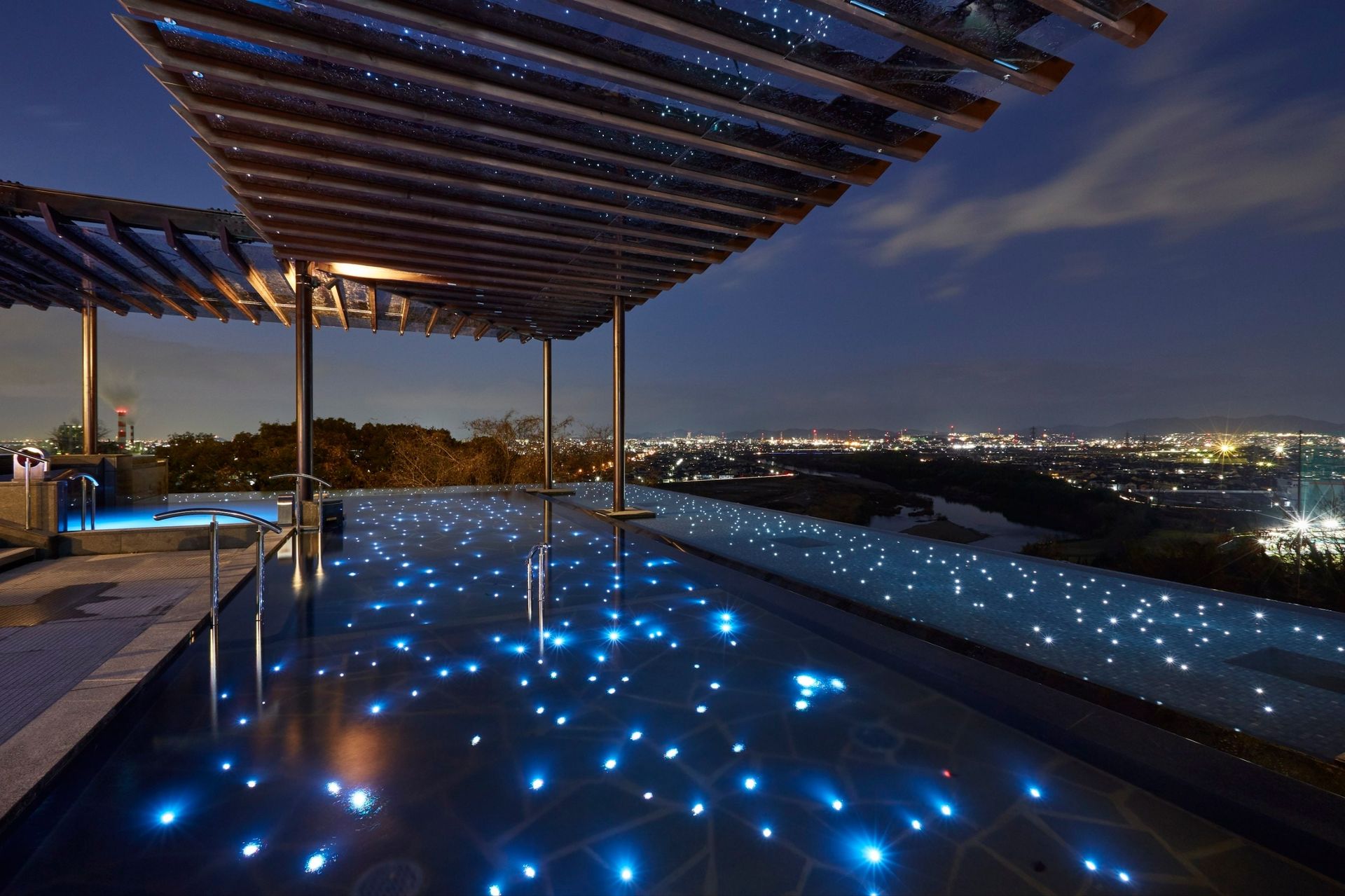
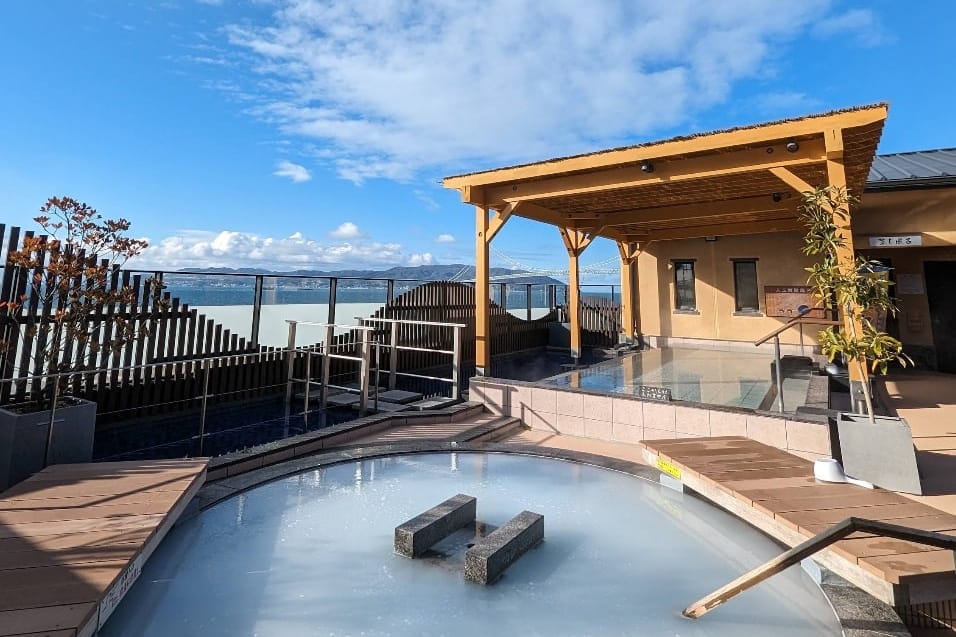
What you find inside varies, but Ryusenji no Yu in Nagoya's Moriyama ward gives the idea: 13 kinds of bath, an open-air bath of natural onsen water, ganbanyoku rock-bed bathing, a restaurant, massage, a corner with books and manga, and opening hours from 6 in the morning until 2:30 at night. Most have a rotenburo, a sauna with a mizuburo cold plunge beside it, and a kyukeijo rest area.
Tenku Spa Hills Ryusenjinoyu Nagoya Moriyama Honten, Aichi Kirari Bettei, Kanagawa Mitsumine Onsen, Gifu
How they differ
Both are public baths you pay to use, both have a men's side and a women's side, and the manners are the same. The rest is different.
Price
A sento's price is capped by its prefecture: 600 yen for an adult in Tokyo from August 2026, 500 yen in Miyagi from December 2025. A super sento sets its own price, and it is not held to the cap.Size and facilities
A sento is one bath hall on each side with a few baths, and in Tokyo often a sauna. A super sento has many baths indoors and out, saunas, often rock-bed bathing, a restaurant, massage and rest areas.How long you stay
A sento is an everyday stop on the way home. A super sento is built for an afternoon or a whole evening, and some stay open until well after midnight.Who goes
A sento's regulars are the people who live around it. Super sento are popular with families and younger people, and many have been built in the suburbs.Onsen or not
Neither name tells you. A sento may heat tap water or run on black onsen water; a super sento may heat ordinary water or have a spring of its own. Look at what each place says about its water.Tattoos
Sento, as general public baths, do not turn people away for tattoos, the national association says. A super sento decides for itself, and some do refuse; the tattoo guide has the details.
Sento to try
Neighbourhood bathhouses from east Tokyo to Kagoshima, some of them on onsen water.
Togoshi Ginza Onsen戸越銀座温泉
Public BathhouseNatural onsen waterTokyo2.0(1)
- Day use 15:00–01:00
- ¥550 for a day bath
- Tattoos allowed
- Bicarbonate spring, pH 8.8, 21°C at the source
Kusatsu (Yokohama Ten-nen Onsen)横浜天然温泉くさつ
Public BathhouseNatural onsen waterKanagawa
- Day use, hours not recorded
- Tattoos allowed
Funaoka Onsen船岡温泉
Public BathhouseNot onsen waterKyoto2.0(1)
- Day use 15:00–23:30
- ¥550 for a day bath
- Tattoos allowed
- Outdoor bath
Yume no Koushuu Yokujou Goshiki夢の公衆浴場五色
Public BathhouseNot onsen waterOsaka1 review
- Day use around the clock
- ¥600 for a day bath
- Tattoos allowed
- Outdoor bath
Kotobuki Onsen寿温泉
Public BathhouseNatural onsen waterEhime2.0(1)
- Day use 07:30–23:00
- ¥460 for a day bath
- Simple spring, pH 8.9, 37°C at the source
Shiroyama Chojusen城山長寿泉
Public BathhouseNatural onsen waterKagoshima1 review
- Day use 10:00–22:00
- ¥460 for a day bath
- Bicarbonate spring, 47°C at the source
Super sento to try
Big day-use bathing complexes, from the edge of Tokyo to Matsuyama.
Ofuro no Osama - Tamamogusatenおふろの王様 多摩百草店
Bathing ComplexNot onsen waterTokyo
- Day use 09:00–00:00
- ¥880 for a day bath
- No tattoos
- Outdoor bath
Kirari Bettei横浜青葉温泉 喜楽里 別邸
Bathing ComplexNatural onsen waterKanagawa4.0(1)
- Day use 09:00–00:00
- ¥1,250 for a day bath
- No tattoos
- Outdoor bath
- Bicarbonate spring, pH 8.3, 29°C at the source
Tenku Spa Hills Ryusenjinoyu Nagoya Moriyama Honten天空スパヒルズ 竜泉寺の湯 名古屋守山本店
Bathing ComplexNatural onsen waterAichi4.0(1)
- Day use 06:00–02:30
- ¥850 for a day bath
- Tattoos with conditions
- Outdoor bath
- Simple spring, pH 9.3, 33°C at the source
Taihei-no-yuSPA専太平のゆ
Bathing ComplexNot onsen waterHyogo2.0(1)
- Day use 10:00–00:00
- ¥900 for a day bath
- No tattoos
- Outdoor bath
Yu Bath Wakayama-tenスーパー銭湯ユーバス 和歌山店
Bathing ComplexNatural onsen waterWakayama1.0(1)
- Day use 09:00–00:00
- Chloride spring, pH 7.4, 28°C at the source
Iyonotojiba Kisukenoyu伊予の湯治場 喜助の湯
Bathing ComplexNatural onsen waterEhime3.0(1)
- Day use 05:00–02:00
- ¥850 for a day bath
- Tattoos with conditions
- Radon spring, pH 9.3, 46°C at the source
Questions people ask
- Is a sento an onsen?
- It can be. Sento is a class of public bathhouse with a capped price, not a kind of water. Many heat ordinary water, but some draw their own hot spring, like the black water sento around Tokyo Bay. If the water matters to you, look at what a place says about its water.
- How much does a sento cost?
- Each prefecture sets the most a sento may charge. In Tokyo it is 600 yen for adults from 1 August 2026, 200 yen for children aged 6 to 11 and 100 yen under 6. Saunas and towels can cost extra. A super sento sets its own price.
- What should I bring to a sento?
- A small towel, a bath towel, soap and shampoo. If you forget them, most sento sell small soaps, shampoos and towels at the counter.
- Can I go to a sento with tattoos?
- Usually yes. Japan's national sento association said in 2017 that its members do not turn people away for tattoos. Super sento make their own rules and some refuse, so check before you go.
- What is the difference between a sento and a super sento?
- A sento is a neighbourhood bathhouse whose price the prefecture caps; a super sento is a big day-use complex with many baths, saunas and a restaurant, which sets its own price. Either may or may not use onsen water.
Related words
- Bandai番台Attendant's booth at the entrance of a traditional sento or onsen, where an employee monitors the premises and collects fees.
- Noren暖簾Traditional fabric curtain hung at the entrance, typically color-coded (blue for men, red for women) to indicate bathing areas.
- Datsuijo脱衣所Changing room with lockers or baskets for storing clothes, located between the entrance and the bathing area.
- Araiba洗い場Washing area with seated shower stations where guests rinse and wash thoroughly before entering the bath.
- Kakeyu掛け湯Pouring hot water from the bath over yourself with a basin before you get in, starting with your feet and hands, to rinse off and get used to the temperature. Some baths have a small tub of hot water just for this.
- Mizuburo水風呂Cold water bath. Commonly used after sauna; rinse off before plunging in.
- Kyukeijo休憩所Rest area for relaxing after bathing, often with tatami seating, beverages, and sometimes massage chairs.
- Ganbanyoku岩盤浴Hot stone bathing: visitors lie on heated stone slabs. Clothing is worn, and the areas are typically mixed-gender.
Where to go next
Sources
- 厚生労働省「公衆浴場法概要」(一般公衆浴場・その他の公衆浴場)official
- 新宿区「公衆浴場について」(令和8年8月1日からの入浴料金)official
- 文京区「公衆浴場事業」(令和8年東京都入浴料金の統制額)official
- 宮城県「公衆浴場入浴料金の統制額の改定について」official
- 東京都生活文化局「都内の公衆浴場数及び入浴料金統制額の推移」(2022年)official
- 練馬区「区内公衆浴場の入浴料金改定のお知らせ」(共通入浴割引券)official
- 東京商工リサーチ「守りたい『街の銭湯』1,493軒」(2026年6月)
- 東京都浴場組合「銭湯の歴史」official
- 東京都浴場組合「銭湯の入り方」official
- 東京都浴場組合「銭湯Q&A」official
- コトバンク「銭湯」(デジタル大辞泉・日本国語大辞典・世界大百科事典・日本大百科全書)
- コトバンク「番台」(デジタル大辞泉・精選版 日本国語大辞典)
- nippon.com「寛政の改革で混浴禁止に? お江戸銭湯よもやま話」(2021年)
- 東京都「東京型銭湯の特徴・現地体験の見どころ」(2025年9月26日 報道発表 別紙)official
- 大田区「大田区の温泉」(区内温泉利用施設一覧表)official
- 鹿児島市温泉ガイド(鹿児島市観光振興課協力、2024年)
- J-CAST「えっ、入れ墨OKの入浴施設がある? 銭湯と日帰り温泉ではルール違う」(2017年)
- 中小機構 J-Net21「スーパー銭湯」official
- 天空スパヒルズ 竜泉寺の湯 名古屋守山本店