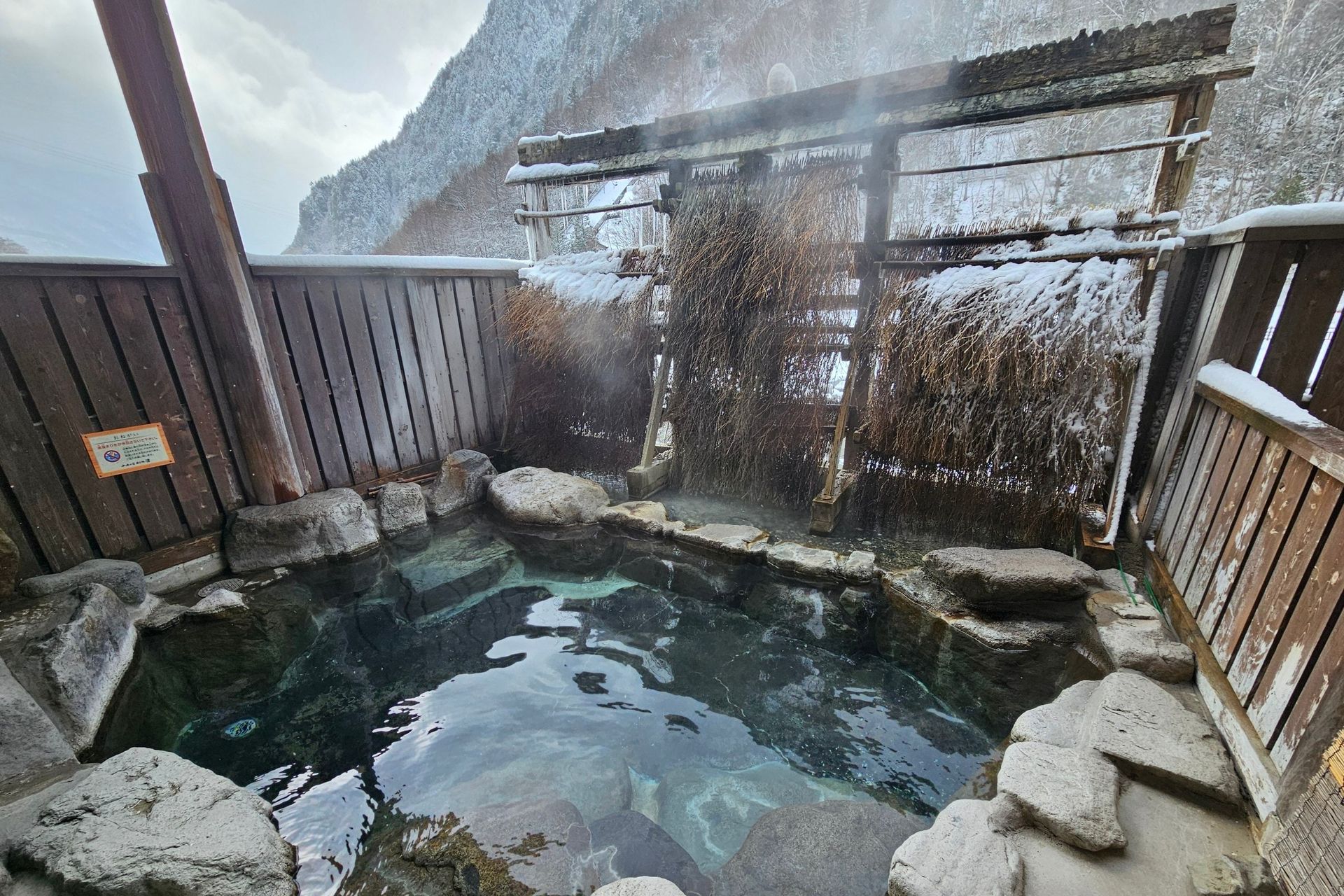
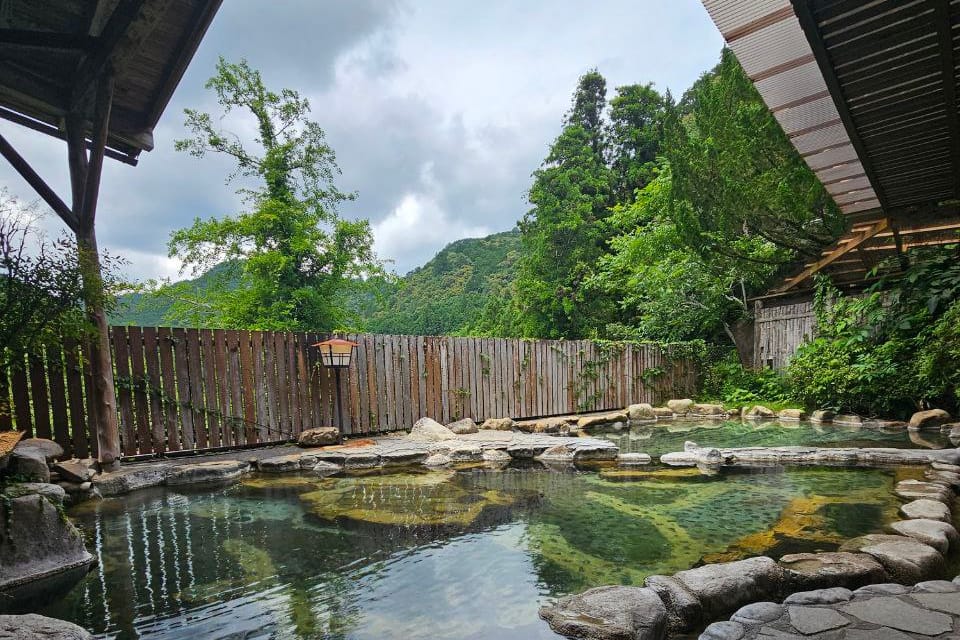
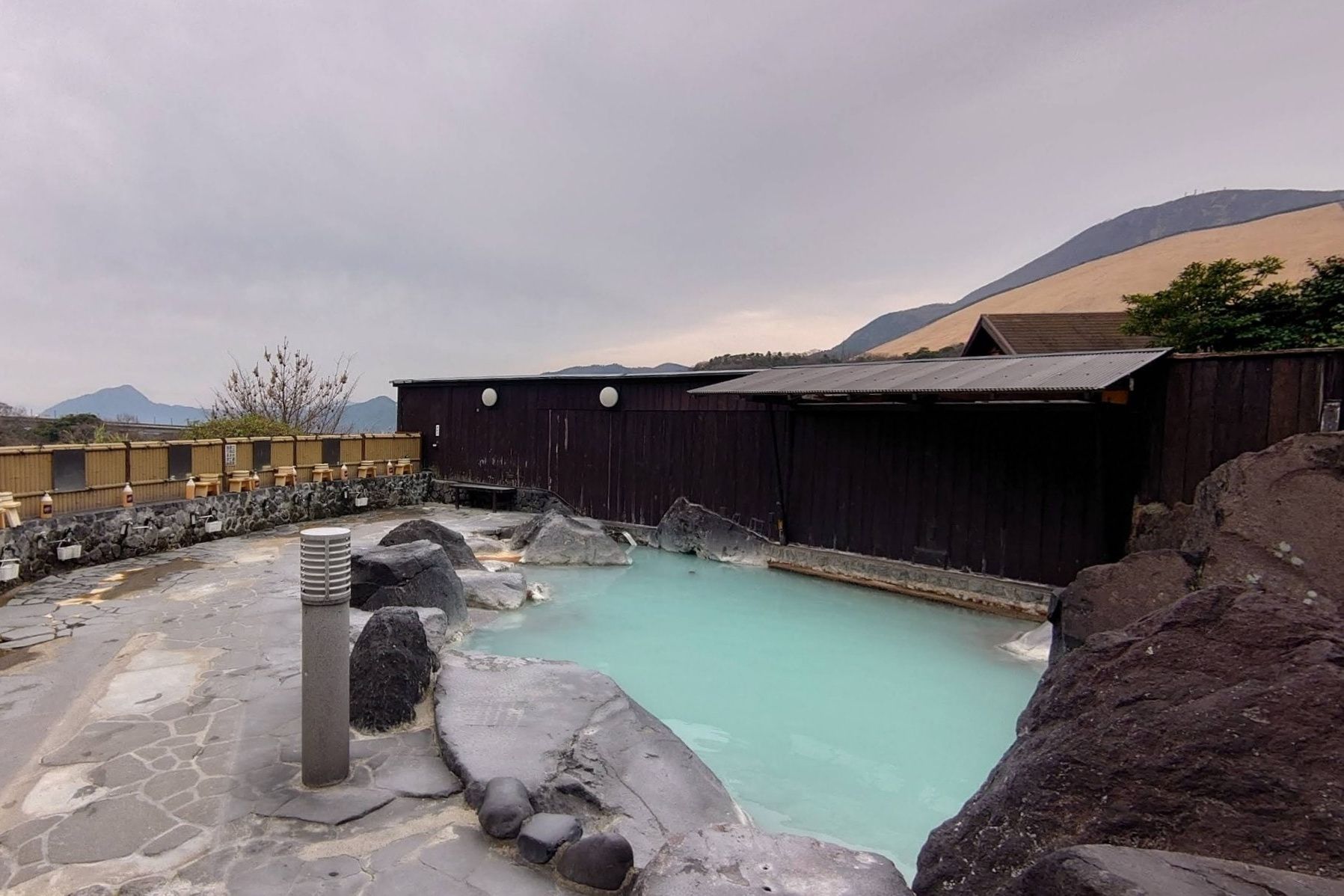
White flakes drifting in the bath, a pale crust on the rocks, a packet of powder to take home: all of them are the spring's own minerals.
湯の花ゆのはなyu-no-hana
What yu no hana are
Yu no hana (湯の花), "flowers of the hot water", are the minerals a hot spring drops once it reaches the surface. Dictionaries describe them as the part of what is dissolved in the water that settles out as the spring cools, loses pressure and evaporates, or reacts with the rock and living things around it. In the bath you see them as soft white or grey flakes drifting in the water; on the rocks, the wooden channels and the pipes they build up as a crust.
So the flakes in a bath are not dirt, and nothing has gone wrong with the water: they are the spring's own minerals, in a form you can see. Japanese has other names for them too: yubana, onsenka (温泉華, "hot spring bloom"), and for the crust, scale or yuaka (湯垢). The word also has a second life as a product, because the deposits are collected, dried and sold as bath salts.
湯ゆhot water; at an onsen, the spring's water itself
ののthe little word that joins two nouns: "of"
花はなflower; here, what blooms out of the water
What they are made of
What blooms depends on what the spring carries. Dictionaries name three kinds after their main mineral, and Beppu grows a fourth on purpose.
Sulfur
A sulfur spring leaves sulfur, the yu no hana most people picture: soft pale flakes in the water and a pale yellow crust where it runs. Dictionaries call it sulfur bloom (ioka, 硫黄華). At Kusatsu, the sulfur turns the water itself yellow-green.
Lime
A spring rich in lime leaves lime bloom (sekkaika, 石灰華), a pale crust that builds up where the water runs.
Silica
A spring rich in silica leaves silica bloom (keika, 珪華). At Tamagawa Onsen in Akita, a strongly acidic spring, the stream below the source drops silica, sulfur, barite and hokutolite (hokutoseki, 北投石) as it cools, in fine crystals that are gathered as bath salts.
Alum
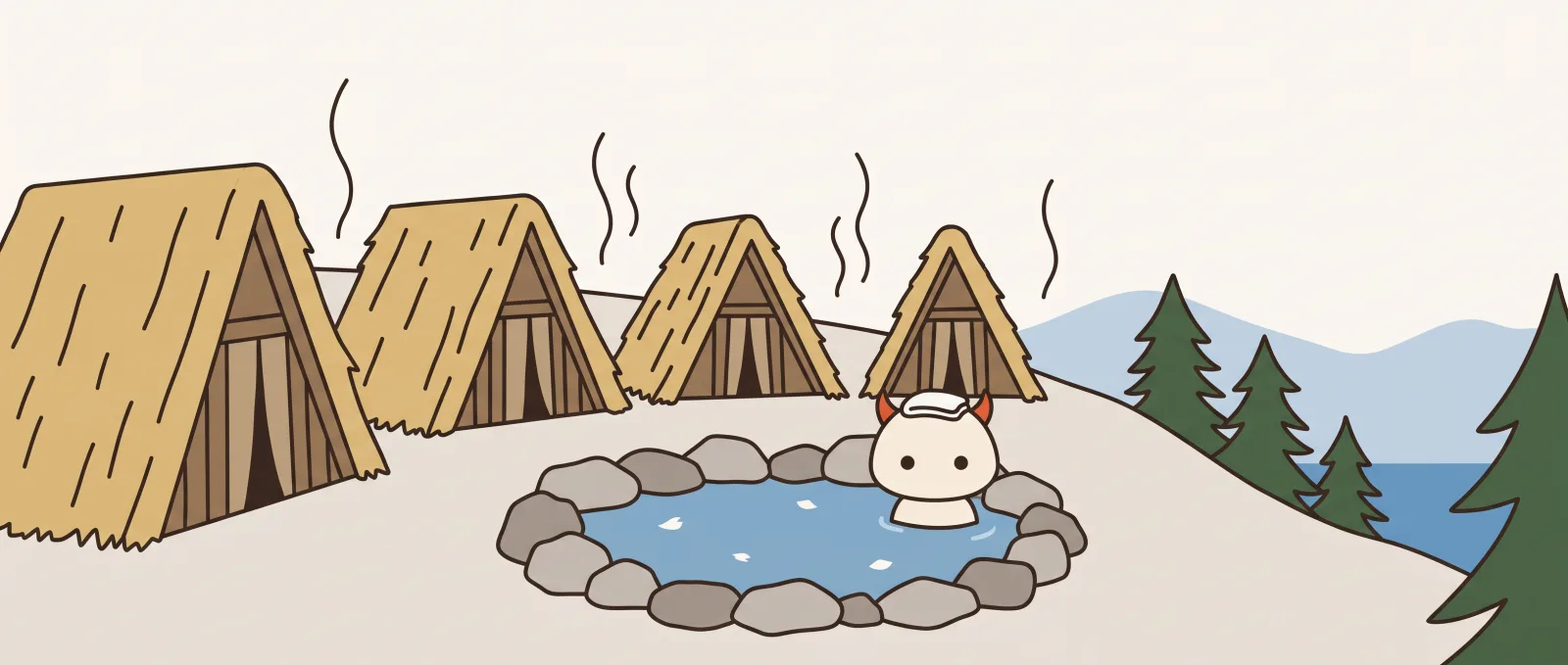
In Beppu's Myoban district, yu no hana are grown in thatched huts, where volcanic steam reacts with clay. What forms there is aluminium sulfate and iron sulfate, the stuff of alum, which is what Myoban (明礬) means.
On the rim and in the pipes
The minerals that float as flakes also stick. Wherever onsen water runs, it leaves a crust: on the rim of the bath, the spout, the wooden channels, and inside the pipes that bring it from the source. Dictionaries list scale and yuaka (湯垢), literally "bath grime", as other names for yu no hana, but at a spring it is mineral, not grime.
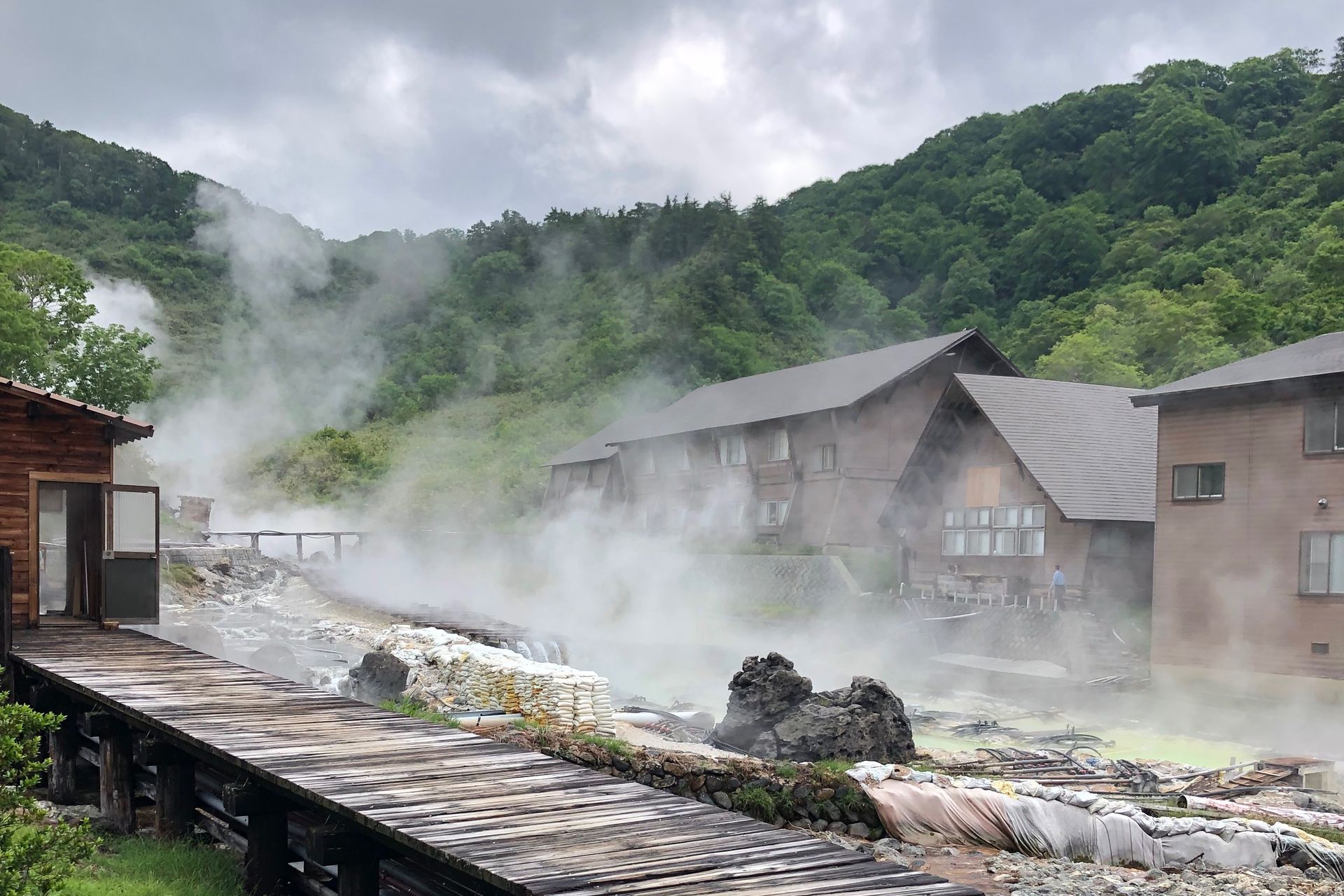
Pipes have to be cleaned, and at Dake Onsen in Fukushima that has become an event. The water comes a long way from its source on Mt. Tetsu and leaves sulfur and other minerals inside the pipe as it goes. When the pipe is cleaned, a week or more of yu no hana arrives in town at once and the baths turn milky white for the day. Dake calls them Milky Days: about once a week in summer, half as often in winter, announced online in advance, and some people plan their visit around one.
On the hillside at Myoban, one of the onsen districts of Beppu in Oita, steep thatched huts line the road with steam rising around them. They are yu no hana goya (湯の花小屋), yu no hana huts, and the way of making yu no hana in them is a national Important Intangible Folk Cultural Property, designated in March 2006 and kept up by a local preservation society.
Volcanic gas from the ground is led into the floor of each hut. Pebbles are packed over it and covered with a layer of blue clay about ten centimetres thick, and as the steam rises through, it reacts with the iron and aluminium in the clay. Crystals of aluminium and iron sulfate grow out of the clay about a millimetre a day, and after about 40 days they are collected, purified, dried and made into the product. The steep roofs keep the rain off and help hold the temperature steady.
The craft is older than the bath salts. Alum was known here in the Edo period, and the district was once the country's largest producer of it; using the method for yu no hana for the bath is thought to date from the start of the Meiji period. The Agency for Cultural Affairs notes that the product has been used both as a medicine and as a bath additive. Beppu's steam and its onsen landscape are also a national Important Cultural Landscape, selected in 2012.
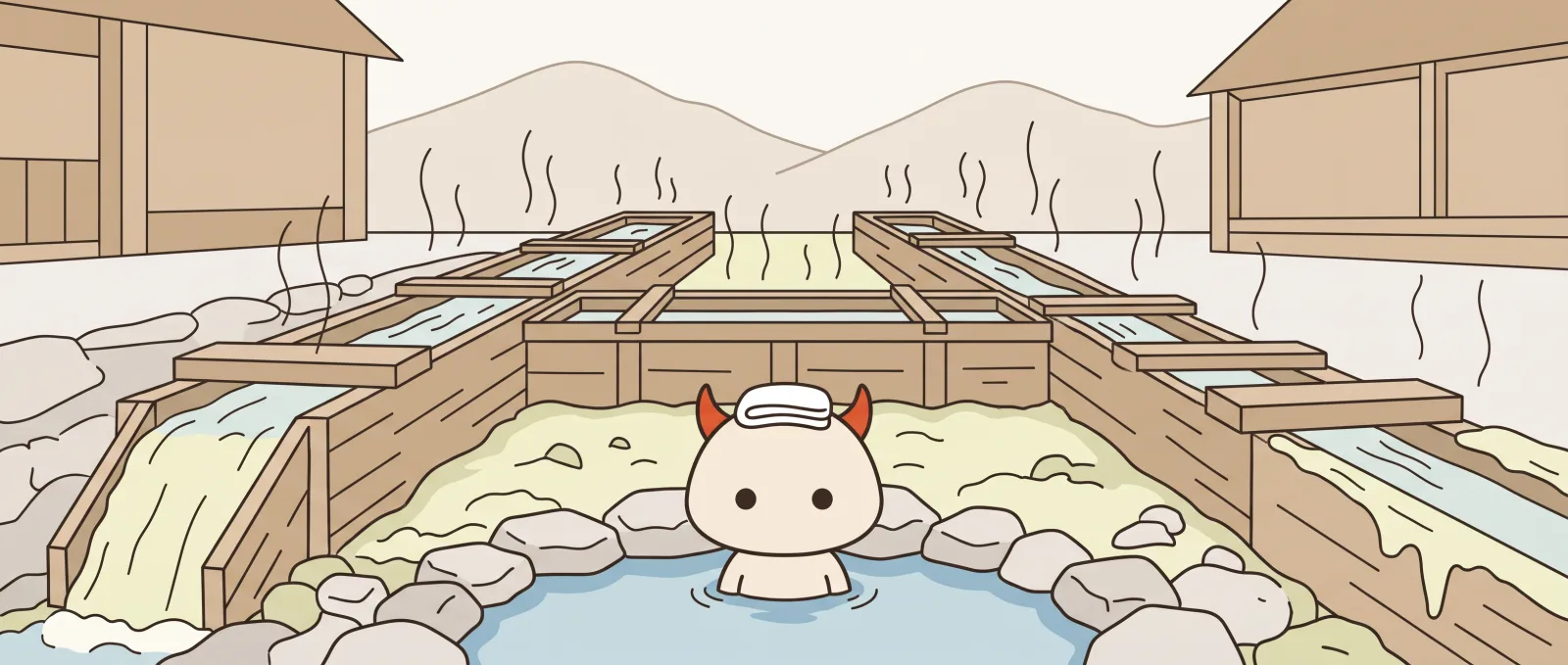
In the middle of Kusatsu Onsen in Gunma, the spring called the yubatake (湯畑) runs through seven long wooden troughs, where the open air cools it. As the water stands in the troughs, its minerals settle out, and they can be collected as yu no hana: that is where the name comes from, the field (hatake) where yu no hana are harvested. The water, yellow-green with sulfur, then falls over a cascade at the end and is piped to the Chiyo-no-yu bath and the inns.
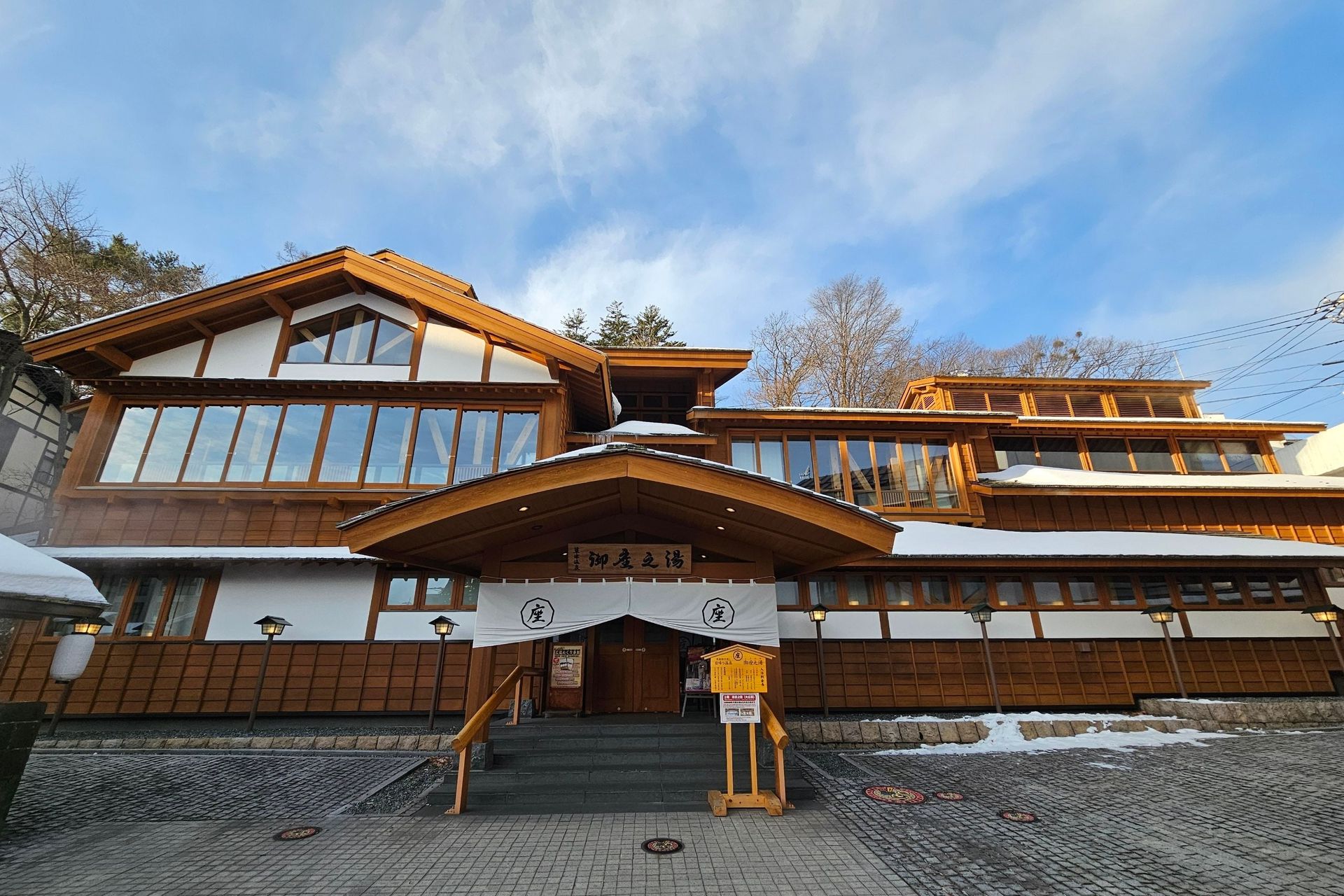
The harvest is small. A national tourism text says it happens only about three times a year, at no fixed time, so the yu no hana sold in town sometimes runs out; Kusatsu town sells its own in 95 g packs for 1,400 yen, at shops and inns in town. In winter there has been a yearly free day when visitors can help collect it. To bathe in the yubatake's own water, Goza no Yu, the bathhouse overlooking it, draws on it as one of its two sources.
Yu no hana to take home
In Beppu and Kusatsu, packets of yu no hana are sold as souvenirs: powder or crystals you add to a bath at home for some of the colour and smell of a spring. Beppu's huts make theirs for that, and Kusatsu sells what comes out of its troughs.
A bath with yu no hana in it is not an onsen, though. Japan's Hot Spring Act defines an onsen as hot water, mineral water, steam or other gas that comes out of the ground at a set temperature or with set minerals in it, and the water in your tub at home is still tap water. Packets also differ from one another, so read the label for what is in it and who made it, and if you want the real thing, buy it where it is made.
In the bath
Yu no hana change little about how you bathe, but a few things are worth knowing.
Leave the flakes where they are
They are part of the bath, not something to skim off or scoop into a bottle. Let them drift past; if you want some to take home, buy a packet.
Take off your silver
Some springs are hard on metal. Kusatsu's water is acidic enough to tarnish silver almost at once, and its visitor guide says to take all jewellery off before you get in. At any sulfur spring, leaving your silver in the locker costs nothing.
Cloudy is not dirty
If a bath is milkier than last time, it may be the yu no hana. At Dake Onsen a cleaned pipe turns the baths white for the day, and that is the day some people come for.
Finding them in the catalog
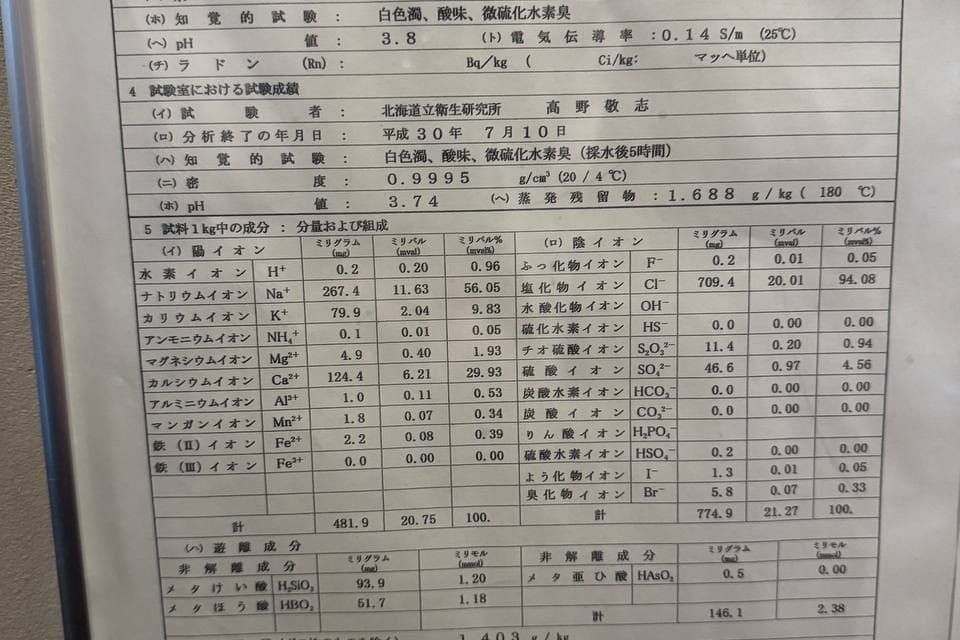
There is no filter for yu no hana, because the same spring can float flakes one day and run clear the next. The place pages are where to look: a description often says when the water carries flakes, and a place's water page shows what its analysis certificate says, when we have one.
The spring type on that page is the best clue to what you will find. Flakes are most likely where it says sulfur spring, and in water that runs from the source and away without being reused, kakenagashi, the flakes are not filtered out on the way back to the tub.
Where to see them
One bath in each region we have a good one for, from Noboribetsu in Hokkaido to the hillside of huts at Myoban in Beppu.
No. They are yu no hana: minerals from the spring itself, such as sulfur, that settle out of the water as it cools and meets the air. They are a sign of what the spring carries, not of a dirty bath.
Is a bath with yu no hana bath salts an onsen?
Not in the legal sense. Japan's Hot Spring Act defines an onsen as water, steam or gas that comes out of the ground at a set temperature or with set minerals in it. Bath salts give a bath at home some of a spring's colour and smell, but the water is still from your tap.
Where can I buy real yu no hana?
Where it is made. Kusatsu town sells what it collects from the yubatake in 95 g packs at shops and inns in town, and in Beppu, yu no hana are made in the huts at Myoban. Whatever you buy, read the label to see what is in it and who made it.
Will a sulfur bath harm my jewellery?
It can. Kusatsu's acidic water can tarnish silver almost at once, which is why its visitor guide says to take jewellery off before bathing. Leave rings and chains in your locker.
Why is the water milkier on some days?
Yu no hana are one reason. At Dake Onsen in Fukushima, cleaning the pipe from the source sends a week or more of deposits down at once, and the baths turn milky white for the day.

 Lodging
 Public Bathhouse