Skip to the page

Glossary

Neyu: The Lying-Down Bath

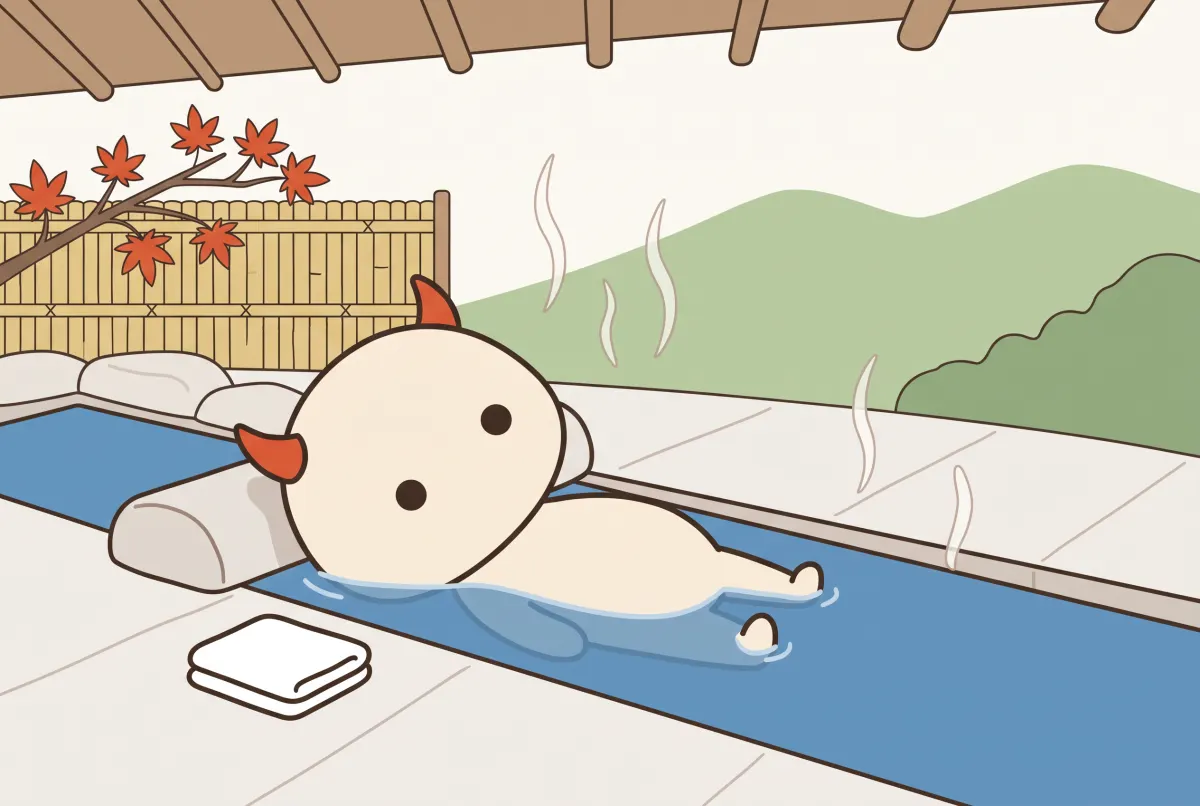
Lie back, head on the rest, a thin layer of warm water over you: the bath you take lying down.

寝湯ねゆneyu
What a neyu is

A neyu (寝湯) is a bath you lie down in. Dictionaries describe it as a bath with a shallow tub that you enter lying down, and Japanese-English dictionaries translate it as a lie-down bath in a bathhouse or hot spring. The water is shallow, so instead of sitting up to your shoulders you lie on your back, rest your head on the edge or on a raised headrest, and let the water run over you. Some places call it a nekorobi-yu (寝ころび湯), a lounging bath, or a gorone-yu (ごろ寝湯), a bath to doze in, which is the same idea.

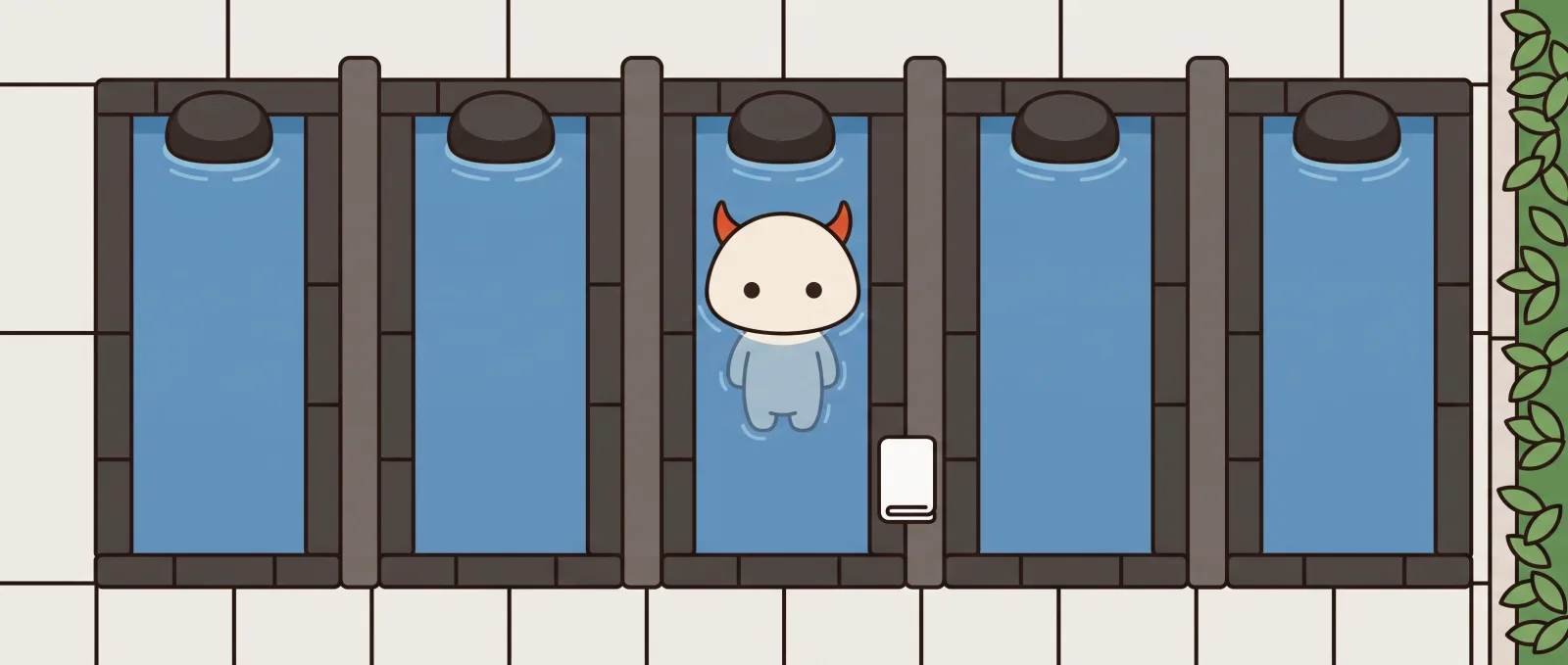
It is not a separate kind of water. A neyu is a shape of tub, and it takes whatever water the place has: the spring itself at an onsen, well water or tap water in a city bathhouse. You usually find one beside the ordinary baths, sometimes several side by side like beds, with low partitions between them and a headrest at one end.

The word, piece by piece

  1. 寝ねto lie down; also to sleep
  2. 湯ゆhot water; at an onsen, the spring's water itself

The kinds you meet

The word covers more than one design. Four you are likely to come across:

  • The shallow bed

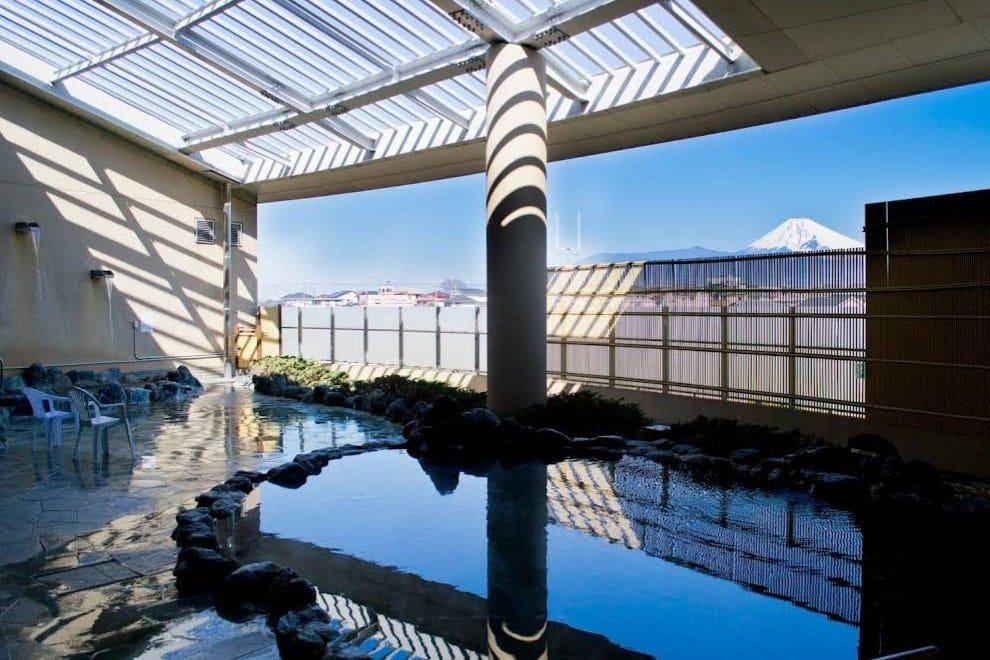
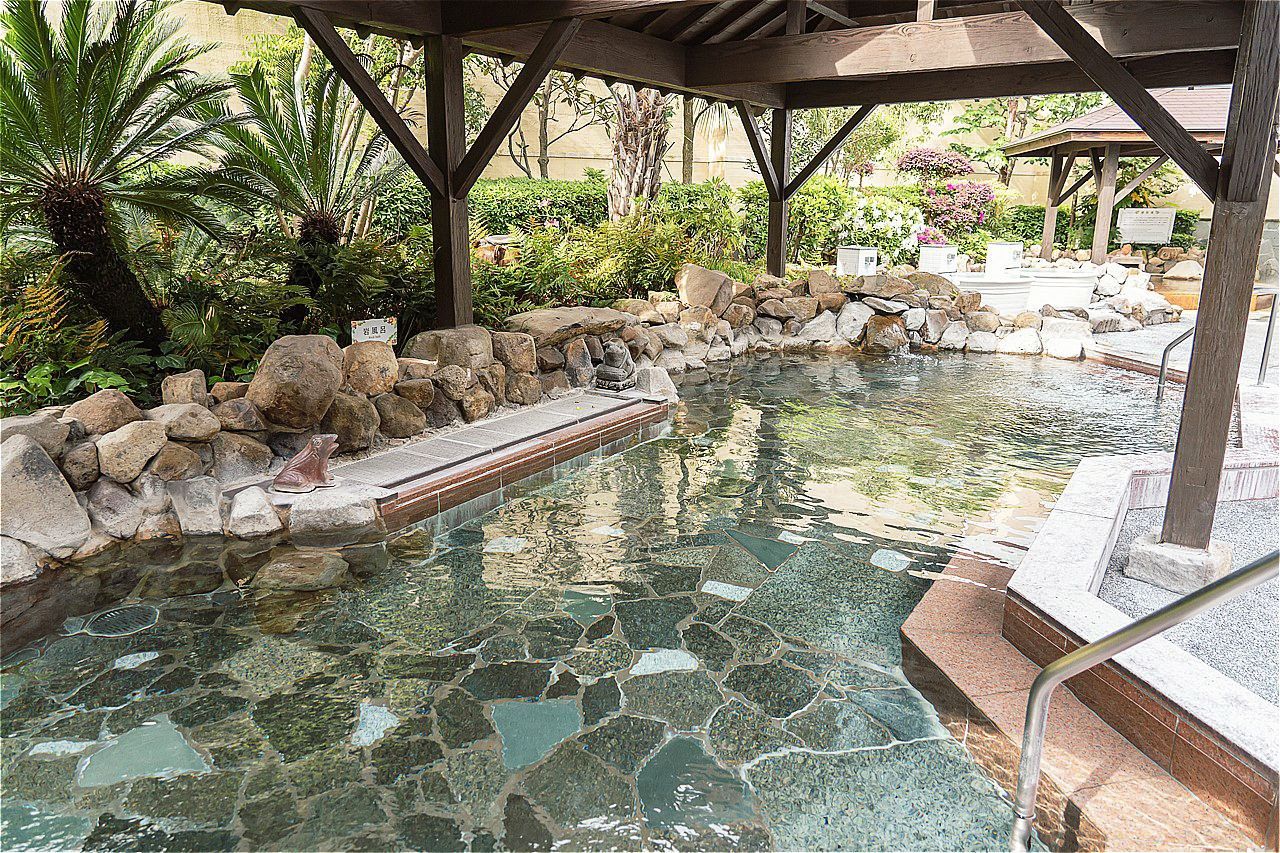
    A long, shallow tub or a row of them, each with a headrest of stone, wood or metal, where the water covers your body while your head stays out. In a big bathhouse there may be a row of them, inside or in the outdoor bath.
  • Warm water under your back

    Some are barely a bath at all: a floor with hot water flowing across it, so you lie on the warm surface and the water warms your back. Naniwa-no-yu in Osaka describes its gorone-yu this way, a floor shaped to press on your back with flowing water over it, the kind of bath where people drift off.
  • Legs only

    At Akakura Onsen in Niigata, the town's outdoor neyu lets you lie down and relax with only the lower half of your legs in the water, close to an ashiyu you lie down for. The Japan Tourism Agency's text for visitors places it beside a teyu, a hand bath, with a view of the mountains.
  • In a private bath

    Some inns build one into a bath you book for yourself. Hara-taki in Higashiyama Onsen, Fukushima, has a private bath with two tubs of Aomori hiba wood, one of them made for lying down; at Tsuruya in Zao Onsen one of the four private baths is a neyu.

Why it is a gentle way to bathe

The bathing notes every onsen in Japan has to post say that people whose heart or lungs are weak should take a half bath or a partial bath rather than going in up to the shoulders. A neyu is not either of those, strictly, but it shares the point: there is far less water on top of you than in a deep tub, and you are lying still. Places with a neyu present it that way themselves. Tofuya, an inn in Onogawa Onsen, says its neyu and its half-bath corner let you bathe with less strain on the body; Yu~topia Kannami in Shizuoka says lying down is said to ease the load on the heart.

Those are the facilities' own words. We found no study that measures what a neyu does to the body, so treat it as a comfortable way to bathe, not a treatment. The same bathing notes still apply: start with a short soak, drink a glass of water before and after, and do not bathe after drinking alcohol.

Where you find them

Mostly where people come to spend a few hours in the bath, rather than ten minutes.

  • In super sento

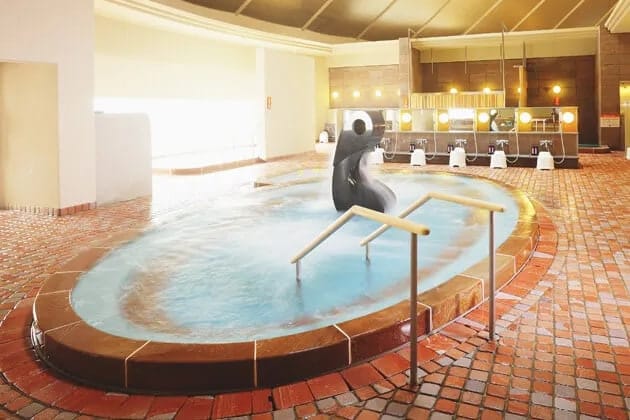
    The big day-bathing complexes are a good place to look. Sayano Yudokoro in Itabashi, Tokyo, has a neyu among its indoor baths and a nekorobi-yu among its outdoor ones; Kirari Bettei in Yokohama has a nekorobi-yu, and on the women's side you can put on a clay pack while you lie there.
  • In local spa complexes

    Smaller day spas outside the big cities have them too. Yu~topia Kannami in Shizuoka has a neyu on its ground floor beside its bubble bath and utaseyu, and Takanoko no Yu in Matsuyama lists a neyu among its baths and opens from 5:00 in the morning to 1:00 at night.
  • In onsen inns

    Some inns put one in the main bath. Iroha, an inn in Niseko, Hokkaido, has a neyu and a sauna in its large indoor bath and takes day visitors; Tofuya in Onogawa Onsen, Yamagata, has one in its public baths.
  • In a city-run bath

    Yutopia Hamawaki, a public bath run by the city of Beppu, has a neyu in its bathing area alongside a bath for pouring over your head, a bubble bath, a full-body bath, a jet bath, an utaseyu and a bath for exercise, with a walking bath outside.
  • Out in the open

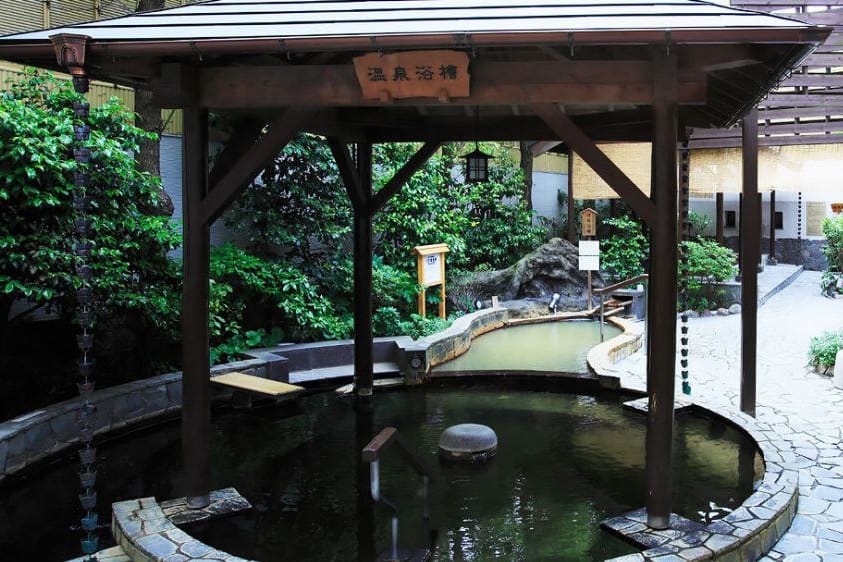
    Now and then an onsen town has one outdoors, like the neyu at Akakura Onsen, where you lie back with your lower legs in the spring and look out at the mountains.

How to use one

A neyu works like any other bath, with a few habits of its own because you are lying down.

  • Wash first

    As before any bath: wash at the washing area and rinse off, then lie down. The water in a neyu is shallow and shared, and it runs right past the next person's head.
  • Head on the rest

    Lie on your back with your head on the headrest or pillow at the end, so your face stays well out of the water. If there is no headrest, lie with your head toward the higher end.
  • Towel out of the water

    The bathing notes say towels do not go in the bath. With a neyu that is easy to forget, because the water is so shallow: put yours on the rim or on the floor near your head, not on your body in the water.
  • Do not fall asleep

    It is called the bath you lie down in, not the bath you sleep in. Yu~topia Kannami asks you to take care not to doze for too long, and a guide to neyu warns that a long doze can leave you chilled or overheated. Never use one after alcohol or after taking sleeping pills or tranquillisers, which the Consumer Affairs Agency warns makes bathing dangerous.
  • Get up slowly

    When you have had enough, sit up first and stand up slowly. The bathing notes and the Consumer Affairs Agency both warn against standing up suddenly from a bath, because it can make you light-headed.
  • Take turns

    There are usually only a few places, and they are popular. A guide to neyu suggests giving up your place from time to time; when people are waiting, have your soak, then let someone else lie down.

Is a neyu a lukewarm bath?

Not by definition. Neyu says how you lie in the bath, not how hot it is, and no definition of the word mentions temperature. A lukewarm bath, nuru-yu (ぬる湯), is the other way round: a bath kept at roughly 40°C or below, whatever its shape, which you can stay in for a long time. The two often go together, because a bath you lie in for a while is pleasant when it is not too hot, and one guide to neyu reports that Hanayu Spa Resort in Kumagaya runs low-temperature spring water through its neyu so you can stay in longer.

But a neyu may be just as hot as the baths beside it, so do not take a neyu for a cool bath without checking. Feel the water with your hand first. If it is a long, lukewarm soak you are after, our nuru-yu guide lists the places known for it.

Neyu on Onsen Oni

The catalog does not mark a neyu yet: there is no filter for it, and a place that has one does not say so in its list of features. Here is what helps in the meantime.

  • No neyu filter

    None of the map's filters finds a neyu. The places below were checked by hand: each one's own site names a neyu.
  • Indoor Bath and Bathing Complex

    Every place on this page has an indoor bath, and several are bathing complexes, the type we file super sento under. Those filters narrow the map down, but most of what they find has no neyu.
  • Lukewarm Bath

    The Lukewarm Bath highlight marks a place with a bath kept at roughly 40°C or below. It says nothing about whether you sit or lie in it.
  • Check the place's own site

    Bathhouses refit their baths, and the men's and women's sides do not always have the same ones. If the neyu is why you are going, look at the place's own bath guide before you set off.

Where to try one

One place with a neyu in each region, checked against its own site: super sento, an inn in Niseko and a city-run bath in Beppu. The catalog does not mark neyu yet, so the map link opens every place with an indoor bath.

See all 4,969 places with an indoor bath on the map

Questions people ask

Can I sleep in a neyu?
Rest, yes; sleep, no. Facilities ask you not to doze for long, and a long doze can leave you chilled or overheated. Never use one after alcohol or sleeping pills.
Where does my towel go?
Out of the water, as in any bath: on the rim or the floor near your head. Do not lay it over yourself in the water.
Is a neyu lukewarm?
Not necessarily. Neyu describes how you lie in the bath, not its temperature. Some are kept cooler so you can stay longer; others may be as hot as the baths beside them, so feel the water first.
How long should I stay in?
Start short. Japan's bathing notes suggest about 3 to 10 minutes at a time at first, building up to 15 or 20 minutes once you are used to it, depending on the heat of the water. When you get out, sit up first and stand slowly.
Is the water in a neyu onsen water?
Only if the place uses its spring there. At an onsen inn it usually is; in a city bathhouse the indoor neyu may be well water or tap water, as at Sayano Yudokoro in Tokyo, whose indoor baths use well water. Look at what the place says about each bath.
Are nekorobi-yu and gorone-yu different from a neyu?
No, they are other names for the same thing, a bath you lie down in. Facilities choose their own name, so a bath guide may say any of the three.
Is a neyu the same as ganbanyoku?
No. In ganbanyoku you lie, dressed, on heated stone slabs and sweat; there is no bath. A neyu is a bath: you lie in shallow water, without clothes, in the bathing area.

Where to go next

Find a place to lie back

The catalog does not mark neyu yet. The map shows every place, and each place's page says what its baths are.

Open the map