

Shiobara Onsen-kyo塩原温泉郷
Eleven onsen districts strung along a 9-km gorge of the Hoki River in Tochigi. Wide range of spring chemistries within a tight valley.
Places in this area
37 placesBest reviewed first. The tabs narrow the list; every place is on the map.
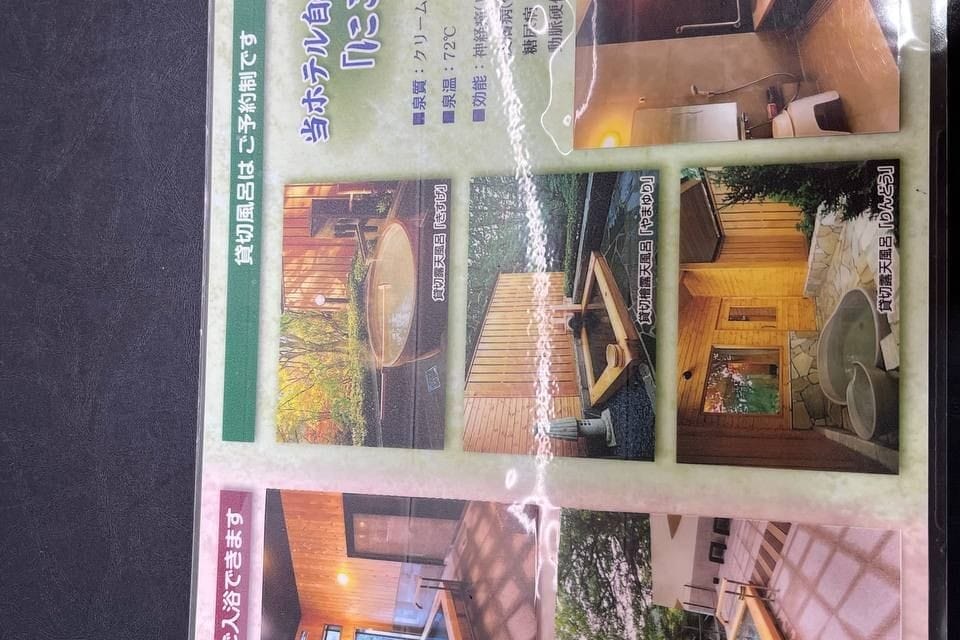
- Okushiobara Kougen Hotel
奥塩原高原ホテル
LodgingNatural onsen waterArayu Onsen1 review- Day use 12:00–15:00
- ¥1,000 for a day bath
- Private bath
- Outdoor bath
- Sulfur spring, 72°C at the source
- Aya Tsumugi
彩つむぎ
LodgingNatural onsen waterShiobara Onsen- Day use 06:00–08:30, 15:00–21:00
- ¥8,800 for a day bath
- Private bath
- Outdoor bath
- Hotel New Shiobara
大江戸温泉物語Premium ホテルニュー塩原
LodgingNatural onsen waterShiobara Onsen- Day use 07:00–10:00, 15:00–24:00
- ¥1,050 for a day bath
- Tattoos with conditions
- Outdoor bath
- Hotel Ohruri
ホテルおおるり
LodgingNatural onsen waterShiobara Onsen- Day use, hours not recorded
- ¥500 for a day bath
- Private bath
- Outdoor bath
- Keiunkaku
塩原温泉 渓雲閣
LodgingNatural onsen waterArayu Onsen- Day use 12:00–14:30
- ¥1,100 for a day bath
- Private bath
- Outdoor bath
- Myogaya Honkan
明賀屋本館
LodgingNatural onsen waterShiobara Onsen- Day use 11:00–14:30
- ¥1,500 for a day bath
- Private bath
- Outdoor bath
- Konyoku (mixed bathing)
- Oku Shiobara Arayu Onsen Naka No Yu
奥塩原新湯温泉 中の湯
Public BathhouseNatural onsen waterArayu Onsen- Day use 07:00–18:00
- ¥300 for a day bath
- Ryokan Majimaso
旅館まじま荘
LodgingNatural onsen waterKamishiobara Onsen- Day use 10:00–19:00
- ¥800 for a day bath
- Private bath
- Outdoor bath
- Shiobara Motoyu Onsen Oidekan
塩原元湯温泉 大出館
LodgingNatural onsen waterMotoyu Onsen- Day use 10:00–16:00
- ¥1,000 for a day bath
- Private bath
- Outdoor bath
- Konyoku (mixed bathing)
- Shiobara Onsen Masudaya
Shiobara Onsen Masudaya
LodgingNatural onsen waterShiobara Onsen- Overnight guests only
- Shofuro Matsuya
湯ったりの宿 松楓楼松屋
LodgingNatural onsen waterFukuwata Onsen- Day use 15:00–17:00
- ¥800 for a day bath
- Outdoor bath
- Sosaku Ryori To Gensen Kake Nagashi No Yado Honjin
創作料理と源泉掛け流しの宿 本陣
LodgingNatural onsen waterShiobara Onsen- Overnight guests only
- Private bath
- YU-FURI NASU-SHIOBARA
ほったらかしの宿 ゆうふり那須塩原
LodgingNatural onsen waterShiobara Onsen- Day use 15:00–19:00
- ¥700 for a day bath
- Outdoor bath
- Yuppo no Sato Foot Bath
湯っ歩の里
Foot BathNatural onsen waterShiobara Onsen- Day use 09:00–18:00
- ¥300 for a day bath
- Yuso Shirakaba
にごり湯の宿 湯荘白樺
LodgingNatural onsen waterArayu Onsen- Outdoor bath
- Konyoku (mixed bathing)
- Acidic spring, pH 2.6, 79°C at the source
- Yuyado Umekawaso
湯宿 梅川荘
LodgingNatural onsen waterShiobara Onsen- Day use 14:30–20:00
- ¥800 for a day bath
- Private bath
- Outdoor bath
- 塩原温泉 旅館 上会津屋 onsen ryokan kamiaizuya
塩原温泉 旅館 上会津屋 onsen ryokan kamiaizuya
LodgingNatural onsen waterShiobara Onsen- Day use 11:00–20:00
- ¥800 for a day bath
- Outdoor bath
- Furumachionsen Momiji Hot Spring
古町温泉 もみじの湯
OtherTemporarily ClosedShiobara Onsen- Konyoku (mixed bathing)
- Mujina-no-yu Hot Spring
むじなの湯
Public BathhouseTemporarily ClosedNatural onsen waterArayu Onsen- Day use 07:00–18:00
- ¥300 for a day bath
- Tera-no-yu Hot Spring
寺の湯
Public BathhouseTemporarily ClosedNatural onsen waterArayu Onsen- Day use 07:00–18:00
- ¥300 for a day bath
- Konyoku (mixed bathing)
 Lodging
 Other
 Public Bathhouse
 Foot Bath
Closed & restricted
2
畑下温泉(塩原温泉郷)
Districts
5 sub-areas within Shiobara Onsen-kyo- Arayu Onsen新湯温泉6 places
- Fukuwata Onsen福渡温泉3 places
- Kamishiobara Onsen上塩原温泉3 places
- Motoyu Onsen元湯温泉2 places
- Shiobara Onsen塩原温泉21 places
About Shiobara Onsen-kyo
Eleven baths along the Hoki
Local tradition fixes the opening of Shiobara at the Motoyu spring in the Daido era, around 806 CE, and a written record of organised bathing reaches back beyond a thousand years. What grew out of that single source was not one resort but a chain. Strung along the Hoki river as it cuts west through the southern flank of the Takahara massif, the valley holds eleven separate bath districts: Oami, Fukuwata, Shiogama, Shionoyu, Hatabori, Monzen, Furumachi, Nakashiobara, Kamishiobara, Shinyu, and Motoyu, together known as the Shiobara Juichi-yu, the eleven baths of Shiobara. Roughly 150 sources feed them, and each hamlet developed its own water character and its own circle of regulars over the Heian and Edo centuries. The novelist Tayama Katai, writing his 1918 Onsen Meguri, applied the term onsen-kyo (hot-spring resort) to Shiobara, and the word stuck.
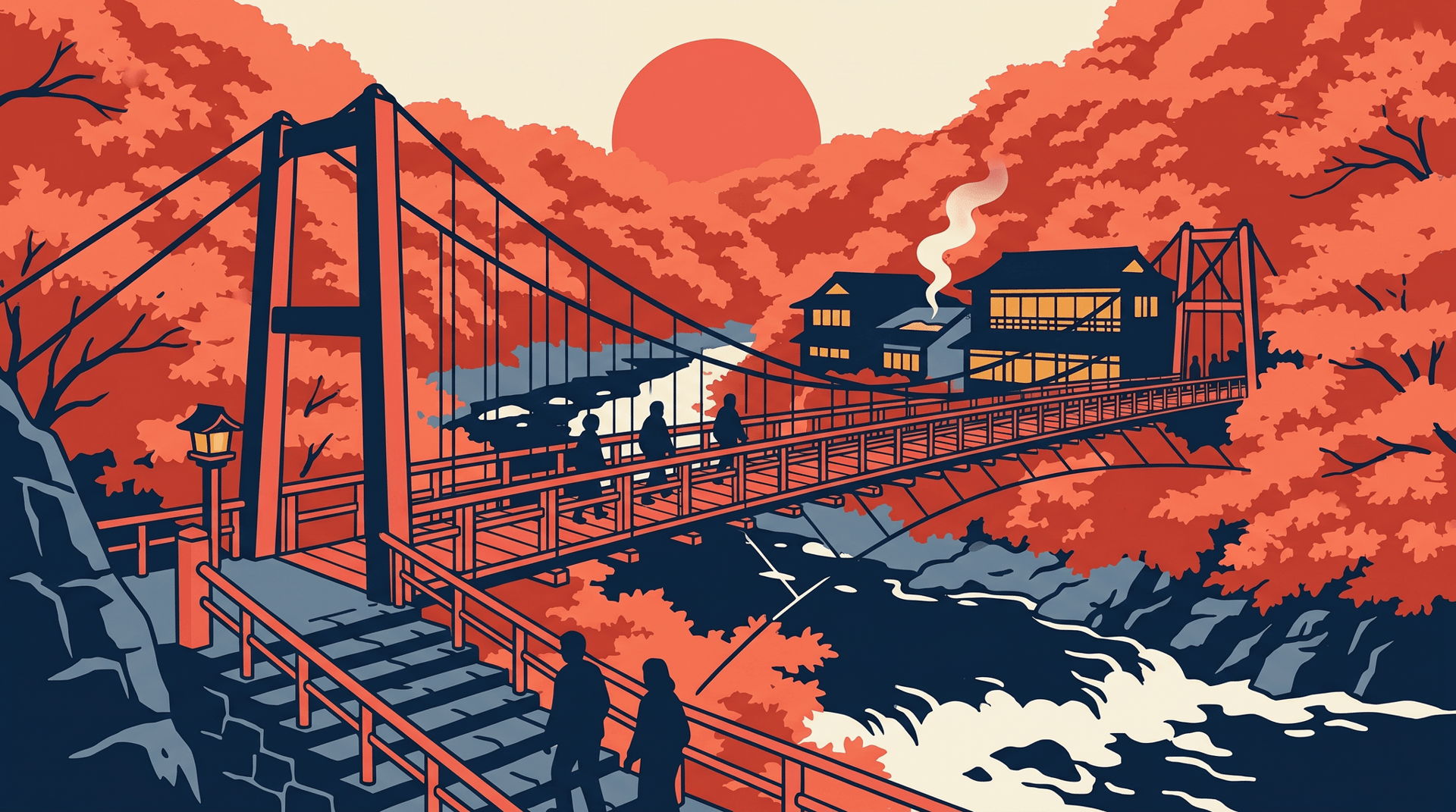
A forested gorge with suspension bridges
The setting is a deep, wooded ravine, walled by ridges that rise to roughly a thousand metres on either side. Ryokan sit close to the river, many with rotenburo built straight over the rapids, and a footpath threads the valley between them. Several pedestrian suspension bridges, among them the long Momiji-dani Otsuribashi, the Kurenai-no-tsuribashi, and the Nanatsuiwa Tsuribashi, span the Hoki at intervals, and in late October and early November the maples on the slopes turn the whole circuit deep red. The waters across the eleven baths cover an unusual range for one valley: simple alkaline springs at the lower hamlets, sodium-calcium sulfate water in the middle stretch, milky sulfur springs at Shinyu and Motoyu near the head, with iron-bearing and carbonate-tinged waters appearing at individual sources. The overall feel is quieter than the better-known Tochigi resorts to the east, in keeping with the mountain country it sits in.
Beyond the bath
The trailheads for Mount Takahara lie within easy reach for a half- or full-day walk, and the Shiobara valley footpath itself runs about eight kilometres between bridges and small waterfalls. The wider Tochigi food culture is also part of any stop: the prefecture is one of the country's recognised homes of tonkatsu, and Shiobara has its share of long-running cutlet houses for an after-bath meal.
Programs in this area
1 program
What's in the water
The spring types on the analysis certificates (bunsekisho) of 2 places here, of 37.
- Sulfur1
- Acidic1
Nearby onsenchi
Within 50 km- Kawaji Onsen川治温泉13 km, Tochigi · 3 placesQuiet gorge onsen at the confluence of the Kinu and Kawaji rivers in Tochigi, just upstream of bustling Kinugawa. The local saying "Kawaji for cuts, Kinugawa for ailments" nods to its gentle alkaline waters and traditional yutoji feel.
- Kinugawa Onsen鬼怒川温泉18 km, Tochigi · 26 placesTochigi resort town in the Kinugawa River gorge — gateway to Nikko and a long-time family destination, with cliff-top rotenburo overlooking the canyon.
- Nasu Onsen-kyo那須温泉郷21 km, Tochigi · 22 placesOnsen group along the foothills of Mount Chausu, with Nasu-Yumoto's milky sulfur waters at its heart.
- Ashinomaki Onsen芦ノ牧温泉45 km, Fukushima · 12 placesA gorge town south of Aizu-Wakamatsu, where tall inns stand along the cliffs of the Okawa river and their open-air baths hang straight over the water. Tradition credits the priest Gyoki with finding the spring some twelve centuries ago, and the calcium and sodium sulfate-chloride water still rises hot enough to need cooling. Three free foot baths mark the walking route, and the branch-line station at the edge of town keeps a cat as its stationmaster.
Sources
- Shiobara Onsen Ryokan Cooperative — Day-Trip BathingofficialOfficial source for the eleven-bath structure, the roughly 1,200-year history, the spread of water types, and the location along the Hoki river.
- Nasu-Shiobara Tourism Bureau — Shiobara OnsenofficialCity tourism bureau page noting the legendary discovery in 806 CE and the six categories of spring chemistry found across the eleven bath districts.
- 塩原温泉郷 — Wikipedia (Japanese)Chronology of the eleven baths, the ~150 sources, and Tayama Katai's 1918 use of the term onsen-kyo (hot-spring resort) for Shiobara.
- Japan-guide — Shiobara OnsenEnglish-language overview of the gorge, the suspension bridges, and the autumn-foliage season.
- Nasu-Shiobara Tourism NAVI — Kurenai (Red) Suspension BridgeDescription of the Kurenai-no-tsuribashi over the Hoki river and its place in the autumn-leaf circuit.